Specs are compiled from manufacturer listings and verified buyer reviews and can change over time — please confirm the key details on the product page before buying.
Buying a winter jacket in XXL is not just a sizing exercise — it is a fight against drafted shoulders, tight armpits, and sleeves that ride up the moment you reach for a steering wheel. The picks below all come in XXL or 2XL, and each one earns its spot for a different reason: raw warmth, packability, or genuine waterproofing. If you want workwear-tough duck canvas in a relaxed big-body cut, start with the Carhartt Montana.
This guide is built by comparing the manufacturers’ published specifications and the patterns across verified customer reviews, so you get each pick’s real strengths and trade-offs instead of marketing spin.
A quick note on how this shortlist was built: some listings offer XXL as one selectable size among many, so a pick here may not be an XXL-only design — it is the same jacket, sized up to fit you. Every entry fits the same job, and the xxl winter jacket that fits your frame best will usually be the one with room to layer.
Top Picks

How To Choose The Best XXL Winter Jacket
An XXL winter jacket has a harder job than a standard size. The bigger the shell, the more cold air your body has to heat, and the easier it is for a draft to find a gap at the cuff, hem, or collar. Here is what actually decides whether a jacket keeps you warm in the size you wear.
Fit is a warmth spec, not a style note
A jacket that fits you closely keeps heat near your body; a jacket that is too loose lets your own warmth billow out with every step. Look for a “relaxed fit” or “loose fit” only if you plan to wear a sweater underneath. If you wear a base layer and a wool mid-layer, the roomier cut is the one that works.
Insulation weight versus insulation type
Down fill (measured in “fill power,” a number that tells you how much loft an ounce of down produces) is warm for its weight but loses warmth when soaked. Synthetic insulation traps heat even when damp, which is why the technical jackets here use it. A hybrid that pairs a light down fill with a thermal-reflective liner is the modern middle ground.
The outer shell decides where you can wear it
Duck canvas and high-denier nylon shrug off brush, fence rails, and barn work. A softer woven shell with a durable water-repellent (DWR) finish sheds light snow and rain but does not resist abrasion the same way. If you live on a farm or hunt, you want the heavy shell; if you commute, the lighter one is kinder to a car seat.
Side-by-Side Comparison
| Model | Best For | Insulation | Weight | Fit / Cut | Amazon |
|---|---|---|---|---|---|
| Carhartt Montana Rugged Flex★ Best Overall | Workwear warmth in XXL | Insulated duck canvas | 2.76 lb | Relaxed fit | Amazon |
| Levi’s Arctic Cloth Extra Long ParkaLong-Length Pick | Long-coverage city parka | Faux down insulation | 5 lb | Long silhouette | Amazon |
| Orolay Thickened Down JacketWomen’s Crowd Favorite | Women’s oversized puffer | Thickened down | 2.73 lb | Oversized / roomy | Amazon |
| Columbia Tipton Peak III | Rain-to-winter crossover | Synthetic + thermal-reflective | — | Regular fit | Amazon |
| The North Face Junction Insulated | Women’s lightweight layering | 100g Heatseeker synthetic | — | Regular fit | Amazon |
| Columbia Suttle Mountain Long | Women’s long parka coverage | Insulated, long-length | — | Long-cut fit | Amazon |
| Carhartt Yukon Extremes Insulated Coat | Deep-cold outdoor labor | 150g 3M Thinsulate | — | Loose fit | Amazon |
| The North Face McMurdo Parka | Expedition-grade waterproofing | 600 fill recycled down | — | Relaxed fit | Amazon |
Detailed Reviews
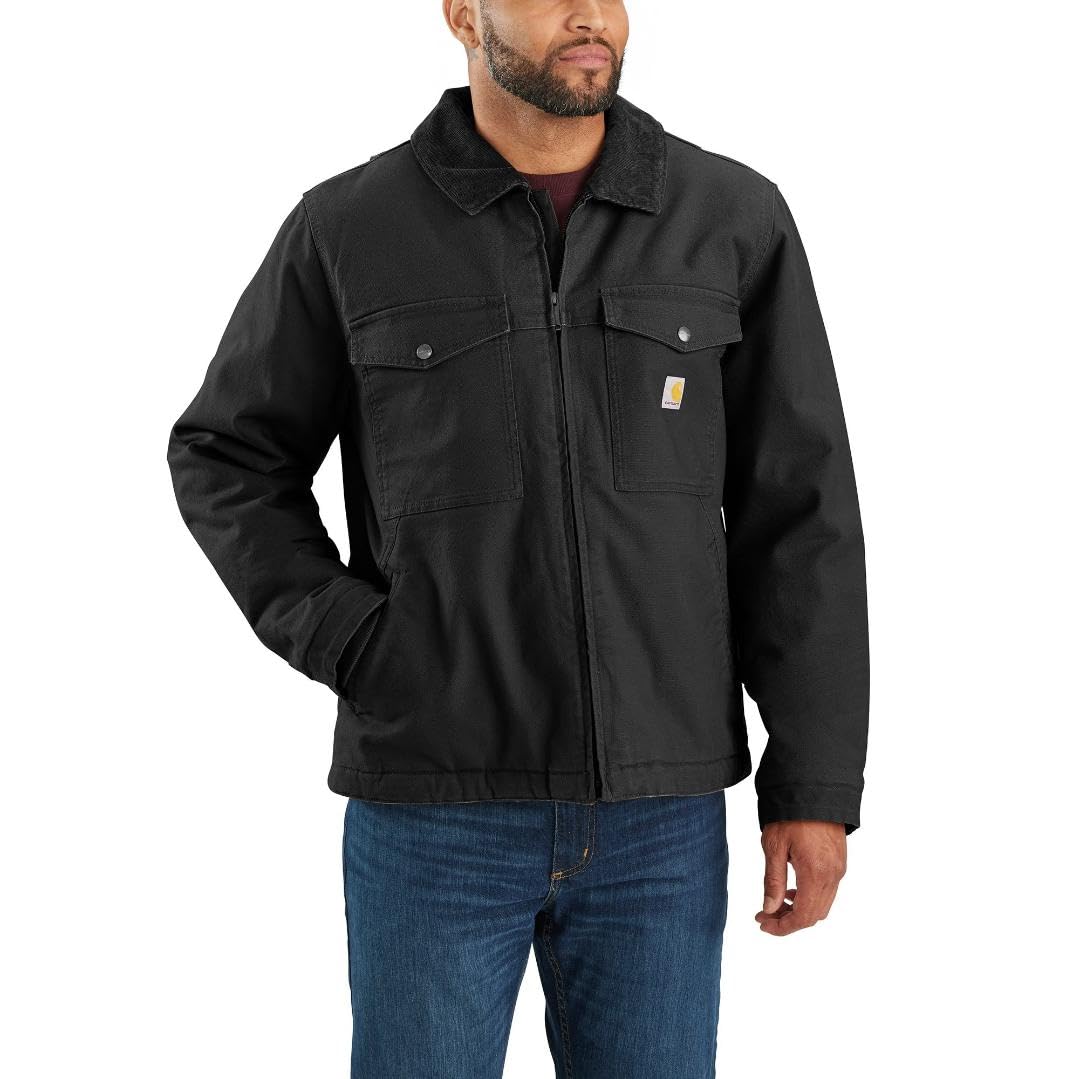
1. Carhartt 106432 Montana Jacket
Our pick — 4.5+★ from 200+ verified ratings; the strongest balance of quality and price.
Duck canvas that bends instead of binding when you reach across a truck bed.
This is the pick that treats XXL as an engineering problem, not a size chart entry. The shell is duck canvas with built-in flex — a stretch-woven cotton fabric that gives when you move instead of stiffening up — and the cut is deliberately relaxed so a hoodie fits underneath without crushing your arms. If your winter jacket has ever fought you while you loaded feed sacks or swung a chainsaw, this is the geometry that fixes it.
Build quality is the whole story here, and it is the reason buyers keep coming back: over 40 of them single out the construction, more than any other subject, with fit not far behind. Six pockets earn their own attention, and the hand-warmer pair sits low enough on the body that you can actually bury your hands without twisting your wrists. That low placement sounds trivial until you spend an hour in the cold with your hands jammed in pockets that are stitched at the wrong height.
The trade-off is honest and physical. This is a workwear shell at 2.76 pounds, so it feels substantial on your shoulders and takes more room in a coat closet than a light puffer. Its relaxed cut is a gift when you layer and a liability nobody warns you about when you do not — if you plan to wear this over a t-shirt only, the same roominess that helps you in a hoodie will let cold air drift through the body. It suits a straight-down-the-middle working fit rather than a slim fashion silhouette.
Where the Montana Wins You Over
- Flexible duck canvas moves with your shoulders instead of riding up when you reach
- Relaxed fit leaves real room for a sweater underneath
- Six pockets, including low-set hand warmers you can actually use
- Built for hunting and farm work, so it holds up to brush and fence rails
Where It Will Make You Think Twice
- Hefty at 2.76 pounds on the hanger — you feel it when you put it on
- Roomy cut leaves dead air if you wear it alone with no mid-layer
- Canvas-forward style reads workwear, not city fashion
Worth buying for: anyone in the cold for work or chores who wants the jacket to move with them, not against them.
Pass it over if: you need something you can roll up and stuff in a bag — this has real bulk to it.
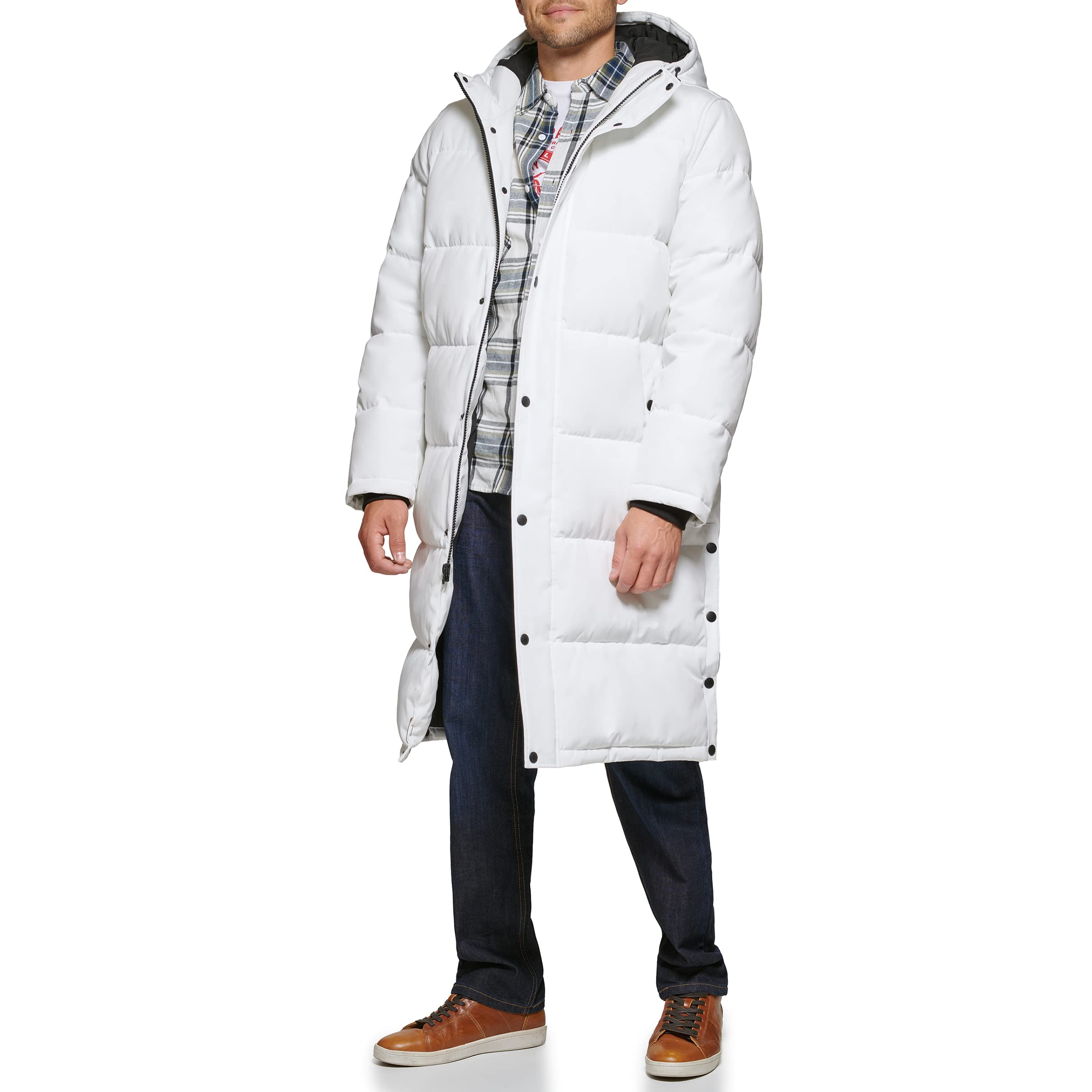
2. Levi’s Men’s Arctic Cloth Extra Long Parka Jacket
Coverage that reaches past your knees, so the cold never finds your waistline.
If your problem with winter jackets is that the wind slides straight up your hem, this is the answer. The Arctic Cloth shell repels water while the faux down insulation traps body heat, and the long silhouette runs from neck to well past the hips. Add an attached hood and a center-front zipper with a snap-button overlay, and you have a parka that seals shut against a raw wind instead of peeling open at the first gust.
The scale of this coat is your first decision. It carries 5 pounds and ships in a box measuring 27 x 13 x 10 inches — against the 13.23 x 12.87 x 4.02-inch package of the Carhartt Montana, that is roughly double the box in its longest dimension. In practice, that means this is not a jacket you fold into a duffel; it hangs on a hook and stays there until you need a wall against the weather.
Construction earns the most credit here over any other consideration, with warmth right behind it, and the “looks like a thousand-dollar coat, costs a fraction” reaction comes up again and again. The sizing note is the one honest wrinkle: this runs large for a big share of buyers, so at XXL you may find yourself stepping down rather than up. Treat that as a layering question — if you want a heavy sweater underneath, hold your normal size.
The long-and-heavy reality: knee-length coverage and faux down warmth make this the coat for standing in a freezing parking lot, not for walking fast.
The one snag: the fit runs on the generous side, and the weight means it lives on a hanger, not in a backpack.
This is your coat: if you want a long parka that shields your waist and thighs from a cutting wind.
Reconsider if: you want something light enough to stow — at 5 pounds it is built to stay on a hook.
3. Orolay Women’s Thickened Down Jacket
The oversized puffer that made a name for itself on winter streets and social feeds.
Orolay’s 092 thickened down coat has the widest fan base of anything on this list, and the reason is the silhouette: it is cut oversized, so an XXL size reads as genuinely roomy rather than merely larger. Six big pockets and zippers give you somewhere to put a phone, keys, and gloves. A fleece-lined hood and an adjustable hem let you cinch out the two spots where cold air creeps in most easily. It comes in at 2.73 pounds.
What owners describe is comfort you can feel the moment you put it on — one customer compared pulling it up to a big hug — and it looks exactly like the photos when it arrives, which is rarer than it should be at this size. This is the pick that proves an oversized puffer can still look sharp.
The honest note is the arms. The body runs roomy, but the sleeves can feel tight on a fuller arm, and the overall sizing has a reputation for running off from what you expect. Order with your arm measurement in mind as much as your chest. If you have broad shoulders or athletic arms, confirm your sleeve fit before you commit, because the body will have room to spare.
The oversized advantage: a true roomy cut, fleece-lined hood, and six pockets make it an easy grab-and-go for city winters.
The sleeve caution: the arms can pull tight on a bigger upper body even when the torso has plenty of space.
Made for: women who want a warm, oversize puffer with real pocket space and a face-framing hood.
Check your arms first if: your sleeves are usually the tight spot in a coat.
4. Columbia Men’s Tipton Peak III Insulated Jacket

A rain shell that also keeps you warm, built for the slushy middle of winter.
Most winter jackets make you choose between warmth and staying dry. The Tipton Peak III refuses the question. A waterproof, breathable shell keeps rain out while synthetic insulation and thermal-reflective lining trap your heat — a reflective interior that sends your body warmth back to you instead of letting it escape. Extended and tall sizing is available, and the fit is regular.
Owners put it through slush season and report it holds up across roughly 15 to 50 Fahrenheit, which is the messy range where snow turns to rain and back again. The adjustable bungee cords on the hood let you snug it down in wind so it stays where you put it. Style and value both draw steady praise, and the overall verdict is that it is worth what you pay.
Two things to know before you order. First, the pockets divide opinions — some find them well placed, others do not, so try them if hand comfort is a priority. Second, the sizing is mixed, which for an XXL buyer means the label is a starting point, not a guarantee. Measure your chest and check the size chart against that number. The payoff is a waterproof shell that handles rain and wet snow, not just dry cold.
Rain-day reasoning: waterproof breathability plus synthetic fill means it works in wet snow and freezing rain, not just dry cold.
Order carefully: the sizing is inconsistent enough that you should confirm measurements, and the pockets are a love-it-or-not detail.
Grab it for: a commute or daily wear in a climate that serves up rain as often as snow.
Measure before you buy if: you are between sizes — reports on fit vary.
5. THE NORTH FACE Women’s Junction Insulated Jacket
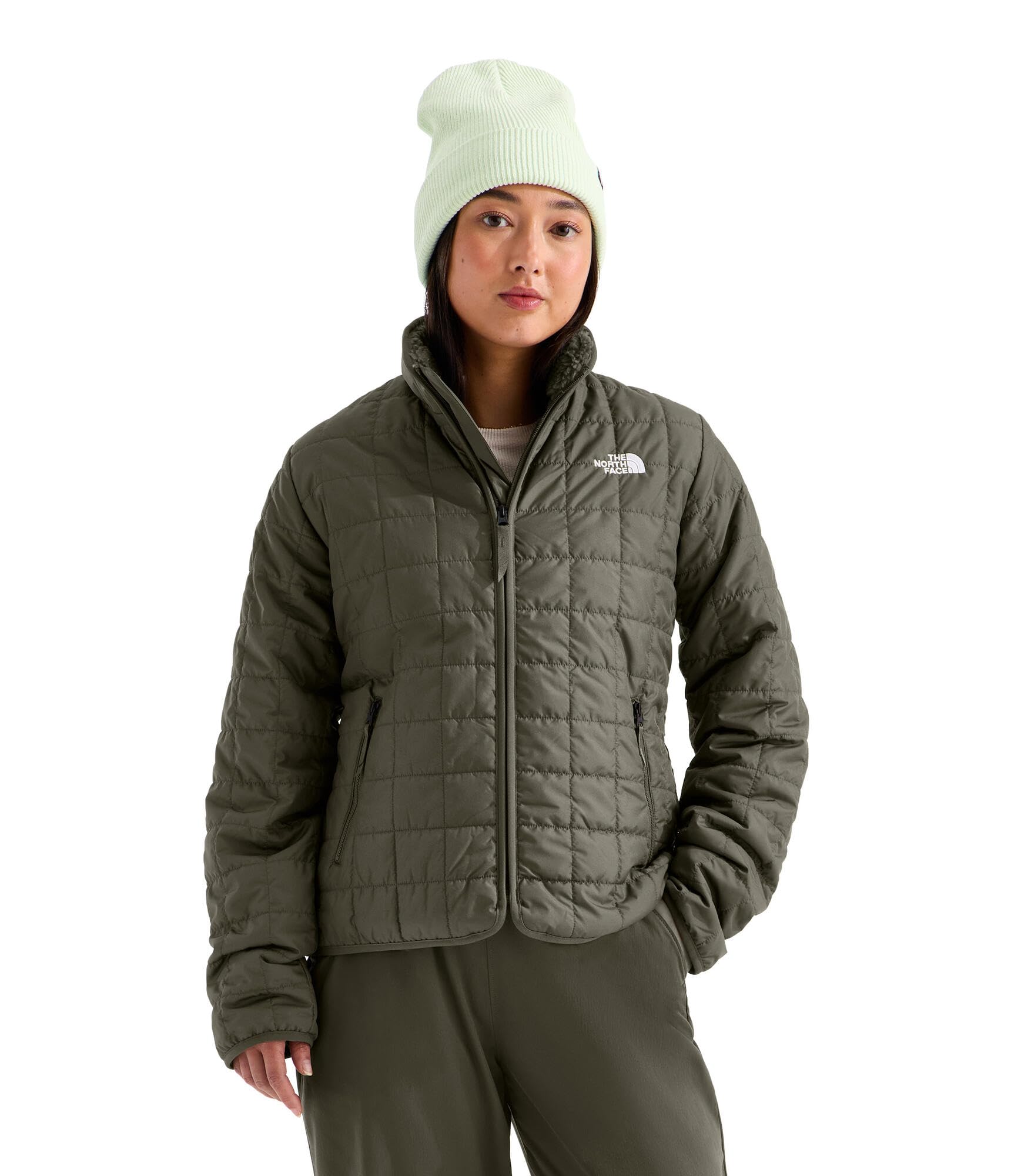
The thin insulated layer that turns a fall jacket into a winter jacket.
This one is for the XXL buyer who already has a heavier coat but needs something that works from fall into spring. It carries 100g of Heatseeker synthetic hollow-core insulation — a recycled fill where each fiber is a hollow tube that traps warm air — inside a 100% recycled polyester shell treated with a non-PFC durable water-repellent (DWR) finish, a coating that makes light moisture bead up instead of soaking in. An internal draft flap behind the zipper blocks gusts from slipping through the teeth.
What it gets right is the intersection of warm and light. It earns the top grade for build quality, with warmth close behind, and owners describe it as warm enough for snowy days and well-suited to late fall and early winter. A high-pile fleece lining inside the collar adds a soft, warm touch at the neck, and secure-zip hand pockets keep small essentials close. Stretch binding at the collar and cuffs tightens the gaps where cold sneaks in.
Fit is where you need to pay attention. A good share of buyers find the sleeves run long and find the jacket runs smaller than expected even though the brand calls it true to size. At XXL, treat the size chart as the authority. Layers easily under a parka during deepest winter, which is exactly how it is meant to be used — as the middle of a three-layer system rather than a stand-alone shield.
Layer-first thinking: at 100g of synthetic fill in a lightweight shell, it is designed to sit under a heavier coat or stand alone in milder weather.
Size with the chart: reports on fit and sleeve length vary, so lean on measurements rather than the label.
A natural fit for: someone who wants a warm, light layer for crisp days and a mid-layer beneath a heavier parka.
Not your pick if: you need one jacket to handle deep-winter wind and wet on its own.
6. Columbia Women’s Suttle Mountain Long Insulated Jacket
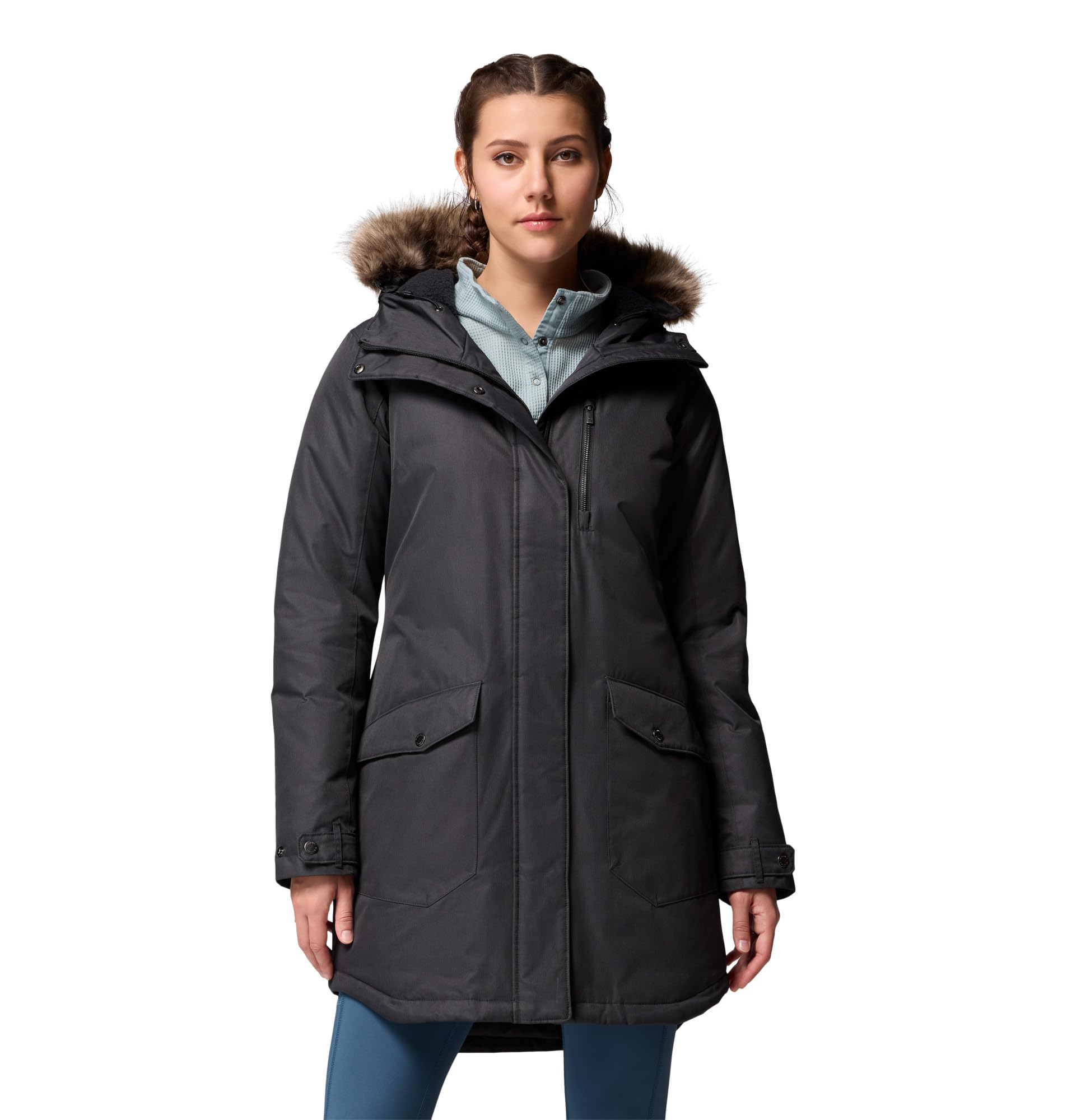
A long women’s jacket that keeps the wind off your back and the snow off your legs.
The defining feature of the Suttle Mountain is its length. Columbia cut it long to cover more of the body, which is where a winter coat either delivers or leaves your thighs exposed to a cold wind. It is insulated and designed to keep you warm and dry, and the look earns favorable word of mouth — often described as good-looking enough for a commute as well as a trail.
Build quality is the standout, with warmth close behind, and both get the fullest praise of anything in this jacket’s write-up. There is a real reason the Suttle Mountain is worth a look at XXL: the long cut adds weight and bulk, which is exactly what you want from a coat you wear over a work outfit and forget about.
The one thing to manage is fit. Reports on sizing split — some find it true to size, others find the sleeves tight and the whole jacket running small. Length also divides opinion, since a longer coat suits some body proportions better than others. At XXL, order to your measurements and give yourself the extra room; a long, insulated coat is a poor place to guess at size.
The long advantage: warmth and dry coverage that reaches further down the body than a standard jacket.
Order by the numbers: tight sleeves and small sizing are the recurring note, so measure rather than assume.
Choose this one for: a long women’s jacket that blocks wind and snow down to the thighs.
Size up if needed: sleeve tightness is the usual complaint, and the chart is your best guide.
7. Carhartt Men’s Yukon Extremes Loose Fit Insulated Coat

Built like a barn wall, with insulation and a shell that shrugs off a real winter.
The numbers tell you what kind of coat this is. The shell is a 6.5-ounce, 500-denier Cordura nylon — “denier” being the thickness of the yarn, so a 500 counts as heavy-duty fabric that resists snags and abrasion. Inside sits 150g of 3M Thinsulate insulation, and on the outside 3M Scotchlite Carbon Black reflective taping on the center back and front pockets makes you visible in low light. Wind Fighter technology handles the gusts, and a Rain Defender durable water repellent finish keeps light rain beaded up and rolling off.
The details are aimed at people who work outdoors. Triple-stitched main seams, rib-knit storm cuffs to seal your wrists, a droptail hem that covers your lower back when you bend, and a corduroy-trimmed collar with hood snaps. Pockets are everywhere: a left-chest map pocket with a zipper, two lower-front snap pockets, a right-chest snap pocket, plus inner zip and hook-and-loop pockets.
The loose fit gives you the layering room an XXL body needs, and the warmth is the kind that holds up through a long shift. The genuine catch is the zipper and the armpits: the zipper is the most-reported weak point here, so treat it carefully and do not force it, and the armpit area runs snug on some wearers even with the loose body. Those are the two places to check before you commit.
What the Yukon Gets Right
- 500-denier Cordura shell and 150g Thinsulate built for real cold-weather labor
- Wind Fighter plus Rain Defender keep out gusts and light rain
- Pockets and reflective taping everywhere you need them outdoors
- Loose fit leaves room for a heavy layer underneath
The Honest Trade-Offs
- The zipper is the most-cited weak point — do not force it
- The armpit area can run snug on some wearers
- Heavy-duty fabric means a heavier, stiffer coat to break in
Reach for the Yukon: if you are outdoors for a living or a long shift and need a shell that handles wind, light rain, and brush.
Look past it if: you want an easy everyday coat — the heavy fabric and zipper demand a little care.
8. THE NORTH FACE Men’s McMurdo Parka
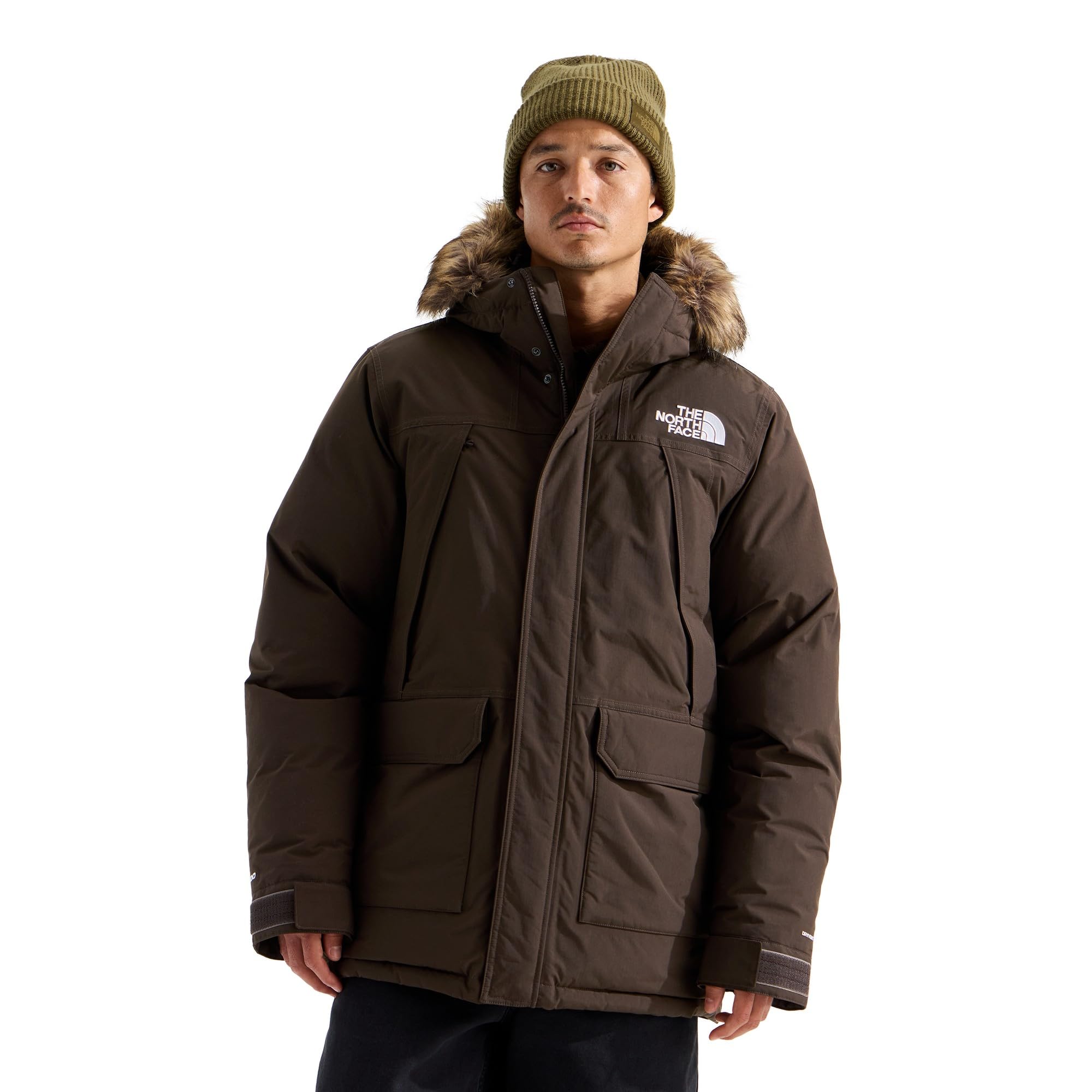
Named after an Antarctic research station, it is the most weather-protected parka here.
If you want the most weather protection on this list, this is it. A seam-sealed DRYVENT 2L shell — a two-layer waterproof fabric whose seams are taped so water cannot seep through the stitching — handles rain and snow, while a non-PFC durable water-repellent finish adds a second line of defense. Inside sits recycled 600 fill down, which offers loft and warmth at a low weight. Windproofing is built into the shell, so a cold gale does not cut through.
The parka-length cut covers well past the hips, and the relaxed silhouette leaves room for mid-layers and lightweight insulated pieces. A two-way center zip with a stormflap seals the front, and an adjustable faux-fur-trimmed hood adds warmth at the neck and head. Storage comes in the form of concealed-zip alpine chest pockets, dual-entry hand pockets, and an internal zip chest pocket. Hook-and-loop cuff tabs let you dial the sleeves down over gloves.
The quality and warmth are what get noticed most, with comfort and fit close behind. The caveat is straightforward: this is the top of the range, so value is the split opinion — some see it as worth the money, others find it steep. If your budget can absorb it and your winters are severe, the protection is in a different class from the lighter picks above. If you mostly walk a parking lot, a more affordable jacket will serve you just as well.
The case for the parka: seam-sealed waterproofing, windproofing, and 600 fill down make this the most protected coat here.
What to weigh: the top-tier cost draws mixed feelings on value, so buy it if you face serious winters and want the extra protection.
Buy it if: you face deep cold, real precipitation, and want the most protective coat on this list.
Consider a lighter jacket if: your winters are mild or your budget is tight — the protection is real, but so is the cost.
Know the Specs
Fill Power and Insulation Grams
Down fill power rates how much volume an ounce of down traps, so a higher number means more warmth for its weight. Synthetic insulation is listed in grams — 100g, 150g — and higher grams mean more warmth but more bulk. An XXL jacket needs enough insulation to warm a bigger body surface, which is why a heavier synthetic or a thick down fill shows up in the warmest picks here.
Denier and DWR on the Shell
Denier is the thickness of the fabric yarn; a 500-denier Cordura is tough and abrasion-resistant, while a plain-weave polyester is lighter and smoother. DWR stands for durable water-repellent, a coating that makes water bead and roll off. Neither makes a jacket fully waterproof on its own — for that you want a seam-sealed shell like the DRYVENT construction.
Relaxed, Loose, and Regular Fit
Regular fit sits closer to the body, relaxed fit leaves some room, and loose fit gives the most space for layering. On an XXL frame, a looser cut prevents the shoulder and armpit pinch that ruins a jacket’s warmth. The trade-off is that extra room can let cold air circulate if you do not layer underneath.
Stormflaps, Draft Flaps, and Cuffs
A draft flap sits behind the zipper, a stormflap covers it from the outside, and rib-knit or stretch-binding cuffs seal the wrist. These small closures close the gaps a larger jacket can open up. Look for all three if you face wind, and treat cuff geometry as a warmth feature rather than a style detail.
Common Questions
If I normally wear XXL, should I size up again in a winter jacket?
Does an XXL down jacket lose warmth when it gets wet?
How do I stop cold air leaking through the armpits and cuffs on a big winter coat?
Is a longer parka warmer for an XXL frame than a waist-length jacket?
What does denier actually measure on a winter jacket shell?
Can I wear a hooded insulated jacket over a hoodie in XXL?
How should I care for a down-filled or insulated winter jacket?
Which pick handles wind and rain best in the middle of winter?
The Bottom Line
For most people after the xxl winter jacket that just works, the Carhartt Montana is the pick — a relaxed big-body fit, six pockets, and a flexible duck-canvas build that handles real work in the cold. If you want a lighter technical shell that still warms up fast, the Columbia Voodoo Falls 590 Turbodown gives you that without the bulk. And for the deepest, wettest cold you expect to face, the McMurdo Parka carries the most protection of any pick here. Whichever one you choose, order to your chest measurement — the right size in a winter coat is a warmth decision, not a vanity one.
How we choose
We do not accept paid placement. Every pick is matched to a real buyer and a real use-case; we do not hands-on test units.
Sources
Specifications: manufacturer listings and product documentation. Review insights: verified customer reviews, as of November 2026. Pricing: not shown on this page (it changes often); check the current price via the retailer link.
As an Amazon Associate, Tactical Gear Guy earns from qualifying purchases. This does not affect which products we feature.