Specs are compiled from manufacturer listings and verified buyer reviews and can change over time — please confirm the key details on the product page before buying.
If your TV only has the old red-and-white RCA jacks on the back, most soundbars sold today simply won’t talk to it. The fix is a bar that ships with an RCA cable in the box — and every pick below does exactly that. Start with the Bluedee 16-inch bar: the RCA cable comes included, it fits under a small TV, and it has the strongest owner feedback of the group at 4.0+ stars across 2,400+ ratings.
This guide is built by comparing the manufacturers’ published specifications and the patterns across verified customer reviews, so you get each pick’s real strengths and trade-offs instead of marketing spin.
Below you’ll find how each bar handles an analog RCA hookup, what the cable bundle actually contains, and which one suits a bedroom, a living room, or a hard-of-hearing viewer. Every option here has a genuine RCA path, so you never end up with a bar that can’t plug into your set — the real question is which rca input soundbar matches your room and your ears.
Top Picks

How To Choose The Best RCA Input Soundbar
The RCA jack is the oldest audio connection still sitting on the back of most TVs, and it is the one that trips people up. It carries an analog stereo signal over two plugs — white for the left channel, red for the right. A soundbar that lists RCA input can take that signal directly. A soundbar that only lists optical or HDMI cannot, no matter how good it sounds.
Check the cable in the box, not just the port list
Plenty of bars advertise RCA compatibility but ship only with an optical cable. You then have to buy an adapter yourself. Look for the phrase “RCA cable included” in the box contents, because that is the difference between a five-minute setup and a trip to the store. Every pick on this list ships with a working RCA path.
Match the wattage to the room, not to the number
Wattage tells you how much power the amplifier pushes, and it matters most in a big room with a lot of soft furniture soaking up sound. A 50W bar is fine for a bedroom or a kitchen set. A 60W bar gives you more headroom in a living room. Anything far beyond that is usually wasted on a TV that sits six feet from the couch.
Decide if you need dialogue help
If the reason you are shopping is that you cannot make out what people are saying, a plain bass-boost bar will not fix it. Look for a bar with a dedicated voice-boost control, which lifts the speech frequencies above the background music and effects. That is a different feature from an EQ mode labelled “news.”
Side-by-Side Comparison
| Model | Best For | Power | RCA Path | Width | Amazon |
|---|---|---|---|---|---|
| Bluedee 16-inch Sound Bar★ Best Overall | Most living rooms | 50 W | Aux-to-RCA cable included | 16.2 in | Amazon |
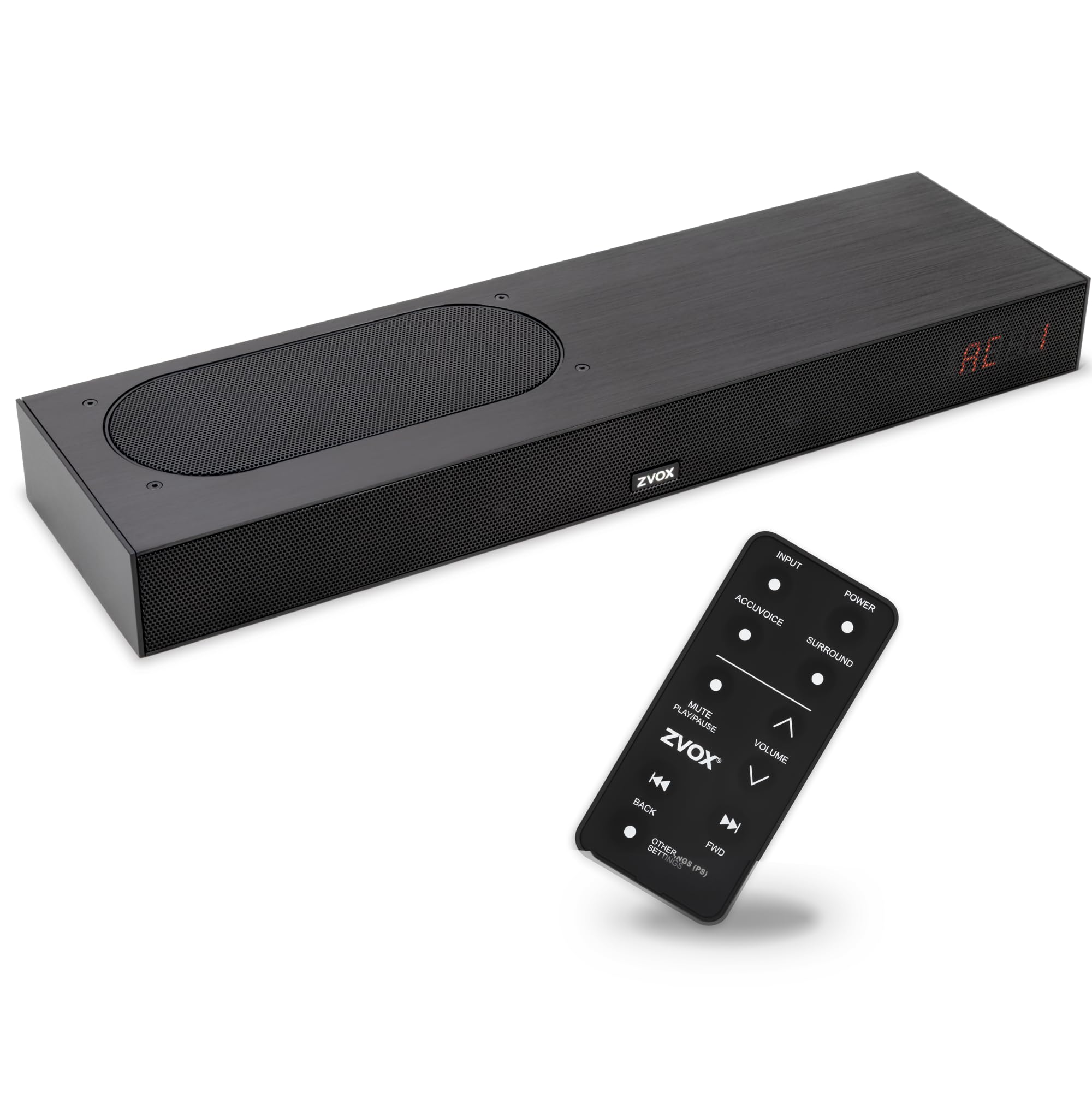
| ZVOX AccuVoice AV835Dialogue Specialist | Hard-to-hear dialogue | — | Mini RCA analog cable included | 17.6 in | Amazon |
| Rythflo 16-inch 60W Bar | Gaming and mood lighting | 60 W | Aux-to-RCA cable included | 16.2 in | Amazon |
| iLive 37-Inch Bluetooth Soundbar | Wide TV stands and big rooms | — | RCA stereo audio inputs | 37 in | Amazon |
| Pyle PSBV30BT | Inputs on inputs | — | Coaxial and RCA cables listed | 31.5 in | Amazon |
Detailed Reviews
1. Sound Bars for TV 16-inch
Our pick — 4.0+★ from 2,000+ verified ratings; the strongest balance of quality and price.
The bar that hands you every cable you need, including the RCA lead your old TV actually wants.
You get an RCA cable in the box from day one, so this Bluedee bar plugs into an older TV without a trip to the store. That, plus 50W of power through two bass radiator units (drivers that add low-end punch), is why it takes the top slot. The speaker measures 16.2 inches wide — genuinely small next to the 31.5-inch Pyle and the 37-inch iLive further down — so it tucks under a 32- to 43-inch set without hanging off the edges of a narrow TV stand.
Owners praise its clear dialogue more than any other trait. Buyers report voices come through clear and the low end sounds rich rather than boomy — a hard balance at 50W. Setup gets almost no friction: 3 EQ modes (sound presets) run on DSP (digital signal processing — a chip that reshapes the sound for movies, music, or news), plus four buttons on the side of the cabinet and a remote for when you are already on the couch. Bluetooth reaches 10 meters, so you can pair a phone and play music without touching the TV.
The catch is the same one that follows every compact bar: 50W fills a bedroom or a modest living room comfortably, but it will not pressurise a large open-plan space the way a bar with a separate subwoofer would. Also note that the RCA route here runs through a 3.5mm Aux-to-RCA adapter cable (a short lead that converts the small headphone-style plug to the red-and-white jacks) rather than two dedicated RCA jacks on the back. The adapter is included, but if you move the bar around, keep track of that short lead.
What earns it the top spot
- Optical, 3.5mm Aux, and Aux-to-RCA cables all included, plus a wall mounting kit and template
- 3 EQ modes for movie, music, and news listening
- 16.2-inch cabinet fits under a small or mid-size TV
- Remote control plus four on-bar buttons for quick volume changes
Where it stops short
- 50W goes only so far in a big open room
- RCA hookup depends on the included adapter cable, so it needs looking after
The sensible default: Buy this if your TV has red-and-white jacks and you want a bar that arrives with every cable sorted and fits a compact stand.
Look further up the list: If your living room is large or your main complaint is mumbled speech rather than thin sound.
2. ZVOX AccuVoice AV835 Soundbar
Twenty separate voice-boost settings, for the viewer who has given up on rewind.
Twenty is the number that defines this bar. AccuVoice gives you twenty levels of voice boost, each one pulling speech further forward from the background music and effects. That is not the same thing as a “news” EQ preset — it is a dedicated control with a range, so you can dial in exactly how much help you need and no more. If your reason for shopping is that you keep reaching for the rewind button during quiet dialogue scenes, this is the bar built for that.
The cabinet is 17.6 inches wide and 1.9 inches high, which slides under or in front of most TVs 32 inches and larger — a genuinely shallow box. Two built-in woofers and a dedicated amplifier produce the low end, and PhaseCue virtual surround spreads the sound around the room from that one small cabinet. Output Leveling is the sleeper feature: it clamps down on the volume spikes when a commercial break hits, so you are not diving for the remote every twelve minutes.
There is a wired 3.5mm stereo line out on the back, which lets you plug in headphones, a wireless headphone transmitter, or an external powered subwoofer. Headphone Mode mutes the bar itself so you can listen privately while the room stays quiet. The mini RCA analog cable is in the box, alongside HDMI-compatible and optical cables. The honest trade-off is cost — this is the priciest pick here, and the value question is the one point where opinions split. If you mainly want loud bass for movies, a bass-focused bar delivers more thump for less. If you want to follow the plot without straining, the extra spend goes somewhere you can actually hear.
Built for tired ears: Twenty voice-boost steps, Output Leveling to tame commercials, and a 1.9-inch-tall aluminum cabinet that fits almost anywhere.
The honest trade-off: Highest cost of the group, and the bass-forward bars further down will out-thump it for movie night.
Reach for this if: Speech is the struggle — quiet dialogue, accents, whispered scenes — and you want one control that fixes it.
Spend elsewhere if: Your priority is room-shaking bass rather than clarity.
3. Rythflo Sound Bar 16′

Sixty watts, five lighting modes, and a cabinet that throws colour across the wall behind it.
You get more volume headroom for a projector setup or a PC desk where the bar sits further from your ears, thanks to 60W against the Bluedee’s 50W. That is the only real power gap in this group — both bars run two bass radiator units from the same 16.2-inch-wide, 2.8-inch-tall cabinet shape. Depth is worth knowing about too: at 3.9 inches front to back, this bar needs a slightly deeper shelf than the 2.4-inch-deep Pyle, which matters if you are tucking it into a media unit with a back panel.
The lighting is what people notice first. Five dynamic modes — Colorful, Rhythm, Flowing, Breathing and Layered — make the sound visible, and they can be switched off entirely when you just want a black bar under the screen. Bass extension and the price-to-performance read are the two things the review pages keep coming back to, and the compact footprint gets a warm reception in smaller rooms. Three EQ modes on DSP cover movie, music and news, and the connection set is the full four: Bluetooth, optical, 3.5mm Aux, and the 3.5mm Aux-to-RCA cable in the box.
Here is where you should think carefully. Performance feedback is genuinely split — some units work exactly as advertised, and a few arrive with problems that leave the bar dead. That is a real quality-control risk, not a nitpick, and it is why this pick sits at 3.9 against the Bluedee’s 4.3 despite the bigger wattage number. Buy from a seller with a straightforward return path and you are covered either way.
The lighting argument: Five modes that pulse with the audio, plus a switch-off option for when the novelty wears off — a genuine point of difference from every other bar here.
What to weigh: The 3.5+ rating reflects a real spread in unit-to-unit reliability, so treat the return window as part of the purchase.
Pick this one for: A games room or PC desk where the lights are half the fun and the 60W fills the space.
Think twice if: You want the safest possible unit from the start and would rather not deal with a return.
4. iLive 37-Inch Bluetooth Soundbar
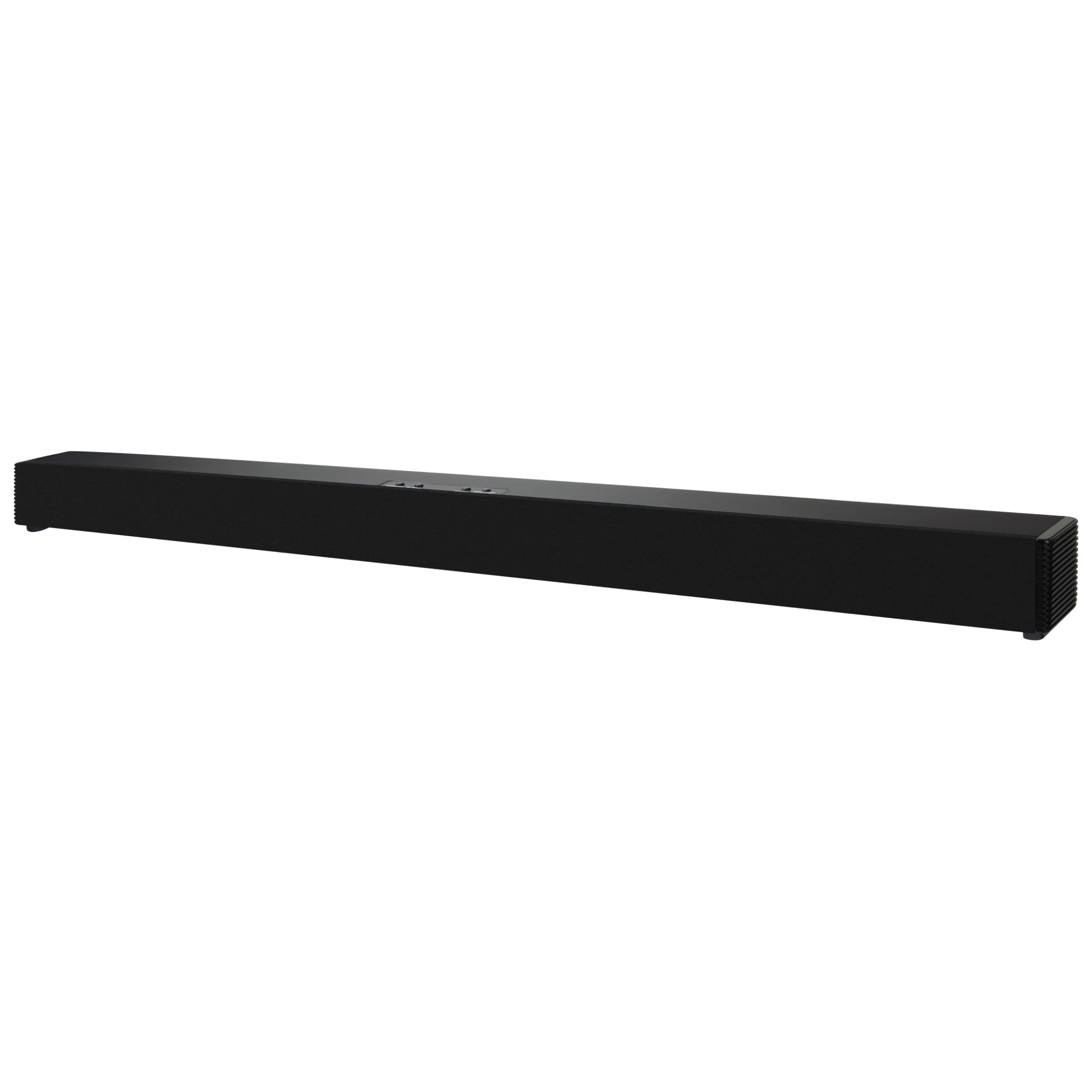
A 37-inch wooden cabinet that sits under a big TV and reaches your phone from across the house.
Thirty-seven inches of speaker makes a visual statement under a 55-inch or larger set, and it is a very different proposition from the 16.2-inch bars above. This one is built around a wooden speaker enclosure with two channel stereo and built-in stereo speakers, which is the traditional way to give a bar a warmer, less plastic tone. It also has genuine RCA stereo audio inputs on the back — real jacks, not just an adapter cable — alongside 3.5mm Aux and optical digital audio inputs.
The Bluetooth figure is the biggest in this lineup at 60 feet, well beyond the 32.8 feet the Pyle manages. In practice that means you can leave your phone in the kitchen and still control the music from the garden. There is automatic device reconnect, so a paired phone jumps back on without a menu crawl, and voice prompts announce what the bar is doing — source changes and pairing are spoken aloud. Every cable you need ships in the box: optical audio cable, remote control, and the AC/DC power adapter, plus wall mount hardware and instructions.
What you are trading for that width is placement flexibility. A 37-inch bar will not sit neatly under a 32-inch TV, and it needs a wide stand or a wall mount with room to spare.
Why the wide body pays off
- Real RCA stereo jacks on the cabinet, not an adapter-only path
- 60-foot Bluetooth range with automatic reconnect
- Wooden enclosure for a warmer stereo tone
- Voice prompts confirm source and pairing out loud
Measure before you order
- 37 inches needs a wide stand or wall space
- Overkill for a bedroom set
Made for: A living room with a big TV and a stand wide enough to hold a 37-inch cabinet, where real RCA jacks are non-negotiable.
Not the one for: A compact bedroom setup or a narrow shelf.
5. Pyle PSBV30BT TV Speaker

Four 2-inch drivers, HDMI ARC, coaxial, optical, USB — and RCA cables in the box.
Four 2-inch full-range drivers with Y35 ferrite magnets (magnet material that helps the speaker play louder with less distortion) is the spec that sets this bar apart — most compact bars run two radiators and call it a day. Pyle pairs those drivers with a Class D stereo power amplifier (a small, efficient amp chip) and a frequency response reaching up to 20kHz (the top of human hearing), so high notes stay crisp. The cabinet measures 31.5 inches wide and 2.4 inches tall and weighs 4.38 lbs, so it is wider than the Bluedee and Rythflo bars but notably shallower front to back at 2.4 inches against the Rythflo’s 3.9 inches — easier to slide into a shallow media unit.
The input list is the longest here by a distance: USB, TF card, HDMI ARC, 3.5mm auxiliary, optical, coaxial, and Bluetooth 5.0, with coaxial and RCA cables supplied. If you have a mix of old and new gear — a games console on HDMI, a turntable preamp on RCA, a phone on Bluetooth — this is the one bar that swallows all of them. Bluetooth 5.0 gives you a 32.8-foot wireless range and works with iPhones, iPads and Android phones alike.
Now the honest part. The sound is a matter of taste rather than a slam dunk — some listeners find it acceptable, and others find it dim, which is why the feedback lands in mixed territory. Reliability gets the same split treatment, with reports of units that work intermittently. The low rating count of 46 also means less evidence to go on than the Bluedee’s 2,400+ ratings. That said, at this price point the input flexibility is genuinely hard to match, and a 2.0 channel design tuned for speech does make dialogue reasonably understandable.
The connection case: HDMI ARC, coaxial, optical, USB, TF card, Aux, RCA and Bluetooth 5.0 in one 31.5-inch bar — nothing else here covers that many sources.
Read the fine print: Sound quality and reliability both split opinion, and the review base is thinner than the other picks, so go in with realistic expectations.
The right fit: A setup with several devices of different ages that all need to feed one bar, where input count matters more than maximum punch.
Better served elsewhere: Buyers who want broad owner consensus behind the sound rather than an unusual port selection.
Know the Specs
Watts and what they mean in a room
Wattage is the power the built-in amplifier can deliver, and it decides how loud the bar goes before the sound starts to strain. A 50W bar like the Bluedee handles a bedroom or a normal living room without complaint. The 60W Rythflo gives you more headroom if the bar sits far from where you sit. Neither number is a quality score — a well-tuned lower-wattage bar often sounds cleaner than a harsh higher-wattage one.
RCA versus optical versus HDMI ARC
RCA carries analog stereo over two plugs, white and red, and it is the fallback that still works on older TVs. Optical sends a digital signal over a single cable and avoids analog hiss, but only newer sets have the port. HDMI ARC lets the TV control the bar’s volume with its own remote over the HDMI cable. A bar with all three, like the Pyle, gives you a path for whatever TV you end up with.
Bass radiators and low end
A bass radiator is a passive driver that moves with the air pressure inside the cabinet to reinforce low frequencies without needing its own power. Two radiators in a compact bar add weight to explosions and music without a separate subwoofer box on the floor. That is why bars this small can sound bigger than their cabinet suggests.
Dialogue clarity controls
An EQ mode labelled “news” typically just tilts the overall balance. A dedicated voice-boost control, like the twenty settings on the ZVOX, lifts the speech band specifically and leaves the rest of the mix roughly intact. If hearing dialogue is the actual problem, that distinction matters more than any other feature on the box.
Common Questions
Will an RCA soundbar work with a TV that only has red and white jacks?
Do I need an adapter cable to use RCA with a soundbar?
Is optical better than RCA for a soundbar?
How loud is a 50W soundbar compared with a 60W one?
Can I wall mount a soundbar with RCA cables connected?
Will a soundbar make TV dialogue easier to understand?
Does the RCA connection carry surround sound?
How wide a soundbar should I buy for my TV?
Can a soundbar connect to my phone as well as my TV?
Do these soundbars come with a remote and all the cables?
The Bottom Line
For most people replacing a TV’s thin built-in speakers, the rca input soundbar that makes the most sense is the Bluedee 16-inch bar — it ships with the RCA adapter, fits a compact stand at 16.2 inches wide, and carries the strongest reputation of the group at 4.0+ stars across 2,400+ ratings. If following dialogue is the whole reason you are shopping, spend up to the ZVOX AV835 and its twenty voice-boost levels, because no bass boost fixes mumbling. And if you have a games room, a wide stand, or a stack of mismatched devices, the Rythflo 60W bar, the iLive 37-inch, and the Pyle PSBV30BT each solve a problem the others do not — pick the one whose port list matches what you actually own.
How we choose
We do not accept paid placement. Every pick is matched to a real buyer and a real use-case; we do not hands-on test units.
Sources
Specifications: manufacturer listings and product documentation. Review insights: verified customer reviews, as of November 2026. Pricing: not shown on this page (it changes often); check the current price via the retailer link.
As an Amazon Associate, Tactical Gear Guy earns from qualifying purchases. This does not affect which products we feature.