Specs are compiled from manufacturer listings and verified buyer reviews and can change over time — please confirm the key details on the product page before buying.
You want your parent to keep living in their own home, and you also want to stop worrying every time the phone rings at an odd hour. Personal alert systems exist for exactly that gap — a wearable button that reaches help when a fall or a sudden emergency leaves someone unable to dial a phone. The short answer: choose by who answers the call — a monitoring center, family, or 911 — before comparing pendant size.
This guide is built by comparing the manufacturers’ published specifications and the patterns across verified customer reviews, so you get each pick’s real strengths and trade-offs instead of marketing spin.
Some pendants dial a monitoring center, some ring family directly, and some call 911 with no subscription at all. The monthly-or-free decision shapes your whole purchase, so the picks below are grouped by the kind of help you want on the other end. Here are the top personal alert systems for elderly independence.
Top Picks

How To Choose The Best Personal Alert Systems for Elderly Independence
The single decision that matters most is who answers when the button gets pressed. Everything else — battery days, waterproofing, GPS — is there to make sure that call actually goes through. Get the answering route right first, then worry about the hardware.
Monitoring center versus family phone versus 911
A monitoring subscription routes the alarm to a trained response center that assesses the situation and contacts emergency services or family. The 321 Alert Mini X3 and the ADT Medical Alert Plus work this way, both requiring a monthly service. A family dialer skips the center and calls your saved contacts directly, which the Seculife pendant does. A direct-911 device goes straight to a local 911 operator with no intermediary and no subscription, like the SmartGo 911 and the SkyAngel911FD.
Fall detection is not the same as a button press
Fall detection uses motion sensing to trigger a call automatically after a hard impact, without the wearer touching anything. That matters most in a bathroom or on stairs, where someone may not be able to reach a pendant after landing. The catch: it responds to the impact, so a slow slide to the floor may not register. Never treat it as a replacement for pressing the button.
Cellular versus landline
A cellular pendant carries its own SIM (a chip that connects to mobile networks), so it works away from the house wherever there is signal. A landline device plugs into an existing phone line and only protects the home. If your parent still has a landline and rarely leaves, a landline unit is simple. If they walk the dog or garden out back, pay for the cellular coverage.
Side-by-Side Comparison
| Model | Best For | Help Routes To | Fall Detection | Battery Life | Amazon |
|---|---|---|---|---|---|
| 321 Alert Mini X3 Necklace★ Best Overall | Mobile coverage with monitoring | 24/7 monitoring center | Yes | 3-5 days | Amazon |
| ADT Medical Alert PlusLongest Range | In-home and yard coverage | ADT monitoring center | — | — | Amazon |
| Seculife PendantFamily Direct | Family alerts without a call center | Preselected family contacts | Yes | Up to 6 days | Amazon |
| Lively Mobile2 | Discreet everyday wear | Lively response agents | Optional add-on | — | Amazon |
| Senior HELP Dialer HD700 | No-fee home dialer | Up to 3 saved phone numbers | — | — | Amazon |
| SmartGo 911 Help Now | Direct 911 with no fees | Local 911 operator | — | — | Amazon |
| SkyAngel911FD | Waterproof keychain 911 dialer | 911 with 2-way voice | Yes | — | Amazon |
| Nomo Smart Care Kit | Whole-home WiFi coverage | Care Circle contacts | Yes | — | Amazon |
| Freedom Alert Landline Device | Landline homes, no fees | 911 or family, 2-way voice | — | 24-hour backup | Amazon |
Detailed Reviews
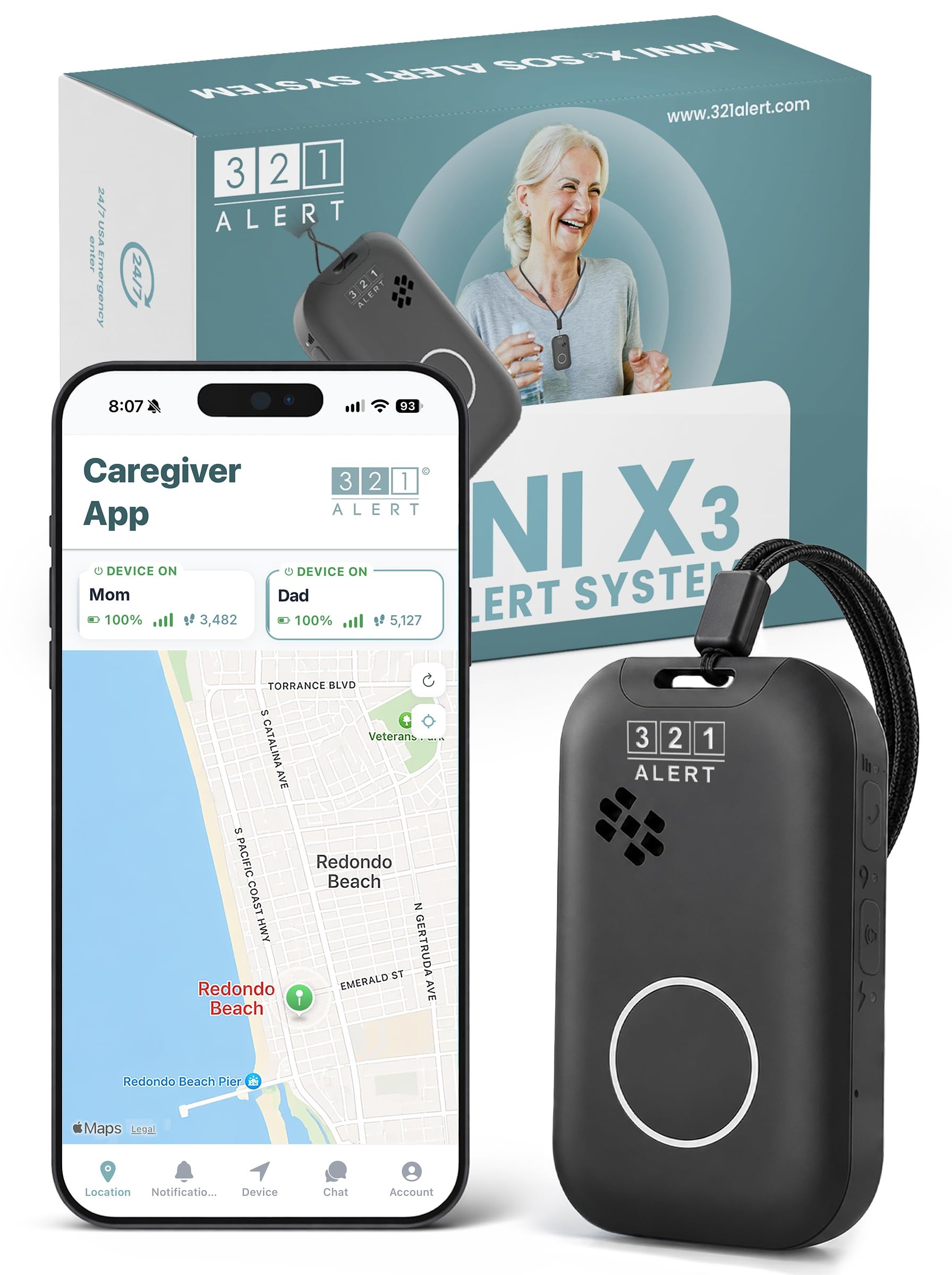
1. Medical Alert System 321 Alert Mini X3
Our pick — 4.5+★ from 70+ verified ratings; the strongest balance of quality and price.
A necklace that calls for help with no cell phone, no base station, and no SIM to install.
The one spec that decides your daily routine here is battery life: 3-5 days depending on how many features you keep switched on. That means a charging session a couple of times a week, not every night, and the included dock has its own help button built in for bedside use. Compare that with the Six-day run on the Seculife pendant below and you can see where the trade opens up.
What wins people over is that it simply works — the embedded SIM (a pre-installed chip that connects to mobile networks) means there is no card to insert and lose. GPS and 4G LTE then identify the wearer’s location so responders and family know where to go. It is water-resistant enough for showers and rain, and the body is shaped to be gripped and held by hands with arthritis, rather than the thin sliver design you see on some pendants.
Fall detection fires on a hard impact and connects to the 24/7 monitoring center even when nobody presses anything. That is the whole point for someone living alone. The honest catch is the ongoing service: the hardware needs a monthly monitoring plan to function, so this is a subscription device, not a one-time purchase. It is the strongest all-rounder here if you want 24/7 monitoring plus cellular mobility.
What earns it the top seat
- No SIM to install — the embedded chip connects from the start
- GPS plus 4G LTE for location anywhere there is cell signal
- Fall detection triggers a call without a button press
- Grippable shape built for arthritic hands
What to weigh before buying
- Requires a monthly monitoring subscription to work
- 3-5 days of battery between charges
- Water-resistant, not rated fully waterproof
Made for: a parent who leaves the house and needs a monitoring center monitoring them the whole time.
Think twice if: you want a one-time purchase with zero recurring cost — this one lives on a plan.
2. ADT Medical Alert Plus
Six hundred feet of roaming distance from the base — enough to reach the mailbox and back.
Range is the number to stare at here: up to 600ft of coverage from the system, so the wearer is protected inside the home and out in the yard. For a house with a garden, a long driveway, or a detached garage, that reach is the whole reason to pick this wristband over a standard pendant pinned to one room. The sealed wearable is waterproof, so a shower does not mean taking it off.
Two features do the most for confidence. The system watches your home’s temperature and sends an emergency alert to ADT if it climbs above 105° F or drops below 35° F — so a heating failure in an empty house won’t go unnoticed. During an incident, agents also give step-by-step updates to your emergency contacts, so the family knows what is happening instead of waiting in the dark. Monitoring runs on a monthly agreement billed quarterly, with free activation and no long-term contract.
Size up one catch before you buy: this is an in-home system that requires a monitoring plan, so it covers the property and yard but is not the pendant you take to the grocery store. Plan for the power, too — the wearable charges from a lithium-ion battery, so set a charging routine. If your parent’s world is mostly the house and the yard, the in-home coverage here is tough to top.
Yard-to-mailbox freedom: the 600ft range keeps protection live out in the garden, not just beside the base station.
The trade-off to plan: the monthly ADT monitoring agreement is required before the device works at all.
Reach for this if: the wearer stays home but loves the yard and driveway.
Look elsewhere if: you need coverage that travels around town — that is the cellular pendant’s job.
3. Seculife Medical Alert Pendant
Skip the call center — this pendant rings the people you already trust.
Here the help lands on family, not on a monitoring agent. When the SOS button is pressed, the pendant makes a two-way cellular call to preselected emergency contacts, and the auto-answer speakerphone means a caregiver can talk hands-free without the wearer fumbling for a button. Add up to 6 days of battery with 24-hour interval tracking and the charging chore eases considerably — a longer run between charges than the 321 Alert’s 3-5 days.
Location is the second draw. Real-time GPS tracking plus geofence zones (custom safe areas you draw around places like home) alert you when the wearer enters or leaves, with a year of location history available. Fall detection is automatic and sends an SOS to those same contacts. The pendant is IP67 waterproof, which is a dust- and water-ingress rating that keeps it on in the shower and the rain — a full waterproofing claim, not just water-resistant.
The clear display showing time, battery, and signal is a good touch for a senior who does not want to learn a smartphone app. The catch: because alerts go to family first, someone on your list has to be reachable and ready to act — there is no dispatch center to escalate automatically. It runs on a monthly subscription, and the pendant is on the compact side. For a family that wants alerts to reach them directly instead of a call center, this is the pick.
Why families like it
- Alerts go straight to chosen contacts, no call center in between
- Up to 6 days of battery with interval tracking
- IP67 waterproof for showers and rain
- Geofence alerts plus a year of location history
What you give up
- No professional center to escalate the call
- Requires a monthly subscription
- Family must be reachable when it fires
Its balance: a closely involved family that wants the call to come to them first.
Know the limit: the SOS only reaches someone who answers — there is no agent to take over.
4. LIVELY Mobile2 Medical Alert Device
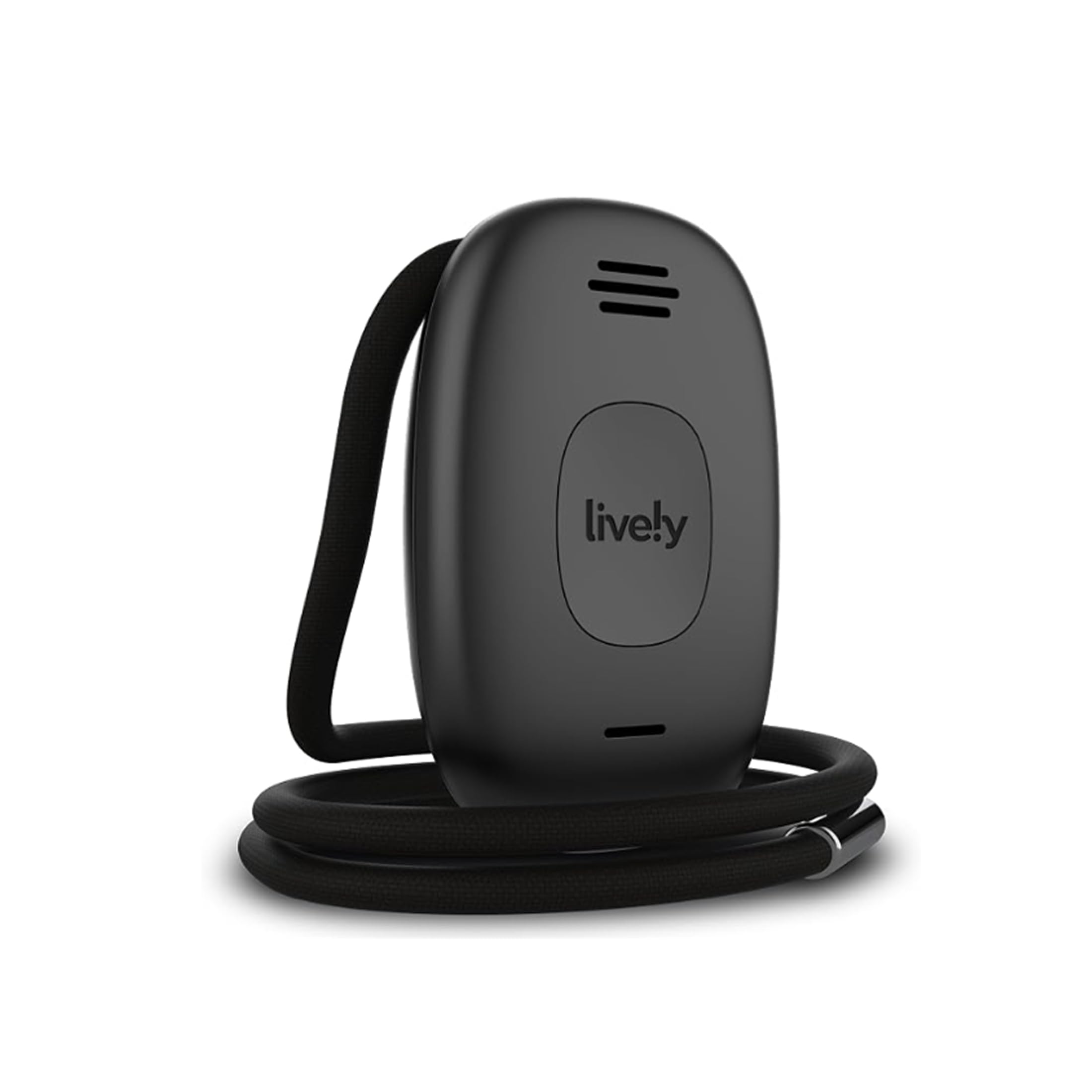
A small, pocketable button that calls trained agents from wherever the wearer happens to be.
The shape is what draws people to the Mobile2. It clips to a belt, drops in a purse, or hangs on the included lanyard, and it needs no landline or base station to work — so an active senior who resists looking “medical” can carry it anywhere. One touch of the Urgent Response button connects to Lively’s agents, who assess the situation and provide help around the clock. A caregiving app also sends automatic notifications to family on their smartphones.
Fall detection is available here but as an add-on to the Lively plan rather than a built-in standard feature, so check that you have enabled it if it matters to you. The device is water resistant and fine to wear in the shower, at the pool, or out in the rain. The small, lightweight build is easy to keep on the body all day — which is the real test of any alert pendant.
Be honest with yourself about the reliability picture. The response-agent model and the portability are what buyers value; the recurring theme in feedback is that the experience depends on connectivity and the plan, so the setup and testing matter more here than with a simple dialer. Run a test call with the wearer and confirm fall detection is enabled on the Lively plan. If you want a discreet, everyday-carry button backed by live agents, this fits well.
The portable angle: no base station and no landline — clip, pocket, or lanyard it and go.
Set it up carefully: fall detection is a plan add-on, and performance leans on signal, so test it at home first.
Best for: an independent senior who wants a button that looks and feels like anything but a medical device.
Second-guess it if: you need fall detection working straight from the start with no extra plan step.
5. Senior HELP Dialer HD700

One press dials up to three numbers and plays your own recorded emergency message.
If recurring fees are what stops you buying, this dialer removes the obstacle entirely — no bills, no contracts, no monitoring plan. Instead it calls up to 3 phone numbers you have saved and plays a personalized emergency message, so family or neighbors hear what is happening in your own voice. You get two panic buttons in the box: one wrist button and one necklace button, so there is always one nearby.
The wrist button is water-resistant, rated for the shower and bath, and it has a 100-foot range from the base — enough to cover a typical house without the wearer being tethered to one room. Pacemaker-safe construction is a reassuring detail for anyone with an implanted device. It runs off a normal phone line, and a Bluetooth adapter (sold separately) lets a cell phone stand in for the landline.
The catch worth knowing up front is that it depends on your existing phone service — this is a landline-first device, so a household with no phone line needs that adapter to use it. Within that setup it is a straightforward, no-subscription safety net with the bonus of two buttons. For a landline home where monthly fees were the deal-breaker, the HD700 dials your saved numbers with no subscription.
Two buttons, zero fees: a wrist unit and a necklace unit, both wired to call your saved contacts with your own message.
The catch: it needs a phone line (or the separate Bluetooth adapter) to make that call.
Pick this when: the home has a phone line and you refuse to pay a monthly plan.
Not for you if: there is no landline and you would rather not add an adapter.
6. Help Now Emergency Communicator

Press and hold the red button, and you are talking to a local 911 operator.
The whole design is one action: press and hold the red button and you connect directly with your local 911 operator to talk with them. No call center, no saved contact list, no subscription — it works for free for life from the start, with no contracts or cancellation fees. It reaches 911 anywhere there is a cell signal, so there is no landline or home hub needed at all.
That nationwide-cell approach is the main contrast with the ADT system above — that one is tied to a home base and a yard, while this pendant goes wherever the signal goes. It ships with 3 AAA batteries, a lanyard, and a removable button protection shield to stop accidental presses. The maker notes it also suits children or anyone who wants 911 a click away, which tells you how simple the device is to operate.
The honest limit is that a direct-911 call places you in the hands of whoever answers, with no agent pre-briefed on the medical history or the address. That is why the setup step matters: make sure the wearer knows to state the address clearly. It is also battery-powered on standard AAAs, so keep spares on hand. For a no-fee line straight to a local 911 operator, this is the most direct option here.
Where it shines
- One-touch connection to a local 911 operator
- No monthly fee, contract, or deposit
- Works anywhere with cell signal, no landline or hub
- Ships with lanyard and accidental-press shield
Where it stops short
- No agent holding medical context beyond what 911 gathers
- Runs on 3 AAA batteries you will need to replace
- Relies entirely on available cell signal
Reach for this if: you want emergency services on one button with no plan to renew.
Look elsewhere if: you want fall detection and a monitoring agent to manage the call for you.
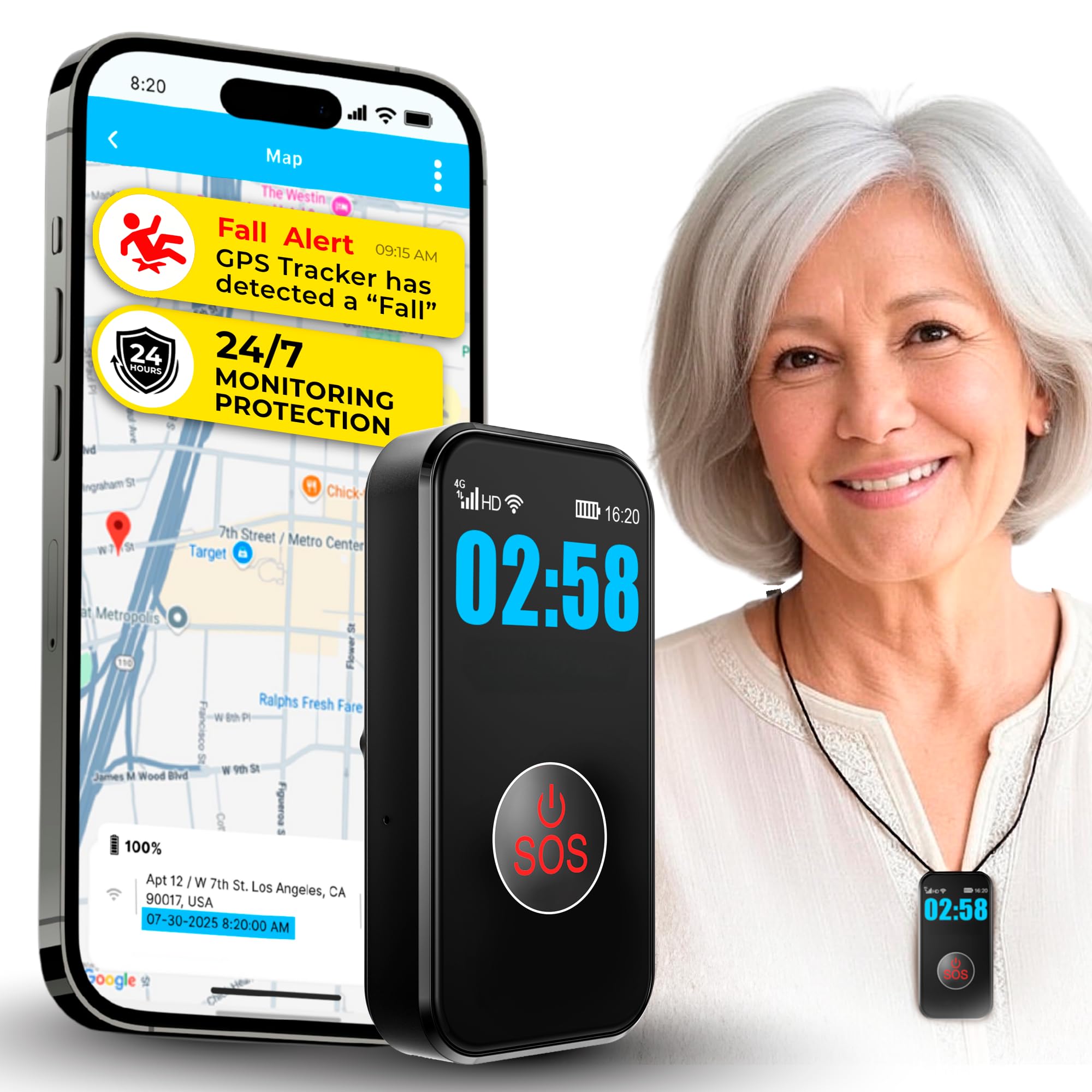
7. SkyAngel911FD – 4G Mobile Cellular NO Monthly FEE 911-2-Way Voice
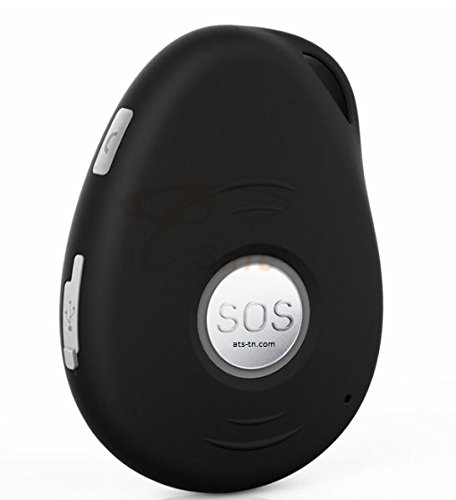
Small enough for a keychain, tough enough to survive the swimming pool.
Waterproofing is the standout: this one is rated for up to 10 minutes underwater and 30 minutes in the shower, so it can go in the pool, the bath, or the rain and still talk through it. It runs on 4G with no monthly fees and no cellular contract, and the whole thing is smaller than any cell phone — small enough to sit on a keychain. That size-plus-waterproofing combo suits someone who wants a tiny 911 line on them at all times without a lanyard around the neck.
Operation is as simple as it gets: one button to press to speak with 911, no swiping or dialing steps. It stays in 2-way speakerphone mode, so a press and you are talking. Automatic fall detection calls on its own if it senses a fall, adding a safety net for moments when the button cannot be reached. Because GPS accuracy and 911 connectivity are the areas that need the most care with this type of device, run a test call from the home and from the places the wearer frequents before relying on it.
Think of it as a pocket 911 phone rather than a full monitoring system — there is no agent on the other end holding your medical details, and success hinges on getting that call to connect. The 1-year manufacturer warranty and SIM included in the box keep the setup simple. For a fees-free, genuinely waterproof button carried on a chain, this fits a niche the bigger systems do not.
Built for water: 10 minutes submerged and 30 minutes in the shower — the most waterproof pick in this group.
Test it first: GPS accuracy and 911 connectivity are the weak spots with this kind, so verify a call goes through before trusting it.
Best for: a swimmer or shower-heavy wearer who wants a tiny no-fee 911 button.
Second-guess it if: you need GPS location you can rely on in an emergency.
8. Nomo Medical Alert System
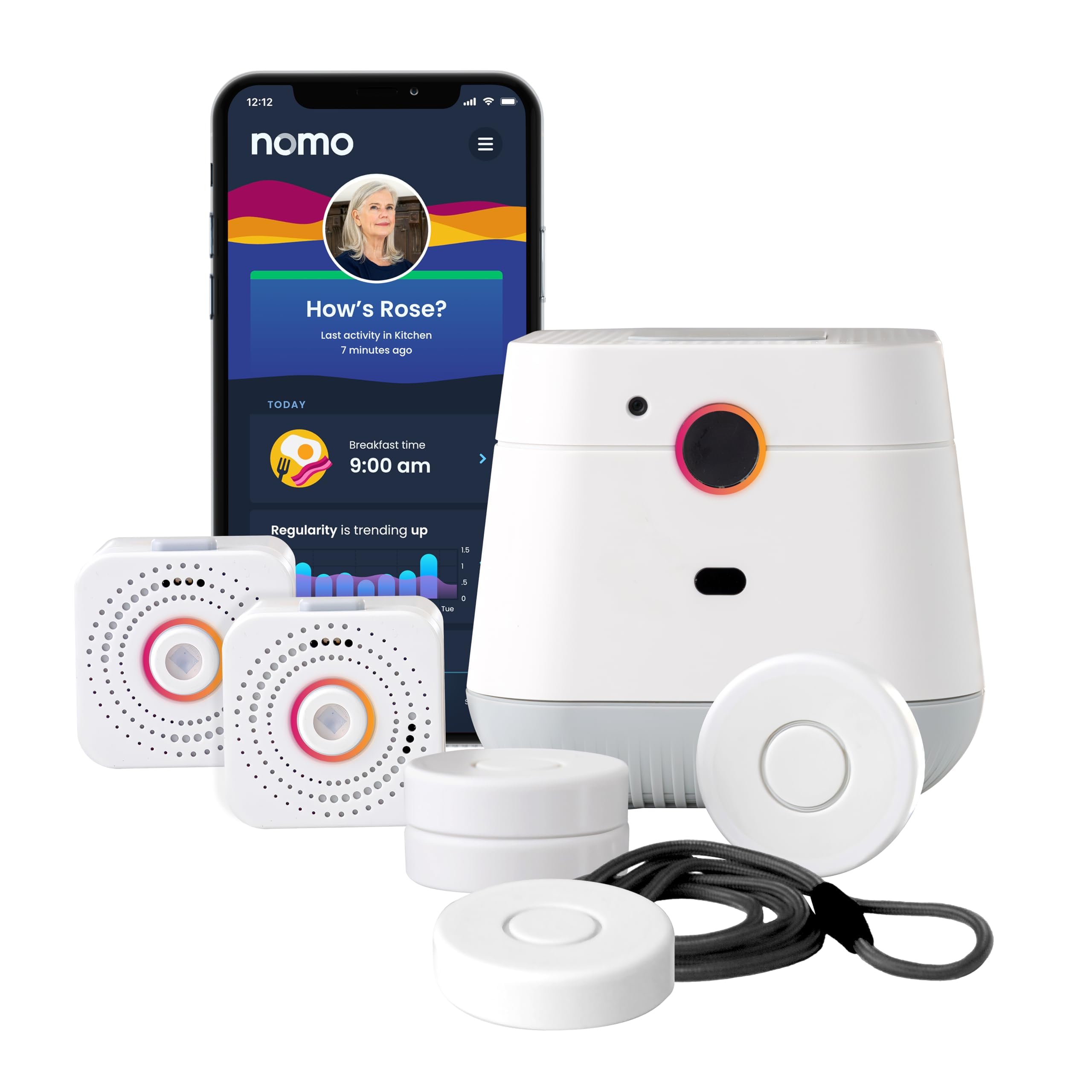
A full monitoring kit — a hub, two range extenders, and wearable tags — that runs on your home WiFi.
This is a system, not a single pendant. The kit pairs a Smart Hub with two satellite range extenders and wearable Tags, all connected over secure WiFi with no landline required. The extenders are the reason a large house stays covered: instead of one base reaching a couple of rooms, the signal is spread through the home. It installs plug-and-play, with the hub and satellites going straight into wall outlets and no technician visit needed.
You talk through the Hub in clear two-way audio, and the wearable Tags handle fall detection and the panic button. The Tags spot unusual movement patterns and send instant alerts to your trusted Care Circle — the family or caregivers you set to receive them. Alerts can arrive as both a text and a phone call. A 30-day trial of 24/7 monitoring with RapidSOS emergency services comes through the Nomo app; after that a monthly subscription applies, and you can cancel anytime.
The thing to plan around is the subscription: after the trial, ongoing 24/7 monitoring needs that monthly plan, and the whole-home value depends on it. The other point is the battery cells — the kit runs on lithium batteries you will want to track and replace. For a large house with dead zones where a single pendant cannot reach, the extenders make this a genuinely different option from a one-room alert.
Coverage where it counts: a hub plus two range extenders pushes protection across a big home over WiFi, no landline in sight.
Watch the plan: the 30-day monitoring trial ends in a monthly subscription — factor that into the decision.
Best for: a large multistory home where a single pendant leaves dead spots.
Not for you if: a simple, cheap-to-run single button is enough for a small apartment.
9. Freedom Alert

A rechargeable pendant that calls 911, police, or family straight from your landline.
Reliability is the theme with this landline device, and it depends on what it connects to: your existing phone service, which then reaches EMS, police, fire, or your family. There are no monthly fees to interrupt service — the recurring reason this model keeps earning a following. It is a two-way voice pendant, so the wearer can hold a full conversation with the person on the other end, and it can sit on its mount or hang from the neck.
The rechargeable design means no hunting for replacement batteries, and it carries a 24-hour battery backup so a power cut does not leave the home unprotected. If the household has a landline and the wearer is not out and about, this covers the essentials with nothing to subscribe to. On the contrast with the 321 Alert necklace, this one stays tied to the house and a phone line rather than a cellular network — the trade for dropping the monthly fee.
The clear caveat is in the name: it uses your existing landline service, so it does nothing in a home without one. That is the decision point. For a landline household that wants a rechargeable, two-way, no-fee pendant that reaches 911, this is a dependable pick.
Why it holds up
- Two-way voice to 911, police, fire, or family
- No monthly fees to keep it running
- Rechargeable with a 24-hour battery backup
- Wear it or mount it for quick access
What limits it
- Needs an existing landline phone service
- Stays tied to the home, not mobile
- No fall detection on this model
Go for it if: the home has a phone line and the wearer stays close to home.
Pass on it if: there is no landline, or the person needs protection while out of the house.
Know the Specs
Battery life between charges
Battery life tells you how long the pendant runs before it needs the dock or a cable, and it directly affects whether the wearer remembers to keep it charged. Shorter runs mean more frequent charging — the 321 Alert is 3-5 days, the Seculife is up to 6 days — so a device with fewer days needs a set routine. A dead pendant is no protection, so a longer run between charges is easier to live with.
Fall detection
Fall detection uses motion sensing to trigger an automatic call on a hard impact, so a wearer who cannot reach the button still gets help. It is most useful in a bathroom or on stairs where a fall may leave someone stranded. Because it responds to impact, it is a safety net rather than a guarantee — the button press is still the primary way to call. Look for models that list fall detection as built-in, like the 321 Alert and the SkyAngel, and note when it is an add-on, as with the Lively Mobile2.
Cellular versus landline connectivity
A cellular pendant with an embedded SIM works anywhere there is mobile signal, so it protects a senior away from home. A landline device plugs into phone service and only covers the house. The Freedom Alert and the Senior HELP HD700 are landline-first; the 321 Alert, SecurLife, SkyAngel, and SmartGo run on cellular. Choose cellular for a mobile senior and landline for a homebound one with phone service.
Water resistance rating
Water resistance decides whether the pendant stays on in the shower, the bath, or the rain — the times a fall is most likely and the button hardest to reach. Ratings range: the Seculife is IP67 waterproof, the SkyAngel survives up to 10 minutes underwater, and the 321 Alert is water-resistant. A fully waterproof pendant is easier to keep on through the whole day.
Common Questions
Does a personal alert system need a monthly subscription to work?
Will fall detection work if my parent does not press the button?
Can a cellular medical alert pendant be used away from home?
Does a pendant work in the shower or pool?
How often does the battery need charging?
What is the difference between a monitoring center and a family-only dialer?
Will a landline alert device work without a phone line?
Can an alert pendant help track a loved one’s location?
Does the alert device call 911 directly or go through a service?
The Bottom Line
For most families, the top personal alert systems for elderly independence winner is the 321 Alert Mini X3. It packs built-in fall detection, GPS, 4G LTE, and 24/7 monitoring into a grippable necklace with an embedded SIM — no card to install, and coverage anywhere there is signal. If you want help to go straight to family with a bigger battery window, the Seculife pendant dials your own contacts and runs up to 6 days. And if recurring fees are the sticking point, the SmartGo 911 Help Now puts a 911 operator one button away with no monthly plan at all. Whichever you choose, match the device to how help should arrive — a monitoring center, a family contact, or 911 directly.
How we choose
We do not accept paid placement. Every pick is matched to a real buyer and a real use-case; we do not hands-on test units.
Sources
Specifications: manufacturer listings and product documentation. Review insights: verified customer reviews, as of November 2026. Pricing: not shown on this page (it changes often); check the current price via the retailer link.
As an Amazon Associate, Tactical Gear Guy earns from qualifying purchases. This does not affect which products we feature.