Specs are compiled from manufacturer listings and verified buyer reviews and can change over time — please confirm the key details on the product page before buying.
You need a headset mic because your hands are busy, your voice is your product, and a desk microphone keeps you pinned in one spot. The right headset stays put through a whole class or set, keeps your voice clear over background noise, and plugs into the wireless bodypack or mixer you already own. This guide separates the nine that genuinely earn their place — sorted by connector type, pickup pattern, and who each one is built for — so you can match one to your setup instead of guessing.
This guide is built by comparing the manufacturers’ published specifications and the patterns across verified customer reviews, so you get each pick’s real strengths and trade-offs instead of marketing spin.
Connector type is the first thing that knocks a candidate out: a TQG plug will not seat in an XLR input, and a wired XLR cable will not plug into a bodypack. Here is the breakdown of the best professional headset microphone options, matched to the gear you already run.
Top Picks


How To Choose The Best Professional Headset Microphone
The hardest part of buying a headset mic is not sound quality — it is compatibility. Most of these are designed to plug into a wireless bodypack transmitter you already own, and each brand uses its own connector. Get the plug wrong and the mic is useless no matter how good it sounds.
Match the connector before anything else
A TQG or TA4F plug is the small four-pin connector Shure uses on its wireless bodypacks. If you run a Shure system, those two plug types are what you want. XLR is the standard three-pin stage connector — choose it when you are going wired into a mixer or a preamp. The Av-jefes set is built specifically for Shure bodypack models like the BLX1, SLX1, and PGX1, and it will not work with Mipro, Peavey, or Beyer systems. Check the model number on your pack before you buy.
Pickup pattern shapes your stage behavior
An omnidirectional capsule (one that hears from all directions) picks up your voice evenly and forgives imperfect placement, but it also catches more of the room around you. A cardioid or hypercardioid pattern (one that hears mostly from the front and rejects the sides) keeps feedback down on loud stages and behind floor monitors. If you teach in a noisy gym, a directional pattern helps isolate your voice. If you present in a quiet room, omnidirectional is more forgiving.
Sweat changes the whole decision for fitness use
Sweat kills headset mics in workout rooms. A hydrophobic fabric mesh (a water-repelling layer over the microphone element) or an IP67 rating (a sealed shell that keeps out dust and water) is the difference between a mic that survives a spin class and one that dies mid-session. If you coach anything physical, put moisture protection near the top of your list.
Side-by-Side Comparison
| Model | Best For | Connector | Frequency Response | Noise Spec | Amazon |
|---|---|---|---|---|---|
| Shure Microflex MX153★ Best Overall | Discreet presentations | TQG / TA4F | 20000 hertz | 90 db | Amazon |
| Av-jefes AVL-630-SH4Budget Champion | Budget worship and lectures | XLR | 50 hz – 18 khz | 60 db | Amazon |
| Shure SM31FHBest for Fitness | Fitness instructors | TA4F | — | 25 db | Amazon |
| KIMAFUN 2.4G | Water-based coaching | Wireless / 6.35mm adapter | — | — | Amazon |
| Audio-Technica PRO 8HEx | Wired stage vocals | XLR | 18000 hertz | 55 db | Amazon |
| Shure WH20 | Aerobics and drummers | XLR | 20 KHz | 78 db | Amazon |
| Sennheiser ME 3 | Feedback-prone rooms | 3.5 mm Jack | — | 150 db | Amazon |
| Samson Airline Micro | Untethered roaming | Wireless / Micro USB | — | — | Amazon |
Detailed Reviews
1. Shure Microflex MX153 Earset Headworn Microphone – Tan
Our pick — 4.5+★ from 450+ verified ratings; the strongest balance of quality and price.
A subminiature omnidirectional earset that disappears on camera and keeps your voice even as you turn your head.
If you present on camera, teach in a small studio, or broadcast from a desk and want the microphone to vanish, this is the one. The cartridge is subminiature — small enough to sit near the ear rather than in front of the mouth — and it is omnidirectional, so it hears you evenly from any angle. You get the same voice whether you turn your head toward the whiteboard or glance down at notes.
Shure calls the plosive protection “enhanced,” and there is a real spec behind it: a frequency response that tops out at 20000 hertz, which is wider than the Audio-Technica PRO 8HEx at 18000 hertz. Voices land crisp and detailed rather than boxy. The capsule is also designed to resist the proximity effect, so you can change distance from the mic without your voice getting suddenly boomy. The 90 db noise figure is the highest of any wired pick here — and for a headset meant for close, quiet work, that is simply a different job than the 25 db Shure SM31FH.
The real advantage is the build detail most buyers miss: a Kevlar-reinforced soft flex cable, which is exactly the part that wears out first on a headset that gets coiled into a bag every day. CommShield technology guards against interference from phones and bodypack transmitters, so a nearby handset does not spray a ticking sound through your audio. The tan finish is a deliberate choice for skin-tone matching on camera. What wins people over is the overall build quality — it feels like a professional tool, not an accessory. The honest catch is fit: a boom that close to the ear is fussy to position, and a small number of owners find it slips.
Where it earns the top spot
- 20000 hertz frequency response gives it the widest stated range among the wired XLR pick here.
- Kevlar-reinforced soft flex cable addresses the weak point on headset mics.
- CommShield technology blocks interference from phones and bodypacks.
- Subminiature omnidirectional capsule stays discreet on camera.
Where it asks for patience
- Fiddly to seat over the ear correctly on the first try.
- Terminated for Shure bodypacks only — it will not plug into an XLR mixer.
Reach for this if: you want the microphone to disappear and you already run a Shure wireless bodypack.
Look elsewhere if: you need to plug straight into a mixer — this one is TQG/TA4F only.
2. Av-jefes Avl-630-sh4 Earhook Headset Mic
A sweat- and dust-proof Shure-compatible headset that delivers 50 Hz–18 kHz voice coverage for well under Shure-brand prices.
Here is a wired headset that punches well above what a value-tier price suggests. It is built for indoor and outdoor professionals — stage performers, houses of worship, lecturers — and it is described as sweat and dust-proof, which is more protection than most wired mics at this level offer. The 50 hz to 18 khz frequency range covers the full human voice, and 60 db audio sensitivity sits slightly above the Audio-Technica PRO 8HEx at 55 db, so it goes a touch hotter on the same bodypack. The 1500 ohm impedance is high, though — worth checking against what your pack expects.
The compatibility list is the part to read carefully. It is built for Shure bodypack models T1, ULX1, UR1, PG1, PGX1, PGXD1, SLX1, BLX1, and BLXD1, and it will not work with Mipro, Peavey, or Beyer systems. The housing is aluminum, and it meets RoHs and REACH standards — free of lead, mercury, cadmium, and the other restricted materials. For a mic at this level, that is a solid materials story.
Clear sound for the money earns this mic its spot. Clarity is the biggest strength, and reliability comes right behind it — it works the way you expect, session after session. The honest trade-off is durability at the hard-use end: several buyers report an early failure after a second use, so if you yank the boom off one-handed or stuff it loose in a gear bag, treat it with care. For a fixed lectern setup or a worship team that handles gear carefully, it is genuine value.
The sound-per-dollar story: 50 hz to 18 khz coverage and 60 db sensitivity give it real headroom against pricier wired headsets.
Fits best when: you are on a Shure bodypack and want professional-grade voice pickup without a premium outlay.
Second-guess it if: the mic will live in a loose gear bag between gigs — the durability reports suggest gentle handling pays off.
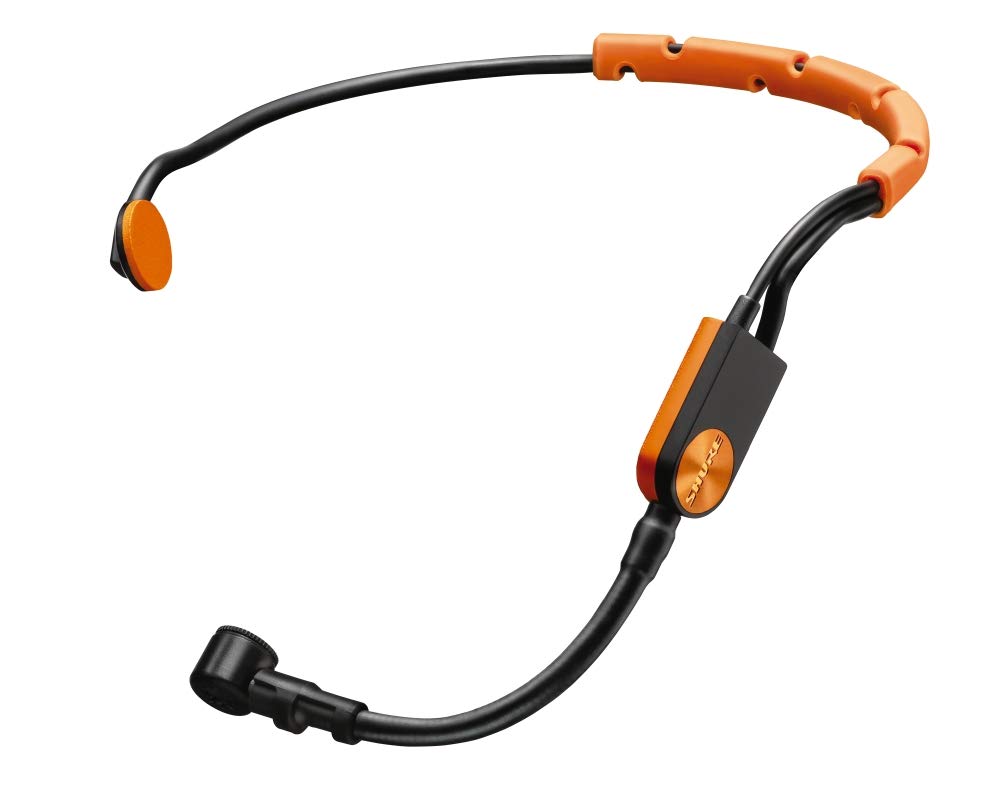
3. Shure SM31FH Fitness Headset Condenser Microphone
A TA4F fitness headset with a hydrophobic mesh and stainless steel housing built to survive sweat and hard motion.
The 25 db audible noise figure is the lowest of any wired headset here — and for a mic that is meant to sit in a sweaty, high-motion environment, that quiet spec is exactly the point. The TA4F connector plugs into Shure wireless bodypacks, so it is designed to clip onto the pack you already own. The mic is omnidirectional with a tailored frequency response, so your voice stays intelligible as you move around the room.
The protection is the real engineering story. A hydrophobic fabric mesh — a water-repelling layer sitting over the microphone element — pushes perspiration away before it reaches the capsule. The stainless steel housing takes knocks a plastic one would not. The wireframe is built to stay in position during hard motion, so you are not reaching up to fix the boom mid-class.
Lifespan at the hard-use end is the catch. Several owners mention the mic giving out within three months, a warning worth taking seriously if you teach multiple classes a day and never wipe the mic down. The mic handles sweat and movement, but it does not seem to tolerate rough storage — so a structured case and a quick dry-down after class will stretch it out. What wins people over, apart from the protection, is how comfortable the fit feels through a full session. If you coach in a climate-controlled studio and look after your gear, this is a strong primary mic. It is also smaller than the mid-range KIMAFUN at 7.6 x 6.4 x 3.2 inches versus the MX153’s 3 x 7.5 x 5.2 inches — a tight, low-profile shape that sits close and stays out of the way.
Why fitness instructors keep coming back: the hydrophobic mesh and stainless housing are the two things that turn a headset into a piece of workout gear rather than fragile studio equipment.
The trade-off to know about: the durability reports at three months suggest this is not a toss-in-the-bag mic — a hard case is the smart companion purchase.
Suits the instructor who: coaches through sweat and motion every day and needs a mic that handles the moisture.
Consider a different route if: you will not maintain it carefully — the reported early failures point to handling making a real difference.
4. KIMAFUN 2.4G Fitness Headset Wireless Microphone

The only fully wireless system here with an IP67 shell rated for splashes.
Coaching swimming or aqua aerobics? Its IP67 waterproof shell seals out sweat, moisture, and dust, and the detachable waterproof microphone heads let you swap the capsule when it needs changing. It is a 2.4G wireless system with a 65 ft range, so no cable tethers you to a receiver. The headset weighs only 0.1 lbs, so you barely feel it on your head.
A smart noise canceling chip handles environmental interference, and omnidirectional pickup keeps your voice loud and clear. The package is unusually complete: a transmitter headset brace, a receiver, a waterproof head microphone, two windscreen foams, a 6.35mm adapter for a voice amplifier or mixer, a 3-in-1 charging cable, a splitter, Type-C to Lightning and Type-C to USB adapters, and a carrying bag. If you are piecing together a kit from scratch, that saves three or four separate purchases.
The honest limits matter. It is a microphone only — no headphone function, no Bluetooth, and it will not work with Bluetooth speakers under 15W. Battery life is listed at 5 hours per charge, with a 2-hour recharge time, and some customers note the unit stopping after two to three months — so treat it as a seasonal tool rather than a decade-long buy. For water-based coaching, that trade-off may be worth it; nothing else here gets wet.
What makes it unique here
- IP67 waterproof shell for sweat, splash, and dust.
- 65 ft wireless range with no cable tether.
- 0.1 lbs headset stays barely noticeable.
- Complete kit with adapters for phone, PC, mixer, and amplifier.
The honest limits
- 5-hour battery per charge, 2-hour recharge.
- Not a headphone, not Bluetooth, and not compatible with Bluetooth speakers under 15W.
Ideal for: swimming and water-aerobics coaches who need a mic that can get splashed and keep working.
Think twice if: you want an all-day teaching mic — the 5-hour battery and reported durability limits make it a specialist tool.
5. Audio-Technica PRO 8HEx Headworn Microphone

A hypercardioid wired XLR headset built to reject monitors and other mics on a crowded stage.
Rejecting stage noise is what this mic does best — the hypercardioid pickup pattern hears a tight cone in front of the mouth and rejects sound from the sides and rear, exactly what you want when sharing a stage with monitors or other vocal mics. A hi-ENERGY neodymium element sits inside, an ingredient that produces crisp reproduction from a lighter magnet assembly. The 18000 hertz frequency response and 55 db sensitivity are both solid for a wired XLR headset.
The physical layout is thoughtfully designed for performers. The low-visibility headband keeps the silhouette tidy on stage, and the pivot-mounted flexible boom descends from either the left or the right side, so you can set it up for the way you like to work. The 7.2-foot (2.2 m) cable is permanently attached and ends in an XLRM-type connector, so it runs straight to a mixer without a preamp. It weighs 3.52 ounces, which is enough that you notice it on first wear but light enough that it fades.
Fit is where honest expectations matter. A few owners find the headband awkward to seat, and some report the sound is lifeless compared with what they expected from a dynamic stage mic — the dynamic element rejects feedback well but demands you speak close and steady. Function is clearly its strongest suit — it works for a wide variety of uses and offers solid value in the wired-XLR space. If you are a singing drummer or a stage performer who controls the distance to the mic, it earns its place.
Where it shines on stage: the hypercardioid pattern rejects side-and-rear noise, keeping feedback down when monitors are loud.
The right fit for: a wired stage performer who wants directional rejection and a left-or-right boom.
Might disappoint if: you expect a full studio voice — the dynamic element favors close, controlled delivery.
6. Shure WH20 Wired Dynamic Headset Microphone – XLR

A rugged XLR headset that shows up for football coaches and singing drummers alike.
Here is the headset that refuses to be boxed in. It is a wired dynamic mic with a 3-pin XLR connector and a detachable belt clip, and it is equally at home on an aerobics instructor, a public speaker, or a musician behind a kit. The 20 KHz frequency response is the widest stated range on this entire list, and the smooth, natural response is compared directly with high-quality dynamic handheld vocal mics. A high input clipping level eliminates overload distortion when you push it hard.
The build is where it earns loyalty. A lightweight wireframe with an elastic headband adjusts for a secure fit, and the extra-strong small-diameter cable resists breakage — that thin cable flexes rather than snapping where it joins the housing. The microphone boom collapses for storage, so it packs down small. It is also rated reliable at temperature and humidity extremes, which matters if you work outdoors or in a hot gym. A foam windscreen and clothing clip are included.
What buyers rave about is the sound — clear, natural voice pickup that works across a wide variety of uses, from sports coaching to public speaking. The headband is secure for active movement, though a few owners find the comfort is a compromise over a long session, and the noise floor sits at a higher 78 db than the quieter Shure SM31FH. For rugged on-the-go use, the toughness is the reason to pick it.
Built to take a knock
- 20 KHz frequency response — the widest on this list.
- Extra-strong small-diameter cable resists breakage.
- Collapsible boom packs down small.
- Reliable at temperature and humidity extremes.
Trade-offs to weigh
- 78 db noise floor is higher than the quietest Shure fitness headset.
- Long-session comfort is a compromise for some wearers.
Go for this one when: you need a rugged wired XLR headset for coaching or performance and want a mic that survives hard use.
Skip past it if: you want a mic for all-day desk or studio work — its toughness and secure headband fit are for active use.
7. SENNHEISER Professional ME 3 Dynamic Headset Microphone
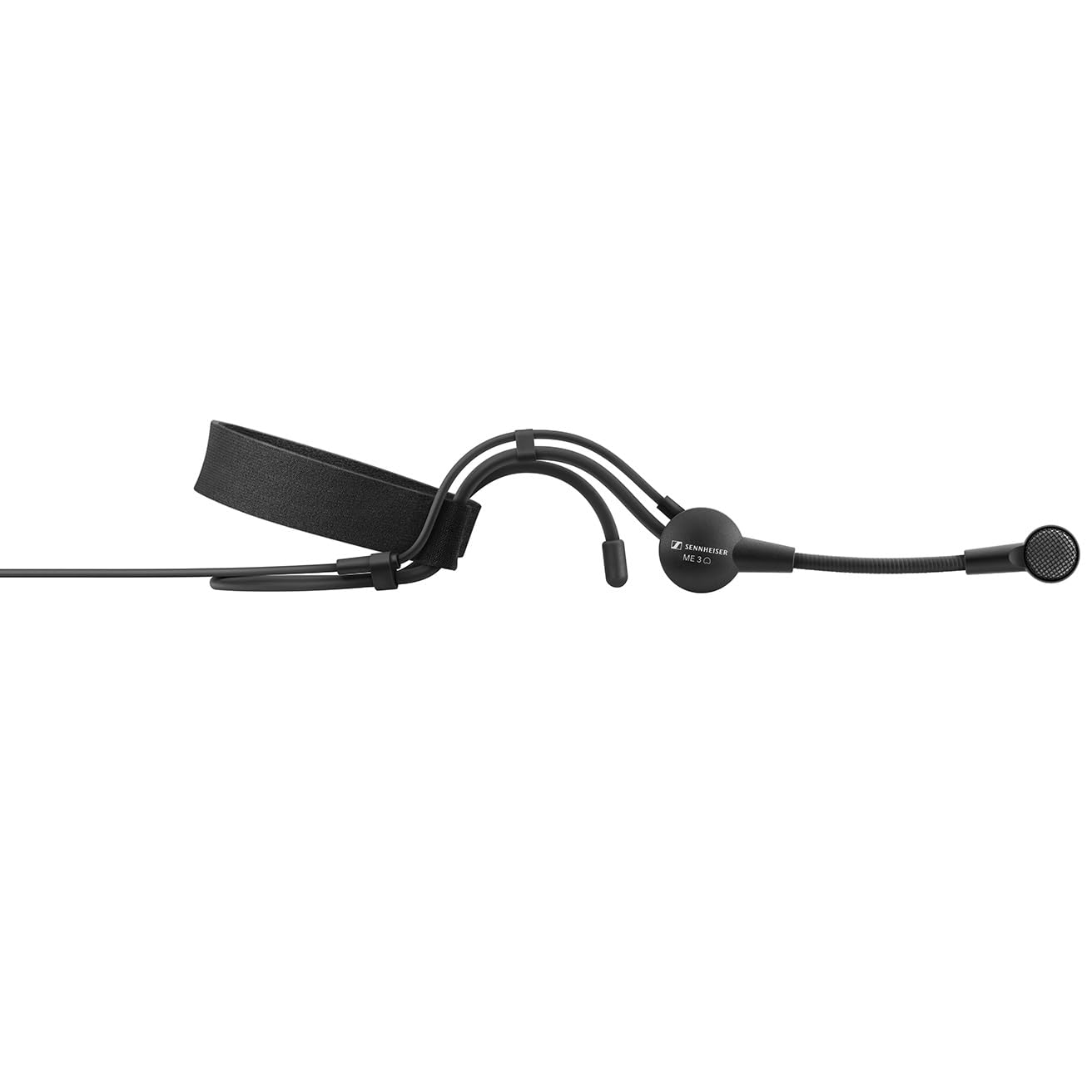
A cardioid headset that fights feedback in rooms that would make other mics squeal.
When you are presenting in a hall with a live PA and the room wants to feed back, a cardioid pattern is your ally. The ME 3’s consistent cardioid pickup is built specifically for high feedback rejection, so you can walk a stage with mains blaring and not trigger the squeal. The 150 db noise specification is the highest figure on this list — a signal that this is a hot, headroom-heavy mic rather than a quiet studio capsule. The connector is a 3.5 mm jack, so it plugs into the right kind of wireless receiver.
At 2.72 ounces, the headband does not dig in over a long set. Sennheiser describes it as lightweight and comfortable but extremely sturdy, and the housing is plastic with a sturdy feel. It is built for a wide range of vocal and speech applications with wireless receivers, so it slots into a rig rather than demanding a whole new system.
The thing to plan around is the connector: the 3.5 mm jack only mates with gear that accepts it — a bodypack or receiver built for that plug. If you run a wireless system with a 3.5 mm input, this is a natural fit. The section of buyers who use it for live vocal work appreciate the cardioid isolation and the low visual profile on stage. If your receiver is a standard XLR input, look at the Shure WH20 or SM35 instead.
The mic for difficult rooms: a consistent cardioid pattern is the single most useful defense against feedback on a live stage.
One thing to verify first: the 3.5 mm jack is not universal — check what your receiver takes before buying.
Strong choice if: you present or perform with a 3.5 mm-capable wireless receiver and fight feedback.
Wrong turn if: you use a standard XLR hookup — this connector will not mate with it.
8. Samson Airline Micro Wireless Earset Microphone
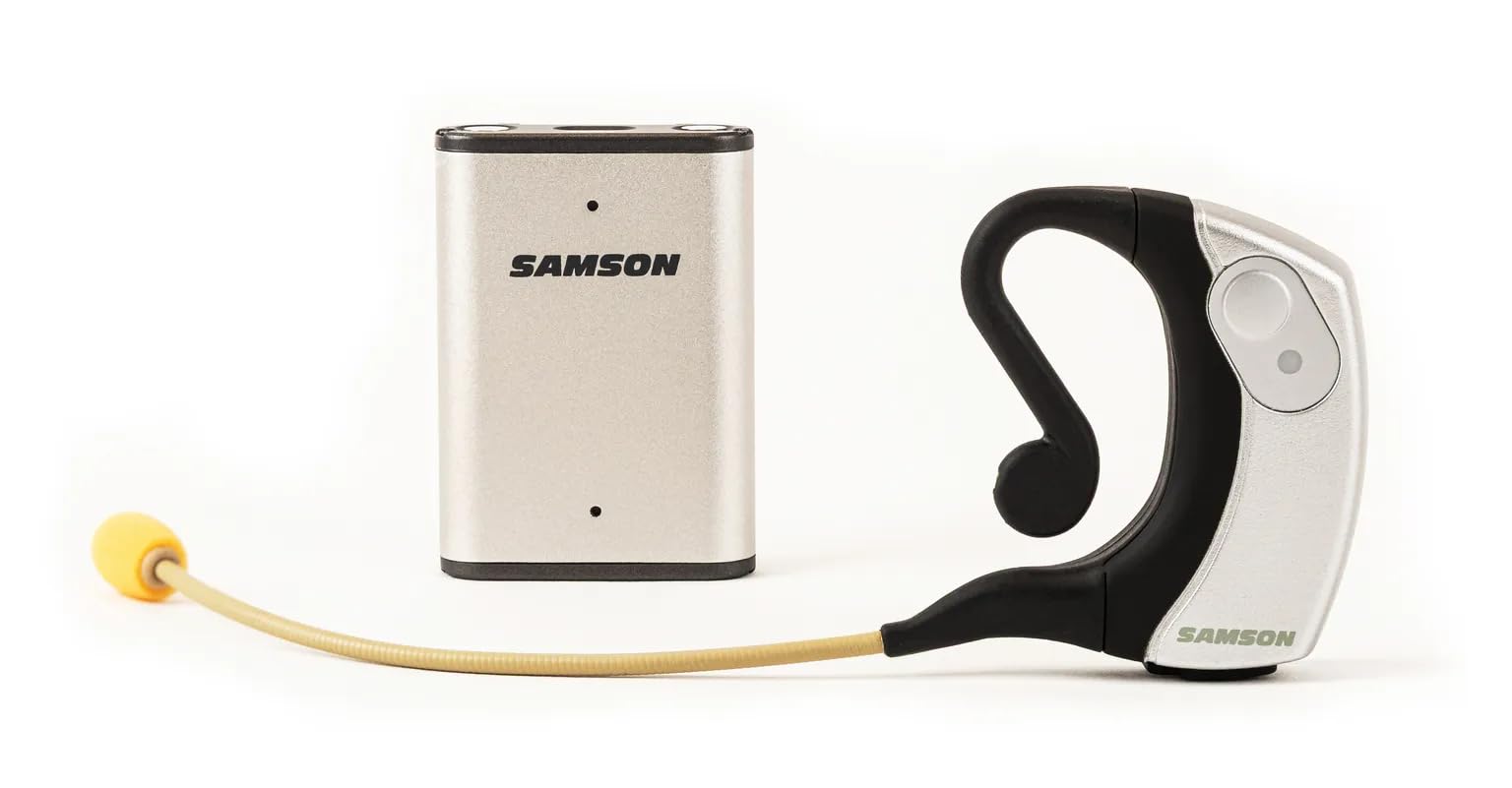
The earset that lets you walk into the crowd without dragging a cable or losing signal.
If you teach, lead, or perform with total freedom, the 300-foot operating range (line-of-sight) is the number that matters here — it is the furthest stated range on this list. Both the AH2 earset transmitter and the AR2 receiver have built-in rechargeable batteries rated at up to 6 hours of operation, so you charge the pair, not a pack of disposables. The AR2D receiver dock holds the receiver securely during use and charging, which keeps your desk tidy.
The controls are genuinely one-hand friendly: a single button handles power, mute, and volume, and a tone key with auto mute prevents unwanted noise when the transmitter is off or out of range. The receiver outputs through a 1/8-inch (3.5 mm) unbalanced mic/line level connector, and the kit includes a USB Y-power cable, a 1/8-inch to 1/4-inch audio cable, three windscreens, and a zippered carry case. It weighs 1.2 pounds across the set.
The honest trade-off is sound consistency. Quality is the clear strength, and the rechargeable design makes it a natural for outdoor and remote use. But a section of reviewers point out crackle and pop, and interference is a real consideration — wireless at 2.4G can crowd up in busy venues. If your room has a lot of other wireless traffic, plan on checking the channel before class. If you need untethered range and can manage the interference risk, no other pick here gives you 300 feet.
Why the rechargeable format wins: 6 hours each on transmitter and receiver means a full day of classes without hunting for batteries.
The honest caveat: the wireless link is the soft spot — some setups pick up crackle in crowded RF environments.
Choose this when: you want to roam a large space untethered and want a rechargeable transmitter-plus-receiver set.
Perhaps not for: venues packed with other wireless gear — the interference reports suggest checking your RF conditions first.
Know the Specs
Connector Type
A TQG or TA4F plug is the small multi-pin connector that Shure wireless bodypacks use — match these when you run a Shure system. An XLR is the standard three-pin stage connector that plugs into a mixer or preamp. A 3.5 mm jack is the slim audio plug used by some receivers. Always check which connector your transmitter or mixer accepts, because a mismatch is a hard stop: an XLR will not seat in a TQG port, and a bodypack will not accept a stage cable.
Frequency Response
Frequency response, measured in hertz, is the range of pitches a microphone can reproduce. A broader stated range can capture more detail in the voice — the Shure Microflex MX153 is rated to 20000 hertz, while the Audio-Technica PRO 8HEx tops out at 18000 hertz. A full vocal signal sits well within either range, but a wider figure means the top end of the voice, like sibilance and air, comes through more clearly.
Pickup Pattern
Pickup pattern describes the shape of the space the mic hears. An omnidirectional capsule hears from every direction, which is forgiving of head movement but also catches more room noise. A cardioid or hypercardioid pattern hears mostly from the front and rejects the sides and rear, which is how you keep feedback down on a loud stage. Choose the pattern for the room: quiet spaces favor omni, loud rooms favor directional patterns.
Sweat and Water Protection
Moisture is the most common killer of a headset mic in an active setting. Two specs matter: a hydrophobic fabric mesh (a water-repelling layer over the capsule) and an IP67 rating (a sealed shell that keeps out dust and water). Both defend the microphone element from perspiration and splashes. If you coach fitness or anything wet, these are the specs to prioritize over sound details.
Common Questions
Will a TQG headset mic work with my XLR mixer?
Which headset mic is best for fitness and gym instruction?
How long does a headset microphone last?
What is the difference between cardioid and omnidirectional headset mics?
Do wireless headset mics need a receiver?
How far can a wireless headset mic transmit?
Can I use a headset microphone for singing as well as speaking?
How long does a wireless headset mic battery last?
What does the noise figure in decibels mean on a headset mic?
Will a headset mic fit a Shure BLX1 or PGX1 bodypack?
The Bottom Line
For most people shopping the professional headset microphone category, the Shure Microflex MX153 is the pick that gets everything right — 20000 hertz of frequency response, a Kevlar-reinforced cable, and CommShield interference protection in a discreet on-camera form. If you coach fitness, the Shure SM31FH’s hydrophobic mesh and 25 db noise floor make it the natural primary. And if you need to teach by the water, the KIMAFUN 2.4G’s IP67 shell is the only one on this list that handles the splash. Whichever you choose, match the connector to your bodypack or mixer first — that single decision is worth more than any spec on the box.
How we choose
We do not accept paid placement. Every pick is matched to a real buyer and a real use-case; we do not hands-on test units.
Sources
Specifications: manufacturer listings and product documentation. Review insights: verified customer reviews, as of November 2026. Pricing: not shown on this page (it changes often); check the current price via the retailer link.
As an Amazon Associate, Tactical Gear Guy earns from qualifying purchases. This does not affect which products we feature.