Specs are compiled from manufacturer listings and verified buyer reviews and can change over time — please confirm the key details on the product page before buying.
If your wallet is the thing you lose most, the answer is a tracker thin enough that you forget it is in the card slot. These are the cards that slide in beside your debit card and still let you ring them from your phone. The hard part is not finding a tracker — it is finding one that won’t make your wallet feel like a brick. Every pick below clears that bar.
This guide is built by comparing the manufacturers’ published specifications and the patterns across verified customer reviews, so you get each pick’s real strengths and trade-offs instead of marketing spin.
Every card here slides into a standard wallet slot, so the real differences are thickness, battery years, alarm loudness, and which phone network it speaks. Pick by your phone first, then by if you want a rechargeable card or a sealed multi-year one. That order settles most of the choice for the best small GPS tracking device for wallet carry.
Top Picks
How To Choose The Best Small GPS Tracking Device for Wallet
A wallet tracker card is a Bluetooth radio shaped like a credit card. It has no dish, no satellite, no cellular modem of its own. When it loses touch with your phone, it quietly pings every nearby iPhone or Android phone that has opted into the finding network — Apple Find My or Google Find Hub. That is the “GPS” part, and it is why one of these can be found across a city with an empty battery still showing on the map.
So your first decision is not thickness or loudness. It is the phone in your pocket. A card certified for Apple Find My only pairs with iPhones, and a Google Find Hub card only pairs with Android. Pick wrong and you own a very expensive piece of plastic that never appears on a map.
Match the card to your phone, not the other way around
Apple MFi certification means the maker passed Apple’s own hardware checks, so pairing with Find My just works. A dual-network card lets you pick Apple or Google at setup, which matters if you or your partner carry different phones. Read the listing line carefully — some cards that say “Android & iOS” are still iOS-only for the alarm and map features.
Thickness is the whole game in a slim wallet
A front-pocket wallet only stays flat if what you add to it is flat. Cards here run from 0.06in to 0.1″ thick, and that gap is the difference between a wallet that closes cleanly and one that bulges. Weight splits the same way — one card is 14 g, another 22.68 g. If you carry a leather bifold, either works. If you carry a minimal metal cardholder, chase the thinner number.
Sealed battery or rechargeable — a real fork in the road
A sealed card rated for 5 to 10 years means you never think about charging. A rechargeable card gives you a few months per top-up, wirelessly, but asks you to remember. Neither is better in the abstract. It depends on whether you will actually drop the card on a charging pad or let it die and never notice.
Side-by-Side Comparison
| Model | Best For | Thickness | Battery Life | Alarm / Range | Amazon |
|---|---|---|---|---|---|
| KIUP Wallet Tracker Card (2-pack)★ Best Overall | Set-and-forget wallet and luggage coverage | 0.06in | 5-10 years | 120 dB | Amazon |
| QUICKHORSE 2-Pack MFi CardBest Value | iPhone owners who want a spare card | 0.07″ | 4 months per charge | 80 dB | Amazon |
| Ridge Tracker Card | Metal-wallet and travel-document tracking | — | 5 months | 95 dB / 300 ft | Amazon |
| Life360 Tile Slim (2-pack) | Families already on the Life360 app | 0.1″ | 3 years | 104 dB | Amazon |
| FAMOO Ultra-Thin MFi Card | Budget travelers with iPhones | 0.06″ | 5-10 years standby | 100 dB / 120 ft | Amazon |
| Ekster Tracker Card | Slim-wallet owners who switch phones | 1.8 mm | 10 months per charge | 95 dB / 300 ft | Amazon |
| Pebblebee Card 5 | Android-first users who want a phone finder | — | 18 months per charge | — | Amazon |
Detailed Reviews
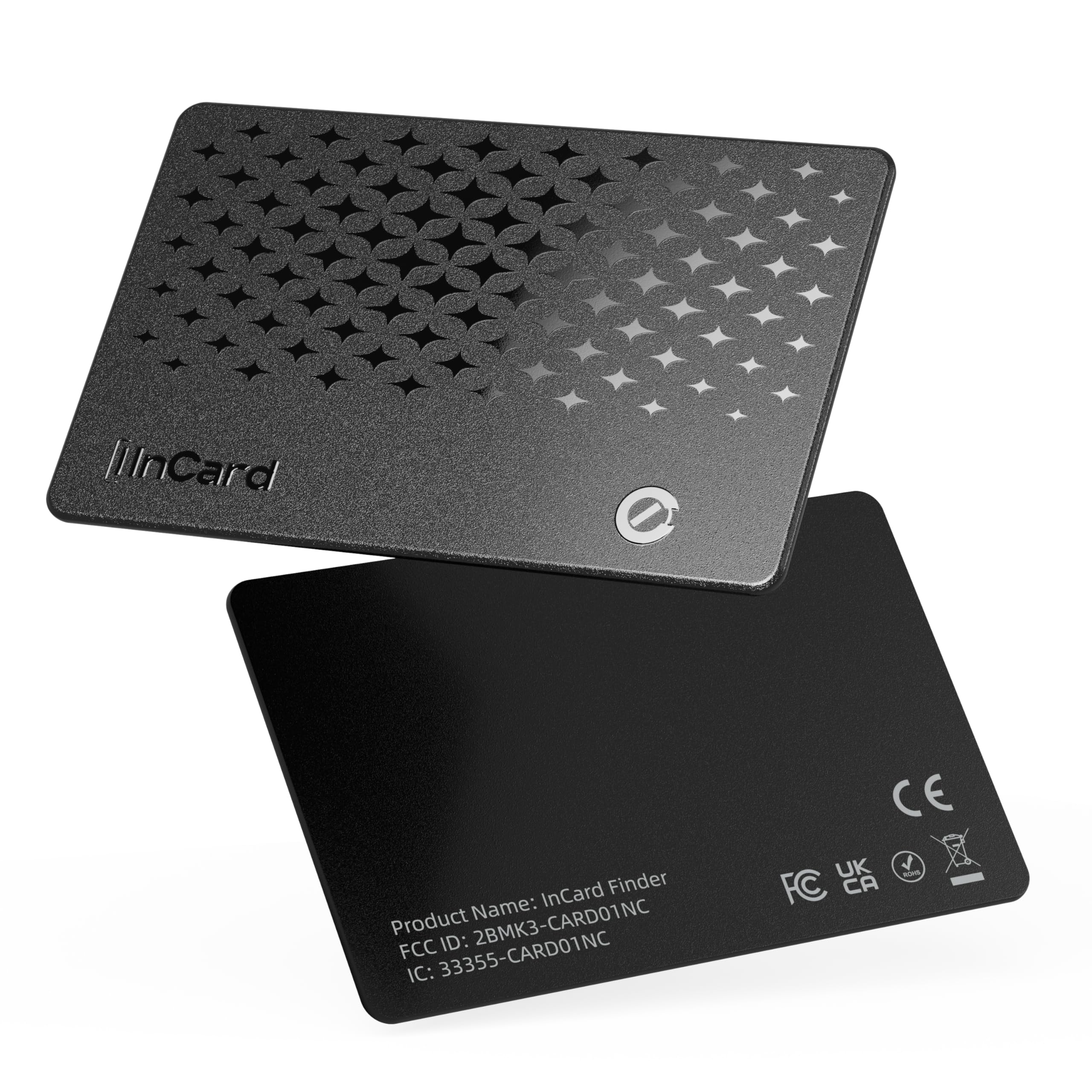
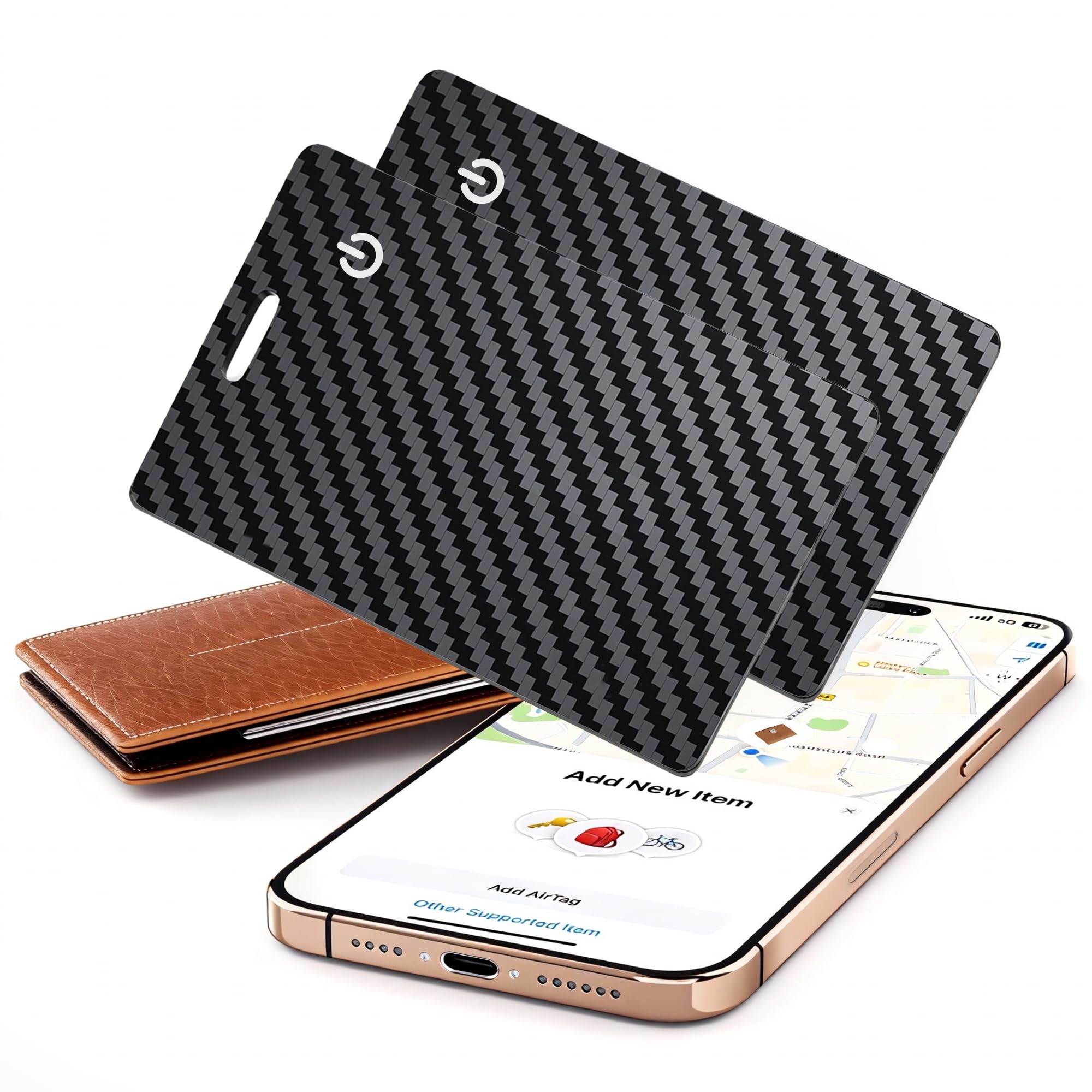
1. KIUP Wallet Tracker Card 0.06in Slim Tracking Card (2-Pack)
Our pick — 4.5+★ from 500+ verified ratings; the strongest balance of quality and price.
A 0.06in card with a 5-10 year sealed battery that pairs with either Apple Find My or Google Find Hub.
The KIUP card earns its spot on two numbers: 0.06in of thickness and a battery rated at 5-10 years. That means it disappears into a card slot and then stops being your problem. No charging pad, no reminder, no dead tracker on the day you actually need it. It works with both Apple Find My and Google Find Hub, so one card covers an iPhone today and an Android next year.
When your wallet is close but hidden, the built-in speaker fires at up to 120dB — loud enough to hear through a sofa cushion or a jacket pocket. That is the highest alarm figure in this lineup, and it clears the 80 db of the QUICKHORSE card by a wide margin. Thickness and weight also stack up well: at 0.06in it is thinner than the 0.1″ Life360 Tile Slim, and it is the lighter-feeling card in a leather bifold.
What wins people over is how little thought it demands — setup lands in the native app and most owners say it is working in minutes. The catch is honesty about what “GPS” means on a card this thin: it uses Bluetooth and nearby phones, so a wallet buried somewhere with no phone traffic around it will only show its last known spot. It is also not compatible with Huawei phones or standalone GPS devices, per the listing. An IP68 rating means splashes and rainwater are fine; a full plunge in the washing machine is still a gamble.
two-card value
- 5-10 year sealed battery means near-zero maintenance
- 120 dB speaker is the loudest in this comparison
- Works with both Apple Find My and Google Find Hub
- 0.06in thick — thin enough to vanish in a card slot
- IP68 sealing handles rain, splashes and spills
adhesive wear
- No live tracking without nearby phones in the area
- Not compatible with Huawei phones or GPS units
- Two-pack commit if you only need one wallet card
slim wallet fit: you want a wallet card that goes five years without a charger and works on either phone network.
single-card buyers: your phone is a Huawei — the listing explicitly excludes it.
2. QUICKHORSE [Apple MFi Certified] 2 Pack Wallet Tracker Card
Two cards, one wallet and one passport, both riding Apple’s network.
This is the pick for an iPhone household that wants a card in the wallet and a second one in the travel pouch without buying twice. The pair arrives as two 0.07″-thick cards, thinner than the 0.1″ Life360 Tile Slim, so neither one turns your wallet into a lump. It runs on Apple Find My only — Android phones are out — and the 2-year manufacturer warranty is the longest written coverage in this lineup.
The alarm tops out at 80 db, which is the quietest number here and roughly half the volume of the KIUP card’s 120 dB. In practice that is a beep you find under a sofa cushion or in a coat pocket, not a siren that carries across a room. Battery is the other honest limit: up to 4 months per charge on any standard Qi wireless charger, so you are on a routine rather than a decade of silence. The upside is that when the card gets low you just drop it on the pad you already own for your phone.
MFi certified pair: if you carry an RFID-blocking wallet, the listing tells you to park the card in an outer pocket — a shielded slot will block the signal and leave the card useless.
basic app: the card is durable and waterproof to IP68, but the 4-month charge cycle is a job you have to actually do, and the listing notes the wireless charger is not included.
iPhone households: the iPhone owner who wants two cards and does not mind a quarterly charging ritual.
Android users: Android users — this card pairs with iPhone only.
3. Ridge Tracker Card

The one built to survive a metal wallet and a long-haul flight.
Ridge made this card for people who carry a metal cardholder, and the numbers reflect that. The 155mAh battery recharges on any Qi or MagSafe pad and runs up to 5 months per charge. A 95 dB ringer reaches up to 300ft (90m) in open areas, and the listing is unusually straight about the caveat — inside a Ridge Wallet, that range may vary. It speaks both Apple Find My and Google Find Hub, which is the real reason to pay the premium here.
Weight is where you notice the build: at 22.68 g it is the heaviest card in this lineup, and the Ridge runs 46% heavier than the 15.5 g Life360 Tile Slim. For a minimal metal wallet that mostly means it feels solid rather than flimsy. It is also the only pick here that pairs proximity alerts with Siri voice activation — you can ask your phone to ring the card instead of hunting through the app.
You can share your location with up to 5 trusted contacts, and end-to-end encryption (scrambling that only your chosen people can open up) keeps the map private. MFi certification (Apple’s official approval for iPhone accessories) backs the Apple side. What keeps it off the top slot is a recurring note on the review pages: buyers report the price feels steep for a single card. You are paying for dual-network flexibility and the brand’s metal-wallet fit. For that specific wallet type, though, it is the card that actually works with the hardware.
Ridge wallet owners: your wallet is metal, your phone might change brands, and you want a card that handles both.
budget shoppers: you want a sealed battery and never want to think about a charging pad.
4. Life360 Tile Slim (2-Pack)

Two cards for the family map, and a battery that outlasts most wallets.
The Tile Slim is the widest-known name here, and it earns that with two features the others do not have. First, a 3-year sealed battery — no charging, no pad, no app nagging you about power. Second, a discreet SOS button that pushes an alert to your loved ones when you feel unsafe. If your household already uses Life360 for location sharing, this slides straight into that map.
Weight is 15.5 g, which the Ridge card clears by 46%. The 104 dB ringer sits in the middle of the pack — louder than the QUICKHORSE’s 80 db, quieter than the KIUP’s 120 dB. It also works in reverse: double-tap and your phone rings, even on silent, which is genuinely useful when the phone slides under a car seat.
It works with both iOS and Android, so mixed-phone households are covered. The trade-off is the older Bluetooth approach versus the newer network cards — a few owners on the review pages report connectivity dropouts, and Tile’s finding network is smaller than Find My or Find Hub. In a busy city it works well; in a quiet suburb with fewer phones around, the map is less lively.
family sharing: a 2-pack plus Life360’s shared map beats a single card if the wallet and a kid’s backpack both need covering.
bulky build: 0.1″ is the thickest here, which you will feel in a thin front-pocket wallet more than in a bifold.
shared plans: families already running Life360 who want the SOS feature and a hands-off battery.
minimalist wallets: you carry a whisper-thin wallet — this is the chunkiest card here.
5. FAMOO Apple MFi Certified Ultra-Thin Wallet Tracker Card
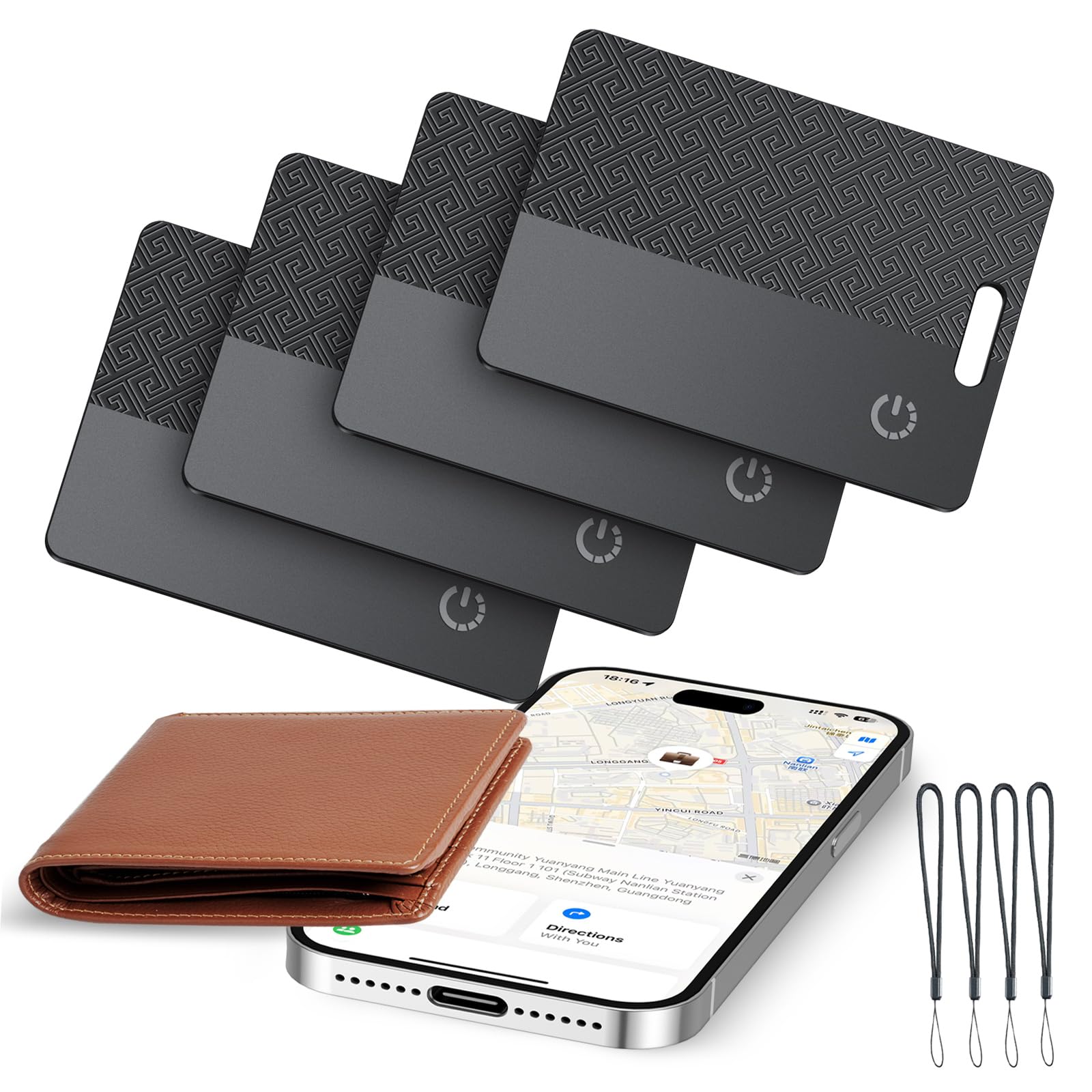
A card cut smaller than a credit card, so it slides into tight slots.
Most wallet trackers are the size of a credit card. This one is deliberately smaller — 1.96 inches x 2.75 inches, which the listing describes as fitting card holders and passport sleeves that a full-size card would jam into. At 0.06 inches thick it sits at the thin end of this lineup, matching the KIUP card. For a passport sleeve or a slim card case with tight stitching, that extra margin is the whole point.
It is iPhone-only and MFi certified, so Find My pairing is clean. The alarm runs at 100 dB, and the Find My network kicks in when you are beyond Bluetooth range. In close quarters — under 120 feet, roughly 37 meters — the app rings the card and guides you in. The battery uses a polymer cell with a self-discharge rate under 2%, rated to sit in standby for about 5 to 10 years, with a 1-hour charge topping it up when needed.
Here is the honest part: the functionality reviews are genuinely mixed, with some cards working fine and others not behaving at all. That is the tradeoff of a smaller card built at a budget price — the build and fit are praised, but the reliability record is not as consistent as the KIUP or the Ridge. If you want a compact card for a passport and can accept the variance, the size is the reason to choose it. If you want the surest thing, this is not the pick.
tight card slots: smaller than a credit card, so it fits passport sleeves and tight cardholders a full-size tracker cannot.
thick wallet users: mixed reliability reports mean it is a fit-first pick, not a sure-thing pick.
6. Ekster Tracker Card
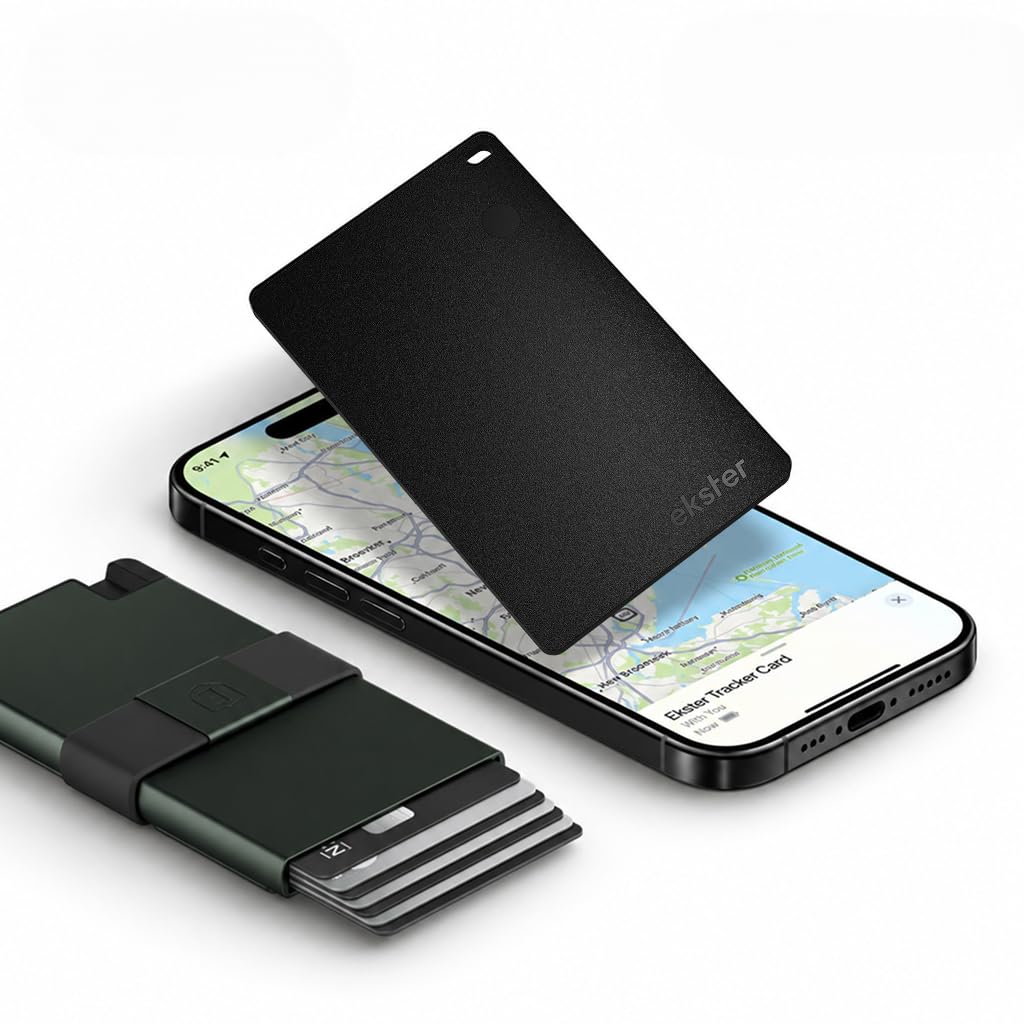
The thinnest card here, and the only one that swaps networks on a whim.
Ekster is a slim-wallet brand, so it makes sense that this card is the 1.8mm-thin outlier of the group — thinner than any inch figure on this page, and thin enough that a cardholder wallet still closes flat. It pairs to Apple Find My or Google Find Hub at setup, and crucially you choose which one, so you are not locked into an Apple-only or Android-only version at purchase. That is a real benefit for a household with mixed phones.
The 95 dB ringer reaches up to 300 feet in open areas, matching the Ridge on both numbers. Battery is a 10-month rechargeable, and it charges on a standard wireless pad — no cable swap required. IP68 sealing protects it through everyday rain and spills. Left-behind alerts fire when you walk away from the wallet, and you can share location with up to 5 trusted people.
Where this card asks you to think is routine: 10 months is generous by rechargeable standards, but it is still a battery you have to remember, versus a 5-10 year sealed card. And as the newest release here, it has the fewest owner reviews of the premium cards, so the long-term track record is less proven than the Ridge’s. If thinness and network flexibility are your top two criteria, this is the card that delivers both in one body — and it is the narrowest profile in the lineup.
Ekster integration: at 1.8mm, it is the card to beat for anyone with a minimalist front-pocket wallet.
battery swap: a 10-month charging cycle still puts you on a calendar, unlike the sealed cards here.
Ekster wallet fans: you want the thinnest card in the lineup and the freedom to switch between Apple and Google.
non-Ekster wallets: you prefer a card with more owner history behind it before you commit.
7. Pebblebee Card 5

Eighteen months of battery and a phone-finder button built into the card.
Pebblebee’s Card 5 stretches a wireless charge across 18 months, which is the longest rechargeable span here — nearly double Ekster’s 10 months and well past the Ridge’s 5. It also throws in a phone-finder: double-press the card and your phone rings, even on silent. For Android users the card is a natural fit, since Pebblebee is privacy-first and dual-network — you pick Apple Find My or Google Find Hub at setup.
At 14 g it is the lightest card in this comparison, lighter than the 22.68 g Ridge and below the 15.5 g Tile Slim. The design is IP66-rated for water resistance — fine for daily carry and rain, though a half step below the IP68 cards on this page. It also shaves thickness versus its own predecessor, with the listing noting it is over 30% thinner than the last model.
The reliability record is the honest story. Review pages show mixed results on reliability, connectivity and battery life — plenty of people find it works well, while others report it going unresponsive or failing to connect at all. That is the most-discussed theme on this card, and it is why it lands last on the list despite the best battery span. If you are Android-first, want the phone finder and can accept the variance, it is a fair fit at its price point. If you need the surest card in the wallet, look to the KIUP or Ridge instead.
set-and-forget users: Android users who want the longest rechargeable battery and a built-in phone ringer.
instant setup seekers: you want the most consistent track record — the reliability reports here are genuinely mixed.
Know the Specs
Thickness and Weight — the Wallet-Fit Specs
A wallet card’s thickness decides whether your wallet closes cleanly. Cards here run from 1.8mm up to 0.1″, and that difference is felt in a slim front-pocket wallet far more than in a leather bifold. The 0.1″ Life360 Tile Slim is the thickest here and the 1.8mm Ekster the thinnest. Weight splits the same way — 14 g for the Pebblebee up to 22.68 g for the Ridge. If you carry a minimal metal or cardholder wallet, go thin and light. In a traditional bifold, the extra grams are unnoticed.
Battery Life — Years vs Months
Two philosophies in one form factor. A sealed card — like the KIUP at 5-10 years or the Life360 at 3 years — means you never charge it, ever. A rechargeable card — 4 months on the QUICKHORSE, 5 on the Ridge, 10 on the Ekster, 18 on the Pebblebee — asks you to remember a top-up but typically rides a wireless pad you already own. For a wallet you carry daily, a sealed card removes the one failure mode that kills trackers: a dead battery you never noticed.
Alarm Loudness and Bluetooth Range
When the wallet is close by, the speaker matters most. The KIUP hits 120 dB — the loudest number here — while the QUICKHORSE sits at 80 db and the FAMOO at 100 dB. Range is a separate spec: the Ridge and Ekster both reach up to 300 ft in open areas, while the FAMOO’s map-and-ring features kick in under 120 feet of Bluetooth. Inside a metal wallet, range shrinks — which is why Ridge tells you outright that its 300 ft figure is an open-area number.
Network — Apple Find My vs Google Find Hub
Both networks use crowdsourcing: your lost card is found by nearby phones that opt in, not by a satellite. Apple Find My is iPhone-only (that means an MFi card like the QUICKHORSE is a paperweight on Android). Google Find Hub is Android-only, and a dual-network card like the KIUP, Ridge, Ekster or Pebblebee lets you pick either at setup. That is the single most common misfire in this category: buying a card for the wrong phone network. Always read the compatibility line before you buy.
Common Questions
Will this wallet tracker work with my Android phone?
Does a wallet tracking card use real GPS?
Will a tracking card fit in an RFID-blocking wallet?
How long does the battery really last on a wallet tracker?
Do I need a subscription or monthly fee?
How loud is the alarm on a wallet tracker card?
Can I share my wallet tracker with family members?
Will these cards survive rain or a drop in a puddle?
Can a wallet tracker find my phone instead?
Is a thinner card always worth it?
The Bottom Line
Never charge it and never pick a phone network: the KIUP Wallet Tracker Card takes the top spot with 0.06in of thickness, 5-10 years of battery, and a 120 dB alarm (about as loud as a smoke alarm) that cuts through furniture. Carry a metal wallet and want the network flexibility that comes with it? The Ridge Tracker Card was designed for that wallet type. Need the thinnest profile on the page? The Ekster Tracker Card at 1.8mm is the card to reach for. Whichever you choose, a wallet you can hear from the sofa beats a wallet you have to search for every time.
How we choose
We do not accept paid placement. Every pick is matched to a real buyer and a real use-case; we do not hands-on test units.
Sources
Specifications: manufacturer listings and product documentation. Review insights: verified customer reviews, as of November 2026. Pricing: not shown on this page (it changes often); check the current price via the retailer link.
As an Amazon Associate, Tactical Gear Guy earns from qualifying purchases. This does not affect which products we feature.