Specs are compiled from manufacturer listings and verified buyer reviews and can change over time — please confirm the key details on the product page before buying.
Wet feet ruin a run faster than tired legs do. A soaked cotton sock goes soggy within a mile, then rubs, then blisters. So the short answer is this: buy a sock with a real waterproof membrane built into it (a thin layer that blocks liquid water but lets sweat vapor out), not a thick sock that just looks tough. The DexShell Waterproof Merino Wool Socks lead this list because they pair a genuine breathable membrane with merino wool, and buyers back that up at 4.5+ stars across 700+ ratings. Below you get nine picks sorted by what they actually do well, plus the honest limits on each one.
This guide is built by comparing the manufacturers’ published specifications and the patterns across verified customer reviews, so you get each pick’s real strengths and trade-offs instead of marketing spin.
Some socks here block rain below the cuff only, and knowing that one limit changes which pair you should buy. That single distinction is what separates a dry run from a soggy one when you shop for water resistant running socks.
Top Picks
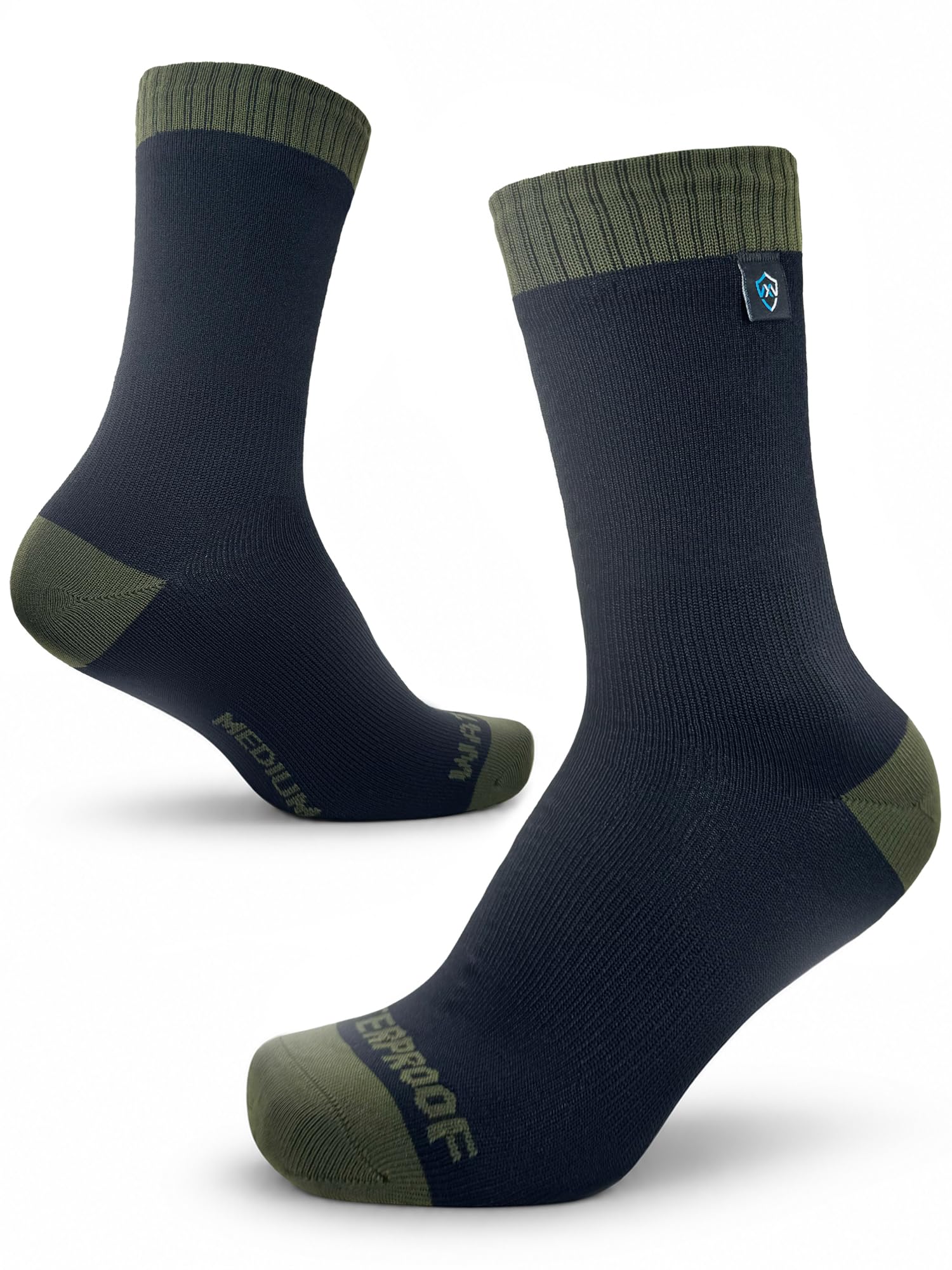


How To Choose The Best Water Resistant Running Socks
Most buyers assume “waterproof sock” means you can wade a stream in it. That assumption is what leads to soggy disappointment. Nearly every sock on this list is built to block rain, mud, puddles and wet grass below the cuff line — the top opening is still an opening. Pick your cut height around the water you actually run through, not around a marketing badge.
Match the cuff height to the water you actually run through
An ankle sock sits low and breathes best, which suits road runners and anyone who mostly deals with rain and road spray. A crew or mid-length sock covers more of the shin, so trail runners pushing through wet grass and shallow puddles get more dry fabric between the ground and the sock opening. Higher coverage is warmer, though, so a mid-length sock in summer heat trades airflow for protection.
The membrane is the whole product
A water resistant running sock works because a thin membrane sits between an outer shell and an inner lining. The outer layer takes the abuse, the membrane stops liquid water, and the inner layer moves sweat away from your skin. That three-layer sandwich is why these socks feel stiffer and less stretchy than a plain knit. It is also why the fit advice on every one of them leans toward sizing up if you are between sizes or have wide feet.
Breathability is the number nobody checks
A sock that blocks rain but traps sweat just swaps one wet foot for another. Look for a stated breathability figure where the maker publishes one, and favor merino or moisture-wicking linings over plain synthetic. Reinforced heels and toes also matter more here than in a normal sock, because a wet membrane against a seam is where hot spots start.
Side-by-Side Comparison
| Model | Best For | Build | Cut | Waterproof Claim | Amazon |
|---|---|---|---|---|---|
| DexShell Waterproof Merino Wool Socks★ Best Overall | Cold, wet trail days | Merino + PORELLE membrane | — | Waterproof to cuff line | Amazon |
| DexShell Men’s Running SockBest Everyday Pick | Everyday road and trail runs | drirelease moisture management | Ankle | Waterproof | Amazon |
| The Wudhu SocksBest for Travel | Travel and multi-sport use | Bamboo fiber blend, 3-layer | — | 100% waterproof (3-layer) | Amazon |
| Neoprene Unisex Outdoor Sports Socks | Wading and cold water | Nylon shell + PU membrane + Coolmax | Ankle or crew | 100% waterproof, 3-layer | Amazon |
| RANDY SUN Unisex Waterproof Socks 2.0 | Warm-weather minimalists | Ultra-thin membrane build | — | Waterproof | Amazon |
| DRYMILE Active Waterproof Socks | Cushioned running and work | 3-layer + bamboo/polyester | — | 100% waterproof with dry-guard strip | Amazon |
| Jeyiour 2 Pairs Waterproof Socks | Two-pair value and hiking | Stretch knit waterproof build | — | Waterproof and breathable | Amazon |
| SEALSKINZ Bircham Ankle Sock | Ankle-height trail running | Merino + Three-Layer Aquasealz | Ankle | 100% waterproof | Amazon |
| SEALSKINZ Wiveton Mid Length Sock | Warm-weather longer runs | AQUASEALZ three-layer membrane | Mid length | Waterproof and breathable membrane | Amazon |
Detailed Reviews
1. DexShell Waterproof Merino Wool Socks
Our pick — 4.5+★ from 750+ verified ratings; the strongest balance of quality and price.
The membrane-and-merino pairing that keeps feet dry on genuinely cold, wet trails.
The headline here is the PORELLE membrane — a waterproof film sandwiched inside the sock that lets sweat vapor out while keeping liquid water in place. DexShell rates that membrane at a Water Vapor Permeability (how much sweat vapor can pass through) of 15/m²/day under ASTM E96:95, and says roughly 70% of sweat moisture can escape. In plain terms, sweat vapor escapes instead of condensing inside the sock, which is where cheap waterproof socks fail.
Wrap that membrane in merino wool and you get the warm-dry feel that owners keep coming back for. Quality is the thing people are sold on here — it is the trait praised most across the reviews, with warmth close behind. Cold-weather runners, hikers and anyone who spends a wet winter evening outdoors get the most from this pair. The merino also means the sock feels like a sock, not a plastic bag against your skin.
What you give up is stretch. The laminated three-layer build is what makes these waterproof, and it costs some of the give a plain knit sock has. DexShell’s own advice is to size up if you have wider feet or sit at the top of a size range — take that seriously. Also respect the cuff limit: this pair is waterproof below the opening, not during a deep stream wade. The other honest note is water resistance sitting at mixed across the reviews, which usually traces back to buyers expecting submersion-level protection.
What earns it the top spot
- PORELLE membrane with a published breathability rating so sweat escapes instead of pooling
- Merino wool keeps feet warm through cold, wet conditions
- Machine washable with standard detergent and tumble-dry-low friendly
- Dries to a genuine outdoor-sock feel rather than a crinkly plastic layer
Where it asks something of you
- Laminated fabric stretches less than a plain knit, so upward sizing is often the right call
- Only protects below the cuff — submersion above the opening lets water in
- Air-drying inside out takes longer than a regular sock
Worth the extra spend if: you run or hike through cold, wet weather and want one pair that handles both rain and sweat.
Not your pair if: you plan to wade through water deeper than the sock opening.
2. DexShell Men’s Running Sock
An ankle sock built for the run itself, not just the weather outside it.
DexShell cuts this one low, which is the right call if you pound pavement more than mud. An ankle height sits under most running shoes and lets far more air reach your foot than a crew sock does, so heat builds up less on a hard effort. The waterproof barrier is still there, just positioned where road spray and puddles actually reach.
The run-specific bits are what set it apart. There is an arch support elastic band that hugs the midfoot, and the fabric uses drirelease — a patented moisture management technology that moves sweat off the skin rather than holding it. Together they keep the sock planted and dry under a shoe on a hard effort.
Compare it to the DexShell merino pair in the top spot and you get a real trade. This one breathes more freely at the ankle and grips the arch, but the merino pair brings warmth that a lighter running build does not aim for. Both are built to stay dry under rain. What you should know before buying is that the ankle cut gives you the least splash coverage of the crew-height socks on this list. A deep wet-grass section will find the top of the sock.
Where this one clicks: it is the pick for someone who logs miles on wet roads and wants breathability first and coverage second, with arch support that keeps the sock planted under a shoe.
The trade you accept: the low ankle cut simply covers less leg than a crew, so knee-deep splashes are out of scope.
Grab this for: everyday wet-weather running where your feet need airflow more than shin coverage.
3. The Wudhu Socks
One unisex pair that rides the line between rain sock and travel companion.
Three layers do the work: an outer shell that blocks rain, a waterproof layer that stops liquid water, and an inner layer that wicks sweat. That much is stated outright, and the maker bills the fabric as 100% waterproof. The material choice is where it gets interesting — a bamboo fiber blend, which the brand says gives natural odor control along with the moisture-wicking. For a sock that lives in a travel bag between wet outings, that odor angle matters.
Quality is what people come back to with this pair — it leads the conversation by a wide margin over fit and comfort, and durability sticks out for a sock at this build level. It slides into shoes and sandals without complaint, and it is unisex, so a shared travel kit works. Hikers, cyclists, kayakers and anyone stepping out into rain get the obvious use out of it.
The catch worth naming is that this is a general-purpose waterproof sock, not a purpose-built running sock. There is no arch band, no racing fit and no cushioning story aimed at pavement. If you want a sock that disappears into a running shoe on a fast wet day, the DexShell ankle above is more focused. If you want one sock that handles a hike, a wet commute and a rainy travel week, this is the smarter single purchase.
Reasons it travels well
- Bamboo fiber blend brings odor control and moisture wicking to a waterproof sock
- Unisex sizing means one pair can serve a household
- Holds up to washing and drying according to owner experience
- Water resistance reads positive here, a welcome change from the mixed reports elsewhere on this list
Who it is not aimed at
- No arch band or run-specific fit, so it is less tailored than a dedicated running sock
- Billed as 100% waterproof with the same cuff-line limit as everything else here
Reach for this if: you want one reliable waterproof pair to cover hiking, cycling, kayaking and wet-weather travel.
Look elsewhere if: you need a form-fitting road-running sock with arch support.
4. Neoprene Unisex Outdoor Sports Socks
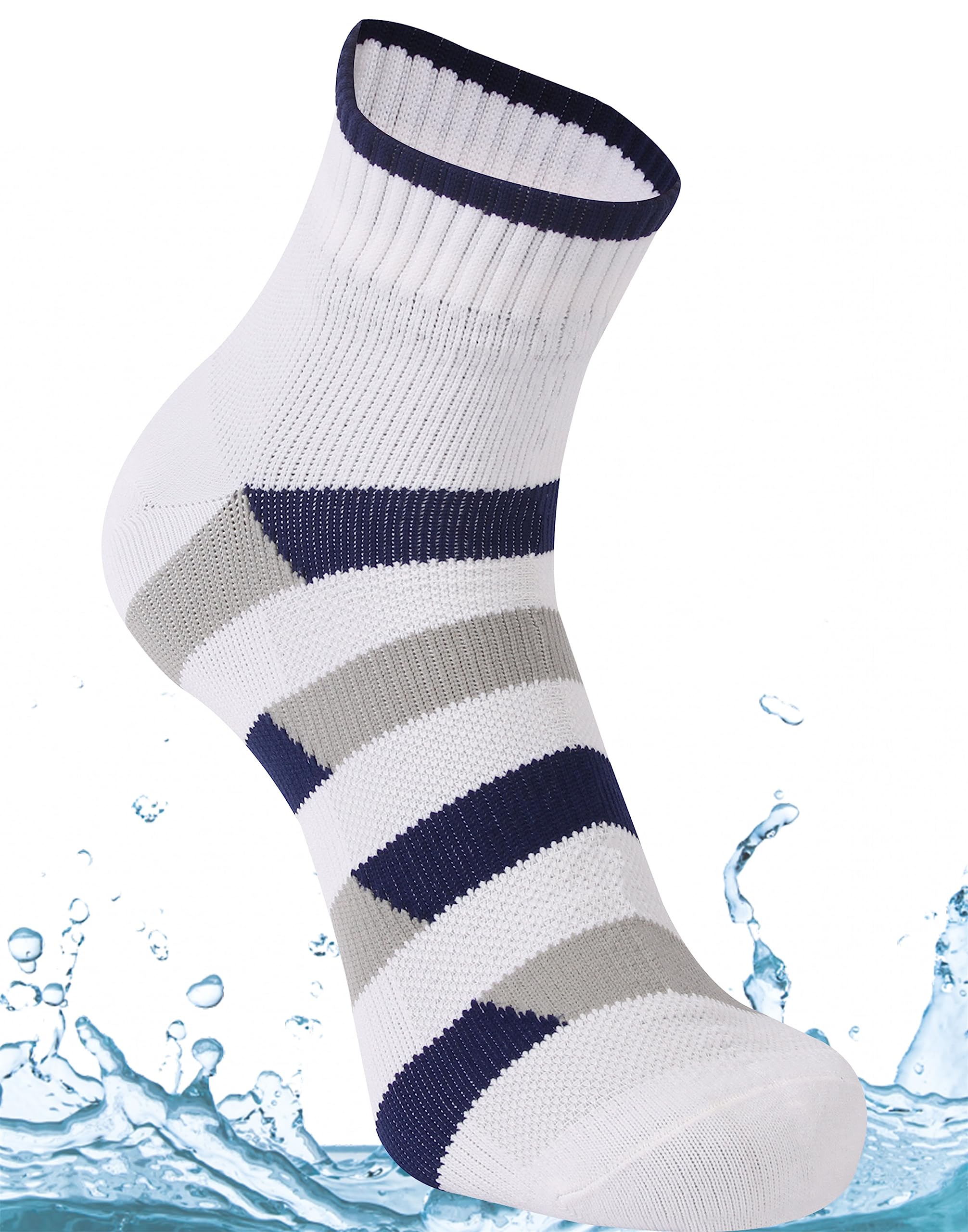
Three layers and a Coolmax lining aimed squarely at wading, kayaking and cold water.
Read the fabric list and you can see the engineering. The outer layer runs 61% waterproof nylon, 32% polyester and 7% elastane — a tough shell with just enough stretch to fit. The middle layer is 100% PU waterproof and breathable membrane, which is the part doing the rain blocking. The lining is 66% Coolmax, 30% polyester and 4% elastane, a fabric chosen because it pulls sweat away and dries fast.
For anyone wading in cold water, the insulation layer matters as much as the barrier. These are built for fishing, wading, kayaking, hunting and winter sports like skating and snowboarding, and the design choices support that. smooth toe closures cut rubbing, targeted arch compression keeps the sock from sliding, and reinforced heels and toes take abrasion. The pull-on cuff stays up rather than slouching down into your boot.
Fit is the consensus win here — it is the aspect owners bring up most and by a mile, with moisture handling a clear second. Where you should temper expectations is the water resistance reports. Some wearers stay dry, others get wet feet, which tracks with a sock that can only guard the territory below the cuff. Treat it as a wading-and-splash sock, not a drysuit accessory. There is a choice of ankle or crew height and four sizes, so match the cut to how deep you go.
What it is genuinely good at: cold-water activities where warm, well-fitted insulation under a boot or sandal is the point, backed by a real PU membrane and a sweat-wicking Coolmax lining.
The honest limit: the brand itself says to avoid submersion above the top — so no, it will not save you in chest-deep water.
Pick it for: wading, kayaking and winter activity where insulation and a secure fit matter more than a sleek running profile.
Think twice if: you want an ultra-slim sock that vanishes inside a racing shoe.
5. RANDY SUN Unisex Waterproof Socks 2.0
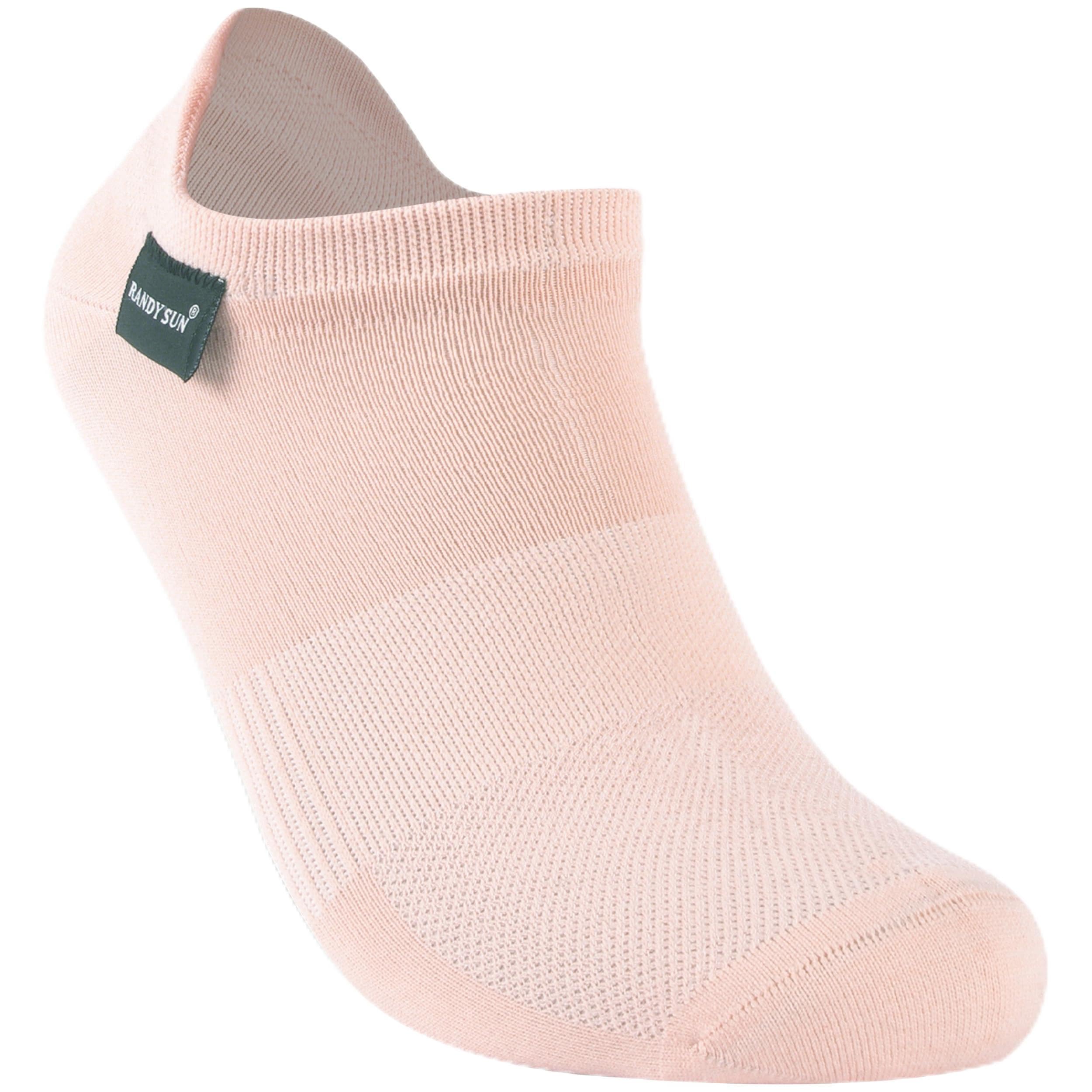
For runners who want the barrier without the bulk underfoot.
Thin is the point with this one. RANDY SUN builds the 2.0 as an ultra-thin, lightweight pair, and that matters if you like a snug shoe fit and refuse to give up room to a chunky sock. A slimmer build also cuts the friction that starts hot spots, which is why thin socks win with distance runners who heel-strike hard.
Water resistance is the strongest part of its reputation — it is the aspect owners praise most here, and they credit it for staying dry in normal rain. Quality and functionality sit close behind, so this is a sock that does its job without drama. It suits warm-weather running, travel where bag space is tight, and anyone pairing it with lightweight shoes.
Now the honest friction point: thin cuts both ways. The thickness itself reads mixed across wearers, with several finding it very thin — which is a feature if that is what you wanted and a surprise if you expected cushioning. If you want a padded heel and toe underfoot, the DRYMILE pair below tells a different story. This one is for the runner who wants the membrane and nothing else.
Why thin helps: the minimal build keeps your shoe fit intact and reduces rub points, while still blocking rain in everyday wet conditions.
Where it may not suit you: if you want cushioning or structure underfoot, this deliberately avoids it.
Best matched to: warm-weather runners and light packers who prioritize a slim, unobtrusive sock.
Skip the thin route if: your feet want padding and support on long efforts.
6. DRYMILE Active Waterproof Socks

A cushioned, work-and-running hybrid with an extra guard at the cuff.
The detail that stands out is the Dry-Guard strip — a waterproofed silicone strip running around the sock opening to cut down on water dripping in from above. It is a small addition, but it targets the open cuff that lets drip enter every waterproof sock on this list. The three-layer construction handles the rest, with a breathable yarn for sweat and a reinforced heel and toe plus ribbed arch support for impact.
The inner fabric blends bamboo and polyester, chosen for softness and odor management, and owners describe the feel as soft like a regular outdoor sock rather than a crinkly waterproof shell. That softness is rare in a three-layer waterproof sock. There is also a reflective strip around the ankle, which is useful if you run at dawn or dusk and want to be seen.
Use cases run wider than pure running — hiking, walking, travel and long workdays outdoors all get a mention. Owners say it performs well with water shoes in particular. The Dry-Guard strip is not a seal, though; it reduces drip entry, it does not make the sock submersible. The other thing to know is that reinforced cushioning makes this a fuller-fitting sock, so leave room in a tight racing shoe.
Why the cushioning pays off
- Reinforced heel and toe plus ribbed arch support add comfort under impact
- Dry-Guard silicone strip reduces water entry at the opening
- Bamboo/polyester blend stays soft and manages scent
- Reflective ankle strip helps visibility on low-light runs
What to plan around
- Fuller cushioning means more volume inside a tight shoe
- The Dry-Guard strip limits drip entry but is not a submersion seal
The right call when: you want a padded, multi-use waterproof sock for running, hiking or outdoor work.
Keep looking if: your racing shoe is snug and you need the thinnest sock possible.
7. Jeyiour 2 Pairs Waterproof Socks
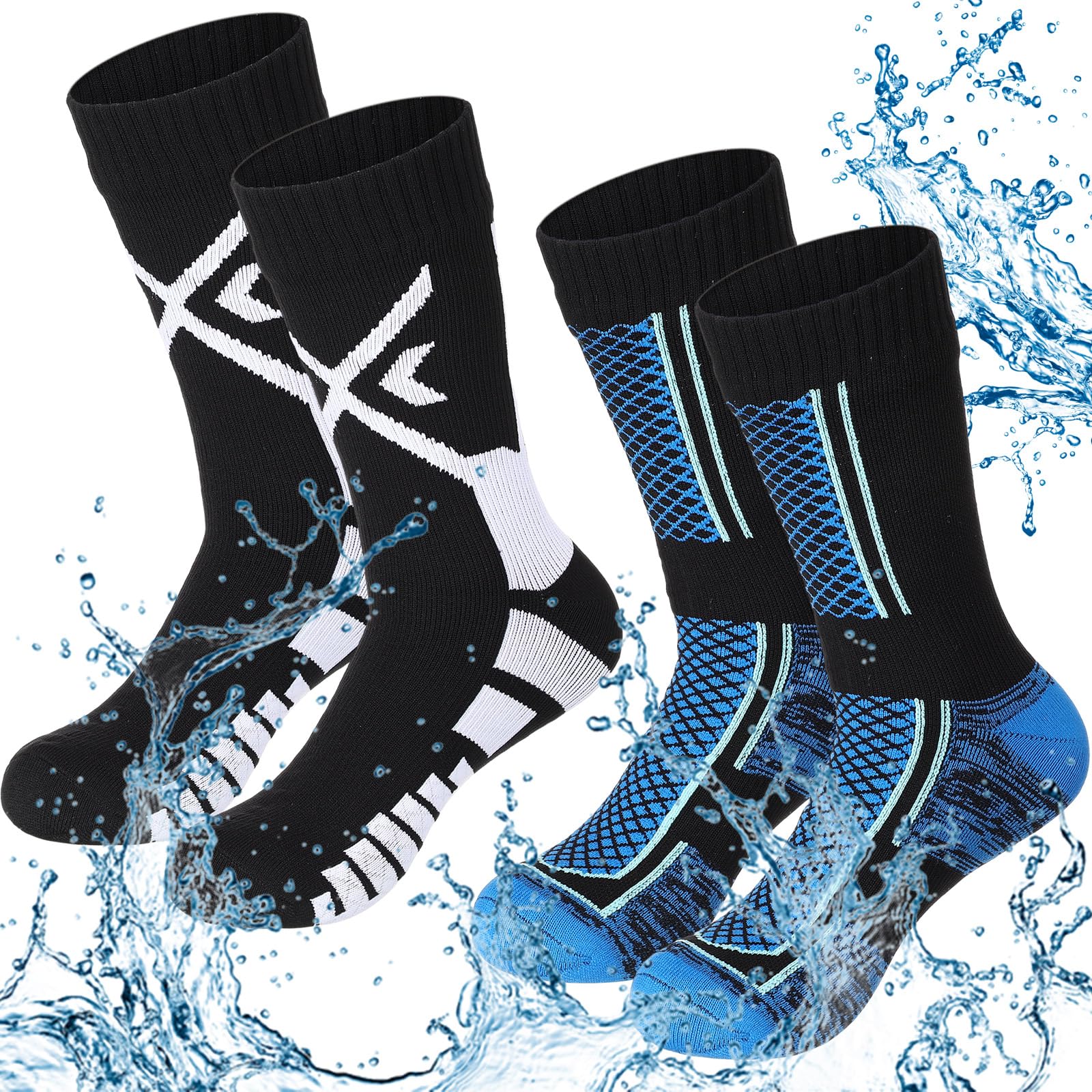
Two waterproof pairs in one box, sized to fit a medium foot right off the shelf.
The practical appeal is obvious — you get two pairs, so one can be drying while the other is on your foot. That solves the single biggest annoyance with waterproof socks, which is that the membrane layer takes longer to dry than a plain knit. It is a sensible setup for a runner who goes out several times a week.
Comfort is the consensus strength. Owners describe these as extremely comfortable, with a medium size that fits well, and they keep feet warm and dry. The elastic build holds them in place, and the sock is billed as breathable and soft, so it suits hiking and walking through water as happily as wet running. Moisture-wicking gets credit too, a genuine bonus in a waterproof sock.
Compared with the DRYMILE pair above, this one goes wider rather than deeper — two pairs for practical rotation, but without the added guard strip or reflective detailing. The listing is thin on technical detail, so if you want a published breathability figure or a specific membrane name to compare, this is not the pick that gives you that. For someone who simply wants two honest waterproof socks for hiking and running, it does the job.
The case for two: rotation matters with waterproof socks because they dry slowly, so a spare pair keeps you running through a wet week.
What you don’t get: no published membrane spec or breathability figure to check against the premium picks.
Choose these if: you want a comfortable, well-fitting pair you can rotate through daily wet-weather runs and hikes.
Pass if: you need documented specs to compare membranes before committing.
8. SEALSKINZ Bircham Ankle Sock

A military-approved ankle sock that balances waterproofing with temperature control.
The Bircham runs a Three-Layer Aquasealz system, with each layer helping moisture escape so the sock stays dry inside even in sustained wet conditions. SEALSKINZ makes the waterproofing claim outright, and pairs it with premium merino wool blended with performance fibers. It is made in the Sealskinz Norfolk factory, and the brand notes it is military-approved — a claim worth knowing but not a substitute for checking the fit.
Ankle length is the smart part for running. Lower coverage means more breathability, which is why this sock is pitched at mountain biking, trekking, trail running and hiking rather than full wading. On a wet trail run where you want airflow and a natural wool feel, that trade makes sense. The merino also regulates temperature across a wide range of conditions.
The one thing to watch is the water resistance pattern. Buyers consistently praise quality and functionality, but water resistance itself reads mixed, with some wearers reporting it does not hold up the way they expected. That usually depends on how deep the water gets relative to the cuff. Buy it as a breathable, natural-feel trail sock and it earns its place. Expect a sealed wading boot liner and you will be disappointed.
Where the design lands: a merino-based ankle sock for trail running and trekking in wet conditions, with breathability prioritized through the lower cut.
Set your expectation here: it guards against rain, wet grass and trail splash — not against standing water over the ankle opening.
Right for: trail runners who want merino comfort, temperature regulation and ankle-height breathability.
Wrong for: anyone expecting fully sealed feet in a mud bath.
9. SEALSKINZ Wiveton Mid Length Sock

The mid-length cut that keeps rain off your shin without roasting your foot.
SEALSKINZ calls this the warm-weather version of its waterproof sock, and the design reflects it. The patented three-layer AQUASEALZ technology uses a fully waterproof and breathable membrane, built so excess heat and perspiration can escape without letting water through. A mid-length cut gives you more fabric up the leg than the ankle Bircham, which is exactly what you want when wet grass and deep puddles are in play.
Length here is the decision. More coverage above the ankle means more protection from splash and spray, and the breathable membrane is the piece that keeps a taller sock from turning into a sauna in summer. The brand builds this range for the tougher environments — a long trail run in mixed weather is the kind of day it was designed around.
Where it differs from the Bircham above is the trade between coverage and airflow. The Bircham breathes more freely at the ankle; this one covers more shin and asks the membrane to do the heat management. If your runs mix road and trail and you want one sock that handles rain without going ankle-low, this is the sensible middle ground. Just remember that the taller the sock, the more the fit needs room in your shoe.
The arguments for it
- AQUASEALZ three-layer membrane lets heat and sweat out while blocking water
- Mid-length cut covers more of the shin against wet grass and splash
- Built as the warm-weather option, so the breathability matches the height
What to weigh first
- Taller coverage needs shoe room and runs warmer than an ankle sock
- Premium build sits at the top of the price range
A smart pick if: you want a taller waterproof sock for warm-weather trail runs in wet grass and rain.
Reconsider if: your priority is maximum airflow — the ankle-height Bircham wins there.
Know the Specs
Waterproof Membrane and Breathability
The mid-layer is what makes a water resistant running sock actually resist water, and a PU (polyurethane) or PORELLE membrane is the common choice. Breathability is the spec that separates a sock you can run in from a sock you sweat through. A Water Vapor Permeability rating tells you how much sweat vapor passes through, and some makers publish it while others do not. Where a number is offered, use it to compare. Where it is missing, weight the material choice instead.
Cuff Line and Cut Height
Every sock here protects below the cuff, so the cut is your real control over splash protection. Ankle socks breathe best and suit road running and light rain, while crew and mid-length socks cover more shin against wet grass and deeper puddles. Taller coverage is warmer and takes more room in a shoe, so match the height to the water you actually run through rather than the deepest puddle you can imagine.
Layer Construction and Fabric Blend
Waterproof socks are built in three layers: an outer shell for durability, a middle membrane for the water barrier, and an inner lining for comfort and sweat. Cotton-heavy socks hold water and turn abrasive, which is why these picks use merino, bamboo, Coolmax or moisture-wicking polyester blends inside. The inner fabric is what you feel against your skin, so treat it as a comfort decision as much as a technical one.
Fit, Sizing and Care
The laminated fabric of a waterproof sock stretches less than a plain knit, so buying your usual size can feel snug. Going up a size helps if you have wider feet or land at the top of a size range. Wash by machine or by hand with standard detergent, and air-dry inside out to protect the membrane. Skip direct heat sources, and use tumble dry low only where the maker allows it.
Common Questions
Can I run through puddles in a waterproof running sock?
Are water resistant running socks actually waterproof?
Will my feet get too sweaty in waterproof socks?
Should I buy a size up in waterproof running socks?
Are ankle socks or crew socks better for wet-weather running?
How do I dry waterproof socks without ruining the membrane?
Can I wear waterproof socks for hiking and fishing too, not just running?
Do waterproof socks last as long as regular running socks?
Is a merino waterproof sock warmer than a synthetic one?
What makes a waterproof running sock different from a normal running sock?
The Bottom Line
For most runners facing wet weather, the water resistant running socks worth buying first are the DexShell Waterproof Merino Wool Socks, because the combination of a PORELLE membrane and merino wool handles rain and sweat in the same pair. If breathable ankle coverage is your priority, grab the DexShell Men’s Running Sock. And for cold water wading and insulation, the Neoprene Unisex Outdoor Sports Socks are the ones to reach for. Whichever pair you pick, the cuff line is your ceiling. Stay below it and your feet stay dry; go over it and water pours in past the membrane.
How we choose
We do not accept paid placement. Every pick is matched to a real buyer and a real use-case; we do not hands-on test units.
Sources
Specifications: manufacturer listings and product documentation. Review insights: verified customer reviews, as of November 2026. Pricing: not shown on this page (it changes often); check the current price via the retailer link.
As an Amazon Associate, Tactical Gear Guy earns from qualifying purchases. This does not affect which products we feature.