Specs are compiled from manufacturer listings and verified buyer reviews and can change over time — please confirm the key details on the product page before buying.
You do not need the most expensive health watch on the shelf — you need one whose heart-rate readings you believe after a workout and whose battery does not quit before your evening walk. That is the whole decision, and this guide cuts straight to it. Below you get nine wrist watches that all genuinely track heart rate, sorted by what each one is actually good at, so you can match one to the way you move and the phone in your pocket.
This guide is built by comparing the manufacturers’ published specifications and the patterns across verified customer reviews, so you get each pick’s real strengths and trade-offs instead of marketing spin.
Some watches here run weeks off a single charge, others lean on your phone for apps and calls. Which one fits you depends far more on your phone and your charging habits than on the badge on the case. If you want the short version, the strongest all-round pick for most people is a smart health wrist watch that simply keeps working without asking for a cable every night.
Top Picks


How To Choose The Best Smart Health Wrist Watch
Start with the phone in your pocket, not the watch in the listing photo. Some of these watches only pair with Android devices, one only pairs with an iPhone, and a few work with both. Getting that wrong is the single fastest way to waste money here.
Battery life in real days, not marketing days
Battery specs come in two shapes, and they are not the same thing. Some listings quote an “18-hour” figure, which means a full day of smartwatch use — notifications, calls, workouts — before you charge. Others quote “20 days” of typical use, which assumes lighter screen time. Read which number you are being given before you judge.
If your routine has no room for a nightly cable, a multi-day watch changes how you live with it. If you are near a charger every night anyway, a full-day watch with fast top-ups is perfectly fine.
Heart rate and sleep are the health core
Every watch here reads your heart rate — that is the baseline. What separates them is what they do with that reading: sleep stages, stress, recovery scores, and blood-oxygen estimates (a rough read on how much oxygen your blood carries). Your real choice is raw numbers or a coach that interprets them for you.
Water ratings, explained without the jargon
A 5ATM rating means the watch is built to handle swimming and surface water, and IP68 adds dust resistance. A 10ATM rating steps that up to tougher water pressure. If you only sweat on it, you have plenty of headroom either way.
Side-by-Side Comparison
| Model | Best For | Battery Life | Heart Rate Tracking | Phone Compatibility | Amazon |
|---|---|---|---|---|---|
| Apple Watch SE 3 GPS 40mm★ Best Overall | iPhone owners who want safety alarms | 18 hours | Yes — workout and heart-rate metrics | iPhone | Amazon |
| Samsung Galaxy FIT 3 40mmBudget Champion | Android users on a tight budget | 13 days | Yes — heart rate and SpO2 | Android only | Amazon |
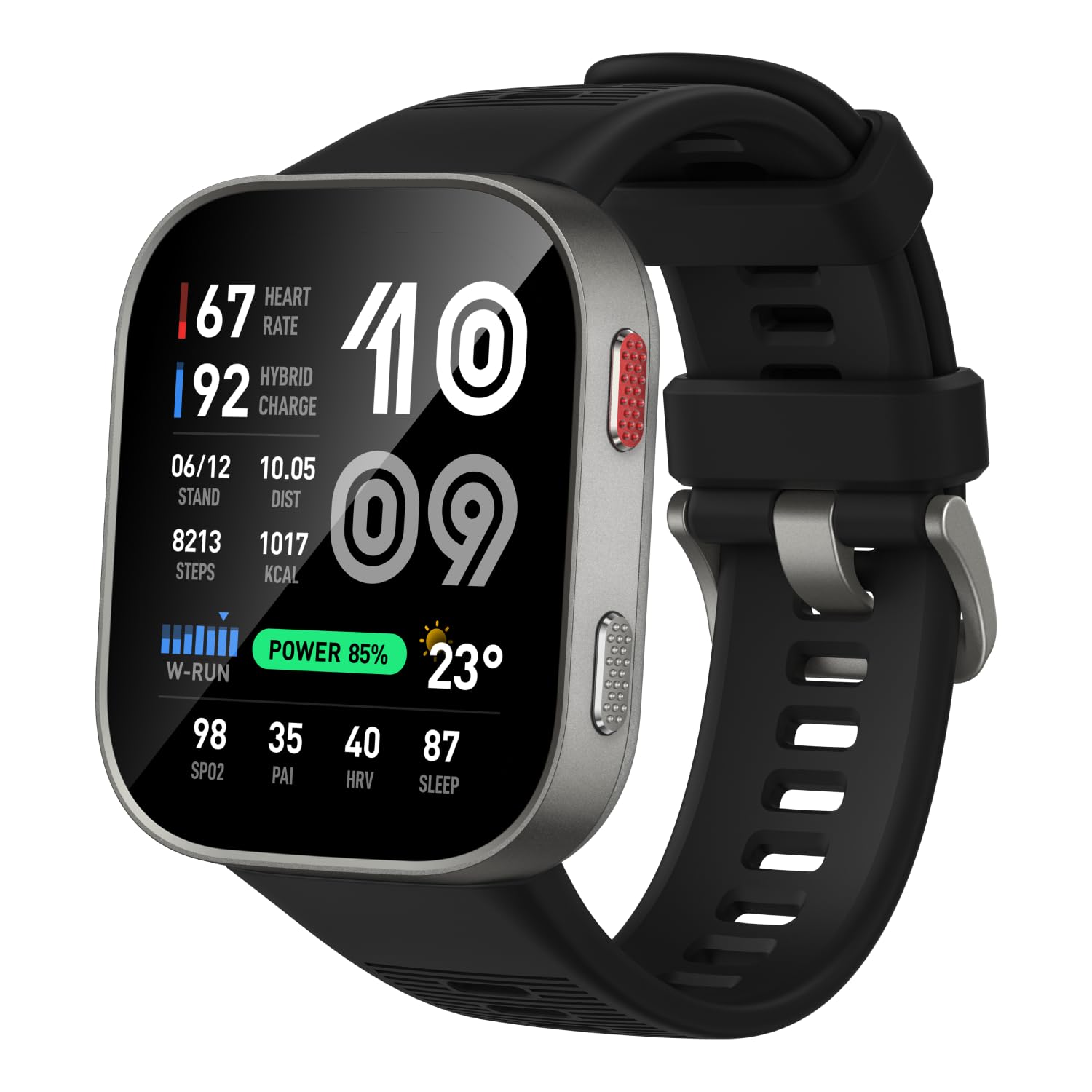
| Amazfit Bip MaxBiggest Screen | Long trips and big-screen fans | 20 days | Yes — accurate heart rate and sleep tracking | iOS and Android | Amazon |
| Fitbit Versa 4 | Balanced fitness and Google apps | 144 hours | Yes — 24/7 heart rate and sleep | iOS and Android | Amazon |
| Withings ScanWatch Light | Anyone who wants a classic analog look | 48 hours | Yes — heart rate monitoring | iOS and Android | Amazon |
| Garmin Instinct 3 Solar 45mm | Outdoor and trail use | 28 days | Yes — wrist heart rate and Pulse Ox | Paired smartphone | Amazon |
| Garmin Venu 3S | Health insights with a bright screen | Up to 10 days | Yes — heart rate and HRV status | iOS and Android | Amazon |
| Google Pixel Watch 5 45mm | Android owners who want Google smarts | Up to 40 hours | Yes — fine-tuned heart rate tracking | Android only | Amazon |
| Samsung Galaxy Watch Ultra 47mm LTE | Android users who want a big rugged watch | 590 mAh cell | Yes — advanced sleep and heart monitoring | Android | Amazon |
Detailed Reviews
1. Apple Watch SE 3 GPS 40mm Smartwatch
Our pick — 4.5+★ from 5,000+ verified ratings; the strongest balance of quality and price.
The every-phone watch that calls for help when you cannot.
The SE 3 tracks runs, strength work and your 10K step goal with real-time metrics, and it does the health job most people actually buy a watch for. Wrist heart rate, sleep, and activity all run on the watch itself. Setup is quick, the band sits comfortably, and it works with your iPhone or Wi-Fi to send texts, take calls, and fire Siri without your phone leaving your pocket.
What makes this the pick for most people is the safety layer. The 40mm SE 3 detects hard falls and severe car crashes, then helps connect you with emergency services and notifies your emergency contacts. That is a feature you buy hoping you never use it. Add an 18-hour battery that charges up to twice as fast as the SE 2 — up to 8 hours of battery in just 15 minutes — and a midday top-up stops being a chore.
The honest catch is that 18-hour figure. It is a full-day number, not a several-day number, and a chunk of feedback lands on that point — for heavy users the battery simply will not stretch. Push it hard with GPS workouts and long calls and you will be looking for the puck most evenings. That is the trade you accept for the iPhone integration and the crash detection.
Where it earns the crown
- Fall and crash detection that can call for emergency help on its own
- Fast charging — up to 8 hours of battery from 15 minutes on the charger
- Dozens of customizable faces and a wide range of bands
- Real workout tracking across running, strength training and daily steps
What to know before you buy
- 18-hour battery means a nightly or mid-day charge for heavy use
- Needs an iPhone to keep you connected
Settled: buy it if you carry an iPhone and want health tracking with a genuine safety net on your wrist.
Keep in mind: if you travel and hate cables, the charge cadence here is the one thing that may wear on you.
2. Samsung Galaxy FIT 3
A swim-ready tracker that outlasts most watches on the shelf.
The number that matters here is 13 days. A 208mAh battery carries the FIT 3 through a typical week twice over, so it sits on your wrist between charges instead of on a desk. Next to the Amazfit Bip Max’s 20 days it falls short, but against the full-day Apple Watch the gap runs the other way — this is the one you stop thinking about.
The 1.6-inch AMOLED screen is the other reason it punches above its tier. AMOLED means each pixel lights itself, so colors stay vivid and touch stays smooth at a price most people keep as a spare. Health coverage runs deeper than you would guess: sleep coaching, SpO2 (an estimate of oxygen in your blood), heart rate, and snore detection, plus 101+ workout modes that spot a lot of movement automatically.
Two hard limits deserve a straight warning. It is an international model with no US warranty, and it only pairs with Android phones — no iPhone. Samsung Pay is also not supported. If you carry an Android and can live without the warranty, the value is tough to argue with.
The value read: you get a bright 1.6-inch AMOLED display, swim-ready 5ATM and IP68 protection, and 13 days of battery in one of the least expensive packages here.
The fine print: no US warranty and Android-only compatibility are the two things that stop this being a universal recommendation.
Worth grabbing if: you are on Android and want maximum tracked days per charge for minimum outlay.
Pass over if: a US warranty or iPhone pairing is non-negotiable for you.
3. Amazfit Bip Max Smart Watch
A screen so big you forget you are wearing a watch, not a phone.
At 2.07 inches, this is the largest AMOLED display in this lineup — visibly bigger than the Samsung FIT 3’s 1.6-inch panel — and the aluminum alloy body keeps it light on the wrist. The 20-day battery is the headline the box leads with, and it means two work weeks between charges.
Where it earns its keep is off the grid. There is 4GB of onboard storage for offline maps pulled from the Zepp App, plus turn-by-turn directions and off-track alerts backed by five satellite systems for a fast GPS lock. Owners describe leaving the phone behind and still having quick access to media and route guidance. On the health side you get heart rate, sleep tracking, a BioCharge recovery score, and 150+ sport modes with adaptive Zepp Coach routines.
The trade-off is the charger itself: the magnetic charging base ships without a USB Type-C cable, so dig out your own. And the two-button, Zepp-based interface is not as deep as watchOS or Wear OS — this is a tracker first.
Why it stands out: a huge 2.07-inch AMOLED screen and 20 days of battery are a combination you do not usually find at the same spot on the shelf.
One thing to pack: the charging base has no cable in the box, so bring your own USB Type-C lead.
Made for: hikers and travelers who want a big readable screen and hate charging rituals.
Not the one for: you if you want deep app support on your wrist.
4. Fitbit Versa 4 Health & Fitness Smartwatch

Six days of charge and a Daily Readiness score that tells you to rest.
You charge the Versa 4 far less often than anything else here. Its 144 hours in smartwatch mode is the longest quoted figure in this guide — against the Apple Watch SE 3’s 18 hours, that is a full work week between charges. A 260mAh lithium-ion cell (the battery’s capacity) carries it, and fast charging covers the odd top-up.
Health tracking is where this watch earns its keep. You get 24/7 heart rate, advanced sleep tracking with personalized insights, and a Daily Readiness Score that tells you whether your body is ready for a hard session or needs a recovery day. A 50-meter water resistance rating (safe for swimming) means the shower and pool are both fine, and 40+ exercise modes cover most sports.
Google Maps and Google Wallet live on the wrist, so turn-by-turn directions and tap-to-pay do not require digging out a phone. The caveat: that Google app support and some insights live behind a subscription for the deeper features, and the interface can feel busy if you only want step count and heart rate.
Clear strengths
- 144-hour battery — six days between charges in smartwatch mode
- Built-in GPS and 40+ exercise modes for pace and distance
- Google Maps and Google Wallet on the wrist
- 50-meter water resistance for swimming and showers
Points to weigh
- Full insights sit behind a subscription
- The interface runs dense for casual users
The smart move: this is the one to choose if long battery and sleep insight top your wishlist.
The honest note: if you hate subscriptions and want a barebones readout, simpler trackers here suit you better.
5. WITHINGS Scanwatch Light

The watch that looks like your grandfather’s, tracks like your trainer’s.
This is the only hybrid here — an analog face with hands and a stainless steel case in white, 37mm. That styling is why people pick it. It reads like a dress watch, works with a suit, and still tracks heart rate and activity underneath. If the glowing AMOLED screens of the Amazfit and Samsung models feel like too much technology on your wrist, this is the answer.
Battery is quoted at 48 hours and the customer consensus backs it — the phrase that keeps coming up is that it doesn’t need charging for weeks. Note that the listing’s 48-hour figure and the “weeks” phrasing don’t fully line up, so factor that in.
What most buyers notice, though, is the mixed feedback on functionality. Some feel it works well; others report unreliability. It’s not a buggy product — but for a tracker this simple, you’re paying for the look and the brand heritage more than for a depth of features. The 0.12 amp-hour cell is small, which is part of why it’s so compact.
Wearing it daily: a stainless steel hybrid that sits comfortably on the wrist and looks at home in office and dress settings.
The trade you feel: functionality feedback is genuinely split, so come in with reasonable expectations of what it tracks.
Ideal for: someone who wants health tracking without a glowing screen and dresses smart daily.
Look past it if: you want a deep feature set and a fully tested, unanimous-track record of accuracy.
6. Garmin Instinct® 3 Solar, Rugged GPS Smartwatch, 45mm, Black

A watch you can throw at a mountainside and still trust on the trail.
Garmin built this one to take hits. The 45mm fiber-reinforced polymer case with a metal-reinforced bezel is rated to MIL-STD-810 (a military standard for surviving heat and shock), so drops and temperature swings are less of a worry. A 10 ATM water rating (pressure-rated for diving) handles far more than a pool — the PADI standard depth maxes out at 100 meters. A built-in LED flashlight with variable intensities and strobe modes only proves itself when you need light in the dark.
Battery is where the solar lens does the talking. Garmin rates it for unlimited solar runtime with three hours a day outside in 50,000-lux conditions, and 28 days of regular use otherwise. That 28-day figure is the longest in this guide — roughly four weeks between charges. Navigation runs on a 3-axis compass, barometric altimeter, and multi-band GPS with SatIQ.
The honesty part: health tools here are strong but not medical. The Pulse Ox reading and heart rate are close estimates, not clinical measurements, and the tiny 0.9-inch display is a deliberate trade for battery and durability. If you want a big, bright watch face, this isn’t it.
Built to take hits: MIL-STD-810 shock and thermal rating plus 10 ATM water rating make this the toughest watch in the lineup.
The small-screen trade: a 0.9-inch display is cramped by smartwatch standards, but the battery payoff is real.
Choose it when: you hike, climb, or work outdoors and need hardy hardware and a long runtime.
Leave it if: a crisp, big screen for reading texts and apps is a bigger priority than durability.
7. Garmin Venu 3S, Running GPS Smartwatch, AMOLED Display

Ten days off a charge, with sleep scores that read like a doctor’s note.
The Venu 3S is the insights machine. A bright colorful AMOLED display pairs with up to 10 days of battery in smartwatch mode, and a 41mm lightweight case with a stainless steel bezel keeps it comfortable for round-the-clock wear. A 220mAh cell carries that runtime.
Body Battery is the star feature: it reads your sleep, naps, stress, and workouts to tell you when you are charged up or need rest. Add a sleep score with personalized coaching, HRV status (the beat-to-beat variation that hints at stress and recovery), plus stress tracking and menstrual cycle and pregnancy tracking. Phone calls and voice-assistant replies work over a paired Android or iPhone, and Android users can text straight from the watch.
Wheelchair mode is worth naming because few watches include it — it tracks pushes rather than steps, with push and handcycle activities and animated workouts for strength, cardio, HIIT, Pilates, and yoga. The catch: that deep feature set needs the Garmin Connect app, and the 18mm band width means most spare straps you already own will not fit.
Why it climbs the list
- Up to 10 days of battery with a bright AMOLED display
- Body Battery energy monitoring plus sleep score and HRV status
- Wheelchair mode with push and handcycle activities
- Calls and voice replies on both iPhone and Android
The fine line
- The best insights depend on the Garmin Connect app
- An 18mm band limits your strap options
This is the one: best for someone who wants recovery guidance and sleep coaching, not just step counts.
Grab a different pick if: you want to swap in a favorite strap — the 18mm width ties you to compatible bands.
8. Google Pixel Watch 5 (45mm)
The Android watch with Google built right into the glass.
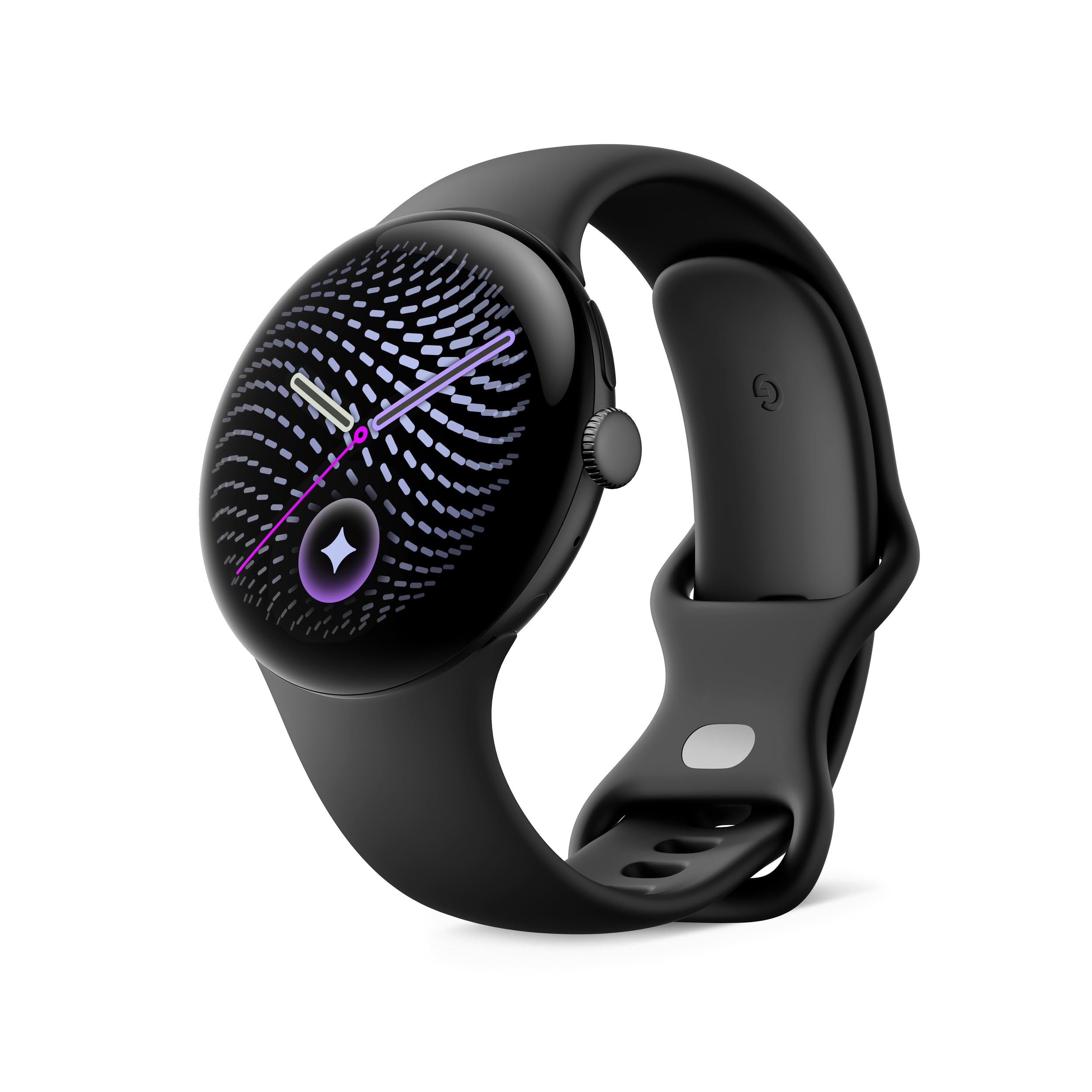
A domed Actua 360 display with scratch-resistant Gorilla Glass is what catches the eye. The design earns the most attention — the curved glass over that bright screen reads as premium on the wrist. Under the hood, up to 40 hours of battery is a meaningful step up from a single-day watch, though it will not stretch to the week-plus of the Garmin or the Amazfit.
Google Health is the core draw. You get proactive help and personalized insights, with heart-rate tracking Google calls its most accurate, tuned for workouts. Sleep review breaks down time in sleep stages and breathing regularity into a Sleep Score. Loss of Pulse Detection can prompt a call to emergency services, which Google says is unique to this watch.
The catch is compatibility and one specific app gap: this is Android-only and won’t pair with iOS. Some buyers also flag Strava integration as a pain point. If you run on Android and live in Google’s ecosystem, it is the natural choice.
For Android users: a domed Actua 360 display, up to 40 hours of battery, and deep Google Health integration in one package.
The real ceiling: Android-only pairing and a mixed record on third-party workout app syncing.
Good fit for: Android owners who want Google’s health smarts and a polished look.
Skip if: you use an iPhone or lean hard on Strava integration.
9. Samsung Galaxy Watch Ultra, Titanium Silver, 47mm LTE
The big-screen, big-battery Android watch for people who go far.
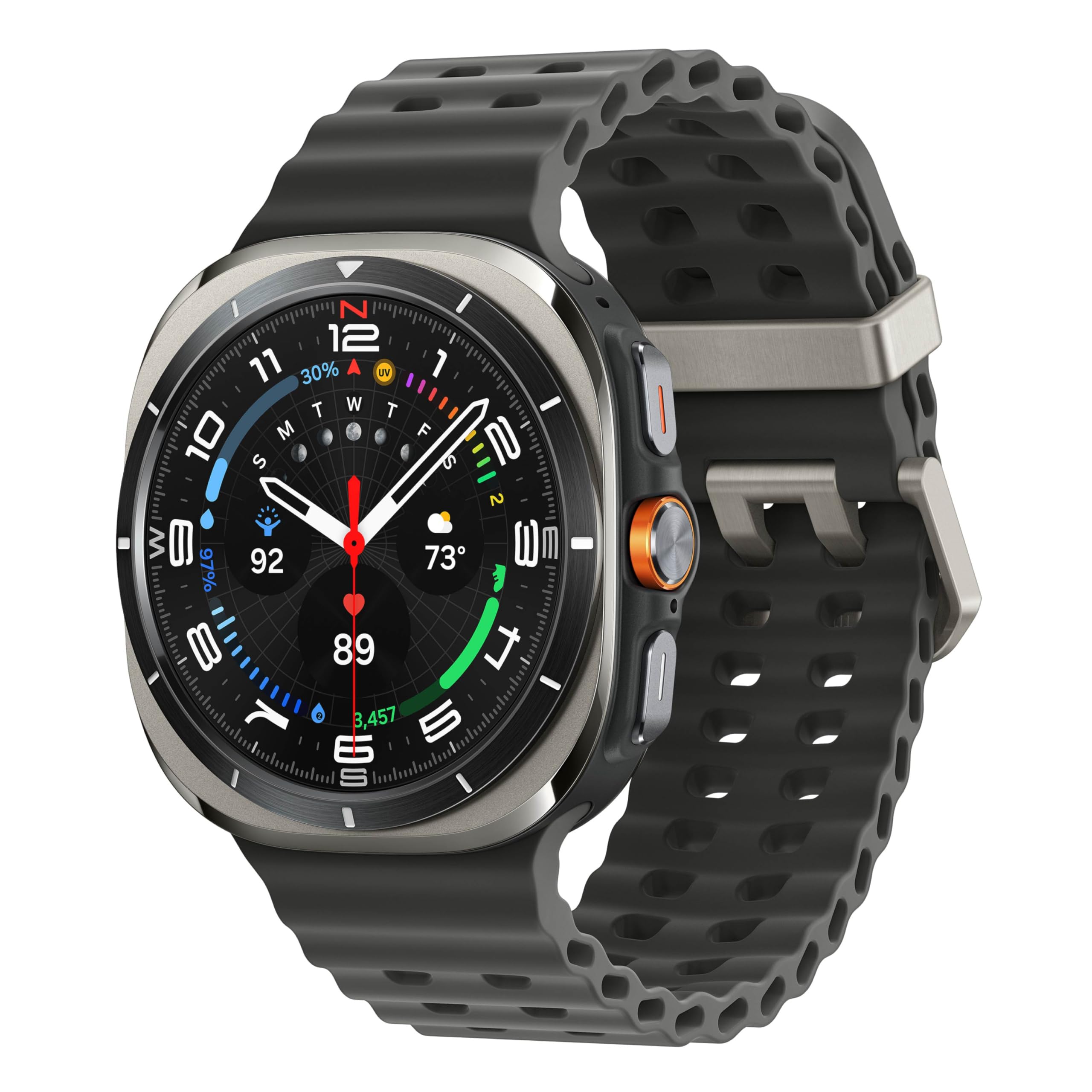
A 47mm titanium case, 10 ATM water resistance, and LTE connectivity in one package: this is the largest, most rugged-feeling Android watch here. Its 590 mAh cell is the biggest battery here by a wide margin, and Samsung calls it their longest-lasting yet.
The health toolkit is wide. Advanced Sleep Coaching, a Running Coach that analyzes age, weight, oxygen levels, and heart rate, and an Energy Score with Galaxy AI that summarizes your wellness several times a day. Blood pressure monitoring needs a cuff (sold separately) calibration first, then reads from the Samsung Health Monitor app.
Two things cloud the picture. Battery feedback is genuinely split — some find it incredible, others report charging every two days. And value is polarizing: buyers agree on the premium feel and the big screen, but the price lands hard. It also pairs with Android only — Samsung phones first, other Android phones with the Galaxy Wearable app.
What you get: the biggest battery and screen in this guide, 10 ATM durability (pressure-rated for diving), and a deep health suite built around Galaxy AI (Samsung’s on-watch software that interprets your readings).
Worth knowing: battery feedback varies widely and blood pressure tracking requires a separate cuff.
Right for: Android users who want the largest, toughest watch and don’t mind the premium tier.
Reconsider if: you need consistent multi-day battery or use an iPhone.
Know the Specs
Heart rate and SpO2 sensors
A heart-rate sensor uses light to read blood flow through your skin, and it powers everything from workout zones to rest-day readiness. SpO2 estimates how much oxygen your blood is carrying, often read overnight. Every watch here tracks heart rate; the depth of what they do with it varies. These are close estimates, not medical measurements.
Battery figures — hours versus days
Watch listings mix two different battery conventions. An 18-hour figure describes full smartwatch use with the screen, notifications, and workouts running. A 13-day or 20-day figure describes typical use, often with lighter screen time. Neither is a lie, but they are not comparable. Read which convention you are being quoted before you compare two numbers.
Water resistance ratings
5ATM handles swimming and surface water, and IP68 adds dust protection. A 10ATM rating stands up to stronger water pressure, which suits ocean swimming and rougher conditions. If your worst exposure is sweat and rain, most ratings here give you plenty of margin.
AMOLED versus hybrid displays
AMOLED means every pixel produces its own light, which keeps colors vivid and deepens contrast. A hybrid display pairs physical hands with a small screen, keeping the classic watch look and stretching battery life. The display type is the clearest lifestyle split on this list.
Common Questions
Will a Samsung Galaxy watch work with an iPhone?
What does 5ATM water resistance actually mean?
How is the 18-hour battery figure different from a 20-day figure?
Do I need a subscription for the health insights?
Can I track my sleep accurately with these watches?
Is a solar-charging watch really unlimited?
Can a smartwatch really measure blood pressure?
Which watch is easiest to charge?
Do these watches work with Strava?
Can a health watch replace a medical device?
The Bottom Line
If you want one watch to start a health routine, the smart health wrist watch that earns the top spot is the Apple Watch SE 3 — it tracks heart rate and workouts, watches your back with fall and crash detection, and charges fast enough that the 18-hour battery stays manageable. Carry an Android phone and want the most days between charges? The Amazfit Bip Max gives you 20 days and a 2.07-inch AMOLED screen (a bright, sharp display) for far less effort. Want the deepest health insights in a genuinely rugged build? The Garmin Instinct 3 Solar runs 28 days and survives whatever you throw at it.
Pick the one whose charging cadence fits your routine and whose app you will actually open.
How we choose
We do not accept paid placement. Every pick is matched to a real buyer and a real use-case; we do not hands-on test units.
Sources
Specifications: manufacturer listings and product documentation. Review insights: verified customer reviews, as of November 2026. Pricing: not shown on this page (it changes often); check the current price via the retailer link.
As an Amazon Associate, Tactical Gear Guy earns from qualifying purchases. This does not affect which products we feature.