Specs are compiled from manufacturer listings and verified buyer reviews and can change over time — please confirm the key details on the product page before buying.
If you want the short answer: the Fujifilm Instax Mini EVO is the retro instant camera to buy, because it lets you shoot, preview, and reprint instead of gambling one shot on one expensive sheet of film. Every pick below is a real instant film camera that spits out a physical print — not a digital camera pretending to be retro. The differences that matter are the film format, the print size, and whether you can see a photo before you commit to printing it.
This guide is built by comparing the manufacturers’ published specifications and the patterns across verified customer reviews, so you get each pick’s real strengths and trade-offs instead of marketing spin.
You will see film size, print size, and control layout spelled out in plain language for each pick. The reward is a camera you actually carry, and this breakdown of the best retro instant camera covers the nine models worth your attention.
Top Picks

How To Choose The Best Retro Instant Camera
The retro look is the easy part — almost every camera here wears a film-era body. What separates a camera you love from one that sits in a drawer is the film it eats and what comes out the other side. Settle the film format first, then weigh preview screen, print size, and weight.
Film format is your real budget line
Every shot burns one sheet of film, so the format you pick sets your running cost for as long as you own the camera. Instax Mini film gives you a small 2” x 3” credit-card print. Instax Square gives you roughly 1.5x the size of a mini print, which is noticeably easier to see across a room. Polaroid Go film is its own smaller format, and Polaroid’s i-Type and 600 cameras take full-size Polaroid film. No camera here shoots more than one format, so choose the print size you actually want to hand someone.
Analog or hybrid: do you get to see the shot first?
A true analog instant camera fires the shutter and prints — one press, one sheet, no undo, which is exactly the charm. A hybrid model like the Instax Mini EVO lets you frame on a screen, apply a lens or film effect, and only then send the image to the printer. Hybrids also let you print from your phone over Bluetooth. If you want one press and one print with no screen in between, go analog. If wasted film would annoy you, a hybrid with a preview screen is the safer buy.
Print size, selfie mirror, and flash
Print size decides where the photo lives — a Mini print tucks into a wallet, a Square print fills the front of a scrapbook page. A built-in selfie mirror (a small mirror beside the lens) is the difference between a framed portrait and a photo of your chin on these near-point-and-shoot bodies. Built-in flash is near-universal here, but check for it, because indoor birthday shots go dark fast without one.
Where these cameras fit in real life
These are party, wedding, travel, and gift cameras. They are not your everyday-carry shooter with zoom and manual controls. Choose weight and footprint around where the camera will live — a pocketable 239 g body travels in a tote, while a bigger one asks for a dedicated case. If the camera is for a grandchild or a first-timer, keep the controls down to a twist and a shutter button.
Side-by-Side Comparison
| Model | Best For | Film Format | Print Size | Weight / Power | Amazon |
|---|---|---|---|---|---|
| Fujifilm Instax Mini EVO★ Best Overall | Flexible hybrid printing | Instax Mini | 2” x 3” | 9.92 oz | Amazon |
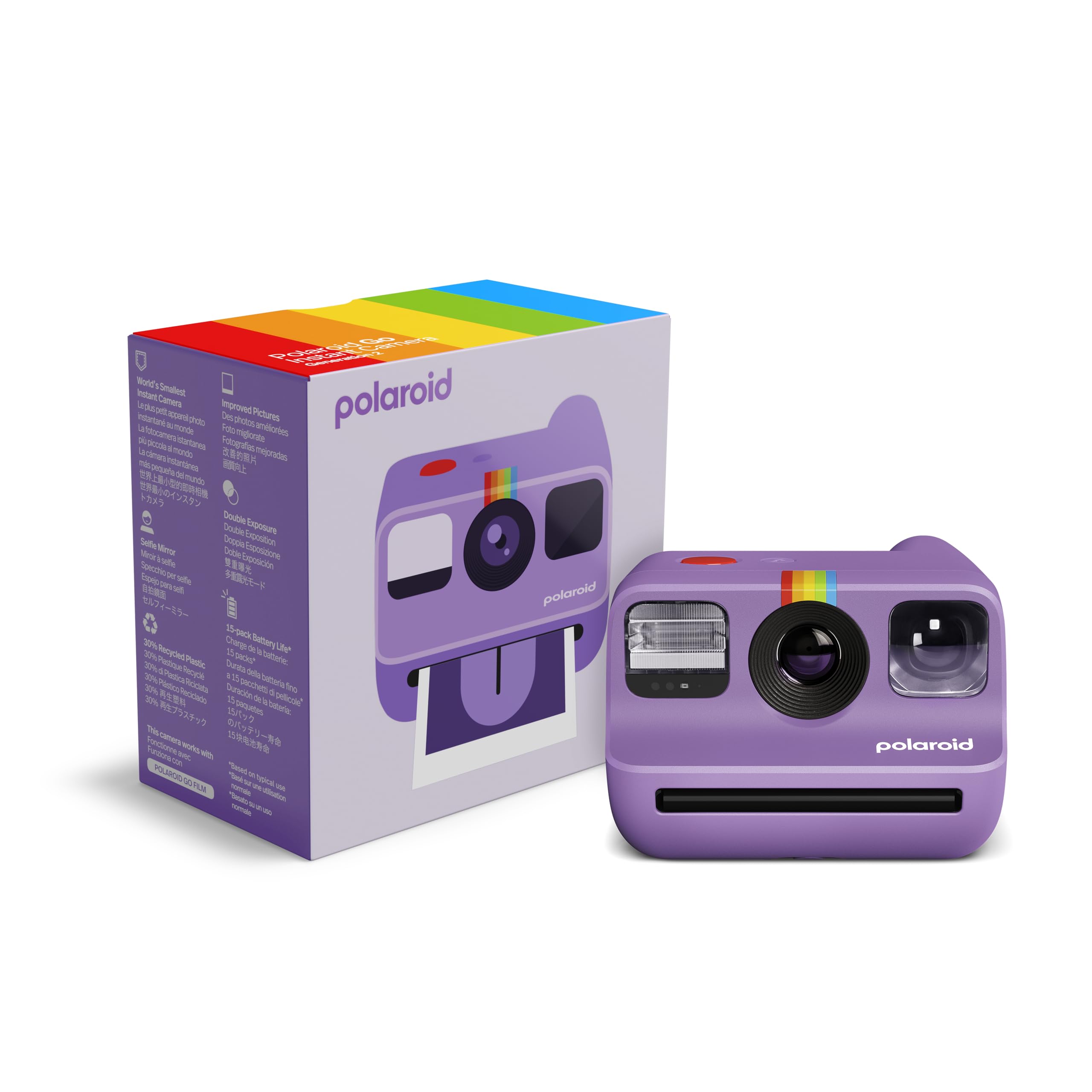
| Polaroid Go Generation 2Best for Travel | Pocket-size travel | Polaroid Go | Polaroid Go film | 239 g / 150 photos per charge | Amazon |
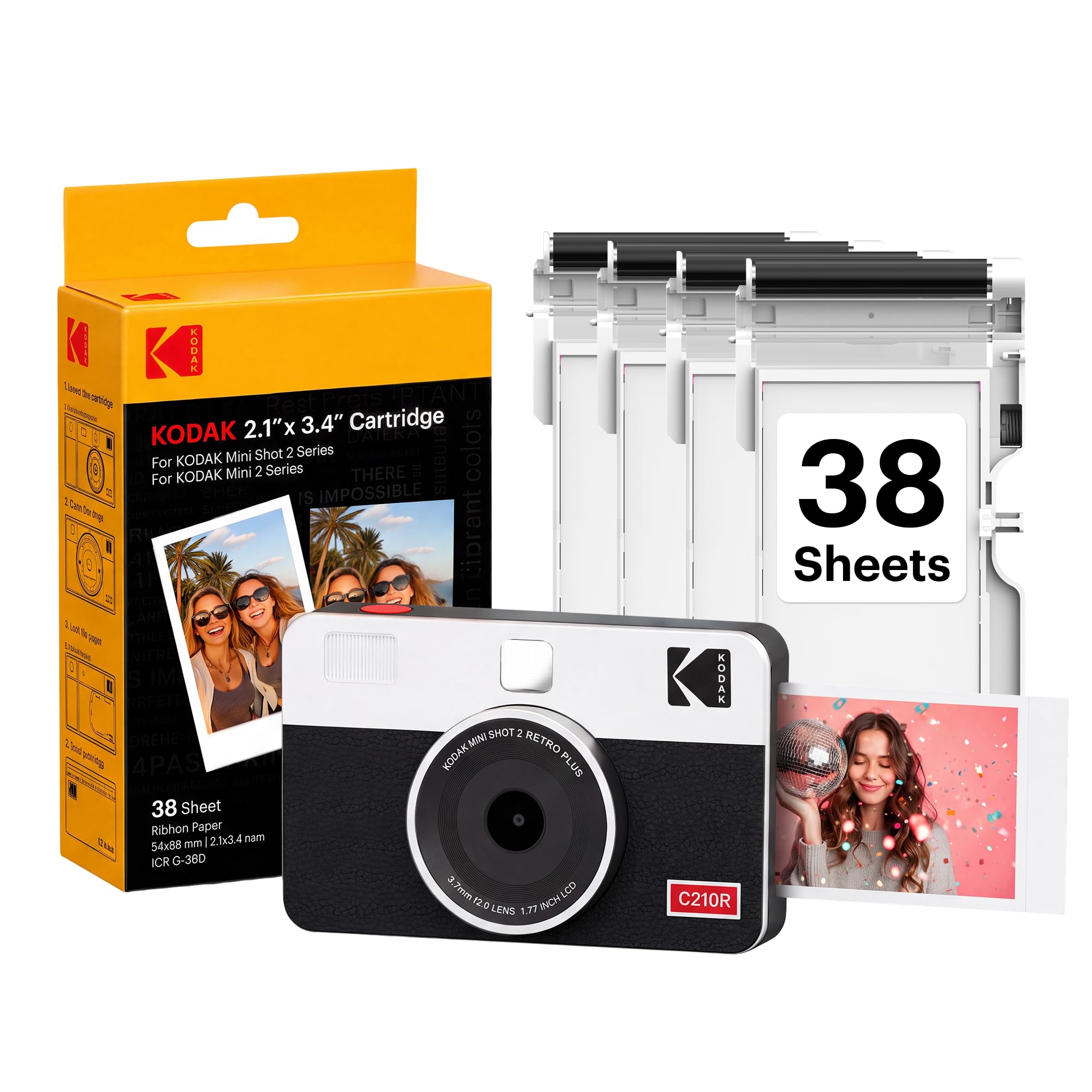
| KODAK Mini Shot 2 RetroCheapest Prints | Cheap prints, many of them | Kodak Instant Print | 2.1 x 3.4” | 10 mp camera | Amazon |
| KODAK Mini Shot 3 ERA | Square 3×3 prints | Kodak Instant Print | 3×3” | 13 mp / 912 g | Amazon |
| Impossible Polaroid 600 Square | True vintage feel | Polaroid 600 | Polaroid 600 print | 1.5 lb | Amazon |
| Polaroid Now Gen 3 Bundle | Big Polaroid prints | Polaroid i-Type / 600 | Polaroid i-Type print | 1.5 lb / USB-C rechargeable | Amazon |
| Fujifilm Instax Square SQ1 | Biggest square instant prints | Instax Square | 1.5x mini size | 390 g | Amazon |
Detailed Reviews
1. Fujifilm Instax Mini EVO Instant Camera
Our pick — 4.5+★ from 600+ verified ratings; the strongest balance of quality and price.
The one camera here that lets you change your mind before the film runs.
The Instax Mini EVO is a hybrid, which in plain terms means it has a digital screen and an instant printer inside the same brown-bodied retro shell. You frame the shot, pick one of 10 lens effects and 10 film effects — that pair of dials is where the 100 combinations come from — and only then send it to the printer. That single design choice is why it sits at the top: you cannot waste a sheet on a blink or a blown-out window. It prints standard 2” x 3” Instax Mini photos, and the film is sold separately.
The flexibility goes further than the viewfinder. You can save prints to a microSD card (not included) and push photos from your phone to the printer over Bluetooth using the free Instax Mini EVO app. There are also dual shutter buttons for portrait and landscape framing, plus a built-in selfie mirror so your face lands where you aimed. In a category where most cameras give you one press and one chance, that is a genuine differentiator — and at 9.92 ounces it is light enough to actually carry, unlike the KODAK Mini Shot 3 ERA at 912 g.
The trade-off is honest and worth naming: this is the pick with the most electronics in it, and the long-run reliability conversation around it is mixed, with some units reported to stop powering on. It is also the most feature-heavy camera here, which means more to learn than a twist-and-shoot analog body. Treat it as a flexible everyday camera rather than a hand-me-down heirloom, and it rewards you with control no analog model in this list can match — the crowd backing it is strong, with the quality of the unit drawing the most praise by a wide margin.
What earns it the top spot
- Preview screen and reprint control mean almost no wasted Instax Mini film
- 10 lens effects paired with 10 film effects for 100 looks straight out of the body
- Bluetooth printing from your phone plus microSD storage for the originals
- Dual shutter buttons and a selfie mirror for framing in either orientation
Where it asks patience
- Film is not included, so budget for Instax Mini sheets on day one
- A hybrid body means more that can fail than a simple analog camera
- Photo quality splits opinion — effects are fun, not a substitute for a real camera
Made for: anyone who wants one camera for parties, travel, and phone-photo printing without gambling film.
Think twice if: you want the pure analog thrill of a single irreversible press.
2. Polaroid Go Generation 2 Mini Instant Film Camera
At 239 grams, this is the camera that rides in a jacket pocket and never gets left home.
Polaroid builds this as its smallest instant camera, and the 239 g frame is the whole pitch — it slides into a bag, tote, or pack and stays out of the way until you need it. That is a real advantage next to the 912 g KODAK Mini Shot 3 ERA, which is over three times heavier by the numbers in the spec sheets. The catch with a body this small is the film: it shoots only Polaroid Go film, a smaller format than the Polaroid i-Type film the bigger Polaroid cameras take, so your print comes out pocket-sized rather than full Polaroid.
A single charge covers 15 film packs, which is enough shooting for a long weekend trip without hunting for a cable. The reflective viewfinder doubles as a selfie mirror, and the camera carries both a double-exposure mode and a self-timer — the double exposure is the sleepy-hit feature here, because it turns two presses into one layered, slightly strange image that no filter app imitates. The large aperture range and a precise light sensor are what Polaroid credits for the better exposure on this generation.
Where it stumbles is sharpness in low light and the discipline of a truly analog press — this one shoots and prints with no review screen, so a misfire costs you Go film. It is also locked to one film type, so you cannot borrow a friend’s leftover Polaroid sheets. Pick it if portability is the point and you are happy with small, soft-edged prints; the compact format is the trade you are making for the size.
The case for the Go: if the camera’s job is to leave the house, this 239 g body beats every bulky option here, and the double-exposure mode gives you a reason to shoot that no phone can match.
The honest gap: it only eats Polaroid Go film, so a bigger Polaroid print is off the table no matter how much you love the camera.
The pocket-first pick: travelers and concert-goers who want instant prints without a case and a strap.
The caveat: expect small prints and a film supply you have to source on its own format.
3. KODAK Mini Shot 2 Retro Instant Camera and Photo Printer
The workhorse that prints 2×3 stickers, not film, and does it in roughly 55 seconds a shot.
The Mini Shot 2 Retro swaps instant film for a 4PASS dye-sublimation printer — that is a three-color process finished with a clear protective lamination layer, which is the reason the prints are built to resist fingerprints, water, and fading. It prints 2×3” photos, and, unlike the film cameras here, you can review a shot and reshoot before you commit to paper. The camera captures at 10 mp, which is the more modest sensor next to the 13 mp in the KODAK Mini Shot 3 ERA above — the smaller format and lighter print load are the matching trade.
It is a genuine 2-in-1: shoot and print from the body, or connect over Bluetooth and print straight from your phone through the KODAK Photo Printer app, where you can crop and customize first. Setup is minimal — power it on, frame, print — and the small footprint means it fits in a hand, a bag, or a pocket on the tight side. The sizable body of buyers here skews toward parents buying it for kids, which fits the simple controls and forgiving 2×3 print size.
The point to weigh is the paper. This camera does not run on Instax or Polaroid film at all, so the zink-style Kodak paper and ink cartridge is your supply line, and the 38-sheet kit is where a trip’s worth of printing starts. It is also a retro-styled printer that is really a digital camera with a built-in printer, not a true film camera — so if the chemical magic of watching an image develop is the reason you want one of these, look elsewhere in this list. If volume and durable prints are the goal, it earns its place.
For high-volume shooters: the family camera, the scrapbook printer, and the child-friendly first camera all in one.
Not for film purists: it prints on laminated paper, so the instant-film developing ritual is absent.
4. KODAK Mini Shot 3 ERA 3×3 Instant Camera and Photo Printer
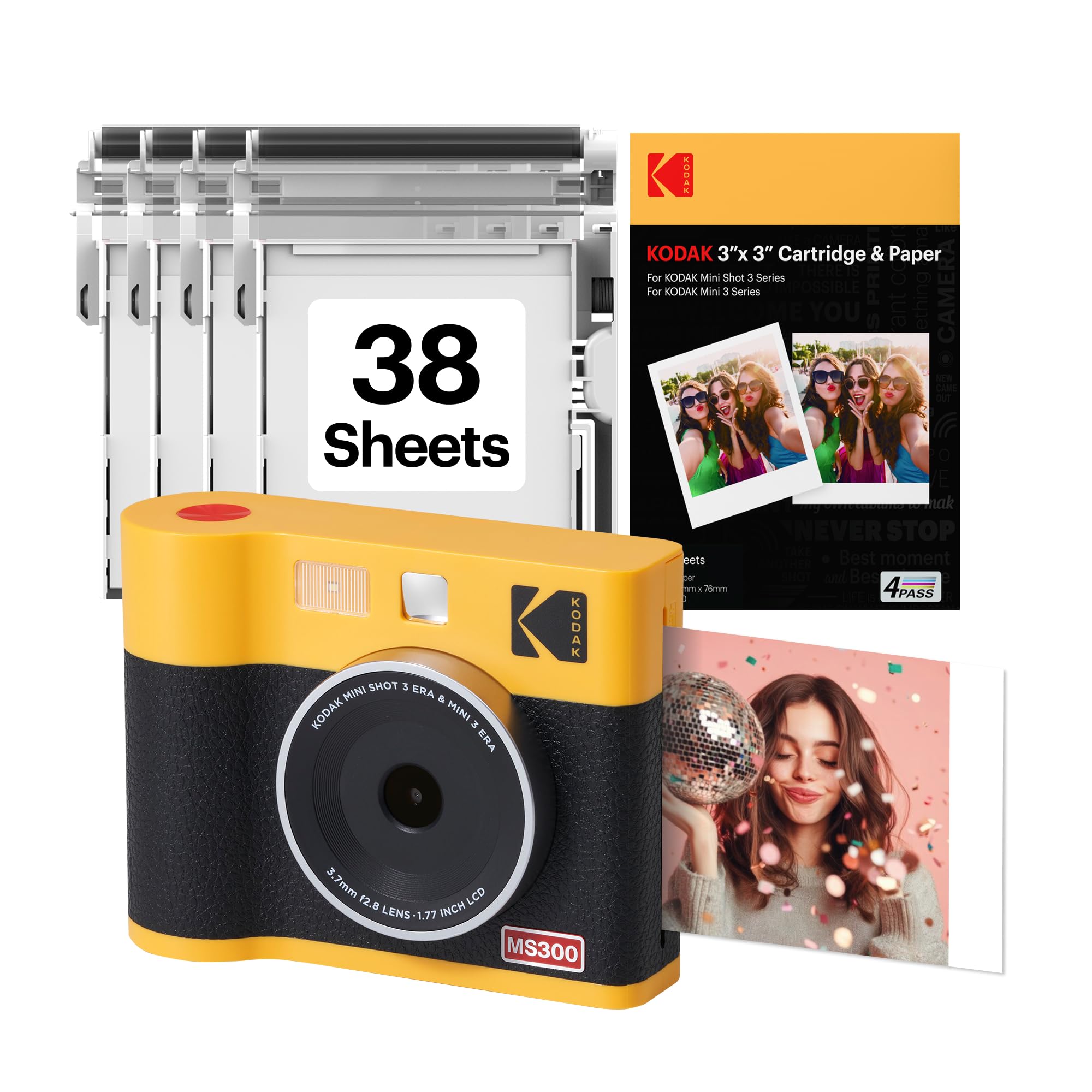
A square print you can stick on a wall, as long as weight and reliability do not put you off.
This one is all about the 3×3” output — a square format that gives a more poster-like look than the 2×3 strip the Mini Shot 2 Retro produces. The camera captures at 13 mp, roughly 30% more resolution than the 10 mp Mini Shot 2 Retro above, according to the spec comparison, which is the reason to pick the ERA if sharpness in the print matters to you. It uses the same 4PASS dye-sublimation process and finishes in approximately 55 seconds with that protective lamination layer.
It is also the heaviest camera in this entire comparison at 912 g, which is roughly three times the weight of the 239 g Polaroid Go Generation 2. At 3 x 3 x 3 inches it is compact on the shelf, but the weight means you will notice it on a hike. Bluetooth printing from the KODAK Photo Printer app and retake-before-printing are here just as on the Mini Shot 2, so the workflow is the same — only the shape of the print changes.
The steeper caveat is the pattern of owner experience, which is more mixed here than anywhere else in this list: a real chunk of buyers report the photos are not great, and the overall satisfaction split shows quality issues that the Mini Shot 2 has largely avoided. The square format and 13 mp sensor are genuine upgrades, but you should go in expecting the most uneven machine here. Buy it for the square print if you are committed to that format — otherwise the 2×3 Retro is the safer Kodak.
The square-print draw: 3×3” output and a 13 mp sensor give you the largest print in the Kodak line here, and the laminated finish still resists fading.
The weight-and-consistency cost: at 912 g it is the heaviest body in the list, and owner reports on print quality are the least settled of the nine.
Buy it for the shape: scrapbookers and wall-collage makers who want a square print and a camera-grade sensor.
Skip the format if: you want a camera to sling in a pocket — this one is a desk-and-bag unit.
5. Impossible Polaroid 600 Square Black One Step Camera

A refurbished original that feels like 1985 in the hand and prints on Polaroid 600 film.
This is the closest thing to a time machine in the list. It is a carefully refurbished Polaroid 600 body, fitted with a new frog tongue — the flap that shields the photo as it exits the camera — and it fires on Polaroid 600-type film with automatic electronic flash and auto exposure. Light sensitivity sits at 640 ISO, and it works at 7 x 7 x 6 inches, so it is a big, boxy object that commits you to the ritual rather than a compact carry.
At 1.5 pounds it has the heft of the original design, and that weight is part of the appeal if you want a camera that feels like an object with history. The flash handles indoor conditions that would leave the analog Instax body struggling. The refurbishment is also the honest caveat: you are buying a refreshed used camera, not a new one, so the warranty terms are the safety net you should check before you fall for the looks.
What this one does not offer is the phone integration, selfie mirror, or preview screen of the hybrid Instax Mini EVO, and the included rating sits on a smaller sample than most of this list. That is fine — this is not the camera for someone who wants to edit and reprint. It is the camera for someone who wants a single unrepeatable press and a print that looks like it came out of a shoebox circa 1985.
Choose it for the ritual: collectors and devotees of the original Polaroid look who want real 600 film and a sturdy boxy body.
Weigh before buying: it is refurbished and heavy, so it is a keepsake camera, not a compact traveler.
6. Fujifilm Instax Mini 12 Blossom Pink Bundle

Full-size Polaroid film, dual-lens autofocus, and a USB-C battery that ends the disposable-cell cycle.
The Now Gen 3 is for the buyer who wants a proper Polaroid print, not a mini. It shoots Polaroid i-Type and Polaroid 600 film, so you get the big, border-rimmed print the brand is famous for. The bundle puts 8 color film sheets in the box along with a protective travel case and wrist strap, so you can shoot the day it arrives.
Power is the modern touch: a USB-C rechargeable battery means you are not stocking AA cells the way the Instax Mini 13 and the Polaroid 600 both ask you to. Both double-exposure and self-timer modes carry over, and the body is crafted from 40% recycled materials, which is a real spec, not a slogan. It carries an ISO range of 600-800 for its film and weighs 1.5 pounds, matching the boxy heft of the vintage Polaroids.
The honest limit is that picture quality still splits opinion in this line — some shooters describe it as photographic perfection, others get soft results, which is the nature of Polaroid film in anything but good light. And you are committing to i-Type or 600 film, the pricier Polaroid supply route rather than Instax. Pick it if the larger Polaroid print and the rechargeable body are worth the film bill; the recycled build and the autofocus make it the most modern analog Polaloid here.
Why it earns a look: dual-lens autofocus and USB-C charging put modern convenience inside a classic Polaroid print format, and the 8 included sheets get you started.
The film trade: i-Type and 600 film cost more to feed than Instax, and results vary with lighting.
For the polaroid purist: buyers who want the big classic Polaroid print and cannot live without a rechargeable battery.
Know the supply line: i-Type and 600 film is your ongoing spend, and this camera takes nothing else.
7. Fujifilm Instax Square SQ1 Instant Camera

The biggest print in the list, at 1.5x the size of a Mini, in a terracotta body you want to hold.
If print size is the deciding factor, the Square SQ1 wins outright: it prints square shots at 1.5x the size of a mini print, so what you hand over is genuinely large enough to fill a wall or a page. It takes Instax Square film at ISO 800, and the auto-exposure system works to keep bright images in mixed conditions. The rounded, textured grip is a real handling upgrade over the slippery bodies in this category, and a separate thumb grip is included for extra purchase.
Self-portraits are handled by a selfie mirror plus a one-touch selfie mode, which takes the guesswork out of framing yourself. It runs on 2 CR2 batteries, a less common cell than AA but nothing you will hunt for online. At 390 g it sits in the middle of the weight range here — heavier than the 239 g Polaroid Go, lighter than the 1.5-pound Polaroids — so it travels in a bag without complaint but is not a pocket camera.
The square film is the real cost of the larger print: the film is pricier than Mini and only the SQ1 takes it here, so you are buying into one supply line. The other honest point is reliability, which shows up as a recurring theme in the feedback mix, with some units reported to give trouble over time. When it works, the print size does the talking, and the appearance — the classic nostalgic retro look — is what people mention most after quality. Buy it for the big square print if that is the format you love.
The large-format standout: 1.5x a Mini print makes this the most shareable, most displayable output of the nine cameras, and the textured grip handles better than most.
The size cost: Square film is the more expensive supply line, and it is the only film this body accepts.
The format winner: anyone who wants a print big enough to frame, with selfie mirror and self-timer in a textured grip.
Go elsewhere for video or phone printing: this is a pure analog shooter with a single film format.
Know the Specs
Film Format and Print Size
The format name on the box tells you which film you can buy — and there is no mixing. Instax Mini film prints 2” x 3” credit-card-size photos, Instax Square film prints at 1.5x the size of a mini print, and Polaroid cameras run on Go, 600, or i-Type film depending on the model. Kodak’s 4PASS cameras are different again: they print on laminated Kodak paper and ink rather than instant film. Pick the film format first, since it sets your per-print cost for the life of the camera.
Analog Vs Hybrid Control
Analog instant cameras fire and print with one press, no preview, no undo — the classic experience. Hybrids like the Instax Mini EVO let you frame on a screen, add lens and film effects, and print only the shot you keep, and they often connect to your phone over Bluetooth. Hybrid means more electronics inside and more to fail, but it also means almost no wasted film. Pick analog for the one-press ritual, hybrid for preview-and-reprint control.
Weight and Where It Lives
Weight decides whether the camera travels or stays home. The Polaroid Go Generation 2 sits at 239 g and slips into a tote, while the vintage Polaroid and the Polaroid Now both run 1.5 pounds and want a dedicated case and strap. The KODAK Mini Shot 3 ERA is the heaviest at 912 g, which makes it a table-and-bag printer. Heavier bodies feel more substantial in the hand but are more likely to get left behind.
Power and Selfie Tools
Power options split into three camps: rechargeable USB-C batteries (Polaroid Now Gen 3), AA cells (Instax Mini 13 bundle), and CR2 camera batteries (Instax Square SQ1). A built-in selfie mirror is the small feature that changes how much you actually use the camera — it sits beside the lens so you can frame your own face. Self-timers let you get in the shot, and the double-exposure mode on the Polaroid Go and Now turns two presses into one layered image.
Common Questions
Do all of these cameras take the same instant film?
Can I print a photo from my phone with an instant camera?
Is a hybrid instant camera worth it over a true analog one?
How big are the prints from these cameras?
Do these instant cameras have a selfie mirror?
How long does the battery last and how do I charge it?
Can I retake a photo before printing it?
Will the prints fade over time?
Is an instant camera good for kids?
Can I use these cameras indoors without a flash?
The Bottom Line
For most people, the best retro instant camera is the Fujifilm Instax Mini EVO, because the preview screen and 100 lens-and-film effect combinations mean you almost never waste a sheet. If you want the largest, most displayable print and a camera that feels good in the hand, reach for the Fujifilm Instax Square SQ1. And for a gift that is shootable from the start, the Instax Mini 12 Blossom Pink Bundle with its 60 sheets, case, and album is the simplest start.
One last nudge for the shopper who wants the surest thing: the Instax Mini EVO holds a 4.5+ star average across a large pool of buyers, the strongest review signal in this list.
How we choose
We do not accept paid placement. Every pick is matched to a real buyer and a real use-case; we do not hands-on test units.
Sources
Specifications: manufacturer listings and product documentation. Review insights: verified customer reviews, as of November 2026. Pricing: not shown on this page (it changes often); check the current price via the retailer link.
As an Amazon Associate, Tactical Gear Guy earns from qualifying purchases. This does not affect which products we feature.