Specs are compiled from manufacturer listings and verified buyer reviews and can change over time — please confirm the key details on the product page before buying.
Running shoes grip forward but slide sideways, which is why every hard cut on court feels like a gamble on your ankle. They grip forward but slide sideways, so every hard cut feels like a small gamble on your ankle. Tennis shoes fix that with a wide, flat base and a reinforced outer edge built to survive sideways lunges. Below you will find the nine court shoes worth your money, sorted by who each one actually fits — wide feet, narrow feet, clay regulars, hard-court bashers.
This guide is built by comparing the manufacturers’ published specifications and the patterns across verified customer reviews, so you get each pick’s real strengths and trade-offs instead of marketing spin.
Court surfaces change what a shoe needs: a hard-court outsole is built to take abrasion, while a clay shoe leans on grip and slide. That difference is why a court-specific pair feels locked-in on match point instead of loose — here are the tennis shoes for tennis players that hold up when you push off sideways.
Top Picks
How To Choose The Best Tennis Shoes for Tennis Players
Tennis asks your feet to do something almost no other sport does: stop sideways at speed. A good pair keeps your foot planted while your body leans out over the ball. A weak pair lets your foot roll inside the shoe. The four things below decide which camp a shoe lands in.
Fit first, then width
Half of the shoes on this list are praised for fit by the majority — and the other half draw mixed feedback on width. That is not noise, it is your main filter. If you have wide feet or a bunion, start with a wide-toe-box model. If your foot is narrow, going a half size down in a roomy shoe often beats sizing up in a snug one. Your toes should have a thumbnail of clearance at the front and zero side-to-side movement.
Toe drag and outsole rubber
Dragging your toe on the serve is normal — the leading shoe grinds away on every follow-through. Look for a reinforced toe patch, like adidas Adituff or a rubber pad along the inside edge, which takes the wear instead of the mesh. The outsole compound matters just as much: hard-court rubber grips through abrasion, while softer clay-friendly rubber lets you slide into a shot deliberately.
Stability for the sideways step
A stability chassis is the stiff piece running from the midfoot back toward the heel. It stops your foot twisting as you set up for a stroke. Names you will see here include the 4D Support Chassis, WINGWALL, TRUSSTIC and PROPEL. None of them make you faster. They make the sideways stop less punishing on your ankle and knee.
How much cushioning you actually need
More foam means softer landings but a vaguer sense of where the ground is. Players who play several times a week usually want a touch more cushioning and a thicker collar. Social players who bounce between tennis and pickleball can go with a lighter, more flexible feel. Match the shoe to the hours you play, not to the price tag.
Side-by-Side Comparison
| Model | Best For | Court Type | Width / Fit Note | Weight | Amazon |
|---|---|---|---|---|---|
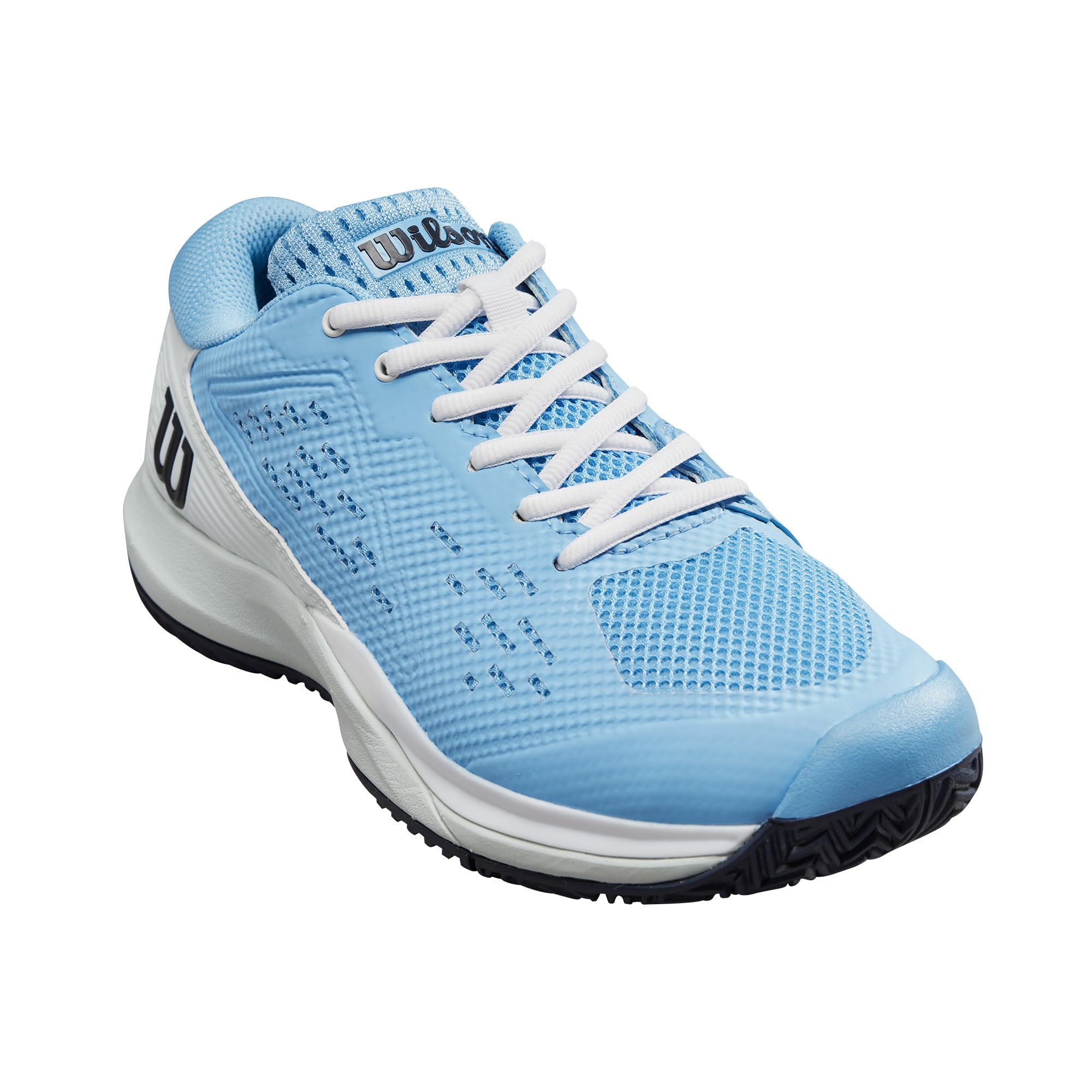
| WILSON Rush Pro Ace★ Best Overall | Wider feet, clay and all-court play | All Court | Generous, wide-foot friendly | — | Amazon |
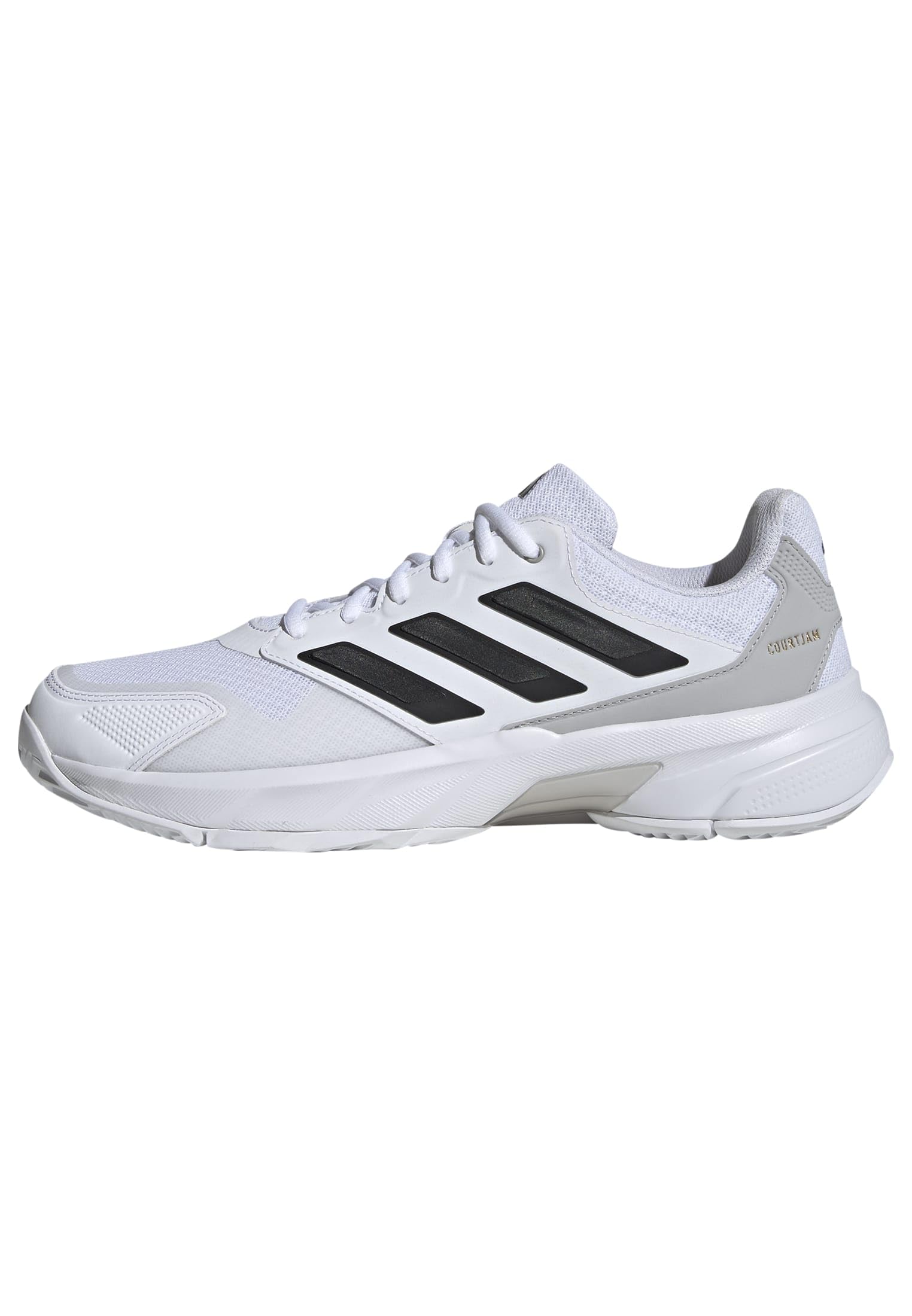
| adidas Courtjam Control 3Best for Hard Courts | Fast hard-court matches with toe drag | Hard Court (Adiwear outsole) | Mixed — some say true to size, some say narrow | 2.43 pounds | Amazon |
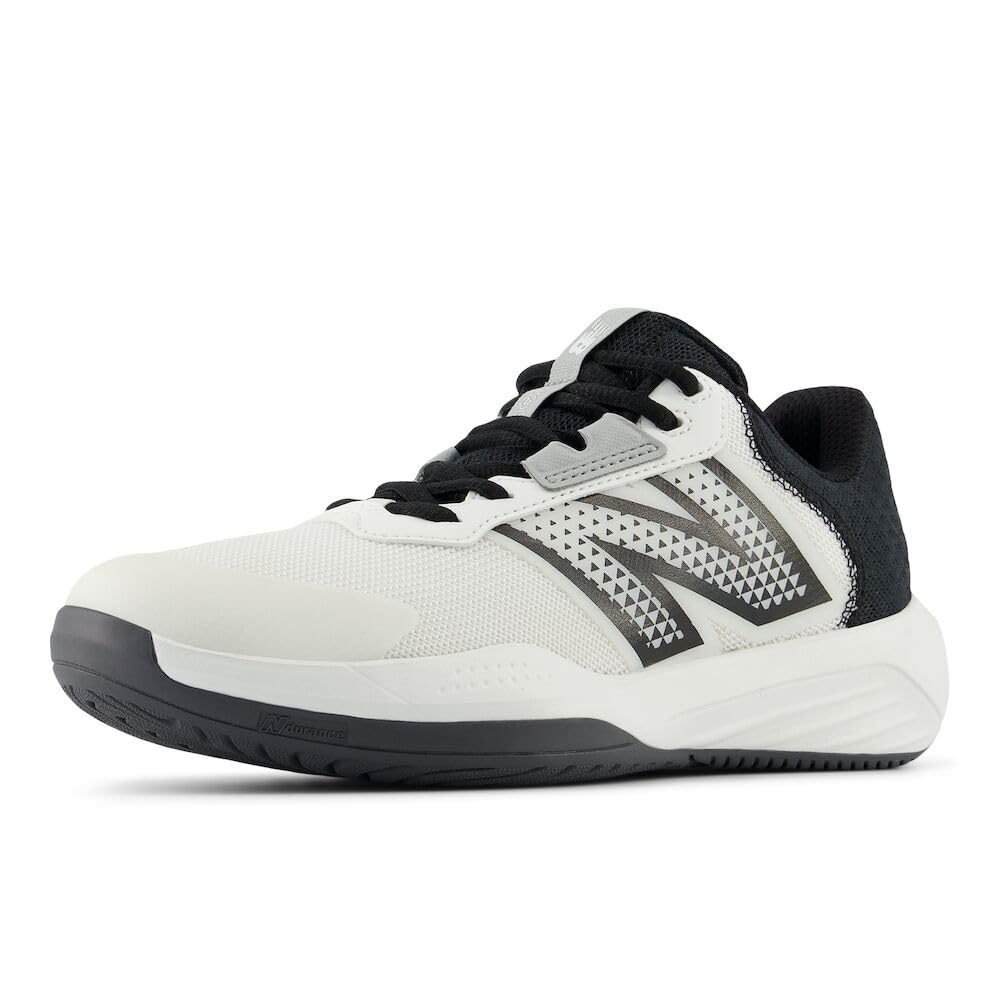
| New Balance 696 V6Lightest Pick | Light breathable option for tennis and pickleball | Any court | Mixed — some find them narrow | 1.5 pounds | Amazon |
| WILSON Men’s Rush Pro Ace Tennis Shoes | Recreational tennis and pickleball, roomy toe box | Hard Court (Duralast outsole) | True fit with toe room | — | Amazon |
| WILSON Hurakn 2.0 | Pickleball crossovers wanting traction | All Court | Mixed — some say too narrow | — | Amazon |
| ASICS Men’s Game FlyteFoam Tennis Shoes | All-court players who overheat | All Court | Mixed — some find them too narrow | 1.44 pounds | Amazon |
| ASICS Gel-Challenger 15 | Players wanting max stability and softer landings | All Court | Mixed — some say toe box too narrow | 1.99 pounds | Amazon |
Detailed Reviews
1. WILSON Rush Pro Ace
Our pick — 4.5+★ from 300+ verified ratings; the strongest balance of quality and price.
Built for the player whose feet swell by the third set and who does not want to hear about it.
This is the easiest pair on the list to recommend to a stranger. The upper is roomy by design, the 4D Support Chassis (a stiff asymmetric brace that runs heel to toe on the inside of the shoe) keeps your foot from rolling during pivot movements, and the R-DST+ midsole pairs compressed foam with rebound. What wins people over is the shape: the roomy cut is the most-discussed reason owners stay happy, and it is the same reason the shoe works for a swollen-foot afternoon.
The support story backs that up without turning the shoe into a stiff brick. Arch support is the thing buyers single out most often, with the extra rubber pad on the inside edge quietly doing toe-drag duty on clay. All-court surfaces are the target here, so hard court, clay and pickleball all sit inside the shoe’s remit rather than straining the outsole.
The catch is the fit go-around at the far ends of the size range — this is a wide-friendly shoe, and a narrow foot can end up swimming. It also leans comfort over raw speed; if you want the lightest possible footwork shoe, the ASICS Game FlyteFoam at 1.44 pounds is the lighter bar to beat.
The reasons to buy
- Generous wide-friendly fit built for wider feet and hot-weather swelling
- 4D Support Chassis controls pivot movements without killing the flex
- R-DST+ foam balances cushioning and rebound for lateral pushes
- Inner rubber pad protects the high-wear inside edge
- All-court outsole covers hard court, clay and pickleball
Worth knowing first
- Narrow feet can find it roomy rather than locked-in
- No published weight figure to compare against the lighter picks
Reach for this if: your feet run wide, or you play long clay matches and want the inner edge protected.
Think twice if: your foot is genuinely narrow and you like a snug, race-fit wrap.
2. adidas Mens Courtjam Control 3 Tennis Sneakers Shoes – White
Stiffer and heavier than most of this list — and that is exactly what a hard court wants.
Where the Wilson picks above are built to feel roomy and comfortable, this adidas push comes from a different direction: sheer durability under abuse. The 2.43-pound build makes it 1.69 pounds heavier than the ASICS Game FlyteFoam, so you will feel it when you push off. In return, a durable Adiwear outsole is tuned to survive the friction of a hard court, and the Adituff wrap over the toe area takes the serve-drag grind that eats through mesh uppers.
That outer protection is a small daily thing that starts to matter around the second month, when cheaper shoes start showing the toe seam. The mesh upper keeps air moving, and Bounce cushioning in the midsole gives you a quick-responding platform for sharp cuts and direction changes rather than a plush trampoline. Players who stand still on the baseline and swing once worry less about weight; players who scramble corner to corner will feel the difference.
The honest nag: sizing is a coin flip. Some find it true to size and others say it runs small and narrow, so measure against the brand’s size chart before you commit. Durability also draws split feedback — plenty of long-wearing pairs, and some that lose the outsole early. Best treated as a hard-court shoe you rotate rather than one you wear down to the nub.
Where it earns its place: the Adituff toe wrap plus a hard-court Adiwear outsole is a two-part answer to exactly what destroys shoes on a hard surface.
The honest limit: at 2.43 pounds it is the heaviest documented shoe here, so it rewards powerful plant-and-drive play more than constant scrambling.
Pick this when: you play hard court several times a week and kill pairs in weeks.
Look elsewhere if: you need something featherweight or your feet run wide.
3. New Balance Womens 696 V6 Tennis Shoe
A light breathable pair of tennis shoes that lets your feet breathe through a long summer set.
Comfort and stability are the two things this shoe hits, and both land on the same short list of things a casual club player wants from a pair they wear twice a week. The lightweight, breathable build is the pitch here: nothing on it feels like a weighted net on your foot. It is designed to keep you moving through long rallies rather than to give you a brick underfoot.
Support shows up in the upper, not in a big chassis. The shoe feels planted enough for the sideways step, and it plays well for both tennis and pickleball, which is a real plus if you are the person who swaps courts on a Saturday.
The catch is the width. Spacious at the front of the shoe is not the same as clean under the arch — this pair runs narrow enough that wide feet will feel it. Going up a half size gives you more room but robs some of the easy lateral feel, so narrow and medium feet get the smoothest ride. If your foot is broad, the Wilson Rush Pro Ace above is the safer bet on width.
Weight angle: the light, breathable construction is what makes this one feel less like a burden in the third set.
The one thing to check: sizing runs narrow — order against a measured foot rather than your usual number.
Best for: medium or narrow feet, tennis-and-pickleball summers, players who want a light feel underfoot.
Skip when: your feet need width and arch space from the first step.
4. WILSON Men’s Rush Pro Ace Tennis Shoes
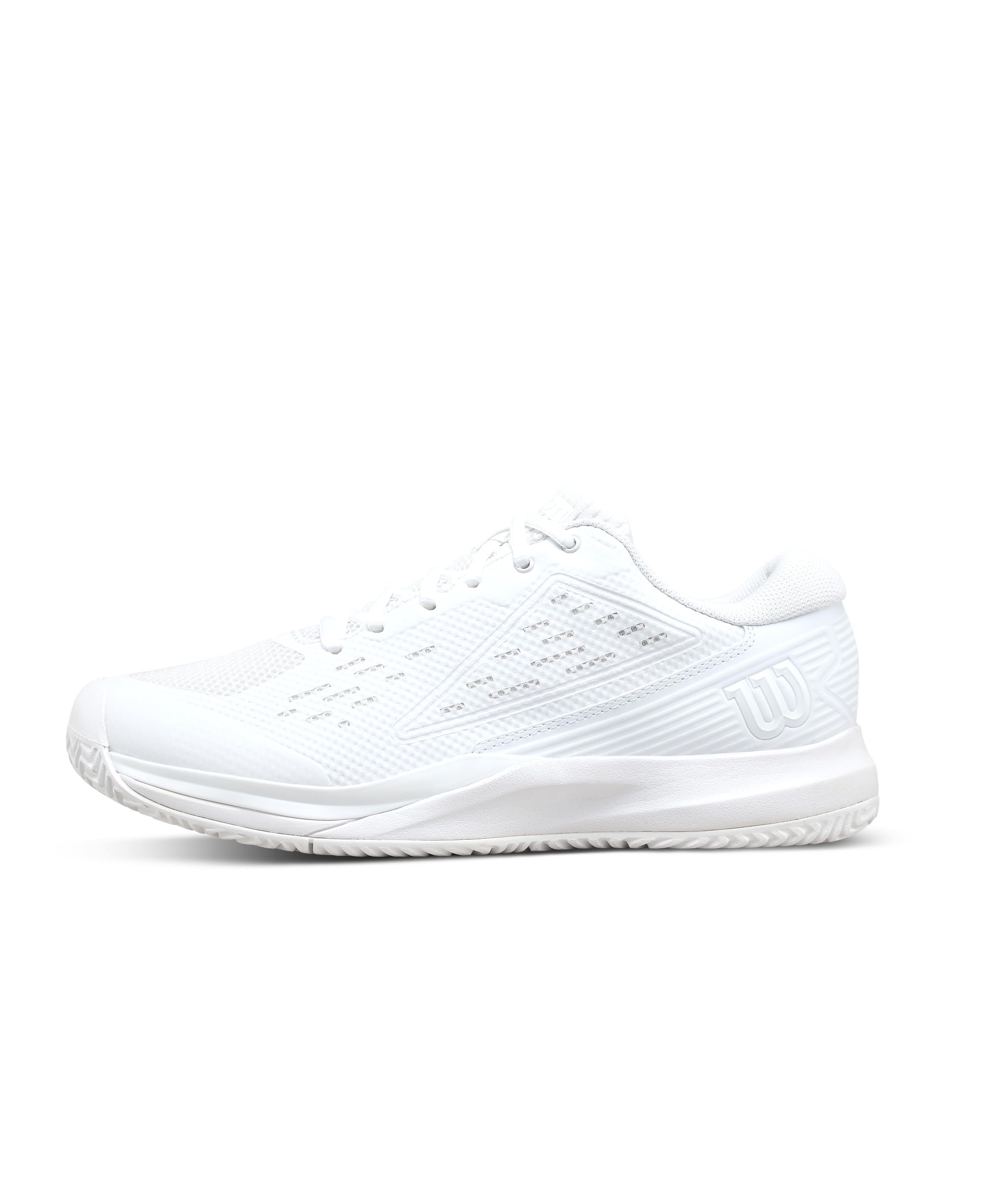
The recreational club shoe that solves the one complaint tennis players make most: nothing fits the toes.
Wilson widened the toe box on this version beyond the Rush Pro 4.0, and that is the move that made it the community default. The upper is breathable mesh that keeps air moving without turning into a sock, and the 4D Support Chassis runs asymmetrically from heel to toe. That brace limits the inward roll and twist of a supinating foot, so you can set up for a stroke without the platform fighting you.
Underfoot, R-DST+ is highly compressed EVA — the squishy-but-springy layer — cut to cushion the heel and push back when you load it. There is also Duralast on the outsole, a dense rubber made for hard-court abrasion, so the sole stays put through repeated outdoor sessions. Players who split time between tennis and pickleball tend to love this one because it does both without complaint.
Longevity is the discussion point. The build quality is the thing buyers mention most often, and the toe room and fit are right behind it, but durability feedback splits — some pairs go season after season and others wear faster than expected. Treat it as a great all-rounder rather than an armored tank.
What earns the trust
- Wider toe box than the Rush Pro 4.0, so the front of your foot is not pinched
- 4D Support Chassis curbs inward roll and twist on the pivot
- R-DST+ compressed EVA balances cushioning with rebound
- Duralast all-court outsole designed for hard-court durability and traction
- Comfortable for both tennis and pickleball
Where it falls short
- Wear times vary a lot from pair to pair
- No published weight, so you cannot size it against the lighter picks on paper
The sensible default: a roomy recreational shoe for hard-court tennis and pickleball, built around comfort and a wider front foot.
Cross it off if: you grind through soles fast and want a harder-wearing outsole.
5. WILSON Rush Pro 4.5 Wide Toe Box

A supportive, grippy crossover for pickleballers who also want a tennis-ready pair.
Grip is what this shoe gets right. The traction works on the court surface, and support shows up in how planted the shoe feels through a lateral shuffle. It is a comfortable option for long pickleball sessions and holds up as a tennis shoe for recreational play, which is why it keeps showing up on both lists.
Quality is the reason people keep buying it, and the comfort is not far behind. The build feels more substantial than the lightest picks here, so it holds its shape after a lot of play. Players who move between tennis and pickleball across the week find that consistency useful.
Two honest notes. The fit splits between true-to-size and slightly narrow, so the width is worth checking against your own foot. And durability is genuinely mixed, with some pairs wearing well while others report the outer sole wearing through in three months. Neither is a reason to treat the shoe as bad. It is a reason to weigh your own foot width and weekly court hours against it.
The traction case: grip and support come together well enough that this shoe suits pickleball as happily as tennis.
The follow-up question: whether a narrow foot will want the next size up, and whether your weekly hours will outpace the sole.
Ideal owner: a pickleball player who plays weekly tennis and wants a supportive, grippy shoe that does both.
Not the fit for: wide-footed grinders who wear through outers quickly.
6. ASICS Men’s Game FlyteFoam Tennis Shoes
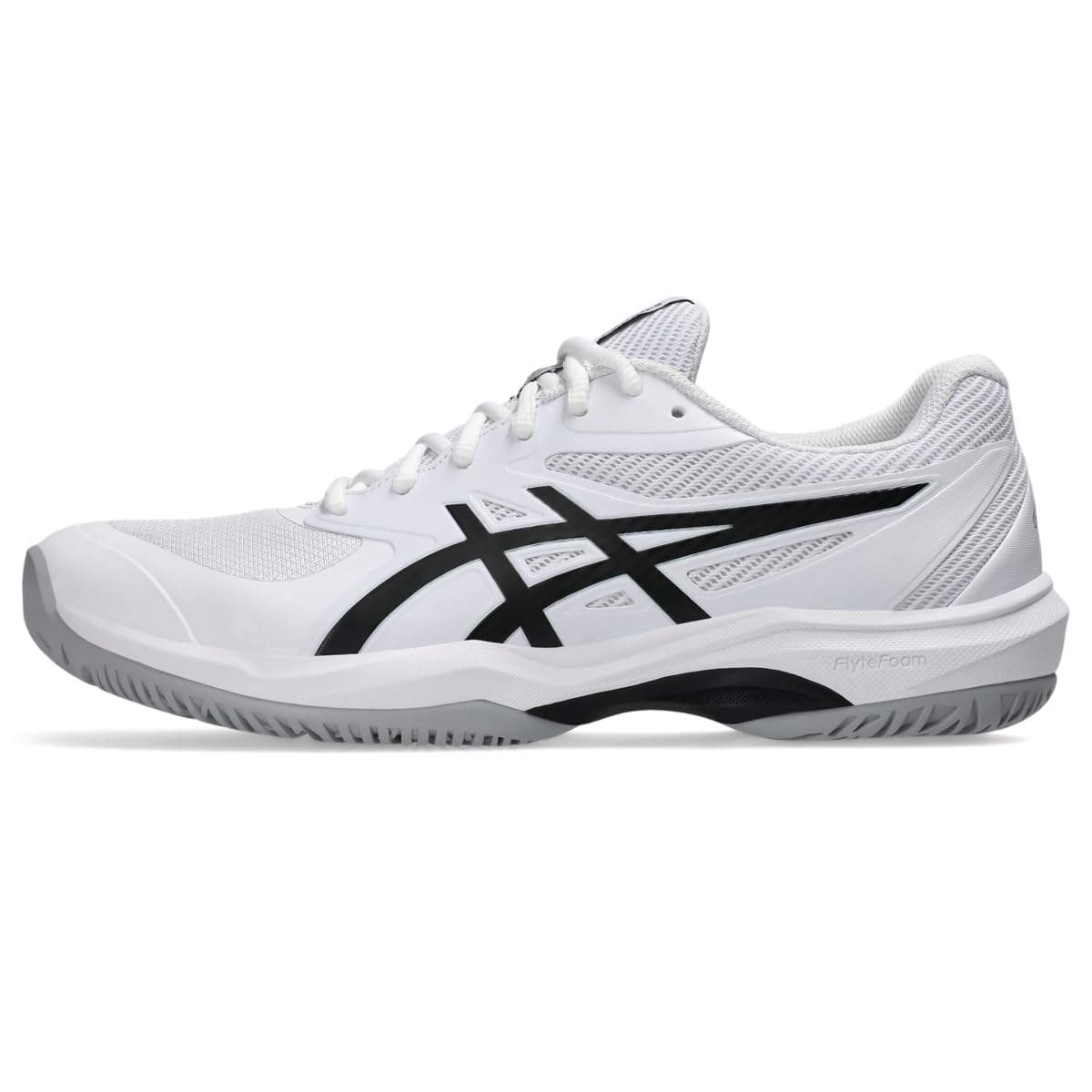
The lightest documented pair on this list, and the best ventilated in a hot gym.
The 1.44-pound listed weight sets the standard here. It is lighter than the adidas Courtjam Control 3, which weighs 2.43 pounds — a full pound of drag off your foot every step. The open-mesh upper with synthetic-leather overlays and a PU film gives you airflow first and stability second. On an indoor court in July, that is not small.
Underneath, FLYTEFOAM keeps the midsole light without killing cushioning, and TRUSSTIC in the midsole adds stability through transitional moves. The outsole is built for flexibility and durability, and the shoe is multi-functional for all-court players. What wins people over here is ventilation plus comfort — feet stay cool, and the shoe is flexible enough to move with you rather than against you.
The recurring caveat is fit: it can run narrow, which is frustrating on wide feet. The other thing worth knowing is that wear-out has been reported within a month for some pairs, which is why a hard-court rotation suits this shoe better than a single-pair season. Think of it as a fast, cool shoe for players who rotate pairs, not a bulletproof daily trainer.
Why the weight matters: at 1.44 pounds this is the lightest documented shoe here, and it is 1.44 vs 2.43 — compare that to the adidas and the difference is obvious the moment you pick both up.
The honest caveat: some owners find it narrow and some report it wears within a month, both of which fit a light performance shoe better than a wide all-rounder.
Great match for: all-court players who sweat hard and want the lightest, coolest foot they can get.
Poor match for: wide feet or a player who wants one pair to last a whole season.
7. ASICS Men’s Gel-Challenger 15 Tennis Shoes
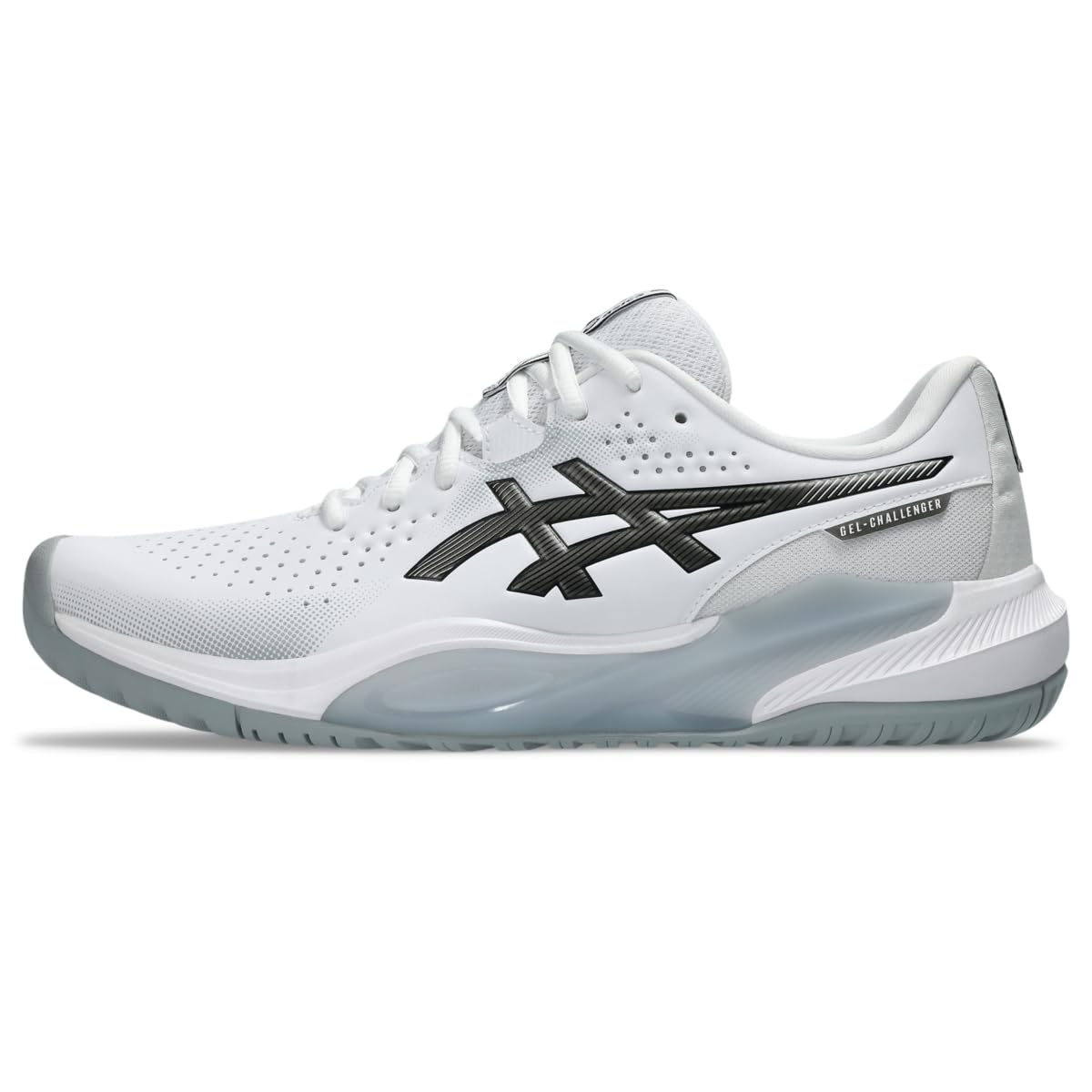
The one built for players whose ankles want a firm answer when they push sideways.
WINGWALL is the reason this shoe exists. It is a stability panel set into the sidewall, so when you step out wide for a ball, the shoe resists rolling over rather than letting your foot tilt. The thicker collar wraps the ankle more fully, and the no-sew overlays keep the upper supportive without the seams that can rub on a long match.
Cushioning does its part through TRUSSTIC PROPEL, which pairs a stable midfoot platform with landing-friendly foam. The full-length outsole with separated grooves gives a larger contact patch, so landings feel softer and the shoe tracks the ground through a slide. With polyester upper, lining and insole plus a synthetic rubber outsole, the shoe is built for repeated court sessions, not a showcase pair.
The sizing honest note is the toe box: for some players this shoe is too narrow up front, which is its most-shared caveat. If you have wide toes, the Wilson Rush Pro Ace’s generous cut is the easier fit. Otherwise, this is the stability pick for a player who steps into the shot and does not want to feel the shoe give.
Why it feels planted: WINGWALL on the sidewall plus the thicker collar is a two-part ankle answer, and the full-length outsole keeps the landing forgiving.
The one narrow point: the toe box is tighter than the roomiest picks here.
Choose it for: hard side-to-side play where you want the shoe to hold the ankle and soften the landing.
Choose something else if: your toes need space across the front of the shoe.
Know the Specs
Court type and outsole
A shoe tuned for a hard court uses a dense rubber compound to handle the abrasive grit of an outdoor surface. A shoe tuned for clay leans on grip and a slide that lets you brake into the ball. Many picks here name all-court surfaces, which means the outsole is meant to work across both rather than being optimised for one.
Stability chassis
A chassis is the stiff piece running from the midfoot toward the heel, often asymmetrical. It resists twisting when you plant for a stroke, so the shoe holds your foot rather than rolling under it. Names like the 4D Support Chassis and WINGWALL refer to that idea. It is the difference between a confident lateral step and a wobbly one.
Toe drag protection
On the serve, the leading shoe skims the ground. A reinforced toe patch — adidas uses Adituff; Wilson puts a rubber pad on the inside — takes that grind so the mesh under it does not wear through first. If you drag your toe, this patch is often why a pair survives a season.
Cushioning and weight
Cushioning is the foam layer under your foot. Compressed EVA, FLYTEFOAM and R-DST+ all do the same job in different ways — absorb impact and give back some energy. Lighter cushioning makes the shoe quicker; softer cushioning makes the landing gentler on long matches. On this list the published weights run from 1.44 pounds to 2.43 pounds, and that gap really is noticeable.
Common Questions
Are tennis shoes really different from running shoes?
How long should a pair of tennis shoes last?
Can I wear tennis shoes for pickleball?
Should I size up or down in tennis shoes?
Do wide feet need a wide toe box to play tennis?
What is a stability chassis and do I need one?
Are clay court and hard court tennis shoes different?
Is a lighter tennis shoe always better?
Can these tennis shoes be worn for everyday walking?
How do I know if a tennis shoe fits correctly?
The Bottom Line
For most tennis players, the tennis shoes for tennis players answer is the WILSON Rush Pro Ace, because it gets the two things that matter most right: a generous width for real-world feet and an all-court build that holds up on clay. For a first pair, it is the lowest-risk pick of the nine. If you want a second pair for hard-court abuse, grab the adidas Courtjam Control 3 — the Adituff toe guard makes it the toughest on the list. And for a woman who wants a shoe shaped for her foot, the WILSON Women’s Intrigue Pro is the one to reach for.
How we choose
We do not accept paid placement. Every pick is matched to a real buyer and a real use-case; we do not hands-on test units.
Sources
Specifications: manufacturer listings and product documentation. Review insights: verified customer reviews, as of November 2026. Pricing: not shown on this page (it changes often); check the current price via the retailer link.
As an Amazon Associate, Tactical Gear Guy earns from qualifying purchases. This does not affect which products we feature.