Specs are compiled from manufacturer listings and verified buyer reviews and can change over time — please confirm the key details on the product page before buying.
Buy a sling rated to 22kN (kilonewtons, a measure of how much load it holds before breaking) or more, from a brand that publishes CE and UIAA certification (independent safety standards for climbing gear), and you have solved 90% of this decision. Everything else — nylon versus Dyneema (a strong, water-resistant fiber), 30 cm versus 120 cm, one pack versus three — depends on what you plan to build with it. Below are seven climbing-rated slings worth trusting, sorted by what each one does best so you can stop comparing and start racking.
This guide is built by comparing the manufacturers’ published specifications and the patterns across verified customer reviews, so you get each pick’s real strengths and trade-offs instead of marketing spin.
Strength ratings and certifications are the easy part to compare on paper. What separates these seven is how they behave once they are clipped to your harness — how they rack, how they wear, and how much water they soak up. That is exactly what this breakdown of rock climbing slings covers, pick by pick.
Top Picks

How To Choose The Best Rock Climbing Slings
A climbing sling is a loop of sewn webbing you use to connect things — your harness to an anchor, a cam to a carabiner, a tree to a rope. It is one of the cheapest pieces of safety gear you will buy, and among the most loaded. So the order of your research matters: strength and certification first, material second, length and pack count third.
Start with the kN rating and the certification stamp
kN stands for kilonewton, a unit of force, and it is how slings are rated. Every sling on this list is rated at 22kN or higher — that is the climbing-standard floor, and 22kN works out to roughly 4,900 pounds of breaking force. Check the listing for a CE or UIAA mark. Those are the two certification bodies climbers look for, and a listing that names neither is a listing you skip.
Nylon versus Dyneema: pick by weather and wear
Nylon webbing is thicker, stretches slightly, and handles abrasion well. It also soaks up water. Dyneema — and UHMWPE, which is the same family of high-strength polyethylene — is stronger for its weight and barely absorbs water, so it resists freezing on ice routes. The trade-off is that Dyneema is slicker and more expensive. If you climb in the rain or on ice, pay for Dyneema. If you are building anchors at a dry crag, nylon is fine.
Match the length to the job
Short runners around 30 cm are for extending placements and clipping close. Mid lengths around 60 cm are the everyday anchor-building size. Long runners of 120 cm or more let you equalize a multi-point anchor, sling a tree, or build a redirect. Most climbers end up carrying a mix, which is why multi-packs are worth a look.
Side-by-Side Comparison
| Model | Best For | Breaking Strength | Width | Material | Amazon |
|---|---|---|---|---|---|
| AINIKEY 18MM Nylon Sling Runner★ Best Overall | Budget three-pack for anchors | 23kN / 5170 lbs | 18 mm | Nylon | Amazon |
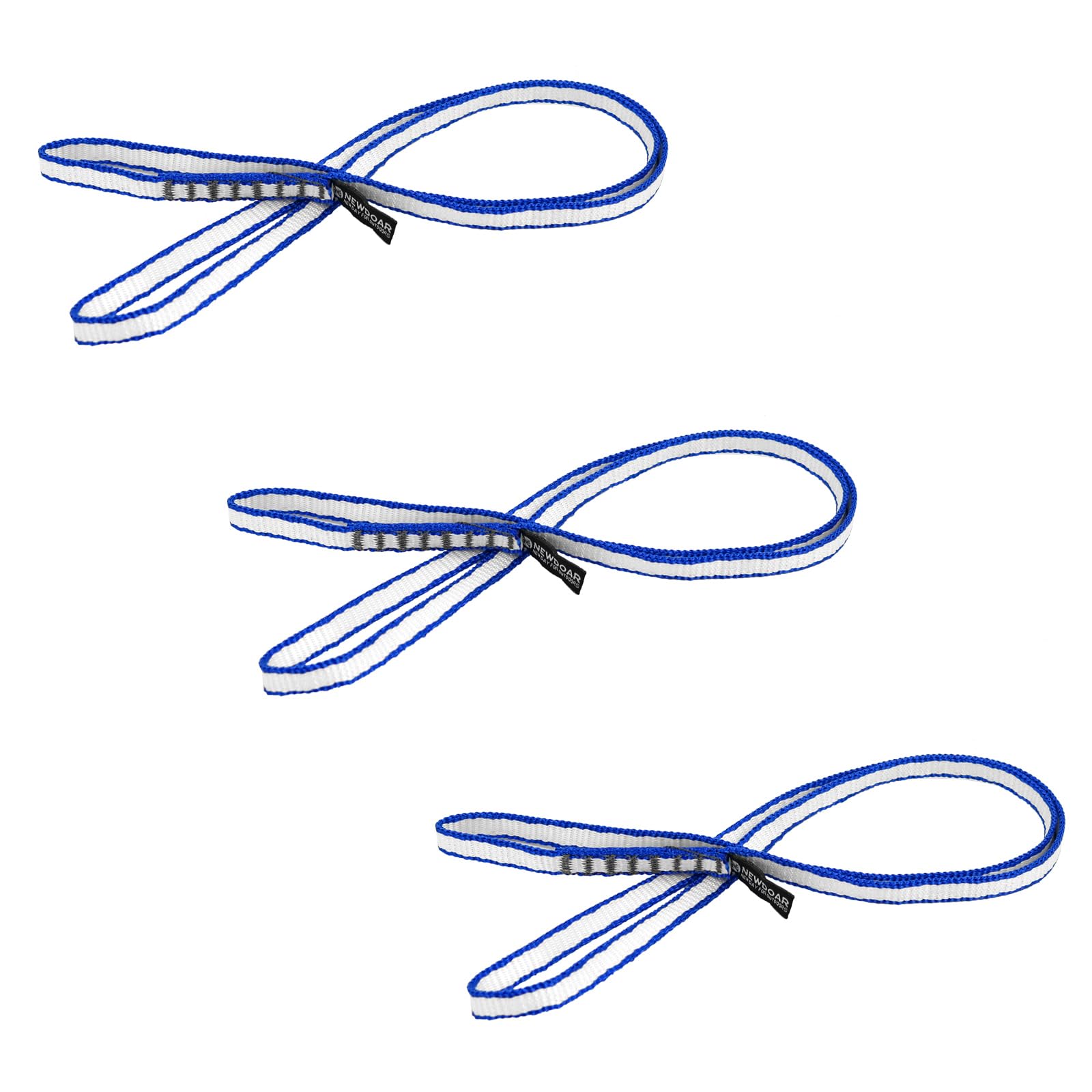
| NewDoar 10mm Dyneema Sling RunnersWet-Weather Pick | Ice and wet-weather climbing | 22kN | 10 mm | Dyneema | Amazon |
| PETZL ANNEAU Polyester Open Sling | Certified everyday runner | 22kN / 4945 lbs | — | Polyester | Amazon |
| GM CLIMBING 11mm UHMWPE Sling | Alpine and trad racking | 22kN | 11 mm | UHMWPE | Amazon |
| Notch Heavy-Duty Circular Loop Runner | Tree work and rigging | 29kN / 6,519 lbs | 1 in | Nylon | Amazon |
| PETZL ST’ANNEAU Dyneema/Nylon Sling | Long anchor and speed-line work | 22kN | 12 mm | Dyneema / Nylon | Amazon |
| Bluewater Ropes 13mm Titan Sling | Thick, firm handling | 6,069.66 lb | 13 mm | Polyethylene | Amazon |
Detailed Reviews
1. AINIKEY 18MM Nylon Climbing Sling Runner 23KN
Our pick — 4.5+★ from 200+ verified ratings; the strongest balance of quality and price.
Three certified 23kN runners for less than most brands charge for one.
Here is the pick I would hand a new climber first. Each of the three runners in this pack is rated to 23kN — 5170 lbs of breaking force — and carries CE2008 and EN566 certification. That is above the 22kN floor the rest of this list sits on, and the joint is overlapped 5 cm and bar-tacked to hold load at the seam. For anchor building and rappelling setups, you have genuine margin here.
The webbing itself is 18 mm wide and 2.5 mm thick, in 60 cm or 120 cm lengths. That width is 18 mm versus the 10 mm NewDoar runner, which makes it chunkier to rack but far easier to grab and feed through a carabiner with gloves on. The finish is what wins people over — a cleanly sewn, good-looking runner that arrived in tidy condition, which is why appearance is the thing buyers bring up most in their write-ups. Buyers also flag how solid the stitching feels over repeated use.
The catch is weight and bulk. These are 0.07 kg nylon runners, and nylon holds water, so this is not the pack you want on an ice route or in sustained rain. The 36-month quality guarantee is unusually long for a budget three-pack.
What earns it the top slot
- 23kN rating beats the 22kN standard, with CE2008 and EN566 certification named on the listing
- Three runners in the pack, so you can rack a full anchor setup in one order
- 18 mm width is easy to handle with gloves on
- Overlapped, bar-tacked joints at the 5 cm seam
Where it gives ground
- Nylon absorbs water, so it is the weaker choice for ice and wet alpine days
- Weighs 0.07 kg each
- Bulkier to rack than a 10 mm Dyneema sling
Rack it if: you want a certified three-pack for dry-crag anchors, rappelling, and top-rope setups without overthinking it.
Look past it if: your season is mostly ice and freezing conditions — go Dyneema instead.
2. NewDoar 10mm Dyneema Sling Runners 22KN
The sling that shrugs off water and freezes instead of stiffening up.
At 0.03 kg, this is the lightest runner here — the 18MM AINIKEY above weighs 0.07 kg. Ten millimetres wide and 3 mm thick, it folds down to roughly palm size and disappears into a pocket. If you are counting grams on the rack or want a handful of runners that never feel like dead weight on the harness, this is the one.
The material is the actual reason to buy it. Dyneema barely absorbs water, so on ice routes and wet days it does not turn into a stiff, heavy strip. Each sling is tested to a 22kN minimum breaking force, and you get four length options — 30 cm, 60 cm, 120 cm, 180 cm — in single or three-packs. Unlike thicker nylon runners, Dyneema resists abrasion from sharp rock edges over a full season.
Two things to know before you buy. The 10 mm Dyneema is slick, so knots and hitch configurations hold differently than on fat nylon — practice your setups before they matter. And it does not have the rating headroom of the 23kN and 29kN options on this list, though 22kN is still the standard.
Why climbers reach for it: Dyneema’s water resistance is the whole story — no soaking, no freezing into a plank, no weight penalty at 0.03 kg.
Size and value: four lengths, single or three-packs, and a build that stays supple in cold.
Who it beats: anyone hauling thick nylon onto a wet or frozen route.
What to plan for: the slick finish means hitch and knot work needs a practice session first.
3. PETZL ANNEAU Polyester Open Sling

One 60 cm runner that weighs less than a candy bar and carries dual certification.
The number that matters on the ANNEAU is 58 grams. That is the whole sling, rolled and ready to clip, and it is the sort of weight you stop noticing on a harness. It is rated to 22kN (4945 lbs) and carries both CE and UIAA certification — UIAA being the international climbing federation standard, which is the stamp serious buyers scan for before anything else.
This is a single 60 cm polyester runner, which is the most useful all-round length for building an anchor or extending a placement. Polyester sits between nylon and Dyneema — it handles abrasion and UV well and holds up to repeated rock contact. Petzl backs it with a 3 year manufacturer warranty, which is the kind of thing a brand only offers when it expects the webbing to last.
The one thing to weigh: single slings multiply fast. One 60 cm runner is a fine anchor extender, but if you are building full multi-point systems you will want several, and buying them individually adds up faster than a three-pack. That is a pack-size decision, not a quality one.
The honest read: 58 grams, 22kN, CE and UIAA — this is the sling you buy when you want zero ambiguity about what you are clipping into.
Pack math: it is a single runner, so plan your needs before ordering one.
Buy it for: a light, dual-certified 60 cm runner to extend placements and build anchors.
Consider bulk buying if: your anchor setups call for more than one runner at a time.
4. GM CLIMBING 11mm UHMWPE Sling Runner

Bar-tacked instead of knotted, so it racks flatter and feeds faster.
The detail that separates this GM CLIMBING runner from the pack is the sewn bar-tack. Instead of a bulky knot at the joint, the webbing is stitched flat, which makes the sling more flexible and easier to rack on a harness. When you are extending a placement mid-pitch, that flat profile means it feeds through a carabiner quicker. It is a small thing that you notice every single time you use it.
UHMWPE — ultra-high-molecular-weight polyethylene, the same strength family as Dyneema — gives it 22kN of breaking strength with CE and UIAA certification at just 0.05 kg. It comes in 30 cm, 60 cm, and 120 cm lengths. UHMWPE absorbs significantly less water than nylon, so it is far less likely to freeze, which makes it the sensible choice for ice climbing and big alpine routes. It also resists UV and chemical exposure better than nylon.
Those water and wear properties are exactly why the quality of the build is what buyers keep circling back to — the runners hold up without fraying at the stitch line. The trade-off is the slick UHMWPE surface again: it handles differently in hitches than nylon, so test your configurations before a route depends on them.
Why it earns its place: CE and UIAA certification, 22kN, and a bar-tacked joint that racks flat — plus water resistance that keeps it working on ice.
The one wrinkle: slick UHMWPE needs a little knot practice before you trust it in a hitch.
Reach for it if: you want one runner that works from a dry crag to an alpine route without changing your rig.
Skip the learning curve if: you are not willing to practice hitches on slick webbing first.
5. Notch Heavy-Duty Circular Loop Runner 29kN

The beefiest sling here — 29kN of tubular nylon built for tree work and rigging.
If your climbing involves ropes, saws, and heavy loads, this is the runner to look at first. It is rated to 29kN, or 6,519 lbs — well above the 22kN the rest of the list runs on, and the highest number in this whole article. The webbing is one-inch tubular nylon with heavy-duty stitching, and the circular loop construction spreads wear around the loop so you can rotate the contact point over time.
This is the 60 in version, so it stretches far longer than the 36 in Bluewater Titan below — long enough to sling a substantial trunk or build a redirect (a sling that changes the rope’s path to reduce drag). The colour-coded sizing across the range (26 in blue, 30 in yellow, 36 in orange, 48 in red, 60 in green) means you can spot the length you want on the harness at a glance without reading a tag. The colour coding is fade-resistant, so it stays readable after sun exposure.
The honest trade is weight and bulk. At 5.28 ounces of tubular nylon, this is not a runner for gram-counting alpine days — it belongs on rigging work, choker straps, and mini false-crotch support. Nylon also takes on water, so keep it for dry work.
The case for the Notch
- 29kN / 6,519 lbs — the highest rating on this list
- Circular loop spreads wear so you can rotate the contact point
- 60 in length handles big trunks and redirects
- Colour-coded sizing makes length easy to grab
Trade-offs to accept
- 5.28 ounces is heavy for a climbing runner
- Nylon webbing holds water
- Bulkier to stuff in a pocket than a Dyneema sling
Best for: arborists, riggers, and climbers who need choker straps and redirects with load headroom to spare.
Not for: alpine racks where every ounce of nylon shows up on the uphill.
6. PETZL ST’ANNEAU Dyneema/Nylon Sling
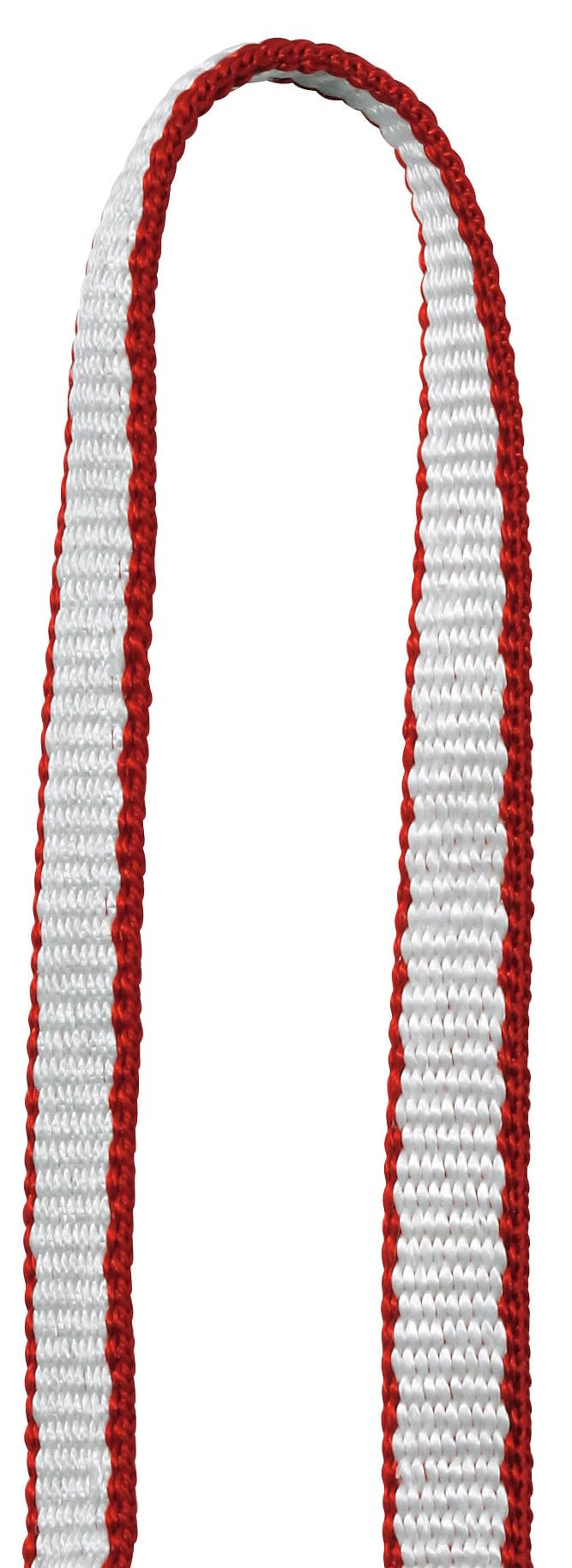
A 120 cm runner that blends Dyneema strength with nylon’s softer hand.
Length is the headline here: 120 centimetres, versus 30 cm for the shortest NewDoar runner. Nobody needs a 120 cm sling for extending a single cam placement, but you reach for one when you are equalizing a multi-point anchor (sharing the load across several pieces), slinging a tree for a speed line, or building a redirect after a wandering route. That long reach is the whole point.
Petzl blends Dyneema and nylon in the webbing, which means you get the light, supple feel of a high-modulus polyethylene with a bit more give than a pure Dyneema runner. The 12 mm profile is slim enough to rack easily, and it is still rated to 22kN with CE EN 795 B certification for anchors. The colour-coded system — 24 cm green, 60 cm yellow, 120 cm red — means this red one is instantly identifiable as the long runner on your rack. The Dyneema/nylon weave resists abrasion, so rough rock contact does not chew through it fast.
Consider what you are paying for. You are buying a long, certified, slick-racking anchor sling, not a multi-pack — it is one runner, and if you build long anchors often you will want more than one. It also does not carry the 29kN headroom of the Notch, so heavy rigging is not its job.
What it does beautifully: a 120 cm length at 22kN that folds down far smaller than a nylon runner of the same length.
The fine print: it is a single sling — build your anchor count before you order.
Your pick if: you build long, equalized anchors or run speed lines and want a light, colour-coded 120 cm runner.
Keep looking if: you need multiples or heavy-duty rigging loads above the 22kN standard.
7. Bluewater Ropes 13mm Titan Sling

A wide 13mm runner — grippy in the hand and steady on the clip.
Width is what sets this Bluewater sling apart. At 13 mm it is wider than the 11 mm GM CLIMBING and the 10 mm NewDoar runners. That extra bulk makes it easier to grab, easier to feed through a carabiner without fumbling, and less prone to twisting on the harness. The 36 in length is a solid mid-long runner, shorter than the 60 in Notch but longer than a 60 cm sling.
The strength figure is listed at 6,069.66 lb, and the material is polyethylene — the same high-strength family as Dyneema and UHMWPE, which is why the quality of the build is what buyers talk about. Buyers describe it as strong and working exactly as intended. One buyer notes it is made of Dynema material; the listing specifies polyethylene, which is that same strength family.
What to accept: this is a single 36 in sling, and its 13 mm beefiness works against it if you want something that stuffs into a pocket. It is a rack and anchor runner, not a micro alpine accessory. The polyethylene weave also wants care with hitches, same as any slick high-strength sling.
Where it wins: 13 mm width and a 6,069.66 lb strength figure make it a confidence-inspiring anchor runner with real hand feel.
Where it flexes away: single sling, thick webbing — not a pocket-friendly alpine piece.
Pick this for: a substantial 36 in anchor runner you can grab and clip without looking.
Look elsewhere if: you want multiple runners or a slimmer profile for alpine packing.
Know the Specs
Breaking Strength in kN
kN is kilonewtons — a measure of force, not weight. A 22kN sling handles about 4,900 pounds of force before it fails, and every sling here meets or beats that. Higher numbers (28kN, 29kN) give you more headroom for rigging and heavy loads, but 22kN is the accepted climbing standard. Always cross-check the kN figure against a CE or UIAA certification stamp; a claimed rating with no certification behind it is not worth trusting.
Dyneema versus Nylon versus Polyester
Dyneema and UHMWPE are the same strength family of high-modulus polyethylene — light, strong, and barely water-absorbent. Nylon is tougher against abrasion and has a little stretch, but it soaks up water and freezes stiff on ice. Polyester splits the difference, handling UV and rock contact well. If you climb wet or frozen routes, pay for a polyethylene sling; for dry crags, nylon is fine and cheaper per runner.
Width, Handling, and Racking
A slimmer sling racks flatter and packs smaller, but it is slicker and fiddlier to handle with gloves. A wider runner — 13 mm to 18 mm — is easier to grab and clip but adds bulk and weight. Neither width is better; it depends on whether you value pocket-ability on the approach or grip mid-pitch.
Length and Pack Count
Short runners around 30 cm extend placements; 60 cm is the everyday anchor size; 120 cm and longer handle equalized anchors, tree slings, and redirects. Pack count matters as much as length: a three-pack lets you rack a full anchor setup at once, while a single runner is a top-up purchase. Match both to the routes you actually climb.
Common Questions
What does 22kN mean on a climbing sling?
Is Dyneema better than nylon for a climbing sling?
Do I need a CE or UIAA certification on a sling?
What length runner should I buy first?
Can I use a climbing sling for a hammock or swing?
How do I inspect a sling before climbing?
Why is the Notch runner rated 29kN when others are 22kN?
What is the difference between a climbing sling and a runner?
Do Dyneema slings need special care with knots?
Should I buy a three-pack or single slings?
The Bottom Line
For most climbers, the rock climbing slings winner is the AINIKEY 18MM Nylon Sling Runner because it gives you three CE2008 and EN566 certified runners rated to 23kN in one order, with bar-tacked joints (reinforced stitching at the ends) and a 36-month guarantee — the safest, simplest way to build a starting rack. If wet or frozen routes are your reality, grab the NewDoar 10mm Dyneema Sling Runners for the water resistance and 0.03 kg weight. And for rigging, tree work, and load headroom, the Notch Heavy-Duty Circular Loop Runner at 29kN is the one to reach for.
One last nudge: the AINIKEY pack carries the highest rating in the group and the most owners behind it, so if you are building a fresh rack from scratch, start there and add a long Petzl or Notch runner once you know what your local routes demand.
How we choose
We do not accept paid placement. Every pick is matched to a real buyer and a real use-case; we do not hands-on test units.
Sources
Specifications: manufacturer listings and product documentation. Review insights: verified customer reviews, as of November 2026. Pricing: not shown on this page (it changes often); check the current price via the retailer link.
As an Amazon Associate, Tactical Gear Guy earns from qualifying purchases. This does not affect which products we feature.