Specs are compiled from manufacturer listings and verified buyer reviews and can change over time — please confirm the key details on the product page before buying.
You want one layer that cuts the wind on a cold morning run and still looks tidy enough for the trailhead cafe afterward. A women’s soft shell vest does exactly that — a stretchy, weather-resistant sleeveless layer you pull on over a hoodie or a base layer when the forecast is uncertain. The good ones share three things: a bonded fabric that blocks wind, a women’s-specific cut instead of a boxy men’s pattern, and enough stretch to swing your arms freely. Below are six vests worth your attention, each picked for the job it does best.
This guide is built by comparing the manufacturers’ published specifications and the patterns across verified customer reviews, so you get each pick’s real strengths and trade-offs instead of marketing spin.
Fit, fabric, and zipper quality separate a vest you reach for daily from one that stays on the hook. Here’s how the leading women’s soft shell vests stack up once you strip away the marketing language.
Top Picks


How To Choose The Best Women’s Soft Shell Vest
Most buyers shop the fabric name alone, and that’s the mistake. “Softshell” is a family of materials, not a single standard, and two vests with the same label can behave very differently on a windy ridge. Start with what you’ll actually do in it, then match the fabric and cut to that job.
Match the shell to your weather, not the label
If you run or hike in shoulder-season drizzle, look for a vest with a membrane — a thin inner film bonded to the fabric that stops rain and wind while letting sweat vapor escape. A TPU membrane (thermoplastic polyurethane, a flexible plastic film) is one common version. If you mostly want wind protection on dry cold days, a simple bonded softshell without a membrane breathes better and costs less.
Get the cut right for a woman’s frame
A women’s-specific vest is patterned with a narrower shoulder and a shaped waist, which keeps the hem from riding up when you reach overhead. Unisex patterns tend to sit square and boxy. If you plan to layer a hoodie beneath, many makers suggest going up one size for room — check the size chart rather than assuming your usual letter size.
Look hard at the zipper and the pockets
The main front zipper is the part that ages fastest on a softshell. A smooth-glide zipper with a decent pull tab lasts; a sticky one will drive you mad within a season. Zippered hand pockets matter if you carry keys or a phone on a run, since open slash pockets dump contents when you lean forward.
Decide if you want a hood
A hood adds warmth at the neck and blocks wind on exposed ridgelines, but it also adds bulk under a rain shell. Some vests offer a zip-off or detachable hood, which lets you choose per outing. If you always wear a beanie or a hooded base layer, a collar-only vest is lighter and simpler.
Side-by-Side Comparison
| Model | Best For | Fabric / Construction | Hood | Sizing Note | Amazon |
|---|---|---|---|---|---|
| Ariat Women’s New Team Softshell★ Best Overall | All-round daily wear | Softshell, women’s cut | — | Mixed feedback; some say runs small | Amazon |
| KVE Women’s Windproof Waterproof Softshell VestBest for Wet Weather | Wet-weather trail running | 95% polyester / 5% spandex, TPU membrane, fleece lining | Detachable, adjustable | True to size; size up for heavy layering | Amazon |
| baleaf Women’s Lightweight Running Vest | Running and golf | Softshell, stand collar, elastic armholes | — | Roomy; fits a thin sweatshirt underneath | Amazon |
| 33,000ft Women’s Hooded Lightweight Softshell Vest | Cold-weather layering over a hoodie | Waterproof, breathable, 4-way stretch, fleece lined | Removable zip-off, adjustable drawcord | Mixed; some say runs slightly small | Amazon |
| ARIAT Women’s Ariat Logo Softshell Vest | Premium branding and finish | Softshell, women’s cut | — | — | Amazon |
| Helly Hansen Women’s W essential Softshell Vest | Mountain and city crossover | Softshell, fleece backing, water-resistant | — | — | Amazon |
Detailed Reviews
1. Ariat Women’s New Team Softshell
Our pick — 4.5+★ from 450+ verified ratings; the strongest balance of quality and price.
The quiet all-rounder that earns its keep on a cold morning walk.
What wins people over here is build quality — the New Team is the vest that shows up to more everyday occasions than any other pick on this list. The fabric is a stretchy softshell that blocks wind without the crinkle of a hard shell, so you can wear it over a hoodie on a dog walk and still look put-together at a coffee stop. It’s a women’s-cut piece with no hood, which keeps the neckline clean under a scarf or a jacket collar.
Fit is the second big talking point, and it’s largely warm. Most buyers find it true to size, though a slice of the feedback says it runs a touch small — so if you plan to layer a thick hoodie underneath, the size chart is worth a second look. The kind of owner who gets the most out of it wears it hard: a muck-out, a feed run, a chilly sideline on a weekend. As an owner put it, layering a hoodie underneath is exactly the move for extra warmth.
The honest catch is two-fold. The front zipper draws mixed feedback, so a little care when zipping is wise. And sizing is genuinely inconsistent for a pocket of buyers, which means buying your right size matters more than any feature. That said, the overall picture is a well-made vest that’s comfortable and warm for its weight, and the fabric has a soft bonded feel rather than a slick plastic shell.
What’s Working In Its Favor
- Build quality is the most-praised trait by a clear margin — this is a vest that feels solid
- Comfortable and warm without adding bulk to your layering
- Clean women’s-cut silhouette with no hood, easy to wear over anything
- Layers over a hoodie for extra warmth on cold days
Where It Asks A Little Patience
- Zipper gets mixed feedback — zip gently and it behaves
- Sizing is inconsistent for some: try your usual size first, go up if you’re layering heavily
Grab this one: the everyday rider, stable-hand, dog-walker, or chill-bleacher parent who wants one dependable vest for most of the year.
Go elsewhere: if you need a hood for exposed ridgelines, or you’re set on a true waterproof membrane for steady rain.
2. KVE Women’s Windproof Waterproof Lightweight Softshell Vest
The trail-ready layer that shuts out rain and gives you a hood to pull up when the weather turns.
This vest keeps you dry in drizzle and still lets sweat vapor escape, thanks to a genuine three-layer build with a TPU membrane (a thin plastic film bonded inside the fabric that repels rain while letting sweat vapor breathe out). That is the difference between a vest that actually shrugs off drizzle and one that just looks like it might. The shell is 95% polyester and 5% spandex, so it stretches in four directions and moves with your shoulders on a run or a scramble.
Then there’s the hood. It’s detachable and adjustable, which means you can pull it up on an exposed ridge and leave it in the car when the forecast looks kind. If you run or ride early or late, the reflective accents on the rear zipper pocket catch headlights without looking like a safety vest in daylight. Five pockets is generous for a running vest — a place for keys, phone, and the small stuff. Lined with fleece, it feels warmer than its light weight suggests.
The caveat to understand upfront is the fit. The maker says it runs true to size with a tailored feminine cut, and suggests going up a size if you want to layer heavily. But a notable share of buyer feedback says it actually runs large — so this is a vest where checking the size chart carefully is worth the two minutes. The sizing is the one thing that trips people up, not the build.
One to beat for wet days: the TPU membrane plus a detachable hood is a combination no other pick here offers. The fleece lining and reflective accents round out a serious trail vest.
Check the sizing twice: the maker and some buyers disagree on whether it runs true or large — so order the size that matches your measurement, not the letter you always grab.
Best for: the early-morning runner, dog walker in drizzle, or hiker caught in shoulder-season rain who wants a hood and real weather protection.
Not the pick for: anyone who wants zero guesswork on sizing — the fit feedback is the one mixed point.
3. baleaf Women’s Running Vest
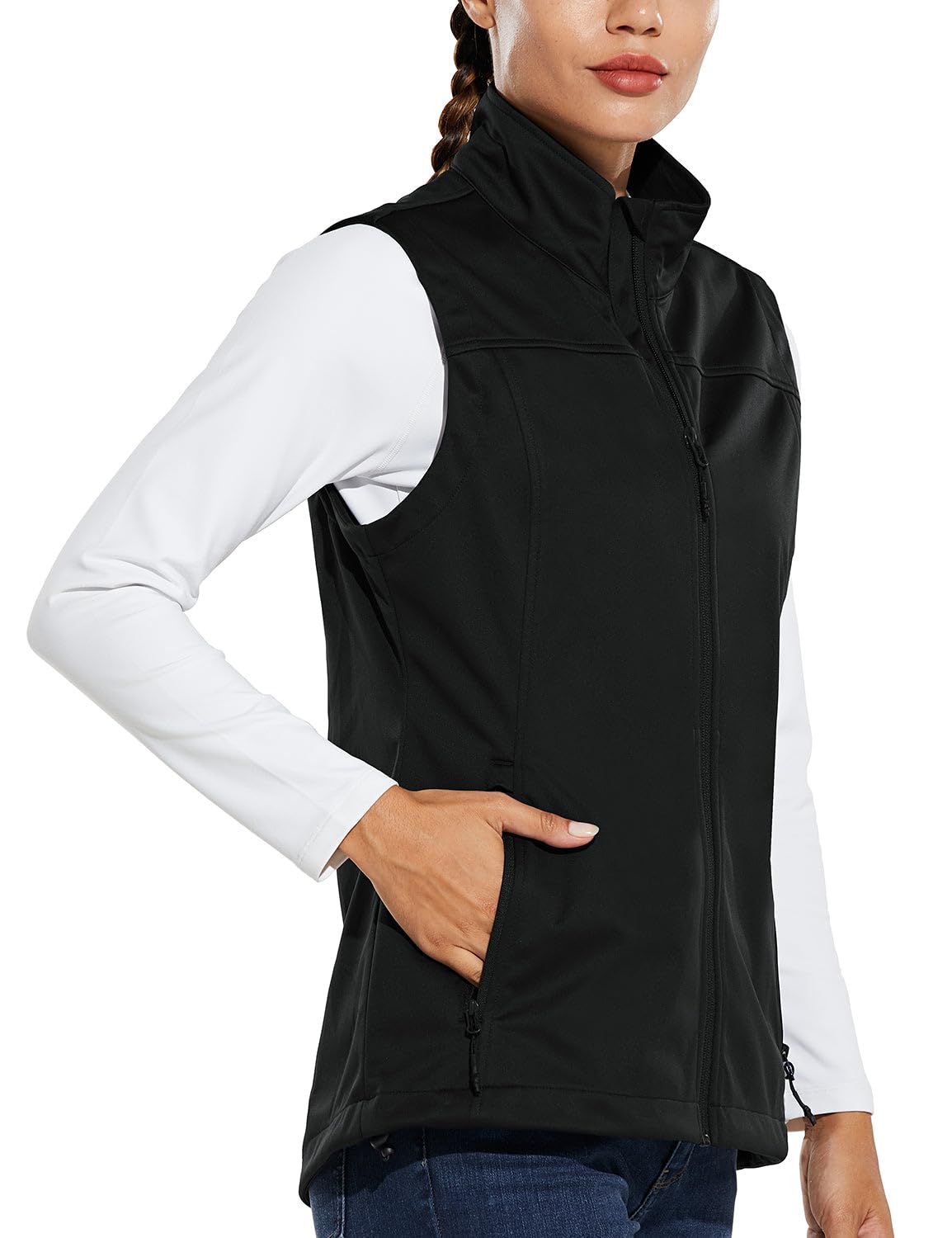
Stretch armholes and a stand collar for the runner who wants nothing flapping.
For a vest built for running, the armholes are the details that matter. Baleaf finishes them with elastic, which means the fabric hugs your shoulders instead of flapping in the wind as your arms pump. Add the stand collar and you’ve got a neckline that seals against a cold draft without a bulky hood behind you. The maker frames it as one fabric doing four jobs, and the four-way stretch backs that up on the trail, in camp, and at the golf course on a chilly morning.
Across the near-thousand reviews, quality is the trait buyers call out most — the fabric holds up wash after wash and still looks presentable off the trail. A roomy cut is another common theme: there’s room to fit a thin sweatshirt underneath for colder days. The sleeve-free build helps with arm swing and keeps you from overheating once you get moving, which is the running-specific tradeoff worth knowing.
The catch is sizing consistency. It runs generous by design, which some buyers love and others find loose — so if you’re between sizes or prefer a slimmer fit, sizing down may suit you better. For runners who value arm mobility and a no-fuss layer, though, this is a genuinely well-made choice at the value end of the market.
Running-Specific Wins
- Elastic armholes sit snug so the vest doesn’t flap as you swing your arms
- Stand collar seals the neck against cold wind
- Roomy cut fits a thin sweatshirt underneath
- Fabric keeps its looks after repeated washing
Worth Knowing First
- Runs generous — size down if you like a slimmer silhouette
- No hood, so exposed ears on a windy run need a separate hat
Reach for this: runners, golfers, and campers who want a no-hood, stretchy vest that keeps its shape and its looks.
Skip if: you prefer a close-fitting cut — the roomy sizing here runs on the generous side by design.
4. 33,000ft Women’s Softshell Vest
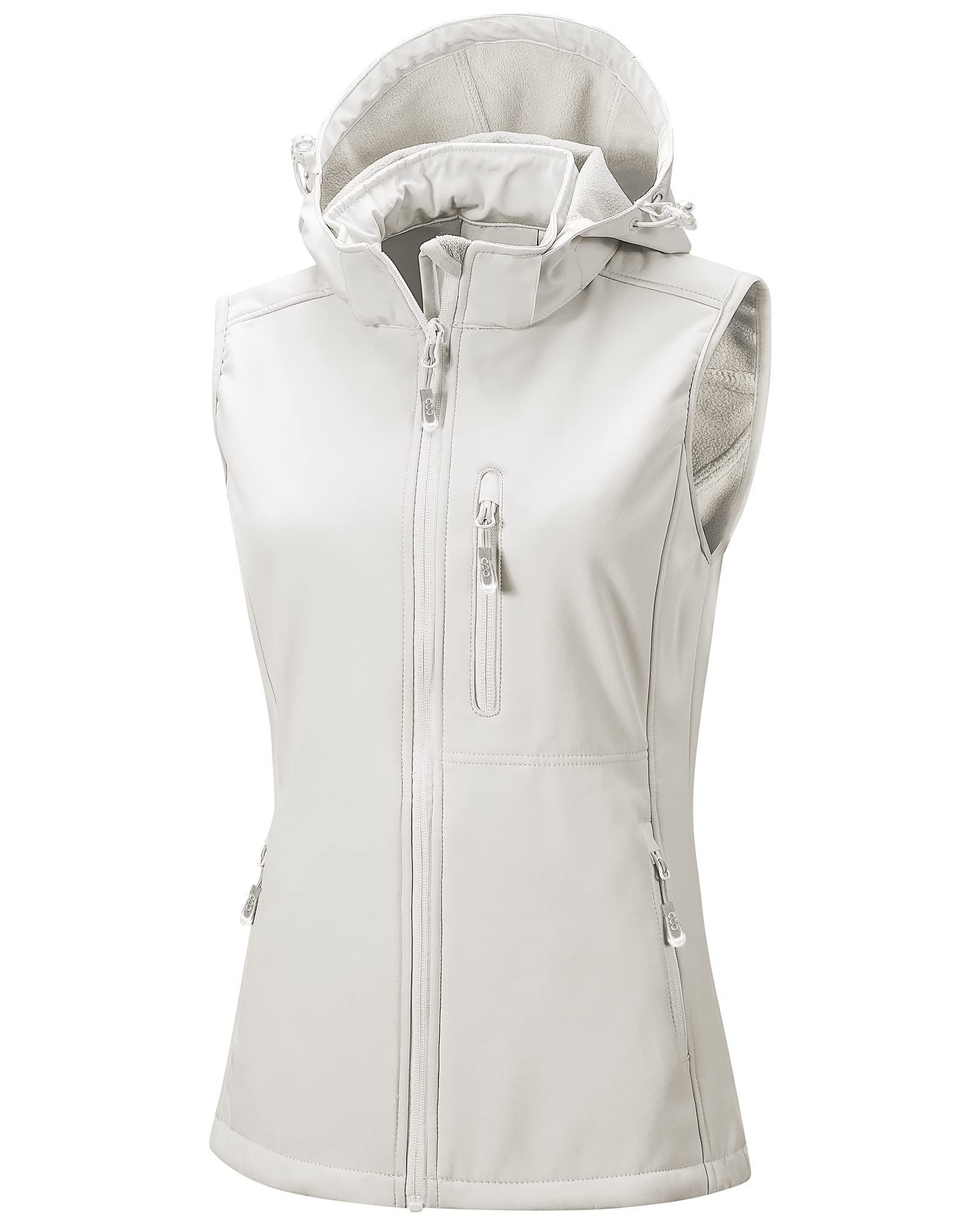
The layering specialist with a hood you can unzip and five pockets to fill.
Five large pockets is a lot for a vest this light — and that’s before you get to the good stuff. This is a waterproof, breathable shell with four-way stretch, so it moves with you and shuts out rain without turning into a sauna. It’s fleece lined for warmth, wear- and stain-resistant on the outside, and finished with a smooth SBS zipper — SBS being a common zipper brand that tends to glide more reliably than no-name hardware.
The hood is the detail that makes this one stand apart. It’s removable with a zipper and adjustable with a drawcord, letting you go hooded on a windy ridge or hoodless in town. An adjustable drawcord hem lets you cinch the bottom against cold air creeping up, and deep zippered pockets hold keys and a phone without fear of them spilling out when you lean forward. Pull it on over a hoodie and it’s a genuinely warm outer layer for a cold commute.
The one thing to keep in mind is sizing. The maker’s chart and much of the feedback agree, but a portion of buyers report it runs slightly small — so if you’re between sizes or layering a heavy sweatshirt, a size up is the safer call. The fabric’s strength is its balance: light enough to pack, warm enough for real cold.
The layering case: a fleece-lined, waterproof, four-way-stretch shell with a hood you can remove and five pockets — for cold commutes and winter runs, that’s a hard package to beat. It’s the top of the mid-range group on finish and on features.
Size up if you layer: the fit skews slightly small for a minority of buyers, so if a heavy hoodie is part of your plan, get the roomier size.
Ideal for: the winter commuter or cold-weather runner who wants a removable hood, warm fleece lining, and enough pocket space for a phone and keys.
Look elsewhere if: you want a minimalist no-hood vest — this one’s built for layering and carrying more than a runner’s essentials.
5. ARIAT Women’s Ariat Logo Softshell Vest
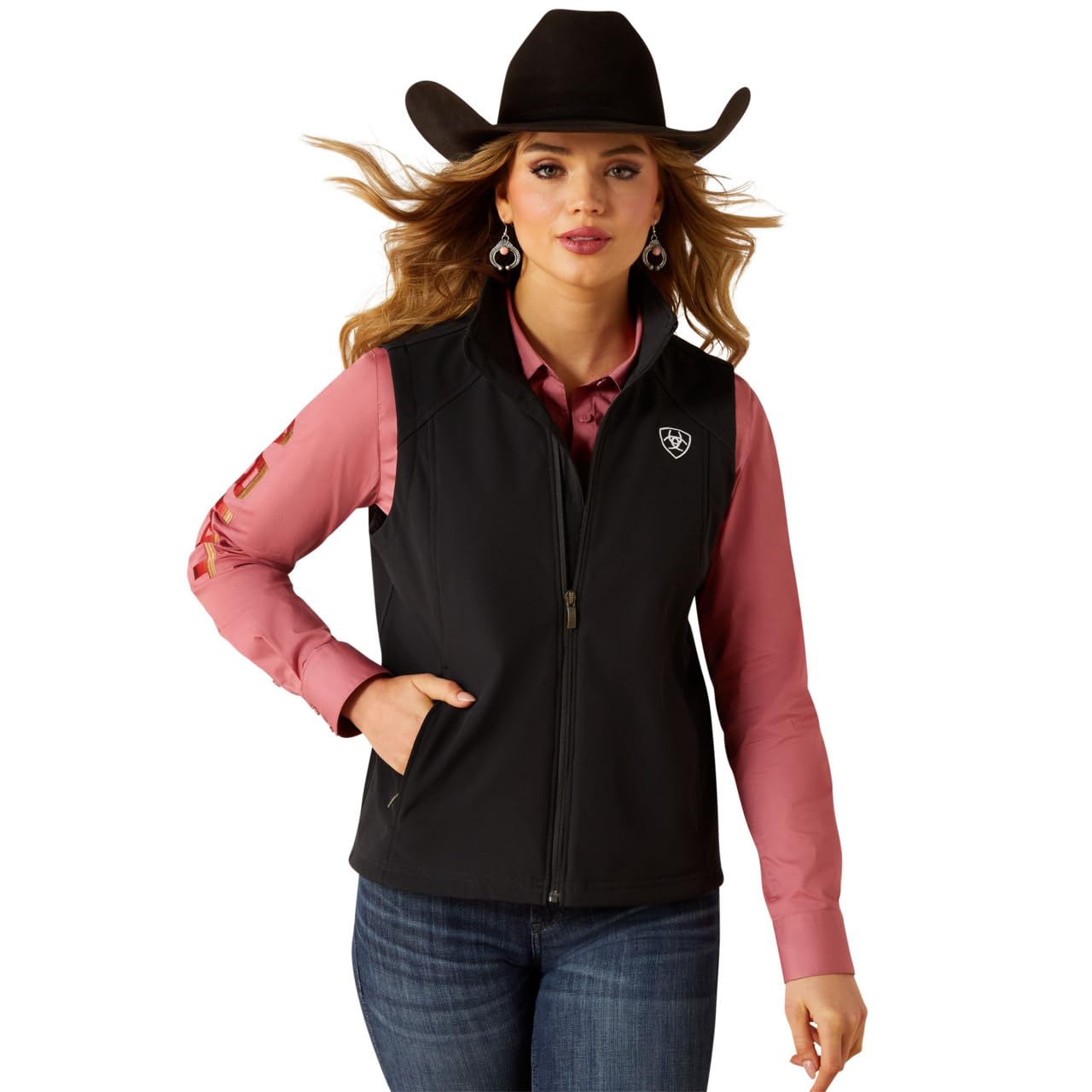
The branded statement piece that leans premium and delivers the fit you expect from Ariat.
If you already own Ariat and trust the fit, this vest is the upgrade path. It’s a women’s-cut softshell with the Ariat logo worked into the design, built on the same approach the brand takes across its outerwear line. Ariat says it partners with biomechanical research groups and testing labs to improve performance, comfort, and durability — the work behind this vest’s premium price.
The Ariat New Team above and this one are both women’s softshell vests from the same brand, but they serve different jobs. The New Team is the everyday, no-hood workhorse with the softer bonded feel. This Logo vest is the premium silhouette: a step up on branded finish and styling, aimed at the buyer who wants a vest that reads as a designed piece rather than a basic layer. Choose this one if the look and the brand’s patterning matter as much as the wind protection.
The trade-off is that this sits near the top of the price ladder, so it’s a pick for the buyer who already knows Ariat’s women’s sizing and values the finish. If you’re just testing whether a softshell vest works for you, the lower-priced picks are the smarter first step. If you’re a committed Ariat wearer, this is the one that feels like an upgrade the moment you put it on.
For the Ariat loyalist: if you know your size in the brand and want the branded, designed feel, this is the premium pick.
Not the first pick for: anyone still deciding whether a softshell vest fits their wardrobe — start with a lower-tier option and work up from there.
6. Helly Hansen Women’s W essential Softshell Vest
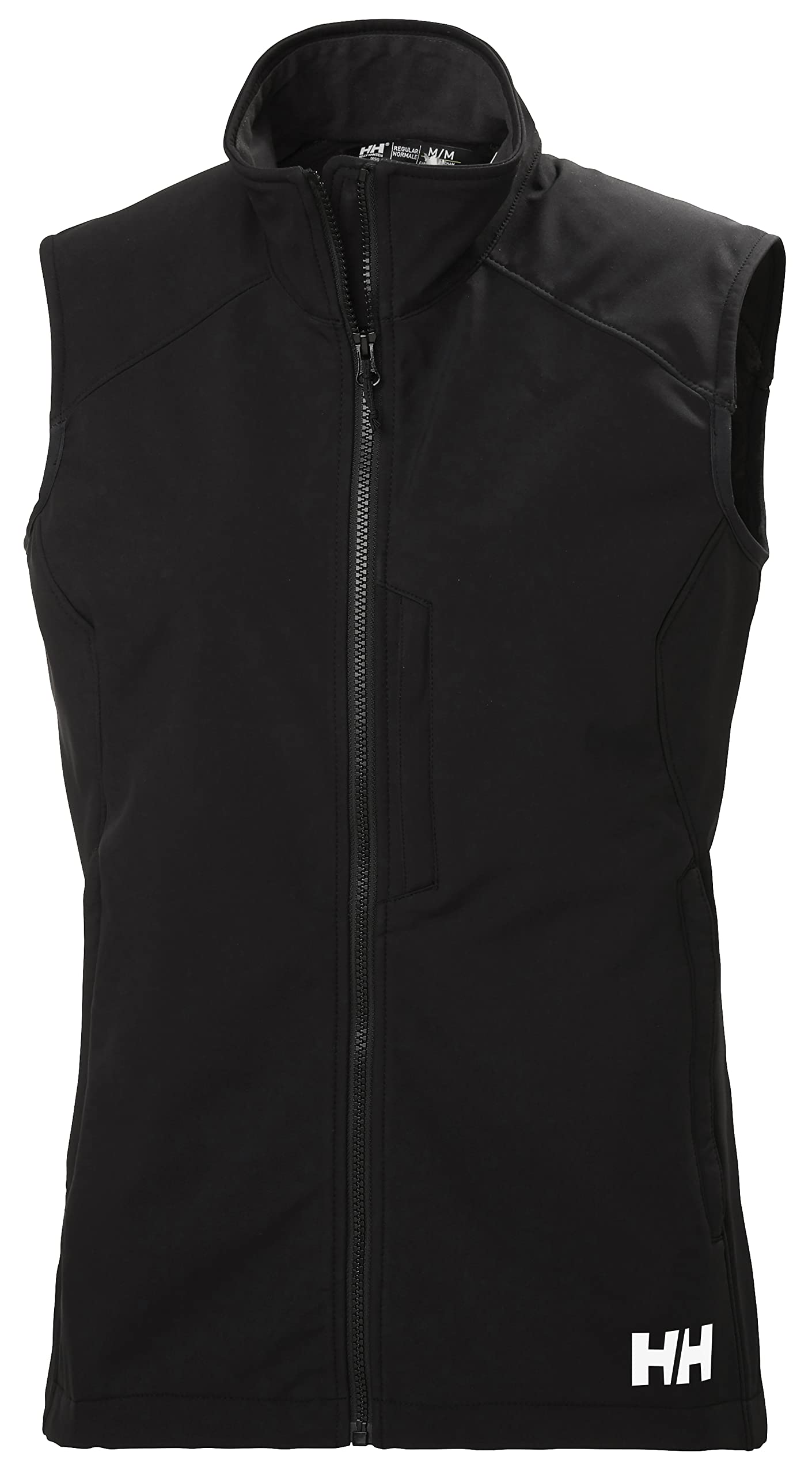
A weather-hardened vest built to cross from a mountain path to a city street.
Helly Hansen built its name on gear for harsh climates, and this vest carries that thinking. The essential Softshell Vest is fleece-backed for warmth and treated to be water-resistant, so it holds off light showers and damp conditions without turning into a sweltering shell. The sleeveless construction keeps your arms free to move, and the fleece inner face wants to be worn against a base layer rather than over a bulky sweater.
Where it stands apart from the rest of the group is the crossover use case. It’s designed to look right on both a rugged trail and a city street, so the styling leans more toward a smart outer layer than a pure performance shell. The fleece backing means it feels warm even at a moderate weight, and the water-resistant treatment is the thing you want for damp, unpredictable afternoons. If your weekend swings between a hiking trail and a coffee shop, this is the one that doesn’t look out of place in either.
The honest limit is the price tier — this is the top of the list, so it’s for the buyer who wants the brand’s weather-tested approach and the crossover styling. If you only ever wear a vest on dry cold days, the mid-range picks do the same job for less. But if you want a layer that can take a damp mountain afternoon and still look sharp in town, this is the premium choice.
Built for the weather: fleece backing plus a water-resistant outer means it handles damp cold better than a plain softshell, and the styling crosses from trail to city without a second thought.
The trade-off: it’s the most expensive in the group, so you’re paying for the brand’s weather-tested approach and the crossover look — not just the fabric.
Best suited to: the buyer whose weekend swings between mountain trails and city streets, and who wants a layer that looks right in both.
Hold off if: your vest life is entirely dry-weather and casual — the mid-range picks cover that for less.
Know the Specs
Softshell Fabric and Membrane
Softshell is a stretchy, bonded fabric that blocks wind while letting some body heat and sweat vapor escape — it sits between a fleece and a hard shell on the weather-protection scale. A membrane is the thin inner film some vests add to stop rain; a TPU membrane is one type, made from thermoplastic polyurethane. The trade-off is simple: a membrane keeps more rain out but can feel less breathable, while a plain softshell breathes better and suits dry cold days.
Women’s Fit vs Unisex
A women’s-specific vest is cut with a narrower shoulder and a shaped waist, so the hem stays put when you reach overhead. Unisex vests tend to sit boxy through the shoulders and square at the waist. When you plan to layer a hoodie or sweatshirt underneath, check the size chart and consider going up one size — several picks here suggest exactly that for a roomier layer.
Four-Way Stretch
Four-way stretch means the fabric stretches both across and lengthwise, so it moves with your arms and torso instead of pulling tight. For a running or climbing vest, that’s the difference between a layer you forget you’re wearing and one that bunches up at the shoulders. It also helps the fabric recover its shape after you pull it on and off repeatedly.
Hood and Collar Choices
A hood adds neck warmth and wind protection on exposed ground, while a stand collar keeps the neckline clean without the bulk. A removable zip-off hood is the most flexible option — you can go hooded on a windy ridge and hoodless in town. If you always wear a beanie or a hooded base layer, a no-hood vest is lighter and less fuss.
Common Questions
Should I size up in a women’s soft shell vest if I plan to layer a hoodie underneath?
What is the difference between a softshell vest and a fleece vest?
Is a TPU membrane actually waterproof, or just water-resistant?
Can I wear a soft shell vest for running, or is it only for hiking?
How should I care for a softshell vest so the weather protection lasts?
What is the difference between the two Ariat vests on this list?
Will a detachable hood on a softshell vest stay on in wind, or should I get a fixed one?
How many pockets should a women’s soft shell vest have for trail use?
Is a no-hood softshell vest warm enough for winter, or do I need the hood?
Do these vests fit over a bulky sweater, or should I stick to a base layer?
The Bottom Line
For most women, the women’s soft shell vest winner is the Ariat New Team Softshell because it balances build quality, comfort, and a clean women’s cut for everyday wear across most of the year. If wet weather and a hood are on your list, the KVE gives you a real membrane and a detachable hood. For winter layering over a hoodie, reach for the 33,000ft with its fleece lining and removable hood. The one nudge worth making: the New Team is the crowd favorite here at 4.5+ stars across 400+ owners — a sample size that large is the best signal you’ll get before ordering.
How we choose
We do not accept paid placement. Every pick is matched to a real buyer and a real use-case; we do not hands-on test units.
Sources
Specifications: manufacturer listings and product documentation. Review insights: verified customer reviews, as of November 2026. Pricing: not shown on this page (it changes often); check the current price via the retailer link.
As an Amazon Associate, Tactical Gear Guy earns from qualifying purchases. This does not affect which products we feature.