Specs are compiled from manufacturer listings and verified buyer reviews and can change over time — please confirm the key details on the product page before buying.
Most people buying a fitness tracker get the same thing wrong: they chase the biggest feature list and end up with a watch they have to charge every single night. What actually decides whether you will still be wearing yours in six months is simpler — does the battery outlast your week, and does the screen stay readable when you are squinting at it mid-run? This guide sorts nine genuinely well-reviewed trackers by what they are actually good at, so you can match one to your wrist, your phone, and your training instead of guessing.
This guide is built by comparing the manufacturers’ published specifications and the patterns across verified customer reviews, so you get each pick’s real strengths and trade-offs instead of marketing spin.
You will see where a screenless band beats a full smartwatch on battery, and where a rugged GPS unit earns its bulk. By the end you will know exactly which of these top rated fitness trackers fits your wrist and your routine.
Top Picks
How To Choose The Best Top Rated Fitness Trackers
Before you compare a single model, decide which of two jobs your tracker has to do. Either it is a quiet sensor on your wrist that logs steps, sleep and heart rate and disappears into your day, or it is a screen-first smartwatch that shows messages and maps. Those two jobs pull in opposite directions, and picking the wrong one is the most common reason a tracker ends up in a drawer.
Decide on battery days before features
A screenless band can run for weeks between charges, which means it survives a forgotten charger on a work trip. A bright always-on screen eats that runway fast, so you trade charging convenience for what you can see at a glance. If you know you will resent a nightly charging ritual, let battery days rule out half the field first.
Check the phone you actually carry
Some trackers are Android-only and will not pair with an iPhone at all, and a few of the deeper integrations only work inside one brand’s ecosystem. Read the compatibility line before you fall for the screen. A tracker that cannot sync to your phone is a bracelet, not a fitness tracker.
Match water rating to your workout
You can wear an IP68-rated tracker (sealed against dust and water) through sweat, rain and hand-washing, so it handles most gym and running sessions. If you want to swim laps or snorkel with it on, you need the tougher 10 ATM rating (waterproof to 100 meters of pressure). Decide on swimming first, because that one requirement narrows your shortlist sharply.
Side-by-Side Comparison
| Model | Best For | Battery Life | Display | Phone Compatibility | Amazon |
|---|---|---|---|---|---|
| Apple Watch Series 12 GPS 42mm★ Best Overall | iPhone owners who want a full smartwatch | Up to 24 hours | Ceramic Shield 2 touchscreen | iPhone | Amazon |
| Screenless Fitness Tracker Smart BandBest Battery Life | Screen-free, charge-free daily tracking | 20–30 days | Screenless | iOS and Android | Amazon |
| Xiaomi Mi Smart Band 10Best Screen Value | Big screen on a small budget | 21 days | 1.72″ AMOLED, 1500 nits | iOS and Android via Xiaomi Fit | Amazon |
| Amazfit Bip Max | Maps and GPS without your phone | 20 days | 2.07″ AMOLED | iOS and Android | Amazon |
| SAMSUNG Galaxy Watch Ultra 47mm LTE | Rugged outdoor wear with cellular | 40 hours | — | Android | Amazon |
| COROS PACE 4 | Runners who want an ultralight GPS watch | 19 days / 41 hours GPS | 1.2″ AMOLED touchscreen | iOS and Android | Amazon |
| Garmin Instinct 3 Solar | Solar charging and rough terrain | 28 days | 0.9″ solar-charging display | iOS and Android | Amazon |
| Google Pixel Watch 5 (45mm) | Pixel and Android users | Up to 40 hours | Domed Actua 360 with Gorilla Glass | Android only | Amazon |
| Garmin Forerunner 570 | Serious runners on smaller wrists | 10 days / 18 hours GPS | Bright AMOLED touchscreen | iOS and Android | Amazon |
Detailed Reviews
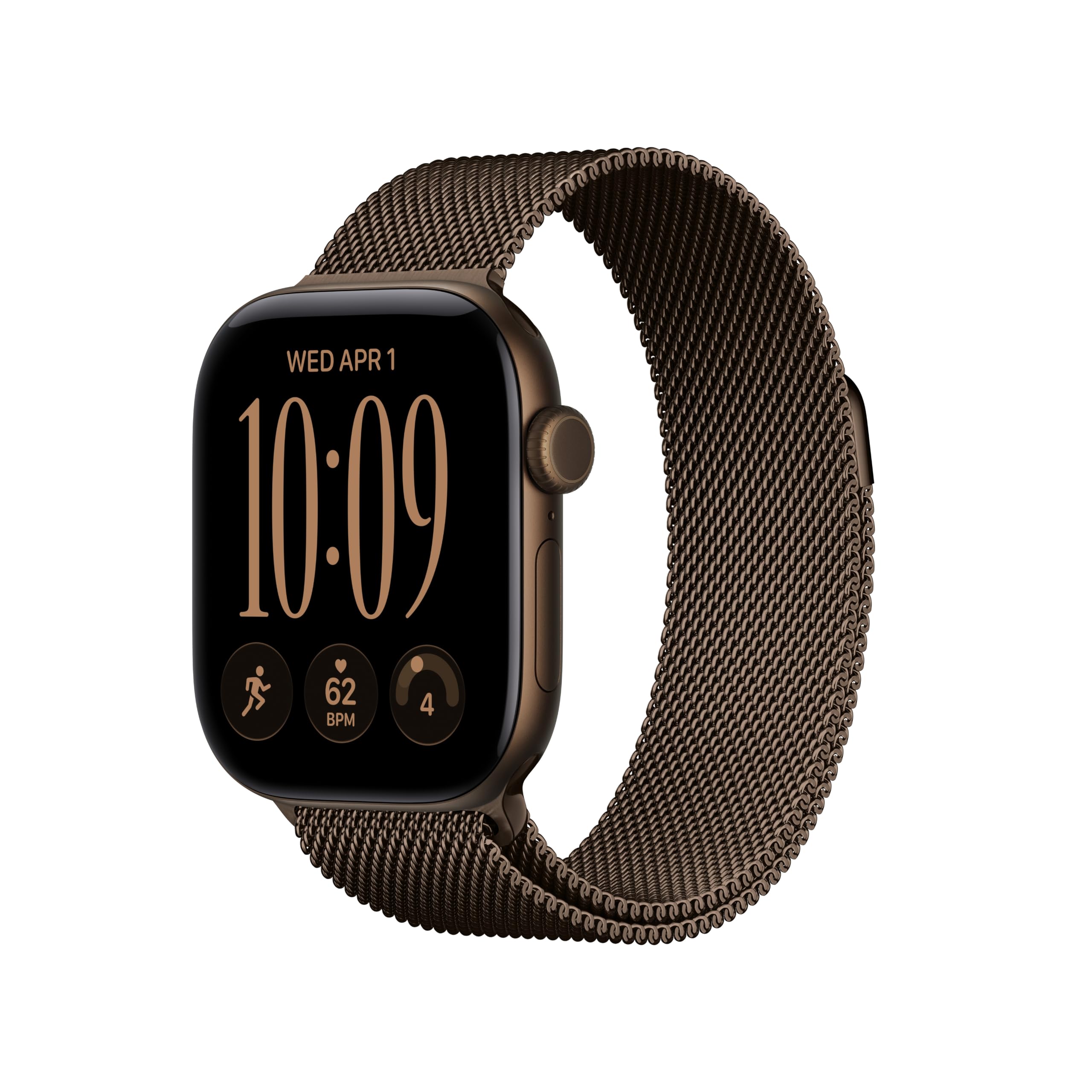
1. Apple Watch Series 12 GPS 42mm Smartwatch
Our pick — 4.5+★ from 500+ verified ratings; the strongest balance of quality and price.
The tracker that treats your recovery as seriously as your workout.
This is the pick for the iPhone owner who wants one wrist device to do everything — train, sleep, pay, text and call for help. Its headline number is the health cadence: it measures HRV (heart rate variability, the gap between beats that hints at stress and recovery) as often as every five minutes. It also takes background heart rate readings every five seconds. In plain terms, you get a dense stream of body data rather than occasional snapshots, which is what makes the readiness and Vitals views useful instead of decorative.
Apple rates normal use at up to 24 hours, and a 15-minute fast-charge tops you back up for up to 12 hours of normal use. That 24-hour figure is the honest trade-off here, and it is far shorter than the 20 to 30 days the screenless band above claims. The compensation is what that screen and chip do: Pacer, Heart Rate Zones, a daily sleep score, menstrual cycle tracking, blood oxygen readings, and fall or severe car crash detection that can reach emergency services. The aluminum cases now carry Ceramic Shield 2, and the titanium and ceramic versions use a crack-resistant sapphire crystal display.
It holds 4.5+ stars from 500+ owners, the highest score in this lineup. Buyers describe the battery as lasting about two days between charges, which beats Apple’s own rating in daily use. The recurring note is that you are buying into Apple’s world: it pairs with an iPhone, and the deeper workout features lean on a nearby iPhone for Apple Intelligence. If you carry Android, this is simply not your watch.
Where it pulls ahead
- HRV sampled as often as every five minutes plus heart rate every five seconds — deep recovery data, not guesswork
- 15-minute fast-charge gives up to 12 hours of normal use, so a forgotten charge is not a disaster
- Fall and crash detection plus a readiness score that reads your activity, vitals and sleep together
- Ceramic Shield 2 on aluminum cases and sapphire crystal on titanium and ceramic models
What to weigh first
- Up to 24 hours of normal use means a nightly charging habit
- Built for iPhone owners — Android users need to look elsewhere
- Audio Intelligence features arrive in beta late 2026 and carry usage limits
Reach for this if: you carry an iPhone and want the deepest health sensing on a wrist that also handles calls, texts and safety alerts.
Look elsewhere if: a nightly charge would annoy you — the screenless band further down runs weeks on a fill.
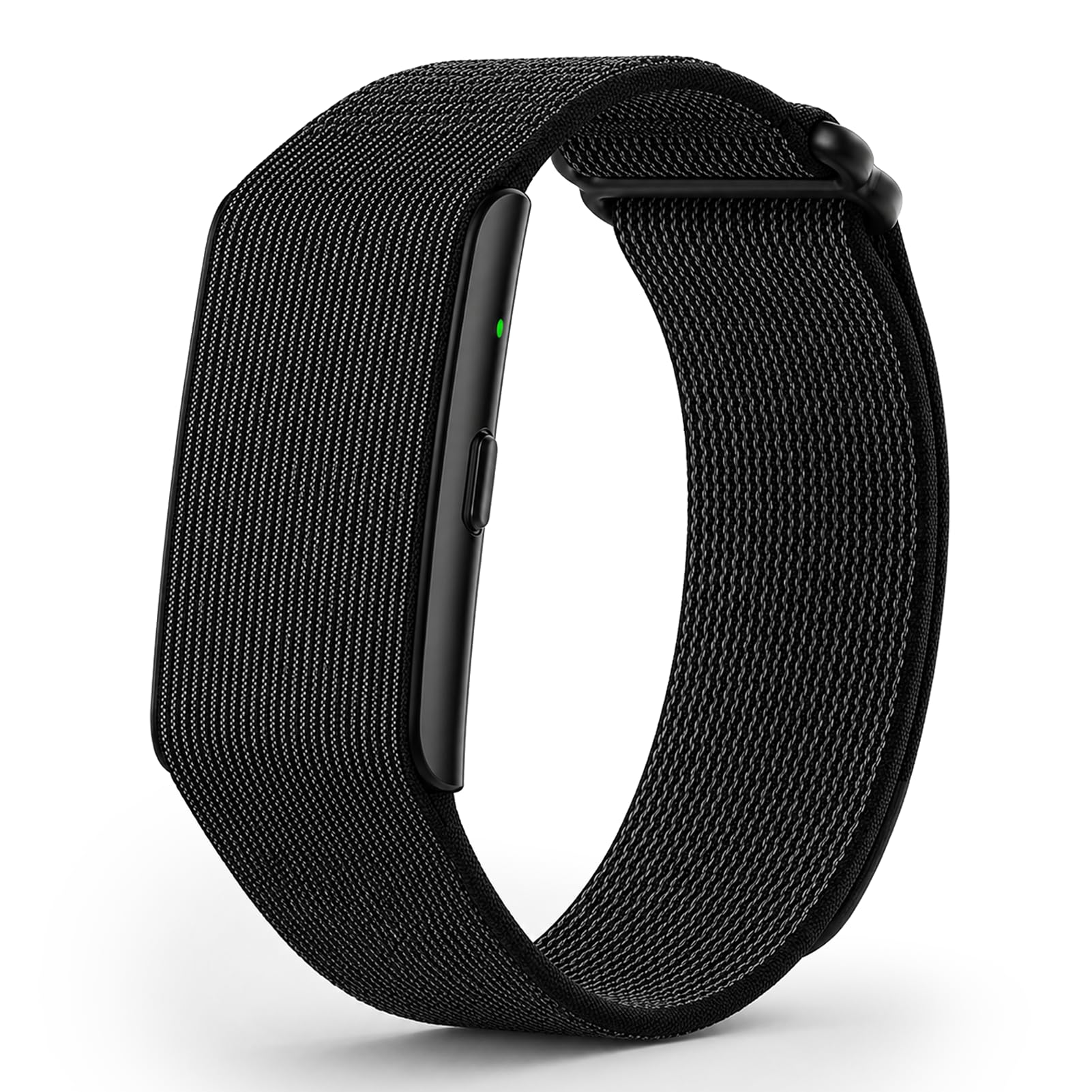
2. Screenless Fitness Tracker Smart Band
No screen, no charging ritual, no subscription — just the numbers.
Here is the concept that divides this whole category: a tracker with no display. There is nothing to light up and nothing to swipe, so the 180mAh battery (the cell’s storage capacity, which sets how long it runs between charges) stretches to 20 to 30 days of use. Recharging takes about 2 hours on the magnetic charger. At 25g it nearly vanishes on your wrist, which is the point — nothing competes for your attention and nothing jabs you at night.
What it does track is broad. Heart rate, SpO2 (blood oxygen), HRV and stress run through the day, and sleep gets broken into light, deep and REM stages. There are 170+ sport modes, from walking and running to yoga and Pilates, plus Connected GPS that borrows your phone’s location to map outdoor routes in the free QwatchPro app. That app carries no subscription, which is rare in this space. The 22mm quick-release strap means you can swap the band when the original wears out.
The price of going screenless is simple: you have to open the app to see anything, and call and message alerts arrive as vibrations with no text on your wrist. That is a fair exchange for a band you can wear for weeks without thinking about it — and it keeps you off a screen more often than the smartwatches here will.
Comfort and accuracy: activity monitoring is what this one is known for, with functionality right behind — the tracking and the app both hold up to daily use, and the lightweight build keeps it comfortable overnight.
Built for: the low-maintenance wearer who wants honest step, heart and sleep data without a nightly charger.
Think twice if: you rely on reading texts or answering calls from your wrist — there is no screen to do it on.
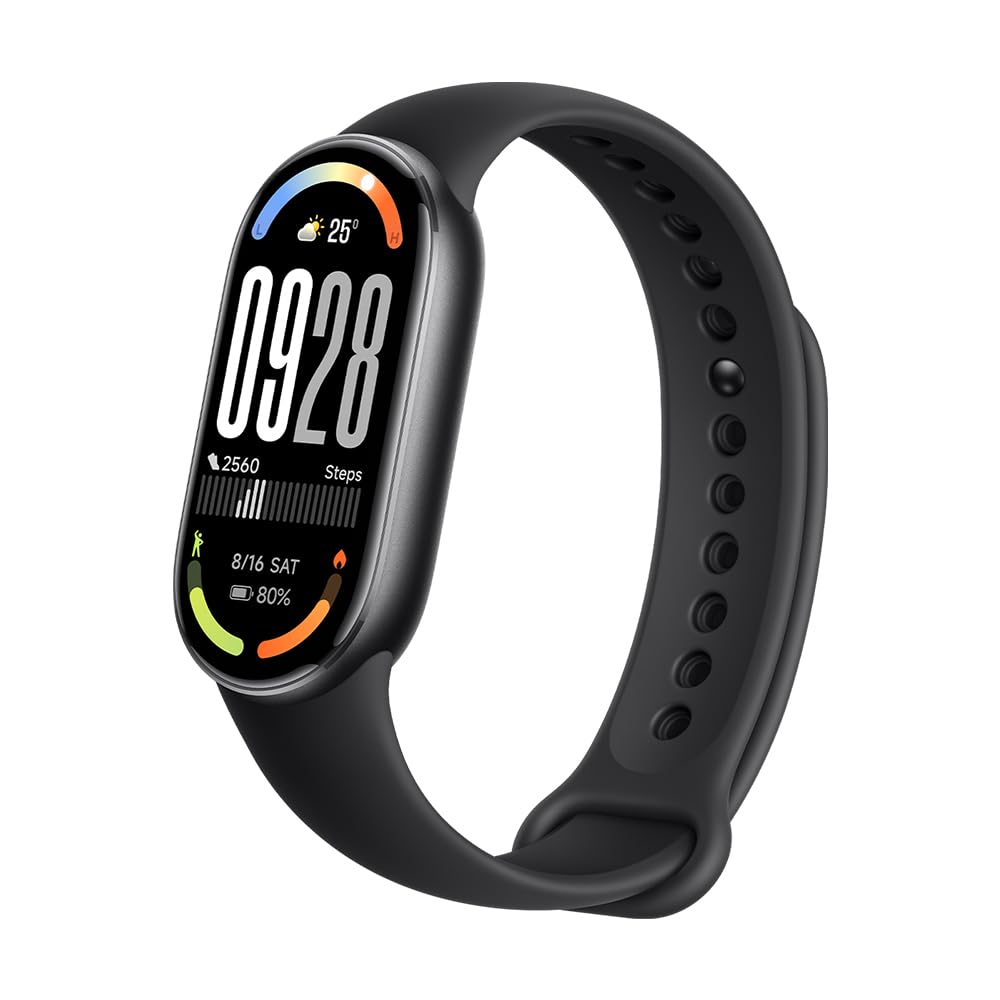
3. Xiaomi Mi Smart Band 10
A 1.72-inch screen that stays legible at high noon.
The stand-out figure on this band is brightness: 1500 nits HBM (the peak brightness mode used in strong light) on a 1.72-inch AMOLED panel, which the maker puts 25% brighter than before. That means messages stay readable in direct sun, which is the single most common frustration with cheap trackers. Symmetrical 2.0mm bezels push the screen-to-body ratio from 66% to 73%, so the face looks bigger without a bigger band.
Battery sits at 21 days per charge with a full recharge in about an hour, and the 200mAh cell is straightforward to live with. The specs sheet also lists a new high-precision electronic compass for tracking swim direction in the pool. Sleep monitoring covers stages and quality. HyperOS 2 drives the interface, and the whole thing runs on Bluetooth 5.4.
One practical catch worth knowing up front: the Xiaomi Fit app only supports the metric system. To see pounds, ounces, inches or feet, you connect it through a third-party app and on to Google Fit. Owners rate the build highest and the battery next, across thousands of ratings. Performance, accuracy and connectivity draw more mixed notes, so treat it as a strong everyday tracker rather than a lab instrument.
Why it earns its spot
- 1500 nits HBM brightness keeps the screen clear in harsh sun
- 21 days per charge and about an hour to refill
- 1.72-inch AMOLED with 73% screen-to-body ratio
- Compass-based swim direction tracking for pool sessions
Fine print to know
- Xiaomi Fit is metric-only — imperial units need a Google Fit workaround
- Accuracy and connectivity land in mixed territory, so don’t expect elite precision
The honest verdict: a big, bright AMOLED face and three-week battery for a modest outlay — the value leader for screen lovers.
Not for you if: you want imperial measurements without routing through a second app.
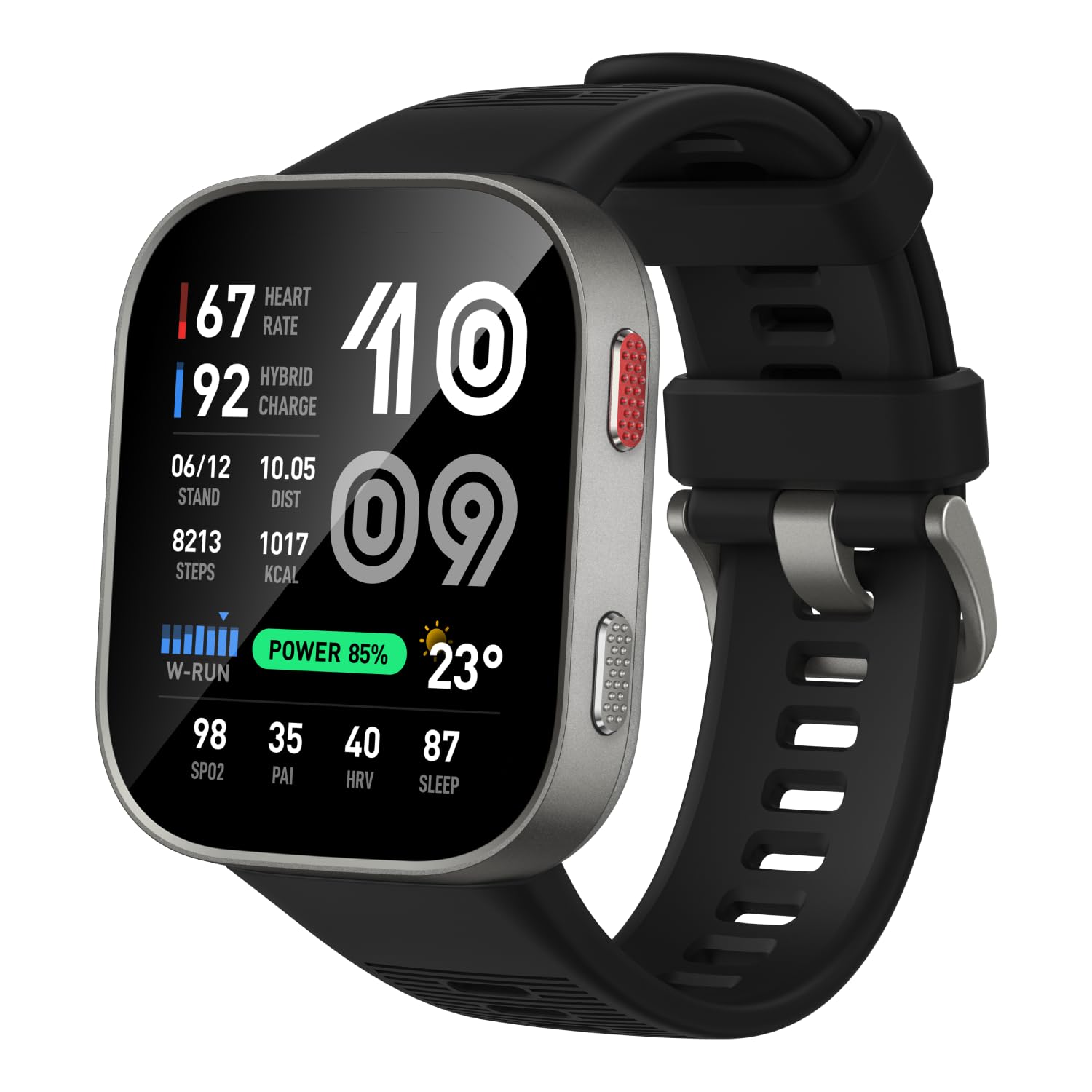
4. Amazfit Bip Max Smart Watch
Leave the phone at home and still find your way back.
Two numbers define the Bip Max. The first is the 2.07-inch AMOLED screen — the largest display in this lineup, and the reason 67 owner mentions of screen size are positive. The second is 4GB of onboard storage, which is what lets you download offline maps from the Zepp app and navigate without a phone signal. Backed by 5 satellite systems, the GPS locks on fast, and you get turn-by-turn directions plus off-track alerts if you wander off route.
Battery runs up to 20 days of typical use, which sits comfortably between the Xiaomi’s 21 days and the smartwatch crowd’s day-or-two cycle. The 150+ sport modes cover HYROX, strength training and yoga, and Zepp Coach builds adaptive routines around metrics like VO2 Max, Training Load and Training Effect. A BioCharge score reads your sleep, recent workouts and stress each morning to steer you toward push or rest.
The Zepp app has no subscription, which matters when several rivals gate their best insights behind one. Physically it is an aluminum alloy body with a clean two-button layout, and it reads as more premium than its tier suggests. The one thing to check before buying: it ships with a magnetic charging base but no USB Type-C cable, so keep a spare on hand.
What owners rave about: build quality sits at the top of the pile by a wide margin, with value for money and battery life close behind. People open the box expecting a budget watch and come away comparing it to far dearer models.
Pick this when: you hike, run trails or travel and want offline maps plus a huge screen without dragging your phone along.
Check first: there is no USB Type-C cable in the box, only the magnetic charging base — plan for that.
5. SAMSUNG Galaxy Watch Ultra 47mm LTE AI Smartwatch (Renewed)
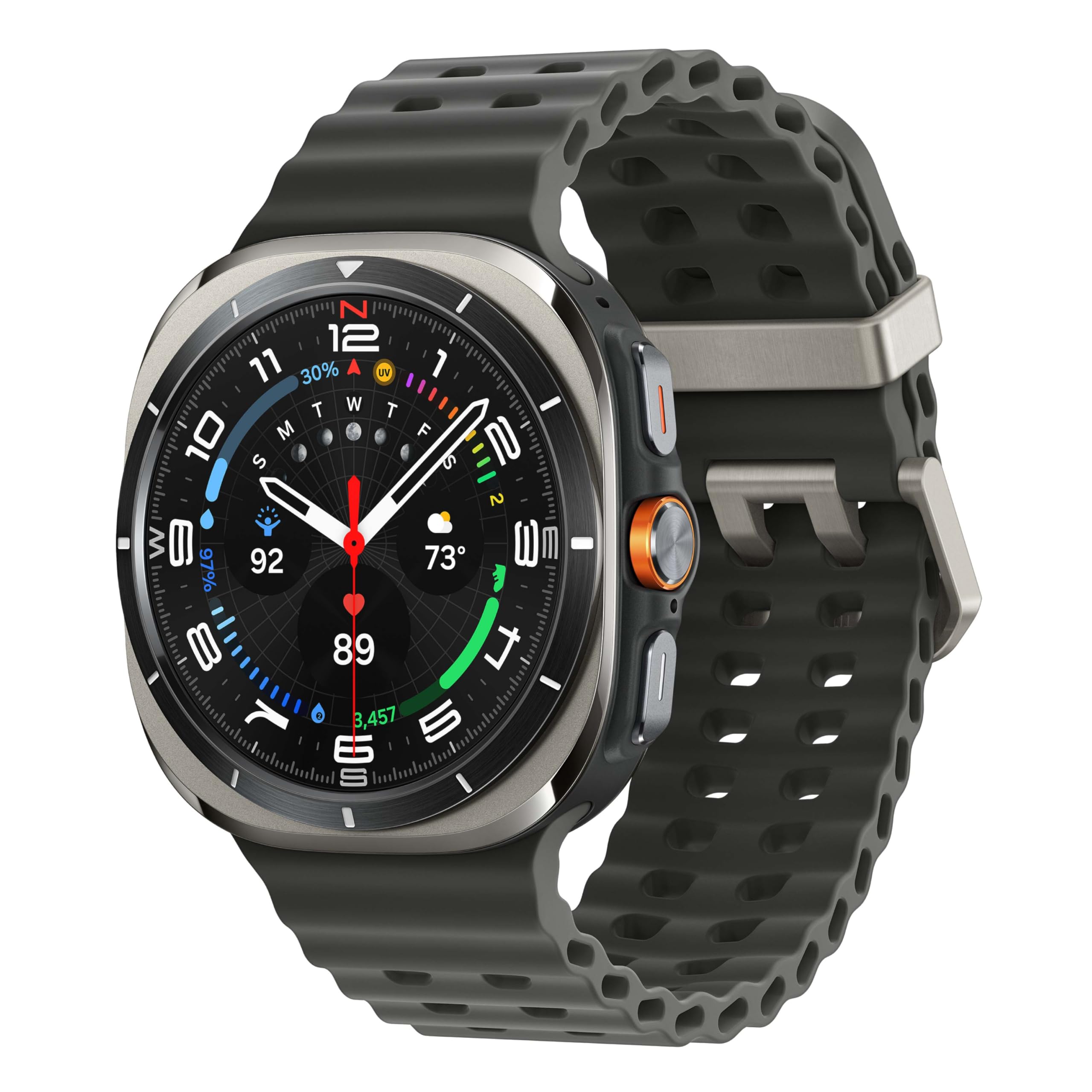
Titanium-tough build with its own cellular connection.
This is the pick for someone who wants a watch that looks the part in the outdoors. The case is built for extreme environments, and the titanium silver finish gets the most praise of anything on this model — appearance is the clear standout across owner feedback. It also carries its own LTE connection (the 3G and 4G cellular bands), so it can stay reachable without your phone nearby.
The 590mAh battery is the largest cell in this whole group, and Samsung rates it at 40 hours of use. Some owners stretch it to 3-4 days between charges, depending on how hard you lean on the GPS and cellular radio. Health tracking covers heart rate, sleep and an Energy Score, with wellness tips layered on top.
Two honest notes for a renewed unit. Condition draws solid feedback — the watch tends to arrive in like-new shape — but the charging system is the spot to watch, with issues surfacing in feedback. Fitness-tracking accuracy is also the weak link, drawing negative marks rather than praise. Buy this for the look, the battery size and the cellular freedom; lean on a dedicated running watch if precise pace data is your priority.
The appeal
- 590mAh battery — the biggest in this lineup, rated at 40 hours
- LTE cellular means calls and data without your phone
- Titanium silver build suited to rough outdoor use
- Arrives in like-new condition as a renewed unit
The honest limits
- Fitness-tracking accuracy draws negative feedback
- Charging system is the recurring weak point to inspect on arrival
Suits you if: you want a rugged titanium look, a big cell and standalone cellular, and you are okay with a renewed unit.
Better elsewhere if: precise workout accuracy is the whole reason you are buying.
6. COROS PACE 4 GPS Watch
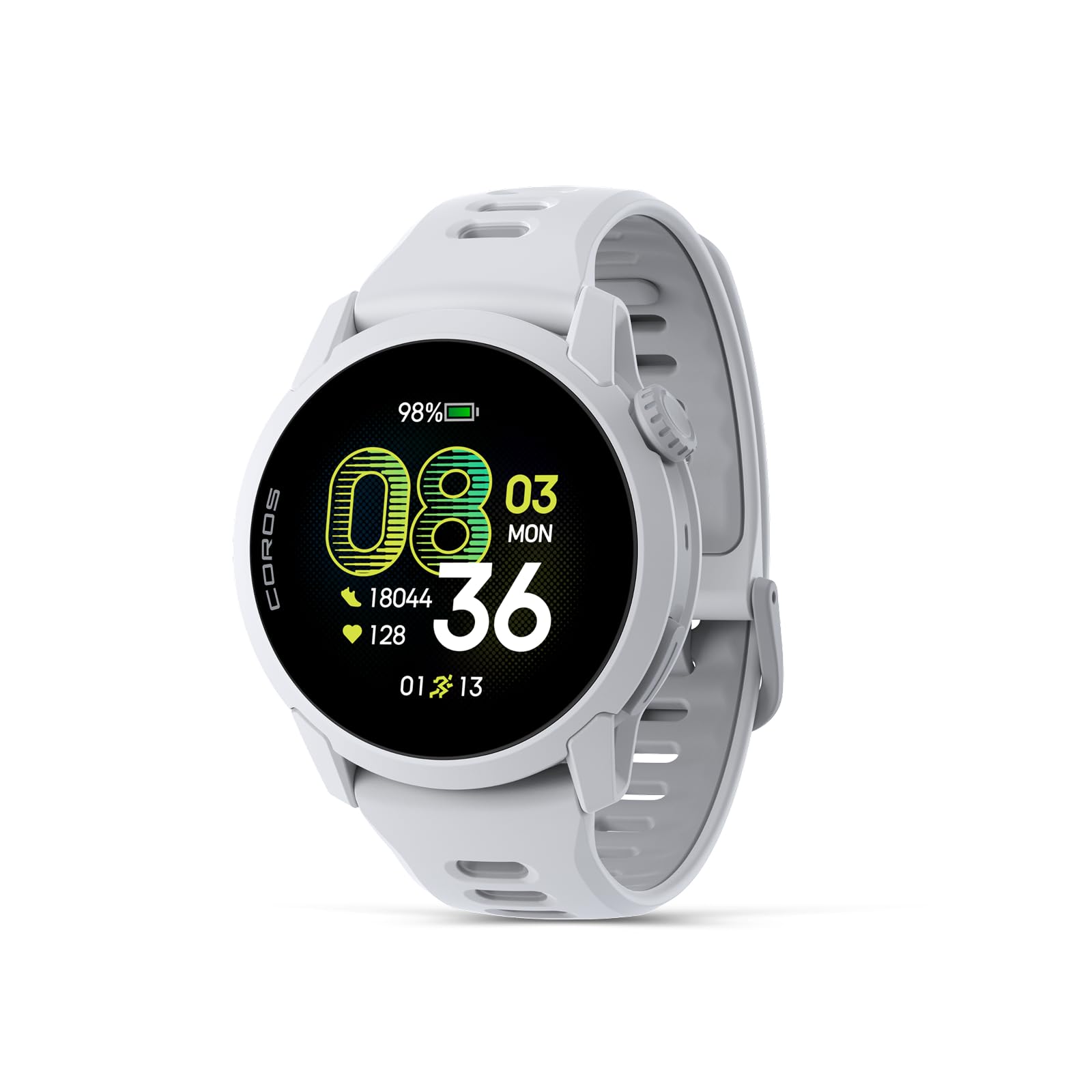
Lighter than an energy gel, built for the long run.
At 32g with the nylon band and 11.8mm thin, the PACE 4 is the lightest option here — you genuinely forget it is on for 24/7 wear. The battery backs that up with 41 hours of continuous GPS and up to 19 days in daily use, so a marathon block or a long trail day never gets cut short by a dead watch. Compare that to the Garmin Forerunner 570 below at 18 hours of GPS mode and you can see where the PACE 4 puts its effort.
The 1.2-inch AMOLED touchscreen auto-adjusts brightness, and COROS puts its resolution 164% higher than the PACE 3. A tactile digital crown, two reachable buttons and the touchscreen give you control even when your heart rate is redlined, and a customizable Action Button gives you one-tap access to media controls or breadcrumb navigation. A voice recording tool lets you log how a session felt, and Voice Control can set an alarm or start a target workout. The COROS app tracks recovery time, sleep stages, HRV and menstrual cycles alongside your training.
The trade-off is honesty about accuracy: heart rate monitoring draws mixed feedback, so pair a chest strap if pace-precise intervals matter to you. Durability also draws some negative notes, which is the cost of going this light. Owners cite enjoyment most often, with battery life right behind.
The verdict in a line: the lightest, longest-GPS watch for the money, let down only by heart-rate precision when you push hard.
Grab it if: you log serious mileage and want a 32g watch that survives 41 hours of GPS.
Look on if: you need chest-strap-grade heart rate from the wrist alone.
7. Garmin Instinct® 3 Solar, Rugged GPS Smartwatch, 45mm, Black

A solar lens that turns daylight into battery days.
Start with the number that sets this apart: Garmin rates it at unlimited battery life with solar charging, assuming all-day wear with 3 hours per day outside in 50,000 lux conditions. Without leaning on the sun it runs 28 days on its 300mAh cell. That combination of solar charging and a 45mm fiber-reinforced polymer case with a metal-reinforced bezel is why owners treat this as the toughest tracker in the roundup.
The outdoor tools are the reason to pay for it. A built-in LED flashlight with variable intensities and strobe modes gives you light when you need it. Multi-band GPS with SatIQ technology positions you while stretching battery life, backed by a 3-axis compass and barometric altimeter. It is 10 ATM water-rated and built to MIL-STD-810 for thermal and shock resistance — swimming, rain and drops are all in its comfort zone.
Health tracking covers wrist-based heart rate, advanced sleep monitoring and Pulse Ox, with the standard reminder that it is not a medical device. Garmin Pay lets you leave cards at home, and Connect IQ opens up apps and watch faces. Incident detection and Assistance can send your live location to emergency contacts when paired with your phone. The one concession is the 0.9-inch display — small next to the 2.07-inch Amazfit, but it is what lets the solar lens do its job.
Built for the backcountry
- Solar charging can extend battery to unlimited under 50,000 lux conditions
- 10 ATM water rating and MIL-STD-810 thermal and shock resistance
- Built-in LED flashlight with strobe modes
- Multi-band GPS with SatIQ, compass and barometric altimeter
Read before you commit
- 0.9-inch display is small for reading maps or messages at a glance
- Pulse Ox is not available in all countries
The one for tough terrain: solar top-ups, MIL-STD-810 toughness and a real flashlight make this the survival-minded choice.
Skip the small-screen hassle if: you want a big bright face for reading stats — look at the Amazfit instead.
8. Google Pixel Watch 5 45mm
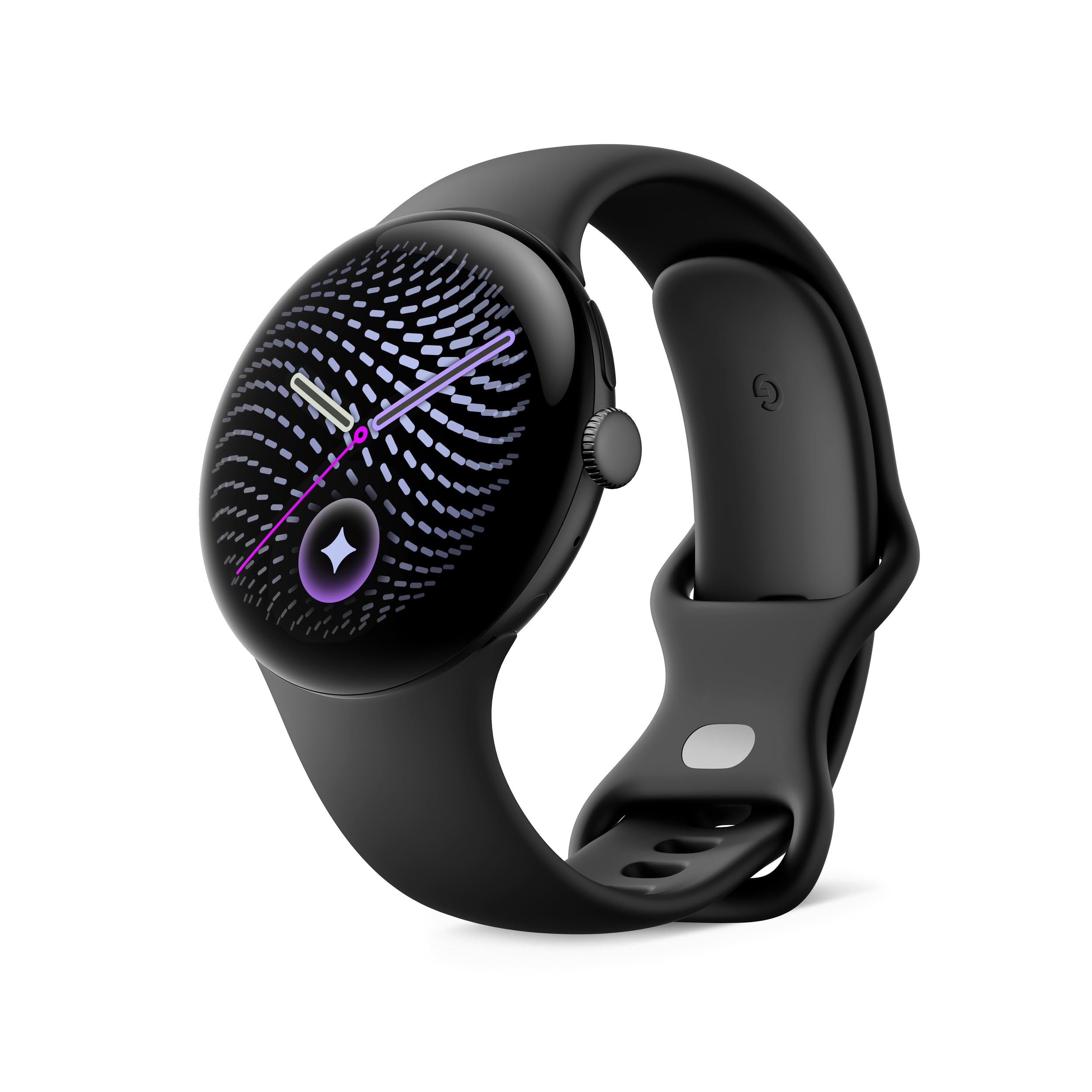
The Android answer to the Apple Watch, with a sleeker dome.
If you carry an Android phone, this is the closest thing here to the Apple Watch experience — and unlike the Apple, it pairs with a Pixel or any Android handset. The domed Actua 360 display is wrapped in scratch-resistant Gorilla Glass, and Google rates up to 40 hours of battery life. It runs Google Health insights and is built around Gemini Intelligence for proactive, personalized tips.
Its standout safety feature is Loss of Pulse Detection, which Google says is unique among smartwatches — the watch can prompt a call to emergency services. Health tracking covers heart rate fine-tuned for activity, sleep stages, breathing regularity and a personalized Sleep Score. Owners praise its looks above all, with functionality right behind, and call the charging super fast.
The friction points are worth knowing before you commit. There is no GPS geotagging on this Wi-Fi model, so route-mapping outdoors is not its strength. Integration with Strava draws mixed feedback, and durability plus value for money both land in mixed territory. At 45mm it is a large face, so small wrists should try it on first. It is Android-only — not compatible with iOS at all.
The editor’s read: a gorgeous Android-first smartwatch with a one-of-a-kind safety feature, best paired with a Pixel phone and not relied on for GPS routes.
Worth knowing: the Wi-Fi version lacks GPS geotagging, so bring your phone if you need route tracking.
Perfect if: you are an Android user who wants the best-looking smartwatch in the lineup and a top-tier safety alert.
Hold off if: you need built-in GPS for running routes or you carry an iPhone.
9. Garmin Forerunner 570 42mm

The running coach that fits a smaller wrist and answers your calls.
Built at 42mm with an aluminum bezel, the Forerunner 570 is sized for smaller wrists — a genuine differentiator next to the 45mm-and-up crowd. Garmin rates 10 days in smartwatch mode and up to 18 hours in GPS mode. That GPS figure trails the COROS PACE 4’s 41 hours by a wide margin, so ultra-distance runners should weigh the two carefully. For marathon training and daily runs, though, 18 hours is plenty.
The training toolkit is the reason runners pay for this line. Training readiness combines sleep quality, recovery, training load and HRV status into one signal for whether you should go hard. Training status uses VO2 max, HRV and recent history to tell you if you are productive, peaking or strained. Daily suggested workouts adapt to your performance, and a morning report folds sleep, recovery and weather into one readout. A built-in mic and speaker let you take calls from your wrist when paired to your phone.
Owners call it easy to set up, with accurate GPS tracking and about 9-10 days of battery in practice. The screen is Garmin’s brightest AMOLED touchscreen with button controls, so you can keep working it with wet or gloved hands. If you race ultra distances and GPS endurance is your top priority, the PACE 4 above beats it on time. For everything else in a runner’s week, the Forerunner 570 leads on coaching depth.
Why runners latch on
- 42mm aluminum case sized for smaller wrists
- Training readiness and training status tie sleep, HRV and load together
- Brightest AMOLED touchscreen with button controls for sweaty hands
- Built-in mic and speaker for calls from your wrist
Where it gives ground
- 18 hours of GPS mode falls well short of the COROS PACE 4’s 41 hours
- Training metrics are close estimates, not lab-grade readings
Made for: the road or marathon runner who wants coaching depth, a smaller fit and calls from the wrist.
Ultra runners look elsewhere: if GPS endurance past 18 hours is non-negotiable, the PACE 4 lasts far longer.
Know the Specs
Battery life in days vs hours
Battery figures come in two flavors, and mixing them up is the fastest way to be disappointed. A screenless band or a solar watch states days — 20 days, 21 days, 28 days, even unlimited with solar — because a small or low-power display barely sips the cell. A full smartwatch states hours, like 24 or 40 hours of normal use, because a bright always-on screen and a processor burn through it. A GPS watch usually gives both: a days number for daily wear and an hours number for active GPS tracking. Decide how often you are willing to charge, then pick the figure that matches.
Display brightness and screen size
Brightness is measured in nits, the unit that tells you how much light the screen throws. Higher nits means the display stays readable in direct sun, which is why 1500 nits on a band or a large AMOLED panel matters for outdoor training. Screen size is the other half: a 2.07-inch panel shows map detail and messages clearly, while a 0.9-inch display saves power but forces you to squint. Bigger and brighter costs battery; smaller and dimmer saves it.
Water resistance: IP68 vs ATM
IP68 means the band shrugs off sweat, rain and hand washing, which covers gym and road use. A 10 ATM rating is the deeper swim-and-snorkel tier and is what to look for if you swim laps with it on. Neither rating makes a tracker a dive computer, so match the number to your actual workout rather than paying for depth you will never use.
GPS vs Connected GPS
Built-in GPS means the watch locates you on its own and maps your run without a phone. Connected GPS borrows your phone’s location instead, which saves watch battery but means you must carry the phone. If you train phone-free or want offline maps, demand a built-in GPS model — and check whether it uses multiple satellite systems for a faster lock.
Common Questions
Will the Apple Watch Series 12 work with an Android phone?
Can the Google Pixel Watch 5 use GPS without my phone?
How long does the Xiaomi Mi Smart Band 10 actually last between charges?
Which tracker can I swim with?
Is the COROS PACE 4 or the Garmin Forerunner 570 better for long runs?
Do these trackers require a subscription?
Can a screenless tracker show me incoming messages?
Is the renewed Samsung Galaxy Watch Ultra worth considering?
What does HRV mean on a fitness tracker?
Do any of these work without my phone nearby?
The Bottom Line
If you own an iPhone, the top rated fitness trackers pick for you is the Apple Watch Series 12. It packs the deepest health sensing — HRV (heart-rate variability, a recovery signal) logged every five minutes and heart rate every five seconds — plus calls, texts and crash detection on one wrist. Hate charging every night? The Screenless Fitness Tracker Smart Band runs 20 to 30 days on its 180mAh cell (battery capacity) and uses a free app with no subscription. Training for races and want coaching in a smaller fit? Reach for the Garmin Forerunner 570, whose training readiness score is built on your sleep, HRV and load.
Before anything else, match the battery number and the phone compatibility to how you actually live. The Apple Watch earns its top spot at 4.5+ stars from 500+ owners because it does the most in one device. The two- and three-week bands on this list prove you don’t have to trade that convenience for a nightly charging ritual.
How we choose
We do not accept paid placement. Every pick is matched to a real buyer and a real use-case; we do not hands-on test units.
Sources
Specifications: manufacturer listings and product documentation. Review insights: verified customer reviews, as of November 2026. Pricing: not shown on this page (it changes often); check the current price via the retailer link.
As an Amazon Associate, Tactical Gear Guy earns from qualifying purchases. This does not affect which products we feature.