Specs are compiled from manufacturer listings and verified buyer reviews and can change over time — please confirm the key details on the product page before buying.
A glass exterior door is a daylight decision with a security consequence, so the real question is which glass you can live with. Frosted glass floods your entry hall with light while blocking a clear view in from the porch. Clear glass shows off a nice street view, but it also shows your hallway to anyone standing at the threshold. Every pick below is a real exterior door — not an interior slab — and the differences that matter are glass type, door material, handing, and rough-opening size.
This guide is built by comparing the manufacturers’ published specifications and the patterns across verified customer reviews, so you get each pick’s real strengths and trade-offs instead of marketing spin.
Fitment trips up more buyers than style does, so measure your rough opening and confirm your handing before you order. Below you will find the strongest options for an outside door with glass, sorted by how they actually behave on a house.
Top Picks

How To Choose The Best Outside Door with Glass
Three things decide whether you are happy with an exterior glass door: the glass, the handing, and the hole in your wall. Get any one of them wrong and you are either returning a 100-pound crate or living with a door that fights you every time you walk through it.
Frosted glass or clear glass
Frosted glass lets daylight in but scrambles the view, so someone on the porch cannot see into your hallway. Clear glass is brighter and shows the street, and its privacy rating is often listed plainly — the National Door Company steel doors here state a privacy rating of 0 out of 10. That is an honest number: with clear glass, anyone at the door can see straight through.
Getting the handing right
Handing describes which way the door swings and where the hinges sit. Standing inside your home, if the hinge pins are on your right, you have a left-hand in-swing. Measure from the inside, not the street, and write the direction down before you order. A wrong-handed door is not a small annoyance — it will not hang correctly in your frame.
Rough opening and jamb size
The rough opening is the framed hole in your wall that the door unit slides into. It is always a little bigger than the door itself. A 36-inch door typically lists a suggested rough opening, and a 32-inch door lists a smaller one, so match the unit to your actual framed opening rather than to the door slab size. The jamb is the frame around the door, and most units here run 4-9/16 inches wide — a standard wall depth.
Fiberglass, steel, and knock-down kits
Fiberglass doors are listed as resisting rot, warp, dents, and splits, and they arrive either prehung in a frame or as a knock-down kit you assemble yourself. Steel doors arrive primed and ready for paint, and they come prehung with hinges and a bored lock prep. If you are painting anyway, steel saves you a step. If you want a door that shrugs off weather without repainting, fiberglass is the safer bet.
Side-by-Side Comparison
| Model | Best For | Material | Door Size | Glass | Amazon |
|---|---|---|---|---|---|
| KHSHOW Fiberglass Entry Door 36×80 French★ Best Overall | Privacy with daylight | Fiberglass | 36 in x 80 in | Frosted | Amazon |
| National Door Company ZZ364628R Full Lite OutswingOutswing Pick | Outswing openings | Fiberglass | 36 in x 80 in | Clear, double paned | Amazon |
| Relaxcabine Fiberglass Exterior Door 36×80 | Frosted glass on a 36-inch frame | Fiberglass | 36 in x 80 in | Frosted, oval lite | Amazon |
Detailed Reviews
1. KHSHOW Fiberglass Entry Door 36×80 French Exterior Door
Our pick — 4.5+★ from 20+ verified ratings; the strongest balance of quality and price.
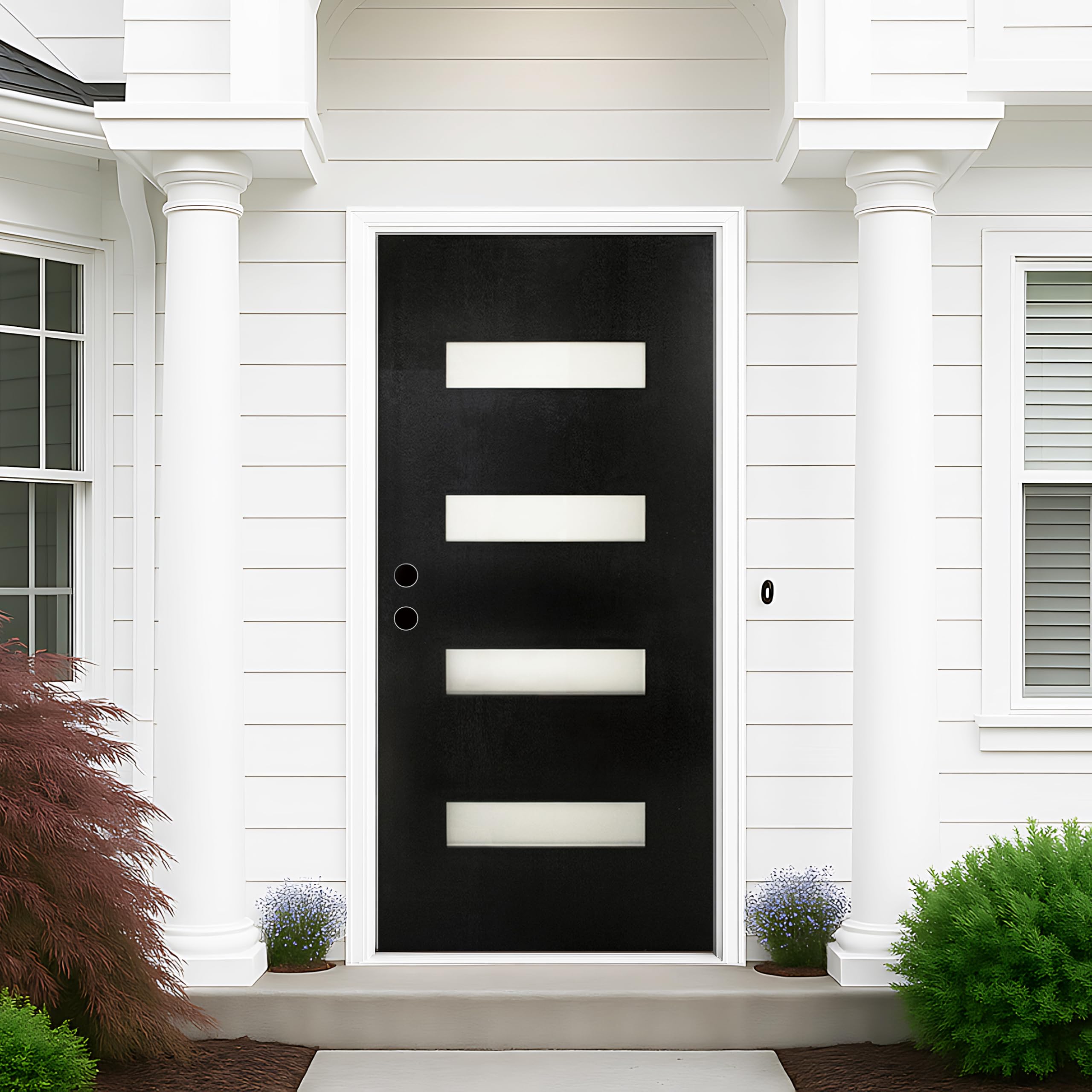
Frosted glass in a black fiberglass slab — daylight in, porch eyesight out.
The KHSHOW entry door solves the single biggest conflict in an exterior glass door: you want the light, not the audience. Frosted glass diffuses the daylight coming into your hall while preventing anyone standing on the porch from seeing past the door. The fiberglass slab underneath resists dents and scratches, so it holds its finish without the repainting a steel door asks for. The whole unit is a full 36 in x 80 in and comes right-hand inswing with a 4-9/16-inch primed jamb already fitted.
Your rough opening is the number to check before you click buy: this door wants 38-1/4 inches by 82-1/8 inches. That is a real framing measurement, not a slab size, and it is wider than the 34-inch opening the 32-inch National Door Company units require. Measured correctly, the door drops into a standard exterior wall depth thanks to the 4-9/16-inch jamb.
What wins people over here is how the whole thing reads once it is up — the appearance of this door is what buyers bring up constantly, and the build quality lands right behind it. Black finish, vinyl frame, and brickmould all come in the box, so you are not hunting for trim after the fact.
Where this door pulls ahead
- Frosted glass delivers light without a clear sightline into your home
- Fiberglass resists dents, scratches, rot, and warping without repainting
- Brickmould, vinyl frame, sill, and door panel all included
- Black modern finish gives strong curb appeal out of the crate
What to sort out first
- Arrives as a knock-down kit — you assemble the slab and frame before install
- Door lock accessories are not included, so budget for your handle set
- At 119 pounds it is a two-person lift, unlike the 79-pound steel National Door Company unit
Buy this one if: you want a private, light-filled 36-inch entry and you are comfortable with a modest Saturday assembly job before installation.
Look at steel instead if: you would rather paint a primed door and skip the knock-down build entirely.
2. National Door Company Z000747L Steel Primed
A nine-lite steel entry that arrives primed and hangs on hinges — the least fussy way in.
If you are repainting a porch-facing wall anyway, starting with a primed steel door saves you that step. This one comes prehung on a 4-9/16-inch primed finger-jointed frame with three ch gives the entry rhythm and hides some of the room behind it, though the glass itself is still clear with a listed privacy rating of 0 out of 10.
It arrives primed and ready for paint, with a 4-9/16-inch primed finger-jointed frame, three satin nickel hinges, and lock prep for a 2-1/8-inch entry and deadbolt with a 2-3/4-inch backset — hardware sold separately. The unit measures 37.5 in x 81.75 in and wants a suggested rough opening of 38 in x 82.25 in. That is the same opening width the 36-inch KHSHOW fiberglass door calls for, and it is four inches wider than the 34-inch opening this brand’s 32-inch steel models need.
Handing is spelled out plainly so you can check it fast: standing inside your home, if the hinge pins are on your left, this right-hand in-swing is the correct door. Get that backwards and no amount of adjusting will save the hang.
Why the 36-inch steel wins fans
- Full 36-inch width suits a main entry, not a side hall
- 15-lite grid adds classic detail over plain glass
- Prehung with hinges and lock prep already done
- Steel paint-ready surface lets you match any trim colour
Where it asks something of you
- Clear glass with a 0-out-of-10 privacy rating — the street can see in
- Steel needs repainting over time, unlike the fiberglass picks
- Locks and handles are not included in the box
Best matched to: a main entry on a 38-inch rough opening where you want steel strength and a classic grid.
Skip the grid if: you prefer a clean single lite of glass — the full-lite options here give you that instead.
3. National Door Company ZZ364628R Fiberglass
The rare outswing — for tight halls where an in-swing door would eat your floor space.
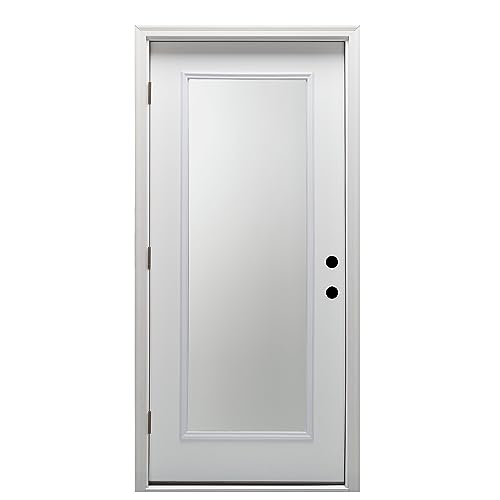
Most exterior doors swing inward, and that is exactly why this one stands out. A right-hand outswing pushes the panel away from the room, which is what you want in an entry where an inward door would slam into a shoe bench or a hallway turn. It is a full 36 in x 80 in slab on a 4-9/16-inch primed composite frame, with double paned, tempered, and insulated clear glass in a full lite.
Fiberglass construction is the reason it holds up on a weather wall: the listing says it resists rot, warp, dents, and splits, and it arrives primed so you can finish it to your taste. The unit measures 37.5 in x 81.75 in and asks for a suggested rough opening of 38 in x 82.25 in — the same footprint the 36-inch right-hand steel National Door Company entry needs, so if you are swapping one wide door for another, the framing math lines up.
At 89 pounds, plan for two people and a good set of shims on install day. The outswing configuration also changes your weatherstripping pressure — the frame carries the seal on the outside face, so check it seats cleanly before you declare the job done.
The outswing caveat: hinging outward means the door face is exposed to the weather, which is precisely why the fiberglass construction matters. Confirm your head clearance and any storm-door setup before committing — an outswing changes how the threshold reads.
Made for: narrow entries where an inward swing wastes space, and anyone who wants a full lite of clear glass.
Not the one for: anyone whose opening is framed for an inswing — the handing will not work.
4. National Door Company ZFS686BLFS28R Fiberglass
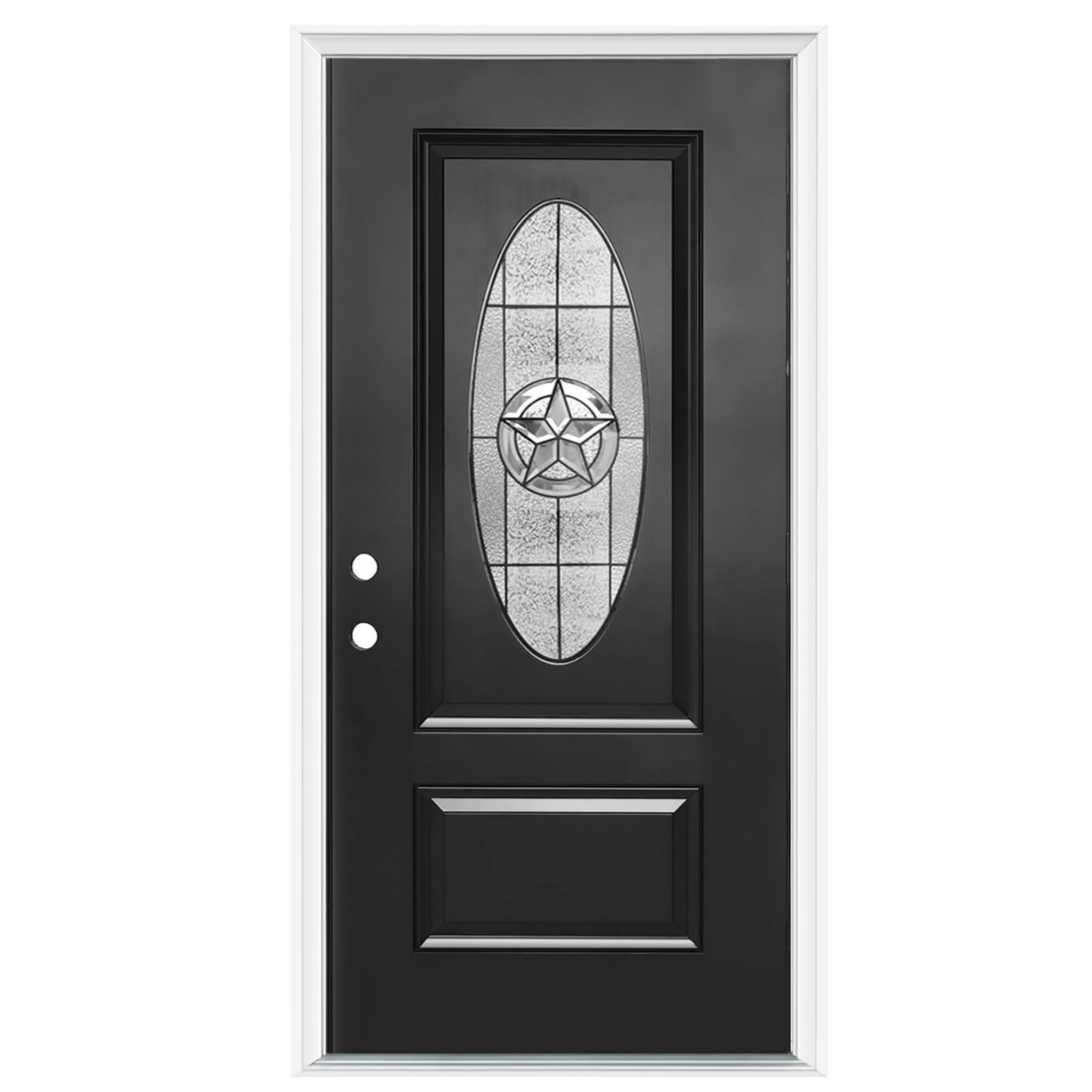
Colour that runs through the fiberglass so the black never chips down to white.
Fade and peel are the quiet killers of a painted entry door, and this one is built to dodge them. The colour runs through the fiberglass layer itself, so the black finish will not easily fade, chip, or peel — useful if your entry faces the kind of sun that bleaches trim. Frosted glass in a decorative oval lite spreads soft daylight across the hall while shutting out the porch view.
The structural story is laminated veneer lumber stiles and an LVL core that resists dents and moisture — what you want on an entrance that takes weather year-round. It is a 36 in x 80 in door on a 4-9/16-inch finished jamb, and it wants a rough opening of 37.5 in x 81.56 in. That is close to but not identical to the 38-1/4-inch opening the KHSHOW needs, so measure your framing rather than assuming the two 36-inch doors swap cleanly.
What people respond to, once it is hung, is the look and how straightforward it is to install. The black slab against a white frame gives a modern contrast that reads sharp from the street, and the frosted oval keeps the privacy promise without killing the light. At 106.9 pounds, set aside a second set of hands and a proper shim kit.
The finish payoff: a through-colour fiberglass face means no repainting cycle and no touch-up bottle for chips — the maintenance story is genuinely low compared with a painted steel door. The trade-off is that the frosted oval is a fixed pattern, so the light and privacy balance is set for good the day it goes in.
An easy yes if: you have a 37.5-inch opening and want frosted privacy with a black-and-white modern look that holds its colour.
Hold off if: you need a clear street view or a different handing — this one is right-hand inswing only.
Know the Specs
Door Size vs Unit Size vs Rough Opening
Three different numbers describe the same door, and mixing them up is the classic ordering mistake. Door size is the slab itself — a 36 in x 80 in door is thirty-six inches wide. Unit size adds the frame, so that same door measures roughly 37.5 in x 81.75 in once prehung. The rough opening is the framed hole in the wall the whole unit slides into, and it is always a bit larger still. Always match your quote to the rough opening, then confirm the slab and unit measurement line up with it.
Handing and In-Swing vs Out-Swing
Handing tells you which way the door opens and which side the hinges sit on. The simplest test: stand inside your home and look at the door. If the hinge pins are on your right, that is a left-hand in-swing. An out-swing door pushes away from the room instead of into it, and that changes everything about how you install it and where it can go. Confirm handing from inside the house, never from the street, and check it against the listing before you order.
Glass Privacy Ratings and Blind Types
Privacy rating describes how easily someone outside can see through the glass. A rating of 0 out of 10 means clear glass with no privacy at all. Frosted finishes diffuses the view, and sealed mini blinds give you adjustable privacy. Double paned means two layers of glass, and tempered means the glass is heat-treated for safety. Every clear-glass door here is listed as double paned, tempered, and insulated, so the difference between picks is really the privacy setup, not the glass build.
Fiberglass, Steel, and Why Weight Matters
Fiberglass doors resist rot, warp, dents, and splits, and they skip the repaint cycle steel doors need. Steel doors arrive primed and ready for paint, which lets you match any colour you like. Door weight is more than a shipping note — it is an install-day forecast. The 79-pound steel unit here is a very different lift from the 119-pound fiberglass slab, so plan your crew and your shims accordingly.
Common Questions
How do I know which door handing I need before ordering?
What is the difference between door size and rough opening?
Why does a privacy rating of 0 out of 10 matter on clear glass?
Is fiberglass better than steel for an outside door?
Do I need to buy locks and handles separately?
What does knock-down door mean when it arrives?
Can I install an outswing door where an inswing was?
Are these doors suitable for a commercial entrance?
How do I match the door width to the wall opening I have?
Do any of these doors come with frames and brickmould included?
The Bottom Line
The outside door with glass that handles the most buyers well is the KHSHOW Fiberglass Entry Door. Frosted glass gives you daylight without the porch view, the fiberglass slab resists dents and rot, and the brickmould and frame come in the box. If you want adjustable privacy rather than permanent diffusion, grab the National Door Company ZFS686BLFS28L with its sealed internal blinds on a 32-inch left-hand opening. And for a household with a dog, the National Door Company ZZ00762L gives you a nine-lite steel entry with the pet door already cut in. Measure your rough opening and confirm your handing first — those two numbers decide nearly everything.
How we choose
We do not accept paid placement. Every pick is matched to a real buyer and a real use-case; we do not hands-on test units.
Sources
Specifications: manufacturer listings and product documentation. Review insights: verified customer reviews, as of November 2026. Pricing: not shown on this page (it changes often); check the current price via the retailer link.
As an Amazon Associate, Tactical Gear Guy earns from qualifying purchases. This does not affect which products we feature.