Specs are compiled from manufacturer listings and verified buyer reviews and can change over time — please confirm the key details on the product page before buying.
Buying a sewage pump is not the same as buying a sump pump, and mixing them up is the costliest mistake in this category. A sewage septic pump moves dirty wastewater that carries solids — the kind of waste that backs up into a basement bathroom or a below-grade laundry room. A clean-water sump pump will choke on that load. The pumps below all pass solid waste through a large discharge, and each one is built for a different basin size and horsepower need, so the real decision is matching the pump to your pit and your volume.
This guide is built by comparing the manufacturers’ published specifications and the patterns across verified customer reviews, so you get each pick’s real strengths and trade-offs instead of marketing spin.
Horsepower, discharge size and solids handling decide most of the job, and a float switch that turns the motor on and off without you touching it is what keeps a pit from overflowing overnight. Below you will find the full breakdown of the best sewage septic pump options on the market right now.
Top Picks

How To Choose The Best Sewage Septic Pump
Start with the pit, not the pump. A sewage pump has to drop into the basin you already have or the one you are about to install, and the float switch has to swing freely without hitting the walls. Get that geometry wrong and even a strong motor will short-cycle or jam.
Match the discharge and solids handling to your waste line
The discharge is the pipe the pump pushes waste through, and it has to line up with your plumbing. A 2-inch NPT discharge is the common residential size, and it lets the pump pass solids up to about 2 inches in diameter. If your line is narrower, check the pump’s solids rating before you buy — a pump that passes 2-inch solids through a 2-inch discharge handles the standard load of a basement bathroom without grinding to a stop.
Pick horsepower by the vertical lift you need
Maximum lifting height is how high the pump can push wastewater vertically before flow drops to nothing. A shallow pit close to the drain line needs far less lift than a basement bathroom pushing waste up to a higher sewer connection. A 1/2 HP pump with 25 to 27 feet of lift covers most residential basement setups, while a 3/4 HP or 1 HP unit gives you headroom for deeper pits and longer runs. The buy rule is simple: more lift required means more horsepower, and a pump rated for less than your rise will strain and stall.
Decide between automatic and manual operation
A tethered float switch is the float that rises with the water and trips the pump on, then shuts it off as the level falls. Pumps with a piggyback plug give you both modes — the float handles daily duty, and you can pull the float plug and run the pump by hand during maintenance. Nearly every pick here works this way, and it is the setup you want if you ever need to drain a pit manually.
Side-by-Side Comparison
| Model | Best For | Horsepower | Max Lift Height | Discharge / Solids | Amazon |
|---|---|---|---|---|---|
| Liberty Pumps LE51A★ Best Overall | Overall reliability with high flow | 1/2 HP | 25 feet | 2-inch; 160 gpm flow | Amazon |
| VIVOHOME 3/4 HPMost Compact | Compact basement retrofit | 3/4 HP | 16.5 feet | 2-inch NPT | Amazon |
| VEVOR 3/4 HPBest for Deep Pits | Deep pits needing high lift | 3/4 HP | 444 inches | 2-inch NPT | Amazon |
| Acquaer 1/2 HP 6000 GPH | Budget-friendly high flow | 1/2 HP | 27 feet | 2-inch NPT | Amazon |
| FOTING 1HP 6000 GPH | Grinder-style solids defense | 1 HP | 32 feet | 1-1/2-inch NPT | Amazon |
| WAYNE RPP50 | Replacing an older sewage pump | 1/2 HP | 10 feet | 2-inch NPT; up to 2-inch solids | Amazon |
| Superior Pump 93501 | Quiet basement-bathroom duty | 1/2 HP | 25 feet | 2-inch NPT; up to 2-inch solids | Amazon |
| Aquastrong 1 HP Grinder | Shredding wipes and debris | 1 HP | 40 feet | 2-inch; up to 2-inch solids | Amazon |
| Red Lion RL-WC50TA | High-volume effluent transfer | 1/2 HP | 22-ft shutoff | 2-inch FNPT; up to 2-inch semi-solids | Amazon |
| Little Giant 9SC-CIA-RF | Continuous-duty sewage transfer | 4/10 HP | 20-ft shutoff | 2-inch FNPT; up to 2-inch solids | Amazon |
| Zoeller Waste-Mate 267 | Heavy cast iron, long track record | 1/2 HP | 21.5 feet | 2-inch; passes 2-inch spherical solids | Amazon |
Detailed Reviews
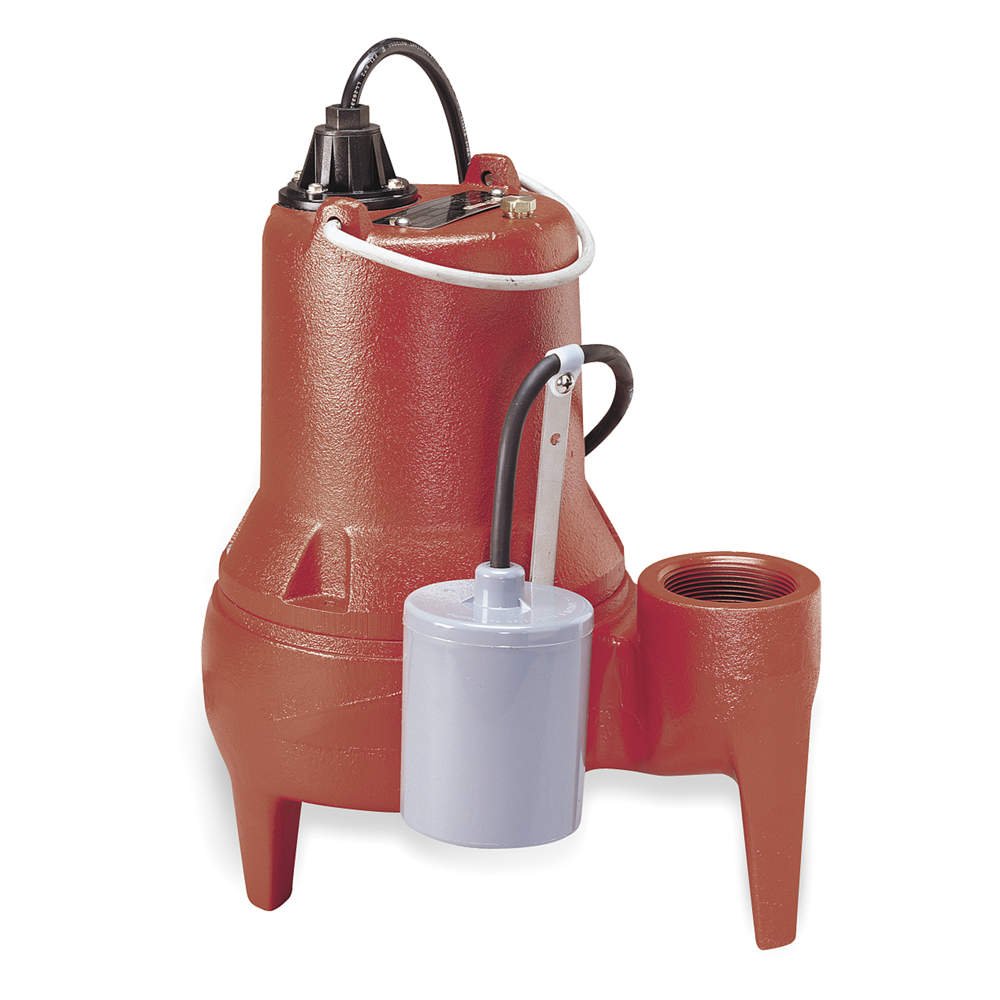
1. Liberty Pumps LE51A Sewage Pump
Our pick — 4.5+★ from 200+ verified ratings; the strongest balance of quality and price.
The cast-iron workhorse that moves more dirty water per minute than anything else here
If raw throughput is the thing keeping your pit from filling overnight, this is the pump to beat. The LE51A is rated at 160 gpm — gallons per minute, the steady rate at which it clears wastewater. The nearest competitor on that measure, the VIVOHOME 3/4 HP, is listed at 78 gpm, so the Liberty moves roughly double the volume at rated flow.
What wins people over is the build. It is a heavy cast iron body at 42 pounds; for scale, the VIVOHOME weighs 23.1 pounds. That solid mass is why it sits planted in a pit instead of skittering around when the float trips. The oil-filled, thermally protected motor shuts itself down before it overheats, and the permanently lubricated ball bearings are why buyers report year-after-year runs without a service call. The published warranty runs two years from purchase.
The LE51A also lifts wastewater up to 25 feet vertically, which is plenty for a basement bathroom pushing waste up to a higher sewer line. Stainless steel fasteners and a stainless shaft fight the corrosion that eats cheaper pumps in a wet pit. A quick-connect 10-foot power cord makes the electrical side painless.
What tips the scales
- 160 gpm flow clears a busy pit faster than almost any 1/2 HP pump in this lineup
- 42-pound cast iron body sits still and soaks up vibration
- Oil-filled thermally protected motor with permanently lubricated ball bearings
- Stainless steel fasteners and shaft resist rust in a wet, dirty pit
- 25-foot lift height covers most residential basement installations
Worth knowing before you commit
- At 42 pounds it is the heaviest pick here; the metal ring and a helper make installation far easier
- The 16″L x 11.5″W x 9″H body needs a basin with real clearance, so measure your pit first
Made for: homeowners who want a pump that handles a busy basement bathroom and can be forgotten about between float trips.
Think twice if: your pit is tight or you install solo — the weight and footprint ask for a basin with room to spare.
2. VIVOHOME 3/4 HP Sewage Pump
A 3/4 HP pump that slips into a tight pit without a wrestling match
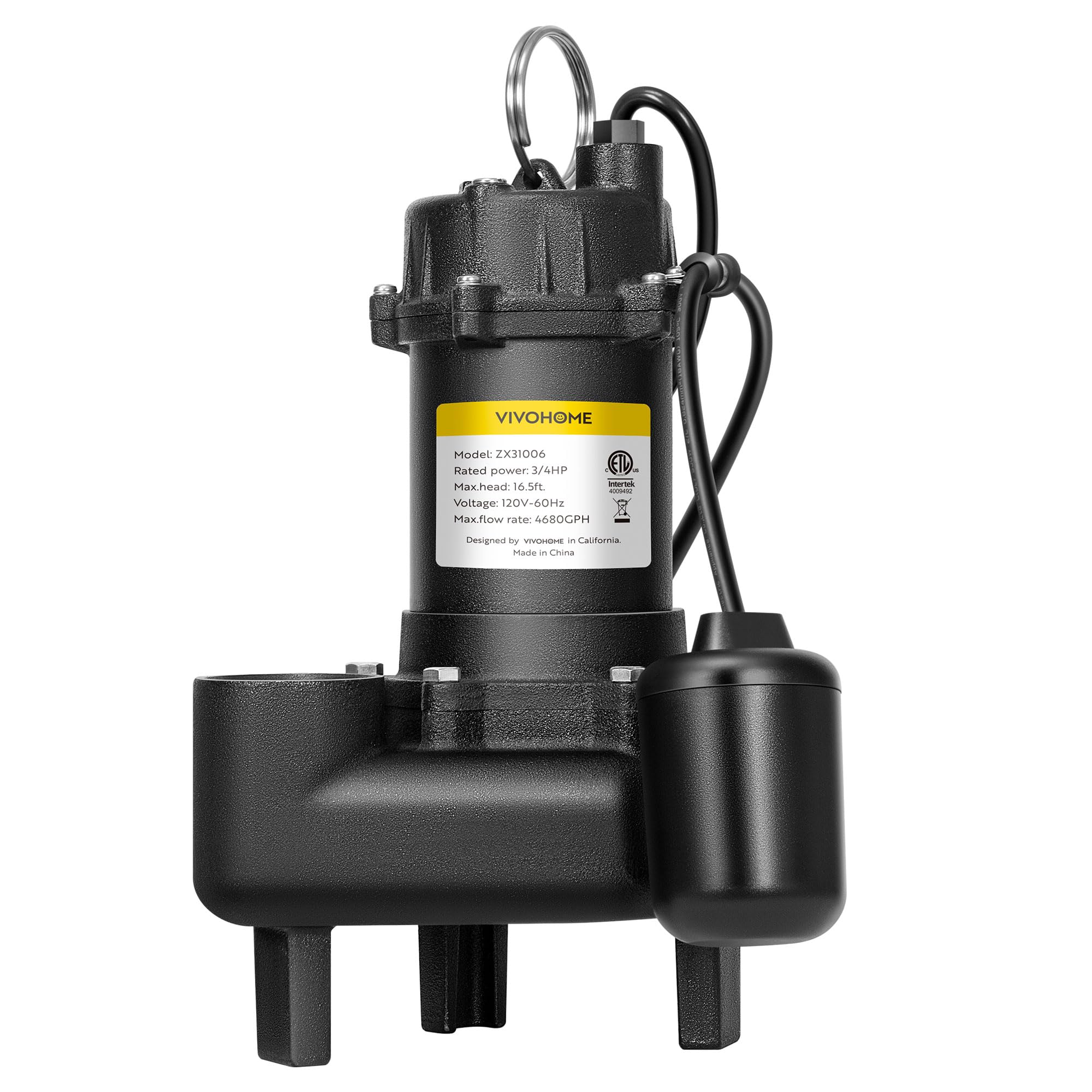
Where the Liberty above is a heavyweight, this VIVOHOME goes the other way. Its 9.4″L x 7.5″W x 14″H frame is a fraction of the Liberty’s size, and at 23.1 pounds it is the easier unit to lower into a narrow basin. If your pit is cramped or you are working alone, that smaller footprint is worth real money in install-day frustration.
The adjustable float is the clever part. It trips the 3/4 HP motor on at 47CM/18.5″ of water and shuts it off at 10.5CM/4.1″, so you can see exactly where it cycles and tune it to your basin. The piggyback plug lets you run it by hand when you need to. A 14.4-foot power cord gives you reach, and a 2-inch NPT discharge passes solids under 0.79 inches through a non-clogging vortex impeller.
Here is the honest part: the durability story is split. Some owners describe it working well for months; others found it gave out after a month. It is a fair choice for a basement or septic pit that sees moderate use, and a riskier bet if your pit runs hard every day. The cast iron housing gets an electrophoresis treatment for rust resistance, and thermal overload protection shuts the pump down at 266°F to guard the motor.
The value proposition: 3/4 HP of push and a truly compact housing make this the easiest pump here to fit into a small basin, and the adjustable float means you are not stuck with one on/off height.
The honest caveat: durability is the one thing buyers disagree on, so treat it as a lighter-duty pick for a moderate-use pit rather than a set-and-forget workhorse.
Reach for this if: you have a tight basin and a moderate waste load and you value an install you can manage alone.
Look elsewhere if: your pit runs continuously or you want the longest-lasting motor you can get.
3. VEVOR 3/4 HP Submersible Sewage Pump
The deep-pit specialist: 3/4 HP and lift that reaches the highest sewer line here
Read the lift before anything else on this one. The VEVOR is rated to push wastewater vertically up to 37 feet, and it moves up to 5880 gallons per hour. That lifting ceiling is the reason this pick exists; many basement setups need only 20 to 25 feet, but a deep pit or a long uphill run to the sewer line benefits from the extra headroom. For comparison, the VIVOHOME above tops out at 16.5 feet, so this one keeps pushing where that one would stall.
The build is a corrosion-proof cast iron frame with a rust-proof surface, and it carries an IPX8 waterproof rating — the highest wet-condition rating of its kind, meant for continuous submersion. The efficient copper motor has thermal overload protection and runs quietly. The piggyback plug gives you automatic control through the float or a manual override, and the 2-inch NPT outlet passes solids up to 3/4 inch in diameter.
One number needs care. The dimensions run 19.1″L x 11.8″W x 8.3″H, which makes this one of the larger bodies here. Against the compact VIVOHOME that is a big footprint difference, so confirm your basin can take it before you buy. The 10-foot cord and ergonomic handle make the loading and lifting easier.
The lift story: 37 feet of vertical push is the standout spec, and it is what earns this pump a place in a deep pit or a demanding uphill discharge run.
The fit note: that big cast iron body demands basin clearance, so this is the pick where a tape measure saves you a return.
Best for: deep pits and long vertical runs where lift height, not flow, is the limiting factor.
Skip if: your basin is small — the body needs more room than the compact picks in this lineup.
4. 1/2 HP 6000 GPH Sewage Pump
Entry-level money for a 6000 GPH pump with a real warranty behind it
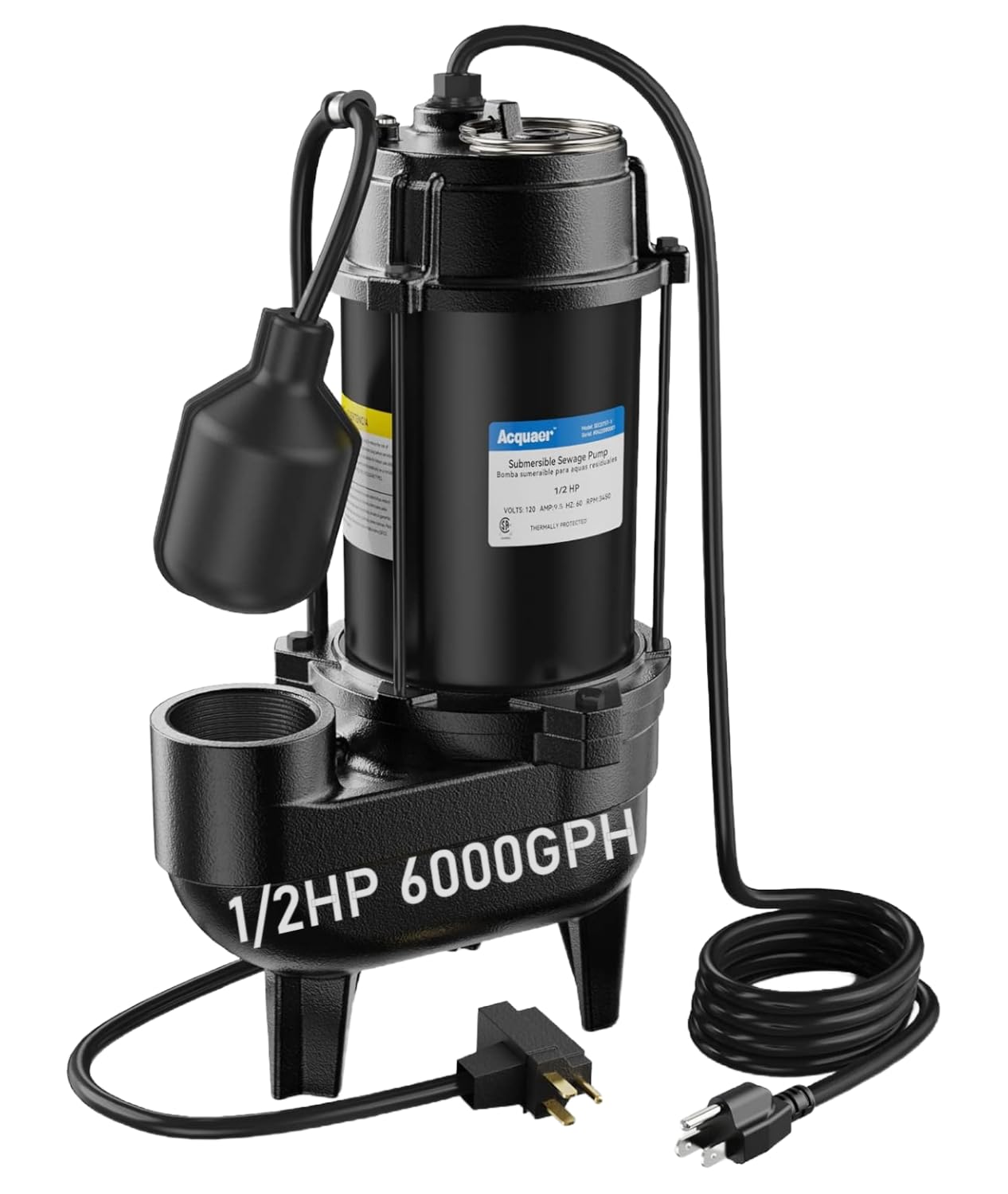
This Acquaer unit delivers the headline numbers of pumps costing far more: 6000 GPH flow, up to 27 feet of vertical lift, a 2-inch NPT discharge that passes up to 2-inch solids. The oil-filled split-capacitor motor drives a non-clogging vortex impeller, and the pump is 100% factory tested before it ships. The thermal overload protection shuts the motor down if it runs dry or overheats.
The adjustable mechanical float switch turns the pump on and off with the pit level, and the 10-foot piggyback cord lets you run it manually when you need to. Cast iron casing keeps it tough in a wet, dirty environment. A 2-year warranty backs the whole thing.
One warning printed on this pump is worth repeating: it is not for use in septic tanks. That makes it the right pick for a sump basin, basement, or residential sewage pit, and the wrong one for a septic tank application. On reliability, buyers are divided — some report units that stopped working within a day, others consider it fine for the money. Treat it as a budget pick that performs when it works and let the warranty do its job.
The budget math: the flow and lift numbers are genuinely strong for the entry level, and a non-clogging vortex impeller plus 2-inch solids handling mean it can do real work, not just light duty.
Where it stumbles: reliability is a coin flip in the reviews, and it is explicitly not for septic tank use — both are worth knowing before you commit.
Worth it for: a residential sewage pit or basement where the budget is tight and the warranty gives you a safety net.
Not for: septic tank applications — the maker says keep it out of tanks.
5. FOTING 1HP 6000 GPH Sump Pump
Double the horsepower of the half-horse picks, with the lift height to prove it
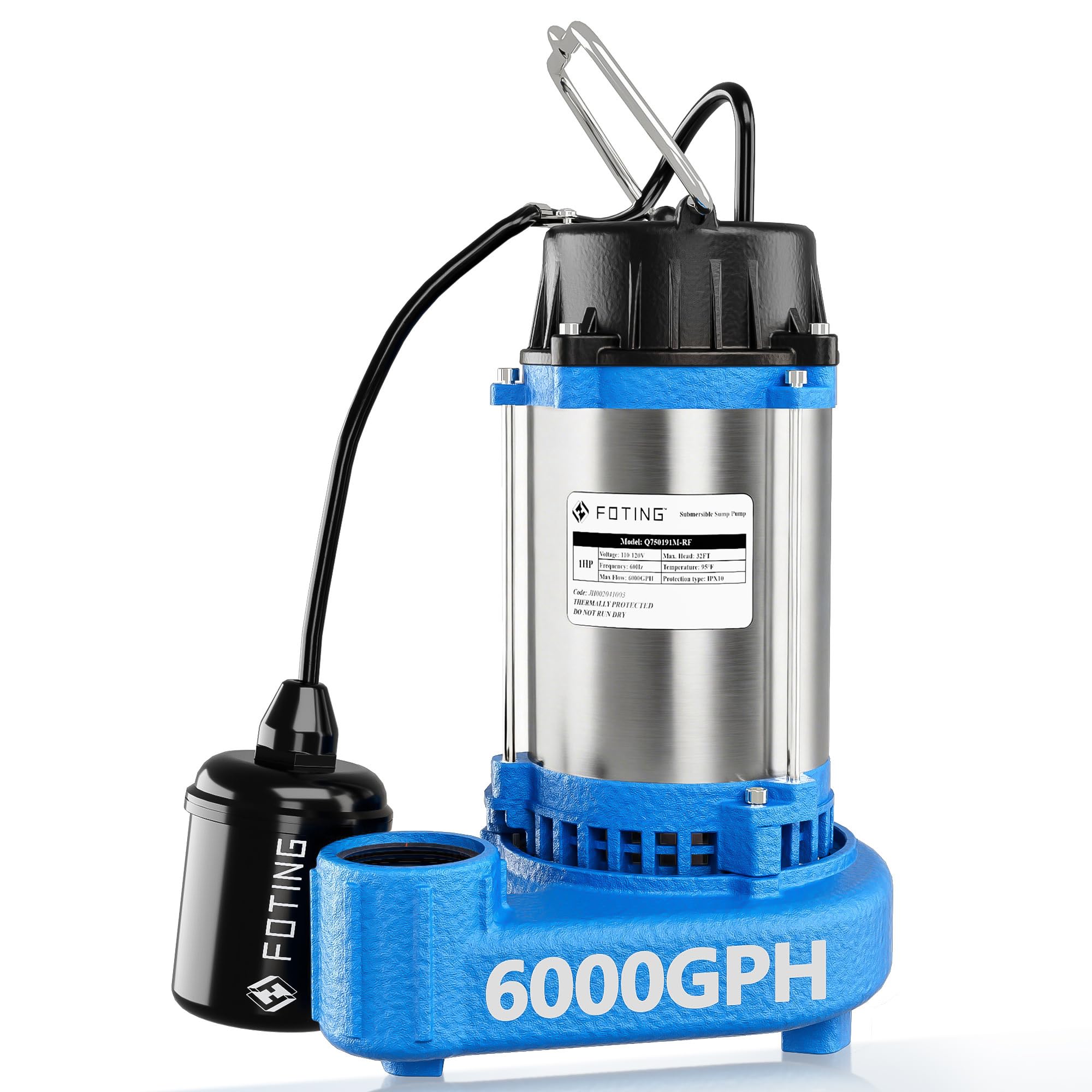
The FOTING runs a 1 HP PSC motor — that is twice the horsepower of the 1/2 HP pumps here — and the lift rating shows it: 32 feet of vertical push. It still moves 6000 gallons per hour. The reinforced anti-clogging design with a stainless steel and cast iron casing handles the dirty side, and the 1-1/2″ NPT discharge is a different fitting than the 2-inch units, so check what your plumbing takes.
Built-in air venting stops air locks so flow stays steady, and the mechanical seal adds durability. A tethered float switch makes it automatic, and the 10-foot cord gives you reach. Thermal overload protection shuts it down on a dry run or a voltage surge.
The caveat is reliability. Buyers are split, with some reporting strong operation and others finding it failed within a month. Even so, the 1 HP motor and 32-foot lift are real advantages in a hard-pulling application. This is a pick to weigh on the warranty and your comfort level, not on the horsepower number alone.
The power argument: 1 HP plus 32 feet of lift makes this the pick for the deepest, hardest-pulling pit in the lineup, and the anti-clog impeller and air venting keep it flowing.
The reliability note: the failure reports are real, so this is a pump to buy for a forgiving single-use setup rather than one you refuse to ever touch.
Pick it when: your application needs 1 HP of brute push and the deeper 32-foot lift.
Hold off if: you want the longest track record — the reliability split makes it a higher-risk bet.
6. WAYNE RPP50 Sewage Pump

Built to swap straight into an existing pit without replumbing
The selling point here is fit, not flash. The RPP50 replaces most existing sewage pumps without any plumbing changes, which is exactly what a homeowner mid-repair wants to hear. It needs an 18-inch diameter basin or larger, and the 2-inch NPT discharge handles up to 2-inch solids. A cast-iron submersible body with a piggyback tether float gives you automatic or manual control.
The flow rating is up to 6,200 gallons per hour, but the vertical lift is 10 feet — the lowest figure in this lineup by a wide margin. That makes it a pump for a shallow install where waste does not have far to climb. Put it in a deep pit and you will get less than you expect; keep the lift demand modest and it does its job.
Owners describe these running quietly and steadily since install, and the cast iron body holds up in a wet pit. The warranty is shorter than several picks here, at 1 year, so factor that into the value read. At 21 pounds it is among the easier pumps to lower in.
The swap-fit win: it drops into most existing setups with no replumbing, needs only an 18-inch basin, and handles 2-inch solids with a 2-inch discharge.
The low-lift warning: 10 feet of maximum lift is the tightest ceiling here, so it is strictly for shallow pits.
Right for: replacing an older pump in a shallow basin without touching the plumbing.
Wrong for: deep pits or uphill discharge runs that need more than 10 feet of lift.
7. Superior Pump 93501 Sewage Pump
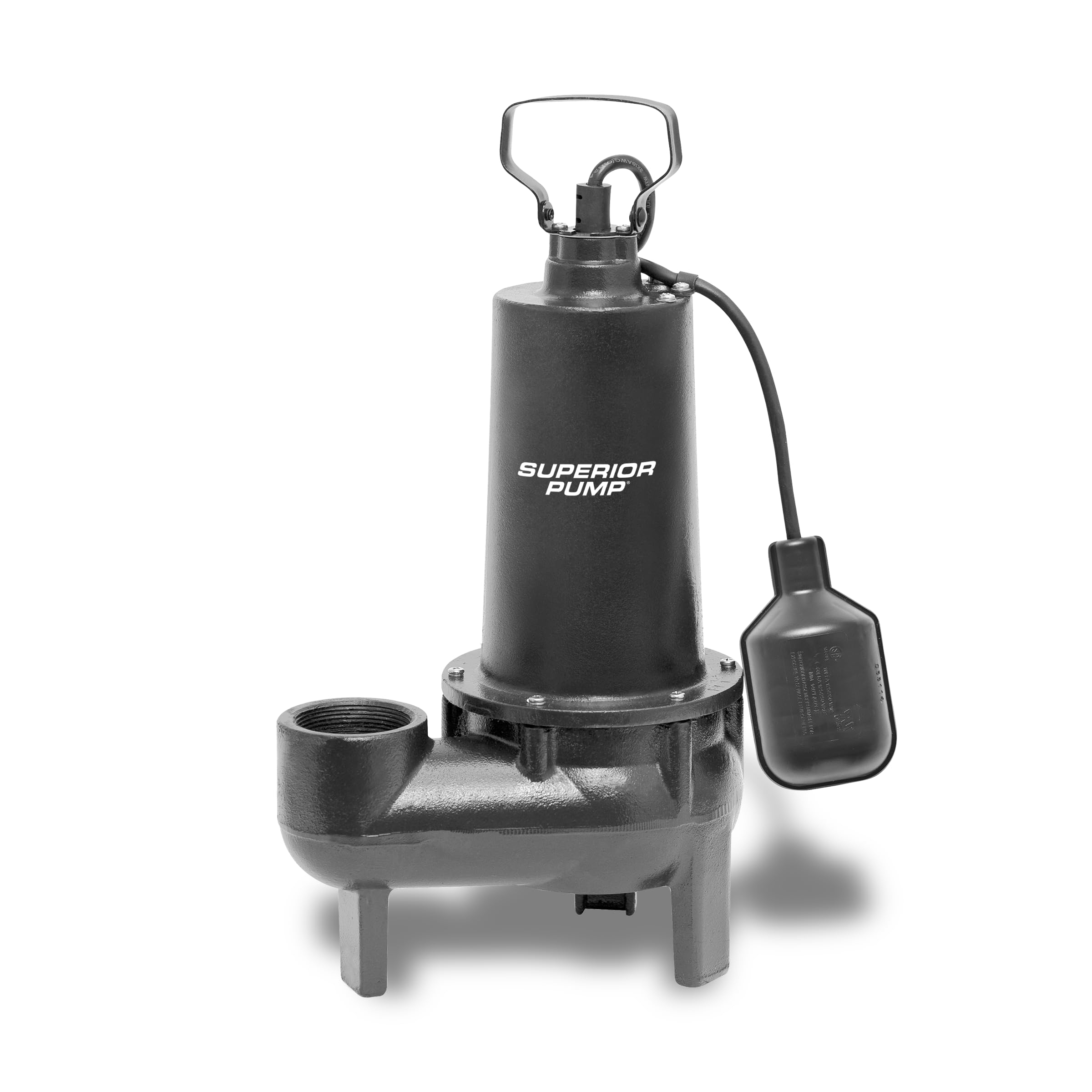
The basement-bathroom pump that keeps its head down and its voice low
The Superior 93501 is a 1/2 HP pump rated at up to 4,800 gallons per hour with 25 feet of vertical lift — solid mid-pack numbers for a basement bathroom or below-grade laundry setup. The 2-inch NPT discharge with a non-clogging vortex impeller handles up to 2-inch solids, and the rugged cast iron body with a 10-foot cord rounds it out. Every unit is 100% factory tested.
Where it quietly shines is the day-to-day. It installs easily, runs quietly, and does its job in a basement with a below-grade bathroom, which is the exact use case most buyers bring to this pump. The tethered float switch handles the cycling automatically. What wins people over is the reliability and the solid, well-built feel.
The trade-offs are worth knowing. Motors burning out within a year comes up, and the float operation draws some mixed feedback. With a 1-year limited warranty, that shorter coverage is the thing to weigh against the quieter, easier install. It is a good fit for a low-to-moderate-use basement, not a high-cycle commercial pit.
What owners prize: quiet running, an easy install, and reliability that holds up in a basement bathroom — the everyday job this pump is built for.
The trade-off: a shorter 1-year warranty and some reports of motor burnout make it a fit for moderate use rather than a heavy daily duty.
Choose this for: a basement bathroom or below-grade laundry pit where quiet operation and simple install matter most.
Look elsewhere for: a high-cycle commercial pit that needs long-term motor endurance.
8. Aquastrong 1 HP Sewage Grinder Pump

It shreds wipes and zip ties before they ever reach the impeller
This Aquastrong is the only true grinder on the list, and that changes what it can do. Stainless steel blades cut through soft and semi-rigid debris — wipes, twigs, zip ties — before it reaches the pump body, which is the answer for a sewage line that keeps clogging on things that should never have flushed. The maker notes to keep rubber items and thick towels out of it.
The 1 HP motor delivers a 4200 GPH flow and a 40-foot maximum lift, the highest lift figure here. The 2-inch discharge passes solids up to 2 inches. An adjustable float switch gives automatic or manual operation, and the cast iron body holds up in a wet pit. A two-year warranty covers the unit.
Owners find it reliable and powerful, with solid construction and quiet running in the mix; the efficiency shows up when people run it hard for a drain job. Where it differs from the Liberty: the Liberty pours out 160 gpm, this grinder is rated differently, and the grinder wins when your problem is debris rather than volume. Just fully submerge it before startup and lift it by the handle, never the cord.
Why it earns its place
- Stainless steel grinder blades shred wipes, twigs and zip ties to head off clogs
- 40 feet of maximum lift is the highest in this lineup
- 1 HP motor with 4200 GPH flow and 2-inch solids handling
- Adjustable float for automatic or manual operation, two-year warranty
Where it asks more of you
- The blades add a maintenance layer — keep rubber items and thick towels out of the pit
- It is a grinder first and a high-volume mover second, so it will not match the 160 gpm Liberty on raw flow
Best for: a sewage line that clogs on wipes and debris and needs shredding power up front.
Be aware: a grinder is a debris solution, not a high-volume one, so measure your flow need against it.
9. Red Lion RL-WC50TA Sewage Pump
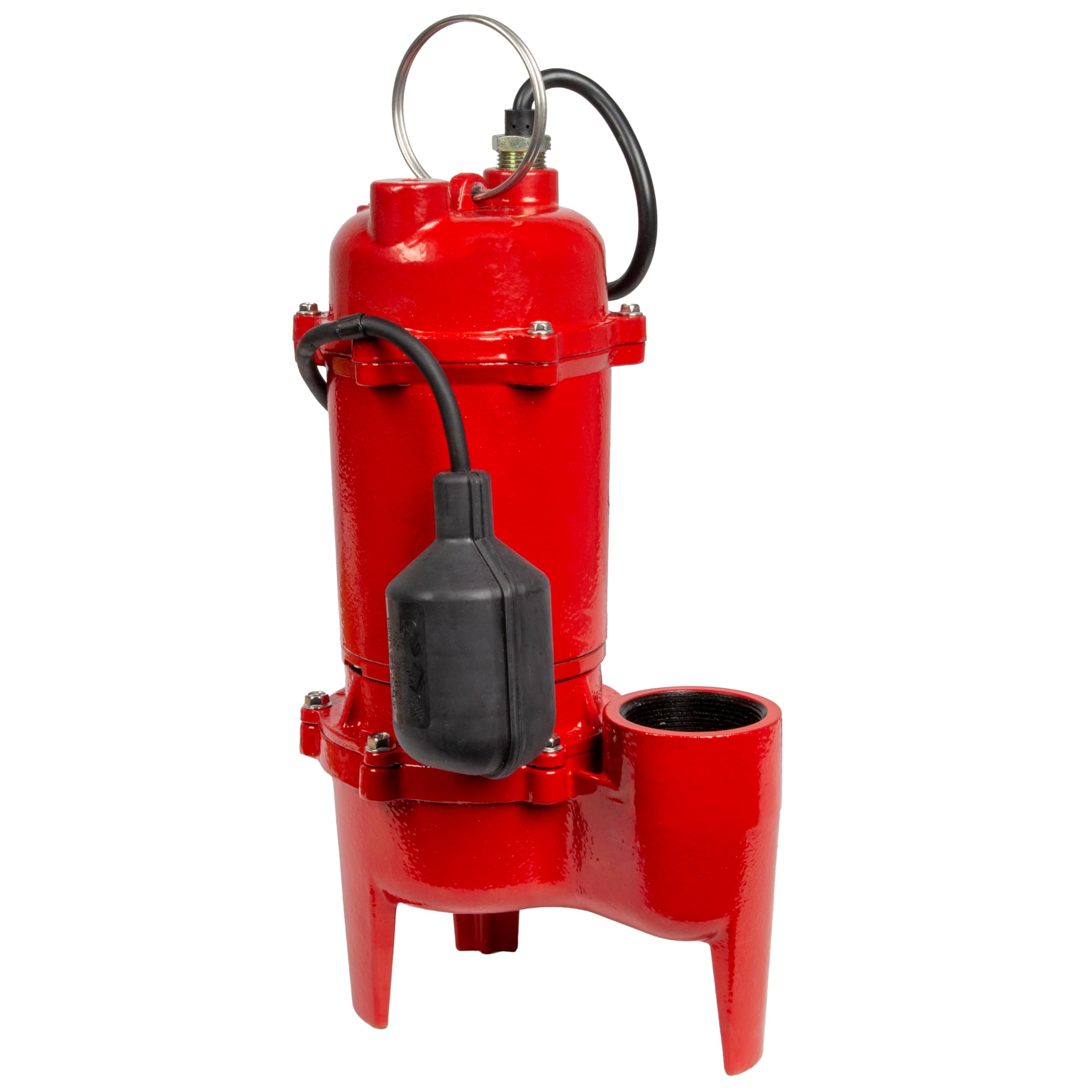
A 1/2 HP pump with the flow of a bigger unit and dual ball bearings to boot
If you want high volume from a half-horse motor, this Red Lion is built for it. It moves 5600 GPH at 0 feet of lift and passes up to 2-inch semi-solids through a cast iron vortex impeller. The PSC dual-bearing motor runs at 9 amps with thermal overload protection, and the pump is CSA listed in the USA and Canada. A 2-year warranty backs it.
The float schedule is clearly published: the piggyback tethered switch kicks in at 17.5 inches and shuts off at 7.5 inches, so you know the cycle. The minimum basin is 18 inches, and the 10-foot cord gives you reach. It is meant for high-volume sewage and effluent transfer to a sewage tank or system, typically a basement bathroom. The maker does not recommend it for pond use.
The lift ceiling is 22 feet of shutoff — enough for a basement push but not the highest here. That is the fit to check against your install. For a moderately deep basement bathroom with a high waste load, the flow number is the reason to pick it.
The flow draw: 5600 GPH and a published 17.5-to-7.5-inch float cycle give you predictable, high-volume performance from a half-horse motor.
The fit check: 22 feet of shutoff and an 18-inch minimum basin mean it is a good basement pump, not a deep-pit solution.
Pick it for: a basement bathroom transferring high-volume waste to a sewage tank or system.
Rule it out for: pond use — the maker advises against it — or a pit deeper than its 22 feet of shutoff.
10. Little Giant 9SC-CIA-RF Sewage Pump

Built for continuous duty, with a 20-foot cord that reaches where others cannot
The Little Giant is designed for continuous-duty service — the sort of duty cycle where the pump is expected to run without a long rest between cycles. It handles solids up to 2 inches, moves 6000 GPH at 5 feet of lift, and passes through a 2-inch FNPT discharge. The 4/10 HP motor runs at 115 volts, 8 amps and 870 watts with a permanent split capacitor design.
Reach is a quiet advantage. The 20-foot power cord is twice what most picks here offer, which saves you from hunting for an outlet or splicing an extension in a wet pit. A piggyback float switch activates the pump at 16 to 19 inches and shuts it off at 9 to 11 inches, and you can flip it to manual for maintenance. The epoxy-coated cast iron cover, housing and volute resist rust, and it is rated for 140°F liquid temperatures.
Durability draws mixed views — some find it heavy-duty while others report it lasting only about two years. The 3-year warranty is the longest coverage on this list, which offsets some of that risk. At 38.5 pounds it sits toward the heavier end.
The longevity package: continuous-duty design, dual ball bearings, a steel shaft and a 3-year warranty make this the pick for a pump you lean on hard.
The honest split: durability reports are divided, so weigh that against the longer warranty before committing.
Best for: continuous-duty sewage and effluent transfer where a longer cord and a 3-year warranty are worth the weight.
Think hard if: the durability reports give you pause — that is the one open question here.
11. Zoeller Waste-Mate 267-0001 Sewage Pump, 1/2 HP Automatic

The cast iron veteran that has been pumping basements for years
Zoeller builds this Waste-Mate from ASTM Class 25 cast iron for the switch case and pump housing — a tougher grade of cast iron you rarely see spelled out on a spec sheet. It is a 1/2 HP automatic pump that passes 2-inch spherical solid waste through a plastic impeller with a non-clogging vortex design. The float switch is a 2-pole mechanical type, and the whole switch assembly is submersible, watertight and dust-tight.
For residential work, the performance numbers land in the balance: 125 gpm flow (gallons per minute) and 21.5 feet of maximum lift (how high it can push waste). It does the job in a basement or commercial pit, and the heavy cast iron body at 35.8 pounds soaks up the vibration of a hard run. Owners prize the cast iron build quality and the long, trouble-free runs — these pumps are known for years of service without a call.
The one caveat is weight and footprint. It is 35.8 pounds, so give yourself a hand on install day. Otherwise, this is the pump for a buyer who wants a cast iron body from a brand with a serious reputation and does not mind paying a premium for it.
The build case: ASTM Class 25 cast iron and a submersible, watertight switch assembly are why these pumps hold up for years in a wet pit.
The install note: at 35.8 pounds it is a two-person job to get it into the basin without strain.
Choose it when: you want a heavy cast iron sewage pump from a name known for long service and can handle the weight.
Consider lighter options if: your basin is small or you need to install solo.
Know the Specs
Horsepower and Lifting Height
Horsepower is the motor’s capacity to move wastewater, but lift height is what tells you how far that wastewater can climb. Maximum lifting height is the vertical distance the pump can push before flow drops to nothing, expressed in feet. A pump with more horsepower but a short lift rating will not help a deep pit, and a modest pump with a tall lift rating is worth more than a big motor with a short one. Match horsepower to the actual rise from your pit floor to the discharge point.
Solids Handling and Discharge Size
Solids handling is the largest solid the pump can pass without clogging, measured in inches. The discharge is the pipe the waste leaves through, usually 2-inch NPT or 2-inch FNPT. A 2-inch discharge passing 2-inch solids handles the standard residential waste load. A pump with a 1-1/2-inch discharge is a different fitting and needs to match your plumbing. Check both the discharge size and the solids rating before you buy; a mismatch here is the fastest way to a clog.
Common Questions
How do I know if my pump needs to pass 2-inch solids?
Will a 1/2 HP pump handle a basement bathroom?
What is a tethered float switch and why does my pump need one?
Can I use a sewage pump in a septic tank?
What is maximum lifting height and how much do I need?
How long do sewage pumps usually last before replacing one?
Do I need a grinder pump or a standard solids-handling pump?
What basin size does a sewage pump need?
Can the float switch freeze or jam in cold weather?
How often should a sewage pump cycle on and off?
Is a larger discharge better for a sewage pump?
Can a sewage pump run dry without damage?
The Bottom Line
For most homes, the Liberty Pumps LE51A is the sewage septic pump to beat — a cast iron body, 160 gpm flow (gallons per minute) and 25 feet of lift (how high it can push waste) backed by a two-year warranty and an ownership community that keeps coming back to it. If you need to shred wipes and debris before they clog, grab the Aquastrong 1 HP Grinder with its stainless steel blades. And if your pit is deep and needs the highest lift in the lineup, the VEVOR 3/4 HP reaches 37 feet where the others stop short.
How we choose
We do not accept paid placement. Every pick is matched to a real buyer and a real use-case; we do not hands-on test units.
Sources
Specifications: manufacturer listings and product documentation. Review insights: verified customer reviews, as of November 2026. Pricing: not shown on this page (it changes often); check the current price via the retailer link.
As an Amazon Associate, Tactical Gear Guy earns from qualifying purchases. This does not affect which products we feature.