Specs are compiled from manufacturer listings and verified buyer reviews and can change over time — please confirm the key details on the product page before buying.
If your ankle rolls inward on every step, you already know the wrong shoe makes it worse by mile two. Stability running shoes fix that with a wider base, firmer inside support, and a heel that holds your foot still. The pick worth starting with is the ASICS GT-1000 13 — it pairs a 3D Guidance System (a sole design that steers your stride straight) with the best fit reputation in this group, at 4.5+ stars across 800+ ratings. Below are seven women’s stability trainers, sorted by what each one does best.
This guide is built by comparing the manufacturers’ published specifications and the patterns across verified customer reviews, so you get each pick’s real strengths and trade-offs instead of marketing spin.
Stability shoes are not just firmer neutral shoes, so the wrong pick can still let your arch collapse. This list covers the best women’s running shoes for stability by support type, fit, and real-world comfort.
Top Picks

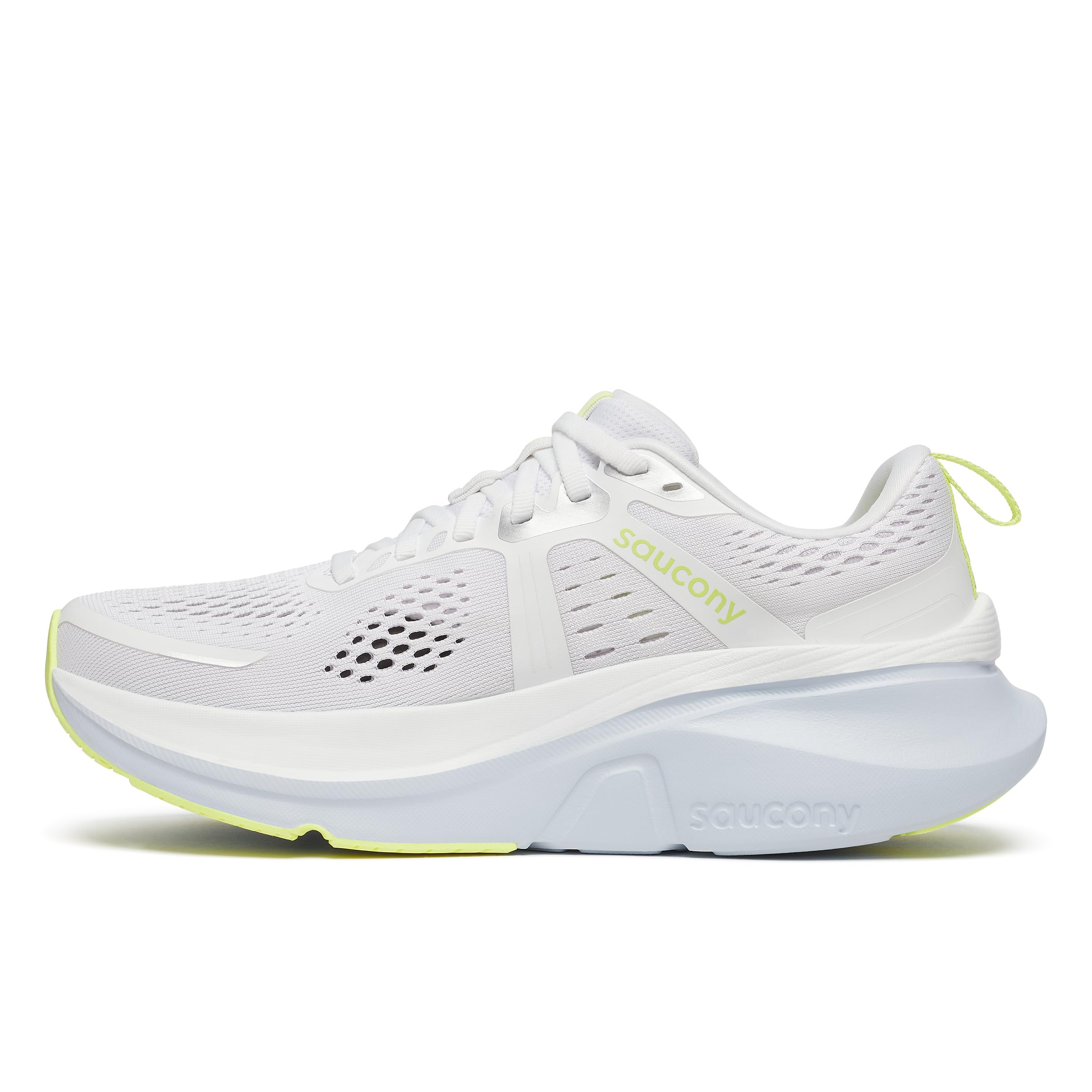
How To Choose The Best Women’s Running Shoes for Stability
Buying for stability is different from buying a neutral trainer. You are shopping for control, and control comes from the shape and structure of the sole, not from how soft or firm the foam feels under your thumb.
Start with how the shoe steers your foot
A stability shoe keeps your foot from rolling too far inward, which runners call overpronation. The good ones do it with a wider base and raised sidewalls that cradle the foot, like the Center Path Technology on the Saucony Guide 18. The ASICS GT-1000 13 and GT-1000 14 use a 3D Guidance System for the same job — it helps your stride stay balanced instead of collapsing inward.
Decide how much guidance you actually need
Some shoes guide you on every single step. Others only step in when your foot starts to drift, which is the idea behind the GuideRail on the Altra Paradigm 8 — gentle support on the inside edge, only when it is needed. If you have mild overpronation, a gentler shoe can feel more natural. If your arch collapses hard, a firmer platform is easier on your knees.
Check the drop and the toe box before you buy
Drop is the height gap between the heel and the toe, and it changes how your calf and ankle work. Zero drop, which the Paradigm 8 runs, puts heel and toe level with each other. A 6mm offset, like the Guide 18, tilts you slightly forward into the toe-off. Toe box width matters just as much — wide-footed runners in this group keep landing on roomier shoes, and narrow-footed runners report the opposite problem.
Side-by-Side Comparison
| Model | Best For | Weight | Stability System | Drop | Amazon |
|---|---|---|---|---|---|
| ASICS Women’s GT-1000 13★ Best Overall | Best overall for daily runs | 1.44 lbs | 3D Guidance System | — | Amazon |
| Saucony Women’s Guide 18Max Cushion Pick | Maximum cushioning with guidance | 8.6 oz (women’s) | Center Path Technology | 6mm (35/29mm) | Amazon |
| ASICS Women’s GT-1000 14 | Narrow feet and soft landings | 1.44 lbs | 3D Guidance System | — | Amazon |
| Saucony Women’s Guide 17 | Wide feet that need a roomy toe | 1.5 lbs | Stability construction | — | Amazon |
| ALTRA Women’s Paradigm 8 | Natural stride with on-demand guidance | 10.9 oz | GuideRail | 0 mm | Amazon |
| New Balance Fresh Foam X 860 V14 | Flat feet and long walks | — | Stability construction | — | Amazon |
| New Balance Fresh Foam X 860v15 | Wide-footed runners logging distance | — | Stability Plane technology | — | Amazon |
Detailed Reviews
1. ASICS Women’s GT-1000 13 Running Shoes
Our pick — 4.5+★ from 850+ verified ratings; the strongest balance of quality and price.
The stability trainer that gets the fit right more often than anything else here.
This is the shoe for the runner whose ankle drifts inward but who does not want a stiff, punishing brick underfoot. The 3D Guidance System inside the sole helps keep your stride balanced and softens each landing, so you get more control without losing comfort. A mesh and synthetic upper with FLYTEFOAM cushioning in the midsole handles daily miles, and PureGEL under the heel takes the sting out of pavement.
What wins people over is the fit — it is the single most praised thing about this shoe by a wide margin, with comfort right behind it. That matters more in stability shoes than in any other category, because a loose heel means your foot slides and the support stops working. Runners also report two to three years of wear, and buyers mention getting compliments on them with jeans.
The catch is sizing. Plenty of runners find these true to size with a roomy toe box, but a real share say they run almost a whole size shorter, so measure your foot and consider going up half a size. At 1.44 lbs the shoe sits right alongside its GT-1000 14 successor on weight, which means you are not paying for the older model in extra ounces. For a first stability shoe, this is the safest place to start.
Where it earns its keep
- 3D Guidance System steers your stride straight without a harsh ride
- PureGEL heel cushioning blunts hard pavement landings
- Fit is the top praise point, which keeps the support locked where it belongs
- Buyers report two to three years of use
What to plan around
- Sizing splits the room — some find it nearly a full size short
- 1.44 lbs is steady, not feather-light, over long distances
Your move: Buy this if you want balanced stability with a soft landing and a proven fit record.
Think twice: If you already know you sit between sizes, order both and return the loser.
2. Saucony Women’s Guide 18 Sneaker
Built like a pillow with walls — soft underfoot, but cradled on both sides.
If your knees complain on longer days, the Guide 18 is the cushioning-first answer. Saucony’s Center Path Technology does the stabilizing with shape rather than stiffness: a broad platform underfoot, taller sidewalls, and a rocker curve that rolls you into the toe-off. PWRRUN foam in the midsole and a PWRRUN+ sockliner give it the soft step-in feel.
Weight is where it separates from the crowd. At 8.6 oz for a women’s pair, versus the Saucony Guide 17 at 1.5 lbs on its product listing. The 6mm offset (35mm heel, 29mm toe) is a gentle forward tilt that suits most everyday runners. An updated heel collar foam adds the locked-in feel stability runners need, and the engineered mesh upper is built for breathability.
Two honest notes. Fit is mixed — some runners call it perfect, others hit sizing trouble — and a share of owners mention durability issues, with complaints of the shoe coming apart after about a month. Those are the exception rather than the rule, but if you log heavy weekly mileage, keep an eye on the seams early. The vegan build with recycled materials is a nice extra for the eco-minded.
Offsets and all: The 6mm drop sits between the zero-drop Altra Paradigm 8 and a traditional trainer, so your calf gets a little help without a steep ramp.
The durability question: A minority of buyers see early wear. If you run four or more times a week, rotate it with a second pair rather than leaning on it daily.
Reach for this if: Cushioning ranks above all else and you want stability that comes from sidewalls, not a rigid post.
Look elsewhere if: You want a proven long-wearing workhorse and cannot risk the durability lottery.
3. ASICS Women’s GT-1000 14 Running Shoes
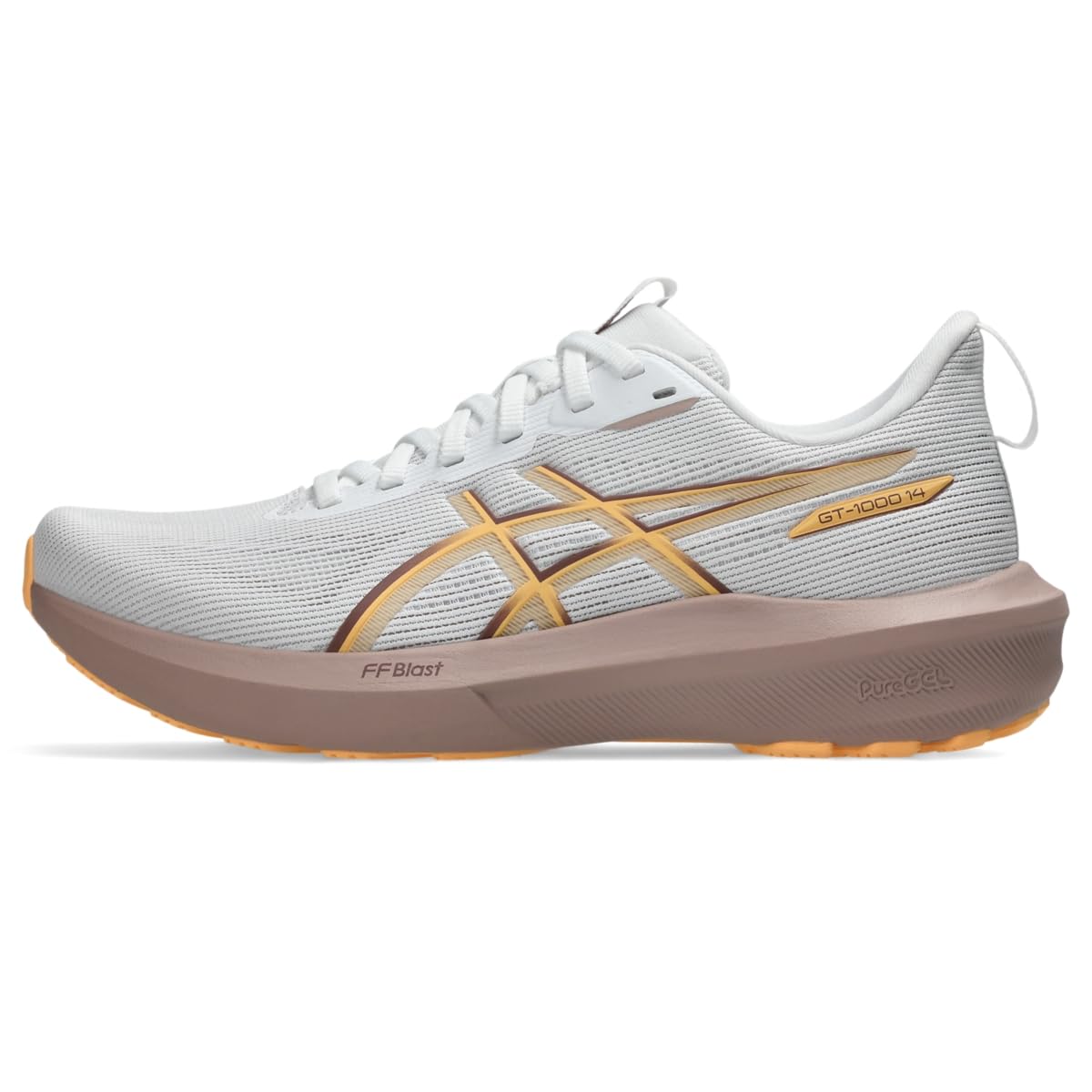
The upgrade that swapped in a bouncier foam and kept the steady, centered ride.
Narrow-footed runners tend to struggle — too much room and the foot slides, which kills the whole point of a stability shoe. The GT-1000 14 is the one that fits slim feet well, and it does it while still anchoring you. The 3D Guidance System keeps the stride stable, and the updated FF BLAST midsole delivers a soft landing with a bit of bounce to push you forward.
Compared with the GT-1000 13, this version brings the newer FF BLAST foam, which is the whole reason to pick it over its predecessor. The upper, lining, and insole are lightweight polyester, and the synthetic rubber outsole is built for road wear. Product dimensions run 12.44 x 6.3 x 4.75 inches, and the Saucony Guide 17 lists 12 x 8 x 4.5 inches.
Comfort leads the praise here — buyers specifically note these do not hurt their feet — and arch support and cushioning both draw steady approval. The trade-off is durability: some report the shoe holding up well, others raise concerns, so treat it as a solid everyday trainer rather than an ultra-distance investment. Value is another strong point, with buyers describing the shoe as worth what they paid.
Who it fits like a glove: Slim and standard-width feet that float in roomier stability shoes.
What you are trading: A slight question mark on long-term durability versus a lower-slung, more precise fit.
Best matched to: Narrow feet that need a stability shoe to actually stay put.
Not the one for: Wide feet — the trimmed footprint will pinch across the ball.
4. Saucony Women’s Guide 17 Running Sneakers
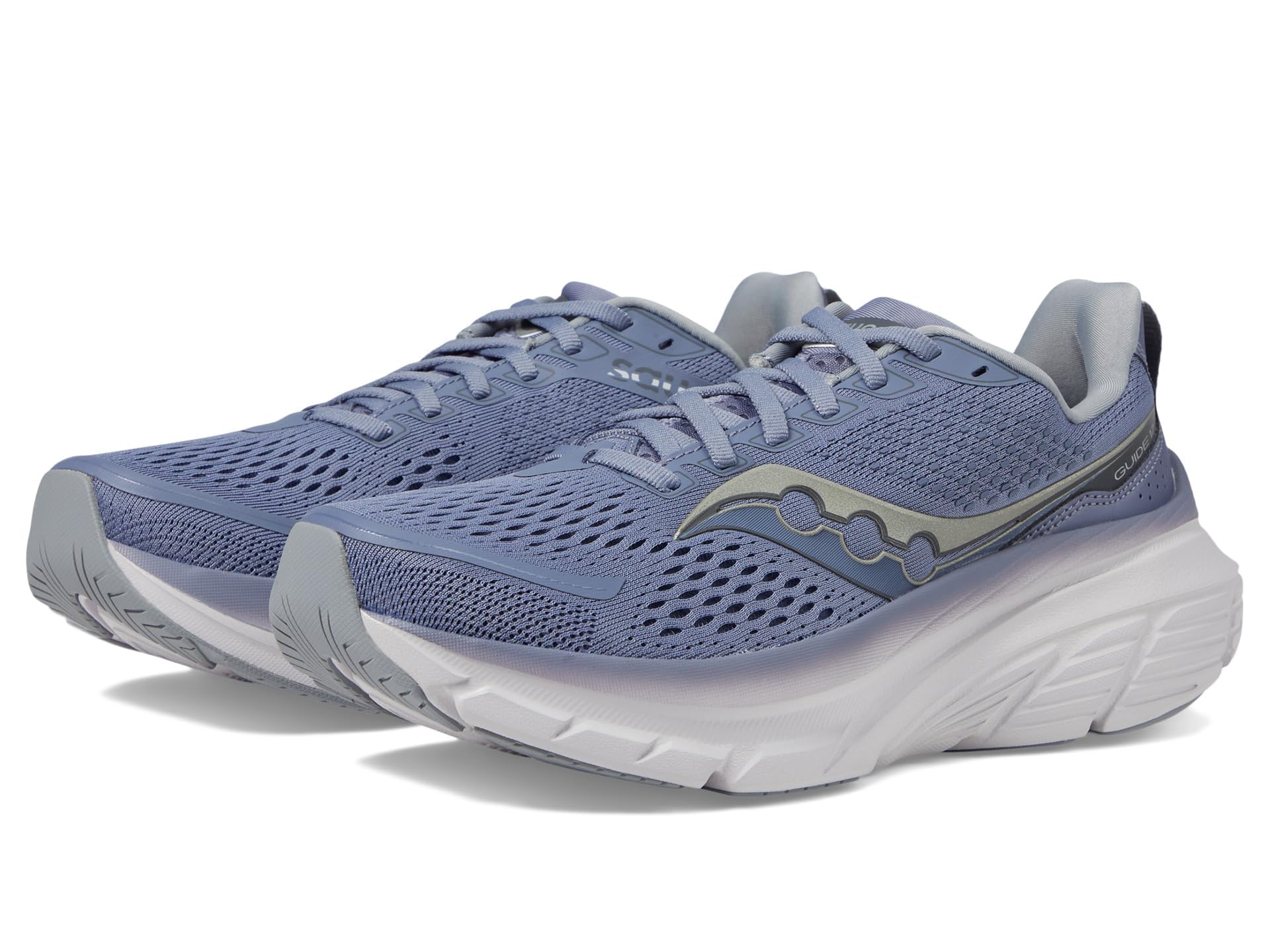
The Guide that wide-footed runners keep coming back to for the toe room.
Bunions and wide forefeet do not play well with snug stability shoes, and the Guide 17 is the pick that gives your toes somewhere to go. Saucony built it as a comfort-first stability shoe with gentle support that helps keep the foot aligned, and the cushioning runs soft enough that runners describe the bottom as super squishy.
Buyers call out stability as a strength here — it is among the most-praised traits in this shoe’s review history, which is exactly what you want in a stability trainer. The toe box is roomy enough that wide-footed customers note it as the rare shoe that fits, and the arch support gets consistent nods.
The flip side is fit balance. A shoe this roomy in the toe can feel loose for runners with average or narrow feet, and some reviewers point out it simply did not suit them. If your foot is not wide, size down or pick a slimmer shoe. For everyone whose running shoes always squeeze at the toes, this is the relief pick.
Why wide feet trust it
- Roomy toe box that ends the squeeze for wide forefeet
- Gentle stability that keeps the foot aligned without a rigid post
- Cushioning runs soft — the “super squishy” feel runners describe
The other side of the coin
- Can feel loose for average or narrow feet
- 1.5 lbs makes it the heaviest Saucony here
Buy it when: Every other stability shoe pinches your toes and you want room to splay.
Pass when: Your foot is narrow and you need a close, precise hold.
5. ALTRA Women’s Paradigm 8 Road Running Shoe

Support that steps in only when your stride needs it, then backs off.
The Paradigm 8 suits the runner who wants a natural, level stride but still rolls inward. GuideRail technology sits on the inside edge of the shoe and offers gentle guidance only when it is needed — the rest of the time your foot moves freely. The updated Altra EGO MAX midsole keeps the cushioning plush without piling on weight, and the 30mm stack height gives you a substantial platform underfoot.
The zero drop is the big dividing line here. Heel and toe sit level with each other, unlike the 6mm offset on the Saucony Guide 18. If you are used to a traditional ramp, expect your calves to notice the first few runs. What runners like most is the ride quality and the comfort — the slight forward roll makes it feel easy to keep moving, and the roomy toe box, engineered mesh upper, and ghillie lacing system keep the fit secure without crowding.
Support is real, not decorative: buyers describe it as the support they need to stay on their feet through 12-hour work shifts, and it helps with pronation. Fit is the mixed spot — the roomy toe box that wins over some runners feels off for others, so check the sizing guide before you commit. If you have never run in zero drop, transition gradually rather than jumping straight in.
The guided-support idea: GuideRail is on-demand by design, which sits between the firm 3D Guidance System on the ASICS shoes and a neutral ride.
New to zero drop: Give your calves a few short runs to adapt. The 30mm stack keeps it from feeling thin, but the level platform is a different motion.
Right for you if: You want natural foot movement with a safety net on the inside edge.
Skip if: You rely on a steep heel-to-toe ramp and do not want to rebuild your stride.
6. New Balance Women’s Fresh Foam X 860 V14

The stability shoe that flat-footed walkers and runners keep recommending.
Flat feet and overpronation are the exact pair of problems this shoe is built around. The Fresh Foam X 860 V14 pairs a stability-focused build with Fresh Foam X cushioning, so your arch gets support while your foot stays comfortable over long stretches. It carries the American Podiatric Medical Association Seal of Acceptance, a review mark the APMA grants to foot-care products.
Where it shines is all-day comfort, not just the run. Runners and walkers both land on it happily, and the shoe suits overpronating, flat feet especially well. The cushioning is deep enough that one buyer describes a spring action underfoot, and feet stay complaint-free through long walks. Plenty of room around the toes keeps you from feeling boxed in.
Quality and fit lead the praise on this shoe in a way that says most buyers feel at home in it immediately. For daily miles and long shifts on hard floors, the Fresh Foam X 860 V14 holds up.
Where it fits best: Flat feet and overpronation that need support without a cramped toe.
What to know: It is built for steady daily use rather than speed work.
The one to grab: If flat feet need a supportive, roomy stability trainer for walking and easy miles.
Look past it: If you want a light, fast shoe for tempo runs.
7. New Balance Women’s Fresh Foam X 860v15
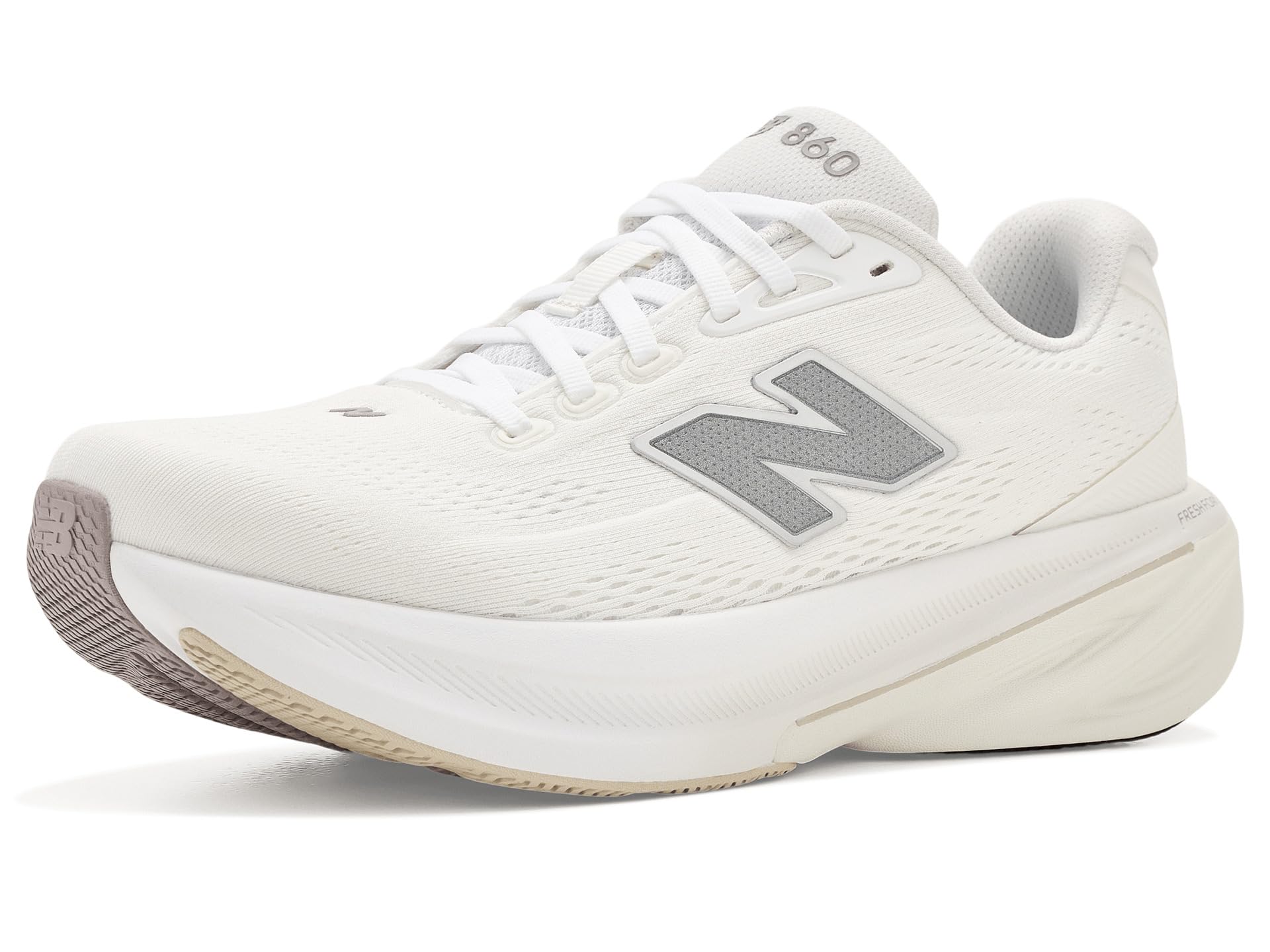
New Balance’s flagship stability trainer, tuned for the long haul.
This is the newest 860 on the list, and it brings Stability Plane technology paired with the full Fresh Foam X underfoot cushioning. New Balance built it for reliability over distance, so the support and the comfort are meant to hold up mile after mile rather than peaking on the first run. For wide feet that need a stable base, this is the top-tier option.
Cushioning is the trait that stands out — runners describe it as their feet getting a hug — and the support gets consistent approval, especially from wide-footed buyers. The look draws praise too, and the color options get noticed. At 2.1 lbs versus the ASICS GT-1000 13 at 1.44 lbs.
Fit is where you need to be careful. It is built for wide feet and runs that way, so average and narrow feet may feel like they are swimming. If you are a dedicated long-distance runner with a wide platform and want the freshest version of New Balance’s stability shoe, this is the one. If you need a lighter shoe for speed or have narrow feet, look down the list instead.
What the flagship brings
- Stability Plane technology for support that holds over distance
- Fresh Foam X cushioning that feels plush from step one
- Wide-footed runners get a roomy, stable fit
Where it asks you to compromise
- 2.1 lbs is heavy next to lighter stability trainers
- Roomy for average and narrow feet
Choose this: Wide feet running long distances that want the newest, cushiest 860.
Choose another: Narrow feet or speed-focused runners who need a lighter, closer-fitting shoe.
Know the Specs
Stability Versus Neutral
A neutral shoe lets your foot roll at will. A stability shoe adds structure — a wider platform, higher sidewalls, or a guidance system — that helps keep your foot from rolling too far inward. When you look at a shoe like the ASICS GT-1000 13, the 3D Guidance System is doing that job. The New Balance 860v15 uses Stability Plane technology for the same purpose. If you overpronate, the stability version is the one you want.
Heel-to-Toe Drop
Drop is the height difference between the heel and the toe, measured in millimeters. A 6mm offset, as on the Saucony Guide 18 with a 35mm heel and 29mm toe, gives you a slight forward lean into your stride. A 0mm drop, as on the Altra Paradigm 8, puts heel and toe on the same level for a more natural motion. Neither is better — the right one depends on what your calf and ankle are used to.
Stack Height
Stack height is how much material sits between your foot and the ground. More stack means more cushioning and more protection from the road; less stack means you feel the ground more. The Altra Paradigm 8 runs a 30mm stack, which is generous enough to soften long runs while keeping a level foot position.
Toe Box and Midfoot Lock
Toe box width decides whether your toes can spread naturally. The Saucony Guide 17 and the Altra Paradigm 8 both favor a roomier toe, while the ASICS GT-1000 14 runs slimmer. The midfoot and heel matter just as much — if the heel slides, the stability support cannot do its job, which is why a locked-in heel collar matters on shoes like the Saucony Guide 18.
Common Questions
How do I know if I need a stability running shoe?
Do stability shoes make your feet weaker over time?
Should I go up a half size in ASICS GT-1000 shoes?
Is a zero-drop shoe like the Altra Paradigm 8 good for overpronation?
What is the difference between the Saucony Guide 17 and Guide 18?
How long do stability running shoes last?
Are wide feet better served by a specific shoe here?
Can I use stability running shoes for walking and work shifts?
What does the APMA Seal of Acceptance mean on the New Balance 860?
The Bottom Line
For most runners hunting the women’s running shoes for stability, the ASICS GT-1000 13 is the safest pick — the 3D Guidance System keeps your stride centered, and its fit record is the best in this group. If you want the plushest landing and a rocker toe-off, the Saucony Guide 18 delivers, and if your toes need room to spread, the Saucony Guide 17 is the one. Wide-footed distance runners can step up to the New Balance 860v15. Each pick here earns its spot on support and comfort — match the shoe to your foot shape and pronation, and the stability does the rest.
How we choose
We do not accept paid placement. Every pick is matched to a real buyer and a real use-case; we do not hands-on test units.
Sources
Specifications: manufacturer listings and product documentation. Review insights: verified customer reviews, as of November 2026. Pricing: not shown on this page (it changes often); check the current price via the retailer link.
As an Amazon Associate, Tactical Gear Guy earns from qualifying purchases. This does not affect which products we feature.