Specs are compiled from manufacturer listings and verified buyer reviews and can change over time — please confirm the key details on the product page before buying.
If your feet ache by lunchtime, the fix is not a thicker sock — it is a boot built around a shaped arch instead of a flat plank of foam. The picks below earn their place on three things: real arch support under the midfoot, a cushioned footbed you can stand on for hours, and a fit that actually accommodates a wider or problem foot. The Skechers Arch Fit Mojave – Indefinite takes the top spot because it pairs that support with a side zip and a look nobody reads as medical.
This guide is built by comparing the manufacturers’ published specifications and the patterns across verified customer reviews, so you get each pick’s real strengths and trade-offs instead of marketing spin.
Some boots put a soft insole over a stiff sole. Others build the support into the shoe itself. Knowing which is which saves you a return — and this breakdown of orthopedic boots for ladies covers support type, width, and the fit quirks worth planning around.
Top Picks
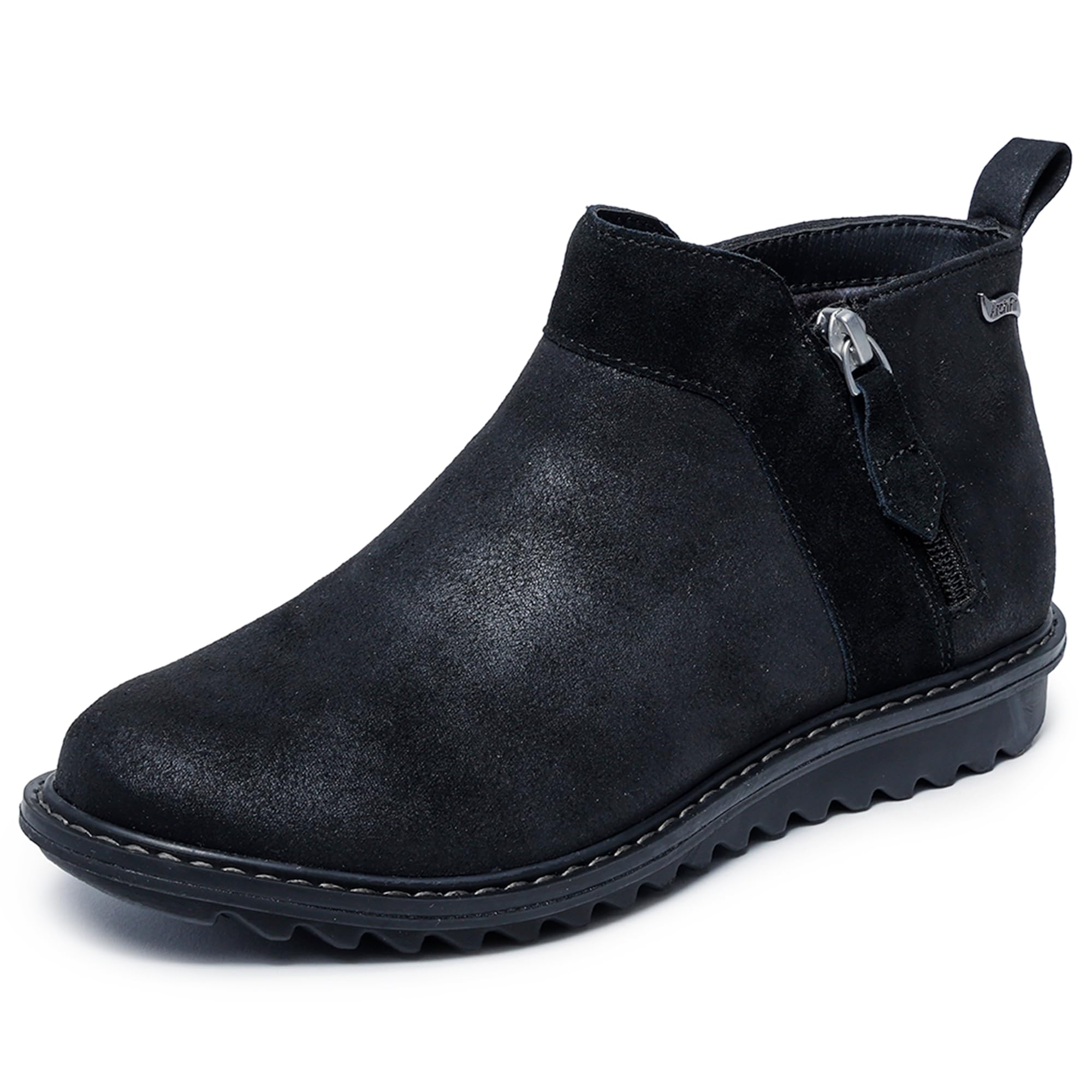
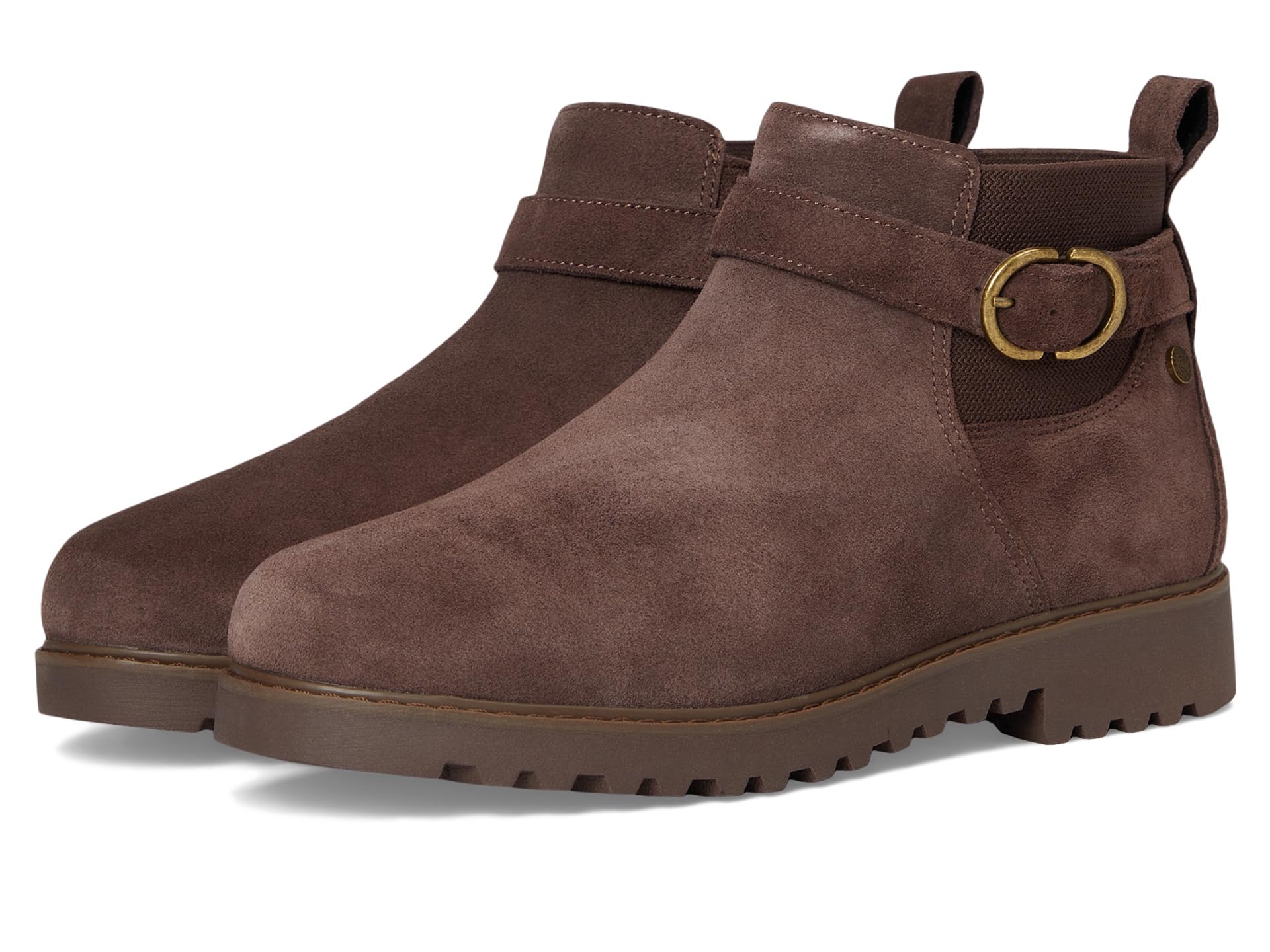
How To Choose The Best Orthopedic Boots for Ladies
The single decision that matters most is where the support lives. A boot with a built-in orthotic insole gives you structure the moment you put it on. A boot with a basic cushioned footbed feels soft but does not correct anything. Most buyers do not need both — they need to know which one they are getting.
Built-in orthotic versus cushioned footbed
A built-in orthotic insole is shaped under the arch and heel so your foot sits in a supported position. The Orthofeet models here use a system with a built-in orthotic insole plus a shock-absorbing sole — that is a different animal from padding alone. A cushioned footbed, like the one in the Propet Waverly, softens the step but does not shape it. If your feet mostly feel tired rather than misaligned, cushioning is enough. If your arch collapses inward over the day, you want the shaped insole.
Does the insole come out?
If you already own custom orthotics, check for a removable insole before anything else. Both Orthofeet boots list a removable insole with extra depth to accommodate most custom inserts. The Skechers Mojave also uses a removable cushioned insole. Pulling the factory insole and sliding in your own is the cheapest way to turn a good boot into your boot — but only if the boot has the room for it.
Width and toe box
A narrow toe box pinches the widest part of your foot, and that pressure is what makes a long day feel long. The Propet Waverly is the pick if a wide toe box is your priority; the boot is built to give your foot room where it moves. Just know that room can read as loose if your foot is narrow.
Shaft height and heel height
Ankle boots sit above the ankle and limit how much your ankle can flex, which is fine for walking on pavement and less fine for uneven ground. The Skechers Marlie lists a 3.5-inch shaft height and a 1-inch heel — a walkable combination you can wear to the office. The Sidney takes the lowest heel approach with a low block heel, so it sits closer to the ground.
Side-by-Side Comparison
| Model | Best For | Support Type | Removable Insole | Shaft / Heel | Amazon |
|---|---|---|---|---|---|
| Skechers Arch Fit Mojave – Indefinite★ Best Overall | Everyday wear with a zip | Podiatrist-certified arch support system | Yes — cushioned insole | Mid-top bootie | Amazon |
| Skechers Arch Fit Marlie – Flirty VibesBest Dress Option | Office and dress wear | Podiatrist-designed arch support system | — | 3.5 in shaft / 1 in heel | Amazon |
| Orthofeet Siena | Long standing shifts | Ortho-Cushion with built-in orthotic insole | Yes — plus extra depth | Ankle boot | Amazon |
| Propet Waverly | Wide toe box | Removable PU insole, shock-absorbing outsole | Yes — microsuede lined PU | Ankle, low heel | Amazon |
| Orthofeet Emma | All-day comfort with support | Ortho-Cushion with built-in orthotic insole | Yes — plus extra depth | Ankle boot | Amazon |
| Sidney Dress Booties | Dress wear, orthotic friendly | Arch support, orthotic friendly | — | Low block heel | Amazon |
Every spec in that table is the same dimension across all six rows, so you can scan down the Support Type column and see instantly which boots give you a shaped insole versus basic padding.
Detailed Reviews
1. Skechers Women’s Arch Fit Mojave – Indefinite
Our pick — 4.0+★ from 650+ verified ratings; the strongest balance of quality and price.
The bootie nobody clocks as orthopedic, and the one most women end up wearing daily.
What makes this the top pick is a footbed developed from more than 120,000 foot scans and built on a podiatrist-certified arch support system. In plain terms, the inside of the boot is molded to hold your arch up rather than leave it to sag. That support is why the boot works for a full day on your feet, not just a walk to the car. The microleather and suede upper keeps the outside looking like a normal casual bootie, and the side zip means you are not unlacing anything to get out the door. At 2.5 pounds, it is the lighter of the two all-leather-feel boots in this roundup — the Propet Waverly sits at 4 pounds.
The pair reads as a fashion boot first. Owners rave about exactly that, and the appearance of this bootie is the thing that wins people over more than any spec on the box. Comfort comes right behind it, with the shaped arch drawing its own steady stream of praise. That combination — looks good, feels good — is rare in a supportive boot and explains why it holds the highest score of the six with a large review base behind it.
The catch is sizing. This is the boot where fit reviews split hardest, with some women finding it true to size and others hitting a tighter fit than expected. The zip helps, but a boot that runs snug will stay snug. If you are between sizes or have a genuinely wide foot, treat this as the one to size up on or try before committing. Everything else about it — the removable cushioned insole, the side zip, the 2.5-pound weight — lines up for daily wear.
Where it pulls ahead
- Footbed shaped from more than 120,000 foot scans, so the arch sits on molded structure instead of flat foam
- Podiatrist-certified arch support system built into the boot, not added as an afterthought
- Side zip for fast on and off; a genuine convenience on a supportive boot
- 2.5 pounds, versus 4 pounds for the Propet Waverly
- Removable insole so there is a path to your own insert
The real catch
- Fit is the split point — some find it true to size, others snug
- Casual bootie styling, not a dress boot
Buy it for: daily wear where you want support tucked inside a normal-looking boot, with a zip you can manage one-handed.
Size up if: your regular size has ever felt tight across the ball of your foot in a zip boot.
2. Skechers Women’s Arch Fit Marlie – Flirty Vibes
A suede bootie with a wrap buckle that happens to hide a podiatrist-designed arch.
Most supportive boots look like supportive boots. This one is premium suede with a wrap buckle detail and a side zipper, built to pass at the office. Underneath sits the same family of podiatrist-designed arch support as the Skechers Mojave, plus a flexible traction outsole that flexes with your foot instead of resisting it. The numbers that shape how it wears are a 3.5-inch shaft height and a 1-inch heel — tall enough to cover the ankle, low enough to walk in without a wince.
What buyers respond to here is comfort first and foremost, with the well-padded interior doing much of the work. The nonslip sole texture earns its own mention, and quality runs second behind comfort as the most-praised trait. For a dress boot, that is the right order — you notice padding and grip long before you notice stitching.
Sizing is the honest sticking point, and it splits both ways: some women find the boot ample while others hit sizing trouble. There is no consensus number to lean on, so the sensible move is to order your usual size and keep the return window open. It is also note this boot has a much smaller review base than the Mojave above it — the pattern is real, but it is drawn from fewer voices.
Why it earns a slot: it is the rare suede ankle boot that pairs a podiatrist-designed arch with a wrap buckle and a 1-inch heel, so you get office-appropriate looks without a flat plank under your foot.
The trade-off to plan for: fit reports disagree in both directions, so treat sizing as a trial rather than a certainty.
Reach for this if: your boots need to look dressy on a workday and you refuse to give up arch support to get there.
Look elsewhere if: you want a fit you can trust from the first wear without testing it first.
3. Orthofeet Siena Orthopedic Women’s Ankle Boots
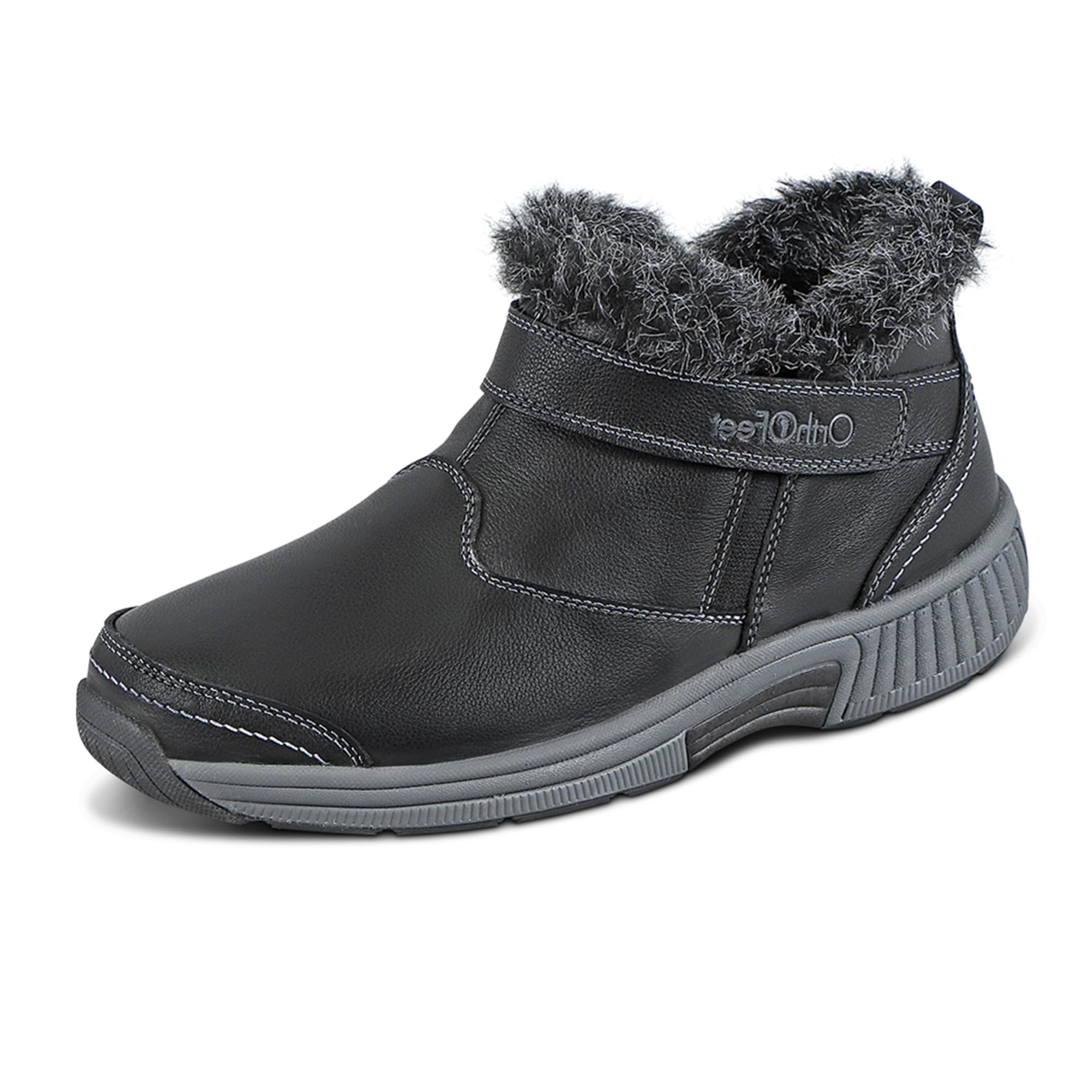
Built for the woman who is on her feet for a whole shift and cannot afford a bad hour.
This is the most deliberately orthopedic boot in the roundup. The Ortho-Cushion system pairs a built-in orthotic insole with a shock-absorbing sole and a roomy, pressure-free fit — three pieces that work as one unit rather than a soft pad dropped on a stiff base. The insole comes out, and the boot carries extra depth so most custom orthotics will drop in. Orthofeet also lists fitting spacers and an Arch Booster in many styles, which gives you a way to fine-tune how much support sits under the arch. The Siena adds a wide base, a firm heel counter and a slip-resistant sole for a steadier step.
Comfort is the trait buyers talk about most, and the way they describe it is telling: boots you can wear all day and forget about. Quality ranks next, and warmth gets its own steady mention — the boot keeps feet warm and dry enough that owners bring it up unprompted. Arch support and pain relief both show up on the list too. That spread of praise across four different traits is what you want to see in a boot built for standing.
Width is the one thing to watch. Some women find the Siena true to size; others report it runs too narrow. On a boot this structured, a narrow fit is not something the insole will fix. If you have a wide foot, this is a boot to check the width options on before you order.
What the orthotic build buys you
- Built-in orthotic insole plus shock-absorbing sole — structure, not just padding
- Removable insole with extra depth for most custom orthotics
- Fitting spacers and Arch Booster available on many styles for tuning support
- Wide base, firm heel counter and slip-resistant sole for a steadier step
- Warmth and dryness both get unprompted praise
Where it can trip you up
- Width reports split — some find it too narrow
- The orthopedic build is visible; this is not a stealth-support boot
The clear winner for: nurses, teachers and anyone whose day is measured in hours standing, especially if you already own custom orthotics.
Think twice if: your foot runs wide and you have been squeezed by structured boots before.
4. Propet Womens Waverly Round Toe Zippered Casual Boots

Twin zips, burnished full grain leather, and toe room for feet that hate being pinched.
Here is the honest trade at the heart of this boot: it gives your toes space, and it asks your legs to carry 4 pounds to do it. The Propet Waverly is 4 pounds while the Skechers Mojave is 2.5 pounds — a real load on a foot that is already tired. In return you get a burnished full grain leather upper with twin zips, a microsuede-lined removable PU insole, and a PU outsole that absorbs shock to reduce fatigue with rubber tread inserts for grip. The wide toe box is the reason to buy it.
Owners describe these as comfortable, supportive and well-made, and the appearance gets its own share of praise — several note the boots simply do not look like orthopedic shoes. Toe box width is the most discussed point and the one that draws the most disagreement: for a wide foot it is the whole point, and for a narrow foot the same room can feel sloppy. Zipper quality and colour also split opinion, so check the colourway you pick carefully.
What you are really choosing here is room over lightness. If a pinched toe is what sends you boot shopping in the first place, the extra weight is a fair price. If you walk long distances, the lighter Skechers above will feel kinder by the end of the day.
The trade in one line: 4 pounds of full grain leather and a wide toe box, versus 2.5 pounds on the Skechers Mojave — you are buying space with weight.
Fit note: that generous toe box is a blessing on a wide foot and a loose fit on a narrow one, so match it to your foot shape.
Made for: wide feet that have been squeezed by every other zip boot and want leather that does not announce itself as medical.
Not the pick if: you are on your feet walking for hours and every extra ounce shows up in your knees.
5. Orthofeet Emma Orthopedic Womens Ankle Boot
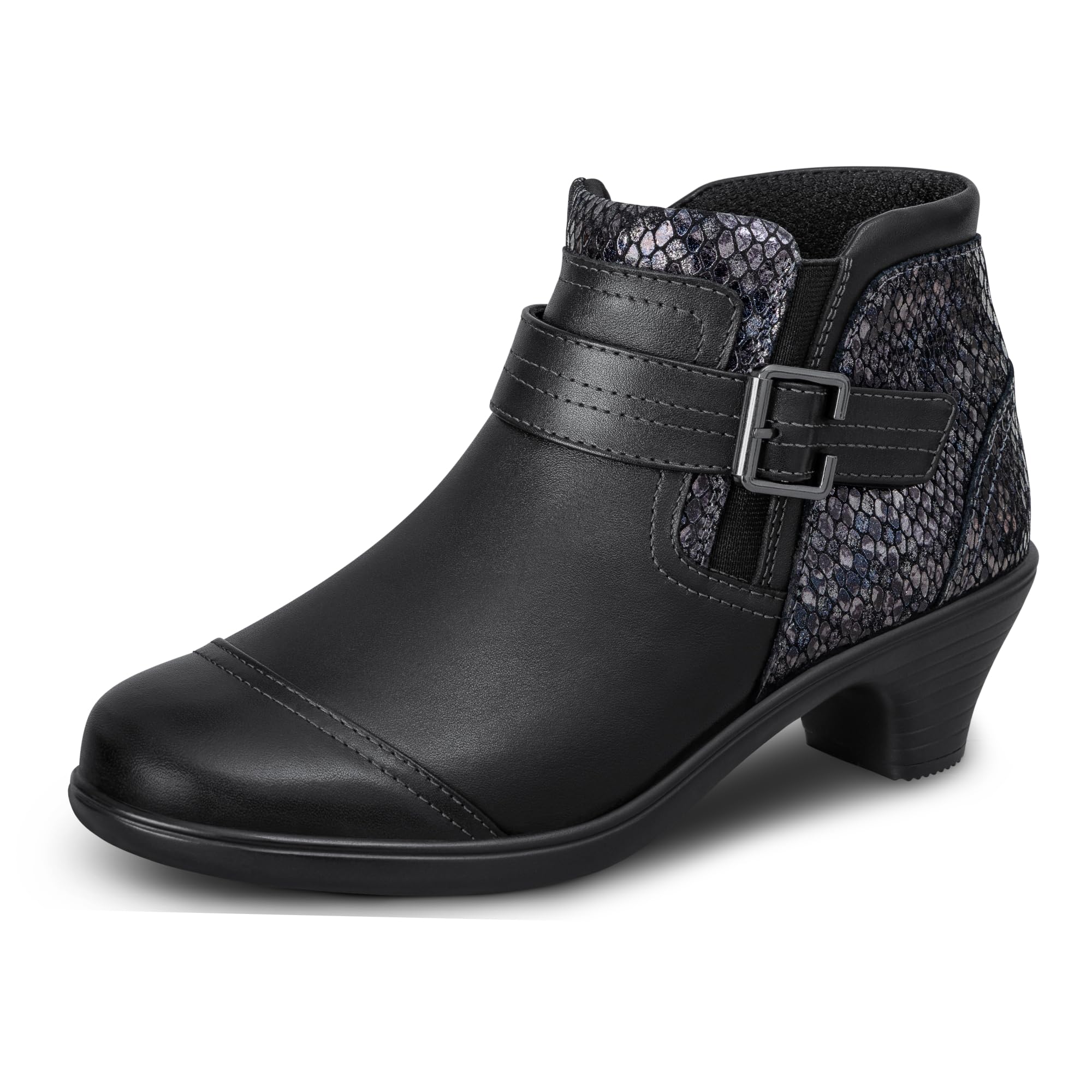
Same Ortho-Cushion foundation as the Siena, dressed in a cleaner ankle-boot shape.
The Emma runs the identical playbook as the Siena: an Ortho-Cushion system with a built-in orthotic insole, a shock-absorbing sole and a pressure-free fit, with the insole removable and extra depth for most custom orthotics. Where the two part ways is on the outside. Appearance leads the conversation on this boot by a clear margin, with comfort close behind — so the look carries as much weight as the footbed here. That matters if you want the support but not a boot that looks like it came from a clinic.
Heel and arch support both earn specific mentions, and the all-day wearability shows up the same way it does on the Siena — boots you can keep on without thinking about them. Durability gets a smaller but genuine nod. This is the softer-looking route to the same Ortho-Cushion foundation.
Two splits are worth knowing before you buy. Fit divides opinion, with some saying it fits right from the start and others finding it a touch narrow. Material divides too — some praise the quality leather, others point out it is not real leather. Neither is a reason to walk away, but both are reasons to read the listing carefully and confirm what you are getting.
The case for the Emma
- Ortho-Cushion system: built-in orthotic insole plus shock-absorbing sole
- Removable insole and extra depth for most custom orthotics
- Appearance is the most-praised trait, so it does not read as medical
- Heel and arch support both get specific praise
Questions worth asking first
- Fit reports split, with some finding it narrow
- Material opinions differ on whether it is real leather
Pick this one when: you want the full Ortho-Cushion setup but the Siena’s look is more clinical than you want on your feet.
Verify before you buy: the exact material and width on the listing, since both draw divided opinions.
6. Sidney Dress Booties
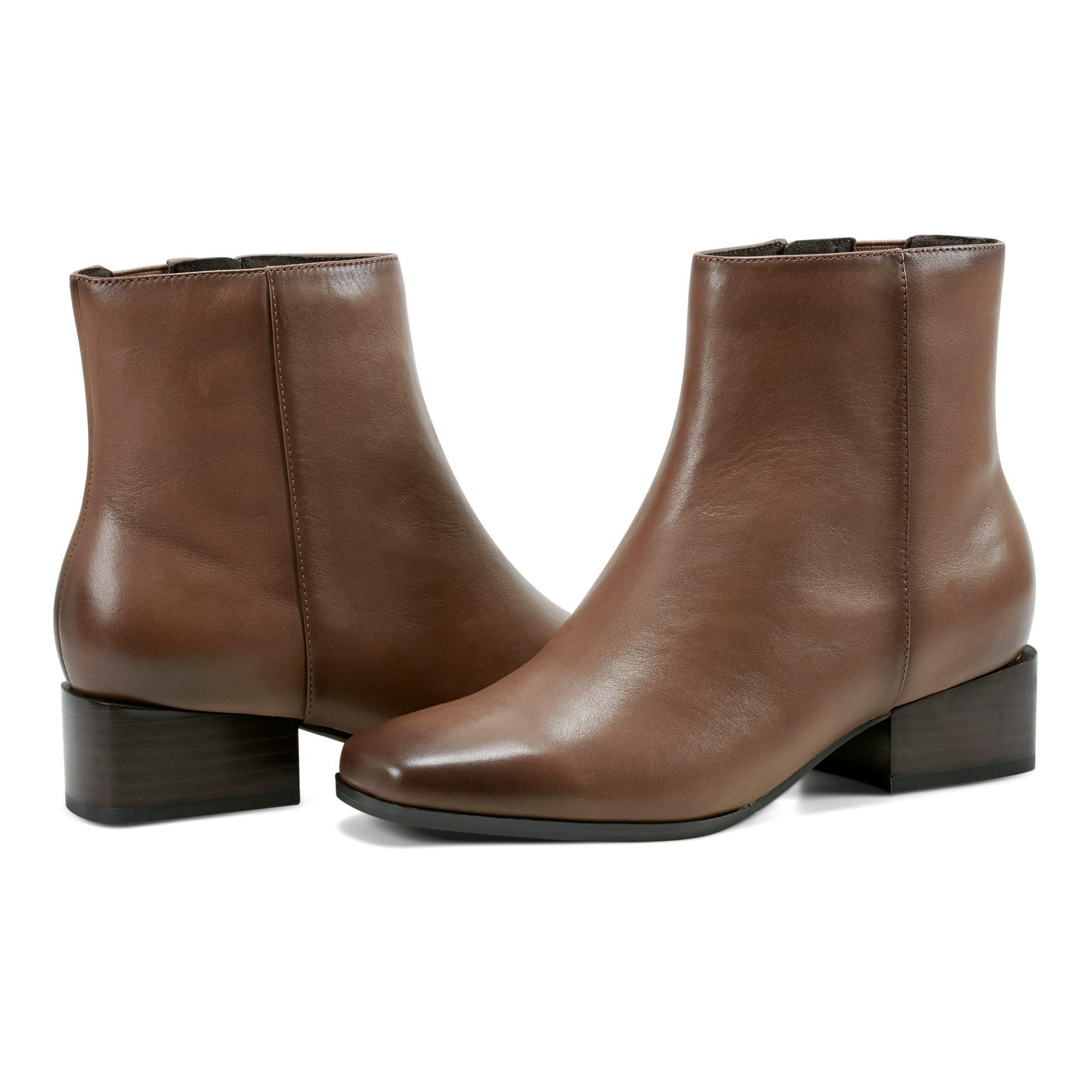
A dress bootie that admits it is orthopedic-friendly, and keeps the heel low to prove it.
Most of this list hides its support. The Sidney says it out loud: a low block heel, arch support and orthotic friendliness, with the maker describing it as heavy on the benefits and light on you. The low block heel is the quiet hero — it puts you closer to the ground than a 1-inch heel does, which changes how your weight travels through each step over a long evening. If your boots are for dinners, events and office days rather than trails, this is the shape that fits.
Comfort and quality lead what owners value here, with style close behind — the boot reads as a dress bootie first. Cushioning and leather quality each get their own specific praise, and the well-padded ankle and shaft area is the detail that keeps coming up when women describe why they can wear these through an evening. Value rounds out the picture.
Fit is the wildcard, and it runs in both directions: some find the boot runs big, others find it runs small in length and width. That is not a single consistent flaw — it is a boot you should order in your true size and be ready to exchange. Durability opinions also split, though one report has a pair holding up well in the rain.
Where it shines: the low block heel plus stated arch support and orthotic friendliness makes it the dress bootie for a reader who needs support but has a wedding or a work dinner on the calendar.
What to expect: fit reports pull in both directions, so plan for one exchange rather than a perfect first try.
Best matched to: dress-up occasions where a low block heel and a padded shaft matter more than a built-in orthotic insole.
Pass on it if: you need the shaped insole and extra depth that the Orthofeet pairs provide.
Know the Specs
Built-in orthotic insole
This is a footbed shaped under the arch and heel so your foot sits in a supported position the moment you step in. It is different from a cushioned insole, which softens the step but does not shape it. The Orthofeet Siena and Emma both use a built-in orthotic insole as part of an Ortho-Cushion system, while the Skechers Mojave uses a cushioned insole developed from more than 120,000 foot scans. Read the listing to know which one you are buying — the words “orthotic” and “cushioned” are not interchangeable.
Removable insole and extra depth
A removable insole lets you pull the factory footbed and drop in your own custom orthotic. Extra depth means the boot has the internal room to hold that insert without crushing your foot from above. Both Orthofeet boots list a removable insole with extra depth to accommodate most custom orthotics, and the Propet Waverly and Skechers Mojave both list removable insoles too. If you already own custom inserts, this is the first spec to check.
Shaft height and heel height
Shaft height is how far the boot rises above your ankle; heel height is how far the back of your foot lifts off the ground. Both change how your foot moves during a day. The Skechers Marlie lists a 3.5-inch shaft height and a 1-inch heel, which covers the ankle while keeping the heel walkable. A low block heel, like the Sidney’s, keeps you closer to the ground and shifts less weight forward onto the ball of your foot.
Weight in pounds
Weight is the spec that decides whether a boot is still comfortable at hour eight. The Propet Waverly is 4 pounds. The Skechers Mojave is 2.5 pounds. Heavier boots tend to carry more leather and a denser sole, which can mean more durability and a wider toe box, at the cost of more work for your legs on every step. Lighter boots are easier to wear for long walks. Match the weight to how you actually use the boot.
Common Questions
Will these boots fit my custom orthotics?
How do I know if a boot has real arch support or just a soft insole?
Which of these boots runs widest in the toe box?
Is a 1-inch heel too much for all-day wear?
How much does boot weight actually matter?
Can I wear these boots in rain or cold weather?
Do these zip boots work for someone with a wide or swollen foot?
What is the difference between the Orthofeet Siena and the Orthofeet Emma?
Are these boots actually made of leather?
How long should I expect an orthopedic boot to last?
The Bottom Line
For most women, the orthopedic boots for ladies winner is the Skechers Arch Fit Mojave – Indefinite. It puts a footbed shaped from more than 120,000 foot scans and a podiatrist-certified arch support system inside a bootie that looks like a normal zip boot. It is also the crowd favorite, holding 4.0+ stars across 600+ ratings with the largest base in this roundup. If you stand all day and already own custom orthotics, reach for the Orthofeet Siena, with its built-in orthotic insole and extra depth. And if a wide toe box is the reason you are shopping, the Propet Waverly gives your toes room in burnished full grain leather at 4 pounds — just know you are trading weight for space.
One last nudge: the difference between a boot you tolerate and a boot you forget you are wearing usually depends on whether the arch is shaped or just padded. Start there, check whether the insole comes out, and confirm the width. Everything else on this list is styling.
How we choose
We do not accept paid placement. Every pick is matched to a real buyer and a real use-case; we do not hands-on test units.
Sources
Specifications: manufacturer listings and product documentation. Review insights: verified customer reviews, as of July 2026. Pricing: not shown on this page (it changes often); check the current price via the retailer link.
As an Amazon Associate, Tactical Gear Guy earns from qualifying purchases. This does not affect which products we feature.