Specs are compiled from manufacturer listings and verified buyer reviews and can change over time — please confirm the key details on the product page before buying.
Most people buying a hardtail mountain bike get the two numbers wrong. They fixate on how many speeds the bike has and ignore the frame material and fork travel, which are the things you actually feel on the trail. A hardtail — front suspension, rigid rear end — is simpler, cheaper to run and lighter than a full-suspension bike, but only if the frame and fork suit your riding.
This guide is built by comparing the manufacturers’ published specifications and the patterns across verified customer reviews, so you get each pick’s real strengths and trade-offs instead of marketing spin.
You will see how a 4-inch fat tire changes traction on snow and sand, why a 100mm fork is enough for most trail centers, and where a carbon race frame stops making sense for a weekend rider. The shortlist below covers the Top Hardtail MTB options that survive real dirt.
Top Picks


How To Choose The Best Top Hardtail MTB
A hardtail is the cheapest way into real mountain biking, and the spec sheet rewards patience. Four numbers decide almost everything: frame material, fork travel, tire width and gearing. Get those right and the rest is detail.
Frame material decides how much bike you push uphill
An aluminum frame is lighter than steel, so it climbs and accelerates with less effort. The Huffy Hardtail Mountain Trail Bike uses a lightweight aluminum hardtail frame and weighs 33 pounds. A steel frame such as the one on the Mongoose Argus Trail takes more abuse and costs less, but you carry that weight on every climb. Carbon, as on the Canyon Exceed CF 5, is the stiffest and lightest option here, and the most expensive.
Fork travel and what it means on the trail
Fork travel is the distance in millimeters the front suspension compresses. A 100mm fork, like the Suntour XCT on the RHT and the RockShox Recon RL Remote on the Canyon, handles roots, rocks and braking bumps at trail-center pace. The Eastern Bikes Alpaka goes further with 130mm of travel, which suits rougher descents. More travel adds weight and softness on smooth climbs.
Tire width is your traction budget
Knobby tires grip loose surfaces, and width matters more than the marketing suggests. The Mongoose Argus Trail runs 4-inch-wide knobby fat tires that float over loose sand and deep snow where a narrow tire digs in. Standard trail tires like the 29″ x 2.2 on the Eastern Bikes Alpaka roll faster on hardpack. Pick fat for soft ground and winter riding, standard for dry singletrack.
Gearing and brakes: the two contact points that keep you safe
Speed count is less important than range. A 7-speed setup on the Mongoose Flatrock keeps things simple for gentle trails, while 21 speeds on the Huffy 26″/27.5″ gives you options on long climbs. Hydraulic disc brakes, as on the Eastern Bikes Alpaka and the RHT, squeeze the rotor with fluid rather than a cable, which changes lever feel in the wet. Mechanical disc brakes on the Mongoose Argus Trail still stop you, just with more hand effort.
Side-by-Side Comparison
| Model | Best For | Speeds | Wheel Size | Frame | Amazon |
|---|---|---|---|---|---|
| Mongoose Argus Trail★ Best Overall | Snow and sand riding | 7-speed | 26 in | Alloy steel | Amazon |
| Huffy 26″/27.5″ Mountain BikeBudget Champion | Budget trail riding | 21-speed | 26 / 27.5 in | Aluminum | Amazon |
| Mongoose FlatrockBest for Teens | Teen and casual trail riders | 7-speed | 26 in | Aluminum | Amazon |
| EUROBIKE YH-X9 | Tall riders wanting 29er wheels | 21-speed | 29 in | 6061 aluminum | Amazon |
| Schwinn High Timber | Versatile family trail bike | 7 or 21-speed | 24 to 29 in | Aluminum | Amazon |
| Huffy Hardtail Mountain Trail Bike | Young riders and teens | 21-speed | 24 in | Aluminum | Amazon |
| Eastern Bikes Alpaka | Rougher descents and jumps | 9-speed | 29 in | 6061 aluminum | Amazon |
| RHT | Component value on a budget | 2×11 | 29 in | Aluminum | Amazon |
| Canyon Exceed CF 5 | Cross-country speed | SRAM SX Eagle | 29 in | Carbon | Amazon |
Detailed Reviews
1. Mongoose Argus Trail Fat Tire Mountain Bike
Our pick — 4.0+★ from 350+ verified ratings; the strongest balance of quality and price.
The fat-tired one that keeps its grip when the trail turns to slush
Four inches of tire width is the whole argument for the Mongoose Argus Trail. Those 4-inch-wide knobby fat tires float across loose sand, deep snow and gravel where a narrow trail tire cuts in and stalls. If your riding calendar includes winter mud or a beach, this is the hardtail that keeps moving. It is rated for riders from 5’7″ to 6’1″ tall on 26-inch wheels.
The gearing is deliberately simple. You get 7 speeds through Shimano twist shifters and a rear derailleur — twist the grip and the gear changes, with no lever hunting on a cold morning. Mechanical disc brakes handle stopping power in varied conditions, though they ask more squeeze from your hand than a hydraulic setup. A steel hardtail frame and rigid fork take abuse, and the drilled aluminum rims offset some of the tire bulk.
What wins people over here is the fun factor and the finish — the copper paint draws genuine praise, and the build goes together without a fight. The honest trade-off is weight and gear count: steel plus 4-inch rubber is a lot to push uphill. Note the 7-speed range also trails the 21-speed drivetrain on the Huffy 26″/27.5″, a 3.0x gap in gear options, so steep climbs will feel like work. It is the most expensive of the simple-geared picks, and you are paying for traction, not speed.
What earns its keep
- 4-inch-wide knobby fat tires hold grip on loose sand, deep snow and gravel
- Steel hardtail frame and rigid fork shrug off rough treatment
- Fits riders from 5’7″ to 6’1″ on 26-inch wheels
- Disc brakes keep stopping power steady across varied conditions
Where it asks patience
- 7-speed drivetrain runs short of range for steep, sustained climbs
- Steel frame plus fat tires makes for a heavy push uphill
- Mechanical disc brakes need firmer hand pressure than hydraulic ones
Right call if: you ride sand, snow or sloppy gravel and want grip above all else.
Think again if: your trails are long and steep and you want the widest gear range.
2. Huffy 26″/27.5″ Mountain Bike for Men
Twenty-one gears on an aluminum frame, at the price of a night out
The gear count is the headline: 21 speeds through a rear derailleur and twist-grip shifters, which gives you a low enough ratio for a long climb and a tall one for the flat run home. That is a 3.0x gap in gear options over the 7-speed Mongoose Argus Trail. The 17-inch lightweight aluminum frame keeps the effort down on the climbs, and it is sized for riders 60 inches and taller.
Rugged knobby tires grip rocky trails and gravel paths, and alloy linear pull brakes — cable-driven rim brakes — give you dependable stopping power on descents and uneven ground. An ergonomic saddle, comfortable grips and a kickstand round out the daily-use details. It arrives in a military green gloss that hides trail dust well.
Here is the catch, and it is the one to weigh properly. The durability record is uneven, with crankshaft failures showing up in the review pages, and the build needs a careful once-over after assembly. That makes this a hardtail for gentle trail centers, canal paths and family rides rather than drop-offs and rock gardens. Go in knowing that and the value is real.
Gear range for the money: 21 speeds and an aluminum frame give you climb-friendly gearing at an entry-level tier, which is hard to argue with.
Build it carefully: check the crankshaft and every bolt after assembly, then keep the riding on gentler terrain.
Buy this one if: you want maximum gear range and a light aluminum frame without stretching the budget.
Pass if: you plan to hammer rocky descents, where a sturdier build earns its keep.
3. Mongoose Flatrock Hardtail Mountain Bike
A grey 26er that fits a wide spread of riders and looks sharp doing it
Fit is where the Flatrock earns attention. The 26-inch wheels suit riders from 5’4″ to 6’2″, and the aluminum mountain frame keeps it light enough for a teen or a smaller adult to throw around a trail center. A suspension fork soaks up bumps and uneven terrain, which is the single biggest difference between this and a rigid city bike.
Gearing is a straightforward 7-speed setup with twist shifters, and linear pull brakes give reliable stopping power on rough ground. Knobby mountain tires handle unpaved trails. You also get to look good doing it — riders consistently call this one great looking.
The trade-off sits in the drivetrain and the build consistency. Seven speeds limit you on sustained climbs, and the durability record is uneven enough that you should check the bike over after assembly and keep to gentler trails at first. Riders do report it rides well when it is sound. Treat it as a light-duty trail and neighborhood hardtail rather than a rough-terrain hauler.
The fit range is the draw: with a suspension fork and a frame that covers 5’4″ to 6’2″, it serves a teen and a parent from the same purchase.
Light-duty by design: 7 speeds and a variable build record mean gentle trails, not rock gardens.
Reach for it when: you need one hardtail that fits several riders in the family and looks the part.
Look elsewhere when: climbing range and heavy trail abuse are on your list.
4. EUROBIKE YH-X9 29-Inch Mountain Bike

The 29er that gives taller riders a frame and wheels that actually fit
Wheel size is the deciding number on the YH-X9. Twenty-nine-inch wheels roll over obstacles with more ease than smaller hoops, and the 19-inch 6061 aluminum frame gives taller riders a properly sized cockpit — recommended for heights from 5’8″ to 6’2″. That frame is also noticeably lighter than steel, which shows up on long climbs. Compared with the Schwinn High Timber’s 16.5-inch frame, this one sits taller in the size table.
A suspension fork reduces turbulence from roots and rocks, while front and rear mechanical disc brakes give more sensitive braking and steady speed control on descents. You change gears through a 21-speed shifter. The three-spoke mag wheel design gives it a look you either love or don’t, and it comes in green.
Set expectations on setup: the bike arrives 85% assembled, so you install the front wheel, pedals, handlebar and seat and pump up the tires. If you are not handy with tools, budget for a shop tune-up. Reviewer coverage is thin relative to the mainstream picks here, so factor in a careful check-over on delivery.
Arguments for the YH-X9
- 29-inch wheels roll over rough ground with less hang-up
- 19-inch 6061 aluminum frame suits riders 5’8″ to 6’2″
- 21 speeds cover climbs and flats
- Front and rear disc brakes give steady control on descents
Worth knowing before you buy
- Arrives 85% assembled, so you finish the build yourself
- Distinctive 3-spoke mag wheel style is divisive
Built for: taller riders who want 29er rollover and a properly sized aluminum frame.
Not for: buyers who want the bike delivered ready to ride.
5. Schwinn High Timber Mountain Bike

One model name that covers nearly every rider height in the house
The High Timber is less a single bike than a family of them. You can pick from 24 to 29-inch wheels, 7 or 21 speeds, aluminum or steel frame, and the 16.5-inch aluminum version fits riders from 5’3″ to 5’8″ on 26-inch wheels. That range is why it lands here: it is the one hardtail that lets two very differently sized riders buy the same model and both get a decent fit.
The alloy crank delivers gear changes that need minimal maintenance, and twist shifters with a rear derailleur make those changes quick. Wide knobby tires hold stability across terrain and weather, helped by sturdy alloy wheels. A quick-release seat post adjusts without tools. It arrives 80% assembled and needs a Phillips screwdriver, 2.5-8mm Allen wrenches, an adjustable wrench and pliers with cable cutters.
The honest note is that build quality is the most-discussed subject in owner feedback, and assembly experiences split sharply — some find it quick, others find the instructions thin. Plan on a careful post-assembly check and you get a capable trail bike. Skip the hand-tool guesswork by paying a shop to finish it.
Sizing flexibility is the selling point: a 5’3″ rider and a 5’8″ rider fit the same 16.5-inch aluminum frame on 26-inch wheels.
Budget for a tune-up: 80% assembly plus divided assembly feedback makes a professional finish the smart spend.
Choose it if: you need a bike that comes in sizes across the family and holds up around the neighborhood and trails.
Wait if: you want to unbox and ride with zero mechanical effort.
6. Huffy Hardtail Mountain Trail Bike

Acid green, aluminum and backed by a ten-year frame warranty
The 10-year limited warranty on the aluminum hardtail frame is unusual at this tier, and it tells you where Huffy put its confidence. An aluminum frame is lighter than steel, so it accelerates and climbs with less effort. The 24-inch wheels and 16.75-inch frame target riders 58 to 70 inches tall, roughly ages 12 to 19.
An all-Shimano drivetrain is designed as one integrated system to deliver 21 speeds through smooth twist shifting. The suspension fork absorbs bumps from uneven terrain. Oversized tires boost traction on dirt and gravel in wet or dry conditions, which pays off on climbs, descents and muddy or rocky sections. A premium padded saddle, slight-rise handlebar for an upright position, and Kraton grips round it out. The bike weighs 33 pounds.
Finish quality is the standout: that acid green with a clear gloss overcoat gets called out for looking better than the price suggests, and assembly goes smoothly. The caution is durability consistency — build quality gets mixed reports and there are occasional front-tire failures. If you want a good-looking trail bike for a growing teen and will inspect it on arrival, it fits.
Reasons this fits a young rider
- 10-year limited warranty on the aluminum frame
- Sized for riders 58 to 70 inches, about ages 12 to 19
- 21 speeds from an integrated all-Shimano drivetrain
- Gloss acid green finish draws compliments
Reasons to check it over
- Build quality gets mixed owner reports
- Occasional front-tire failures show up on the review pages
A good fit for: a teen rider who wants a sharp-looking 24-inch hardtail with real frame backing.
Wrong pick for: heavy adult trail abuse or buyers unwilling to inspect on arrival.
7. Eastern Bikes Alpaka 29″ Mountain Bike
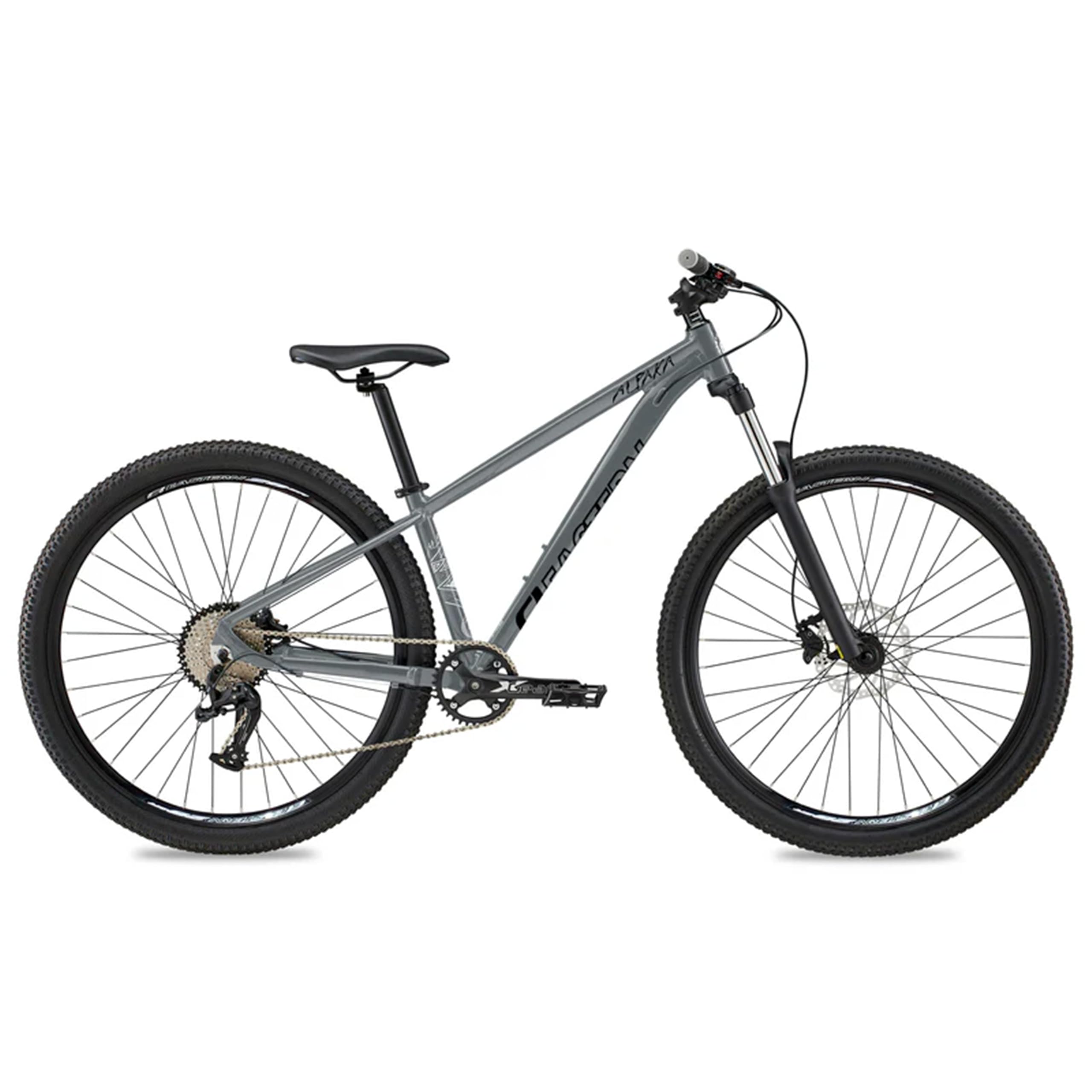
The one that goes bigger: 130mm of travel and hydraulic brakes
Most hardtails here run 100mm of fork travel. The Alpaka runs 130mm, which buys you noticeably more cushion on rough descents and drops — that is the real jump, not the gear count. The ultra light hydroformed 6061 aluminum frame is built to save grams, and sealed bearing front and rear hubs keep the wheels spinning freely in wet, gritty conditions. Tires are 29″ x 2.2.
Shifting is a 9-speed trigger setup, a narrower range than the 21-speed bikes in this article but with a trigger action many riders prefer for control. Hydraulic disc brakes provide strong, precise stopping — the kind that stays consistent when the trail is wet and your hands are cold. Eastern supplies its own stem, bars and lock-on grips. You also get a 5-year frame warranty and 12 months on other parts.
The trade-off is 9 speeds against a longer travel fork — climbing a long fire road will ask more of your legs than a 21-speed drivetrain would. Frame sizing and pre-order availability of the right size decide this purchase more than anything else. For riders who point downhill more than up, the extra travel is worth the gearing compromise.
The travel lead is real: with sealed bearings and hydraulic brakes to match, this is the most descent-ready hardtail here.
Check your size first: 9 speeds trade climbing ease for fork travel, so confirm your frame size before anything else.
Made for: riders who want 130mm of fork travel and hydraulic stopping power on rougher descents.
Not made for: long fire-road climbs where a wider gear range matters more than travel.
8. RHT Shimano SLX Hardtail Mountain Bike

Real trail components on a lightweight frame, assembled for comfort
The RHT is the bike for someone who reads derailleur names. It pairs a Shimano SLX 2×11 shifter with Shimano SLX 11-speed indexing for 22 speeds across an 11×42 cassette, backed by a Neco alloy 3-piece crank. That is a wide, well-spaced gear range built to climb and descend on any terrain. WTB Trail II grips and a WTB Volt saddle are genuine comfort parts, not placeholders.
A Suntour XCT suspension fork with 100mm travel keeps the front wheel planted and absorbs bumps. WTB alloy rims and Kenda Small Block 8 tires roll fast and grip dirt. Dual hydraulic disc brakes give strong, precise stopping, and you get quick-release hubs for easy wheel removal. The frame, handlebar and stem are all aluminum.
Quality is the top-cited strength here, and riders single out the components as the reason. The catch is the price and adjustability. Some buyers love the value; others feel it is not worth the money — a split worth weighing honestly. Adjustability is divisive too. The RHT includes no kickstand, so add one if you want it to stand on its own.
Component value, not badge value: SLX shifting, WTB contact points and hydraulic brakes on an aluminum frame make it a serious build.
The trade-off: a premium-tier price and divided adjustability reports mean it pays to confirm fit before you commit.
Pick this if: you judge a bike by its drivetrain and want real trail components on a light frame.
Look elsewhere if: you prefer simple, no-fuss fit or expect a kickstand in the box.
9. Canyon Exceed CF 5
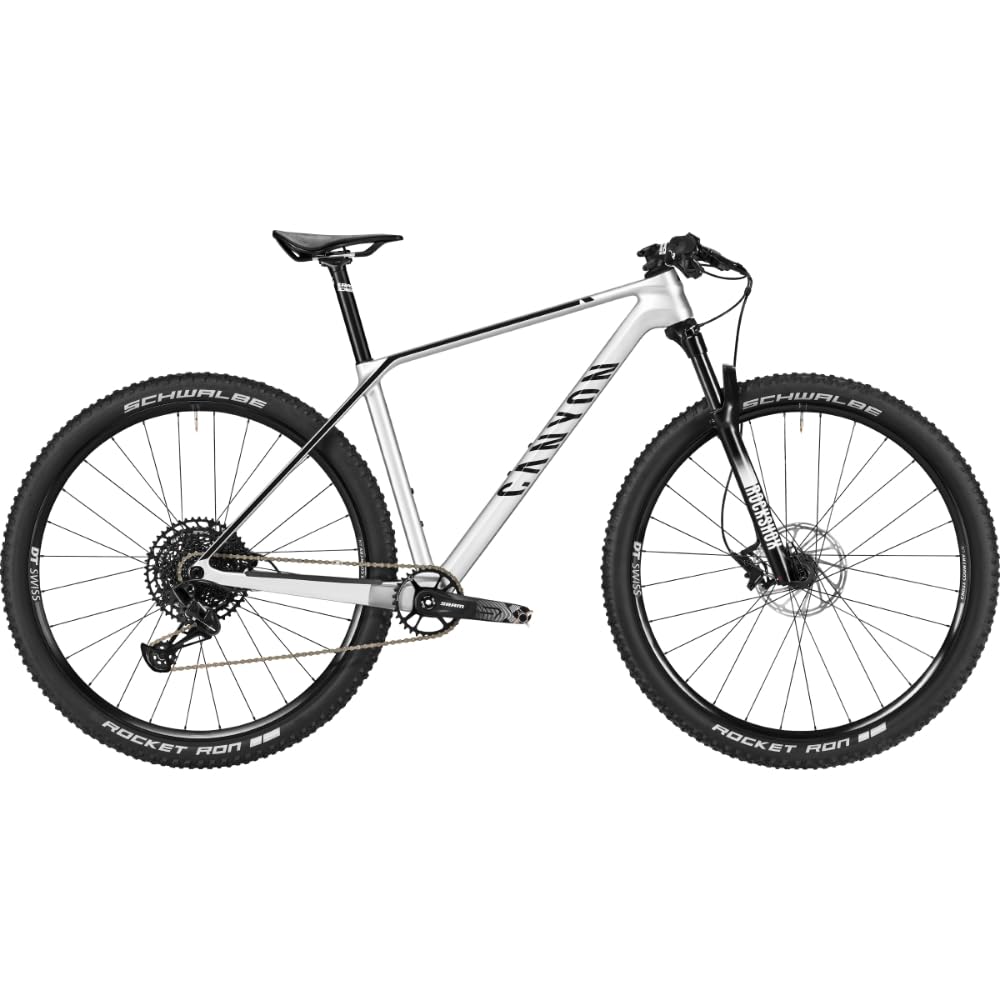
A carbon cross-country frame built for speed, not for a relaxed Sunday loop
Carbon is the material story here. The Exceed CF frame is stiff, strong and ultra-light, built to send maximum power to the rear wheel while staying compliant for long days in the saddle. It is a cross-country hardtail — engineered for explosive acceleration, precision handling and fast laps on an XC course. If your goal is going quicker on a loop you know well, this sits at the top of the pile.
The RockShox Recon RL Remote fork offers 100mm of front travel plus a remote lockout, so you can stiffen the fork for climbing and let it work on descents without reaching down. SRAM SX Eagle gearing covers a wide range for efficient climbs and fast descents, and SRAM Level T brakes handle stopping. Tubeless-ready wheels let you run lower pressures for traction. Everything rolls on 29er wheels.
The honest limitation is that a carbon race frame rewards a rider who uses it and offers little to a casual one — you are paying a premium for stiffness and weight you may not feel on a green trail. Reviewer coverage is thin, so plan on a careful fit check with a shop. Buy it to race; skip it to cruise.
Why riders pay for the CF 5
- Carbon hardtail frame is stiff, light and built for power transfer
- RockShox Recon RL Remote fork with 100mm travel and a remote lockout
- SRAM SX Eagle drivetrain handles climbs and fast descents
- Tubeless-ready wheels and SRAM Level T brakes for race pace
What to weigh honestly
- Premium-tier price for material and stiffness a casual rider may not feel
- Thin reviewer coverage means less real-world guidance
Spec’d for: cross-country riders chasing laps, accelerations and podium pace on a carbon frame.
Overkill for: relaxed trail riding and neighborhood cruising where the carbon premium goes unused.
Know the Specs
Frame Material And Weight
An aluminum frame is lighter than steel, so it pedals up to speed with less effort. Steel takes more abuse but carries weight up the climbs. Carbon is the lightest and stiffest, at a premium. If you grind up long climbs every weekend, frame material is the upgrade you feel most.
Fork Travel In Millimeters
Travel is how far the front suspension compresses. A 100mm fork handles roots, rocks and braking bumps on a trail center. A 130mm fork, like the Eastern Bikes Alpaka, gives more cushion on rougher descents. More travel adds weight and pedals soft on smooth climbs, so match it to your terrain.
Gear Count vs Gear Range
Speed count tells you the number of combinations, not the breadth of the range. A 7-speed setup keeps shifting simple for gentle trails, while a 21-speed drivetrain like the Huffy 26″/27.5″ gives you a low ratio for long climbs. Check the lowest gear for climbing instead of chasing a bigger speed count.
Brake Type: Mechanical vs Hydraulic
Mechanical disc brakes pull a cable against the rotor; hydraulic brakes push fluid. Hydraulics, as on the RHT and the Eastern Bikes Alpaka, keep a consistent lever feel in the wet with less hand effort. Mechanical disc brakes on the Mongoose Argus Trail still stop you, but ask more from your grip on long descents.
Common Questions
What is a hardtail mountain bike and is it enough for real trails?
How do I know which wheel size to choose?
Is a fat tire hardtail good for snow and sand?
Are 21 speeds better than 7 speeds on a hardtail?
Do I need hydraulic brakes on a hardtail?
How much assembly does a new hardtail need?
What rider height does each hardtail fit?
Is a carbon frame worth it for a hardtail?
What kind of terrain can a hardtail handle?
How do I maintain a hardtail after buying?
The Bottom Line
For most riders, the top hardtail mtb winner is the Mongoose Argus Trail because 4-inch fat tires deliver grip on sand, snow and gravel that narrower tires cannot match. If gear range and a light aluminum frame matter most, grab the Huffy 26″/27.5″ Mountain Bike with its 21 speeds. And for cross-country speed, the Canyon Exceed CF 5 is the one to reach for. Pick by the terrain you actually ride, then confirm your frame size before checkout.
How we choose
We do not accept paid placement. Every pick is matched to a real buyer and a real use-case; we do not hands-on test units.
Sources
Specifications: manufacturer listings and product documentation. Review insights: verified customer reviews, as of November 2026. Pricing: not shown on this page (it changes often); check the current price via the retailer link.
As an Amazon Associate, Tactical Gear Guy earns from qualifying purchases. This does not affect which products we feature.