Specs are compiled from manufacturer listings and verified buyer reviews and can change over time — please confirm the key details on the product page before buying.
You want a door that stays shut when someone leans on it, and you want to know which bar actually does that before you buy one. Here is the short answer: for most homes, a bar that props under the knob and grips the floor solves the everyday problem. The pick that handles both hinged doors and sliding patio doors in one unit is the one worth starting with. What actually decides whether a security bar helps you or just sits in a closet is a mix of tube strength, floor grip, and whether the length range covers your door.
This guide is built by comparing the manufacturers’ published specifications and the patterns across verified customer reviews, so you get each pick’s real strengths and trade-offs instead of marketing spin.
Below you’ll find the bars that cover apartments, rentals, dorms, and houses, sorted by what they are best at. The crowd favorite behind this list has been proven on thousands of doors, and you’ll see how to pick your own match with this security bars for doors rundown.
Top Picks


How To Choose The Best Security Bars for Doors
Most people buy the wrong bar because they shop by how it looks under the knob instead of by where the force actually lands. A door bar does two jobs at once: it wedges the door shut at the knob, and it presses into the floor to stop the pivot. Whichever job fails first is the one that lets the door open.
Match the bar to the way your door swings
A hinged door that opens toward you needs a bar that sits between the floor and the knob, so the bar has to reach the handle height. Sliding doors and windows are a different job entirely, because there is no knob to brace against; the bar has to sit in the track instead. Many bars now ship with a removable head that flips between a knob grip and a flat cap for tracks. Before you order, measure the floor-to-knob distance and the track width, because a bar that is even slightly too short will not seat, and one that is too long will not fit snugly.
Look at the foot, not just the tube
The tube diameter gets all the attention, but the rubber foot is what touches your floor. A wide base with deep grooves grips tile and hard flooring far better than a small flat pad, and a pivoting or swivel foot lets the base sit flat even when the bar is angled. If your floors are slick, a pivoting foot is the single feature most worth paying for, since a bar that slips across the room is not much of a bar.
Decide if you want an alarm or just silence
A silent bar is for anyone who wants their door held shut without drawing attention or waking the household. An alarm-equipped bar adds a motion sensor and a siren that sounds when the handle moves, which suits people who want a warning as well as a brace. Alarms cost more, need batteries, and only work in the hinged-door setup on most models, so they are not a universal upgrade.
Side-by-Side Comparison
| Model | Best For | Adjustable Length | Weight | Tube / Build | Amazon |
|---|---|---|---|---|---|
| BRINKS Door Security Bar★ Best Overall | All-around home and travel | 25″–43″ | 2.4 pounds | 20-gauge steel | Amazon |
| Wefaith Heavy Duty Door Security BarLongest Reach | Tall doorknob heights | 24.5″–50.7″ | — | 1″ metal tube | Amazon |
| HANGMAICOME Door Security BarThickest Tube | Packing for hotels and rentals | 25.5″–52″ | 2 pounds | 1.2″ stainless steel | Amazon |
| Master Lock Folding Door Stopper | Two doors, one purchase | 25.5″–43.5″ | 2.9 pounds | 20-gauge steel | Amazon |
| SecurityMan 2-in-1 Bar (2 Pack) | Sliding patio coverage | 18.25″–47.50″ | 3.65 pounds | High-grade iron | Amazon |
| SABRE Bar with Vibration Alarm | Warning siren on hinged doors | 29.5″–44″ | 2.3 pounds | 20-gauge steel | Amazon |
| BRINKS Portable Alarm Bar | Loudest alert plus brace | 25″–43″ | 2.4 pounds | 18-gauge steel | Amazon |
| OnGARD Door Brace | Kick-in resistance on entry doors | — | — | Polymer | Amazon |
| SecuraDoor Heavy Duty Metal Bar | Commercial-grade holding force | 34″–48″ | 3.2 pounds | Aluminum alloy | Amazon |
Detailed Reviews
1. BRINKS Door Security Bar
Our pick — 4.5+★ from 9,000+ verified ratings; the strongest balance of quality and price.
The bar that simply props under the knob and sets up in seconds, without a single tool.
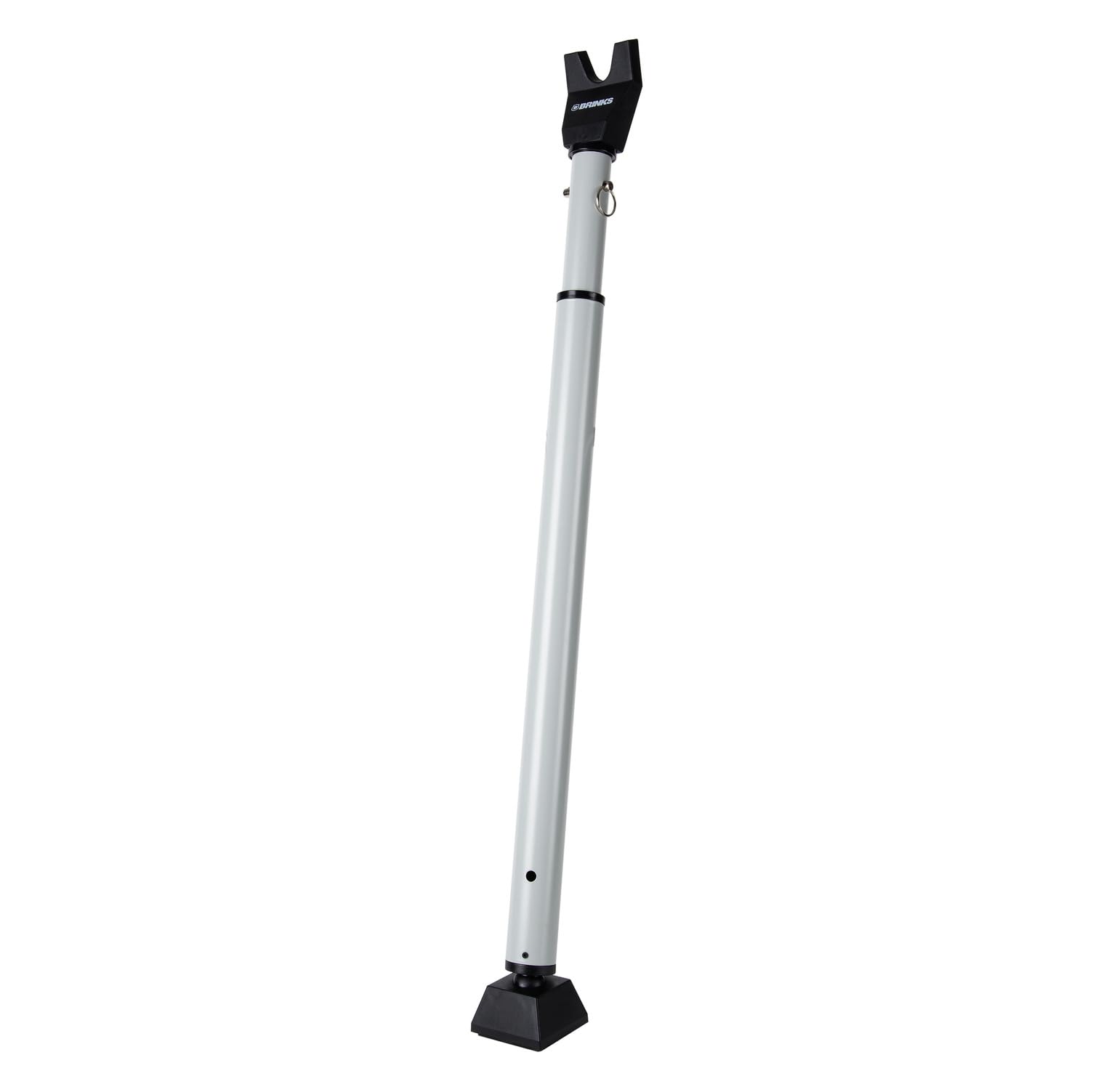
For a first door bar, you want one that works on the door you already have and takes seconds to put in place. This BRINKS does that with a 25″ to 43″ adjustable range and a 20-gauge steel body, which is thin-walled steel that keeps the bar light while still resisting inward push. It seats under door knobs and levers on hinged doors, and it also props between sliding doors, so a single unit covers the front door and the patio slider.
What wins people over is the build. The tube feels solid in the hand and the top yoke is non-marring, meaning the part that touches the door is padded instead of bare metal, so it will not scratch your knob or your paint. There is also a pivoting padded foot, which lets the base stay flat even when the bar is angled. Setup is tool-free: no drilling, no screws, no damage to the door frame, which is exactly what anyone in a rental needs to hear.
Now the honest part. The bar sits on the floor by pressure alone, and on slick surfaces it can creep out of place. The grip is the recurring gripe, not the strength. If your entry floor is polished tile or smooth vinyl, plan to add a rubber mat under the foot or angle the bar tighter against the knob. On carpet and wood flooring it tends to hold far better. At 2.4 pounds it is still easy to move from room to room, or to pack for a trip.
Why this earns the top spot
- 25″ to 43″ adjustability covers most hinged and sliding doors in one unit
- 20-gauge heavy-duty steel with a non-marring top yoke that protects finishes
- Tool-free setup under a knob or lever, and portable enough to travel with
- Pivoting padded foot keeps the base flat and protects floors
Where it struggles
- Pressure alone holds it down, so on slick tile it can slide out of position
- No alarm and no fixed mount, so it is a brace and not a permanent lock
Right for: anyone who wants one simple bar for the front door, a dorm, or an apartment, and wants it from the start without drilling.
Think twice if: your entry floor is polished tile or smooth vinyl and you want a bar that stays put with zero fuss.
2. Heavy Duty Door Security Bar
A reach that stretches all the way to 50.7 inches, for the tall knobs other bars cannot touch.
If your doorknob sits high on the door, most bars run out of length before they reach it. This Wefaith bar telescopes from 24.5″ to 50.7″ across 20 locking holes, so you can hit the right height and angle on front doors, back doors, bedroom doors, and hotel doors alike. The tube is 1 inch in diameter and the body is stainless steel, which gives you a stiffer brace against push than a thinner rod.
The standout piece is the foot. It measures 3.94 inches across with deep herringbone grooves, and a 360° swivel joint lets the base sit flat on tile, wood, vinyl, carpet, and concrete. That wide footprint is why it manages to hold on more floors than a small pad would. The head is a deep Y-shape for round knobs, lever handles, and square handles, and you swap to a flat rubber cap for sliding windows, patio doors, RVs, and rentals.
The catch is the same one every pressure-fit bar carries. Some surfaces let it drift, and a few floors simply do not give it enough bite. Set it firmly and check your flooring first. Beyond that, it stands up as a well-built unit that sets up and tears down without tools, and the wide base does noticeably more work than a narrow foot.
Where the value lands: the 3.94-inch grooved base and the 360° swivel foot are the parts you will actually feel working. It is built for the door you already own, not for a permanent install.
What to plan around: give the foot a clean, flat surface and a firm press. On glossy flooring, treat it as a brace you snug each night, not a set-and-leave fixture.
Pick it when: your knob sits high, your floor is a mixed bag, or you travel and want one bar that fits nearly any door.
Hold off if: you need something bolted down and permanent, since this one is built to move.
3. Door Security Bar
A thicker stainless tube that shaves carry weight down to about 2 pounds.
Strength starts with the tube, and this bar runs a 1.2-inch-diameter stainless steel tube with a 0.8 mm wall. That is 1.2″ against the 1″ tube on the Wefaith above, so there is more steel in the path of the push. It is a heavier-duty barrier to put alongside your existing lock, not a replacement for it, and the Y-head braces inward-opening front, back, or bedroom doors. Remove the head and it slots into compatible sliding patio doors, balcony doors, or sliding windows.
What people notice first is the 1.2-inch stainless tube, which feels stiffer in the hand than a 1-inch bar. The grooved rubber base grips the floor and a 360° pivoting joint keeps the foot flat as you change the angle. Setup takes no tools and no drilling: screw the sections together, set the length, and drop in the locking pin. When you are done, it breaks down into compact sections for luggage or the closet, and at about 2 pounds it disappears in a bag.
Here is the trade-off to know before you order. The bar leans on floor contact, and some floors let it creep. The foot wants a clean, suitable surface with full contact, which means sweeping up grit before you set it. Treat it as a daily brace you check, not a fire-and-forget lock.
The build in one word: substantial. A 1.2-inch stainless tube with a 0.8 mm wall gives it real heft for its class, and it still packs down small.
One caution: floor grip is the weak point on any pressure-fit bar. Keep the foot clean and dry, and give it a firm press each night.
Best matched to: renters and travelers who want a thicker steel tube without more bulk in the bag.
skip it if: your main door is a slick tiled entry and you want a bar that never needs resetting.
4. Master Lock 270EC2 Door Stopper

Two folding bars in one box, so the front door and the slider both get covered.
Sometimes the simplest fix is having a bar in two places at once, and this Master Lock pack gives you two. Each is a dual-function door security bar that guards hinged, patio, and sliding doors, built from 20-gauge steel for strength. It adjusts up to 43-1/2 inches for hinged doors and extends up to 39 inches for sliding doors, and a flexible handle strap keeps it tidy in storage.
The folding hinge is what separates it from a fixed bar. Instead of leaving a long rod propped in the corner, you fold it down to a compact size and stash it in a drawer or a travel bag. The pivoting rubber grips hold the door without scratching the frame or the floor, and the whole thing is made for indoor use. For the price of one bar, you get two, which matters if you want coverage without buying twice.
The honest caveat is the folding joint, which is the first part to wear under hard use. The folding joint is a moving part, and on hard use it is the first thing to watch. It also does not want to be jammed onto vinyl flooring, where the foot can fail to bite. Treated as a light-duty brace, it is a practical pick.
The appeal: the pack and the folding hinge. Two bars, stored flat, cover both a hinged door and a slider without taking up drawer space.
The fair warning: a folding joint has more give than a solid rod. If you want a bar for high-traffic hard use, a one-piece tube is the sturdier road.
Good fit for: households wanting two doors covered at once and a bar that tucks away flat.
Less suited to: heavy daily use on slick or vinyl floors, where a fixed brace holds up better.
5. SecurityMan Door Security Bar 2 Pack
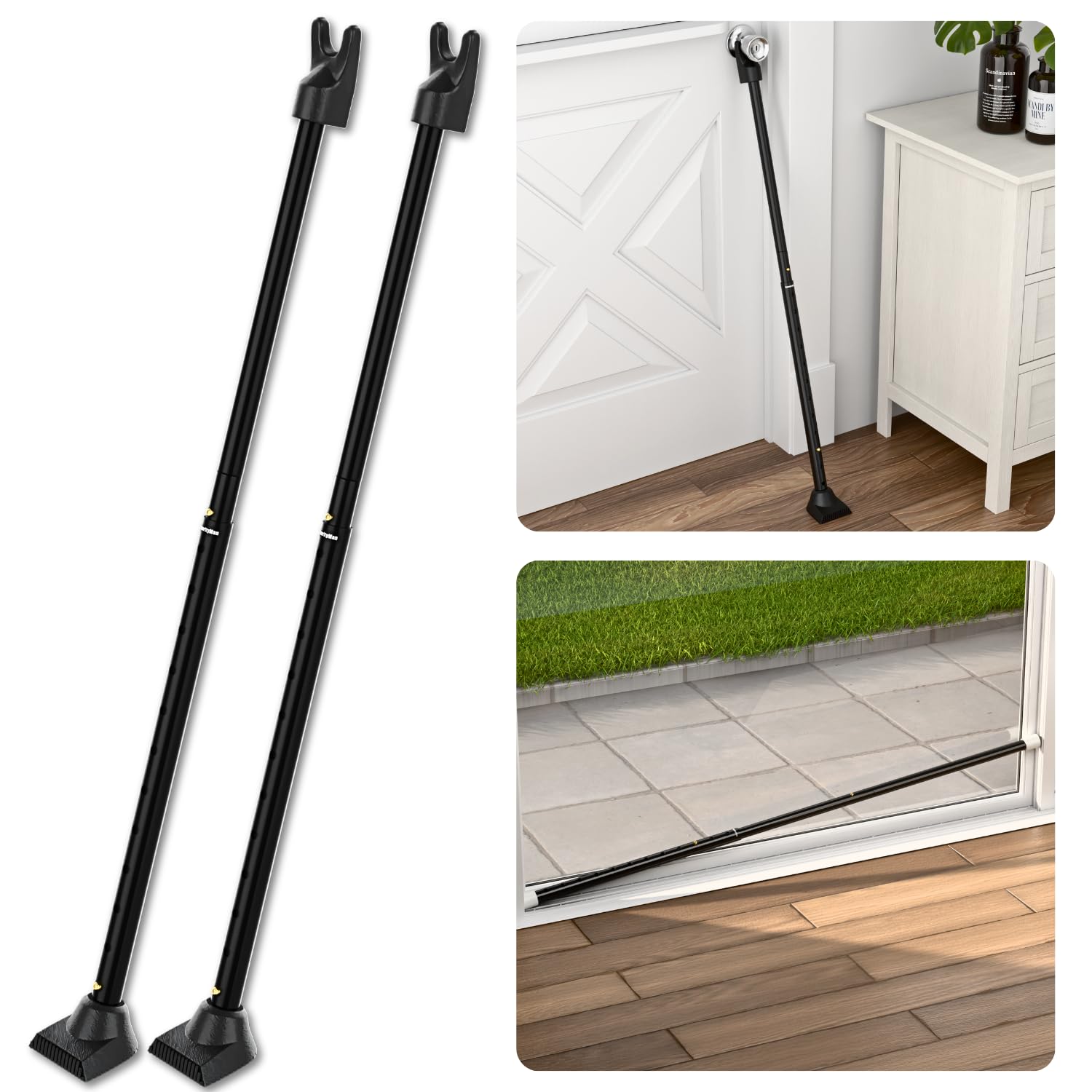
Two bars, two cap sets, one job: shut down a hinged door and a patio slider.
Sliding glass doors are the weak spot in most homes, and this pack is built to address it. The SecurityMan kit includes two bars, two hinged-door caps, and two sliding patio door and window caps, so you can run one on the front door and one in the patio track at the same time. Its high-grade iron is rated to withstand 400 pounds of pressure, and it adjusts from 18.25″ to 47.50″ with an angled rubber bottom that sits flat without scratching the floor.
Set one bar next to the BRINKS above and the size difference is obvious. This bar weighs 3.65 pounds against the BRINKS at 2.4 pounds, so it is the heftier unit in the hand and the steadier one under a door knob. That extra mass is why it holds so well on linoleum, where the rubber bottom really seats. The cap swap takes a moment, not a tool, which means switching between the front door and the patio is easy.
Where it slips is the same floor it always slips on. On tile surfaces the foot can lose hold, so it needs a firm press and a clean floor to do its best work. The 3.65-pound weight helps there but does not solve it outright. Overall it is the most complete patio setup here.
What earns it a spot: the interchangeable caps turn one bar into two jobs, and the 2-pack means both the front door and the slider stay covered at once.
What to watch: the same surface issue every pressure-fit bar faces. On tile, snug it fresh before bed and skip leaving it in place for days.
Choose it for: any home with a sliding patio door that needs real coverage, plus a hinged front door to pair with it.
Look elsewhere for: a permanent, bolted solution. This one relies on pressure and comes and goes as you need it.
6. SABRE Door Security Bar with Alarm
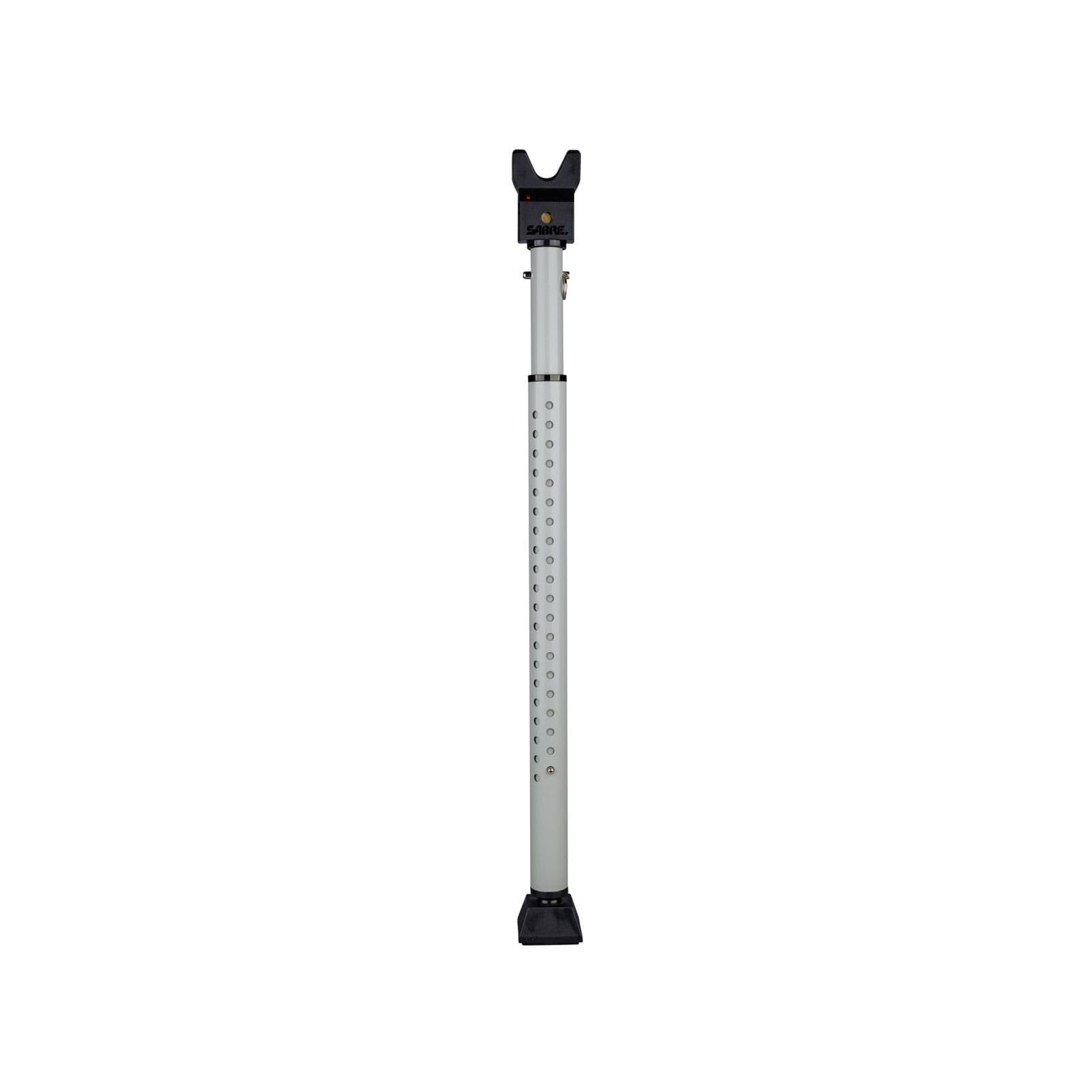
A 115dB siren that fires the moment someone moves the handle from outside.
If you want the door to hold and to tell you when someone is testing it, this is the bar. It pairs a 20-gauge steel brace with a vibration-detecting alarm that sounds a 115dB siren when someone tries the handle from outside. That is loud enough to be heard across the house, and the maker rates it audible up to 1,100 feet (335 meters), which reaches well past the walls of an apartment. The rubberized foot grips the floor, and the collapsible design packs down for travel.
Length is the fitting detail to check first. It adjusts across 40 height positions, fitting hinged doors between 29.5″ and 44″ and sliding doors between 27″ and 41.5″. The alarm is designed only for the hinged-door setup, so a sliding door here gets the brace and none of the siren. Setup takes seconds and no tools: press the release buttons, set the length, and prop it under the knob.
The alarm is the whole point, and the 115dB siren does that job. It wakes the house and the neighbors when a door gets jiggled, and owners describe the comfort of hearing that siren before anyone gets near the lock. The clear limit is that your sliding door gets zero alarm coverage, so treat this as a hinged-door device above all.
Reasons it stands out
- 115dB siren with a 1,100-foot audible range to alert the whole house
- Vibration sensing trips the alarm when someone tries the handle from outside
- 40 height positions fit hinged doors from 29.5″ to 44″
- Collapsible and tool-free for quick packing and travel
Limits to weigh
- The alarm works only in the hinged-door setup, not on sliding doors
- Runs on batteries, so the alert is useless if you forget to swap them
Built for: anyone alone at night who wants both a physical brace and a loud early warning.
Not the one for: a sliding patio door you want alerted, since the siren only works on hinged setups.
7. BRINKS Portable Alarm Door Security Bar

A 121dB siren with the power of a police alarm, packed into a portable bar.
The number worth knowing here is 121dB, a siren the maker compares to a police alarm. That is louder than the SABRE above at 115dB, and it is designed to alert you and your household if anyone tampers with a door or a window. The bar itself is 18-gauge steel, so it braces inward-opening hinged doors and also seats between sliding doors, and it expands from 25″ to 43″ for a snug fit against the frame.
Setup is a one-step job. You prop the bar under the knob or between the sliding panels, no tools and no bolts. It is light enough at 2.4 pounds to carry from the apartment to a hotel, and the two included CR2032 batteries mean it works the moment it lands. The adjustable height lets you seat it at the right press under almost any knob.
Here is the part the marketing hides. The alarm split people down the middle: some find it amazingly loud, others find it fairly quiet in practice. Treat the siren as a backup alert, not your main defense, and test it the first night. The brace is what does the actual work, and it does that well.
The draw: a 121dB alarm plus an 18-gauge steel brace in one portable unit, with the batteries in the box.
The honest limit: siren volume varies on real units, so it is a warning layer rather than a guarantee. Sound it once at home before you trust it on the road.
A natural fit for: travelers and apartment dwellers who want a siren alongside the brace and do not mind swapping batteries now and then.
Steer clear if: you want a high-volume alarm you can count on across every unit, since loudness reports are split.
8. OnGUARD Security Door Brace

The floor-mounted brace rated to hold against 3,100 pounds of violent force.
This is a different kind of device. It is not a portable bar you prop under a knob; it is a two-piece brace that mounts at the base of an inward-swinging door and presses back against the bottom of the door. The maker says its patented polymer is stronger than steel or aluminum and will not rust or corrode, and rates the OnGARD to hold against up to 3,100 pounds of violent force. It is built to stop a kick-in, not to slide across the floor and hope.
Installation is the trade-off you buy into. It goes on most wood, concrete, stone, or tile floors and sets up in a short session, and the maker recommends a professional for concrete, stone, or tile. Once it is in, it becomes part of the door. It locks from the inside, so it cannot be picked or defeated from the outside, and it does that without batteries or an alarm. For a renter or a homeowner whose biggest concern is the front door giving way, this is the level of protection the other bars here do not reach.
The catch is cost and permanence. It is the priciest bar in this roundup and it is installed, not carried, so you do not take it to a hotel. The permanent install is the point: once it is bolted down, it becomes part of the door.
Why it ranks here: it braces against the door itself rather than just the knob, and the 3,100-pound rating puts it in a class the pressure bars cannot match.
The catch: it is a permanent, floor-mounted install, so it is a home defense upgrade, not a travel bar.
Worth the install for: a homeowner who wants a fixed barricade on a ground-floor or entry door and never plans to move it.
Not your pick if: you rent short-term, travel, or want a bar you can pack and take with you.
9. Super Heavy Duty Metal Door Stoppers Bar

A bar the maker rates at over a ton of holding force, with a rotating handle to tighten it down.
If you want the most stated strength of any bar you carry, start here. The bar is heavy-duty aluminum alloy and thermoplastic elastomer, and the maker rates it at over 3,000 pounds, more than five times the leading brands. The bar weighs just over 3 pounds and adjusts for doorknob heights from 34″ to 48″ on inward-opening hinged doors. A rotating handle lets you add compression to hold the bar firmly against the floor and the knob.
What makes it practical is the footplace. The footplate provides maximum surface contact and is built to adhere to carpet, vinyl, tile, concrete, and hardwood, so mixed flooring is not a dealbreaker. The rotation is set to give the best support angle, which the maker says works better than a ball joint that can slip out of place. Setup is one-handed at the knob, and the yoke protects your hardware finish. It packs up small enough for travel and rentals.
Nothing is perfect. On some floors the grip fades after it has been pressed for a while, so a midday re-seat is not unusual. It is also a heavier unit than a simple propping bar, which is why the strength and the weight come as a pair. Weigh that against the holding capacity and it earns its place.
What impresses: over 3,000 pounds of rated strength in a bar you can carry to a hotel, with a rotating handle to crank down the compression.
What to expect: it can lose some grip over a long day on certain floors, so a quick re-seat keeps it honest.
For the buyer who: wants the most rated holding force for the money and does not mind a heavier bar in the bag.
pass on it if: you want a light, no-thought bar and will not bother re-pressing it during the day.
Know the Specs
Adjustable length and how it fits your door
Length is the first thing to check, because a bar that does not reach your knob will not seat. The range tells you which doors it covers: a bar with a 25″ to 43″ span suits most standard hinged doors, while a bar that stretches to 50.7″ handles taller knobs on unusual doors. Sliding doors use a shorter, wider track seat instead. Always measure floor-to-knob and the track width before you order, and remember the flat sliding cap on some bars shortens the usable length.
Tube strength, gauge, and floor grip
Tube diameter and steel gauge tell you how much metal stands between the knob and your room. A thicker stainless tube with a thicker wall resists inward pressure better than a thin rod. Gauge works in reverse: a lower number means thicker steel, so 18-gauge is beefier than 20-gauge. But all that steel is only as good as the rubber foot. A wide, grooved base with a pivoting or swivel foot keeps the bar planted on hard floors, and on slick tile that foot is the part that decides whether the bar holds.
Common Questions
Will a door security bar work on a sliding glass patio door?
How do I stop the bar from sliding on tile floors?
What do the steel gauge numbers mean on door security bars?
Does the alarm on a door bar work on sliding doors?
Is a floor-mounted door brace better than a propping bar?
How do I measure my door for a security bar?
Is a door bar as good as a deadbolt?
Can I use a security bar while I am home, or only when I leave?
Will a security bar damage my door or floor?
Do door security bars need batteries?
The Bottom Line
For most people, the security bars for doors answer is the BRINKS Door Security Bar: the 25″ to 43″ range fits hinged and sliding doors, the 20-gauge steel and non-marring yoke protect your finish, and setup takes no tools. It is the easiest first bar to live with. If your doorknob sits high or your floors are mixed, the Wefaith Heavy Duty Door Security Bar reaches to 50.7″ with a 3.94-inch grooved base that grips more floors. And if your real worry is a kick-in on a ground-floor door, the OnGARD Door Brace holds against up to 3,100 pounds and mounts where the other bars cannot reach. With a 4.5+ star record, the BRINKS is the safest place to start for a first bar.
How we choose
We do not accept paid placement. Every pick is matched to a real buyer and a real use-case; we do not hands-on test units.
Sources
Specifications: manufacturer listings and product documentation. Review insights: verified customer reviews, as of November 2026. Pricing: not shown on this page (it changes often); check the current price via the retailer link.
As an Amazon Associate, Tactical Gear Guy earns from qualifying purchases. This does not affect which products we feature.