Specs are compiled from manufacturer listings and verified buyer reviews and can change over time — please confirm the key details on the product page before buying.
If your deck is the part that keeps failing you, the fix is simpler than you think: buy one with the right ply count, the right width, and the right wood. The best skateboard decks here are the ones that hold their pop, take a landing, and don’t split down the middle after a few weeks of stairs. Below you’ll find nine real decks, sorted by who each one actually suits — the beginner still learning to ollie, the park skater chasing height, and the cruiser who just wants a wide, stable ride.
This guide is built by comparing the manufacturers’ published specifications and the patterns across verified customer reviews, so you get each pick’s real strengths and trade-offs instead of marketing spin.
The deck is the first part worth upgrading, and the right width and ply count change how the whole board feels underfoot. This breakdown of skateboard decks covers the widths, plies, and shapes that actually matter once you start landing tricks. Every pick below is judged on what it physically is: the ply count, the maple or bamboo layup, and the deck dimensions.
Top Picks


How To Choose The Best Skateboard Decks
The single biggest mistake new skaters make is buying a deck by the graphic. The picture on the bottom wears off in a week; the width, the ply count, and the wood underneath are what decide whether the board survives a month of stair sets. Nail width, ply count, and wood type and the deck holds its pop through months of skating.
Deck width: the number that decides how the board feels
Width is measured across the deck at its widest point, and it changes everything. A narrower deck in the 7.75 to 8.0 inch range flips quickly and suits smaller feet or tech tricks. An 8.25 inch deck is the middle ground most skaters settle on for all-round street and park riding. Step up to 8.5 inches or wider and you get a stable platform that feels planted in bowls and on ramps — great for cruising, less nimble for flip tricks.
Ply count and wood: maple versus bamboo
Ply count is the number of thin wood layers glued together. Seven plies of maple is the traditional standard: stiff enough to hold its shape, springy enough to pop. A six-ply bamboo-and-maple hybrid is lighter and flexes more, which some skaters find gives extra spring off the tail. Neither is “better” — it’s a trade between stiffness and flex, so match it to how you ride.
Shape, kicktail, and concave
A “popsicle” shape is symmetrical, with a kicked nose and tail of similar length, and it works for nearly any style. “Concave” is the side-to-side curve of the deck; it cradles your feet and helps you control the board. A deeper concave locks your feet in for big landings. An old-school shape with a large kicktail and wider body is a different animal — more stable underfoot, more suited to cruising and park carving than technical flip tricks.
Side-by-Side Comparison
| Model | Best For | Deck Width | Ply Rating | Weight | Amazon |
|---|---|---|---|---|---|
| [CCS] Skateboard Deck★ Best Overall | All-round street and park | 8.25 inches | 7 Ply | 3 pounds | Amazon |
| Cal 7 Blank Deck with Grip TapeBest Value | Beginners on a budget | 8.25 inches | 7 Ply | — | Amazon |
| Bamboo Skateboards Graphic DeckMost Pop | Extra pop and lighter weight | 8 inches | 6 Ply | 1.2 kg | Amazon |
| Moose Old School Deck | Cruising and park carving | 10 inches | 7 Ply | 1.59 kg | Amazon |
| Mini Logo Detonator ’15’ | Wide park setup on a budget | 8.5 inches | — | 2.5 pounds | Amazon |
| Powell Peralta Steve Caballero Robot | Collectors and street riders | 8.25 inches | 7 Ply | 2.8 pounds | Amazon |
| Santa Cruz Screaming Hand | Bigger riders and park skating | 8.8 inches | 7 ply | 1 kg | Amazon |
| Baker Logo Deck | Street skating with a known name | 8.25 inches | — | 2.7 pounds | Amazon |
| Powell Peralta Andy Anderson Heron Flight | Riders who want the lightest strong deck | 9.13 inches | — | 2.9 pounds | Amazon |
Detailed Reviews
1. CCS Skateboard Deck
Our pick — 4.5+★ from 800+ verified ratings; the strongest balance of quality and price.
The all-rounder that pairs real maple strength with a shape most skaters can learn on.
Seven plies of Canadian maple give this deck its balance of flex and stiffness — the wood bends when it needs to and holds firm when you land. At 8.25 inches wide, it sits in the middle of the street-deck range, so it flips without feeling twitchy and still gives you enough platform for balance. If you’re unsure what width to buy, this is a safe middle.
The “popsicle” shape means a symmetrical deck with a kicked nose and a kicked tail that curve up at both ends. That double kicktail is what lets you pop off the back for an ollie and pop off the front for nollie tricks, so one deck covers both. It’s rated for a 220 pound load, and at 3 pounds it’s noticeably heavier than the 2.5 pound Mini Logo below — swap a few ounces of carry weight for a beefier feel underfoot. CCS says the decks are skate tested in Portland, Oregon, and the wood quality is what wins most people over here.
Where it gets tricky is durability under hard use. Most riders find the maple holds up, but a handful hit delamination early — the layers separating at the edge. That’s worth knowing if you skate stairs daily and land heavy; if you’re a newer rider logging flat-ground sessions, this deck should serve you a long time.
What holds up under your feet
- 7-ply Canadian maple gives a proven flex-to-stiffness balance
- 8.25 inch width suits most street and park riders
- Double kicktail popsicle shape handles ollies and nollies
- 220 pound load capacity covers a wide range of skaters
Where it can bite
- Some decks delaminate early under heavy stair use
- 3 pounds is heavier than lighter park decks
- One colorway shows a different under-layer than expected
Solid starting point: A confident pick for most skaters who want one maple deck that works for street and park.
Glass-half-empty note: If you skate big drops every day, check the edges for layer separation over the first few sessions.
2. Cal 7 Blank Skateboard Deck with Grip Tape
A blank deck and the grip tape to cover it, in the one box.
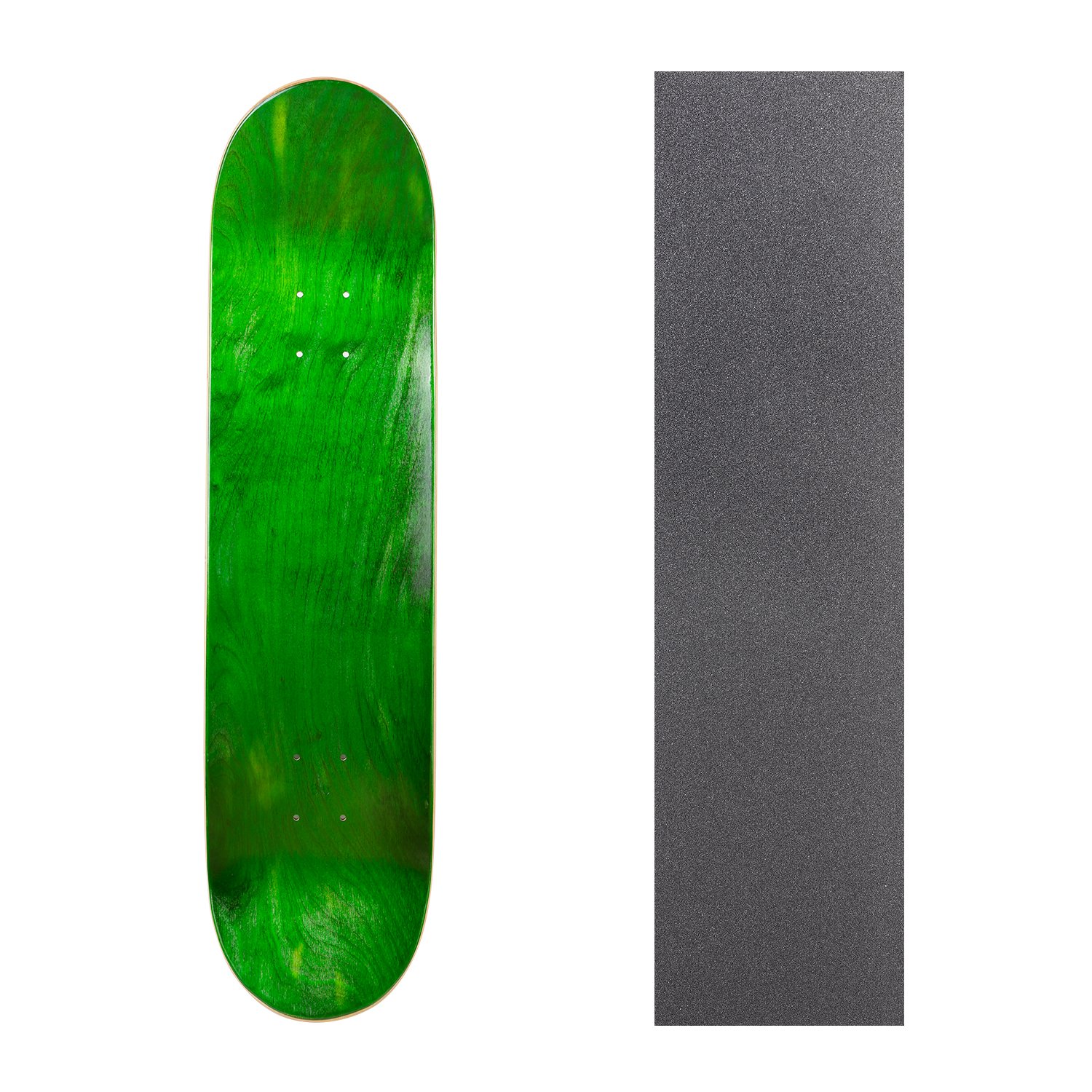
New skaters get sticker shock when they buy a deck and then realize they still need grip tape — the gritty sheet you stick on top so your shoes don’t slide. This Cal 7 bundles a sheet with the deck and ships in four widths: 7.75, 8.0, 8.25, and 8.5 inches. That span covers a smaller rider up through a bigger one, so you can pick a width that matches your shoe size instead of guessing.
The 8.25 inch version is the one most folks land on for a first proper deck. It’s a seven-ply Chinese maple build with a symmetrical popsicle shape and a medium concave — the side-to-side curve that helps your feet lock in. Blank means no graphic to peel off and no brand markup baked into the price, and the natural wood grain shows through the color finishes. It’s the kind of deck you learn on and don’t wince at when you scuff it.
Buyers are honest that this is an entry-level deck. Some find it sturdy and ride it into intermediate territory; a few note the grip tape doesn’t grab as well as name-brand tape, so you may want to leave a little extra texture rough when applying. There’s a small set who pop it and find less spring than a maple original. Apply the grip carefully and it does the job it’s sold to do.
The newcomer’s advantage: Four width options plus included grip tape means no second shopping trip and a deck sized to your feet.
Where to manage expectations: Grip and pop land in mixed territory — this is a learn-the-ropes deck, not a competition deck.
Reach for this if… you’re buying a first real skateboard and want one box with everything you need to get rolling.
Look elsewhere if… you need max pop on every trick and want a maple deck tuned by a skate brand.
3. Bamboo Skateboards Graphic Deck
A bamboo-and-maple hybrid built for spring off the tail, not just brute strength.
Bamboo Skateboards swaps some maple for a six-ply bamboo-and-maple hybrid, and the result is a deck that weighs 1.2 kg — noticeably lighter than the 1.59 kg Moose old-school deck. Bamboo flexes more than maple, and the maker claims it absorbs shock better, so the tail rebounds harder when you pop. Skaters shopping for more pop are drawn to this thing, and the pop is the single thing most owners call out as its strength.
It’s an 8 inch wide deck with a medium concave and a 99A durometer — the hardness rating on the material, where a higher number means a harder, snappier feel. The medium concave cradles your feet without over-locking them, so it suits everything from flatground to small transitions. Available in 7.75 x 31.5, 8 x 31.75, and 8.25 x 32 inch sizes, so the 8 inch version is the middle classic.
The honesty part: durability is where the conversation splits. Bamboo Skateboards claims these decks last weeks and sometimes months longer than maple, and most buyers report the plies holding up. But there’s a small group who fracture one within hours, which points to a bad hit on a particular trick rather than a weak design. Treat those as the outlier — most owners keep riding these well past the learning stage.
Why it springs: Bamboo flex and a lighter build give it the kind of rebound maple decks don’t offer.
The fairness check: A rare early fracture shows up, so don’t expect this to be bulletproof on the biggest drops.
Pull the trigger if… you love that springy pop off the tail and want a lighter board underfoot.
Give it a pass if… you want the stiffest, most predictable deck for heavy stair sessions.
4. Moose Old School Skateboard Deck

A wide, full-bodied cruiser deck with a big kicktail and old-school attitude.
Ten inches wide and 33 inches long, this is the widest deck on this list by a clear margin. A deck that wide gives you a stable, planted platform under your whole foot — perfect for cruising bike paths, rolling through a park, or carving turns. At 1.59 kg it’s the heaviest of the group, but that weight is part of the point: a big deck should feel substantial, not twitchy.
The old-school shape keeps the full body and modern concave the label promises, plus a large kicktail and a kicked nose. You get stability and control together, which is why it works both cruising and skating the park. The 7-ply natural-finish deck is 100% Canadian maple, and it’s built to take a beating — among owners, “sturdy” is the phrase that keeps coming up, with one rider noting it hasn’t snapped on them.
The one snag is grip tape. Some Moose boards arrive with the grip tape included in the box; others show up as deck-only, and that inconsistency trips up buyers. Check whether your listing includes it, and if it doesn’t, budget for a roll of your own. It’s not a dealbreaker, just a five-minute planning step.
Why it stands out: A 10-inch full body with genuine Canadian maple is a rare combo at this end of the market, and it’s a blast to cruise.
Check before you click: Grip tape inclusion varies by listing — confirm it or buy your own separately.
The right fit for… cruisers, bigger riders, and anyone who wants a long, wide, planted ride.
The wrong fit for… skaters chasing quick flip tricks, where a 10 inch deck is too much board to flick.
5. Mini Logo Detonator ’15’ Skateboard Deck

Eight and a half inches of park-ready maple, without the boutique price tag.
The Mini Logo Detonator gives you an 8.5 inch wide deck with a 32.08 inch length — a wider platform with a shorter, punchier feel. The wheelbase measures 14.375 inches, which is the distance between the trucks; a longer wheelbase like this adds stability when you land and make it easier to hold speed through a transition. The full nose and tail and K20 concave round out a shape made for riding ramps and bowls.
This is also a genuinely light deck at 2.5 pounds — lighter than the 3 pound CCS above. It comes out of Skate One’s AirLam press, where the plies are fused with a water-resistant, high-strength glue and sealed against moisture. That seal matters if you skate in damp weather or store your board outside; a dry core is a happy core.
One thing nobody tells you: grip tape isn’t in the box. The listing calls it a deck only, so you’ll need to buy or apply your own. Budget that time. The upside is that the deck is tuned and pressed like a competitive board but sold at a straightforward price, so you’re paying for wood quality, not a graphic.
Why the park crowd likes it
- 8.5 inch width gives a stable platform for bowls and ramps
- 14.375 inch wheelbase helps you land and hold speed
- Water-resistant, sealed construction protects the core
- 2.5 pounds keeps it light underfoot
What to plan around
- Grip tape is not included
- Narrower street skaters may find 8.5 inches too wide
- Shorter 32.08 inch length may feel cramped on tall riders
Commit to it if… you skate parks and ramps and want a wide, stable deck with a longer wheelbase.
Steer clear if… you skate flatground tech tricks and need a narrower board.
6. Powell Peralta Steve Caballero Robot 7-Ply Maple Deck
A classic pro graphic riding on a 7-ply maple deck built for real street skating.
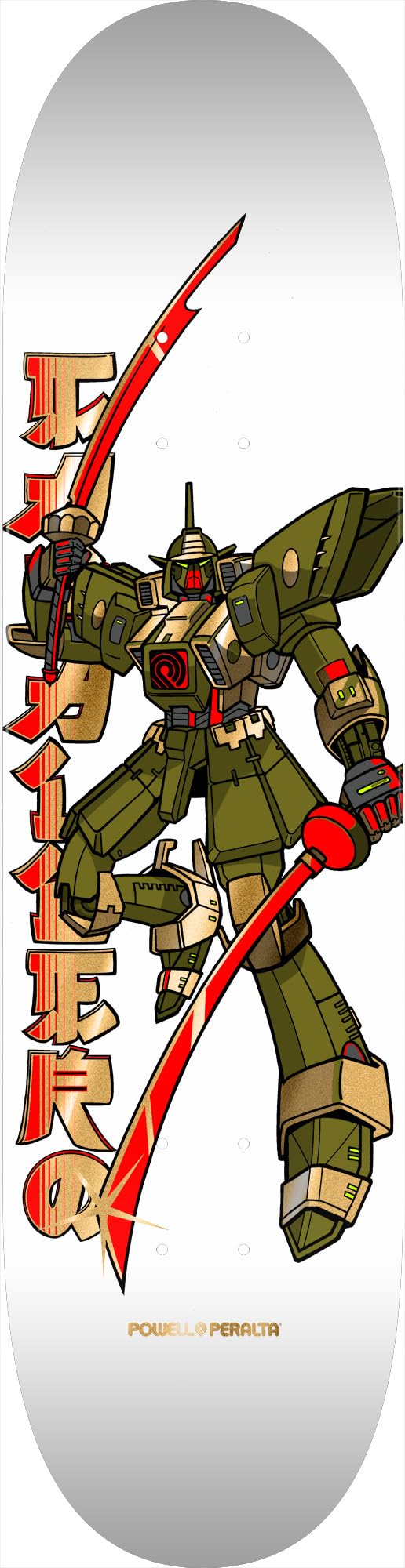
Powell Peralta has been a name in skateboarding for decades, and this Steve Caballero Robot deck brings a retro graphic to a modern 7-ply maple build. The seven plies give the same flex-and-stiffness balance you want from maple, and the 8.25 inch width is the go-to street size. It’s a shorter deck at 31.95 inches with a 14.25 inch wheelbase — a nimble setup for flatground popping and quick moves.
The shape is full nose and tail with a K20 concave, the same curve family as the Mini Logo above, which keeps your feet cradled on both ends. At 2.8 pounds it sits between the lighter Mini Logo and the heavier CCS, so it’s not a featherweight, but it’s not a brick either. If you like the idea of a known skate brand under your feet, this is a clean choice.
One catch: the listing is deck only, so griptape is on you. And because it’s a signature graphic, some riders buy two — one to skate and one to keep. That’s a personal call; the wood underneath is the working part.
Who it sings for: Skaters who want a street-ready 8.25 inch maple deck with a graphic worth showing off.
One thing to note: Deck-only listing means you supply the griptape.
Worth grabbing for… the rider who wants a modern maple deck with a classic Powell graphic.
Think twice if… you need grip tape in the box to get skating the same day.
7. SANTA CRUZ 8.8” x 31.95” Screaming Hand Skateboard Deck

A wider deck from a brand name most skaters already know, with among the most recognizable graphics in skating.
The Screaming Hand graphic is a piece of skate history, and it sits on an 8.8 inch wide deck with a 31.95 inch length. That extra width over the 8.25 decks gives you more room for your feet and more stability on landings, which suits bigger riders or anyone who rides ramps and bowl transitions. It’s built from 7-ply North American maple, so the wood itself is the kind serious skaters look for.
You buy this deck for how it holds up, not just how it looks. It feels solid in the hand and meets the standard you’d expect from a brand that has been making boards and apparel for over 40 years. The matte finish keeps the graphics looking sharp over time. It’s rated for a 220 pound load (the most weight it’s built to carry), so it’s strong enough for most adult riders.
Durability is where opinions vary. Most riders find it holds up, but a small group report it breaking on the second day of use — almost certainly a single hard impact, not a universal flaw. If you’re doing big drops, check your landings; if you’re cruising and hitting the park at moderate speed, it’s a solid deck.
The headline: A 8.8 inch North American maple deck with a graphic that makes the board feel like a statement.
The consideration: A rare early break shows up in the feedback, so size your tricks to the deck.
Pick it when… you want a wider, stable deck and a graphic you’ll be proud to flip.
Pass on it when… you need a narrow flip deck for technical trick work.
8. Baker Skateboard Deck (Black/White Logo, 8.25″)

A no-nonsense 8.25 inch maple deck from a street brand that keeps it simple.
Baker’s black-and-white logo deck is stripped back: an 8.25 inch wide maple board with a 31.88 inch length and 2.7 pounds of weight. The 8.25 inch width is the modern street standard — wide enough to feel stable on landing, narrow enough to flip. Maple wood gives it the stiffness you want for popping tricks, and the black-and-white graphic is the kind of clean look that doesn’t scream for attention.
It’s built for the skater who wants a well-known name under their feet without a busy graphic. The 220 pound load rating covers most adult riders, and at 2.7 pounds it’s in the same neighborhood as the Powell Peralta above. If you’re replacing an old deck and want something that feels familiar the moment you step on it, this is that deck.
One honest note: this is a deck only, no grip tape, and the listing is sparse on details like ply count and concave. That’s fine if you already know what you want, but if you’re still figuring out specs, the CCS or Cal 7 above are more informative. This one is for skaters who already trust the brand.
The case for it: An 8.25 inch maple deck from a brand street skaters know, with a clean black-and-white look.
The catch: Deck-only and light on published specs — best for someone who already knows their setup.
Buy it if… you want a straightforward street deck from a trusted brand name and you know your grip tape needs.
Look past it if… you need detailed specs before committing or want grip tape included.
9. Powell Peralta Andy Anderson Heron Flight Skateboard Deck

The lightest strong deck here, thanks to a fiberglass-and-epoxy Flight build.
Nine and a bit inches wide, 32.8 inches long, and only 2.9 pounds — that combination is the whole story. The Flight construction is thinner and lighter than a standard maple deck while still being strong, using U.S. hard rock maple, high-strength fiberglass, and epoxy resin fused in an AirLam press. That fiberglass-and-epoxy layup is what lets a 9.13 inch deck weigh only 2.9 pounds.
The Heron is an unusual shape: 9.13 inches wide with a 15 inch wheelbase, 6.8 inch nose, and 6.8 inch tail, and a K21 concave. That’s a wider, longer board than most street decks, and the longer wheelbase adds stability. It’s rated for a 250 pound load — the highest rating on this list — so it handles bigger riders or harder landings with room to spare.
The honest trade-off is durability. Most owners mention the Flight construction lasting well, but a few riders have had a deck fail sooner than the price suggests. That’s an outlier given how many skaters love the shape and pop, but it’s a fair warning at the premium end. Keep it off the biggest drops and it holds up over a long season.
The case for Flight
- 2.9 pounds despite a 9.13 inch width — lighter than most maple decks this size
- Fiberglass and epoxy build adds strength while trimming thickness
- 15 inch wheelbase and K21 concave give a stable, planted ride
- 250 pound load rating is the highest on this list
The fine print
- A rare deck doesn’t last as long as the price would suggest
- Wide 9.13 inch shape may feel like too much board for nimble street tricks
- Deck-only, no grip tape included
The standout: A lighter, stronger deck for the rider who wants a wide, stable platform and doesn’t mind paying for the Flight construction.
The caveat: If maximum long-term durability is your only metric, a standard 7-ply maple above is the safer bet.
Know the Specs
Ply Rating
Ply count is the number of wood layers glued together to form the deck. Seven plies of maple is the standard for strength and predictable pop; six plies of a bamboo-and-maple hybrid is lighter and flexes more. A higher ply count generally means a stiffer, more durable deck, but the wood matters as much as the number — a 7-ply Canadian maple and a 7-ply generic maple won’t feel the same.
Deck Width and Wheelbase
Deck width is measured across the widest point, and it’s the single biggest factor in how a board feels. Narrower decks (7.75 to 8.0 inches) flip faster; 8.25 inches is the all-round middle; 8.5 inches and up gives a stable platform for parks and cruising. Wheelbase is the distance between the truck mounting holes — a longer wheelbase like the 15 inch on the Heron adds stability, while a shorter one makes the deck feel quicker and more nimble.
Concave and Shape
Concave is the side-to-side curve of the deck, and it’s what keeps your feet locked in when you land. A K20 concave is a moderately deep curve that suits most riders; a K21 is slightly different in feel and suits the Andy Anderson shape. “Popsicle” describes a symmetrical deck with matching kicked nose and tail. An old-school shape, like the Moose, uses a full body with a large kicktail — more stable, less suited to technical flip tricks.
Grip Tape Inclusion
Grip tape is the gritty sheet stuck to the top of the deck so your shoes don’t slide off. Some decks ship with a sheet included, and some are deck-only. If the listing says “deck only,” budget for a roll of grip tape and a few minutes to apply it — bubbles and wrinkles are the enemy, so go slowly and press it down from the center outward.
Common Questions
What deck width should I get for a first skateboard?
Does a 7-ply maple deck last longer than a bamboo deck?
Do these skateboard decks come with grip tape?
What is a popsicle shape on a skateboard deck?
What does concave mean and does it matter?
Can a heavier adult ride these decks safely?
How long does a skateboard deck usually last?
Is a wider deck harder to do tricks on?
Do I need to buy new trucks and wheels for a new deck?
What’s the difference between the Moose and the Powell Peralta Flight deck?
The Bottom Line
Our pick for the best skateboard decks is the [CCS] Skateboard Deck. It gives you one deck for both street and park skating, thanks to 7-ply Canadian maple (seven thin layers of wood pressed together for strength) and a versatile 8.25 inch popsicle shape (the rounded, symmetrical board shape most skaters ride). Owners keep coming back to this wood quality. Want a wider, more stable ride for carving and bowls? The Santa Cruz Screaming Hand gives you 8.8 inches of North American maple and a graphic worth showing off. And if you want the lightest strong deck here, the Powell Peralta Andy Anderson Heron Flight packs a 9.13 inch platform and a 250 pound load rating into a 2.9 pound fiberglass-and-maple build. That build is genuinely different from everything else on this list.
How we choose
We do not accept paid placement. Every pick is matched to a real buyer and a real use-case; we do not hands-on test units.
Sources
Specifications: manufacturer listings and product documentation. Review insights: verified customer reviews, as of November 2026. Pricing: not shown on this page (it changes often); check the current price via the retailer link.
As an Amazon Associate, Tactical Gear Guy earns from qualifying purchases. This does not affect which products we feature.