Specs are compiled from manufacturer listings and verified buyer reviews and can change over time — please confirm the key details on the product page before buying.
Most “winter boots” keep your feet dry but make you look like you’re headed to a polar expedition — and the ones that actually look sharp tend to leak by February. The fix is a boot with a real waterproof membrane, not just a water-resistant coating, in a silhouette you’d wear into a coffee shop. That’s the shortlist below: nine men’s boots with genuine waterproofing and a look that won’t embarrass you downtown.
This guide is built by comparing the manufacturers’ published specifications and the patterns across verified customer reviews, so you get each pick’s real strengths and trade-offs instead of marketing spin.
You’ll see which uppers truly shed slush, which liners hold heat on a long commute, and where the fit runs narrow. Read on for the stylish waterproof winter boots for men that actually earn their place by the door.
Top Picks

How to Choose Winter Boots That Stay Dry and Look Sharp
The decision that matters most is waterproof versus water-resistant. Water-resistant means a finish that beads light rain and gives up in a puddle. Waterproof means a membrane or a sealed shell that keeps water out entirely — look for the word “waterproof” attached to the upper or shell. Every boot here is waterproof, not just water-resistant.
Membrane and shell: what actually blocks the slush
A waterproof nylon shell or a rubber duck shell is the outer wall that stops snow and street slush from soaking through. A seam-sealed construction means the stitching is taped too, so water can’t sneak in at the joins. If the listing only says “water-resistant,” treat it as a light-drizzle boot, not a snow boot.
Warmth: insulation weight and reflective liners
Insulation is measured in grams, and the number tells you how cold a boot is built for. A 200-gram boot handles a cold commute; a 400-gram boot is a deep-winter workhorse. Thermal-reflective liners bounce your own body heat back at you, while a removable felt liner can be pulled out to dry overnight.
Fit and the toe box
A narrow toe box pinches across the toes once you add a thick sock. A wider form gives your toes room to spread on a long walk. If a boot is described as running a full size small, size up rather than hoping it breaks in.
Side-by-Side Comparison
| Model | Best For | Waterproofing | Warmth Feature | Build | Amazon |
|---|---|---|---|---|---|
| Columbia Firecamp★ Best Overall | Everyday cold-weather wear | Waterproof construction | Low-bulk insulation | Lightweight multi-sport | Amazon |
| Sperry Coldbay Duck BootBest Look | Preppy daily wear | Waterproof upper | Thermal interior lining | Leather upper, rubber duck shell | Amazon |
| FREE SOLDIER Snow BootsBest Traction | Ice and trail traction | EVA waterproof shell, waterproof nylon upper | 3M insulation, graphene insole | Tall rubber sole, adjustable collar | Amazon |
| Columbia Burnsider Omni-Heat | The daily commute | Waterproof protection | Thermal-reflective Omni-Heat liner | Insulated hiking boot | Amazon |
| Kamik Greenbay 4 | Deep snow and shoveling | Waterproof nylon shell | 8mm Thermal Guard liner, rated to -40° Fahrenheit | Mid-calf, lace-lock collar | Amazon |
| The North Face Chilkat V | Cold-day hiking and daily walks | Waterproof construction | 200g of premium insulation | Lace-up snow boot | Amazon |
| KEEN Revel 4 Mid Polar | Wide-footed winter hikers | Waterproof, breathable protection | Thermal heat shield | Mid height, speed lace webbing | Amazon |
| Timberland Premium 6-Inch | Style that lasts seasons | Seam-sealed waterproofing | 400 grams PrimaLoft insulation | Goodyear welt, nubuck upper | Amazon |
| Duck Snow Boots (All-Day Comfort) | Work, walking, casual | Waterproof duck boot build | — | Duck boot silhouette | Amazon |
Detailed Reviews
1. Columbia Men’s Firecamp Boots
Our pick — 4.5+★ from 950+ verified ratings; the strongest balance of quality and price.
A lightweight cold-weather boot that handles mountain and downtown without looking like a snowmobile suit.
The Firecamp’s real strength is the pairing of waterproof construction with low-bulk insulation. Waterproof means the snow and slush stay on the outside, so your socks stay dry on a wet walk. Low-bulk insulation means warmth without a pillowy, oversized shell — the boot keeps a slim profile on your foot. That combination earns it the top spot: dry feet in a slim boot you can wear with jeans.
Columbia built this as a multi-sport boot, so it’s meant to go from a trailhead to a downtown sidewalk without a costume change. The lightweight build keeps your legs from dragging on a long walk, and the plush cushioning underfoot softens hard pavement. Reviewers single out the looks, with quality the most-cited strength and comfort close behind. Dryness is the other recurring theme; the review pages make clear that socks come out dry after a wet outing.
The honest limit is warmth. Low-bulk insulation is tuned for cold weather, not for standing still in bitter wind for hours — if that’s your day, a heavier liner serves you better. The boot’s thin feel is the trade-off for that light weight, and a few buyers who wanted a burlier snow boot will notice it. For commuting and errands, that light weight is the right trade-off.
What earns it the top spot
- Waterproof construction keeps socks dry through slush and wet walks
- Low-bulk insulation delivers warmth without a bulky shell
- Lightweight multi-sport build that goes trail to town
- Plush cushioning softens hard pavement on long days
- Multiple colors and sizes to match your wardrobe
Where it asks you to compromise
- Low-bulk warmth is not sized for hours standing still in deep cold
- Thinner feel than a dedicated heavy snow boot
Reach for this if: you want one boot that looks right on a city street and still shrugs off wet weather.
Pass it by if: your winter is long hours of standing in deep cold — a heavier liner will feel warmer.
2. Sperry Men’s Coldbay Duck Boot
A coastal classic duck boot that looks deliberate in wet weather, not dutiful.
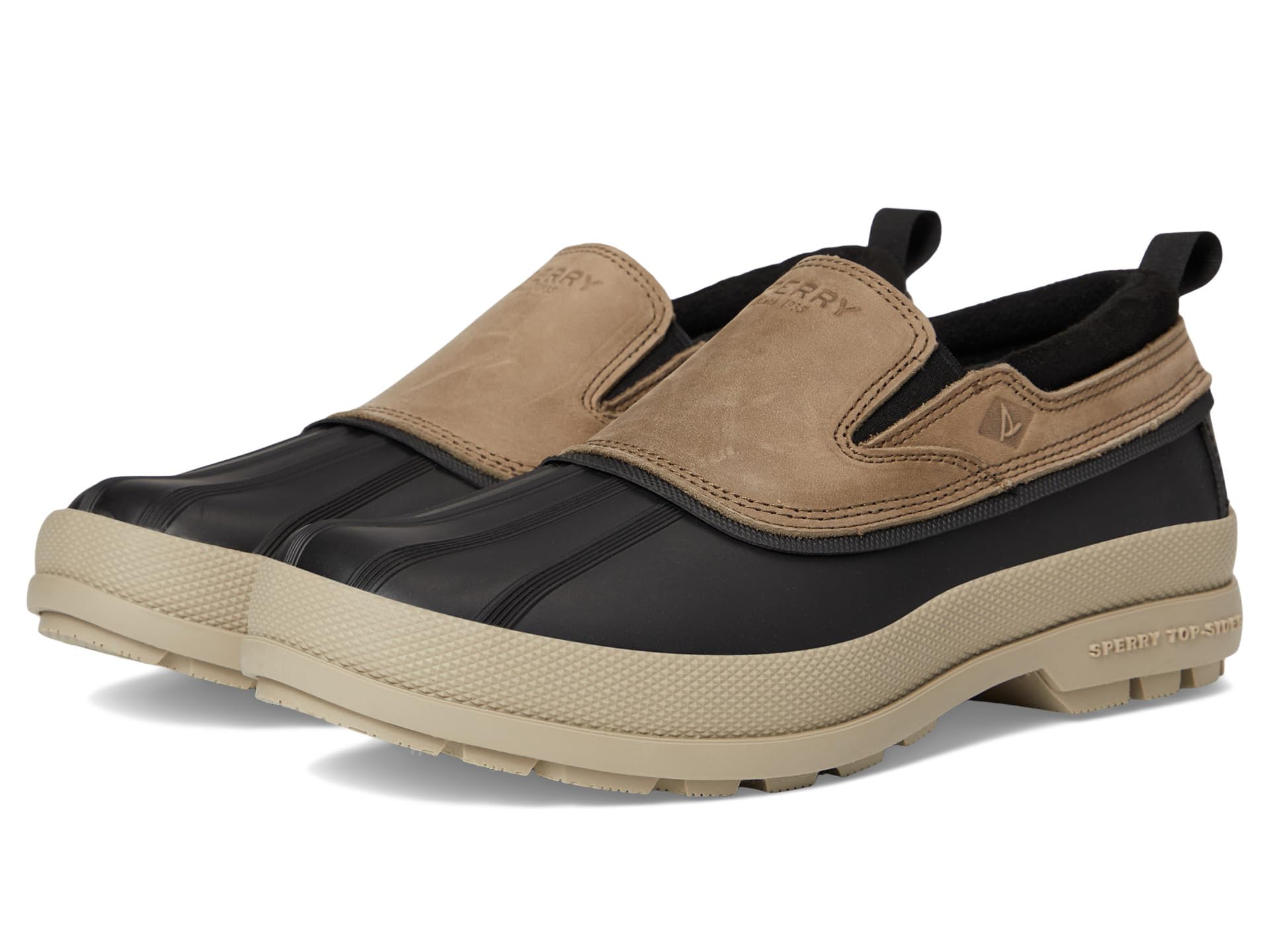
Sperry’s Coldbay is a duck boot in the traditional sense: a premium leather upper sitting on a classic rubber duck shell. The leather gives you the polished, preppy look you can wear with dark denim and a flannel or trousers and a sweater, and the rubber shell handles the wet ground underneath. The waterproof upper plus thermal interior lining is the working combination — water stays out, warmth stays in, and the higher cut shields your ankle from splash and wind.
The molded Wave-Siping outsole is the traction piece: the tread is shaped to grip changing surfaces so you’re not skating on wet pavement. This is the pick that makes the sharpest case for daily wear through fall and winter — it’s a boot that reads as style first. Build quality is the trait owners talk about most, and warmth and comfort land right behind it.
The follow-up question is fit. The toe box runs somewhat narrow, so if your foot is wide across the toes, plan to go up or look elsewhere. The weight is also real — 2.76 pounds per the package figure — so it’s not a featherweight like the Columbia above. Neither is a flaw; both are just what a leather-and-rubber duck boot costs you.
The style argument: a leather-over-rubber duck boot that pairs with denim and flannel or trousers and a sweater, backed by a waterproof upper, thermal lining, and a higher cut for splash protection.
Pick this one when: the look matters as much as the dry feet, and you want a duck boot that reads classic rather than technical.
Size up instead if: your toes are wide — the toe box runs somewhat narrow.
3. FREE SOLDIER Snow Boots for Men
The tall, grippy snow boot for the guy whose winter includes ice, driveways, and a shovel.
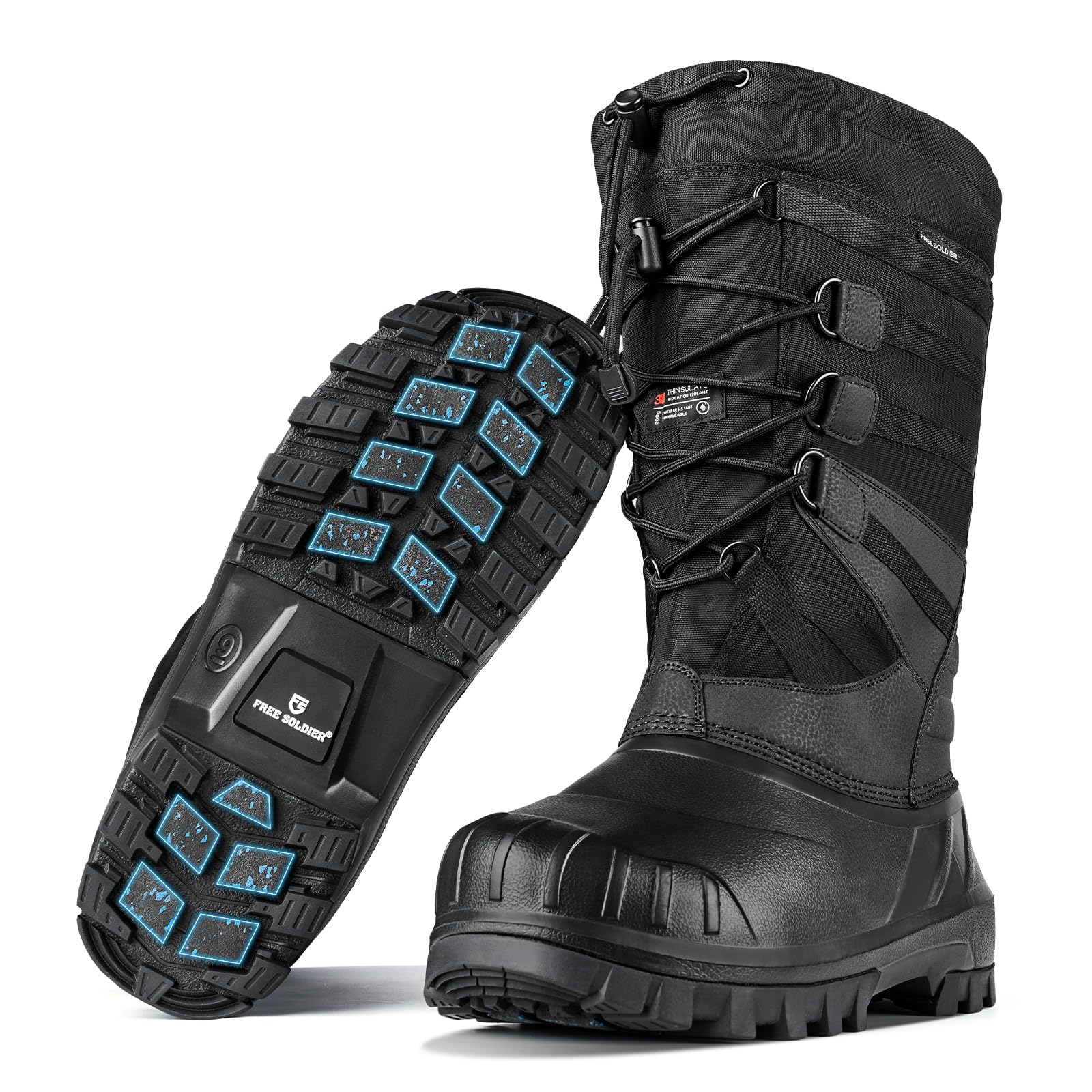
If the Columbia is the city boot, this is the one for the driveway on a freezing morning. The headline here is the Arctic Grip anti-slip sole — tiny cleats molded into the rubber that dig into ice so you’re not sliding on a slick path. The EVA waterproof shell sheds wind and snow, and the waterproof nylon upper keeps the wet out while standing up to wear and cold. Between the two, your foot is wrapped in a sealed layer from sole to shaft.
Warmth comes from a stack of layers: a graphene insole, 3M insulation cotton, and a removable thickened inner lining. The tall cylinder adds protection up the leg, and the adjustable collar and lacing let you dial the shaft in snug. It’s built for dog walking, snow plowing, ice fishing, and winter hiking — and the high cut is why it can handle that list.
The catch is sizing. The fit is genuinely split: some say it fits great, others report it running a full size too small. Read the size chart carefully and consider going up. Beyond that, the build quality and warmth are the traits that come up most, so the boot itself delivers — it’s the number on the label you have to get right.
Choose it for: icy driveways, snow plowing, and winter chores where grip and tall coverage matter most.
Watch the sizing: a full-size-too-small report is common, so order up or measure your foot first.
4. Columbia Men’s Burnsider Omni-Heat Infinity Hiking Boots
Built specifically to get you to the office dry and warm, without a trail-boot silhouette.
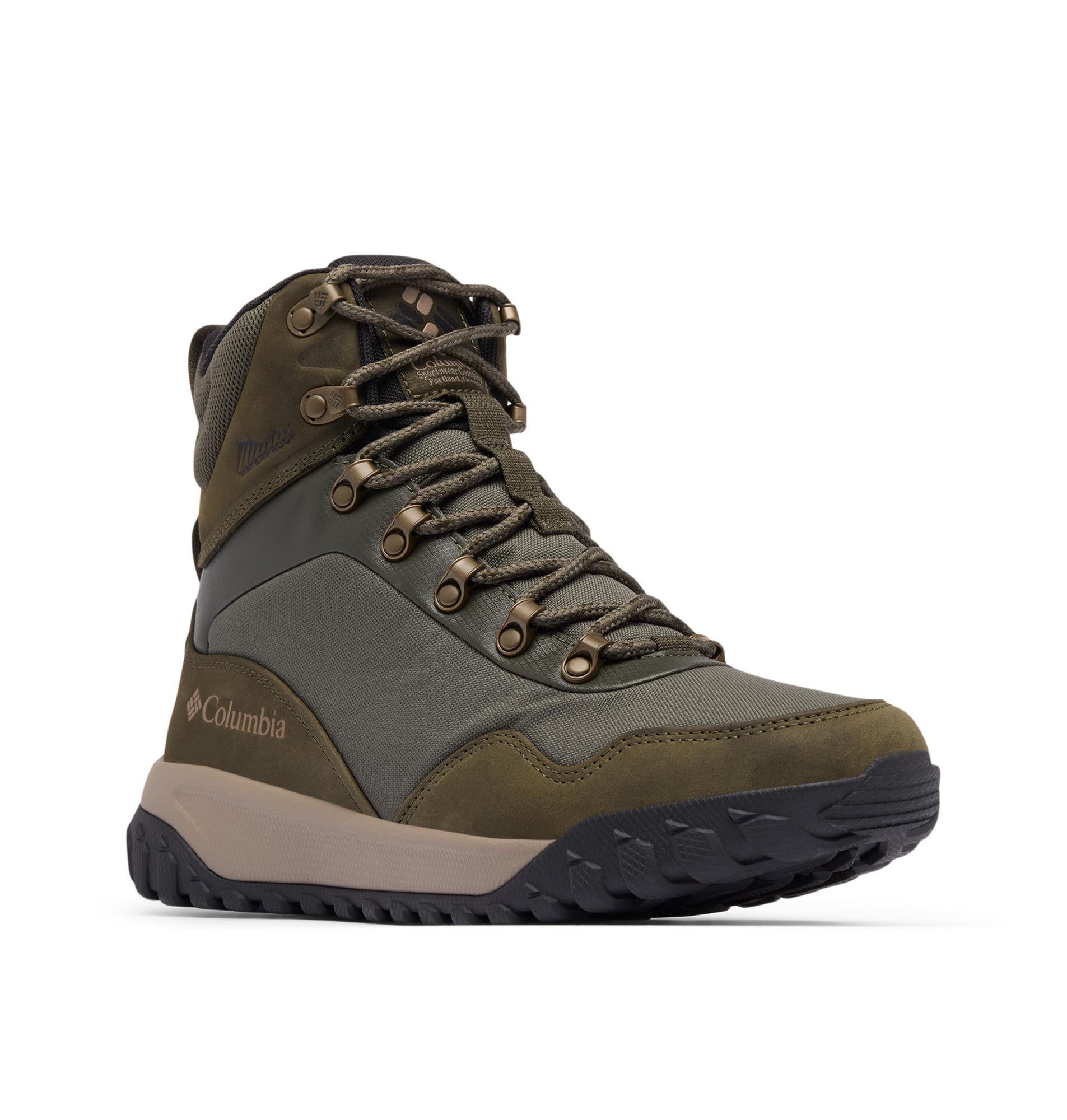
The Burnsider is a three-part answer to the winter commute: thermal-reflective warmth, waterproof protection, and comfort. The Omni-Heat Infinity liner is the reflective piece — it bounces your own body heat back toward your foot instead of letting it escape. That’s why the warmth reads as effective on a cold walk rather than just thick. The waterproof build handles the puddles and slush on the way to the train.
Fit is one of the traits that comes up favorably, so the boot sits close to true to size for most feet. The overall quality and the comfort underfoot are the recurring high points. It’s a hiking-boot shape, so it looks a little more technical than the Sperry — but it’s tuned for a daily commute, not a summit push.
The practical note: reflective warmth depends on your foot generating heat, so it rewards a walk over standing still. If you’re mostly stationary in the cold, a thicker insulated boot is the better call. For anyone moving through a winter morning, the balance is well judged.
The commute read: an insulated hiking boot with a reflective liner that returns your body heat, waterproof protection for slush, and a true-to-size fit — a genuinely practical daily driver.
It suits you if: your winter day is a walk to the train, a walk to the office, and back again.
Think twice if: you’ll be standing still outdoors for long stretches — reflective warmth needs you moving.
5. Kamik Greenbay 4 Men’s Waterproof Winter Snow Boots
The value king that shovels the driveway and looks fine on a slushy city street afterward.
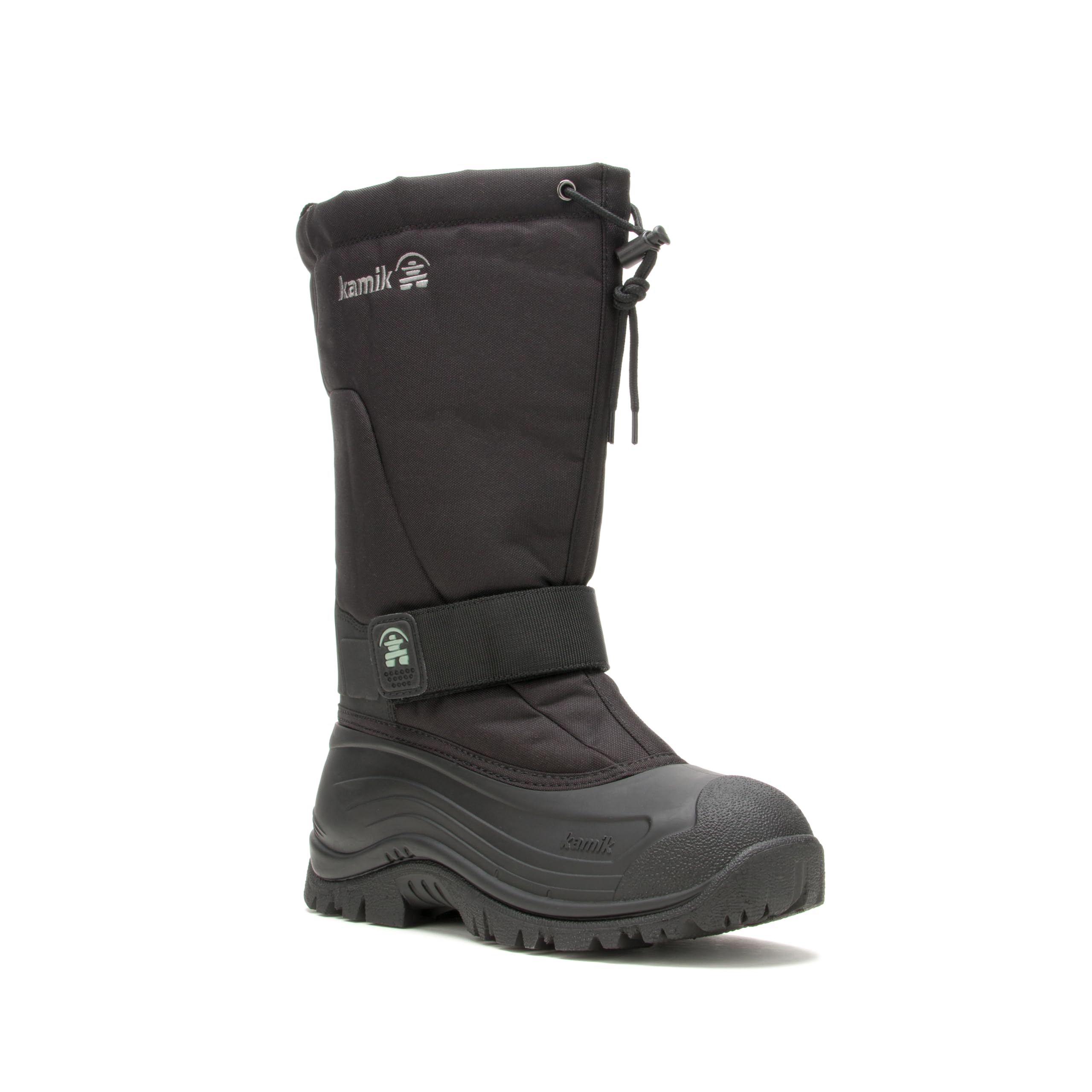
Kamik rates this boot to -40° Fahrenheit — that’s the number to hold onto. The 8mm Thermal Guard liner is thick and made from recycled materials, and it’s the reason the boot holds warmth in a real cold snap. The waterproof nylon shell keeps snow and slush off your foot, and the mid-calf cut adds coverage up the leg. For a boot in this price tier, that warmth rating is the standout.
The traction comes from a lightweight RubberHe shell and a high-traction outsole, and the adjustable snow collar with a bungee lace lock and a midfoot hook-and-loop strap cinch the fit around your leg and instep. That strap-and-lock arrangement is also why it slips on and off easily — a real plus when your hands are cold. The mid-calf cut and round toe keep the look casual rather than technical.
The recurring gripes are fit and long-term durability, so treat sizing as the care point and give the boot reasonable care. What makes it a value pick is the combination: deep-cold warmth, genuine waterproofing, and a comfortable slip-on fit for a comparatively modest outlay.
Why it wins on value
- Rated to -40° Fahrenheit for genuine deep-cold warmth
- 8mm Thermal Guard liner made from recycled materials
- Waterproof nylon shell keeps snow and slush off your foot
- Bungee lace lock and hook-and-loop strap for easy on-and-off
- High-traction outsole on a lightweight RubberHe shell
The honest caveats
- Fit is the most-discussed concern, so check the size carefully
- Durability opinions are mixed on long-term wear
The value play: -40° Fahrenheit warmth and true waterproofing for a modest outlay, with slip-on ease.
Mind the fit: it’s the recurring concern — measure first and pick your size deliberately.
6. THE NORTH FACE Men’s Chilkat V Lace-up Waterproof Snow Boot

200 grams of insulation in a lace-up snow boot built to keep cold days from reaching your toes.
The 200 grams of premium insulation is the defining spec — 200g is a cold-weather weight, enough to keep warmth in on a genuinely cold day without turning the boot into a heavy monster. The waterproof construction handles the wet, so snow and rain stay out. It’s a lace-up snow boot, so you can snug the fit down over the instep.
Owners put these through real winter use, from dirt and mud to creeks and light snow, and the boot handles that range without complaint. Lightweight is another recurring plus — the boot doesn’t feel like a brick on a long walk — and durability holds up over a season’s use. For a boot that sits at the higher end, the performance justifies the placement.
The question to ask is where you’ll wear it. The Chilkat reads as a technical snow boot, so it’s less of a dress-up option than the Sperry or the Timberland — this is the boot for cold walks and slushy errands, not a night out.
Cold-day read: 200g of premium insulation paired with waterproof construction makes this the boot you want on a genuinely cold, wet day; the lightweight feel keeps long walks comfortable.
It earns its place if: cold days and winter walks are your baseline and you want insulation weight you can feel.
Less so if: you need one boot that doubles as a dressier city shoe — this one leans technical.
7. KEEN Revel 4 Mid Height Polar Insulated Waterproof Boot
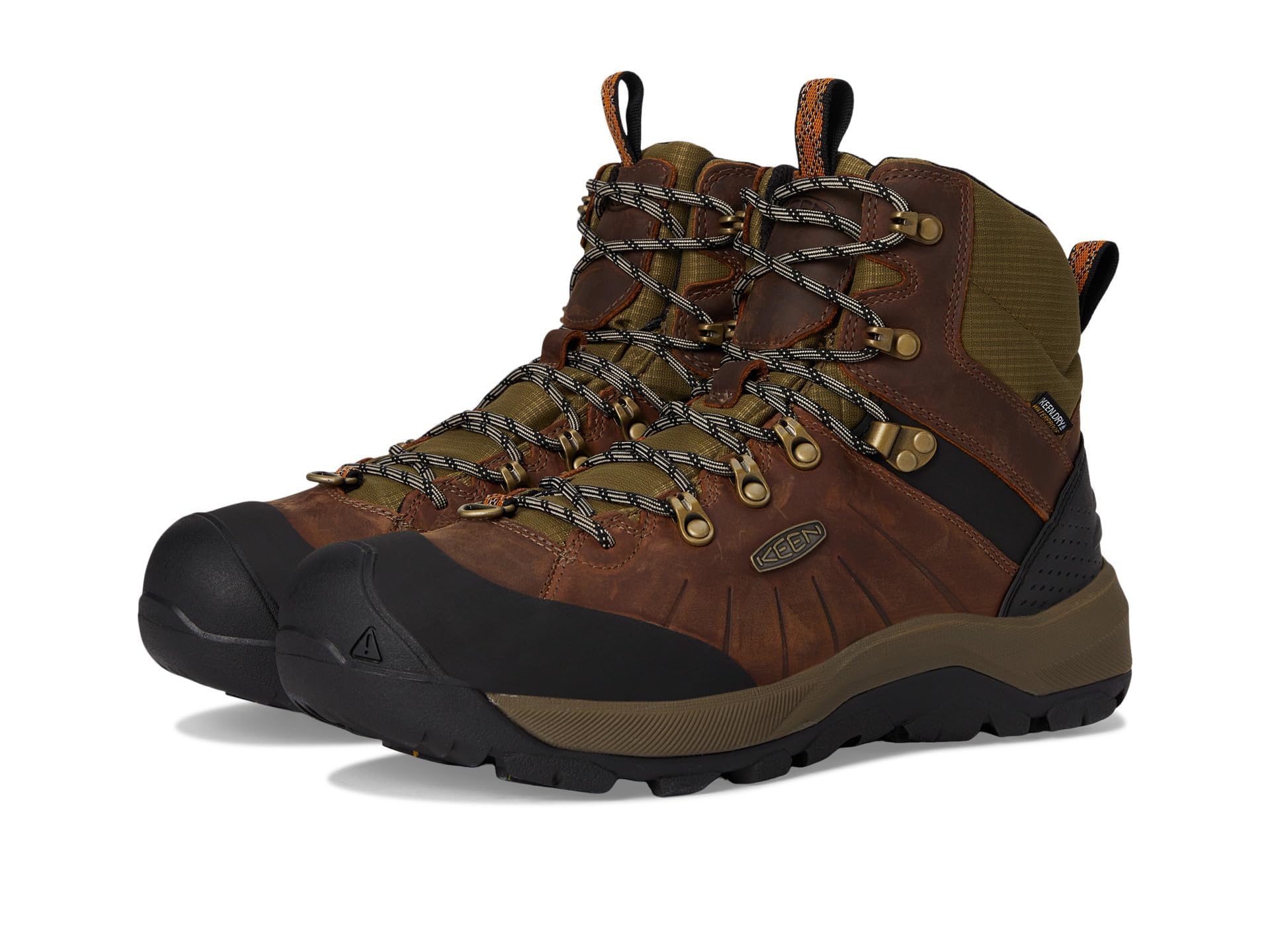
Built off KEEN’s wider form, with a thermal heat shield and breathable waterproofing for long winter miles.
KEEN builds its boots off a wider form, and that’s the reason to look here first if a narrow toe box has pinched you before. The waterproof, breathable protection is the other half — water stays out while the boot still lets your foot breathe, which matters on an eight-mile city walking day. Inside, a thermal heat shield captures warmth so your toes stay warm.
The fit is what buyers respond to most, ahead of warmth and comfort, so the wide form is doing the heavy lifting. The speed lace webbing system lets you cinch the boot quickly over the instep. It’s also built for snowshoeing and winter hiking, which is the use case the boot is tuned for.
The honest catch is longevity in one spot: the lace anchor is the reported weak point, and durability opinions split. Treat the lacing with care and it serves you well. It’s also a premium-tier boot, so you’re paying for the wide fit and the breathable waterproof build.
The wide-foot pick: KEEN’s wider form plus a thermal heat shield and breathable waterproofing for snowshoeing and winter hikes.
Handle the lacing gently: the lace anchor is the reported weak point, so a little care goes a long way.
8. Timberland Men’s Premium 6 Inch Waterproof Boot
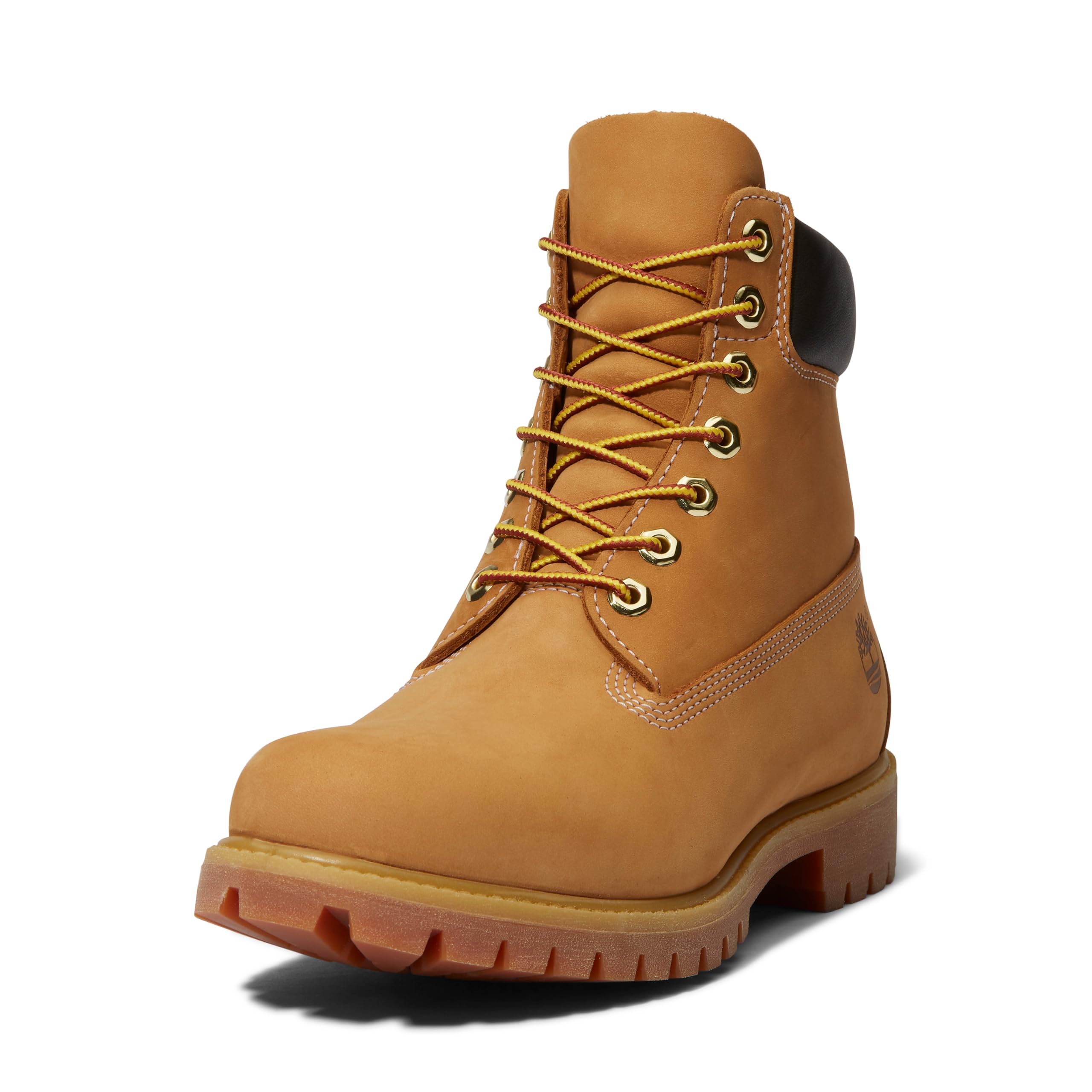
The boot that never goes out of style, with 400 grams of PrimaLoft inside a seam-sealed nubuck shell.
Four hundred grams of PrimaLoft insulation is the warmest number on this list, and it sits inside a seam-sealed waterproof nubuck upper. Seam-sealing means the stitching is taped, so the join lines are watertight — not just the panels. The 6-inch silhouette with a padded leather collar and rust-resistant hardware is the part that looks as good with dark jeans as it does with workwear.
The build is the other half of the story: direct-attached construction, triple stitching, and a Goodyear welt. Goodyear welt is a stitched construction that can be resoled rather than thrown away, which is why this boot is a long-haul buy. The anti-fatigue sole and the rubber lug outsole with 10% plant-based materials round out the daily-wear package. Appearance is a real driver here — owners note it never goes out of style — and quality is the most-cited strength of all.
Fit is the honest question. Some feet find it too wide, so if you have a narrow foot, try it before committing. Durability opinions also split — for a boot at this price, that’s worth knowing going in.
This one’s for: a long-haul buy where 400g PrimaLoft, seam-sealed waterproofing, and a resolable Goodyear welt justify the premium tier.
Try before you buy if: your foot is narrow — the fit has run too wide for some.
9. Men’s Waterproof Duck Snow Boots
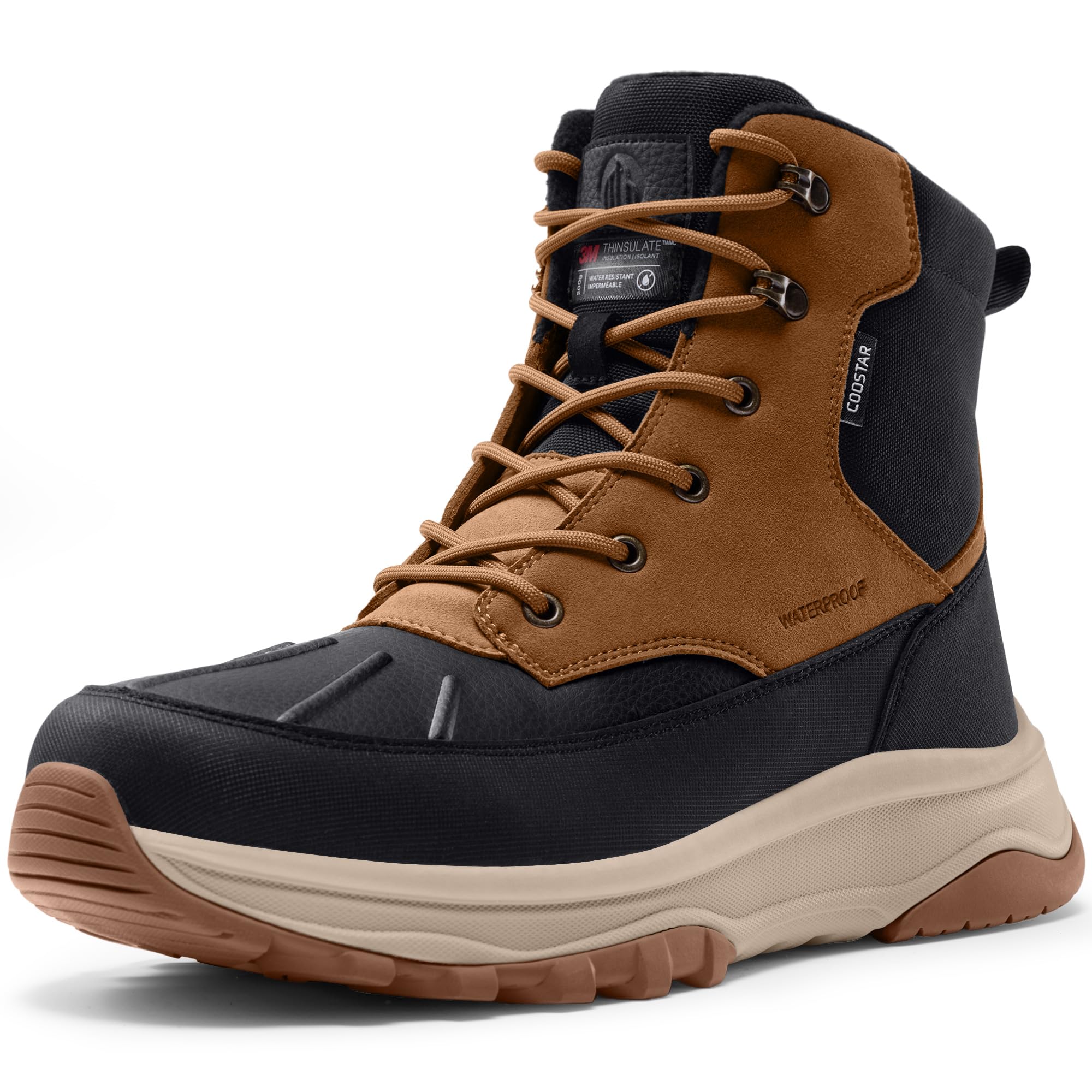
A no-frills waterproof duck boot for work, walking, and the quick trip out in bad weather.
This one keeps it simple. It’s a waterproof duck snow boot built for three jobs: winter work, walking, and casual wear. The duck-boot silhouette is the familiar rubber-lower-and-upper shape that sheds slush, and the waterproof build is honest about its limits — it keeps water off your foot, which is what you need on a wet walk to work.
You’re getting the essentials without the extras. There’s no listing of a specific insulation weight, liner, or outsole technology to report, so this is a straightforward dry-foot boot rather than a deep-cold specialist. If you want a guaranteed -40° Fahrenheit rating, look at the Kamik above instead. If you want the job done on a wet, cold, ordinary day, this covers it.
Think of it as the spare pair you keep by the door — the one you don’t mind getting muddy when you’re shoveling or running the dog out. The waterproofing is the point; the rest is simple, which is the whole appeal.
The simple take: waterproof duck-boot protection for work, walking, and casual wear, with no insulation spec or outsole technology detailed in the listing — a dry-foot boot, not a deep-cold specialist.
Good to have on hand: the budget dry-foot boot for wet work days and quick trips outside.
Not the one if: you need a rated deep-cold boot with a specified insulation weight.
Know the Specs
Waterproof vs. water-resistant
Waterproof means a membrane, sealed shell, or seam-sealed construction that keeps water out entirely; water-resistant only beads light rain and gives up in a puddle. Every boot on this list is waterproof. When you shop, the word “waterproof” attached to the upper or shell is what you’re looking for — not “water-resistant.”
Insulation in grams
Insulation weight tells you how cold a boot is built for. The Chilkat V runs 200g of premium insulation, and the Timberland Premium runs 400 grams of PrimaLoft — the higher the number, the deeper the cold it handles. A boot with no stated insulation weight is a dry-foot boot, not a cold-weather specialist.
Liners: reflective vs. felt
A thermal-reflective liner bounces body heat back at your foot, so warmth builds while you move. A removable felt liner like the Kamik’s 8mm Thermal Guard can be pulled out to dry overnight. Both keep warmth in — the difference is how you maintain them and how much heat they need from you.
Outsole and traction
A rubber lug outsole with deep tread grips packed snow and wet pavement. An ice-specific sole like the FREE SOLDIER’s Arctic Grip adds tiny molded cleats that bite into slick ice. On a wet city commute, a normal lug is enough; on a frozen driveway, the cleated pattern is what you want.
Common Questions
What’s the difference between waterproof and water-resistant winter boots?
Will waterproof boots make my feet sweat?
How warm is a 200g or 400g insulated boot?
What does it mean if a winter boot is rated to -40° Fahrenheit?
Do wide-footed men have a better option on this list?
Is a duck boot warm enough for snow?
What is a Goodyear welt and why does it matter on a winter boot?
Will these boots work for shoveling and ice fishing?
Should I size up in winter boots to fit thick socks?
The Bottom Line
For most guys, the winner is the Columbia Firecamp because it pairs genuine waterproof construction with low-bulk warmth in a light, city-friendly boot — the 4.5+ star crowd favorite among this set. If you want the sharpest look, the Sperry Coldbay wins on leather-and-rubber style. And if your winter is ice, driveways, and deep cold, reach for the Kamik Greenbay 4 with its -40° Fahrenheit rating, or the Chilkat V for 200g of insulation on cold-day walks.
How we choose
We do not accept paid placement. Every pick is matched to a real buyer and a real use-case; we do not hands-on test units.
Sources
Specifications: manufacturer listings and product documentation. Review insights: verified customer reviews, as of November 2026. Pricing: not shown on this page (it changes often); check the current price via the retailer link.
As an Amazon Associate, Tactical Gear Guy earns from qualifying purchases. This does not affect which products we feature.