Specs are compiled from manufacturer listings and verified buyer reviews and can change over time — please confirm the key details on the product page before buying.
You are standing at the register with a coffee in one hand and your phone in the other. The tap-to-pay terminal beeps, you walk out, and you never opened your wallet. That is what an NFC phone (near-field communication — the short-range radio that talks to a payment terminal or transit gate) is for. Every phone in this guide has NFC built in and confirmed in its own spec sheet, so none of them will leave you digging for a card at the counter.
This guide is built by comparing the manufacturers’ published specifications and the patterns across verified customer reviews, so you get each pick’s real strengths and trade-offs instead of marketing spin.
The list below runs from the foldable that swallows a whole tablet to the pocket-sized oddball that fits where nothing else will. Each entry tells you who it truly suits, and you can compare the whole field on the specs that matter most in my guide to the best smartphones with nfc.
Top Picks


How To Choose The Best Smartphones with NFC
Start with the thing you touch every day: the screen. A big AMOLED (a display type where each pixel lights itself, so blacks look truly black) panel is what makes a foldable feel like a small tablet and a normal phone feel like a window. Then work down to battery, camera and the network your carrier actually uses. The order matters — a gorgeous screen is useless on a phone that will not hold a signal on your network.
NFC is a spec you can verify, not assume
NFC sits in the same connectivity list as Bluetooth and Wi-Fi on a spec sheet, and that is exactly where you should look before buying. Every phone in this guide lists it; plenty of budget listings quietly leave it out. NFC is what turns your phone into a transit card, a hotel key and a tap-to-pay wallet, and it only works if the hardware is there.
Match the battery number to your day
Battery capacity in milliamp-hours (mAh — a measure of how much charge the cell holds) tells you roughly how long you can go between plugs. A 5,000 mAh phone is the everyday standard, while a 6,500 mAh cell in a gaming phone buys you noticeably more screen time. Charging wattage matters just as much, because a 100W charger (a measure of how fast power flows in) refills a big cell in far less time than a standard brick.
Check your carrier before you fall in love
Some open up phones are built for GSM networks like T-Mobile, Mint and Tello, and simply will not activate on Verizon. Others are built for all three major US carriers. Read the listing’s carrier note before you buy, because a phone that cannot make a call is not a bargain. The Nothing Phone (3), for example, needs Verizon to whitelist its IMEI before it will work on that network.
Side-by-Side Comparison
| Model | Best For | Battery (mAh) | Display | Camera | Amazon |
|---|---|---|---|---|---|
| Samsung Galaxy Z Fold8★ Best Overall | Big-screen multitasking | 4800 | AMOLED foldable | 10x digital zoom | Amazon |
| UMIDIGI G6 5GBudget Champion | Budget NFC basics | 5000 | 6.57″ 90Hz | 50MP main | Amazon |
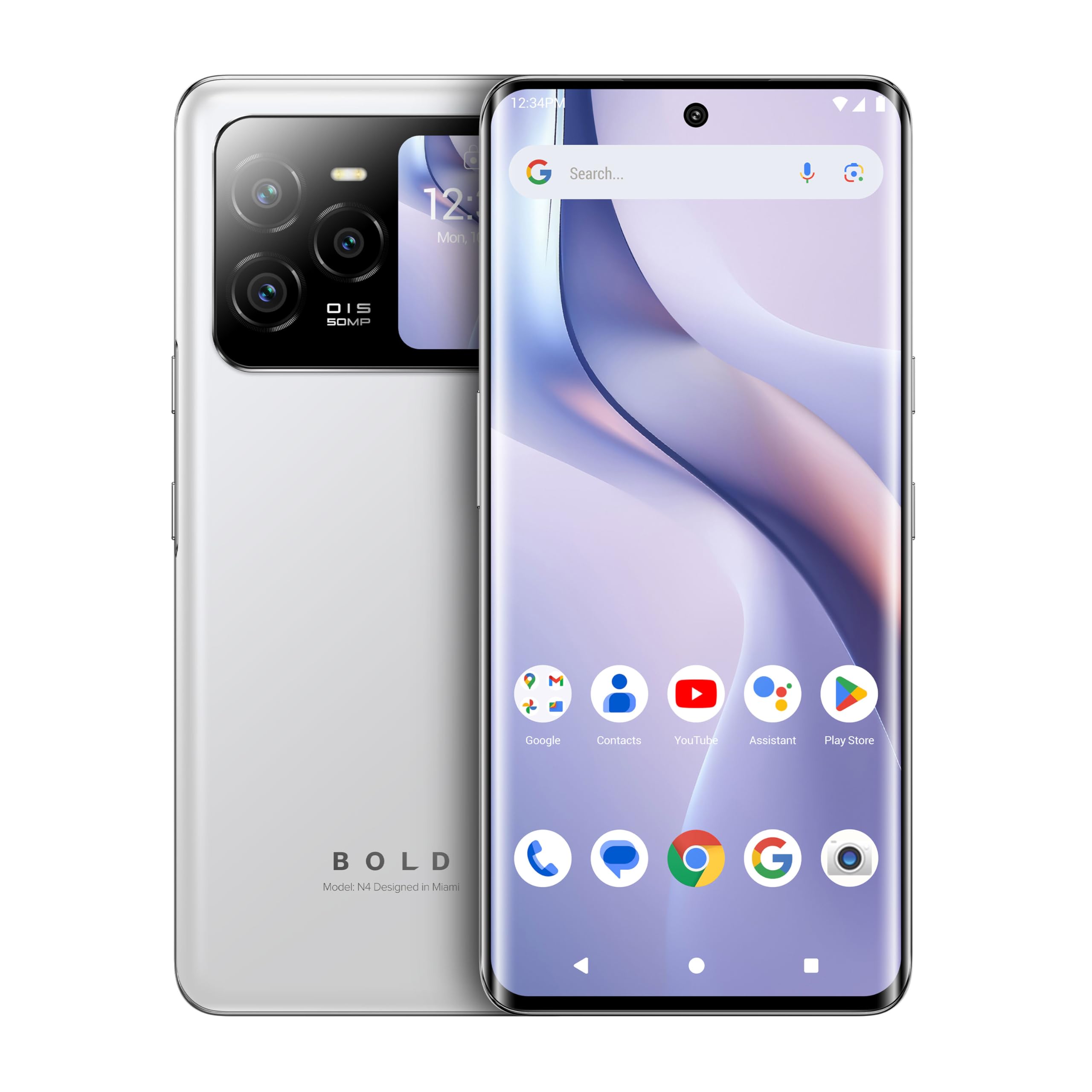
| BLU Bold N4 5GMost Versatile | Dual-screen value | 5000 | 6.78″ curved + 1.74″ rear | 50MP + 16MP selfie | Amazon |
| Samsung Galaxy A37 5G | Long-term security updates | — | 6.7″ Super AMOLED | 50MP triple | Amazon |
| XIAOMI Poco X8 PRO 5G | Gaming on a budget | 6500 | 6.59″ 120Hz | 50MP OIS | Amazon |
| Motorola Razr 2025 | Pocketable flip | 4500 | 6.9″ LTPO + 3.6″ external | 50MP | Amazon |
| XIAOMI Poco F8 PRO 5G | Flagship speed | 6210 | 6.59″ 120Hz AMOLED | 50MP + 50MP telephoto | Amazon |
| Nothing Phone (3) | Standout design | 5150 | 6.67″ 120Hz AMOLED | Four 50MP | Amazon |
| Unihertz Jelly Star | Tiny pocket carry | 2000 | 3″ | 48MP | Amazon |
| Google Pixel 10 Pro | Camera-first flagship | 4870 | 6.3″ Super Actua | 50MP, 100x Pro Res Zoom | Amazon |
Detailed Reviews
1. Samsung Galaxy Z Fold8 256GB
Our pick — 4.5+★ from 100+ verified ratings; the strongest balance of quality and price.
A phone that unfolds into a book-sized screen and still folds flat into your pocket.
The Galaxy Z Fold8 covers two jobs with one device. Unfolded, the AMOLED (self-lit pixel) screen makes movies and books feel bigger than a normal phone ever will. Folded, it behaves like a regular handset for texting and one-handed scrolling. Samsung calls it the world’s lightest fold, and weight is the classic reason people put a foldable back on the shelf.
Inside sits a 4800 mAh battery, which Samsung describes as long-lasting enough for hours of entertainment, paired with Super Fast Charging 2.0 to get you moving again. The digital wallet is the NFC highlight: cards, boarding passes and digital IDs all live behind a single swipe up, so the payment terminal never sees you fumbling. Super Steady Video with Horizontal Lock keeps handheld footage level, which is genuinely useful when you are filming on the move.
The honest catch is durability culture, not the hardware. A folding hinge and a soft inner screen ask more care than a slab phone — no keys in the same pocket, no tossing it onto a table. And with 100+ ratings behind its 4.5+ star score, this is a well-liked phone rather than the most-reviewed one here; the Pixel 10 Pro carries more ratings. If you want the biggest screen you can carry and you treat your gear carefully, the Fold8 is the pick.
Foldable screen appeal
- Two screens in one: a tablet-sized AMOLED view that folds down to handset size.
- NFC wallet holds payment cards, boarding passes and digital IDs behind one swipe.
- Super Fast Charging 2.0 keeps a 4800 mAh cell topped up between sessions.
- Horizontal Lock steadies handheld video so clips stay level.
Crease and bulk
- A hinge and an inner display want gentle handling, not a jammed pocket.
- Premium-tier cost puts it at the top of this entire list.
- Fewer ratings than the Pixel 10 Pro, though its average score is higher.
Big-screen multitaskers: anyone who reads, streams or works on their phone and would happily trade a little care for a much bigger canvas.
Pocket-space purists: you want a phone you can drop in a bag with keys and forget about.
2. UMIDIGI G6 5G — Dimensity 6100+, 12+128GB, Android 13
The entry-level NFC phone that keeps going long after the others want a charger.
Look at the battery figures and this is the value play of the whole article. UMIDIGI lists 365 hours of average battery life and 35 hours of talk time from a 5000 mAh cell (a measure of battery capacity). Compare that with the Samsung Galaxy A37 5G’s 10 hours average and 27 hours of talk time and the gap is enormous — the UMIDIGI stretches a single charge across days of light use, while the A37 leans on overnight charging. For a second phone, a glovebox spare, or a kid’s first handset, that is a real advantage.
The rest of the package is sensible for the tier. The 6.57-inch 90Hz display (90 refreshes per second, so scrolling looks fluid rather than strobe-like) is easy on the eyes over long sessions. The 50MP main camera uses four-in-one pixel blending to pull in more light, and there is an 8MP front shooter plus a 5MP infrared night-vision mode for dark rooms. NFC is confirmed in the spec sheet, and a dedicated Express Key can be reprogrammed to launch whatever you use most. It weighs 183g and is 8.3mm thin, so it slips into a pocket without a bulge.
Battery that lasts: value is the headline every time — owners consistently describe this as a lot of features for an entry-level outlay, and the camera gets compared favorably to far pricier gear.
Dim camera night: speed and build feel land in the middle of the road. The Dimensity 6100+ chipset is built for balance rather than pace, so heavy gaming will show its limits. This is a phone for calls, payments, photos and browsing — not a performance machine.
Budget 5G seekers: battery endurance means more to you than benchmark scores, and you want NFC on a budget.
Night-photo fans: you plan to play demanding games or need a flagship-grade finish.
3. BLU Bold N4 5G — 6.78″ Curved Display + 1.74″ Rear Display
Two screens on one slab: a big front canvas and a tiny rear window for selfies.
Most phones give you one display. The Bold N4 gives you a 6.78-inch curved main AMOLED screen at 2340×1080 for streaming and gaming, plus a 1.74-inch rear screen that handles quick selfies, message previews and music controls without opening anything. That rear window is a genuinely useful trick for framing a shot with the main camera instead of the 16MP front sensor.
Under the hood there is 512GB of storage and 8GB of RAM, which is plenty of room for a photo library and a few games. NFC is confirmed for tap-to-pay, and you get both face open up and a fingerprint reader. The 5000 mAh battery covers a normal day, and the 5G radio is GSM-only — it works on T-Mobile, Metro PCS and similar networks, but it does not support AT&T, Cricket, Verizon or Sprint. That carrier note is the single biggest thing to check before you buy.
Functionality is what this phone is loved for — the daily stuff, done reliably, without fuss. Value runs a close second, and the display and camera both earn steady praise, including low-light shots that come out brighter than the price tier suggests. Reliability and battery life draw more mixed feelings, and connectivity complaints line up with the GSM-only limitation above. The trade is simple: you get a huge storage number and a second screen, and you accept a single-carrier-family reality.
Curved-screen curious: you are on T-Mobile or a GSM network and want big storage plus that rear-screen selfie trick.
Long-term updaters: you are locked to Verizon, AT&T or Cricket — this phone will not activate there.
4. Samsung Galaxy A37 5G — 128GB, AMOLED, IP68
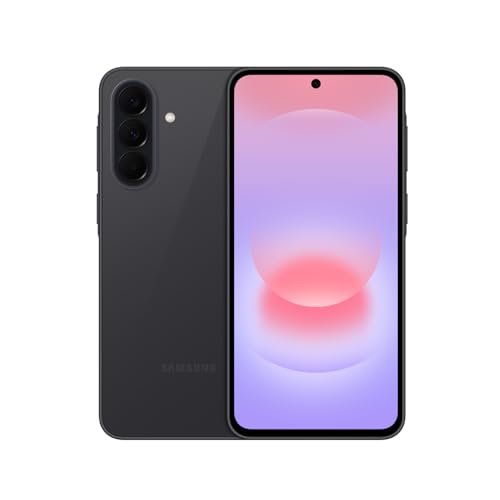
The mid-ranger you can hand down in six years and still find supported.
Samsung’s pitch here is longevity, and it is written right into the spec sheet: 6 OS upgrades and 6 years of security updates. That is the number that separates the A37 from every other mid-range phone on this list — the UMIDIGI and the Poco phones will be frozen in time while the A37 keeps getting patched. If you keep a phone for years or pass it to a family member, this is the single most valuable line on the page.
The 6.7-inch Super AMOLED display (a screen type that is bright and detailed) is easy to read outdoors, and the triple camera leads with a 50MP HDR main sensor (high dynamic range, which balances bright and dark areas) plus a studio-grade front camera. Nightography handles low-light shots automatically, so you are not fiddling with settings at a birthday party. IP68 means it is rated water-, dirt- and dust-resistant (a standard rating for protection against elements), which is confidence you rarely see at this tier. NFC is confirmed, and the Exynos 1480 chipset (the phone’s processor) keeps apps and games moving smoothly.
Where owners split is endurance. Samsung lists 27 hours of talk time but only 10 hours of average battery life, and that average-versus-talk-time gap is exactly what you feel on a long day out — the UMIDIGI’s 365-hour average sits at the opposite extreme. Power users should plan a midday top-up with Super Fast Charging 2.0. For everyone else, the durability rating and the six-year support window make this the sensible long-haul choice.
Bright AMOLED panel: six years of updates turns a mid-range purchase into a long-term one, and IP68 plus the AMOLED screen round out a genuinely durable package.
Modest chip speed: heavy users will notice the 10-hour average battery figure and want a charger within reach.
Everyday midrange users: buyers who want one phone to last through several years of Android versions without a replacement cycle.
Heavy gamers: you routinely push 10+ hours of screen time away from a power outlet.
5. XIAOMI Poco X8 PRO 5G — 256GB + 8GB, 6.59″ 120Hz AMOLED

A 120Hz screen and a 6500 mAh cell for people who game until the battery begs.
The battery is the headline: 6500 mAh (typical), which is a larger cell than the Galaxy Z Fold8’s 4800 mAh and the Motorola Razr 2025’s 4500 mAh. Pair that with 100W HyperCharge and a long gaming session ends with a fast refill rather than an overnight wait. Reverse charging at up to 27W even lets the phone top up earbuds or another handset from its own reserves.
The 6.59-inch 1.5K AMOLED hits 120Hz for fluid motion and a 2756×1268 resolution for sharp text. Peak brightness is listed at 3500 nits, which is what lets you read a map in direct sun. The Dimensity 8500-Ultra chip runs on a 4nm process with cores up to 3.4GHz, and a touch sampling rate that hits 2560Hz in Game Turbo mode means taps register almost instantly under your thumb. A 50MP main camera with optical image stabilization (OIS — a physical shake absorber for the lens) keeps handheld shots steady. NFC is confirmed.
Owners describe this as a solid mid-range pickup with quality as the defining trait — build feel and screen are what people talk about most, and value follows closely. The honest limitation is regional: this is a T-Mobile, Mint and Tello phone for the US market, and it needs an already-activated SIM. No microSD slot either, so the 256GB is your ceiling. Outside the US it works on any GSM carrier.
Smooth-scroll fans: you are on a T-Mobile-family network and want a big battery plus a fast screen for games.
Low-light photographers: you are on Verizon, AT&T or CDMA, or you need expandable storage.
6. Motorola Razr 2025 — 8/256GB, 50MP, Pantone Parfait Pink

A flip phone that folds shut into a square and still runs your apps on the outside.
Unlike the Galaxy Z Fold8, which unfolds into a tablet, the Razr folds down into a compact square that disappears into a front jeans pocket. Closed, a 3.6-inch external display lets you read messages, snap selfies and control music without opening the phone. That external screen is the practical magic here — the thing owners reach for dozens of times a day without thinking.
Opened up, the 6.9-inch LTPO main display runs edge to edge with a billion shades of color validated by Pantone, and the 413 pixels per inch keeps text crisp. The hinge plate uses titanium for extra strength, and the 50MP camera works with moto ai to clean up shots in tough light. A 4500 mAh battery is paired with 30W TurboPower charging, and Motorola lists it as over a day of use. NFC is confirmed for tap-to-pay, and it takes a physical SIM or eSIM.
Build quality is what people rave about most with this generation — the flip feel and the finish are what get described again and again. Value and looks round out the praise, with the Pantone colorway getting a lot of compliments. The honest trade-off is a folding screen, because glass that bends is glass that wants care. Screen durability and general longevity show up in the conversation, so treat the inner panel kindly and the Razr rewards you with the most pocketable big-screen phone here.
Style-first flippers: the fold-flat form factor and the outside screen that handles the small stuff.
All-day power users: you want a slab phone you can treat roughly for years without thinking about it.
7. XIAOMI Poco F8 PRO 5G — 256GB + 12GB, Snapdragon 8 Elite

Flagship silicon in a mid-tier shell: the Snapdragon 8 Elite runs on a 3nm process.
The Snapdragon 8 Elite is the story here. A Snapdragon 8 Elite built on a 3nm process, with two prime cores up to 4.32GHz and six performance cores up to 3.53GHz, puts this phone’s engine in a different league from the Dimensity 6100+ in the UMIDIGI. That translates to apps that open instantly and games that hold their frame rate. It is a performance-led machine, not a spec-sheet novelty.
The 6.59-inch AMOLED display runs 2510×1156 at up to 120Hz with 3500 nits of peak brightness, and a 2560Hz instant touch sampling rate in Game Turbo mode. The camera array pairs a 50MP main sensor with a 50MP telephoto at a 60mm equivalent focal length — real optical reach, not just a digital crop. A 6210 mAh battery feeds from a 100W HyperCharge brick, and there is up to 22.5W reverse charging. NFC is confirmed in the spec sheet, and Bluetooth 5.4 plus Wi-Fi 6 handle the wireless side.
Two things to weigh. The first is the same T-Mobile, Mint and Tello US reality as the other Poco phones here, with an activated SIM (a small card that connects you to a carrier) needed before it will run. The second is storage: no microSD slot (a slot for extra memory cards), so the 256GB is what you live with. If those do not bother you, this is the fastest phone in this article and among the most capable cameras at its tier.
Snapdragon 8 Elite speed: the Snapdragon 8 Elite and 100W HyperCharge combination keeps a heavy workload humming without a long charge break.
No wireless charging: 256GB fixed storage and a carrier list that stops at the T-Mobile family.
Performance chasers: frame rate and app speed are your top priorities and your carrier is T-Mobile-family.
Wireless-charge loyalists: you need Verizon support or you shoot video faster than 256GB can hold.
8. Nothing Phone (3) 512GB

A phone whose back lights up when your NFC tap goes through.
Nothing’s Glyph Matrix turns the back of the phone into a small light show. When an NFC payment triggers, an animation pulses on the rear panel so you know the terminal read it. That is not a gimmick you will get from the UMIDIGI or the Bold N4 — it is a real feedback loop that tells you the tap worked without staring at the screen. Notifications speak in light as well as sound, and the Glyph Button launches its own small toolkit.
Under the glass sits a Snapdragon 8s Gen 4 chip built on a 4nm process with a 3.2GHz CPU, backed by LPDDR5X RAM and UFS 4.0 storage for quick loading. The 6.67-inch FHD+ AMOLED runs 1.07 billion colors at 120Hz adaptive refresh, and Nothing lists peak brightness at 4500 nits, 460 PPI for sharpness and a 1000Hz touch response rate. Four 50MP cameras — main, periscope, ultra-wide and front — cover the camera side, and the 5150 mAh battery runs all day. IP68 gives it dust and water protection.
What people notice first is the design and the sheer uniqueness; functionality and battery life get called out as the practical wins, with the 5150 mAh cell lasting a full day on a charge. The camera performs well, especially in the standard range. The caveat is network handling: on Verizon the IMEI must be whitelisted through their customer service before activation, and Nothing itself says it does not recommend the network. On AT&T and T-Mobile it works from the start.
Design-forward users: you are on AT&T or T-Mobile and want a phone that stands out in a row of black rectangles.
Carrier-deal hunters: you are on Verizon — the whitelisting step is a real friction point.
9. Unihertz Jelly Star

A 3-inch phone with a see-through back and a notification light that pulses in your pocket.
There is no other phone on this list shaped like the Jelly Star. It crams a 3-inch display, an octa-core 6nm MediaTek Helio G99 chip, 8GB of RAM and 256GB of storage into a body that disappears into any pocket. The transparent rear panel and LED notification light make it look like a piece of tech jewelry, and the whole thing runs Android 13 with NFC for tap-to-pay.
For all that smallness, the feature list reads longer than its frame: a programmable button, a 3.5mm headphone jack, dual nano SIM slots, an infrared port, USB OTG support, FM radio, GPS and fingerprint open up. A 48MP main camera sits on the back. NFC is confirmed in the spec sheet, and it works with Google Pay as well as tap-to-pay terminals, so the tiny size does not cost you the contactless convenience the rest of this list is built around.
What owners adore is the pocketability and the sense of fun — it fits where no modern phone fits and it is genuinely enjoyable to use, a throwback to the era when phones were small and playful. The 2000 mAh battery is the figure to respect, because it will not last like the 6500 mAh cells elsewhere here, and the small screen size will feel cramped to anyone used to a 6-inch panel. Carrier support is T-Mobile and Verizon only, with a setup step for Verizon.
Tiny pocket size: the transparent design, LED notifications and true one-hand size make it a pocket companion like nothing else in this article.
Cramped keyboard: a 2000 mAh cell and a 3-inch screen mean short sessions, not long marathons.
Minimalist phone users: a second phone, a travel handset or anyone who wants a genuinely pocket-sized device with real NFC.
Media-heavy users: you watch video or game on your phone for hours.
10. Google Pixel 10 Pro — 128GB, Gemini, Obsidian

The camera-first flagship with the most reviews and the most loyal camera fans in this list.
If you buy a phone for its camera, the Pixel 10 Pro makes the strongest case here. A 50MP main sensor works with Google’s AI models to pull detail out of dim scenes, and 100x Pro Res Zoom reaches further than the 10x digital zoom on the Galaxy Z Fold8 or the Motorola Razr 2025. Super steady 8K video and 50MP stills mean you carry a serious camera in a 6.3-inch slab. The Tensor G5 chip handles the AI work behind the scenes.
The 6.3-inch Super Actua display hits 3300 nits of peak brightness, which is exactly what you need to read a text at noon on a sunny sidewalk. It is built with aluminum and Corning Gorilla Glass Victus 2 for scratch and drop resistance. A 4870 mAh battery backs up the 24-hour average life and 21.14-hour talk time figures. It is open up for all major carriers — Google Fi, Verizon, T-Mobile and AT&T — which is more flexibility than the T-Mobile-only Xiaomi picks or the Unihertz Jelly Star offer. NFC is confirmed for tap-to-pay.
Quality is what people praise most about this phone, and the camera output gets noticed right behind it — owners consistently talk about photos and videos that look better than expected. Battery life and value draw a more mixed reaction, with users split on whether the endurance matches the rest of the package. It also costs more than every other pick here, so the question is whether the camera and the AI features justify the premium for you. If they do, this is the most complete phone in the article.
Gemini AI smarts
- 50MP main camera with Tensor G5 AI processing makes difficult light look easy.
- 100x Pro Res Zoom reaches farther than any other zoom on this list.
- 3300-nit display stays readable in direct sun.
- Works on every major US carrier, unlike several Xiaomi and Unihertz picks.
Premium price tag
- Premium-tier price — the highest of the group.
- Battery life divides opinion among users.
- 128GB storage is the smallest base capacity here.
Camera-first buyers: photographers, content creators and anyone who wants a carrier-agnostic phone with the sharpest camera on the list.
Budget-conscious shoppers: your budget is fixed or you need more than 128GB of built-in storage.
Know the Specs
Battery capacity in mAh
Battery capacity is measured in milliamp-hours (mAh), which tells you how much charge the cell can hold. A bigger number means more hours between plugs. The UMIDIGI G6’s 5000 mAh and the Poco X8 PRO’s 6500 mAh sit at opposite ends of this list, with the Razr 2025’s 4500 mAh and the Jelly Star’s 2000 mAh filling the smaller end. Match the figure to your routine: a commuter can live with 4500 mAh, while a long-haul traveler wants the extra headroom.
Display brightness in nits
A nit is a measure of screen brightness. Higher numbers mean the display stays readable when you are outside. The Pixel 10 Pro’s 3300 nits and the Nothing Phone (3)’s 4500 nits are what let those screens keep their contrast in direct sunlight, while a dimmer panel can wash out in the middle of the day. Brightness also affects eye comfort, which is why many phones advertise flicker-free or low-blue-light certifications.
Common Questions
Will an NFC phone work for tap-to-pay at US stores?
Do all open up phones work on Verizon, AT&T and T-Mobile?
What does NFC actually do besides payments?
How long do the batteries last between charges?
Is a foldable like the Galaxy Z Fold8 or Razr 2025 as durable as a normal phone?
Does a 200MP camera like the Redmi Note 15 Pro+ beat a 50MP camera?
Can I add a microSD card to the Xiaomi Poco phones?
Which phone here charges fastest?
What is the smallest phone with NFC I can buy?
Do these phones come with a charger in the box?
Is the Google Pixel 10 Pro worth it over a cheaper NFC phone?
Can I use two SIM cards and NFC at the same time?
The Bottom Line
For most people hunting through the field of smartphones with nfc, the winner is the Samsung Galaxy Z Fold8 because it turns one device into both a phone and a tablet-sized screen, and it folds down to fit your pocket when you are done. The 4.5+ star rating and its confirmed NFC wallet make it the most polished all-rounder here.
If the camera is what you shop for first, the Google Pixel 10 Pro is the one — 100x Pro Res Zoom, a 50MP main sensor and full support for every major US carrier. And for a tight budget with genuine NFC, the battery-first UMIDIGI G6 5G keeps going for days on a single charge. Whichever you pick, verify NFC sits in the spec sheet and your carrier is on the compatibility list before you click buy — that is the single most useful check you can make.
How we choose
We do not accept paid placement. Every pick is matched to a real buyer and a real use-case; we do not hands-on test units.
Sources
Specifications: manufacturer listings and product documentation. Review insights: verified customer reviews, as of November 2026. Pricing: not shown on this page (it changes often); check the current price via the retailer link.
As an Amazon Associate, Tactical Gear Guy earns from qualifying purchases. This does not affect which products we feature.