Specs are compiled from manufacturer listings and verified buyer reviews and can change over time — please confirm the key details on the product page before buying.
If your hands slide forward in downward dog or your knees ache on a bare floor, the fix is mostly about matching three things to how you actually move: thickness, grip, and mat width. A thicker mat feels kinder under knees and wrists, but a very thick one can make standing balance poses wobblier. A wide mat gives you room for lunges and floor work, yet it weighs more to drag to class. This guide sorts nine mats by what each one genuinely does well, so you can match thickness, grip and width to your workout.
This guide is built by comparing the manufacturers’ published specifications and the patterns across verified customer reviews, so you get each pick’s real strengths and trade-offs instead of marketing spin.
Below you’ll find the wide, thick and grippy options people keep coming back to, plus the one spec that matters most for your floor. Here’s what separates the good buys from the rest.
Top Picks


How To Choose The Best Trending Yoga Mats Online
Buying a mat online means you can’t press your palm into it first, so the specs have to do that job for you. Three numbers decide almost everything: thickness in millimetres (or inches), the width in inches, and the material the foam is made from. Read those three first, then check grip and weight.
Thickness: comfort versus balance
A thin mat around 6mm (roughly a quarter inch) keeps you close to the floor, which helps standing balance poses feel steady. A thick mat at 10mm or more cushions knees, hips and wrists, which is what most beginners and anyone with a hard tile or concrete floor actually wants. Very thick foam — the 1-inch range — is the softest option and the least stable for one-legged poses. Choose thickness by how much cushion your knees and wrists need.
Width and length: room to move
A standard mat is 24 inches wide, which is fine for mat-width yoga but cramped for lunges, sumo squats or stretching out sideways. A 32-inch or wider mat gives your hands and feet somewhere to land. Just know that extra width usually means extra weight, so a wide mat is happiest staying at home.
Material and grip: what stays put
NBR foam is soft and airy, TPE is denser and easier to wipe clean, and natural rubber with a polyurethane top layer is what delivers grip when your hands get sweaty. If you practise hot yoga or sweat heavily, grip is the spec to pay for. If you mostly do floor stretching, cushioning matters more. Textured surfaces help on smooth wood and tile — but many mats are not designed for carpet, so check that if your floor is soft.
Side-by-Side Comparison
| Model | Best For | Thickness | Width | Weight | Amazon |
|---|---|---|---|---|---|
| Large Workout Mat (Karma Fitness)★ Best Overall | Wide home floor workouts | 0.39″ (10mm) | 32″ | 1.8 kg | Amazon |
| Gaiam Thick Yoga MatBudget Champion | Joint-friendly beginner stretching | 0.39″ (10mm) | 24″ | 930 g | Amazon |
| Circuit Fitness by MarcyBest for Travel | Light travel and studio use | 0.25″ (6mm) | 24″ | 1.5 lb | Amazon |
| YOTTOY Extra Thick TPE | Knees and wrists on hard floors | 0.5″ (12mm) | 24″ | 4 lb | Amazon |
| KEEP Extra Wide Yoga Mat | Tall or broad frames, wide poses | 0.28″ (7mm) | 32″ | 2.8 lb | Amazon |
| HAPBEAR Large Yoga Mat | Big floor space for HIIT and Pilates | 0.25″ (6mm) | 36″ | 1.2 kg | Amazon |
| Amazon Basics Extra Thick | Sensitive knees on a budget | 1″ | 24″ | 2.09 kg | Amazon |
| Plyopic Ultra Grip PRO | Hot yoga and sweaty palms | 0.17″ (~4mm) | 26″ | 2.4 kg | Amazon |
| Hatha Yoga Large TPE | Maximum room, two-person stretch | 0.5″ (1/2″) | 48″ | 8.8 lb | Amazon |
Detailed Reviews
1. Large Workout Mat 10mm
Our pick — 4.5+★ from 650+ verified ratings; the strongest balance of quality and price.
A 32-inch-wide mat that gives press-ups and lunges somewhere to land.
The 32-inch width is the headline here. That is 32 inches versus the standard 24 inches, which means your hands and feet stop running off the edge during press-ups, sumo squats and lateral lunges. If you have ever done a wide-legged stretch and felt your palms teeter on the mat’s border, this fixes it.
The build is a custom dual-layer TPE — a two-layer foam that puts cushioning on top and a denser support layer underneath. That denser structure is the reason it doesn’t feel mushy under standing poses the way softer foams can. It’s also waterproof and sweat-resistant, so wiping it down after a session takes seconds rather than a full wash. At 0.39 inches thick (10mm), it leans toward comfort while keeping enough firmness to stay stable.
Buyers praise the construction most, with the 32-inch size a close second. It rolls up neatly and the included carry bag with shoulder strap makes moving it from room to room painless, though at 1.8 kg it’s a stay-at-home mat rather than a class commute. Just note the care instructions: hand wash only, no machine.
Where It Earns Its Place
- 32-inch width versus the standard 24-inch mat, so lunges and press-ups fit
- Double-layer TPE stays supportive instead of sinking under standing poses
- Waterproof, sweat-resistant surface wipes clean in seconds
- Carry bag and shoulder strap included
What To Know First
- At 1.8 kg it’s a home mat, not one you’ll carry to class daily
- Hand wash only — no machine cleaning
Reach for this if: you work out at home and want room to move without your hands slipping off the mat.
Look elsewhere if: you need something light enough to haul to a studio several times a week.
2. Gaiam Thick Yoga Mat
The light 10mm cushion that makes morning stretches on a hard floor kind to your back.
Gaiam built this one for comfort over firmness. The 10mm (2/5 inch) high-density NBR foam — a soft, airy foam — delivers plush cushioning that takes pressure off knees, hips and joints. That makes it a natural first mat for low-impact yoga, Pilates, stretching or floor work over wood, tile or concrete.
What really sells it is the weight. At 930 g it’s about as light as a thick mat gets, and it rolls up quickly with an adjustable strap for moving between rooms or classes. Compare that to the YOTTOY at 4 pounds and you can feel the difference in one hand.
The trade-off is honesty about foam. NBR is soft, so it prioritises shock absorption over firmness, and it may carry a new-foam smell when you first unroll it — air it out for 24–48 hours and it fades. The textured surface reduces slipping on most hard floors during dry workouts, but this isn’t a sweaty-hot-yoga mat. For calm stretching and joint-friendly sessions, it’s a sensible entry point.
The value read: a 10mm cushion at 930 g is hard to argue with for beginners and low-impact routines — it does the joint-comfort job without the bulk of a heavy mat.
The honest limit: soft NBR foam favours comfort over firmness, so if you want a rock-steady base for standing balance work, a denser TPE mat will serve you better.
The right fit: beginners, and anyone stretching or doing Pilates on a hard floor who wants cushioning without weight.
Not the one for: hot yoga or heavy-sweat sessions where grip under wet hands is the priority.
3. Circuit Fitness by Marcy Yoga Mat
At 1.5 pounds, this is the mat you actually toss in a bag and forget about.
Weight is the whole story here. Circuit Fitness lists this mat at 1.5 pounds — against the YOTTOY’s 4 pounds, that’s the difference between a mat you carry and a mat you leave at home. The 1/4-inch (6mm) thickness is the flip side: thin enough to keep standing poses steady, but not the plush cushion a 12mm mat gives.
The closed-cell TPE material is the practical win. Closed-cell means the foam doesn’t soak up sweat, so a damp cloth brings it back to fresh after a session. Textured surfaces on both sides give it something to grip on hardwood, tile or carpet, and it rolls up compactly with a shoulder strap for the trip to the studio.
Two things worth knowing before you commit. Grip draws split feedback — some find it stays put, others find it slippery — so if you sweat hard, a rubber-based mat like the Plyopic is the safer call. And the carry strap isn’t always in the box, so don’t bank on it arriving. For daily stretching, core work and low-impact routines where lightness matters most, it earns its spot.
Why it travels well: 1.5 pounds and a compact roll make it the easiest mat in this group to take to class, and closed-cell TPE wipes clean without soaking up sweat.
The catch: grip feedback is mixed and the included strap is hit-or-miss, so treat this as a light travel mat rather than a heavy-sweat gripper.
Pick this one for: commuters who want a 6mm mat that won’t weigh down a gym bag.
Think twice if: you sweat heavily and need grip that holds firm — a natural-rubber mat is the better fit.
4. YOTTOY Extra Thick Yoga Mat

Half an inch of TPE that turns a hard floor into somewhere your knees don’t complain.
If kneeling and seated poses are what hurt, this is the mat built around that problem. At 0.5 inches (12mm), the YOTTOY delivers exceptional support for joints in kneeling and sitting postures — versus the Circuit Fitness’s 0.25 inches (6mm). That extra depth is what you feel under your knees in a long held pose.
Grip gets real attention too. The top surface uses granular protrusions — small raised bumps that increase friction and absorb sweat — while the reverse side has a water-ripple texture that grips various floors. The TPE material is SGS and TUV certified and free of heavy metals and 10 types of phthalate, and the one-piece foam process makes it odourless and waterproof. Wipe it with a damp cloth and mild detergent, then let it dry flat away from direct sun.
The one honest catch is mobility. At 4 pounds versus the Circuit Fitness’s 1.5 pounds, it’s a home mat. Also, at 12mm the cushioning is generous — genuinely helpful for joints, but a thick mat can dull the floor feel for precise standing balance work. If your practice is mostly floor-focused, that trade-off goes in your favour.
The Case For It
- 12mm thickness gives genuine joint support in kneeling and seated poses
- Granular top and water-ripple base both work to hold grip
- TPE foam is odourless, waterproof and easy to wipe clean
- SGS and TUV certified, free of heavy metals and phthalates
The Trade-Off
- 4 pounds makes it a stay-at-home mat
- Thick cushioning can dull the floor feel in precise balance poses
Made for: anyone whose knees and wrists need real padding during long floor sessions.
Not ideal for: a daily studio commute or a practice built on delicate one-legged balance.
5. KEEP Extra Wide Yoga Mat, 7mm Thick 72″ x 32″ Exercise Mat
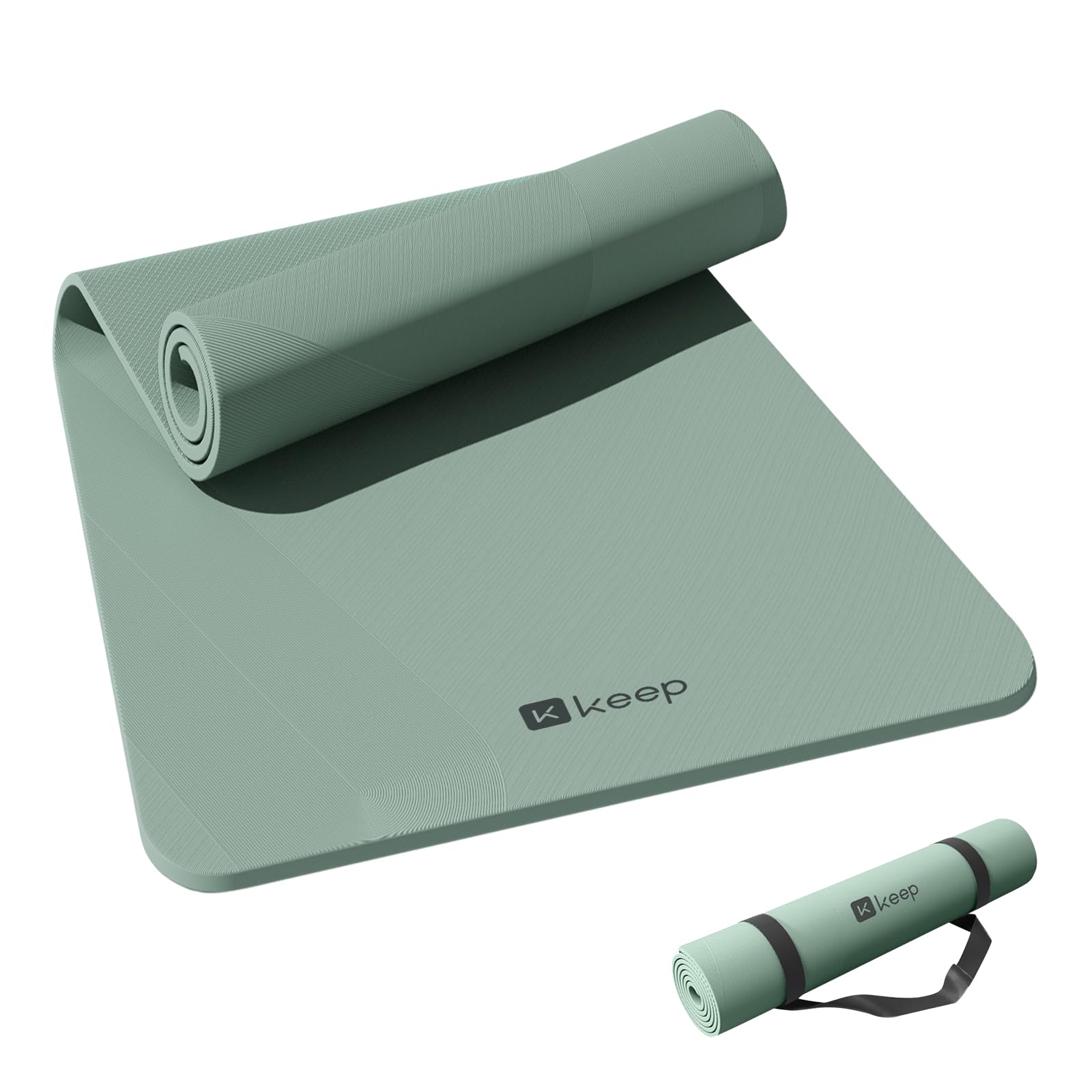
Thirty-two inches wide and 7mm thick — the balance point between room and cushion.
KEEP strips the problem down to two numbers. At 32 inches wide versus Gaiam’s 24-inch option, this mat gives taller and broader frames room to move through dynamic poses without rolling off the edge. At 7mm (0.28 inch) thick, it cushions knees, elbows and joints while staying thin enough that balance poses don’t feel like standing on a cushion.
The material is premium TPE, free from plasticisers and formamide, and both sides carry anti-slip texture — a fingerprint-like top for control, a full anti-slip base for the floor. It even holds up on a wet surface, which most foam mats won’t promise. Portability is a surprise: it weighs just 2.8 pounds and ships with an adjustable polyester strap.
Where it wobbles is around the edges. Traction and durability both draw split feedback — some love the grip, some find it less consistent over time — so a rubber mat like the Plyopic is the sturdier pick if you sweat a lot. Also air it out before first use to let packaging odour settle, and keep it out of long sun exposure. Reviewers mention build quality 144 times, more than any other mat here, with the 32-inch size a close second.
The standout: 32-inch width plus 7mm thickness in a 2.8-pound mat is a hard combination to beat for home workouts of every kind.
The caveat: traction and durability feedback runs mixed, so expect to look after the surface if you use it daily.
Your match if: you’re tall, broad, or just want a wide mat that stays light enough to move around.
Skip the swap if: you need a mat with proven wet-grip — go rubber-based instead.
6. HAPBEAR Large Yoga Mat 72″x36″x6mm
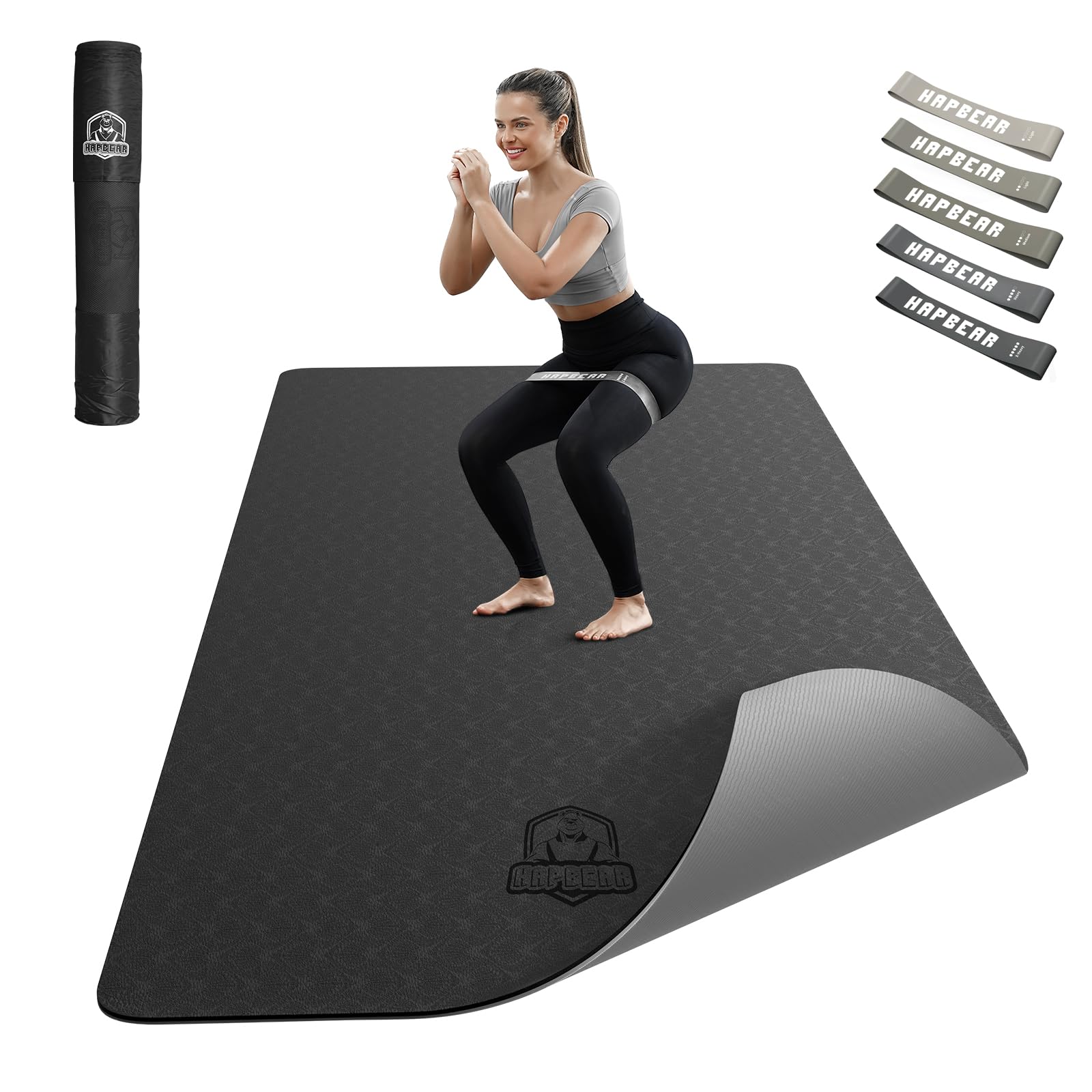
A 36-inch-wide stretch of floor that turns your living room into a workout zone.
Where most mats stop at 24 or 32 inches, HAPBEAR goes to 36 inches versus the standard 24 inches. For HIIT, Pilates and full-body stretching where you want your whole body on the mat at once, that extra footprint matters. It rolls out at 72″ x 36″ and gives you the freedom to move without a hand or foot hanging off the edge.
The double-sided textured grip is built to hold on smooth floors, and the 6mm thickness balances cushioning against support so knees and wrists get some relief without losing stability. It’s TPE, easy to clean, and it packs down into the included carry bag — at 1.2 kg it’s light for its size. One straight-up note from the maker: this mat is not for use on carpet.
The honest edges are durability and grip, both of which draw split feedback — some find it slip-resistant and long-lasting, others don’t. Some initial scent is normal; allow 1–2 days to air it out. In a mat this wide at this weight, that’s a reasonable set of compromises — as long as your floor is hard, not carpeted.
What justifies it: 36 inches of width at 1.2 kg is the widest large mat that still packs into a bag and moves easily.
What to weigh: durability and grip responses are mixed, and the maker says it’s not for carpet — so confirm your floor before buying.
The winning use: home HIIT, Pilates and stretching routines that need a big, light footprint.
One reason to pass: your workout space is carpeted — this mat isn’t designed for it.
7. Amazon Basics Exercise Yoga Mat

One full inch of memory foam — the softest landing in this lineup.
Of all nine mats here, this is the one that takes thickness to the extreme. A full 1-inch memory foam construction delivers cushioning and shock absorption on a scale the 6mm and 7mm mats simply can’t match. If your knees or hips ache on a hard floor, this is the depth that changes the feeling.
The material list is reassuring for anyone wary of foam: it’s free of phthalates, heavy metals like lead and cadmium, and latex. The 74 x 24 inch surface carries a non-slip texture for stable poses, and the high-density NBR foam is built to hold its shape through daily use at home, the gym or a studio.
The trade-off is real with foam this deep — softness this generous can make balance poses feel less grounded than a firmer mat allows, and durability and grip both draw split feedback, with some reporting sliding on wood floors. A new-product smell is expected; unroll it flat and air it in a ventilated space for at least 48 hours. For gentle floor comfort, it’s the softest option on the list.
Why It Stands Out
- Full 1-inch memory foam for the deepest cushioning here
- Free of phthalates, heavy metals and latex
- High-density NBR foam built to hold shape through daily use
- Non-slip textured surface for stable poses
Where It Could Trip You Up
- Very deep foam can make balance poses feel less grounded
- Grip and durability feedback is mixed on some floors
Choose it when: joint comfort outranks everything and you want the softest surface available.
Skip it when: you need a firm, thin mat for precise standing balance work.
8. Plyopic Ultra Grip PRO Yoga Mat
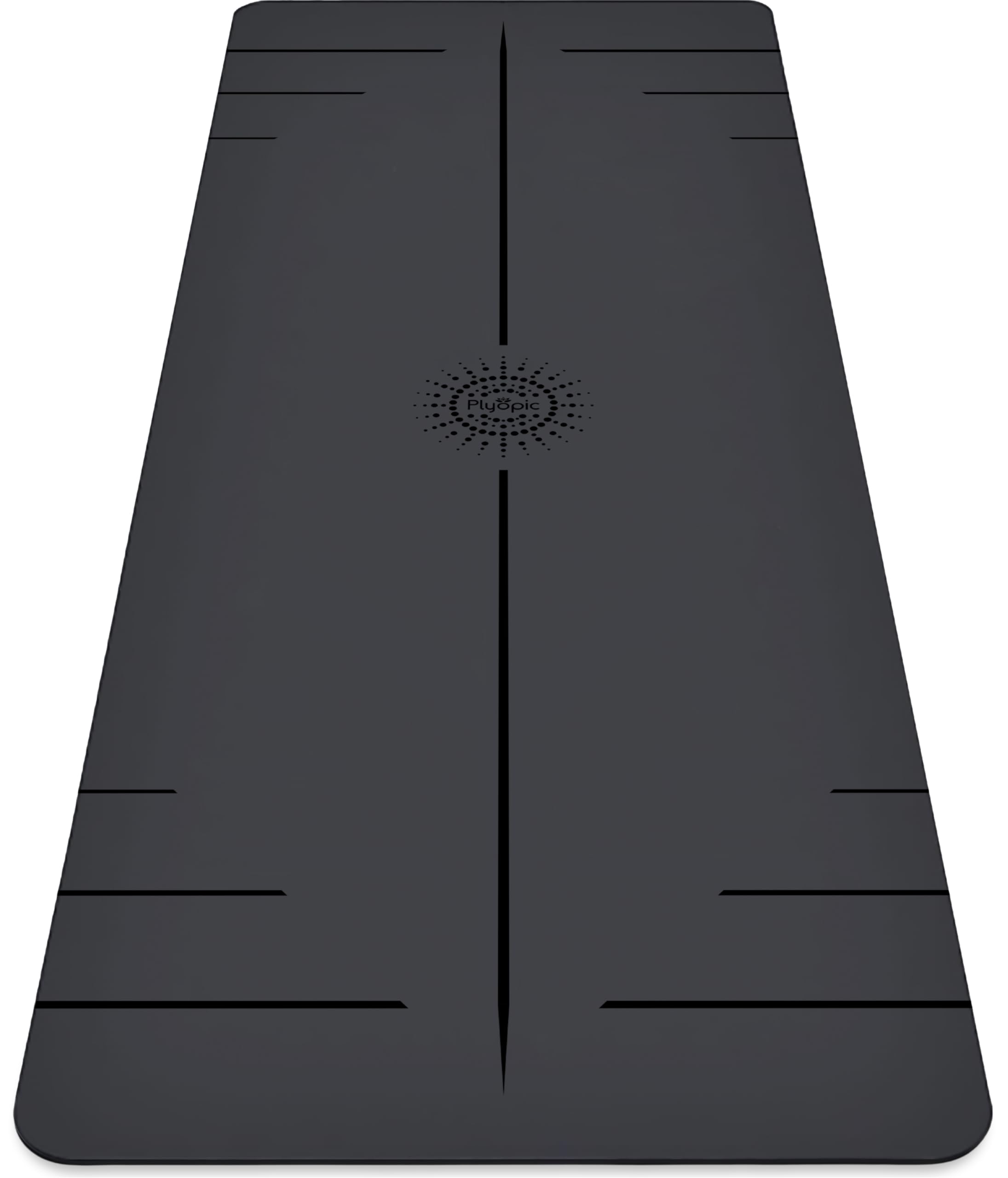
A grip mat for sweaty hands, with printed alignment lines to check your symmetry.
For hot yoga or anyone whose palms turn to a slip hazard mid-flow, the UltraGrip surface is the reason to buy this. It’s built to hold contact as moisture builds, so your hands and feet stay planted through sweaty sessions instead of sliding away. That’s a different job from the foam mats above, which are aimed at cushioning.
The other feature buyers notice is PoseMap — printed alignment reference points for hands, feet and centre, developed from 8 years of alignment mat design. It gives you clear marks to check positioning at a glance. Underneath is dense natural rubber with an integrated fibre layer that keeps the mat stable beneath your knees and wrists, and the 72 x 26 inch surface is vegan-friendly and PVC-free with a carry strap included.
Where it holds back is cushioning. At 0.17 inches (about 4mm) it’s the thinnest mat here, and the cushioning feedback splits between those who find it comfortable and those who want more padding — so if knee comfort is your driving need, a 10mm or 12mm mat fits better. Odour also draws mixed feedback, so expect a break-in period. But for stability and quality in a wet-grip mat, it’s the strongest option on this list.
The grip advantage: wet-or-dry traction plus printed alignment lines put it ahead of the YOTTOY and KEEP for sweaty, positioning-precise sessions.
The honest limit: at roughly 4mm it’s the thinnest mat here, so knees that want padding should look to a thicker option.
Built for you if: you do hot yoga, sweat heavily, or want alignment marks to check your form.
Better to pass if: your priority is cushioned comfort under knees and wrists.
9. Hatha Yoga Large TPE Yoga Mat

Four feet across and half an inch thick — effectively a padded floor you can roll up.
This is not a commuting mat; it’s a floor pad for a dedicated workout space. At 72″ x 48″ it’s 48 inches wide versus a standard 24-inch mat and the broadest here, with a 1/2 inch thickness for joint relief during floor work. That footprint covers jump rope, squats and stretching without a limb leaving the mat.
Both sides carry a non-slip texture over high-density construction for traction and tear resistance. The TPE material is phthalate-free, gentle on the skin, lightweight and fully recyclable. Two bundling ribbons let you tie it up and stow it in a corner when the session ends. It’s a thoughtful package for a garage gym or spare-room setup.
Weight is the price of all that room — 8.8 pounds, the heaviest mat on this list, so it stays where you put it. New-mat odour draws mixed feedback, so air it out before the first session, and keep it out of long direct sun. Quality and size are the things people value most here, and for a big-home-gym mat, it delivers both.
The room factor: 48 inches wide and 1/2 inch thick is the biggest usable surface here — a full exercise area rather than a mat.
The weight reality: 8.8 pounds and two bundling ribbons mean it’s designed for a fixed spot, not a commute.
Your pick if: you have a dedicated workout room and want maximum space and padding underfoot.
Look elsewhere if: you need a mat to fold up and carry to a class.
Know the Specs
Thickness (mm and inches)
Thickness is measured in millimetres or inches, and it’s the spec that decides how the mat feels under your knees and how stable you are standing on it. A 6mm mat keeps you near the floor for balance; a 10mm or 12mm mat cushions joints; a 1-inch foam mat is the softest and the least grounded. Match thickness to whether your joints or your balance needs the help most.
Material: NBR, TPE and Natural Rubber
Three foams dominate. NBR foam is soft, airy and cushions well, so it suits gentle floor work. TPE is denser, wipes clean more easily and tends to feel more supportive, which is why most of the wide mats here use it. Natural rubber topped with polyurethane is the grip specialist — it holds when wet, which is why hot-yoga mats choose it. Each foam trades cushioning, grip and cleanability slightly differently.
Width and Length
A standard mat is 24 inches wide. A 32-inch or wider mat gives room for lunges, sumo squats and arms-out stretching without falling off the edge. Lengths here range from 72 to 74 inches, so a 74-inch mat gives a little extra head-to-toe space over the 72-inch standard. Wider and longer means more room — and usually more weight to carry.
Grip and Surface Texture
“Non-slip” is a direction, not a guarantee. A textured surface reduces sliding on smooth floors during dry workouts, while wet grip depends on material — usually the polyurethane top on rubber mats. Textured foams help on wood and tile, but many thick foam mats aren’t designed for carpet. If you sweat heavily or practise hot yoga, prioritise wet grip over cushioning.
Common Questions
Is a thicker yoga mat better for my knees?
Can I use these yoga mats on carpet?
What is the difference between NBR foam and TPE?
Which mat works best for hot yoga or sweaty hands?
How wide should a yoga mat be for tall or broad people?
How long does a yoga mat last before it wears out?
How do I clean a TPE or foam yoga mat?
Why does a new yoga mat smell when I unroll it?
Is a heavier mat better than a light one?
Can I use these mats for Pilates and HIIT as well as yoga?
The Bottom Line
For most people the best trending yoga mats online pick is the Large Workout Mat by Karma Fitness because its 32-inch width and double-layer TPE give real room for lunges and press-ups without feeling mushy. If joint comfort on a hard floor is your main worry, the YOTTOY Extra Thick at 12mm is the cushioning answer. And if you sweat hard or do hot yoga, the Plyopic Ultra Grip PRO is the one built to stay put — its wet-grip surface and alignment marks earn it the nod,
How we choose
We do not accept paid placement. Every pick is matched to a real buyer and a real use-case; we do not hands-on test units.
Sources
Specifications: manufacturer listings and product documentation. Review insights: verified customer reviews, as of November 2026. Pricing: not shown on this page (it changes often); check the current price via the retailer link.
As an Amazon Associate, Tactical Gear Guy earns from qualifying purchases. This does not affect which products we feature.