Specs are compiled from manufacturer listings and verified buyer reviews and can change over time — please confirm the key details on the product page before buying.
Buying a vented portable air conditioner is mostly a hose decision. A dual-hose unit pulls outside air in and pushes hot air out through two separate pipes, so it stops fighting itself. A single-hose unit pulls cooled room air and dumps it outside, which drags warm air back in through every gap. That one difference decides whether a unit actually holds your set temperature or just runs loudly all afternoon. Below are ten hose-vented portables, sorted so you can match one to your room size, your window, and how much noise you can sleep through.
This guide is built by comparing the manufacturers’ published specifications and the patterns across verified customer reviews, so you get each pick’s real strengths and trade-offs instead of marketing spin.
Some units here cool a small bedroom, others push into an open living space, and a few add heat for year-round use. What separates them is hose count, BTU rating, and how loud the compressor gets at night — the practical details covered in this vented portable air conditioner breakdown.
Top Picks
How To Choose The Best Vented Portable Air Conditioner
A vented unit pushes hot air out a window through a hose — that is what “vented” means, and it is the line between a real air conditioner and a swamp cooler (an evaporative cooler that just adds moisture to the air). Once you accept the hose, four practical questions decide the rest: how big is the room, how many hoses feed the machine, how loud is it at 2 a.m., and will you be emptying a bucket every day.
Single hose versus dual hose
A single-hose unit uses your cooled indoor air to carry heat outside, then that air has to be replaced — usually by hot air leaking in around doors and windows. A dual-hose unit separates intake and exhaust, so it pulls fresh outside air for the condenser and never steals your conditioned room air. That is why dual-hose machines tend to hold a set temperature with less effort. If you are cooling one small bedroom and want the simplest install, a single hose is fine. If the room is large or the unit runs all day, go dual.
Read the DOE/SACC number, not the big one
Portable AC listings often show two BTU figures side by side. The larger ASHRAE number is a lab figure; the smaller DOE/SACC number is the realistic cooling you actually get. Compare units on the DOE/SACC figure so you are not fooled by a headline rating. Match it to your square footage with a little headroom, because a unit sized exactly to the room runs at full tilt constantly.
Inverter compressor and decibels
A standard compressor slams on and off, which is the clunk-and-hum cycle that wakes light sleepers. An inverter compressor varies its speed instead, holding temperature steadily and running quieter. Look at the decibel rating — anything in the low 40s is roughly a quiet conversation, while low 50s is closer to normal speech at close range. For a bedroom, the inverter and the decibel number matter more than raw BTU once the room is properly sized.
Drainage and the humidity catch
Most modern units self-evaporate condensation, so you rarely touch a drain pan. The catch is humidity: manufacturers typically rate drainage-free operation for environments under a certain humidity level, and above that you connect the included drain hose for continuous drainage. In a damp basement, plan on running that hose to a floor drain or bucket rather than trusting the self-evaporation alone.
Side-by-Side Comparison
| Model | Best For | Cooling Power | Floor Area | Hose Setup | Amazon |
|---|---|---|---|---|---|
| ZAFRO 14000 BTU Smart Inverter★ Best Overall | Large rooms, quiet operation | 14000 BTU | 550 sq ft | Dual hose | Amazon |
| Hisense HAP0825TWDBest Value | Budget-friendly cooling | 8000 BTU | 350 sq ft | Dual hose | Amazon |
| DREO 515SBest for Bedrooms | Bedrooms, smart controls | 12000 BTU | 150 sq ft | Single hose | Amazon |
| Hisense API0825UW1D | Year-round heat and cool | 8000 BTU | 350 sq ft | Twin hose | Amazon |
| Westinghouse 14,000 BTU | Big rooms with heat mode | 14000 BTU | 700 sq ft | Single hose | Amazon |
| HUMHOLD 16000 BTU Inverter | Very large spaces | 16000 BTU | 700 sq ft | Dual hose | Amazon |
| AC Infinity AC-TFH8 | All-season AI control | 12000 BTU | 600 sq ft | Single hose | Amazon |
| Whynter ARC-1230WN | Dual hose efficiency | 14000 BTU | — | Dual hose | Amazon |
| SereneLife 16,000 BTU | Large rooms plus heating | 16000 BTU | 850 sq ft | Dual hose | Amazon |
| Midea Duo 14,000 BTU | Dual hose-in-hose cooling | 14000 BTU | — | Dual hose-in-hose | Amazon |
Detailed Reviews
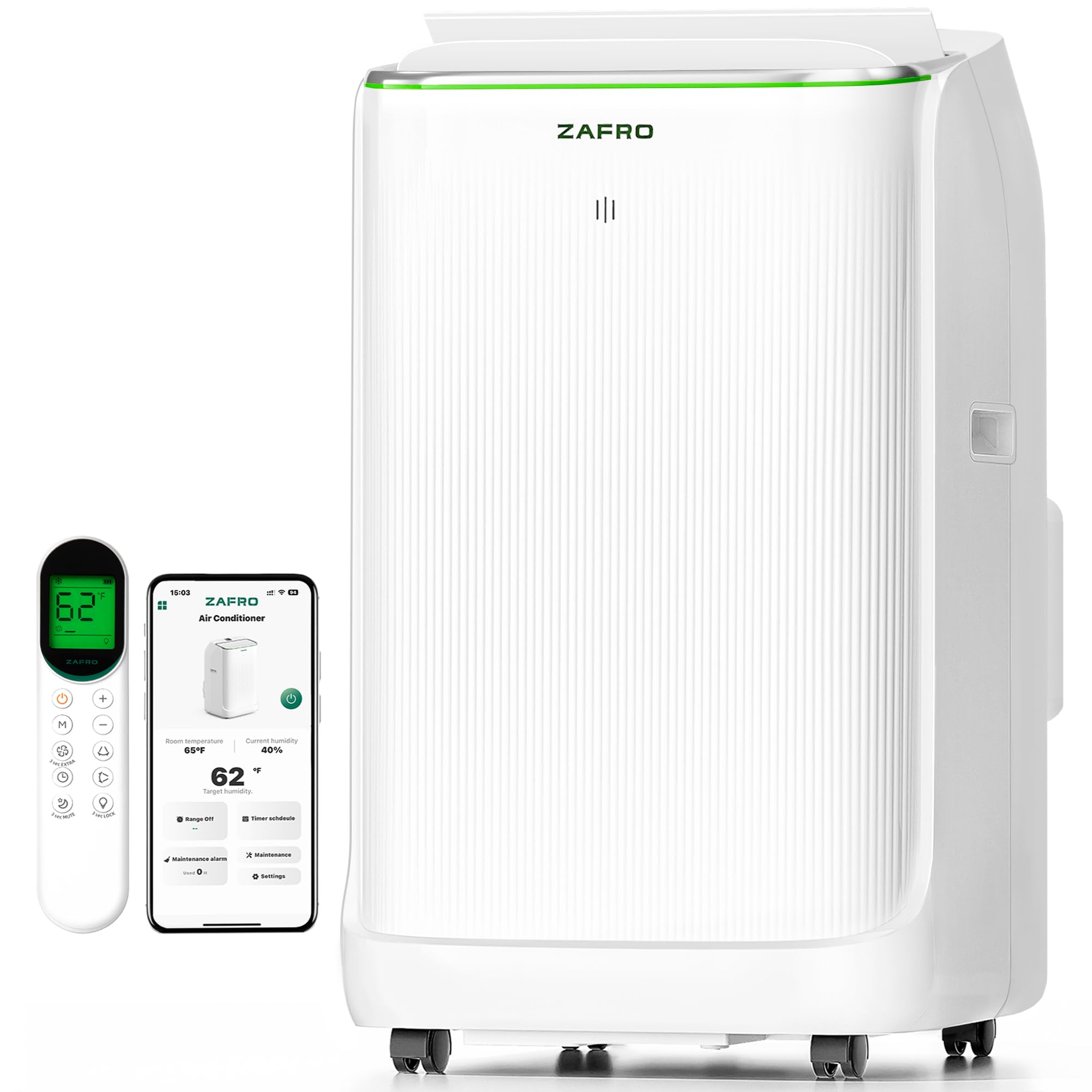
1. ZAFRO Smart Inverter Portable Air Conditioners, 14000 BTU
Our pick — 4.0+★ from 500+ verified ratings; the strongest balance of quality and price.
Two hoses, 550 square feet, and a 42 dB floor — the specs that actually matter.
For an open living area or a master bedroom that never quite cools, the ZAFRO leads this list on raw coverage. Its dual hose setup — one pipe pulling outside air in, one pushing hot air out — tells the machine what to do without stealing your cooled indoor air. Coverage reaches 550 square feet, which is the headline. Compare that to the DREO 515S at 150 square feet and the gap is enormous, the kind of difference that decides whether the far end of a room gets cool at all.
Strong cooling is what wins people over here, and it comes with a genuinely useful trick: an Extra mode that locks the temperature at 61 degrees Fahrenheit and runs at full power, so you get instant relief on the hottest afternoons. The inverter compressor (a compressor that varies its speed instead of switching fully on and off) holds a steady temperature instead of clunking on and off. It earns a CEER of 12.8 — a cooling efficiency score well above the 7.83 standard — so it sips power during long all-day runs. Buyers report it cools a bedroom in about 2 hours and holds its own in 350 sq ft rooms.
Drainage is the quiet hero. The self-evaporating system throws collected moisture into the condenser where it evaporates off, so in humidity under 90% it runs drainage-free for 72 hours. Above that, you attach the included drain hose and keep going. You also get six modes, a 24-hour timer, app and remote control, and four-way oscillation that sweeps air both up-and-down and side-to-side. The one catch is size — a 14000 BTU dual-hose unit is a substantial cabinet, so plan floor space near the window rather than tucking it behind a door.
Where it earns its spot
- Covers 550 sq ft, the widest reach on this list — enough for an open-plan living room
- 42 dB operation with inverter compressor and smart sleep mode for nights
- 72 hours of drainage-free cooling under 90% humidity — no bucket duty
- CEER of 12.8, well above the 7.83 standard, so long runs stay affordable
What to plan around
- Two exhaust hoses plus a 550 sq ft cabinet need real floor and window space
- Above 90% humidity you must connect the drain hose for continuous drainage
Go for it if: your room runs large and you want the quietest full-power cooling here with the least maintenance.
Think twice if: your window setup can only take one hose — the dual-hose kit needs two openings.
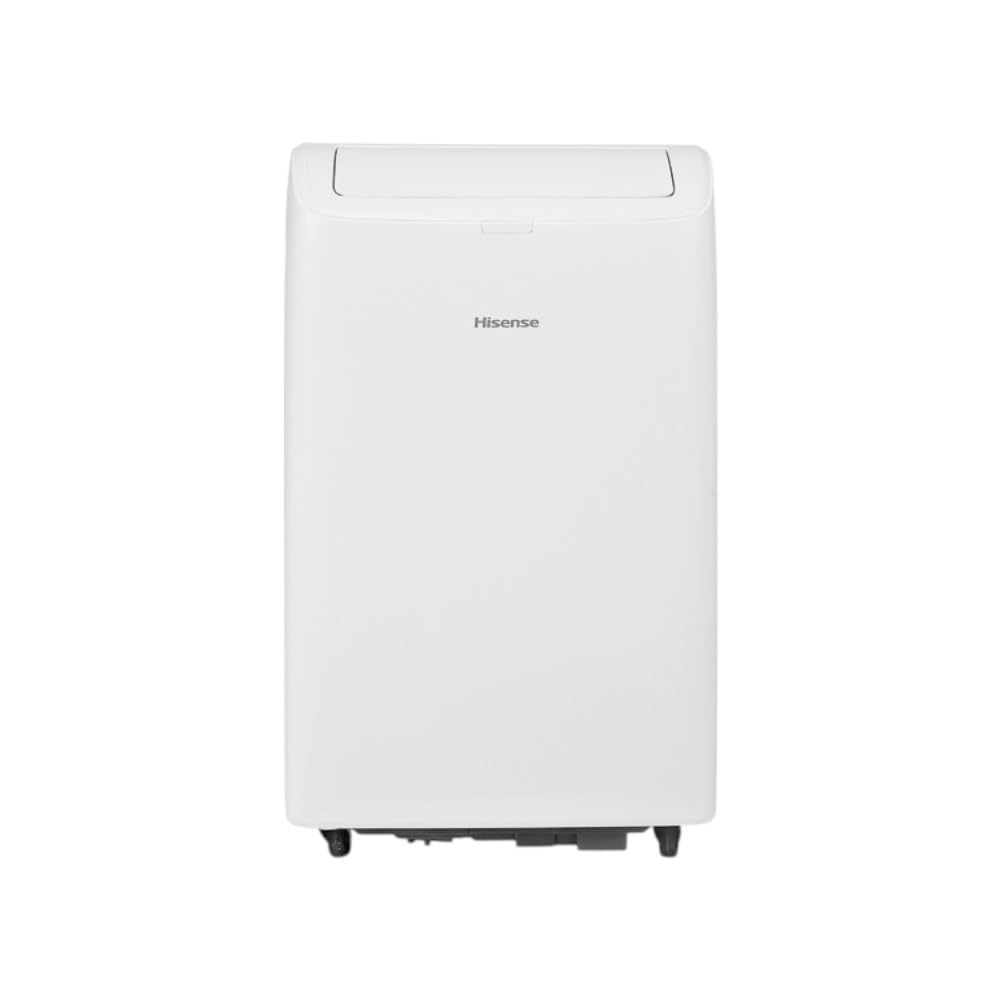
2. Hisense 8,000 BTU Portable Air Conditioner
Dual hose and inverter cooling in the most affordable package on this page.
This is the entry point into dual-hose cooling. The Hisense HAP0825TWD delivers 8,000 BTU (DOE/SACC — the realistic federal rating, not the inflated old figure), a step below the ZAFRO’s 12,000 BTU DOE equivalent in this lineup. Check the coverage, though: 350 square feet. That suits a bedroom, a home office, or a converted attic, and it will not overwhelm a smaller room.
Cost plus capability is what sells this one. You get a dual-hose design (two hoses instead of one, which makes cooling more efficient), an inverter compressor that varies speed instead of hammering on and off, and a maker claim of up to 40% more efficiency from that inverter. Three modes cover cool, dehumidify, and fan. Owners mention effective cooling, with one owner noting it holds temperatures between 76-80 degrees. You control it through the ConnectLife app, Google and Alexa voice, a remote, or the touch panel.
Two honest notes. This is a renewed unit, so inspect the window kit and hoses on arrival rather than discovering a missing foam seal mid-install. And at 42 dB it is quiet, but the smaller BTU rating means it works harder in a room that runs past its 350 square foot rating. Sized correctly, it holds temperature without strain. Push it into a large space and you will hear it.
Smart-control depth: App, remote, touch panel, and both Google and Alexa voice give you more ways in than most units at this tier — handy when you want to pre-cool before you get home.
The renewed caveat: Renewed means a returned or refurbished unit, so verify every component in the box before you mount the window kit.
This one is for you: a bedroom or office up to 350 square feet where you want the dual-hose advantage without a premium outlay.
Look elsewhere if: you are cooling an open living space — the 8,000 BTU DOE rating is tuned for smaller rooms.
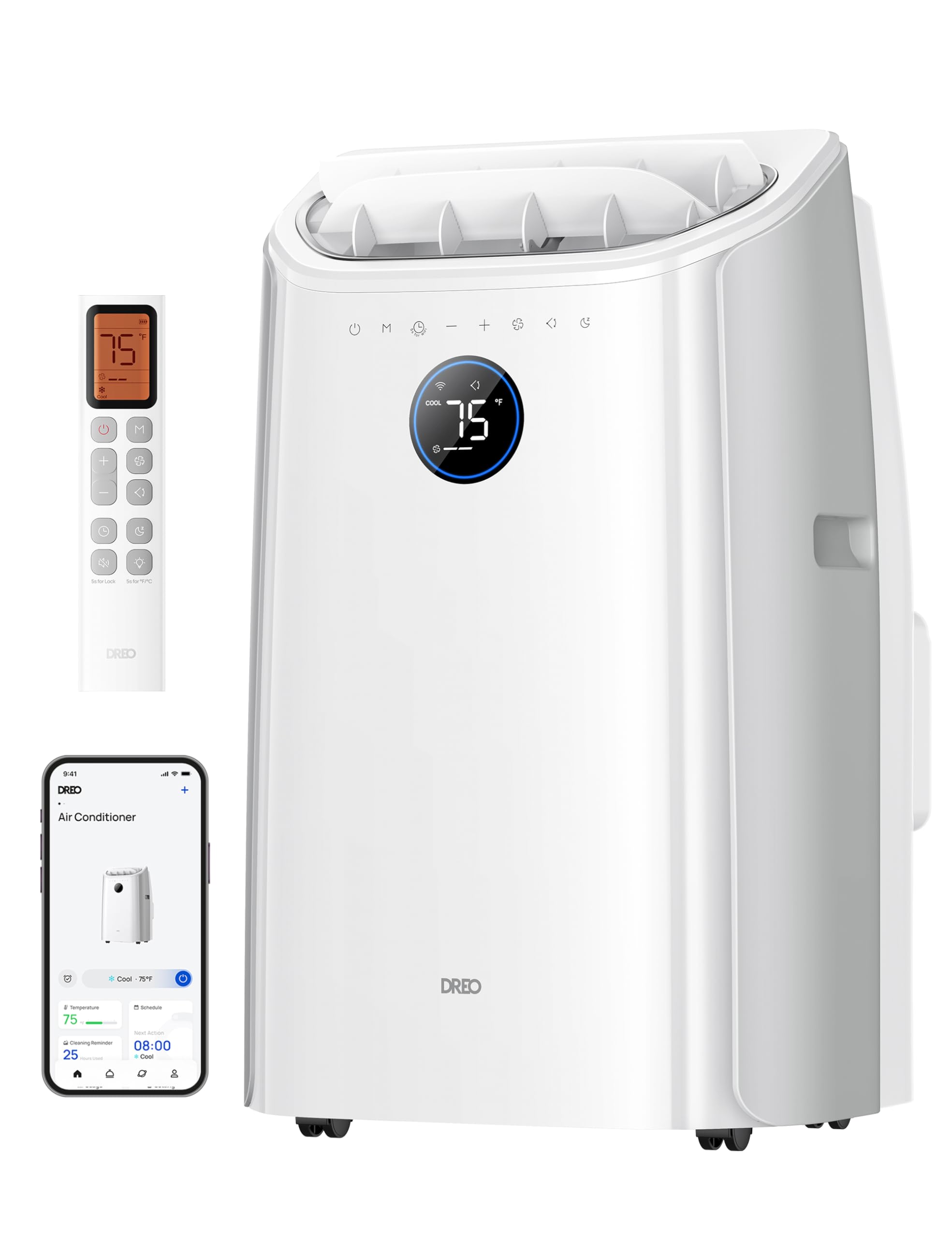
3. DREO Portable Air Conditioner 515S, 12000 BTU ASHRAE
Built for sleeping through the night — 45 dB, voice control, and a true drainage-free system.
The DREO 515S is a single-hose machine, and that is the first thing to know. It runs 12,000 BTU (8,000 BTU DOE/SACC) and is rated for a 150 square foot room — a bedroom, a study, a small office. On the head-to-head, the ZAFRO covers 550 square feet to the DREO’s 150, so this is a focused cool-your-bedroom unit, not a whole-floor solution. It also runs at 45 dB to the ZAFRO’s 42 dB, a small edge to the ZAFRO on the noise front.
Where the DREO earns its place is the bedroom experience. Its patented noise isolation system cuts compressor and airflow turbulence down to that 45 dB, which is roughly a quiet conversation and easy to sleep through. You can hold any temperature between 61 and 86 degrees Fahrenheit, and the system claims to reach up to 16 feet from the unit. Voice control works through Siri, Alexa, and Google Home, and the DREO app lets you monitor temperature and humidity and set a custom sleep curve. Customers note it holds up night after night of bedroom use.
The patented self-evaporating system uses sensors and a pump to clear excess water automatically in environments under 90% humidity, so no daily emptying. The catch is the single hose: in a large room, a single-hose unit pulls some cooled air out with the exhaust. In a tight bedroom it is a non-issue. In an open floor plan, the dual-hose picks above will hold temperature better. If you want a dedicated bedroom cooler with serious smart controls, this is a strong one.
What lands well
- 45 dB with noise isolation — quiet enough to sleep through all night
- Three functions inside each of Cool/Fan/Dry modes for granular control
- Voice control via Siri, Alexa, and Google Home plus app sleep curve
- Drainage-free under 90% humidity with patented self-evaporating logic
The real limits
- Single hose, so it will not hold temperature as efficiently in a large room
- Covers 150 sq ft — a smaller footprint than several picks here
Best fit: a bedroom or study where noise is the deal and voice/app control matters.
Not the one for: open living rooms — the 150 sq ft rating and single hose suit smaller, closed spaces.
4. Hisense API0825UW1D
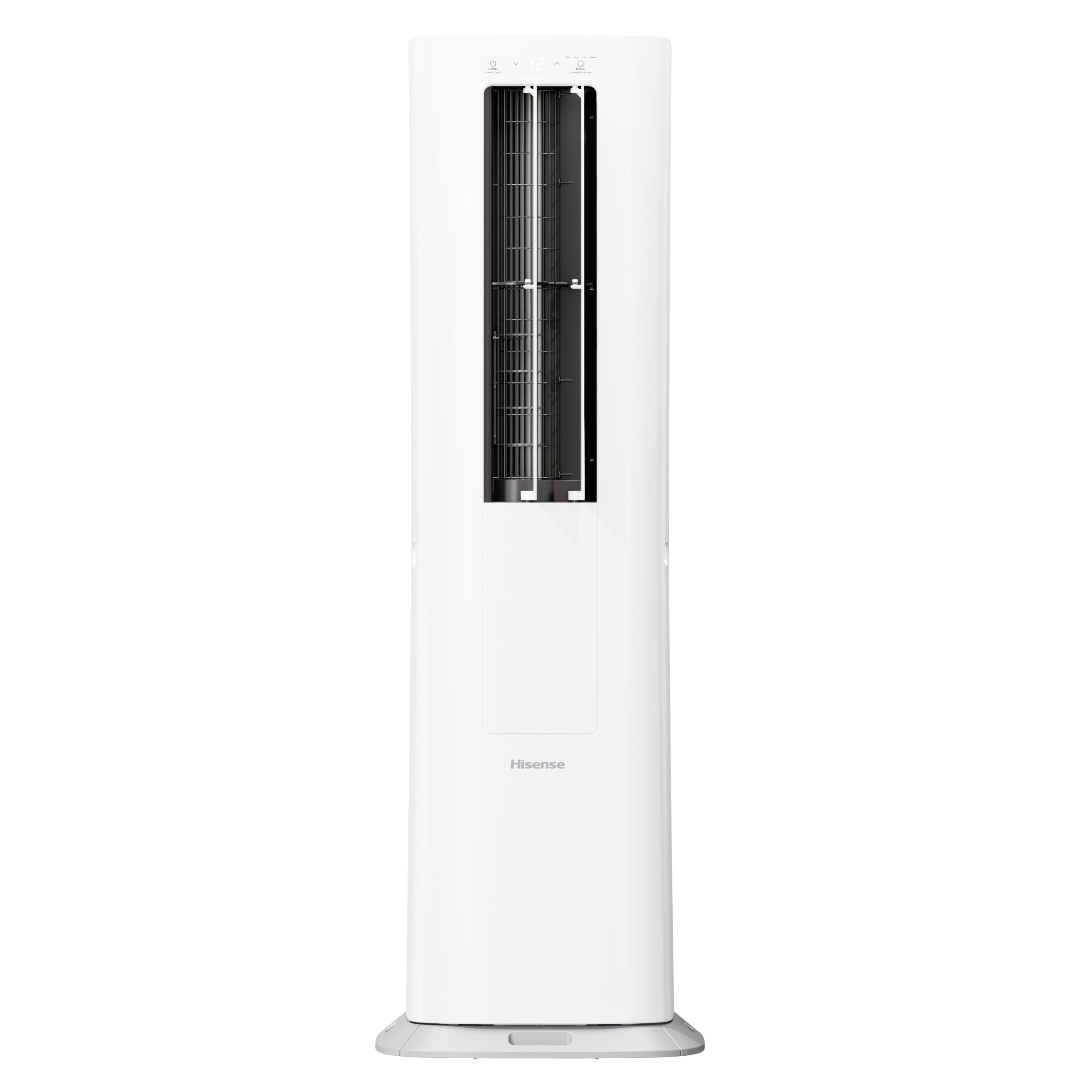
A heat pump in a tower cabinet — cool in summer, supplemental heat in winter.
Most portables here only cool. This Hisense adds a heat pump, so it warms as well as chills, and that single feature is why it sits this high. The 8,000 BTU (DOE) rating covers 350 square feet — same reach as the Hisense HAP0825TWD above — and the twin hose system feeds the cooling or heating. If you have a room that gets hot in July and cold in December, one machine now handles both.
The cooling reach is unusual for the size. A vertical cross-flow fan sends air up to 21 feet with 60 degrees of coverage, which spreads cool air across a larger room faster than a standard front-vent. Setup is the snap-in window kit with the twin hose, no tools beyond the included hardware. Condensation self-evaporates for maintenance-free operation, and the improve drain port lets you thread a standard garden hose for continuous drainage in heating or dehumidify modes. Reviewers point out fast, efficient cooling and a temperature that stays steady through the night.
Two things to weigh. The 8,000 BTU rating will not keep up with an open-plan downstairs; it is a room-sized unit. And heating from a heat pump works best as a supplement, not a whole-home furnace replacement. That said, for a bedroom or a converted garage space, combining cool and heat in one footprint is a real convenience that no pure-cooling unit here can match.
The heater bonus: Advanced heat pump technology gives you winter warmth from the same cabinet, and the 41 to 86 degree operational range covers most seasons.
Space to allow: The tall tower form factor takes vertical room but a smaller footprint than a wide box; keep the 21-foot throw aimed at the seating area.
Reach for this if: you want one machine for summer cooling and winter heating in a single 350 sq ft room.
Pass if: you only need cooling — pure-cooling units here give you more BTU for the money.
5. Westinghouse 14,000 BTU Air Conditioner with Heat Mode
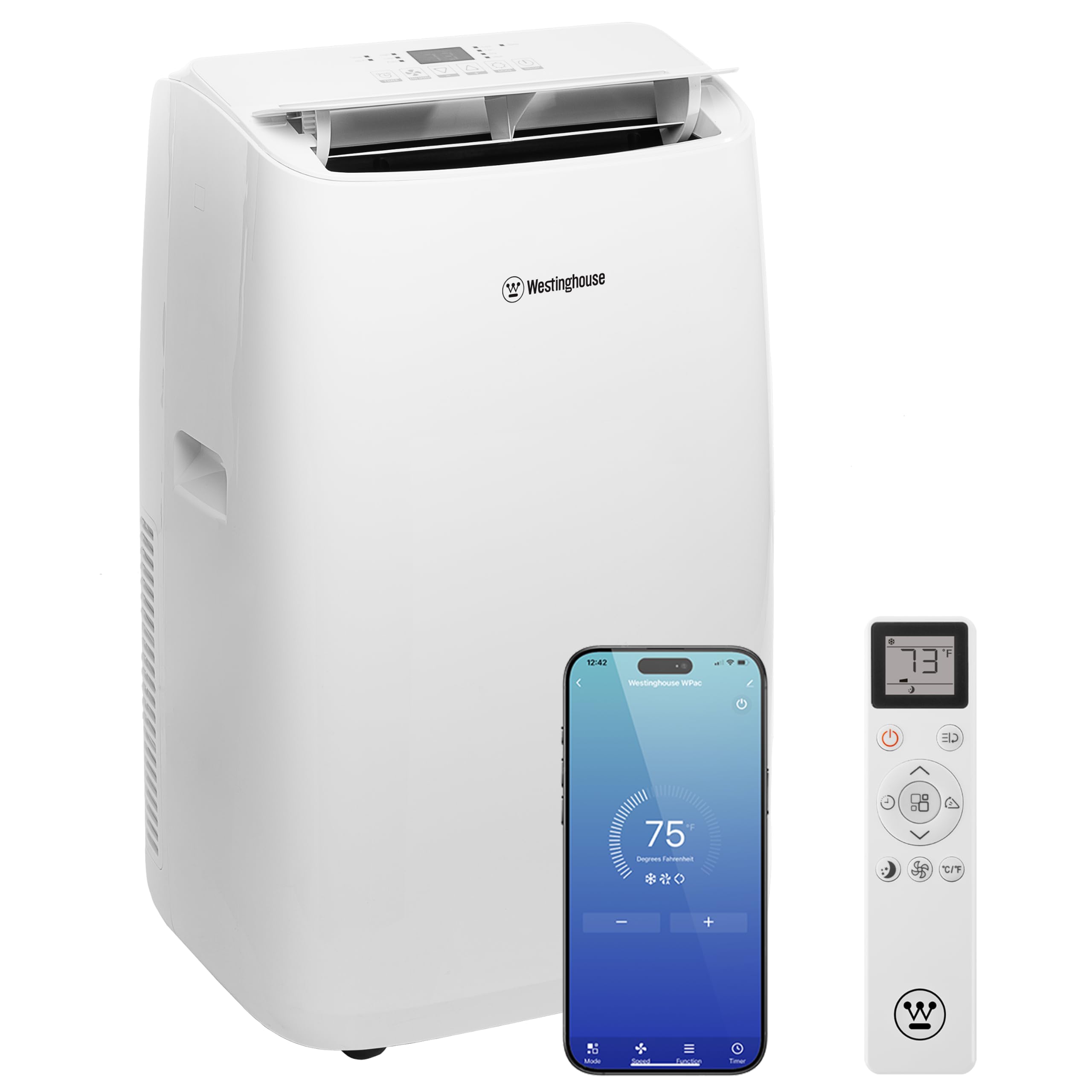
Four modes, 700 square feet, and a heat setting that covers both seasons.
This is the widest-coverage room unit on the list: 14,000 BTU and a 700 square foot rating. That reach matches the HUMHOLD below, so if you have a large living room or an open kitchen-and-lounge, both are sized for it. The difference here is the mode set — cooling, fan, dehumidify, and heat all in one machine. It runs 52 dBA, which is comparable to normal conversation at close range, so a bedroom at night might be a stretch for light sleepers, but a living area in the day is exactly its lane.
Setup is the fast part. The exhaust hose connects to a quick-adjust window panel sized for double-hung or sliding windows, and the panel adjusts by knob without cutting anything. You get a remote with a 20-foot range, app control, and a top touch panel, plus a programmable timer to power the AC on or off. Dehumidify pulls up to 90 pints, and the cleanable air filter pops out for washing. Shoppers say it heats and cools better than expected and holds the temperature where it is set.
The honest trade-off is that 52 dBA and the single-hose design. It is louder than the inverter units near the top of this list, and single-hose operation is less efficient in a big open room than the dual-hose machines. Neither is a dealbreaker at this price tier — it is a big-room workhorse, not a silent bedroom companion. If your priority is coverage and heat mode together, this delivers.
The four-mode upside: Cool, Fan, Dry, and Heat give you a single machine for a big room year-round, plus 90-pint dehumidifying.
The noise caveat: At 52 dBA the Westinghouse is the loudest pick here, so keep it out of light-sleeper bedrooms at night.
Made for: a large living room or open floor plan where 700 sq ft of coverage and heat mode matter most.
Skip the idea of: a silent bedroom-cooler — the 52 dBA rating and single hose suit daytime living spaces.
6. HUMHOLD 16,000 BTU Dual Hose

The highest BTU count here — 16,000, dual hose, and rated to 800 square feet.
If your space is genuinely large, this is the muscle. The HUMHOLD pushes 16,000 BTU (ASHRAE) / 12,000 BTU (SACC) and is rated to 600 to 800 square feet. On cooling power it sits at the top of this group — the ZAFRO has 14,000 BTU, this has 16,000. It is dual hose, so it intakes and exhausts through two pipes and stops hot outside air from seeping back through window gaps. For a big basement, a finished garage, or a large open room, this is the pick that will not run out of breath.
The inverter adds 40% energy savings by varying compressor speed instead of full-blast cycling, and an internal temp sensor with Auto Smart mode runs between Cool and Fan to hold the room around 73 to 77 degrees Fahrenheit. Sleep mode drops fan speed and keeps it under 42 dB — a quiet number for a unit this size. You get three speeds, a 15 to 75 degree auto-swing, a backlit remote good to 25 feet, and a 0.5 to 24-hour timer. Buyers report turbo mode cools fast, with one room reaching 62 degrees.
One thing to know: drainage depends on the room. In a normal space the self-evaporating system handles it, but in a humid basement or laundry room, or in dry mode, it needs an 8-hour drain or continuous drainage — and the unit will stop when the tank fills if you do not connect the hose. The filters pop out without tools and rinse clean. At this output it is a powerful floor-standing machine, so give it room and put it to work in a big space.
Why this one leads on power
- 16,000 BTU ASHRAE / 12,000 BTU SACC, the most on this list, rated to 800 sq ft
- Dual hose with 40% energy savings from variable-speed inverter
- Under 42 dB in sleep mode — quiet for the output
- 95 pints/day dehumidifying and 73-77°F Auto Smart mode
What the room demands
- In humid rooms or dry mode it needs draining every 8 hours or a continuous hose
- Large, heavy cabinet — needs wheels-and-space planning near a window
When it wins: a very large room or finished basement that a smaller unit cannot reach.
Only if it fits: your humidity is moderate or you are willing to run a drain hose — the self-evaporating system alone is not rated for damp basements.
7. AC Infinity Smart Portable Air Conditioner 5-in-1
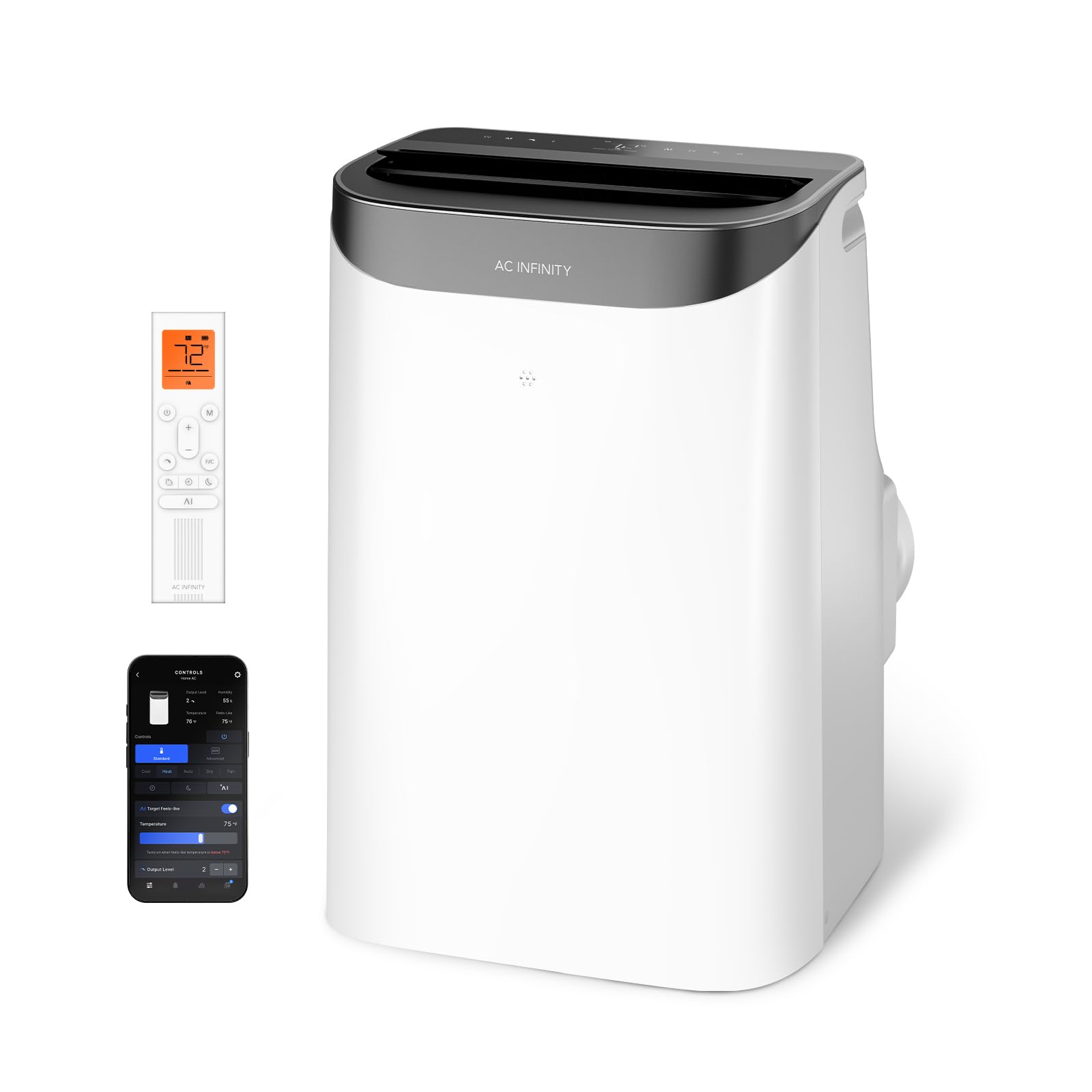
Software-driven climate control — AI that reads temperature and humidity together.
The AC Infinity takes a different approach: it leans on intelligence over brute BTU (British thermal units, the standard measure of cooling power). It cools at 12,000 BTU and heats through the same system, covering rooms up to 600 square feet. Where a basic unit just aims cool air, this one switches modes automatically to keep a “feels-like” climate, factoring humidity into the mix — the difference between a dry 74 degrees that feels fine and a muggy 74 that does not.
The 5-in-1 menu covers Cool, Heat, Dry, Fan, Auto, and Combo, with True Comfort AI toggling between them as conditions change. Three output levels, scheduling, timers, and a sleep mode let you tune it to the hour. Control runs through the included IR remote, Alexa or Google Home voice, and an app for data charts and automations. It is rated 48 dB and runs a wide-angle oscillator with a noise-isolated compressor, and it operates drainage-free. Owners most often praise its reliability — it just keeps doing its job.
Here is where it sits honestly against the leaders: 12,000 BTU and 48 dB (decibels, the loudness measure) are a step short of the ZAFRO’s 14,000 BTU and 42 dB, so if raw cooling and quiet are your whole brief, the ZAFRO edges it. This unit suits someone who wants a hands-off system that manages heat, cool, and humidity on its own — and it comes with a 2-year warranty. The input voltage is 115 volts, so it plugs into a standard household circuit. Smart comfort, not the loudest spec sheet.
Set-and-forget appeal: True Comfort AI reads temperature and humidity and toggles Cool or Heat on its own, so you rarely touch a button.
The honest edge: 12,000 BTU and 48 dB place it just below the top performers on raw cooling and quiet.
This suits: a 600 sq ft space where you want a smart system to run heat, cool, and humidity without daily fiddling.
Not for: someone chasing the coldest, quietest output — the higher-BTU picks above out-muscle it.
8. Whynter ARC-1230WN

Dual hose and inverter working together to hold a set temperature without galloping.
The Whynter delivers 14,000 BTU with the dual-hose design, and the pairing is the point. Separate intake and exhaust hoses stop conditioned indoor air from being pulled outside, which lets the inverter compressor hold your set temperature with less effort instead of hammering on and off all day. That combination — dual hose plus inverter, with an efficiency rating of 12.3 — is the recipe for a room that stays flat rather than swinging warm-then-cold.
Cooling power is the loudest signal here. Owners consistently praise its effectiveness, reporting an 8-degree drop in household temperature, and airflow is a recurring strength. A built-in dehumidifier pulls up to 87 pints, so a humid room is handled without buying a separate machine. Wi-Fi app control lets you set temperature, mode, and timer from your phone, and voice control handles the same changes hands-free. The washable filter pops out for cleaning, and the whole thing runs from a free-standing cabinet.
Where to be careful: durability is a mixed signal, with some long-term reports less glowing than the initial ones, so baby the cabinet and keep the filter clean to protect your investment. And with no floor-area rating listed, size it by the 14,000 BTU figure against your room. For a dual-hose unit with serious cooling and app control, the Whynter is a confident pick — just treat it like equipment, not a throwaway.
The case for dual hose here
- 14,000 BTU with separate intake/exhaust so it holds set temperature efficiently
- Efficiency rating of 12.3 from the inverter compressor
- 87-pint built-in dehumidifier and washable filter
- Wi-Fi app, remote, and voice control from your phone
Treat it well
- Long-term durability reports are mixed — clean the filter and handle it carefully
- No published floor-area rating, so match it to your room by BTU
The match: a large room where you want dual-hose efficiency plus inverter and app control in one machine.
The trade: plan for careful upkeep — durability is the one weak spot in an otherwise strong cooling package.
9. SereneLife 16,000 BTU Dual Hose
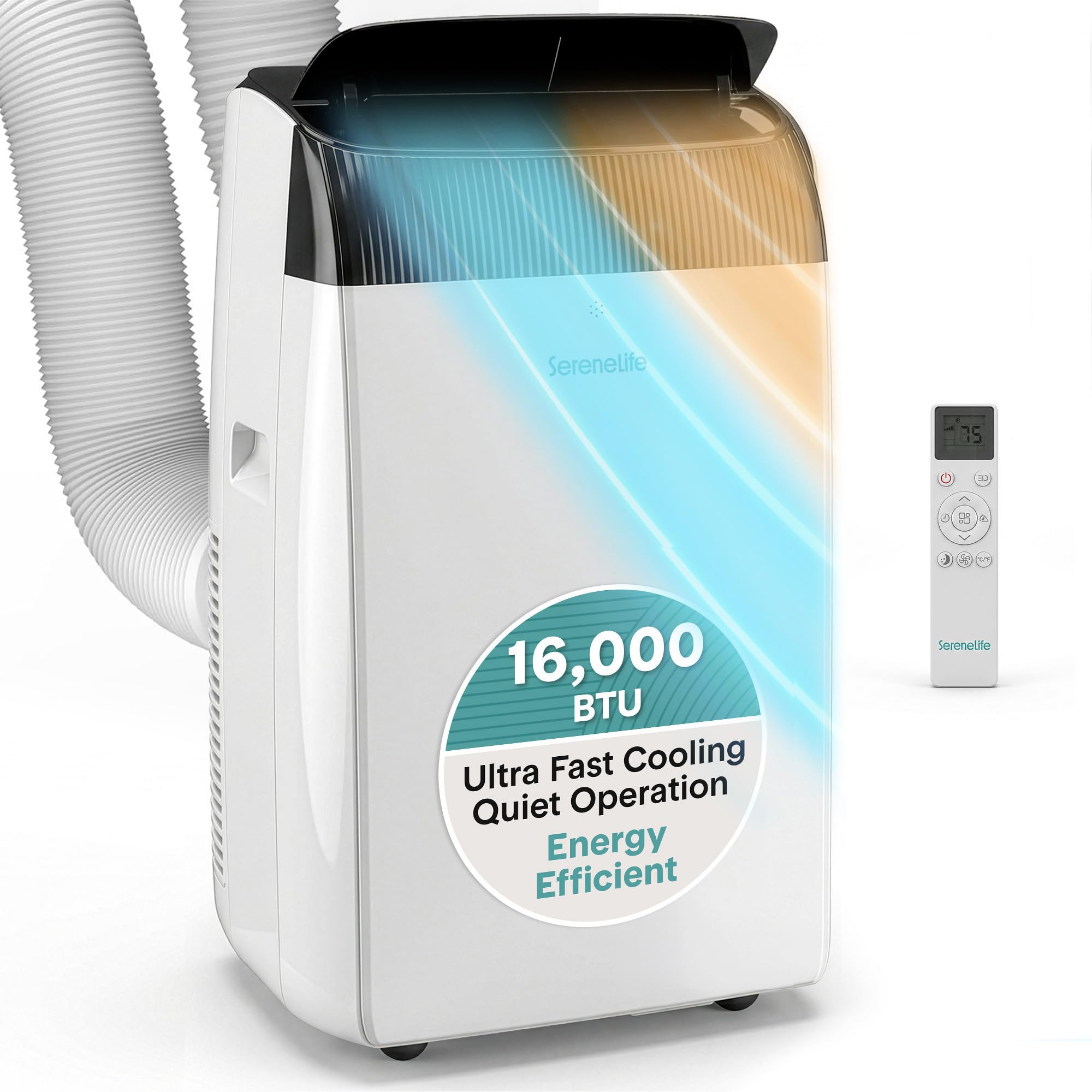
850 square feet of dual-hose cooling with heat — the biggest reach on this page.
This is the largest coverage figure here: 16,000 BTU cooling with an 850 square foot rating, plus 11,000 BTU heating from the same cabinet. The dual-hose system feeds both. Four modes — cool, heat, fan, and dehumidifier — mean one machine across the year. Performance stands out across the long ownership base: the cooling does its job and bedrooms stay at comfortable sleep temperatures. With a reach like this, it is built for a big living room or an open-plan space that needs both seasons covered.
Setup is straightforward with the included window vent kit, and rolling wheels plus a compact cabinet make it easy to move between rooms. The feather-touch control panel, included remote, adjustable timer up to 24 hours, and two fan speeds cover the daily controls without a learning curve. The inverter compressor smooths out the on-off cycling that makes cheaper portables feel jerky. Value is a consistent theme — it does the big-room job without premium pricing.
Noise is the honest variable. Some units run quietly and some come across louder, so where you place it matters — put it near the seating zone in a living room rather than beside a headboard, and the wide cooling reach does the rest. Long-term reliability reports are mixed, so keep the filter clean and treat it as durable equipment. For raw square footage plus heat, nothing here reaches further.
The coverage headline: 16,000 BTU cooling and an 850 sq ft rating with 11,000 BTU heating — the widest reach on this list, plus four modes.
The noise reality: Noise is the mixed signal here — some find it quiet, others louder, so keep it out of arm’s reach of a bed at night.
Built for: the biggest room on this page where you need cool and heat from one dual-hose unit.
Be mindful of: noise variance and long-term reliability — place it away from sleeping areas and maintain the filter.
10. Midea Duo 14,000 BTU Portable Air Conditioner with Heat

One hose inside another — Midea’s dual-hose twist on efficient cooling and heating.
Midea does the dual-hose job differently: a hose-in-hose design where the intake pipe runs inside the exhaust pipe, both going out the same window opening. That means you get the efficiency of separate intake and exhaust — balanced indoor circulation, no hot outside air seeping in through gaps — without threading two separate hoses across the room. It cools at 14,000 BTU and heats through the same system, so it works across seasons.
The inverter compressor is tuned to cool with noticeably less electricity than standard portables, with a maker claim of more than 40% energy savings compared to the U.S. federal standard. The tune air duct is built to lock in cooling, delivering a whole-room result that feels strong and even. Heating runs through a heat pump with an operating range from 41 to 86 degrees Fahrenheit, so it supplements a chilly room rather than replacing your furnace. Smart control runs through the app for iOS and Android, plus Alexa and Google Assistant voice. Owners describe strong airflow, quiet inverter operation, and the room cooling within a short time.
The practical note is batteries: the remote needs 2 AAA alkaline batteries, and they are not included, so have them ready on day one. Beyond that, the hose-in-hose format is the reason to choose this over a standard dual-hose unit — it simplifies the window setup. If your window can only spare one opening but you want dual-hose efficiency, the Midea is the clean answer.
The format advantage: A hose-in-hose design gives you dual-hose efficiency from a single window opening, plus 14,000 BTU heating and cooling.
One small prep: The remote runs on 2 AAA batteries that are not in the box, so add them before setup day.
The fit: a room where your window can only spare one opening but you still want the efficiency of a dual hose.
Otherwise: if a full two-hose window kit is easy for you, the standard dual-hose picks above cool just as hard.
Know the Specs
BTU and the two ratings
BTU (British thermal units) measures cooling power — higher means it moves more heat. Listings often show two numbers: a big ASHRAE figure and a smaller DOE/SACC figure. The DOE/SACC number is the realistic cooling you actually get, so compare units on that smaller one. A unit with more BTU covers more square feet, but oversizing is fine while undersizing means it runs flat-out and never gets ahead of the heat.
Single, dual, and hose-in-hose
Hose count decides how efficiently a unit holds temperature. A single hose pushes hot air out but drags warm replacement air in through gaps. A dual hose separates intake and exhaust so it does not steal cooled room air. A hose-in-hose runs both pipes through one window opening, giving dual-hose efficiency from a single vent. In a big room, dual or hose-in-hose holds temperature noticeably better.
Decibels and inverter compressors
Decibels (dB) measure sound. Low 40s is roughly a quiet conversation; low 50s is closer to normal speech nearby. An inverter compressor varies speed to hold temperature steadily and quietly, while a standard compressor cycles on and off. For bedroom use, pair an inverter with a low dB rating — that combination is what lets you sleep through the night without hearing the machine kick in.
Drainage-free and humidity
Self-evaporating systems reuse condensation to cool the condenser, so you rarely empty a pan. Manufacturers typically rate this for humidity under a set level; above it, or in dry/dehumidify modes, you connect the included drain hose for continuous drainage. In a damp basement, plan on running that hose to a floor drain — self-evaporation alone will not keep up with heavy moisture.
Common Questions
Does a vented portable air conditioner need a window?
Is a dual hose really better than a single hose?
How many BTU do I need for my room size?
What does the DOE/SACC BTU number mean versus ASHRAE?
Do I have to empty a water tank every day?
How loud is a portable AC at night?
Can a portable AC with heat mode replace my furnace?
Will an inverter compressor really save on electricity?
Can I use a portable AC in a basement or room without a standard window?
What maintenance does a vented portable AC need?
Can I run a portable AC on a standard household outlet?
The Bottom Line
For most buyers the winner here is the ZAFRO 14000 BTU Smart Inverter because it pairs the widest coverage in its tier with a genuine dual-hose design, a 42 dB floor, and 72 hours of drainage-free running — a full-power machine that stays quiet and low-maintenance, at 4.0+ stars from 500+ owners. If you want dual-hose efficiency in a small bedroom for the least outlay, the Hisense HAP0825TWD is the value play. And for a very large room or finished basement that needs maximum cooling, the HUMHOLD 16000 BTU reaches furthest with the most BTU on the page.
One nudge before you decide: match the unit to your actual square footage and hose setup first, because a perfectly rated machine on the wrong room size will disappoint no matter how good its specs look. Get the size right and any pick here will do the job.
How we choose
We do not accept paid placement. Every pick is matched to a real buyer and a real use-case; we do not hands-on test units.
Sources
Specifications: manufacturer listings and product documentation. Review insights: verified customer reviews, as of November 2026. Pricing: not shown on this page (it changes often); check the current price via the retailer link.
As an Amazon Associate, Tactical Gear Guy earns from qualifying purchases. This does not affect which products we feature.