Specs are compiled from manufacturer listings and verified buyer reviews and can change over time — please confirm the key details on the product page before buying.
You want one bike that handles a paved commute on Monday and a chunky gravel rail-trail on Saturday. That is the whole promise of a versatile gravel bike, and it is achievable — but only if you check three things first: tire width, frame material, and whether the brakes and shifters actually work together. Skip those checks and you end up with a bike that is fast on tarmac but sketchy on loose stone, or comfortable off-road and sluggish on the way to work. This guide covers six drop-bar all-road bikes that genuinely straddle both worlds, with the real strengths and the real trade-offs spelled out.
This guide is built by comparing the manufacturers’ published specifications and the patterns across verified customer reviews, so you get each pick’s real strengths and trade-offs instead of marketing spin.
Below you will find a full breakdown of drivetrain, frame, brakes, and tire clearance across every pick, so you can match a bike to the surface you actually ride rather than the one in the brochure. The right pick is the one whose tire width, gear count, and brake type match the surfaces you actually ride.
Top Picks


How To Choose The Best Versatile Gravel Bike
A gravel bike has to do two jobs that pull in opposite directions. On pavement you want low rolling resistance and a body position that does not punish you over distance. On loose stone, dirt, and fire roads you want grip, vibration damping, and brakes you trust. The picks below all sit somewhere on that spectrum, and the trick is figuring out where you want to land.
Tire width is your first decision
Width is the single biggest dial for mixed terrain. The 700c wheels on these bikes pair with tires running from 38c to 40c here. A 38c tire like the one on the Schwinn Sporterra RX leans toward pavement speed with enough tread for light gravel. A 40c tire, which four of these six bikes run, gives you more air volume — so roots, washboard, and loose stone feel less jarring and you get more float before the tire digs in. Wider is not automatically better; beyond a point it drags on tarmac. For a bike you ride on both surfaces, 38c to 40c is the working range.
Count the gears against your hills
Gearing on a versatile gravel bike ranges widely in this group, from a 14-speed up to a 24-speed triple. More gear steps mean smoother jumps between ratios, which helps on rolling terrain where you are constantly shifting. A triple crankset gives you a small climbing ring plus a big ring for flats. A simpler single-ring or 11-speed setup trims weight and complexity but hands you a narrower range. If your routes include real climbs, lean toward more speeds. If you ride flat, fast paths, fewer gears keep things tidy.
Mechanical or hydraulic disc brakes
Both stop the bike; they feel very different. Mechanical disc brakes pull a cable through the caliper — simple to service at home, and slightly less powerful in sustained wet braking. Hydraulic disc brakes push fluid and generally give smoother modulation and stronger bite on long wet descents. If you ride in rain, or descend loaded, hydraulic is the calmer choice. If you want to adjust your own brakes with a hex key, mechanical keeps you self-sufficient.
Frame material and real-world weight
Aluminum frames dominate the value end and take knocks without drama. Carbon frames trim weight and soak up high-frequency buzz from chip-seal and gravel, at a higher cost. Fork material matters too: a steel fork is sturdy and compliant, while a carbon fork is lighter and damps vibration. One spec to weigh is the 10.4kg (22.92 lbs) figure on both SAVADECK carbon builds — a figure that makes lifting the bike onto a car rack and muscling it up a stairwell noticeably easier.
Side-by-Side Comparison
| Model | Best For | Drivetrain | Total Speeds | Brake Style | Amazon |
|---|---|---|---|---|---|
| Tommaso Sentiero★ Best Overall | All-rounder first bike | Shimano Claris | 24 (3×8) | Mechanical Disc | Amazon |
| Schwinn Sporterra RXPavement-Leaning Pick | Pavement-leaning gravel | Schwinn alloy double crank | 14-Speed | Mechanical Disc | Amazon |
| Tommaso Sterrata | Carbon fork on a budget | Shimano Claris | 24 (3×8) | Mechanical Disc | Amazon |
| SAVADECK U6000 | Carbon with 11-speed | Shimano U6000 | 11-Speed | Hydraulic Disc | Amazon |
| SAVADECK GRX400 | Serious gravel all-day | Shimano GRX400 | 20-Speed | Hydraulic Disc | Amazon |
Detailed Reviews
1. Tommaso Sentiero Gravel Bike
Our pick — 4.0+★ from 60+ verified ratings; the strongest balance of quality and price.
The all-rounder that gives a first-time gravel buyer the widest spread of usable gears
Twenty-four speeds from a Shimano Claris triple is the headline here, and it matters because that gearing covers the awkward middle — the shallow rollers and gear-change-heavy paths where a narrower setup forces you to grind or spin out. You get three chainrings up front, so there is a small ring for the steep stuff, a middle for everyday mixed terrain, and a big ring for the fast pavement run home. The 40mm tires add float on loose stone, and the cable-pull mechanical disc brakes stay self-serviceable with a hex key.
The buyer consensus that lands hardest is simply that this is a well-made bike — the build quality is what gets called out the most, and it reads like a machine that holds up rather than a catalog promise. Ride quality is the second thing people keep circling back to, with owners describing it as quicker and more fun than they expected from an aluminum frame. It also gets styled well enough that people notice it in the garage. For a do-everything bike at the value end of the category, that is a strong combination.
Here is the comparison that shapes your decision: this Sentiero runs 24 speeds to the SAVADECK U6000’s 11, a much wider spread that tilts the advantage to the Tommaso on climbing-heavy routes. The honest caveat is that the customer summary pegs this as a great first road bike — which is a fit nudge, not a flaw. If you already ride hard and want the lightest, simplest race-feel machine, a carbon build will suit you better. If you want one aluminum bike with a 24-speed triple for climbs and 40mm tires for loose stone, this is it.
What makes it worth owning
- 24 speeds (3×8) give you a gear for climbs, flats, and everything between
- 40mm tires add float and grip on loose gravel and dirt
- Shimano Claris drivetrain from a recognized component family
- Mechanical disc brakes you can adjust yourself
Where it asks patience
- Aluminum frame with steel fork is heavier to lug up a stairwell than carbon
- The biggest praise centers on entry-level riding, so hardcore racers may outgrow it
Your move if: you want one aluminum gravel bike with the widest gear range in this group and you are happy to grow into the sport.
Size check first: the gearing leans toward mixed and climbing routes — flat, all-out speed seekers should look at a leaner carbon setup.
2. Schwinn Sporterra RX Gravel Bike
The slickest roller of the group, built for riders who spend more time on tarmac than trail
The defining number on the Sporterra RX is its 38c tire — the narrowest here, and that is a deliberate lean toward pavement speed. The alloy frame and rigid fork keep the bike light and quick, and the aerodynamic riding position rewards you on long flat stretches. Sizing is clearly spelled out too: it fits riders from 5’6″ to 6’0″ tall. A quick-release seatpost adjusts without tools, which makes sharing the bike or dialing in saddle height a two-minute job.
Where this one wins people over is the look. Appearance is the most-cited positive in its feedback, with build quality running a close second — this is a bike that photographs well and feels solid in hand. The alloy double crank and 14-speed shifter-brake lever combo keep the cockpit simple and uncluttered, which many riders prefer over a fussier triple.
The honest trade here is gearing and surface range. Fourteen speeds is the smallest count in this comparison — against the Tommaso Sentiero’s 24 — so steep, loose climbs on a loaded bike will ask more of your legs. The 38c tires also mean less cushioning on chunky gravel than the 40c tires most of these bikes run. Assembly feedback is mixed, so budget some time with a torque wrench or a shop setup. None of that makes it a bad bike; it makes it the right one for a rider who wants 38c gravel-readiness with a road bias.
Strengths worth your attention
- 38c tires and an aerodynamic position favor fast pavement riding
- Fits riders from 5’6″ to 6’0″ tall with a clearly stated range
- Quick-release seatpost adjusts seat height without tools
- Alloy mechanical disc brakes work in all weather
- Appearance and build quality both rated positively
Trade-offs to weigh
- 14-speed gearing is the narrowest here — climbing range is limited
- 38c tires give less float on chunky gravel than 40c
- Assembly experience varies, so a shop once-over is worth considering
Best matched to: commuters and fitness riders who want gravel capability without giving up tarmac speed.
Think twice if: your rides are mostly steep, loose climbs where a 24-speed triple would earn its keep.
3. Tommaso Sterrata Gravel Bike

A carbon fork and 24 speeds give you the vibration damping without paying carbon-frame money
This is the pick for a rider who wants a smoother front end on rough surfaces but is not ready to buy a full carbon frame. The carbon fork is the differentiator: it damps the high-frequency buzz from chip-seal and gravel that a rigid steel fork passes through to your hands and shoulders. The 24-speed (3×8) Shimano Claris drivetrain adds the climbing range you lose on the 14-speed Sporterra, and the 40mm tires keep the mixed-terrain footprint generous.
Owners consistently land on quality first — this reads like a bike that punches above its value tier — with ride quality, appearance, and easy assembly all drawing warm feedback. It is quick to put together compared with the more fiddly assembly some bikes in this space require, and the weight is light enough that it feels lively rather than agricultural.
Now the part that deserves a straight look: this is the most braking-sensitive bike on the list. Buyers report the mechanical disc brakes are only 50% effective, and some say the shifters do not work properly from the start. That is a setup-and-component story, not a reason to dismiss the whole bike — mechanical disc brakes and finicky factory shift adjustments respond well to a shop tune before your first real ride. Get the brakes dialed in and the shifters indexed properly, and the carbon fork and 24-speed Claris drivetrain give you a genuinely capable mixed-terrain machine.
The honest headline: the carbon fork earns its keep on rough roads, and 24 gears cover climbing duty that a 14-speed cannot.
Set it up right: braking feedback is mixed and shifter complaints crop up, so plan on a professional tune before you trust it on descents.
Worth it for: riders who want carbon-fork buzz damping and a wide gear range without the full carbon-frame outlay.
Before the first ride: budget for a brake and derailleur tune — this is a bike that rewards proper setup.
4. SAVADECK Carbon Gravel Bike U6000
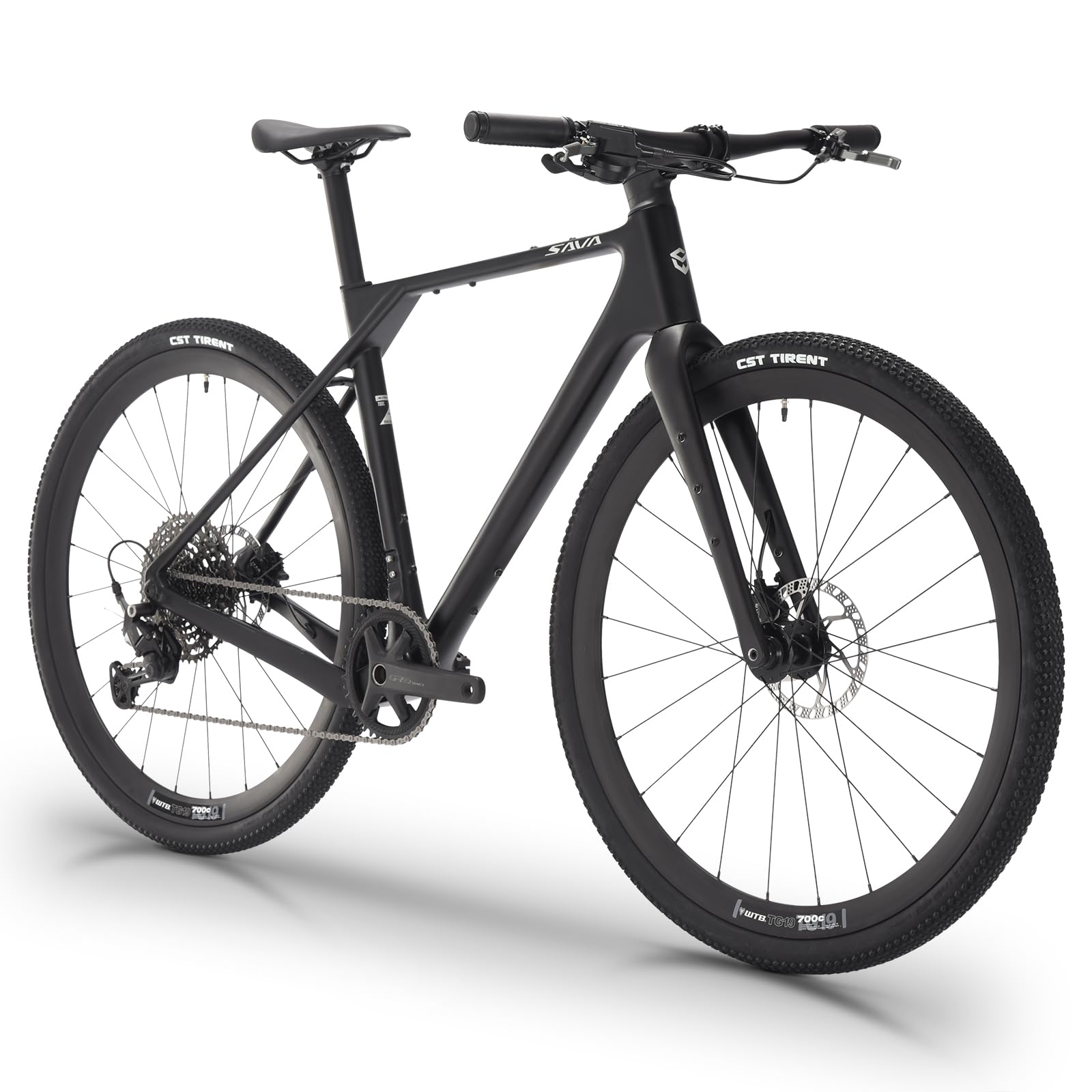
A carbon frame and fork that keeps the whole bike at 10.4kg with hydraulic stopping power
The number that decides this bike is 10.4kg (22.92 lbs) — the total weight of a T800 carbon fiber frame and fork, which is genuinely light for a mixed-terrain machine. The maker claims a 5x strength-to-weight ratio over aluminum, and the T800 frame is why the 10.4kg build accelerates quickly and shoulders easily up stairs. Hydraulic disc brakes change the stopping feel entirely: consistent power in all conditions, with internal cable routing keeping the lines clean and protected from grit.
The 11-speed Shimano U6000 setup is the leanest drivetrain here, and that is a deliberate philosophy — fewer gears, cleaner shifts, less to maintain. This is where the comparison bites: at 14 speeds the Schwinn Sporterra RX gives you more steps, and at 24 the Tommaso Sentiero roughly doubles the range. If your rides include big loaded climbs, the wider gear count is the comfort valve. If your terrain is rolling and your riding is fast and varied, 11 clean gears will feel enough.
The 700x40c tires provide the mixed-surface footprint, and the maker pairs that with 45-spoke wheels for durability across mixed surfaces. The frame is a comfortable upright design with a tapered head tube for steering stability at speed. It arrives 90% pre-assembled with tools included, so the first ride is not gated by a long build session. Buyers get a full-carbon bike with hydraulic discs when they want lighter weight and easier climbing feel rather than maximum gear count.
What earns it a spot
- T800 carbon frame and fork at 10.4kg (22.92 lbs)
- Hydraulic disc brakes for consistent stopping in all conditions
- 700x40c tires with 45-spoke wheels for mixed terrain
- Internal cable routing keeps lines protected and clean
- Arrives 90% pre-assembled with tools included
What to weigh before buying
- 11 speeds is the leanest gear count here
- Carbon frames need care against sharp impacts and over-clamping
Dialed in for: riders who prioritize low weight and powerful hydraulic braking over a large gear count.
Look elsewhere if: your regular routes demand the wider gear spread a 24-speed triple provides.
5. SAVADECK Carbon Gravel Bike GRX400
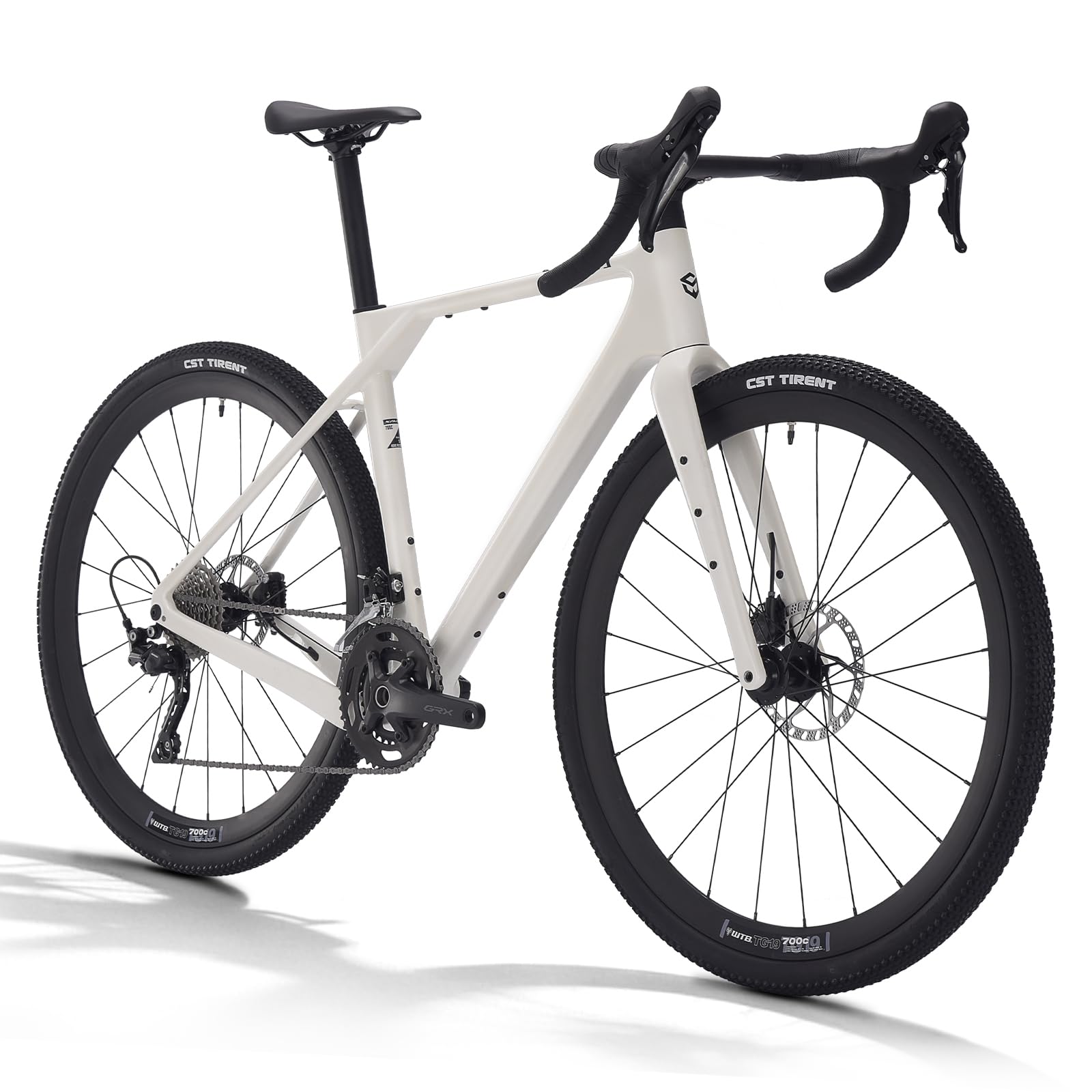
The full gravel groupset build, for riders who want the drivetrain designed for the surface
Where the other SAVADECK runs a lean 11-speed, this one steps up to a Shimano GRX400 groupset with 20 speeds — and GRX is the family of components Shimano builds specifically for gravel riding. You get GRX400 shift levers and RX400 front and rear derailleurs working as one system, plus Shimano RX400 hydraulic disc brakes. The 700x40c tires keep the mixed-surface traction, and the RX600 crankset keeps the weight down while transferring power efficiently. The frame is the same 10.4kg (22.92 lbs) T800 carbon build, so the weight advantage holds.
The shifting is the reason to choose this over its sibling. Twenty speeds against 11 is a meaningful jump for riders who spend time on rolling terrain and want the ratio to feel right on every gradient. And buyers clearly rate the way it comes together — quality and weight draw the most praise, with assembly feedback positive and value mentioned warmly, including one buyer who noted it arrives with features you would normally expect on a pricier bike.
The comfortable upright frame, internal cable routing, and tapered head tube give the steering a planted feel at speed without making the bike twitchy on loose surfaces. The trade-off is simply gearing granularity versus complexity: 20 speeds is more range and more parts to keep tuned than a lean 11-speed. If you want to spend less time thinking about the drivetrain and more time riding, the 11-speed U6000 is the leaner choice. If you want the bike built for gravel from the levers outward, this is the one.
Why the spec sheet matters here: a GRX400 groupset is built for gravel, and 20 speeds give you a ratio for every gradient rather than a compromise.
Where it balances out: more gears mean more to maintain — this is the pick for a rider who values range and is happy to keep the drivetrain tuned.
Made for: serious gravel riders who want a carbon frame, hydraulic brakes, and a gravel-specific groupset in one package.
Not the pick for: buyers chasing the absolute simplest drivetrain — the 11-speed sibling would suit that rider better.
Know the Specs
Drivetrain and Total Speeds
The drivetrain is everything that moves the chain: shifters, derailleurs, cassette, chainrings, and chain. “Total speeds” is the count of usable gear combinations — 14, 20, 21, or 24 across these picks. A triple crankset with three rings and an 8-speed cassette, for example, yields 24 (3×8). More speeds means smaller jumps between gears, which helps you hold cadence on rolling ground. Fewer speeds means a simpler, lighter setup but a more pronounced step between ratios. Match the count to your terrain: climbers and loaded riders benefit from more steps, while flat, fast riders do fine with fewer.
Brake Style: Mechanical vs Hydraulic Disc
Mechanical disc brakes pull a steel cable to squeeze the pads — simple, adjustable with basic tools, and self-serviceable on the road. Hydraulic disc brakes push fluid through a sealed line, delivering smoother modulation and strong bite under sustained wet braking. The trade is maintenance: hydraulic lines need bleeding eventually, while cables are changed with hand tools. If you ride in rain or descend loaded, hydraulics give a calmer feel. If you want to understand and adjust your own bike, mechanical keeps everything visible.
Frame Material and Fork Type
Frame material drives weight, ride feel, and price. Aluminum is durable, cost-effective, and holds up to knocks. Carbon fiber trims weight and damps high-frequency vibration, which shows up as less hand and shoulder fatigue on rough surfaces. The fork matters independently — a carbon fork (as on the Tommaso Sterrata) is lighter and more compliant than steel, while a steel fork is sturdy and forgiving. On the value end, an aluminum frame with a carbon fork is a smart way to get damping where you feel it most, at your hands. Tire width adds further cushioning you can feel directly.
Tire Width and Wheel Size
All six bikes here use 700c wheels — the standard road and gravel diameter. Tire width is the variable: 38c and 40c are the working numbers in this group. A 38c tire is narrower and rolls faster on tarmac but transmits more of the road surface. A 40c tire holds more air volume, so it floats better on loose stone, roots, and washboard, at a small cost in pavement speed. For genuine two-surface riding, 40c is the comfortable middle. Wider tread also means you can run lower pressure for grip without pinching the tube.
Common Questions
Will a 40mm gravel tire fit on all of these bikes?
Is 24-speed better than 11-speed for gravel riding?
Do I need hydraulic disc brakes on a gravel bike?
What rider height does the Schwinn Sporterra RX fit?
How much assembly is required when a gravel bike arrives?
Can I ride a gravel bike on pure road and pavement?
Is a carbon fork worth it over a steel fork on gravel?
What is the difference between the two SAVADECK carbon gravel bikes?
How do I keep a gravel bike shifting cleanly on mixed terrain?
Can a gravel bike handle loaded bikepacking trips?
The Bottom Line
For most riders, the versatile gravel bike that hits the widest balance is the Tommaso Sentiero — 24 speeds for real climbing range, 40mm tires for mixed-surface grip, and mechanical discs you can service yourself. If you want carbon-fork buzz damping without the carbon-frame price, the Tommaso Sterrata is the value upgrade — just set aside time for a brake and shifter tune before your first ride. And if you want the gravel-specific drivetrain that Shimano built for this exact surface, the SAVADECK GRX400 tops the range with 20 speeds, hydraulic brakes, and a 10.4kg carbon frame. The takeaway is simple: match the gear count to your climbs and the tire width to your surface mix, and one bike covers both your commute and your weekend.
How we choose
We do not accept paid placement. Every pick is matched to a real buyer and a real use-case; we do not hands-on test units.
Sources
Specifications: manufacturer listings and product documentation. Review insights: verified customer reviews, as of November 2026. Pricing: not shown on this page (it changes often); check the current price via the retailer link.
As an Amazon Associate, Tactical Gear Guy earns from qualifying purchases. This does not affect which products we feature.