Specs are compiled from manufacturer listings and verified buyer reviews and can change over time — please confirm the key details on the product page before buying.
You want one microphone that handles a lead vocal on Monday, an acoustic guitar on Wednesday and a podcast interview on Friday — without buying three mics. That is exactly what a versatile condenser mic is for, and the difference between a good one and a frustrating one is usually a single feature: whether the polar pattern (the shape of the area the mic “listens” to) can be switched. The picks below were chosen on that basis first, then on noise floor (how quiet the mic is when nothing is happening), build and what comes in the box.
This guide is built by comparing the manufacturers’ published specifications and the patterns across verified customer reviews, so you get each pick’s real strengths and trade-offs instead of marketing spin.
A cardioid-only mic locks you into one recording angle, while a multi-pattern model lets you swap pickup shapes as the session changes. Below you’ll find the versatile condenser mic that matches how you actually record, from a treated booth to a noisy bedroom.
Top Picks


How To Choose The Best Versatile Condenser Mic
The mistake almost every first-time buyer makes is shopping by brand name or by how the mic looks on a stand. What decides whether a condenser mic is genuinely versatile is much more boring and much more useful: how many pickup shapes it offers, how quiet it is when nothing is happening, and whether the accessories you need arrive in the box or cost extra.
Start with the polar pattern count, not the badge
A polar pattern is the shape of the zone a mic picks up sound from. Cardioid hears what is in front of it and rejects the back, which is why it dominates vocal work. Omnidirectional hears the whole room, which suits a group around a table or capturing ambience. Figure-8 hears front and back and rejects the sides, which is the classic trick for two singers facing each other on one mic. If you record more than one kind of source, a mic with switchable patterns does the work of several fixed-pattern mics. Continuously variable pattern control goes a step further, letting you land anywhere between those shapes instead of picking from three fixed stops.
Read the self-noise number before anything else
Self-noise is the faint electrical hiss the mic makes with no sound going in, measured in dB (decibels). On a loud drum take you will never hear it. On a quiet fingerpicked guitar or a soft spoken-word take, it can be the difference between a clean track and one you have to fix in editing. Lower is better here, and the gap between models is real rather than academic.
Match SPL handling to what you record
SPL stands for sound pressure level — how loud a source is — and a mic’s maximum SPL is the point where its output starts to distort. If you only ever record voice, almost any condenser clears the bar. If you plan to put the mic in front of a drum kit or a cranked guitar amp, a high maximum SPL rating and a pad switch (which drops the signal level before it reaches the circuit) are what keep the recording clean.
Count what is actually in the box
A shock mount holds the mic in a cradle so floor thumps and stand knocks do not travel up into the capsule. A pop filter softens the burst of air from P and B sounds. These are not luxuries — they are the difference between a usable first session and a second shopping trip. Some mics bundle both, and that changes the real cost of getting started.
Assume you need an audio interface
Every mic here connects over XLR, the three-pin studio connector, and none of them plug straight into a laptop’s headphone jack. You will need an audio interface or mixer with an XLR input that supplies phantom power — the voltage a condenser needs to charge its capsule. Budget for that before you budget for the mic itself.
Side-by-Side Comparison
| Model | Best For | Patterns | Self-Noise | In The Box | Amazon |
|---|---|---|---|---|---|
| LEWITT LCT440PURE★ Best Overall | One-mic studio work | Cardioid | 7 dB | Shock mount, magnetic pop filter | Amazon |
| RØDE NT1 Signature SeriesQuietest Pick | Silent-room vocals | Cardioid | 4 dBA | Shock mount, pop filter, 6m XLR cable, dust cover | Amazon |
| CAD Audio M179Pattern Master | Pattern experimentation | Variable omni to figure-8, cardioid detent | — | Shock mount, internal pop filter | Amazon |
| Aston Origin | Built-like-a-tank vocals | Cardioid | — | Built-in pop filter, direct-to-stand mount | Amazon |
| Shure SM4 Kit | Home rooms with noise | Cardioid | — | Shock mount, magnetic pop filter, stand adapter, case | Amazon |
| Audio-Technica AT2050 | Multi-source sessions | Omni, cardioid, figure-8 | — | Shock mount, protective pouch | Amazon |
| Warm Audio WA47jr | Warm vintage-flavoured tone | Cardioid, figure-8, omni | — | Microphone | Amazon |
| Audio-Technica AT4040 | Detailed instrument capture | Cardioid | — | AT8449 shock mount, dust cover, carrying case | Amazon |
| AKG C214 | Loud sources and stage | Cardioid | — | Rugged aluminum carrying case | Amazon |
Detailed Reviews
1. LEWITT LCT440PURE Large Diaphragm Condenser Mic
Our pick — 4.5+★ from 750+ verified ratings; the strongest balance of quality and price.
A bright, detailed studio capsule that ships with the two accessories most mics charge extra for.
If you record vocals on Monday and an acoustic guitar on Tuesday, this is the mic that quietly handles both. Its 1-inch true condenser capsule (the sound-capturing element itself, roughly the diameter of a coin) gives you depth on a voice and detail on strings. The cardioid polar pattern rejects the rear, so the wall behind the mic stops bleeding into your take — that is why it works as well at a home desk as it does in a treated room.
What wins people over is the sound quality above all, with value for money running a clear second — this is a mic that gets compared favourably to far more expensive studio models. It is also built like a metal enclosure should be, so a knocked stand is not a disaster. The 44 dB audio sensitivity (how much output the mic produces for a given sound) means you are not cranking your interface gain to the ceiling for a quiet vocal. At 7 dB of audible noise it sits higher than the quietest mic on this list, the RØDE NT1 Signature Series at 4 dBA — so on an extremely quiet source, the RØDE has the edge.
The practical bonus is the bundle: a shock mount and a magnetic pop filter come with the mic. That magnetic filter clicks on and off in a second, which matters when you are swapping between a vocal take and an instrument take and do not want to unscrew anything. One more thing worth knowing — it needs an interface or mixer that supplies phantom power over XLR, so a bare laptop will not drive it.
Where it earns its keep
- 1-inch true condenser capsule delivers depth and clarity on voice and instruments alike.
- Cardioid pattern rejects the rear, keeping unwanted room sound out of the take.
- Shock mount and magnetic pop filter both in the box.
- All-metal enclosure that stands up to regular handling.
What to weigh first
- Cardioid only — no omni or figure-8 if you want pattern switching.
- At 7 dB audible noise it is noisier than the lowest-noise option here.
- Requires an XLR interface with phantom power, sold separately.
Pick this if: you record one source at a time and want a detailed, ready-to-go studio sound without buying accessories separately.
Different mic if: you need to switch patterns for group or ambience work — the CAD M179 and AT2050 do that, this one does not.
2. RØDE NT1 Signature Series
The hiss-free option for whisper-quiet takes and soft acoustic playing.
Quiet sources are where most condenser mics give themselves away. The NT1 Signature Series lists 4 dBA (A-weighted decibels, the standard way self-noise is measured), versus the LEWITT’s 7 dB. On a belted vocal you will not notice; on a fingerpicked intro or a hushed spoken-word piece, that headroom keeps the background silent.
The HF6 1-inch true condenser capsule handles high SPL (loud sources) without breaking up, so the same mic that captures a soft vocal can sit in front of a guitar amp. The frequency response is described as smooth, which in practice means the mic flatters a voice rather than spotlighting one harsh frequency. Buyers describe hearing detail and nuance they did not get from cheaper mics — the kind of thing that shows up as a vocal sitting in the mix with less work.
The bundle deserves attention: a studio-grade shock mount, pop filter and a 6 m XLR cable all come with it, plus a dust cover. That 6 m cable is longer than most starter cables, which means you can stand further from the interface without hunting for an extension. Size is compact too, at 2.05 x 2.05 x 7.48 inches, so it does not dominate a small desk. RØDE backs it with a 10-year warranty, a longer coverage term than most studio condensers carry.
Where the money goes: the exceptionally low self-noise and the full accessory bundle — shock mount, pop filter and a 6 m XLR cable are included, not upsold.
The honest catch: it is cardioid only, so if you want omni for room capture or figure-8 for two-person recording, this mic cannot change shape.
Built for the quiet stuff: solo vocalists and acoustic players recording in a room that is already fairly silent.
Not the tool for: anyone who needs switchable patterns — a fixed cardioid will feel limiting the first time you record a duo.
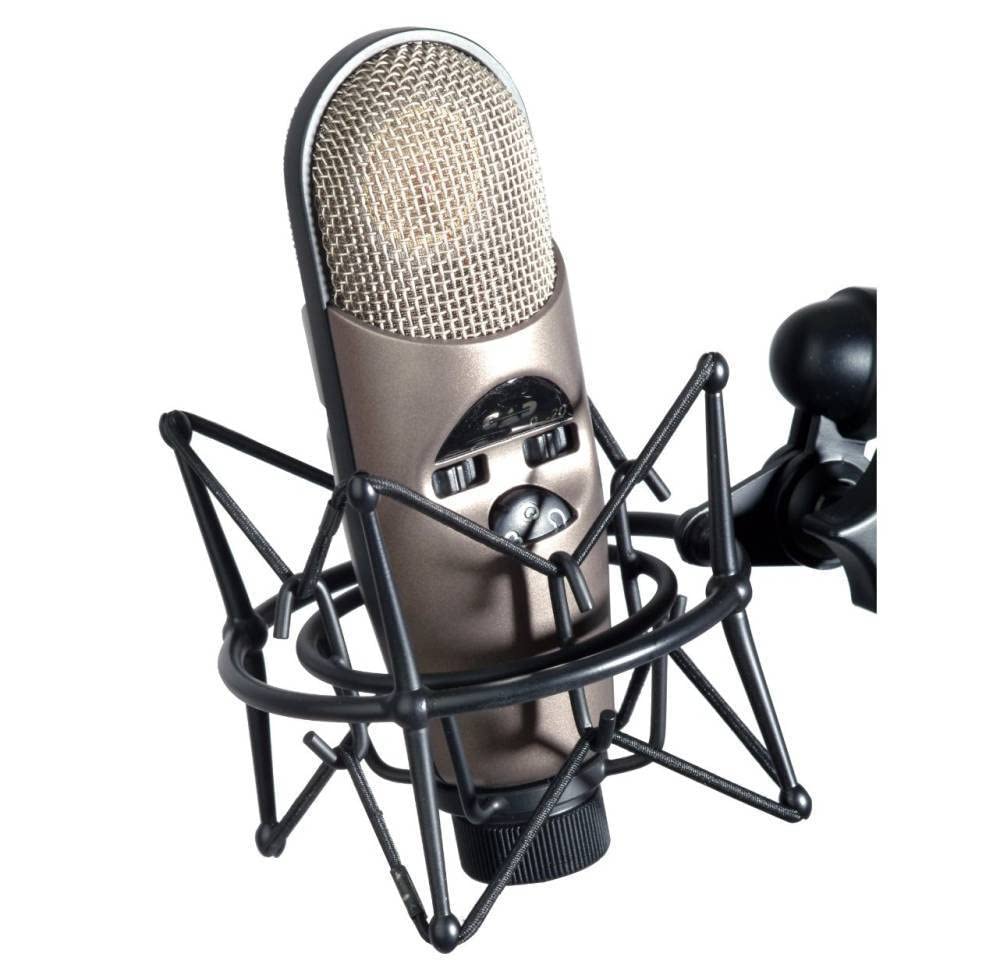
3. CAD Audio M179
A dial between omni and figure-8, so one mic covers the whole room.
This is the pick for anyone who keeps running into the limits of a fixed pattern. The M179 offers a continuously variable polar pattern running from omnidirectional through to figure-8, with a hard detent at cardioid so you can feel where the standard vocal setting sits. That dial gives you figure-8, hyper-cardioid, cardioid, sub-cardioid and omni from a single mic, with the cardioid detent marking the standard vocal setting. Recording a duo facing each other, a choir in a circle, or a drum kit from across the room all become possible without a second microphone.
Underneath it all is a gold-sputtered 1.1-inch diaphragm, sized specifically for a rich, detailed tone across a wide range of sources. The stainless steel body gives it a heft that feels like studio gear, and a shock mount with an internal pop filter is in the box. Sound quality and build quality are what carry this mic, with versatility a close and frequently-praised companion.
One spec note in plain terms: its 11 dB audio sensitivity is far lower than the Audio-Technica AT2050’s 42 dB, which means this mic pushes out less signal for a given sound. In practice you will run your interface preamp higher, and on a very quiet source you may hear more of the preamp. The trade is a capsule that stays calm when a loud source hits it.
Reach for this if: you want one mic that can be omni for a room, figure-8 for two singers, and cardioid for a solo vocal.
Know before you buy: the low 11 dB sensitivity means you will lean harder on your interface’s gain knob, so a clean preamp matters.
4. Aston Microphones Origin

A stainless steel body with a pop filter woven into the grille, built in the UK.
Handling noise and stand knocks are the quiet killer of home recordings, and the Origin attacks both from the design side. The chassis is 2 millimetre solid stainless steel, laser cut and etched, and the pop filter is built into the head rather than clamped on as a separate hoop. At 1.3 pounds versus the Shure SM4 kit’s 2.5 pounds, it is easier to position on a light boom arm without the arm sagging.
The mounting is another practical touch: the Origin mounts direct to the stand, so there is no separate shock mount cradle to set up. The capsule delivers a detailed, mid-forward character that sits well on voice without harshness on consonants. A low cut switch on the body rolls off low-frequency rumble — the kind of thing that saves you from traffic noise bleeding into a take recorded near a window.
Design is a genuine part of the appeal here; it looks like nothing else on a stand, and the stainless finish holds up to fingerprints better than a matte black body. Quality and sound quality are what owners talk about most. What it does not offer is pattern switching, so for a two-person interview or a room capture you would be reaching for the CAD M179 or the AT2050 instead.
What the steel buys you
- 2 mm solid stainless steel chassis that takes daily handling in stride.
- Pop filter built into the head, so no separate hoop to position.
- Mounts directly to the stand — no shock mount cradle to fit.
- Low cut switch rolls off low-frequency rumble from traffic and footsteps.
Where it stops short
- Cardioid only, so no omni or figure-8 option.
- No self-noise figure published, so quiet-source work is a leap of faith.
- No shock mount in the box beyond the direct-to-stand mounting.
For the vocalist who wants a tank: a solid, stand-mounted cardioid that shrugs off handling and street noise.
Look elsewhere if: pattern switching is on your must-have list — this one does not budge from cardioid.
5. Shure SM4 XLR Studio Condenser Microphone Kit for Recording

Built for the bedroom that has a phone on the desk and a router in the next room.
Most mic advice assumes a treated room. The SM4 assumes reality. Patent-pending interference shielding blocks RF noise from cell phones, laptops and Wi-Fi routers, which is the exact interference that shows up as a faint buzz in an untreated home setup. A woven mesh Faraday cage wraps the capsule for the same reason. If your recording space is a desk in a living room, this is the design detail that earns the pick.
The brass 1-inch dual-diaphragm capsule gives a clean, controlled low end and smooth highs, and a uniform cardioid pattern (a pickup shape that listens mostly from the front) rejects off-axis noise so a computer fan to the side stays out of the take. The “balance” is deliberately large, so your level stays consistent even if you move a little while performing. That means your level stays consistent even if you move a little while performing. It handles sources up to 140 dB SPL without distorting, so a drum hit or a loud amp is within range.
The kit is complete: the mic, a detachable magnetic pop filter, a shock mount, a brass mic stand adapter and a zippered carrying case. It is also the heaviest mic here at 2.5 pounds across 10.03 x 7.99 x 4.1 inches of packaging — solid rather than dainty. The low-profile design keeps it from blocking the performer on camera, which matters for streaming.
The real differentiator: RF shielding and a woven mesh Faraday cage target the interference that ruins home recordings, not just studio ones.
What it will not do: it is cardioid only, so if your plan is two-person interviews on one mic, you need a figure-8 option elsewhere on this list.
Buy it if: you record at a desk with a phone, laptop and router nearby and want the interference handled in hardware.
Pass if: you need to switch patterns mid-session — this one is a fixed cardioid.
6. Audio-Technica AT2050 Multi Pattern Condenser Mic

Three patterns and a pad switch, so it covers vocals, guitar, sax and percussion.
Versatility here is a switch, not a promise. Three polar patterns — omni, cardioid and figure-of-eight — cover the three situations that come up most: a solo vocal, a whole room, and two people facing each other. On top of that, an 80 Hz high-pass filter rolls off rumble and a 10 dB pad drops the signal before it hits the circuit for loud sources. The combination is what lets one mic cover a singer, a guitarist and a sax player without changing hardware.
The large diaphragm is tensioned for a smooth, natural sound with low noise, and the surface-mount electronics are built to A-T’s consistency standards, which matters when you are relying on a single mic for everything. It comes with a shock mount and a protective pouch, so the essentials are covered. Buyers consistently single out how far the sound stretches for the money — it gets compared to pricier models in the same breath.
In terms of sensitivity, its 42 dB figure is a strong output level, so you will not be fighting your interface for gain. Compared with the CAD M179’s continuously variable dial, this one gives you three fixed stops rather than a sweep between them — but it adds the pad and filter switches the CAD does not list. For most home studios, three fixed patterns plus those switches is the more useful combination.
The one for changing sessions: you record vocals one day, a guitar the next and a duo the day after, and want it all from one mic.
The limit to accept: three fixed patterns rather than a continuous sweep — if you want to land between omni and cardioid, the CAD M179 is the one that dials.
7. Warm Audio WA47jr Large Diaphragm Condenser Mic, Black
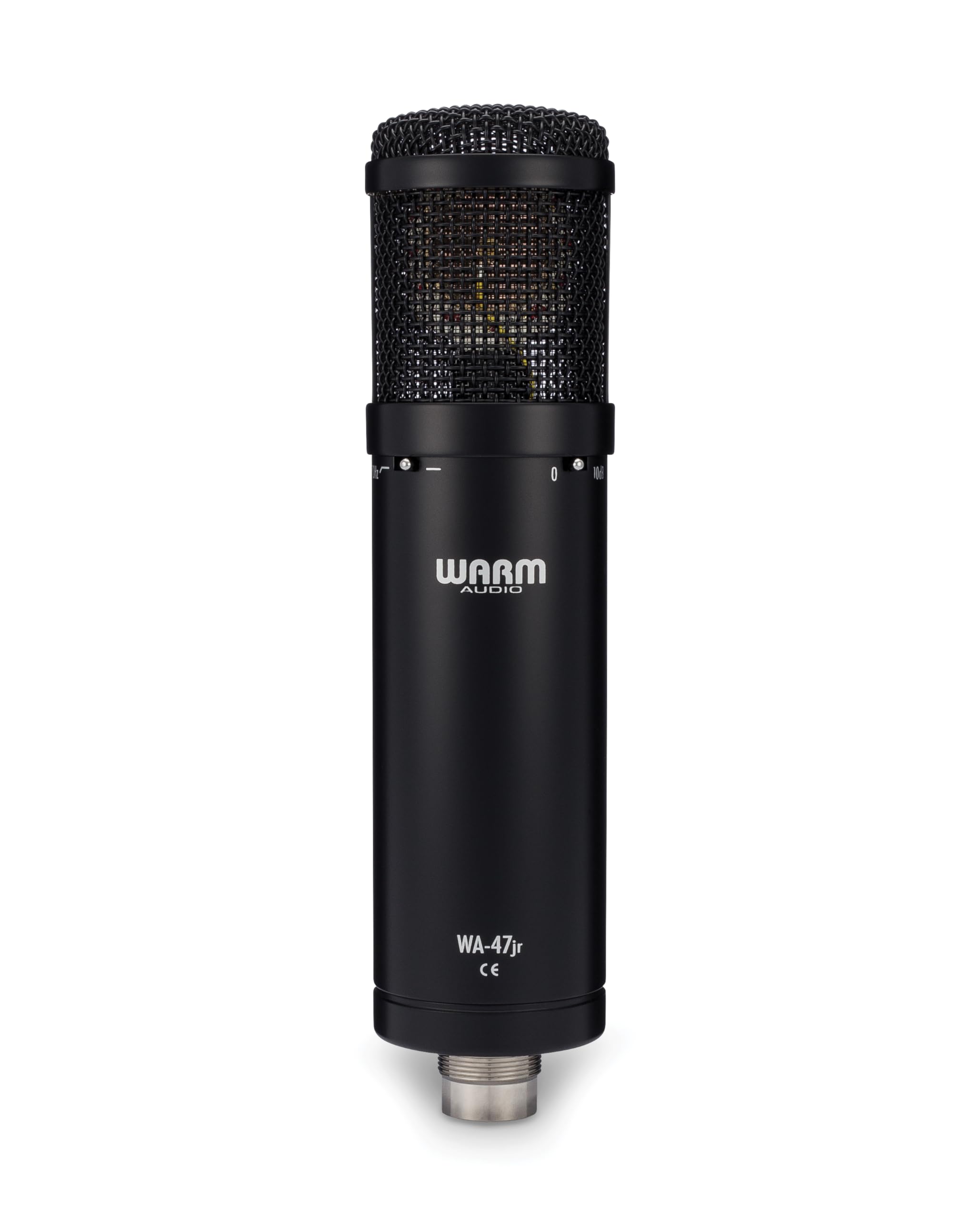
A modern take on a classic ’47 capsule, with the warmth that name implies.
Some voices want a mic that adds character rather than reports the truth. This is that mic. The WA47jr is a transformerless FET version of the renowned classic ’47 design, built around a custom k47-style capsule reproduced with the same hole pattern and frequency response as the vintage original. The result is the warm, rounded tone singers associate with classic vocal records — a voice sounds bigger and softer through it, which is why it gets picked for lead vocals and broadcast work.
It is fully discrete and offers three polar patterns, so it handles pro studio, home studio, live and broadcast duty from the same body. The brass construction gives it real weight at 3.59 pounds, and it looks the part on a stand. Sound quality carries the reputation here, with value for money a close second — the warmth is what people come back for.
The honest note is durability. Build reports are split, with a share of buyers finding the unit fragile over time. That does not erase the tone, but it does mean you should treat it as studio gear to be mounted and left alone rather than something to throw in a gig bag. If you need a mic that travels hard, the stainless steel Aston Origin is the sturdier pick.
The case for the warmth
- Custom k47-style capsule reproduces the vintage hole pattern and frequency response.
- Three polar patterns cover studio, live and broadcast duty.
- Fully discrete transformerless design for a clean, characterful signal path.
- Brass body with real weight on the stand.
What to plan around
- Durability reports are mixed — treat it as fixed studio gear.
- No shock mount listed in the box.
- The vintage-voiced tone colours every source, which is not what every instrument wants.
Suits a voice that needs body: singers and voice-over artists chasing classic warmth over clinical accuracy.
Choose a different body if: the mic will travel — the mixed durability feedback makes a fixed stand mount the safer home.
8. Audio-Technica AT4040 Cardioid Condenser Microphone

A transformerless cardioid that catches every detail inside its pickup zone.
Accuracy is the whole point of the AT4040. The externally polarized true condenser design pairs a large diaphragm, tensioned specifically for smooth natural characteristics, with transformerless circuitry that virtually eliminates low-frequency distortion. In plain terms: on a bass-heavy source the low end stays defined instead of turning to mush, and fast transients — the sharp attack of a picked string or a drum hit — come through with their edge intact.
The precision-machined, nickel-plated brass acoustic baffle shields the capsule from electrical interference, keeping the output clean and consistent. It handles high SPL, which is why it turns up on both vocals and instruments in the same session. Its characteristic sound puts vocals up front and clear, capturing everything within the pattern — detail is the thing people notice first, and versatility for both voice and instrument runs through the same feedback.
In the box you get the AT8449 shock mount for 5/8-27 threaded stands, a dust cover and a protective carrying case, so it is genuinely ready to mount and record. Note that it is cardioid only. If your session plan includes figure-8 for two singers or omni for a room, the AT2050 is the sibling that switches; this one stays fixed and concentrates on doing one pattern exceptionally well.
What sets the sound: transformerless circuitry keeps low-frequency distortion out of the signal, so loud, bass-heavy sources stay clean and transients keep their attack.
The trade-off: fixed cardioid only — detail and accuracy are the promise, not pattern flexibility.
Worth it for: instrument and vocal work where you want every nuance captured accurately in a front-facing pickup zone.
Wrong choice when: your sessions need omni or figure-8 — look at the AT2050 for switchable patterns.
9. AKG Pro Audio C214

Built for sources loud enough that most condensers start to flinch.
If a drum kit or a cranked amp is on your recording list, this is the number that matters: up to 156 dB SPL. That is a huge ceiling for a condenser, and it means close-miking a loud source is within range rather than at the edge of distortion. A switchable 20 dB attenuator (a pad that drops the level before the mic’s circuit reacts) and a bass-cut filter let you trim the signal at the source and reduce proximity effect — the bass boom you get when the mic sits close to the source.
An outstanding dynamic range and ultralow noise pair with that high SPL ceiling, which is why the same body covers a whisper and a snare. Integrated suspension inside the housing reduces mechanical noise and vibration travelling up from the stage, and the aluminum body is built to travel in the rugged aluminum carrying case that comes with it. Durability is a consistent theme in owner reviews — the aluminum body and integrated suspension are expected to hold up over years of stage and studio handling.
What carries the reputation is build and sound together, with value and versatility both running strong. Its sound is described as clear and crisp, which suits acoustic guitar and vocals without any help. A fair note: it is cardioid only, so figure-8 and omni work needs a different mic — the CAD M179 covers that ground. Also weigh the weight at 0.8 kg, which is substantial on a light stand.
Why it takes the abuse
- Handles sources up to 156 dB SPL without clipping — drum kits and amps included.
- Switchable 20 dB attenuator and bass-cut filter for close-up work.
- Integrated suspension reduces stage vibration noise.
- Rugged aluminum carrying case included for transport.
The limits to plan around
- Cardioid only — no omni or figure-8 for room or paired recording.
- 0.8 kg is heavy enough to need a solid stand.
- No shock mount listed beyond the integrated suspension.
Made for loud rooms: anyone recording drums, amps or other high-SPL sources that would strain a lighter condenser.
Not for pattern switching: if a figure-8 or omni option is on your list, this mic cannot provide it.
Know the Specs
Self-Noise (dB / dBA)
The faint electrical hiss a mic makes with no sound going in, measured in decibels. On a loud guitar amp or a drum take you will never hear it. On a quiet fingerpicked intro or a soft spoken take it can be the loudest thing in the recording. Lower is better. The RØDE NT1 Signature Series at 4 dBA and the LEWITT LCT440PURE at 7 dB are the two clearest reference points on this list. A low figure means you can add gain at the interface without dragging the noise floor up with it.
Polar Patterns
A polar pattern is the shape of the area a mic listens to. Cardioid is a front-facing heart shape and rejects the back, which is why it dominates vocal work. Omnidirectional hears the full room and suits a group around a table or ambience. Figure-8 hears front and back and rejects the sides, which is the classic method for two singers facing each other. Fixed-pattern mics do one of these; multi-pattern mics let you switch. Three fixed patterns plus pad and filter switches, as on the AT2050, is often more useful than a continuous sweep for a home studio.
Maximum SPL and Pad Switches
SPL stands for sound pressure level — how loud the source is. A mic’s maximum SPL is the point where its output starts to distort. The AKG C214 is rated up to 156 dB SPL and the Shure SM4 up to 140 dB, which puts both in range for drums and loud amps. A pad switch, like the 10 dB pad on the AT2050 or the 20 dB attenuator on the C214, drops the signal before the circuit reacts, so you can close-mic a loud source without clipping. If you only record voice, this spec is far less important.
Sensitivity and Impedance
Sensitivity describes how much electrical output a mic produces for a given sound level, measured in dB. Higher means more signal for less gain on your interface. The AT2050 lists 42 dB and the LEWITT LCT440PURE lists 44 dB, while the CAD M179 lists 11 dB — so the CAD needs noticeably more preamp gain, which can mean more noise from the interface itself. Impedance, the electrical resistance, is typically around 200 ohms on a studio condenser, such as the LEWITT’s 200 ohm figure, and matching it to your interface’s input is what keeps the signal clean.
Common Questions
Do I need an audio interface to use a versatile condenser mic?
What is the difference between cardioid and figure-8 patterns?
Does a lower self-noise number really matter for vocals?
Can I record drums with a large-diaphragm condenser?
Do I need a shock mount and pop filter?
What does the 10 dB pad on the AT2050 do?
Is a variable-pattern mic better than a three-pattern mic?
Will a condenser mic pick up noise from my phone and router?
Which pattern should I use for a two-person interview?
Do these mics work for streaming and video recording?
The Bottom Line
For most people, the versatile condenser mic to beat is the LEWITT LCT440PURE, because it pairs a 1-inch true condenser capsule with a shock mount and magnetic pop filter in the box — the two accessories most mics make you buy separately. If your sessions need to switch between omni (picks up sound from all around) and figure-8 (picks up from front and back), the Audio-Technica AT2050 gives you three patterns plus a pad and filter for the widest range of sources. And for a stage or loud-room job where 156 dB SPL headroom matters, the AKG C214 is the one to reach for.
The honest nudge: the LEWITT is the crowd favourite at 4.5+ stars across 700+ ratings, but if your room is quiet and your source is a whisper or a soft fingerpicked guitar, the RØDE NT1 Signature Series at 4 dBA (a very low self-noise level) is the lower-noise tool for that specific job.
How we choose
We do not accept paid placement. Every pick is matched to a real buyer and a real use-case; we do not hands-on test units.
Sources
Specifications: manufacturer listings and product documentation. Review insights: verified customer reviews, as of November 2026. Pricing: not shown on this page (it changes often); check the current price via the retailer link.
As an Amazon Associate, Tactical Gear Guy earns from qualifying purchases. This does not affect which products we feature.