Specs are compiled from manufacturer listings and verified buyer reviews and can change over time — please confirm the key details on the product page before buying.
Buying a furnace is mostly a sizing and fit decision, not a brand decision. Get the BTU output (how much heat it makes), the AFUE rating (how much of the gas it turns into usable heat) and the cabinet width right, and the unit will heat your house quietly for years. Get any of those three wrong and even a well-built furnace becomes an expensive headache. This guide walks through the real choices — gas versus electric, single-stage versus two-stage, 80% versus 96% — and which furnace suits which home.
This guide is built by comparing the manufacturers’ published specifications and the patterns across verified customer reviews, so you get each pick’s real strengths and trade-offs instead of marketing spin.
The furnace that fits your duct opening, your climate and your gas line is the one you want. Below you’ll find best types of furnaces sorted by efficiency, staging and cabinet size.
Top Picks
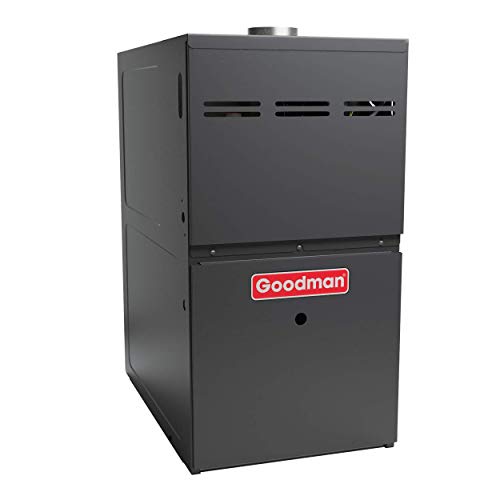


How To Choose The Best Types of Furnaces
A furnace is one of the few home purchases where the wrong size is worse than a lower grade. A unit that makes too much heat will blast on and off in short bursts, leave cold spots, and wear itself out faster than one matched to the house. So before you look at efficiency percentages, work out two things: how many BTUs (British Thermal Units, the standard measure of heat output) your home actually needs, and how wide a cabinet your duct opening will accept.
Start with BTU output, not brand
BTU output tells you how much heat the furnace delivers. A 60,000 BTU gas furnace is typically sized for a modest, well-insulated home, while 100,000 BTU and 120,000 BTU units are built for larger or leakier houses. The number to match is the one your installer calculates from square footage and insulation — not the biggest figure on the page. Oversized furnaces heat fast and then sit idle, which wastes fuel and creates temperature swings room to room.
Understand AFUE before you compare prices
AFUE (Annual Fuel Utilization Efficiency) is the percentage of gas energy the furnace turns into actual heat. An 80% AFUE furnace sends roughly a fifth of its fuel up the flue, while a 96% AFUE condensing unit captures most of that. Higher efficiency usually means different venting — often PVC pipe rather than a metal flue — so the higher-AFUE models can cost more to install even when the equipment spec looks similar. In a cold climate where the furnace runs hard, the 96% models tend to make the most sense; in a mild climate, an 80% single-stage can be the smarter spend.
Single-stage versus two-stage: comfort you can feel
A single-stage furnace runs at one full output setting — on or off. A two-stage furnace runs on low most of the time and steps up to high only on the coldest days, which keeps temperatures steadier and runs quieter. If your rooms currently swing hot and cold, or you want the blower to run longer at a gentler pace, the two-stage models are worth the step up. If your ductwork is basic and you mainly care about reliability, a single-stage unit does the job.
Cabinet width and install orientation are non-negotiables
Every model below lists its cabinet width, and it must match the space your old furnace occupied. The narrower 14-inch and 17.5-inch cabinets fit tighter closets, while the 21-inch and 24.5-inch cabinets are for larger airflow demands. Orientation matters just as much: these are upflow or horizontal units and cannot be installed as downflow. If your ductwork flows downward, you need a model whose number begins with GD9 instead. Accessories like thermostats, linesets, LP conversion kits and venting kits are sold separately on most of these, so budget for them.
Side-by-Side Comparison
| Model | Best For | Heating Output | Efficiency | Cabinet Width | Amazon |
|---|---|---|---|---|---|
| Goodman GR9S800803BN | All-round family home | 80,000 BTU | 80% AFUE | 17.5 in | Amazon |
| Goodman MBVK12BP1X00 Electric | No gas line, mobile homes | 34,120 BTU | Electric | 17.5 in | Amazon |
| Goodman GR9S960803BN | Efficient whole-house heat | 80,000 BTU | 96% AFUE | 17.5 in | Amazon |
Detailed Reviews
1. Goodman GR9S800803BN Furnace
An 80,000 BTU workhorse with a 17.5-inch cabinet that fits the most common furnace closets.
This is the furnace most single-family homes actually need. It gives you 80,000 BTU of natural gas heat at 80% AFUE (annual fuel utilization efficiency — it turns 80% of the gas it burns into warm air for your rooms). And it drops into a 17.5-inch cabinet, the width of a standard replacement opening, so it fits the closet you already have. The multi-speed ECM motor (an electronically controlled blower that adjusts its speed instead of running flat-out) is the part you’ll appreciate day to day: it pushes air gently and quietly instead of roaring on at full tilt.
The build is aluminized steel in the primary heat exchanger, and the model replaces older units numbered GMES800803BN and GM9S800803BN. One thing to confirm before ordering: this is an upflow or horizontal furnace and cannot be installed as a downflow. If your ductwork flows downward, look for a model that starts with GD9 instead. A thermostat, lineset and LP conversion kit are all sold separately, so plan those into the job. At 175 pounds it’s a two-person lift, and your installer will handle the gas and electrical hookups.
Owners praise the build quality most by a wide margin, followed closely by how reliably it performs once it’s running. Installation feedback tends to be positive too, with the gas line, power and thermostat described as straightforward to connect. The trade-off is honest and simple: at 80% AFUE this is a standard-efficiency unit, so it sends more heat up the flue than a 96% model would. In a mild climate that’s a fair trade for the lower equipment complexity; in a hard-freeze region the higher-efficiency boxes below will cut running costs more.
Where this furnace shines
- 80,000 BTU output handles most mid-size family homes without short-cycling.
- 17.5-inch cabinet fits the most common replacement opening.
- Multi-speed ECM blower keeps airflow smooth and the noise down.
- Aluminized steel primary heat exchanger for durability.
What to know before you buy
- 80% AFUE is standard efficiency, not high efficiency.
- Upflow/horizontal only — no downflow installation.
- Thermostat, lineset and LP kit sold separately.
- 175 pounds, so it’s a two-person install.
Reach for this if: you have a standard 17.5-inch furnace closet and want a proven 80,000 BTU gas unit with a quiet blower.
Look elsewhere if: your ducts flow downward or you’re chasing maximum efficiency — you’ll need a GD9 series or a 96% model instead.
2. Goodman 60,000 BTU 80% Efficiency Furnace (GR9S800603AN)
A narrow 14-inch cabinet that slips into closets where a full-width furnace simply won’t go.
If your old furnace sat in a cramped utility closet, this is the fit that saves the job. The cabinet is only 14 inches wide (narrower than the 17.5-inch models here) and it makes 60,000 BTU at 80% AFUE — enough for a smaller, well-insulated home or a condo. The multi-speed ECM motor gives you the same controlled airflow as its larger siblings, which means steadier temperatures and less blower noise than a basic single-speed unit.
Construction is the same story as the rest of the family: aluminized steel primary heat exchanger, and it swaps out older units numbered GM9S800603AN, GMES800603AN and GMS80603AN. It’s upflow or horizontal only, so a downflow duct layout rules it out — GD9 series is your answer there. It weighs 89 pounds, which is manageable for two people, and accessories like the thermostat, lineset and LP kit come separately. The full installed dimensions run 33.38 inches deep by 28 inches wide by 33.38 inches high, so measure your closet before you commit.
The honest sizing note: 60,000 BTU is deliberately modest. On a large or drafty house it will run hard all winter; on a tight small home it’s the correct match. The narrow 14-inch width is also a genuine constraint — it’s a fit-first pick, not a one-size-fits-all unit.
Built for: small homes and tight closets where the 14-inch cabinet is the whole reason you’re replacing.
Not your unit if: you’re heating a big open floor plan — step up to the 80,000 BTU models.
3. Goodman 10 KW Electric Furnace (MBVK12BP1X00)
The number that sets this unit apart isn’t the 80,000 BTU — it’s the four-ton rating that lets it team up with a matching air-conditioning coil for year-round comfort in one cabinet. It also comes with a 10-year unit replacement limited warranty (plus the standard 10-year parts coverage) when a qualified installer does the job and you register online within 60 days. That warranty is the reason this one punches above its spec sheet.
It’s 80% AFUE natural gas, front-door access, and it looks the part with a polished grey finish. It shares the family’s multi-speed ECM motor and aluminized steel primary heat exchanger, and its dimensions run 17.5 inches deep by 28 inches wide by 33.38 inches high. The older model numbers it covers are GM9S800804BN, GMES800804BN and GMS80804BN. Upflow or horizontal only, mind — downflow needs the GD9 series.
Owners single out straightforward build quality, with reliability and ease of install close behind — and call the deal genuinely good. It’s a standard-efficiency 80% unit, so if you live where winters drag, the 96% models below will cost less to run. But for a home in a milder zone, the warranty plus the AC pairing make this the value buy of the 80,000 BTU group.
The warranty gets top billing: a 10-year replacement warranty on a major appliance is real confidence. That coverage is the clearest reason to pick this over its near-identical sibling above.
Know the limit: 80% AFUE means you still send some heat up the flue — fine in mild climates, costlier in hard winters.
Pick this one when: you want an 80,000 BTU gas furnace that can also carry an AC coil, backed by a 10-year repan 96% AFUE Two Stage 60k BTU Furnace (GR9T960603BN)
Top-tier 96% efficiency and two-stage comfort in a compact 60,000 BTU package — the quietest kind of heat.
This is the combination a lot of buyers ultimately land on: 96% AFUE fost all of it. Higher efficiency usually means a condensing design that vents differently — often PVC pipe — so installation can cost more even when the equipment looks comparable. In a hard-winter climate the 96% models tend to pay off over the years; in a mild climate an 80% unit is often the more sensible buy.
Single-Stage Versus Two-Stage
Staging is about how a furnace delivers its heat. A single-stage unit runs at one full output setting and cycles on and off. A two-stage unit runs on a low setting most of the time and steps up to high only when it needs to, which keeps temperatures steadier and runs quieter. If your rooms currently swing hot and cold, two-stage comfort is worth the step up. If your ductwork is basic and you mainly want reliable heat, a single-stage unit keeps things simple.
CFM, Cabinet Width and Orientation
CFM (cubic feet per minute) is the blower’s airflow rate — 1,200 CFM and 1,600 CFM units move more air than a smaller furnace and suit larger homes. Cabinet width must match your existing furnace opening: 14-inch and 17.5-inch cabinets are common for tighter closets, while 21-inch and 24.5-inch cabinets handle the biggest airflow demands. Orientation matters too. Every model here is upflow or horizontal and cannot be installed as downflow; if your ducts flow downward, you need a model number beginning with GD9 instead.
Common Questions
What BTU size furnace does my house need?
Is a 96% AFUE furnace worth it over an 80% model?
Single-stage or two-stage — which feels more comfortable?
Can I install any of these furnaces as a downflow unit?
How do I know which cabinet width to buy?
Can I use a gas furnace if I don’t have a gas line?
Are thermostats and venting included with the furnace?
What does the two-stage gas valve dipswitch do?
How long is the warranty on these Goodman furnaces?
Do I need a qualified installer or can I do it myself?
The Bottom Line
For most homeowners, the types of furnaces winner is the Goodman 80,000 BTU 80% Efficiency Single-Stage Furnace (GR9S800803BN). It pairs a proven 80,000 BTU output and a quiet multi-speed ECM blower with the 17.5-inch cabinet that fits the most common furnace closets — the crowd favorite at 4.5+ stars across 50+ owners. If you’re after top-tier efficiency and quieter heat, reach for the Goodman 96% AFUE Two Stage 80k BTU Furnace (GR9T960803BN), which combines 80,000 BTU, 96% AFUE and two-stage comfort in one unit. And for the biggest homes that genuinely need the output, the Goodman 96% AFUE Two Stage 100k BTU Furnace (GR9T961004CN) is the one to reach for, with 100,000 BTU and 1,600 CFM of airflow.
Before you click buy on any of these, do the one thing that decides whether the furnace fits: measure your cabinet opening and confirm your duct orientation. Get those two right, match the BTU to your home’s load, and any of these furnaces will heat steadily for years. Get them wrong, and even the best-specced unit becomes a return. The stages and efficiency tiers add comfort and running-cost savings, but fit comes first.
How we choose
We do not accept paid placement. Every pick is matched to a real buyer and a real use-case; we do not hands-on test units.
Sources
Specifications: manufacturer listings and product documentation. Review insights: verified customer reviews, as of November 2026. Pricing: not shown on this page (it changes often); check the current price via the retailer link.
As an Amazon Associate, Tactical Gear Guy earns from qualifying purchases. This does not affect which products we feature.