Specs are compiled from manufacturer listings and verified buyer reviews and can change over time — please confirm the key details on the product page before buying.
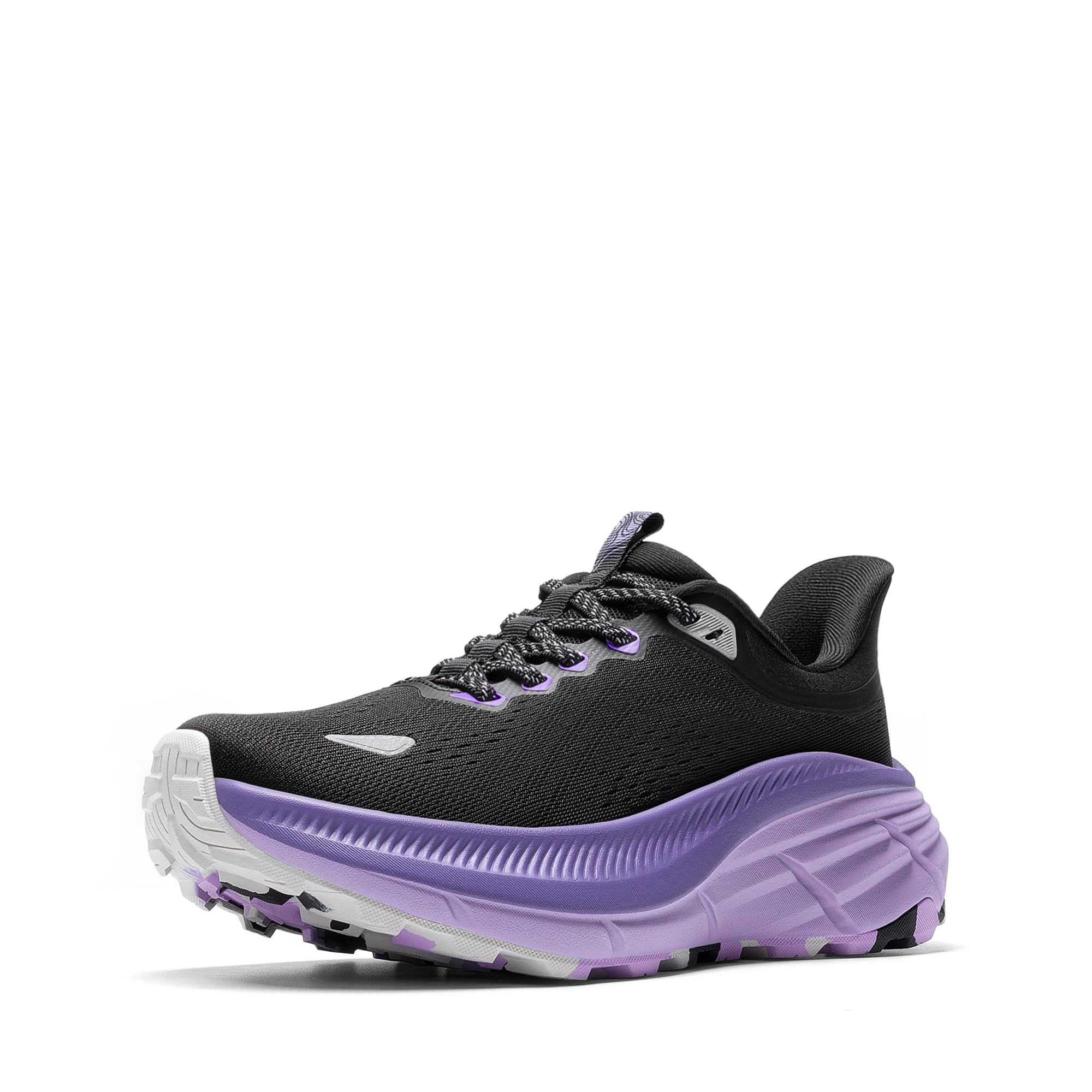
If you want the short answer: buy the Skechers Go Run Trail Altitude 2.0 for the best all-round value, the Merrell Antora 4 for the lightest ride on this list, or the Altra Lone Peak 8 if your toes feel cramped in everything else. A black trail shoe for women has to do three jobs at once — grip on wet roots, room for a foot that swells on long descents, and enough cushioning that a rocky path doesn’t beat you up. This list covers all three, in plain English.
This guide is built by comparing the manufacturers’ published specifications and the patterns across verified customer reviews, so you get each pick’s real strengths and trade-offs instead of marketing spin.
Below you’ll find lug depth, drop, stack height and weight laid out side by side, plus the fit quirks that actually trip people up. Every pick here is a genuine women’s-specific black trail shoe, so the only question left is which one matches your foot and your terrain with these women’s black trail running shoes.
Top Picks

How To Choose The Best Women’s Black Trail Running Shoes
Trail shoes fail in two places: the toe box and the outsole. Get the rubber right and you stay upright on wet granite. Get the fit right and you finish the descent without losing a toenail. Everything else is preference.
Start with the lug depth, not the brand
Lugs are the raised rubber nubs under the shoe. Shallow lugs suit hardpack and gravel-to-road transitions. Deeper lugs — like the 6mm ones on the New Balance Fresh Foam X Hierro V9 — bite into mud and loose dirt so you aren’t skating downhill. A shoe with an aggressive lug pattern is worth the extra weight if your local trail is soft or steep.
Decide if you want drop or no drop
Drop is how much higher your heel sits than your forefoot, measured in millimetres. Most trail shoes sit somewhere between 5mm and 8mm. A zero-drop shoe puts heel and forefoot on the same plane, which changes your stride and loads your calves differently. If you’ve never run in zero drop, a gradual switch is kinder than going straight into a long race.
Match stack height to your terrain
Stack height is the total foam under your foot. A high-stack shoe like the Altra Olympus 6 at 33mm swallows rocks and roots on long days. A low-stack minimalist shoe like the Merrell Trail Glove 7 at 14mm puts you closer to the ground so you feel the trail and react faster. Neither is “better” — one is for comfort over distance, the other is for feel and control.
Check the toe box before anything else
Your feet swell on long descents and your toes slide forward. A roomy toe box — Altra’s FootShape fit is the roomiest in this lineup — gives them somewhere to go. A snug race-fit toe box is faster on short technical runs but punishes you over hours. If you’ve ever finished a run with a bruised big toenail, size up or switch to a wider last.
Side-by-Side Comparison
| Model | Best For | Weight | Drop / Stack | Outsole | Amazon |
|---|---|---|---|---|---|
| Skechers Go Run Trail Altitude 2.0★ Best Overall | Best all-round value | — | — | Aggressive trail lug pattern | Amazon |
| NORTIV 8 Slip On TrailEasiest On And Off | Quick on-and-off | — | — | Trail lugged | Amazon |
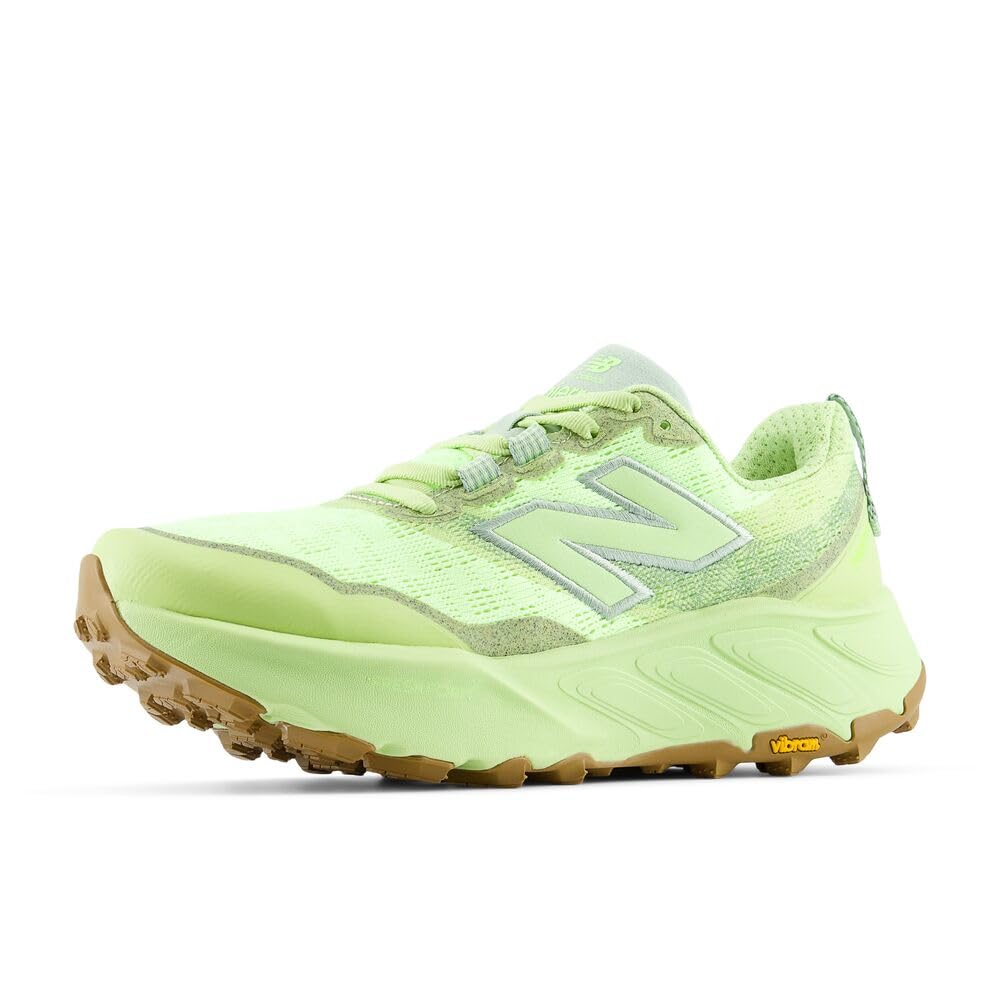
| New Balance Fresh Foam X Hierro V9Best Wet Grip | Wet-weather grip | 2.1 pounds | 6mm lugs | Vibram Megagrip with Traction Lug | Amazon |
| New Balance Dynasoft Tektrel V1 Suede | Style meets trail | 2.1 pounds | — | Aggressive lug design | Amazon |
| Merrell Antora 4 | Lightest ride here | 1.5 pounds | — | Trail outsole with toe lift | Amazon |
| ALTRA Lone Peak 8 | Roomy toe box | 10.7 oz / 303 g | 0mm drop / 25mm | MaxTrac with TrailClaw | Amazon |
| Topo Athletic Ultraventure 4 | Long-run cushioning | 8.6 oz (W7) | 5mm drop / 35 x 30mm | Vibram XS Trek EVO | Amazon |
| ALTRA Olympus 6 | Max cushion | 10.2 oz | 0mm drop / 33mm | Vibram Megagrip | Amazon |
| Merrell Trail Glove 7 | Barefoot feel | 2.09 pounds | 14mm stack | Vibram EcoStep | Amazon |
Detailed Reviews
1. Skechers Women’s Go Run Trail Altitude 2.0 – Ravine
Our pick — 4.5+★ from 400+ verified ratings; the strongest balance of quality and price.
The trail shoe that quietly does every job without asking for a premium.
If you only run trails a few times a week and want something that slips on for a dog walk as happily as it does for a gravel loop, this is the shoe to start with. The lugged outsole bites into damp dirt and loose gravel, so you get real off-road grip rather than a road sole dressed up with extra rubber. It’s the highest-rated pick here at 4.5+ stars, and buyers report no break-in period at all.
What wins people over is the styling — it’s the attribute that comes up most in buyer feedback by a wide margin, comfortably ahead of comfort itself. That styling means it works as a casual shoe as well as a trail shoe. Support and durability both draw steady positive notes, and the fit lands as genuinely well-fitting rather than “true to size if you squint”.
The honest catch is depth of cushioning. This is a mid-tier trail platform, not a rock-swallowing max-cushion shoe, so on long rocky descents you’ll feel more of the trail than you would in the Altra Olympus 6. That’s a fit issue rather than a flaw — it suits runners who like ground feel and shorter to mid-distance outings better than ultra-distance pounders.
What earns it the top spot
- Aggressive lugged outsole handles damp, gravelly terrain without slipping.
- Comfortable straight from the start — no break-in period to survive.
- Black colourway with a clean look that works on and off the trail.
- Steady support and durability notes in buyer feedback.
Where it stops short
- Mid-level cushioning, so long rocky descents come through to your feet.
- No published weight or drop figure to compare against the spec-heavy picks.
Reach for this if: you want one black trail shoe for mixed weekly runs, gravel paths and everyday wear at the entry-level tier.
Look elsewhere if: your trails are all sharp rock over long distance — you’ll want the max-cushion Altra Olympus 6 instead.
2. NORTIV 8 Women’s Slip On Trail Running Hiking Shoes
A lace-free trail shoe built for loose dirt, rocky paths and uneven ground.
Some people want to bend down once, not twice. This slip-on takes the laces out of the equation for quick trailheads, campsite mornings and errands between runs. NORTIV 8 describes it as built for loose dirt, rocky paths and uneven terrain, and the lugged outsole matches that brief.
The comfort story is the strong one. Owners mention wearing these all day without foot pain, and arch support draws consistent positive notes — useful if you have flatter feet and most trail shoes leave you sore by mid-afternoon. Quality and value round out the picture, and the whole thing comes across as a solid mid-tier option at the entry-level end of the group.
Here’s the trade-off to weigh up: the fit is the split issue. Some find them true to size, others find the toe box narrow, and heel movement while walking shows up in feedback. The slip-on entry is also a two-way street — easy to get on, and occasionally not as locked-down as a laced shoe. If you have a wide forefoot, size up or look at the Altra Lone Peak 8’s roomier last.
The trade-off worth knowing: the slip-on build that makes these so fast to pull on is also the reason a few people notice heel movement while walking. Pair them with a light sock and you’ll get a closer fit.
Best suited to: anyone who wants a pull-on trail shoe for walks, hikes and casual runs, especially if arch support is the priority.
Think twice if: you have a wide toe box or race technical descents — a laced, wider shoe will hold you more securely.
3. New Balance Women’s Fresh Foam X Hierro V9
Six-millimetre lugs and a sticky Vibram sole for the days the trail turns slick.
The number to focus on here is 6mm — the depth of the lugs on the Vibram Megagrip outsole, backed by Traction Lug technology. Those deeper lugs bite into mud, wet roots and loose grit, so the grip holds in wet conditions as well as dry. On slick roots, that lug depth is what keeps you upright.
Underfoot it’s a dual-density Fresh Foam X midsole — plush comfort on top, stable support underneath. The breathable knit upper with a gusseted tongue keeps grit out while still letting air move, and Toe Protect shields your toes from rocks and roots. Buyers call the ride plush, and the arch support and versatility notes cover daily walks as well as trail hikes.
It’s the heavier of the two New Balance picks on paper, and it is noticeably heavier than the Merrell Antora 4 — 2.1 pounds versus 1.5 pounds. That extra weight buys you the deeper lugs and bigger cushioning. Sizing is the recurring gripe: some find the fit true to size while others hit issues, so try before you commit to a long race day.
Why the lugs matter: deep lugs and a MegaGrip compound are the difference between confident descents and picking your way down slowly. This is the wet-weather specialist of the group.
Weight reality: at 2.1 pounds it gives away 0.6 pounds to the Merrell Antora 4, so if saving weight is your goal, that’s the trade you’re making.
Go for it if: you run in damp, rooty or muddy conditions and want the outsole to do the work.
Pass if: you want the lightest possible shoe for dry hardpack — the Antora 4 trims the weight.
4. New Balance Women’s Dynasoft Tektrel V1 Suede
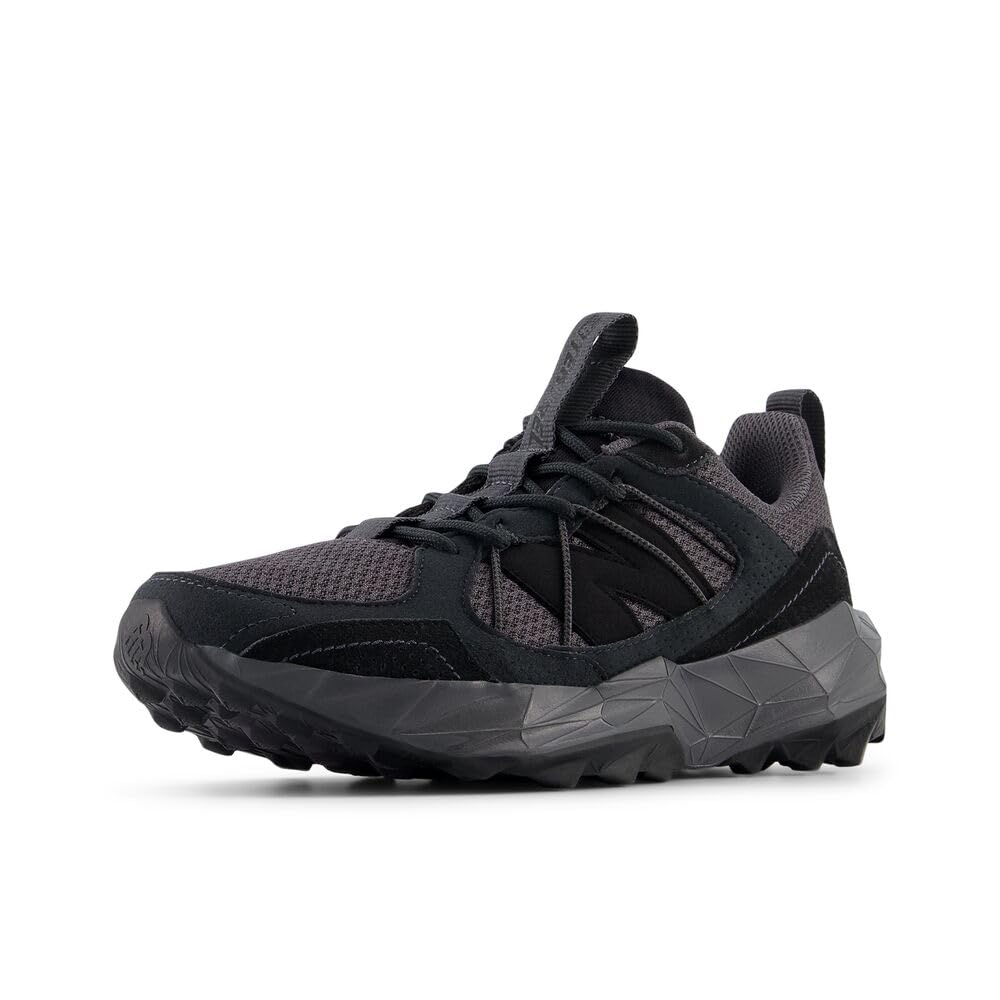
Trail-ready rubber under a suede upper you can wear straight into town.
New Balance built the Tektrel for the trail less travelled, with an aggressive lug design, a dynamic midsole and a stylized upper. The suede finish is the detail that separates it from the rest of this list — most trail shoes look like trail shoes, and this one looks like a lifestyle sneaker that happens to have grip underneath.
Comfort and quality are the two headline strengths, with appearance close behind. It’s versatile enough for gravel-road walking and energetic activities, and the grip gets steady positive mentions. If you want a shoe that does double duty on pavement and packed trail, that weight is the cost of the extra structure.
The caveat is fit and arch support. Both come through as split — some say true to size with good support, others say they run small and lack arch support. That’s the one thing to test carefully. If you need reliable arch support and know your feet are sensitive to a narrow last, get the size right before a long outing.
The suede advantage
- Suede upper that reads as a lifestyle shoe, not a race shoe.
- Aggressive lug design for genuine off-road grip.
- Comfort and quality are the strongest themes in buyer feedback.
- Works on gravel roads and energetic daily activity.
Fit notes to weigh
- Fit feedback is mixed — some find it runs small.
- Arch support is split: some get good support, others wish for more.
- At 2.1 pounds it’s heavier than the Antora 4’s 1.5 pounds.
The suede trail pick: if you want one black shoe for trail time and everyday wear without looking like you’re mid-race, this delivers.
Try before you commit: sizing is the one variable worth confirming face to face.
5. Merrell Women’s Antora 4 Trail Running Shoes

At a listed 1.5 pounds, this is the lightest shoe in the lineup.
Merrell reworked its trail shoe to blend a clean athletic design with running comfort, and the weight is where that shows most. It comes in at 1.5 pounds and measures 12 x 8 x 4.5 inches, which is lighter and slightly more compact than the 2.1-pound, 12.7 x 7.9 x 4.5-inch New Balance Dynasoft Tektrel V1 Suede. On a long climb, that gap matters.
Comfort and quality drive it, with a true-to-size fit and plenty of toe room as the standout practical strength. Stability and arch support draw positive notes, and the toe lift at the front is designed to reduce tripping over rocks — a small design detail that pays off when you’re tired and shuffling. Versatility covers road-to-trail transitions and everyday wear without drama.
The honest limit is that at 1.5 pounds it doesn’t carry the deep, max-cushion platform of the Topo Ultraventure 4 or the Altra Olympus 6. You’re trading padding for agility. If your terrain is mild to moderate and your priority is a responsive, lightweight ride, that trade falls your way.
Lightest on the list: at 1.5 pounds, this is the pick if saving weight matters more than max cushioning, and the toe lift adds safety on rocky, tired-mile terrain.
Best for: trail runners who want a light, true-to-size shoe with room for their toes and stability on uneven ground.
Not for: ultra-distance runners who need deep cushioning over rocky terrain all day.
6. ALTRA Women’s Lone Peak 8 Trail Running Shoe

The roomiest toe box on this list, paired with a 0mm drop you either love or don’t.
Altra’s signature FootShape last puts heel and forefoot at the same height — 0mm drop on a 25mm stack — so your foot sits flat and your toes can spread. If your normal trail shoe squeezes your little toe by mile five, this is the fix. The upper is a refined ripstop mesh, and the MaxTrac outsole with TrailClaw lugs places canted rubber under the metatarsals for added grip.
Toe room and comfort are the overwhelming consensus points. Quality is the top positive theme, with comfort close behind and the toe box drawing its own third cluster of praise. People run all day and report their feet don’t hurt, and there’s no break-in phase to grind through. That’s unusual for a zero-drop shoe, which normally demands a break-in period.
The trade-off is the zero drop itself. If you’ve always run in a 6-8mm drop shoe, moving straight to 0mm shifts load onto your calves and Achilles, and a sudden jump is the wrong way to do it. At 10.7 oz / 303 g it’s also heavier than the Merrell Antora 4’s listed 1.5 pounds. Ease into the 0mm drop over a few weeks and it rewards you on the trail.
The toe-box angle: more space across the forefoot than anything else here, which is exactly what a wide-footed runner or anyone prone to black toenails needs.
The transition warning: 0mm drop changes your stride. Give yourself a few weeks of shorter runs before you take it on a race.
Pick it if: you have a wide forefoot or want natural foot positioning with a 0mm drop and grippy lugs.
Leave it if: you’re not willing to ease into a zero-drop platform over several weeks.
7. Topo Athletic Women’s Ultraventure 4

A 35 x 30mm cushioning platform that keeps rocky miles comfortable.
Topo built this for long runs on mild to moderate terrain, and the numbers explain how: a 35 x 30mm platform with a 5mm drop and a ZipFoam midsole designed to be springier than standard EVA foam. The recycled mesh upper now carries strategically placed PU print in high-abrasion zones, so it holds up where it rubs.
The outsole is Vibram XS Trek EVO, which Topo positions for multi-surface traction — good for a trail-to-road transition without swapping shoes. Its roomy anatomical toe box lets toes spread naturally, and the listed weight is 8.6 oz (W7). Fit draws strong praise, including for wide feet, and traction on rocky trails and arch support both come through clearly.
Durability is the one recurring grumble — this is the note that caps it at 4.0+ stars, and value comes through as mixed alongside it. Hard chargers who log heavy mileage on sharp rock are the ones most likely to notice the wear. For runners who want a high-stack, comfortable trail shoe for long but not extreme terrain, that trade is reasonable if you rotate it with another pair.
What it gets right
- 35 x 30mm ZipFoam platform for long-run comfort.
- Vibram XS Trek EVO handles trail and road transitions.
- Roomier toe box that suits wide feet.
- Traction on rocky trails earns steady praise.
What to expect
- Durability is the most-discussed negative — rotate it to extend life.
- Value feedback is mixed relative to the premium tier.
Good match for: long runs on mild-to-moderate trails where cushioning and toe space matter most.
Think twice if: you log heavy mileage on sharp rock and want maximum longevity.
8. ALTRA Women’s Olympus 6 Trail Running Shoe

Altra’s plushest trail runner, with a 33mm stack for all-day pounding.
Cushion, grip and a roomy toe box — that’s the Olympus 6 in three words. The 33mm stack with a 0mm drop and max-cushioned midsole foam swallows rocks and roots so a long day on technical trail doesn’t wreck your legs. Listed weight is 10.2 oz, heavier than the Lone Peak 8’s 10.7 oz / 303 g when measured in ounces, but with noticeably more foam underfoot.
Comfort is the defining feel — no pain and minimal rubbing as people describe it, and stability on uneven surfaces draws real praise. The updated mesh upper is designed for breathability on long days, and the premium Achilles pillow softens the step-in. Vibram Megagrip rubber with an updated lug pattern handles wet and dry surfaces and stays grippy on technical terrain.
The catches are worth naming. Traction feedback is split — the lug pattern leans toward durability and stability over pure bite, so on very wet technical sections it can feel less locked-in than a deeper-lug shoe. Fit feedback is also mixed, and at 3 pounds listed, this is a substantial shoe. If your priority is ground feel and speed, go lightweight; if it’s cushioning over distance, this is the one.
Where it shines: on long technical descents where you want protection from rocks without losing stability, the 33mm max-cushion platform and Roomiest FootShape toe box do the work.
The honest limit: all that cushion comes at 3 pounds and with traction that leans toward durability rather than maximum bite.
Built for: runners and hikers who want the plushest ride on long days over technical terrain.
Not the one if: you want a light, responsive shoe for speed on hardpack.
9. Merrell Women’s Trail Glove 7

A 14mm stack and a grippy wraparound sole for runners who want the ground.
Merrell’s Trail Glove 7 returns to barefoot with a 14mm total stack height and a Vibram EcoStep outsole that wraps the foot to boost grip and connection. The midsole uses FloatPro Foam with FLEXconnect dual-directional flex-grooves — plain English: it bends where your foot bends, so you feel the trail and can react to it.
Comfort here is described in the way minimalist runners talk: like gloves on the feet, no pain, and grip that performs on wet surfaces without slipping. It’s versatile enough for trail and gym in the same afternoon, and the grip draws steady praise despite minimal cushioning.
The catch is the low stack. At 14mm this sits far closer to the ground than anything else in the group — under a third the stack of the 35mm Topo Ultraventure 4 — so rocks can be felt, not just sensed. Fit is mixed and durability is a mixed note too, so plan for it as a training and short-trail shoe rather than an ultra-distance rock plow. If you want maximum ground feel on moderate trails, this is the pick.
The barefoot pick: for runners who want maximum ground feel and connection on light to moderate trails.
Consider a pass if: you want rock protection and high-stack cushioning for long, technical days.
Know the Specs
Lug Depth
Lugs are the raised rubber knobs under a trail shoe. They dig into soft ground and grip wet rock. Deeper lugs — the New Balance Hierro V9 lists 6mm — suit mud, roots and loose dirt. Shallow lugs roll better on hardpack and smooth gravel. Match lug depth to your usual terrain, not to the marketing photo.
Heel-Toe Drop
Drop is the height gap between heel and toe in millimetres. A 5mm drop, like the Topo Ultraventure 4, sits in the middle range and suits most runners. A 0mm drop, like the Altra Lone Peak 8 and Olympus 6, puts both ends at the same height and shifts more load to your calves. Ease into zero drop gradually.
Stack Height
Stack height is the total foam between your foot and the trail. A high-stack shoe at 33mm or more protects you on rocky ground but feels taller and less connected. A low-stack minimalist shoe like the Merrell Trail Glove 7 at 14mm keeps you grounded. Higher isn’t better — it just changes what you feel underfoot.
Toe Box Fit
Toe box is the room at the front of the shoe. A wide toe box — Altra’s FootShape is the roomiest here — lets toes spread and helps prevent bruised toenails on long descents. A snug race fit is faster on short technical runs. If you’ve ever finished a run with sore toes, go wider or size up.
Common Questions
Can I wear trail running shoes on the road?
How do I know if my toes are too tight?
Should I move straight from a 6mm drop to 0mm drop?
Is a roomy toe box better for long runs?
Do black trail shoes get hot in summer?
How long should trail shoes last?
Does a slip-on trail shoe hold my foot securely?
Can trail running shoes double as hiking shoes?
Which is better for wet trails, Vibram Megagrip or standard rubber?
The Bottom Line
For most people, the women’s black trail running shoes winner is the Skechers Go Run Trail Altitude 2.0 — it balances trail grip, box-fresh comfort and everyday looks better than anything else here, and it holds the highest rating of the group at 4.5+ stars across 400+ ratings. If wet roots and mud are your everyday trail, go for the New Balance Fresh Foam X Hierro V9 and its 6mm lugs (the deep rubber teeth that bite into soft ground). And if your toes need room, the Altra Lone Peak 8 is the one to reach for — just ease into the 0mm drop (a flat heel-to-toe height that takes time to get used to).
How we choose
We do not accept paid placement. Every pick is matched to a real buyer and a real use-case; we do not hands-on test units.
Sources
Specifications: manufacturer listings and product documentation. Review insights: verified customer reviews, as of November 2026. Pricing: not shown on this page (it changes often); check the current price via the retailer link.
As an Amazon Associate, Tactical Gear Guy earns from qualifying purchases. This does not affect which products we feature.