Specs are compiled from manufacturer listings and verified buyer reviews and can change over time — please confirm the key details on the product page before buying.
If you want one answer: buy a thin mat for balance and ground feel, not cushioning, and check the thickness number first. A thin yoga mat puts your hands and feet close to the floor, which is exactly what standing balances and long holds ask of you. The catch is that less foam means less padding under knees and wrists, so the right pick depends on how you practice.
This guide is built by comparing the manufacturers’ published specifications and the patterns across verified customer reviews, so you get each pick’s real strengths and trade-offs instead of marketing spin.
Thickness, surface material and wet grip decide almost everything here, and the five mats below cover the range from a foldable travel sheet to a full-size studio mat.
The picks below cover every thickness tier, so you can choose a thin yoga mat that matches how much cushioning you actually want under your joints.
Top Picks

How To Choose The Best Thin Yoga Mat
A thin mat trades padding for stability. That trade only pays off if the mat still grips when your palms are wet, stays put on a hardwood or studio floor, and rolls or folds small enough that you actually carry it. Get those three right and the millimeter count becomes the reason you bought the mat.
Start with the thickness number, not the cushion
Anything from about 2mm to 4mm counts as thin in this category. A 2mm travel mat packs almost flat and gives you near-direct contact with the floor, which sharpens balance work. A 4mm mat adds a little joint relief while still keeping you grounded. If you have cranky knees or do a lot of floor work, thin mats will feel firm — that is the honest cost.
Match the surface to how much you sweat
Grip is the spec that decides whether a thin mat works for hot classes. Cork and eco-polyurethane tend to bite harder as moisture builds, while a plain rubber or PVC surface can get slick once your hands are damp. If you flow hard or practice in a heated room, favor a textured or cork top layer over a smooth one. If you mostly do slow, dry practice, a standard textured rubber surface is fine.
Weigh the carry burden against the practice
Weight matters more on a thin mat than on a thick one, because thin mats are usually the ones you travel with. A mat that folds to roughly 12″ x 12″ x 1.3″ fits in a carry-on or a gym tote without a fight. A full-size rubber mat at 5.2 lb to 5.5 lb is a leave-at-home or leave-in-the-car mat. Decide whether you carry your mat or leave it home before you compare anything else.
Side-by-Side Comparison
| Model | Best For | Thickness | Material | Weight | Amazon |
|---|---|---|---|---|---|
| Liforme Printed Yoga Mat★ Best Overall | Full-size studio practice | 0.16″ | Rubber | 2.5 kg | Amazon |
| Avoalre Foldable Yoga MatBest for Travel | Travel and carry-on packing | 0.12″ | PVC | 2.87 lb | Amazon |
| Manduka eKOLite Yoga Mat | Hot Pilates and barre | 0.16″ | Rubber | 5.2 lb | Amazon |
| Satori Concept Cork Yoga Mat | Sweaty flows and joint comfort | 0.16″ | Cork, Rubber | 5.5 lb | Amazon |
| Liforme Travel Yoga Mat | Topping a studio mat | 0.08″ | Rubber | 1.6 kg | Amazon |
Detailed Reviews
1. Liforme Printed Yoga Mat
Our pick — 4.5+★ from 300+ verified ratings; the strongest balance of quality and price.
A full-size mat that gains grip as your hands get wetter, not slicker.
The Liforme Printed mat measures 72.83″L x 26.77″W at 0.16″ thick — a genuinely long, wide surface that gives your hands room to land outside a narrower mat’s edge during wide-legged poses. That 26.77″ width is the number to note: it beats the Avoalre travel mat’s 24″ width, and that extra few inches is the difference between your wrist resting on the mat and hanging off it in a lunge.
What wins people over is the grip. The GripForMe surface is designed to bite harder the sweatier it gets, and that behavior is the single most repeated praise in the feedback for this mat — hot-room regulars describe hands that stay planted through a full flow instead of sliding into a towel. The printed artwork and the AlignForMe markers, which are visual guides etched into the surface to show where your hands and feet line up, both draw steady praise too, and the markers genuinely help if you are still learning where to place your feet in Warrior poses.
Here is the honest part. This is the crowd favorite — 4.5+ stars across 300+ owners — but durability is the split point in the feedback. Some owners treat this as a long-haul mat, while a smaller share describe the printed design lifting or peeling with heavy use, and cleaning it is fiddly because Liforme asks for hand washing only. It is also a 2.5 kg mat, so it lives at home or in the studio rather than at the bottom of your bag.
Where It Earns Its Place
- 72.83″ x 26.77″ of surface — noticeably roomier than a 24″-wide travel mat
- Grip that increases as sweat builds, so hot flows stay stable
- Patented alignment markings guide hand and foot placement in every pose
- Eco-polyurethane top over a natural rubber base, PVC-free
What To Weigh First
- At 2.5 kg it is a stay-at-home mat, not a commute mat
- Hand wash only — no machine, no soaking
- The printed design is the durability question mark for heavy daily users
Reach for this if: you practice at home or in a studio several times a week and want a wide, grippy surface with guidance built into it.
Think twice if: you need to carry your mat to class on foot or by bike — the 2.5 kg weight and hand-wash care make it a poor commuter.
2. Avoalre Foldable Yoga Mat
The mat that folds into a square and slips into a carry-on instead of a roll.
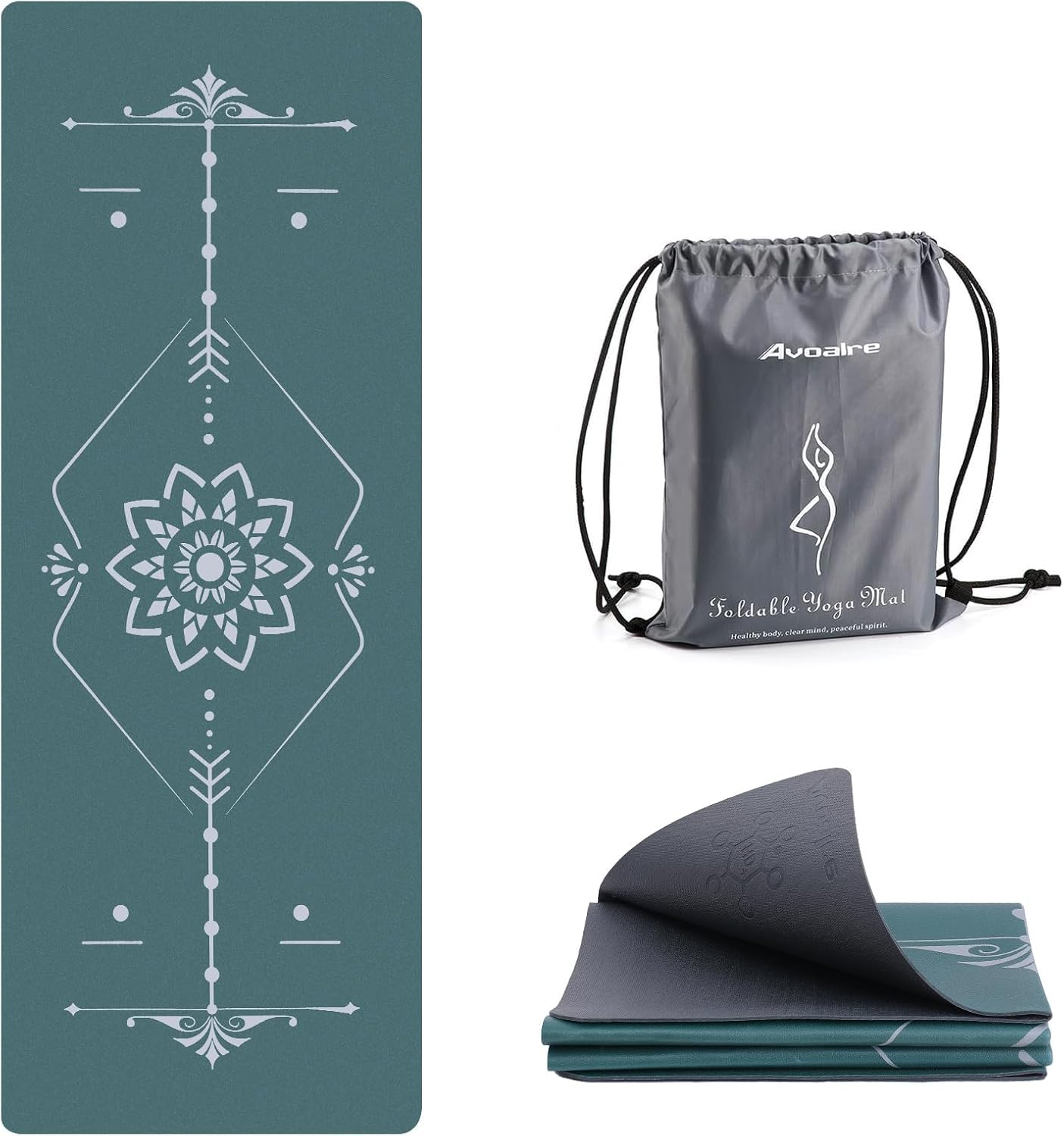
Foldability is the whole reason this one exists. Instead of rolling into a long tube, the Avoalre folds down to 12″ x 12″ x 1.3″ — a flat square that goes into a suitcase or a tote alongside your clothes. At 0.12″ thick it is the thinner of the two PVC-style options here, and at 2.87 lb it is light enough to forget you packed it. Unfolded it gives you 72″L x 24″W, so you lose width against a full studio mat but keep full length.
Portability is the theme that runs through every bit of feedback on this mat — it is the trait people lead with when they talk about it, and the fold-flat shape is why. The double-sided texture top and bottom also does real work: a textured underside resists sliding on smooth floors, and a textured top gives damp hands somewhere to grab in a downward dog. The maker states it is made from non-toxic PVC tested to OEKO-TEX STANDARD 100 and SGS standards, and free of BPA and phthalates — worth knowing if you are scent-sensitive, though the instructions do ask you to unfold and air it out for 2 to 3 days before the first use.
Thickness is the trade you accept. A 0.12″ mat has almost no give, so long floor sequences will press into your knees and wrists, and the feedback splits on exactly that point — fine for travel, firm for daily practice. If you want a mat you can leave down at home every day, this is not the one; if you want a mat that travels without complaining, it is.
Pick this one for: hotel rooms, retreats, and a mat that has to earn its space in a carry-on.
Leave it on the shelf if: you want padding under your knees for a long home session — 0.12″ is deliberately minimal.
3. Manduka eKOLite Yoga Mat
A rippled rubber surface built for barre and hot Pilates, with one smell caveat.
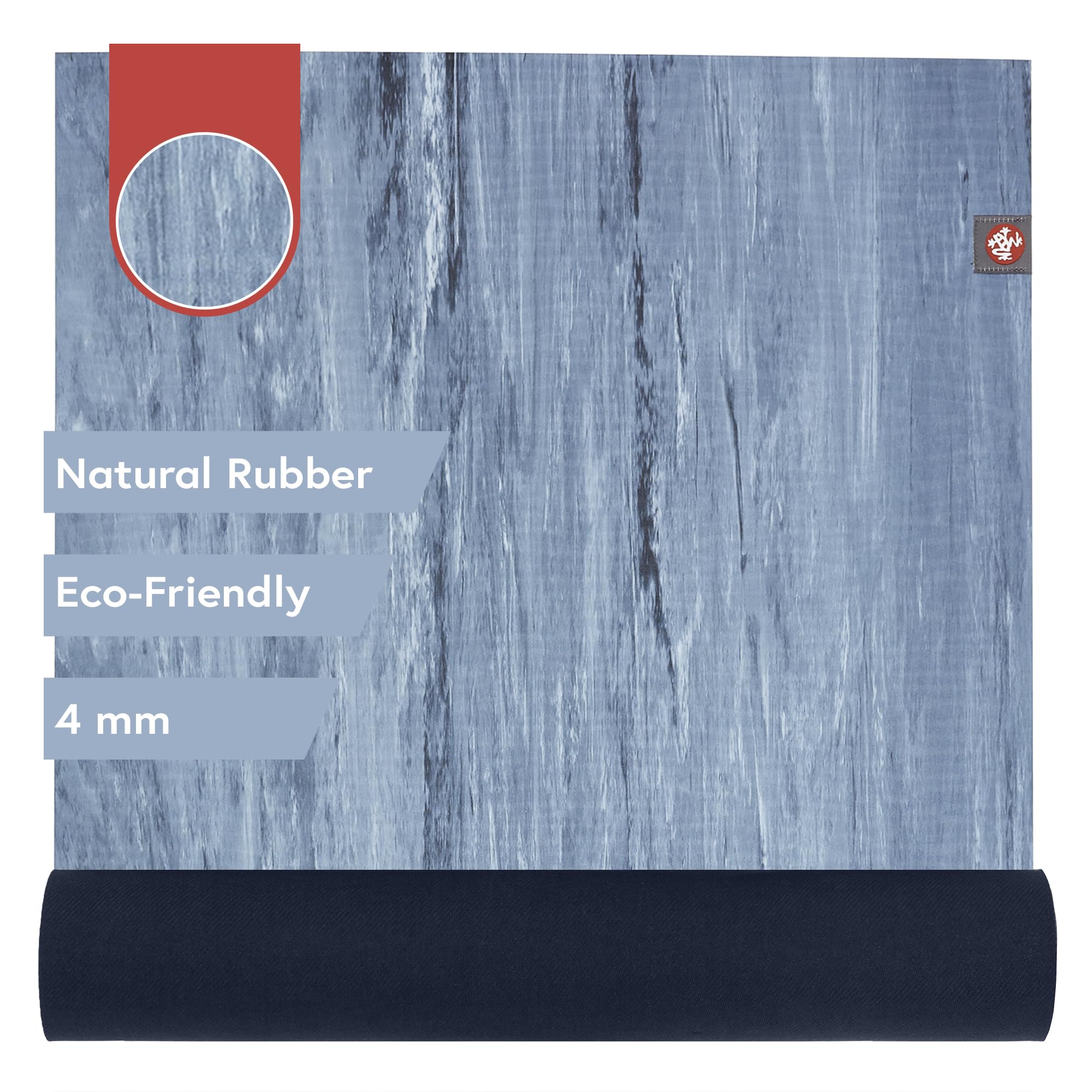
At 71″L x 24″W and 0.16″ thick, this is the workhorse shape of the group — long enough for tall frames, standard width, and thin enough to keep you grounded. Against the Liforme Printed mat’s 72.83″, its 71″ length is the sort of difference a tall practitioner notices in a long lunge. The 4mm rubber body gives more joint relief than a 0.12″ travel mat without tipping into thick-mat territory.
The surface is the standout. A rippled Catch-Grip texture runs across the top to give hands and feet something to push against, and the closed-cell construction keeps moisture from soaking into the rubber, which helps it stay hygienic and wipe clean between sessions. It is 99% latex-free and made from natural tree rubber. Where it shines brightest, in the feedback, is exactly where Manduka aimed it — hot Pilates and barre classes, where you are moving fast, sweating, and holding positions that punish any slip.
The catch is grip once you are truly soaked. A dry mat holds; a full-sweat session can soften that hold, which is the split point in the reviews. There is also a strong rubber smell out of the package for some owners, and cleaning is fussy on purpose — Manduka says spray their Restore product, let it sit 5 minutes, then wipe dry, and specifically warns against soaking, sun exposure, soap, a garden hose, a vacuum, or a washing machine.
What the texture buys you: the rippled Catch-Grip top gives you a surface to push off rather than a flat sheet to slide on, and the closed-cell build wipes clean instead of absorbing sweat.
The care clause: this mat wants its own spray and a dry wipe, not soap and water — follow that and it stays grippy; ignore it and the surface degrades.
Good match: barre, hot Pilates, and fast sweat-heavy classes where you want rubber traction at a standard 24″ width.
Not the one: if you are sensitive to new-rubber smell or want zero-hassle cleaning.
4. Satori Concept Cork Yoga Mat
Cork over tree rubber that grips harder the wetter it gets, in an extra-wide cut.
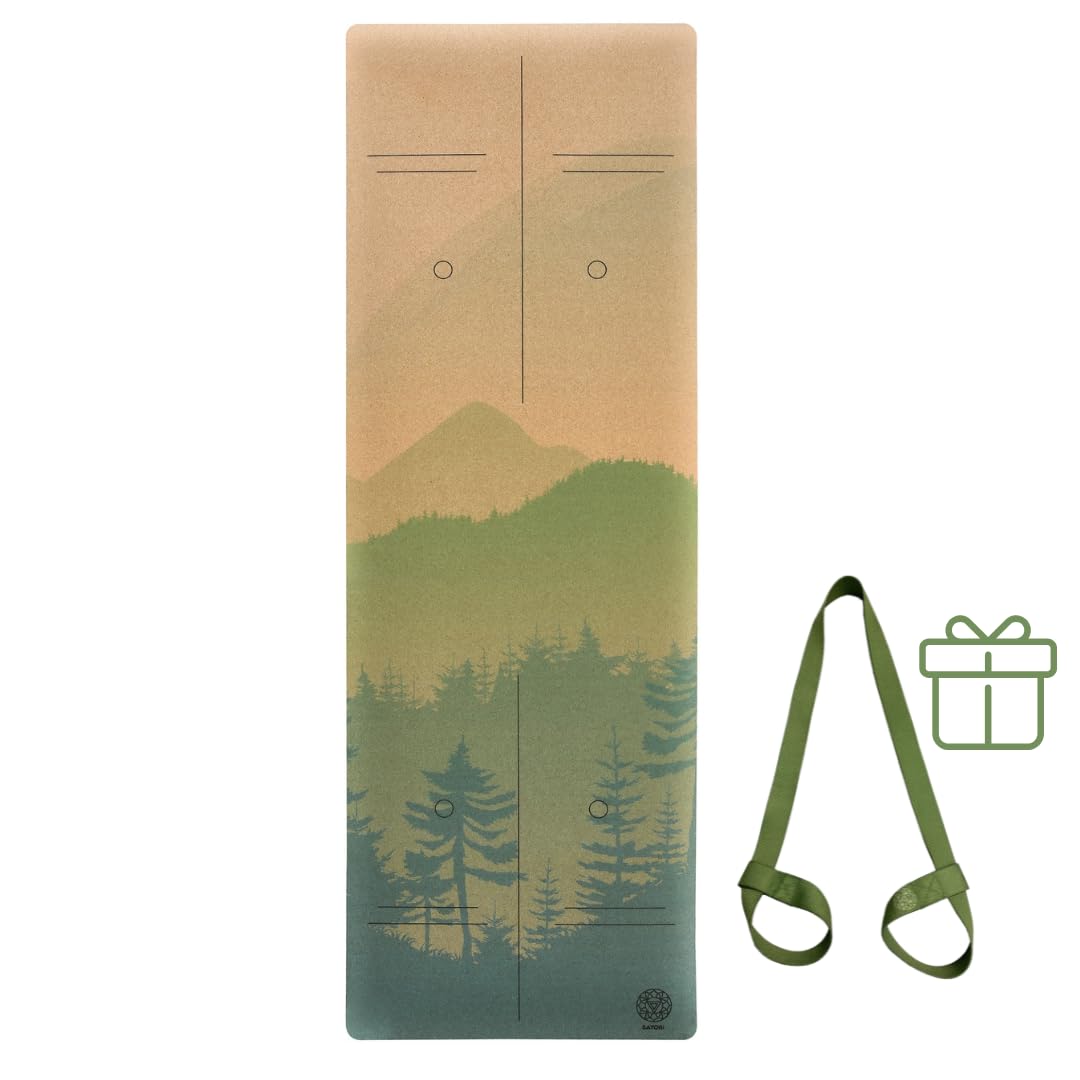
At 0.16″, this is one of the thicker mats in this thin-mat lineup, and the numbers show how far it sits from a true travel sheet: 0.16″ against the Avoalre’s 0.12″, and 5.5 lb against 2.87 lb. That size still buys you a 72″ x 26″ surface with a joint-cushioning rubber base — a genuine comfort mat that still stays in thin-mat range for ground feel. The 26″ width also puts it wider than the 24″ Manduka and Avoalre.
The cork is the draw. Cork gets tackier as your hands dampen, which is the opposite of what a smooth rubber surface does, so it is the material to pick if you sweat heavily and hate reaching for a towel mid-flow. Owners consistently describe it as comfortable and generous underfoot, and the natural rubber base under the cork keeps the mat stable rather than spongy. Each mat ships with a free carry strap, and the maker packages it in recyclable materials.
The trade is weight. At 5.5 lb this is the heaviest pick here, and while some owners call it manageable, others find it a chore to lug — so it is a mat for the car, the studio locker, or the living room floor, not a backpack. Cork also wants hand washing only, and it will feel firm under a knee compared with a thick foam mat.
The material argument: cork and tree rubber, both sustainable, both non-toxic — and cork’s sweat-grip behavior is the reason to choose it over a plain rubber top layer.
Where it costs you: 5.5 lb and hand-wash care make it a stay-put mat; if you carry your mat daily, this is the wrong pick.
Choose this when: sweat is the enemy and you want a wide, cushioned, cork-topped mat that stays in one place.
Skip the cork route if: you commute with your mat on your back.
5. Liforme Travel Yoga Mat

An 0.08″ sheet that brings Liforme’s grip and alignment cues to a studio mat near you.
At 0.08″ this is the thinnest mat on the list — a topper, not a standalone cushion. Laid over a studio’s communal mat it gives you your own clean, grippy surface in a public class, and on its own it delivers close-to-the-floor feedback for balance work. It measures 70.87″L x 25.98″W, and at 1.6 kg it carries easily, with a travel bag included in the box.
What wins people over is the same GripForMe surface that makes the full-size Liforme mat a favorite — it holds firm in sweaty conditions instead of going slick. The AlignForMe markings on top are the second reason people pick it: the graphics show where to plant hands and feet, which helps you hold position without a teacher’s eye on you. Portability and light weight both come up as genuine strengths, and it is built from eco-polyurethane and natural rubber, PVC-free.
Be clear about what 0.08″ means. There is essentially no padding, and the feedback on this mat flags thickness as its weak point — knees and wrists will feel the floor directly in floor work. Owner opinion also divides on value, with a share feeling it asks a lot for a sheet this thin, and durability is an open question for heavy daily use. As a travel topper it makes sense; as your only mat on a hard floor, it does not.
Best for: slipping into a bag, topping a rental mat, and adding Liforme’s grip and alignment cues to a class you do not own the floor for.
Not for: anyone who needs joint cushioning — 0.08″ is a sheet, and it feels like one.
Know the Specs
Thickness in Inches and Millimeters
Thickness is the number that decides everything else. A listing may state it as 0.08″, 0.12″, 0.16″ or 0.24″, and each jump changes how the mat feels under a knee or wrist. Thinner means more ground feel and better balance; thicker means more cushioning and more weight. For hot, fast practice, ground feel helps; for long floor holds, cushioning helps. Neither is wrong; they suit different practices.
Surface Material and Wet Grip
The top layer decides how the mat behaves once you sweat. Cork tends to get tackier as moisture builds, eco-polyurethane is engineered to hold under sweat, textured rubber gives you a surface to push against, and smooth PVC can go slicker when damp. If you practice hot, prioritize a surface listed as sweat-resistant or designed to grip when wet — after thickness, that is the spec that matters most.
Common Questions
How thin is too thin for a yoga mat?
Is a thin mat better for balance poses than a thick one?
Will a cork yoga mat grip when my hands are sweaty?
Can I put a thin travel mat over a studio mat?
What is the difference between a 3mm and a 4mm yoga mat?
How do I clean a natural rubber or cork yoga mat?
Do thin yoga mats slide on hardwood floors?
How much does a travel yoga mat weigh?
Does a thinner mat hurt your knees?
Is an expensive thin yoga mat worth it over a budget one?
The Bottom Line
For most people shopping for a thin yoga mat, the Liforme Printed Yoga Mat is the one to buy — it pairs a wide 26.77″ surface and 0.16″ profile with grip that strengthens as you sweat, plus alignment markings that help you hold form. If a mat has to fit in a suitcase, reach for the Avoalre Foldable instead; it folds to 12″ x 12″ x 1.3″ and weighs 2.87 lb. And if sweat is the thing that beats you, the Satori Concept Cork mat gives you cork-and-rubber traction at 0.16″. Whichever you pick, check the thickness number first — it decides whether a thin mat suits your practice at all.
How we choose
We do not accept paid placement. Every pick is matched to a real buyer and a real use-case; we do not hands-on test units.
Sources
Specifications: manufacturer listings and product documentation. Review insights: verified customer reviews, as of November 2026. Pricing: not shown on this page (it changes often); check the current price via the retailer link.
As an Amazon Associate, Tactical Gear Guy earns from qualifying purchases. This does not affect which products we feature.