Specs are compiled from manufacturer listings and verified buyer reviews and can change over time — please confirm the key details on the product page before buying.
If your upstairs never gets warm and your gas bill keeps climbing, the real fix is matching furnace size and efficiency to your house — not buying the biggest box you can find. An oversized furnace short-cycles, heats unevenly, and wastes fuel, while an undersized one runs nonstop and still leaves you cold. This list covers the Goodman furnaces buyers actually research, sorted by what each one does best,
This guide is built by comparing the manufacturers’ published specifications and the patterns across verified customer reviews, so you get each pick’s real strengths and trade-offs instead of marketing spin.
Every model here is an upflow/horizontal gas furnace, which means the cabinet position and venting path matter as much as the heat output. Below you’ll find what each one fits, what it skips, and where the honest limits sit — top ten furnaces for your own home before you call an installer.
Top Picks

Two-Stage Comfort
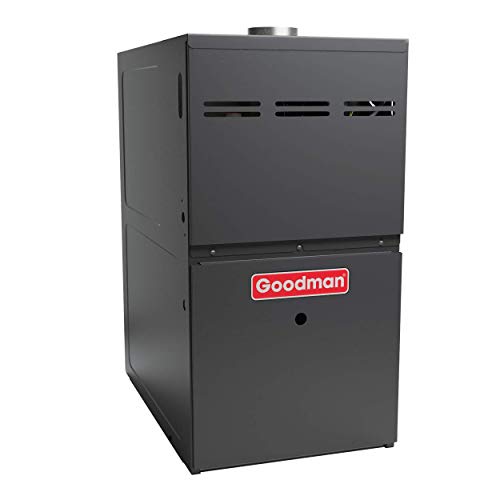
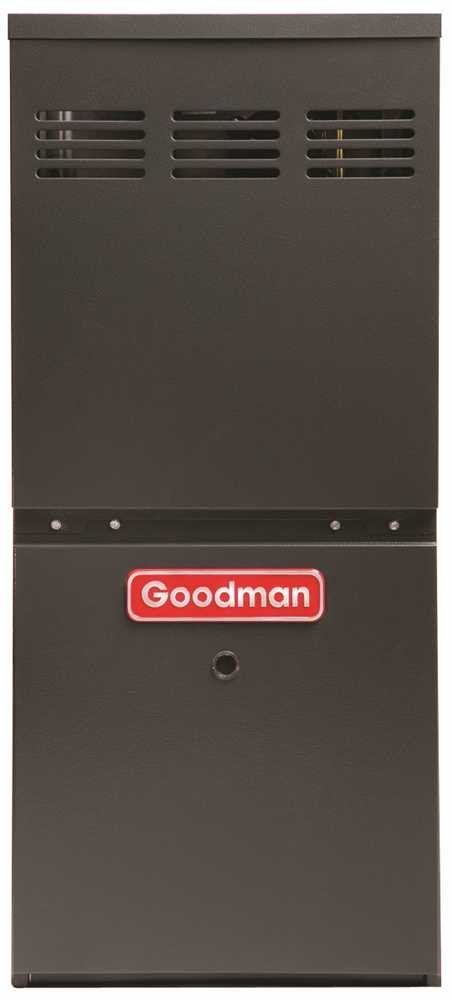
5. Goodman 80% AFUE Two-Stage Upflow/Horizontal Multi-Speed 80k BTU Natural Gas Furnace (GR9T800803BN)Two-stage heating for the house that runs hot, then cold, then hot again. Two-stage heating is the fix for a house that swings between stuffy and chilly.Check price on Amazon
How To Choose The Best Top Ten Furnaces
Choosing a furnace is less about brand loyalty and more about three numbers that have to line up with your house: heat output, efficiency, and physical size. Get those wrong and no amount of features saves you. Get them right and a mid-range furnace heats evenly without short-cycling.
Match BTU output to your square footage and climate
BTU (British Thermal Units) is simply a measure of heat output per hour. A 60,000 BTU furnace suits a smaller or well-insulated home, while a 120,000 BTU unit is built for large houses or cold climates. An oversized furnace heats fast, shuts off, and repeats — that on-off cycling leaves rooms uneven and wears parts faster. Ask your installer for a load calculation rather than guessing from square footage alone.
Understand AFUE before you compare efficiency
AFUE (Annual Fuel Utilization Efficiency) is the percentage of fuel that becomes usable heat. An 80% furnace sends roughly a fifth of its fuel up the flue as waste; a 96% model captures far more of that heat. The catch is venting: higher-efficiency units typically need different venting than an 80% furnace, so confirm what your home can support before choosing an efficiency tier.
Check cabinet width against your existing ductwork
The cabinet width — the outside width of the furnace box — has to fit your plenum and duct opening. Goodman builds these in 14″, 17.5″, 21″, and 24.5″ widths, and swapping widths usually means ductwork changes. Measure your current cabinet before you order anything; it is the single fastest way to rule out a model.
Decide if you need single-stage or two-stage heating
A single-stage furnace runs at one full output level, on or off. A two-stage furnace runs at a lower level on mild days and ramps to full only when it is truly cold, which many buyers find more even and less drafty. Two-stage models cost more and add a little install complexity, but they can be the better fit for a house that feels too hot-then-cold.
Side-by-Side Comparison
Detailed Reviews
1. Goodman GR9S800803BN Furnace
The 80,000 BTU middleweight that fits most houses without oversizing the ductwork.
For a typical three-bedroom house, 80,000 BTU is the number most installers land on — enough heat for a cold snap without the short-cycling that comes from going bigger. This is the unit that fits that window, with a 17.5-inch cabinet width that slips into a standard closet or utility space. It ships as an upflow/horizontal furnace, meaning it can sit vertically or lay on its side but cannot be flipped into a downflow. If your ductwork runs out the bottom, look at the GD9 series instead.
The multi-speed ECM motor is the part that quietly changes your day. It varies fan speed based on what the system needs, so you get steadier airflow and less blower racket than a fixed-speed motor. In practice, that means bedroom air that feels even on a January morning rather than blasting cold then hot. The primary heat exchanger is aluminized steel, a common material chosen for corrosion resistance in gas furnaces.
What sets this one apart in owner experience is build quality — that is the theme that runs through the feedback most consistently, with performance close behind. Connecting the gas line, power, and thermostat is described as straightforward by buyers who have done it, which speaks to a clean control layout rather than a fussy one. The crowd favorite here sits at 4.5+ stars across 50+ ratings, and it earns the top slot on that foundation.
What earns it first place
- 80,000 BTU hits the balance for a mid-size house without oversizing.
- Multi-speed ECM motor keeps airflow even and blower noise low.
- 17.5″ cabinet fits common utility closets and plenum openings.
- Aluminized steel primary heat exchanger built for long service.
Where it stops
- Upflow/horizontal only — no downflow installation.
- Thermostat, linesets, and LP conversion kits sold separately.
- 80% AFUE leaves more fuel waste than a 92% or 96% unit.
Take this one if: you want a proven 80,000 BTU furnace for a standard home and don’t need downflow venting.
Look elsewhere if: your ductwork exits the bottom of the cabinet — this unit can’t be installed that way.
2. Goodman GR9S800603AN Furnace
A slim 14-inch cabinet for tight closets and smaller homes that still want real heat.
Tight utility closets are where most furnace shopping goes sideways, and this model solves that with a 14-inch cabinet width — the narrowest on this list. If your existing opening is cut for a compact unit, this is the one that slides in. At 60,000 BTU it suits a smaller or well-insulated home, and it carries a listed 5-ton cooling capacity for split-system setups.
Here is where the numbers get interesting against its bigger sibling. This unit weighs 89 pounds against the 175 pounds of the 80,000 BTU model above — a genuine 2.0x gap that matters when an installer is maneuvering a cabinet into a tight space. Its listed footprint of 33.38″D x 28″W x 33.38″H is deeper in cabinet terms, so measure your closet depth as carefully as its width before committing.
The multi-speed ECM motor and aluminized steel heat exchanger carry over from the larger Goodman line, so the internals are familiar. What you give up is headroom: 60,000 BTU can feel stretched in a large or drafty house on the coldest nights. That is a sizing question, not a build question — if your load calculation points to 60,000, this unit does the job without overspending on capacity you don’t need.
The size trade-off: a 14-inch cabinet is the reason to pick this one, and the reason to look elsewhere if you already run a wider plenum.
Right for a compact install: smaller homes or tight closets where width is the deciding factor.
Pass it by if: your house needs more than 60,000 BTU to stay warm through winter.
3. Goodman GRclass Furnace
Two-stage heating for the house that runs hot, then cold, then hot again.
Two-stage heating is the fix for a house that swings between stuffy and chilly. This furnace runs at a lower stage on mild days and shifts to full output only when it needs to, which smooths out temperature swings and shortens the harsh on-off cycles of a single-stage unit. The two-stage gas valve uses a convertible design that lets the installer activate two-stage operation with the flip of a dipswitch.
Goodman builds in some service-friendly details here. The silicon nitride igniter uses an adaptive learning control aimed at maximum igniter life, and the control board stores the last five diagnostic codes in memory — handy when a technician needs to trace a fault. There are color-coded low-voltage terminals and provisions for an electronic air cleaner and 24-volt humidifiers.
The heat exchanger is Goodman’s patented TuffTube dual-diameter tubular design, an upgrade over a basic exchanger tube. Owners describe it as quiet in operation, which lines up with the two-stage approach of running gently instead of blasting. It is a 120-pound unit at 17.5 inches wide, so confirm your closet can carry the weight and fit the cabinet.
Why two-stage pays off
- Two-stage gas valve with dipswitandard 80,000 BTU need.
Check before you buy: a 96% furnace needs venting suited to high efficiency — confirm your setup first.
5. Goodman GR9S960803BN Furnace
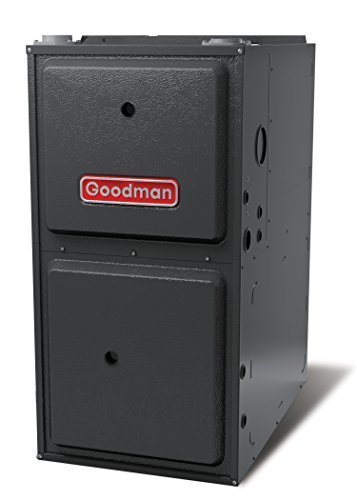
When your code demands low-NOx and you won’t give up 96% efficiency, this is the combination.
The rarest pairing on this list is low-NOx compliance together with top-tier efficiency, and this furnace is it. It carries the Low NOx designation at 96% AFUE and 80,000 BTU, so a district with strict emissions rules doesn’t force you down to an 80% unit. That is a real advantage for buyers in reguilds these in 14″, 17.5″, 21″, and 24.5″ widths. A 14-inch unit suits a tight closet; a 24.5-inch unit needs a proper utility space. Swapping widths usually means ductwork changes, so measure your current cabinet first — it is the fastest way to rule out models that won’t work without construction.
Single-Stage vs Two-Stage
A single-stage furnace runs at one full output level — on or off. A two-stage furnace runs at a lower level on mild days and ramps up only when it is truly cold, which many buyers find more even and less drafty. Two-stage models add cost and some install complexity, but they can smooth out a house that feels too hot then too cold. Single-stage is simpler and suits homes that heat evenly already.
ECM Motors
An ECM motor (Electronically Commutated Motor) is a blower motor that varies its speed to match what the system needs. The practical result is steadier airflow and lower blower noise than a fixed-speed motor. It also supports the multi-speed operation common across this Goodman line. When you see “multi-speed ECM motor” in a listing, that is the feature responsible for the quieter, more even air delivery.
Low NOx and Installation Type
Low NOx means a furnace is designed to produce lower nitrogen oxide emissions, which some air quality districts require for code compliance. Installation type matters just as much: every furnace on this list is upflow/horizontal, meaning it can sit vertically or on its side but cannot be flipped into a downflow position. If your ductwork exits the bottom, you need a GD9 series model instead. Confirm both points before ordering.
Common Questions
How do I know what BTU furnace my house needs?
Can any of these furnaces be installed as a downflow?
What is the difference between 80% and 96% AFUE in real life?
Is a two-stage furnace worth it over single-stage?
Do these furnaces come with installation, or just the unit?
How does the Goodman warranty work on these furnaces?
What cabinet width do I need, and how do I measure it?
Do I need a low-NOx furnace where I live?
What does a multi-speed ECM motor actually do for me?
Can I run one of these furnaces on propane instead of natural gas?
The Bottom Line
For most homes, the top ten furnaces winner is the Goodman GR9S800803BN because 80,000 BTU suits a typical mid-size house, the 17.5-inch cabinet fits common closets, and the multi-speed ECM motor keeps airflow even and quiet. If you want more efficiency on a smaller footprint, the Goodman GR9S920603BN steps up to 92% AFUE at 60,000 BTU. And for a large home or a cold climate that needs maximum heat, the Goodman GR9T961004CN pairs 100,000 BTU with 96% AFUE and two-stage comfort. Match the BTU and cabinet width to your house first — that single step decides whether any of these furnace picks actually keeps you warm.
How we choose
We do not accept paid placement. Every pick is matched to a real buyer and a real use-case; we do not hands-on test units.
Sources
Specifications: manufacturer listings and product documentation. Review insights: verified customer reviews, as of November 2026. Pricing: not shown on this page (it changes often); check the current price via the retailer link.
As an Amazon Associate, Tactical Gear Guy earns from qualifying purchases. This does not affect which products we feature.