Specs are compiled from manufacturer listings and verified buyer reviews and can change over time — please confirm the key details on the product page before buying.
If your boot uppers are still solid but the bottoms are slick, worn flat, or peeling away, you do not need new boots — you need the right replacement sole. The short answer: pick a sole by the surface you actually walk on. Felt grabs wet river rock, studded rubber bites into slimy stone and ice, and flat rubber sheet handles everyday pavement and worn heels. Everything below is organized around that one decision, so you can match a sole to your ground instead of guessing from a listing photo.
This guide is built by comparing the manufacturers’ published specifications and the patterns across verified customer reviews, so you get each pick’s real strengths and trade-offs instead of marketing spin.
Some soles click into a boot system and some you glue and cut yourself, so the first thing to settle is which type your boot accepts. Below you will find the best soles for boots sorted by surface, fit, and how much hands-on work each one asks of you.
Top Picks


How To Choose The Best Soles for Boots
Replacement soles fail for one of two reasons: the wrong material for your ground, or the wrong attachment method for your boot. Sort those two out and the rest is detail. Here is what actually decides whether a sole earns its place on your boot.
Match the sole material to the surface, not the price
Felt is the classic wading material because it spreads contact across slick rock instead of relying on lugs. Studded rubber adds carbide tips (tiny hardened metal points set into the rubber) for slimy stone, mud, and ice, where plain rubber slides. Flat rubber sheet is the general-purpose option for heel repair and resoling everyday shoes. A sole that is brilliant on a riverbed can be genuinely poor on a paved trail, so buy for where you walk.
Click-in system or glue-on sheet
Some boots use an interchangeable sole system where the sole clicks on and off — that is a five-second swap and no adhesive. Everything else is a glue-on job: you cut the sheet to shape, rough up both surfaces, and bond it. If your boots are not part of a click-in system, budget your time for the glue route rather than expecting a drop-in fit.
Thickness changes the feel underfoot
A 1mm sheet is thin enough to sit flush and add grip without changing how the boot fits. A 5mm sheet adds real cushioning and wear material, but it also takes up room inside the boot. If your boots already fit snugly, a thick sheet can push your foot up against the upper.
Prep work is the whole game with adhesive
Glue only holds if both surfaces are clean and slightly rough. Sand the patch and the old sole until they are a bit rough, wipe them down, and let everything dry before you bond. Skipping that step is the most common reason a new sole peels off early.
Side-by-Side Comparison
| Model | Best For | Sole Type | Attachment | Weight | Amazon |
|---|---|---|---|---|---|
| Korkers Unisex-Adult Replacement Soles★ Best Overall | Wet river rock while wading | Felt | OmniTrax 3.0 click-in | 13.6 ounces | Amazon |
| Korkers OmniTrax v3.0 Studded Vibram XS Trek SoleTop Performer | Slimy rocks, mud and ice | Studded rubber | OmniTrax 3.0 click-in | 16 ounces | Amazon |
| Korkers Plain Felt Re-Sole Kit | Reviving worn wading boots | Felt | Glue-on | 10.24 ounces | Amazon |
| Shoe Sole Repair Rubber Soling Sheet, 3/16 Inch Thick | DIY resoling and heel repair | Diamond-pattern rubber | Glue-on, cut to fit | 1.34 pounds | Amazon |
| Resistant Shoes Sole Sheet Kit 2.5MM | Thin patch on leather-soled boots | Rubber sheet | Glue-on, cut to fit | 1.28 pounds | Amazon |
| CHGCRAFT Shoe Replacement Rubber Soles for DIY Shoes | Full sole rebuild on work boots | Raised-grain rubber | Glue-on, cut to fit | — | Amazon |
| Vibram Red Rubber Soles Replacement, 1mm Thin (1 Pair) | Thin flush grip on dress shoes | Smooth rubber | Glue-on | 0.95 ounces | Amazon |
Detailed Reviews
1. Korkers Unisex-Adult Replacement Soles
Our pick — 4.5+★ from 350+ verified ratings; the strongest balance of quality and price.
The wading sole that swaps onto your boots in seconds and finds grip on slick river rock.
For anyone whose boots already run the Korkers OmniTrax 3.0 interchangeable system, this felt sole is the lowest-effort way to restore river traction. There is no glue, no trimming, no drying time — it clicks into place, and it comes back off just as easily when you want to clean it. It weighs 13.6 ounces, which gives it enough body to lie flat underfoot instead of curling at the edges.
What wins people over here is the felt itself. It is the material that spreads your weight across wet stone instead of relying on lugs, which is exactly why it holds on the slick, algae-covered rock that turns a rubber boot into a skate. It is also a straight upgrade path for a boot that is otherwise still healthy — you are refreshing the grip without replacing the boot you already broke in.
The catch is compatibility. This sole is built for the OmniTrax 3.0 system, so if your boots are not part of that family, it will not help you at all — check your boot model before you buy. Felt also wears faster on dry pavement than rubber does, so treat these as river footwear rather than a hiking sole.
What earns its keep
- Felt spreads contact on slick wading rock instead of relying on lugs alone
- OmniTrax 3.0 click-in fit means no adhesive and a quick swap
- At 13.6 ounces, it lies flat and stable underfoot
- Simple to pull off and clean after a day in the water
Where it pushes back
- Only fits boots built for the OmniTrax 3.0 interchangeable system
- Felt wears down faster on dry, abrasive pavement than rubber
Reach for this if: your boots already run OmniTrax 3.0 and you spend your days on wet river rock.
Look elsewhere if: your boots have a fixed sole — this cannot be retrofitted onto them.
2. Korkers OmniTrax v3.0 Studded Vibram XS Trek Sole
Thirty carbide-tipped studs for the ground that laughs at plain rubber.
When the river bottom is slimy, muddy, or icy, this is the sole whose whole job is bite. It carries 30 carbide tipped studs per pair embedded in the rubber lugs, and a deep, wide lug pattern around them drains and self-clears instead of packing up. The studs are the part that grabs where felt and plain sticky rubber run out of ideas.
Grip is the headline here — traction is far and away what buyers talk about with this one. Compare it to the felt pick above and the split is clear: felt wins on clean wet rock, while this studded sole is built for the extremely slippery aquatic environments and mud and ice that leave felt sliding. It weighs 16 ounces, which is heavier than the felt sole by design — you are carrying metal points, and you feel that on the boot.
The honest trade-off is wear around the studs. Studs bite hard, but the rubber around them is the wear point, and the sole does not have an endless life if you punish it. Treat these as your specialized tool for the worst ground rather than a do-everything sole.
Best-suited to: anglers and hunters who keep ending up on slimy stone, mud, or ice and have already slipped once too often.
Know before you buy: the rubber around the studs is the weak spot over the long haul, and it only fits OmniTrax 3.0 boots.
3. Korkers Plain Felt Re-Sole Kit
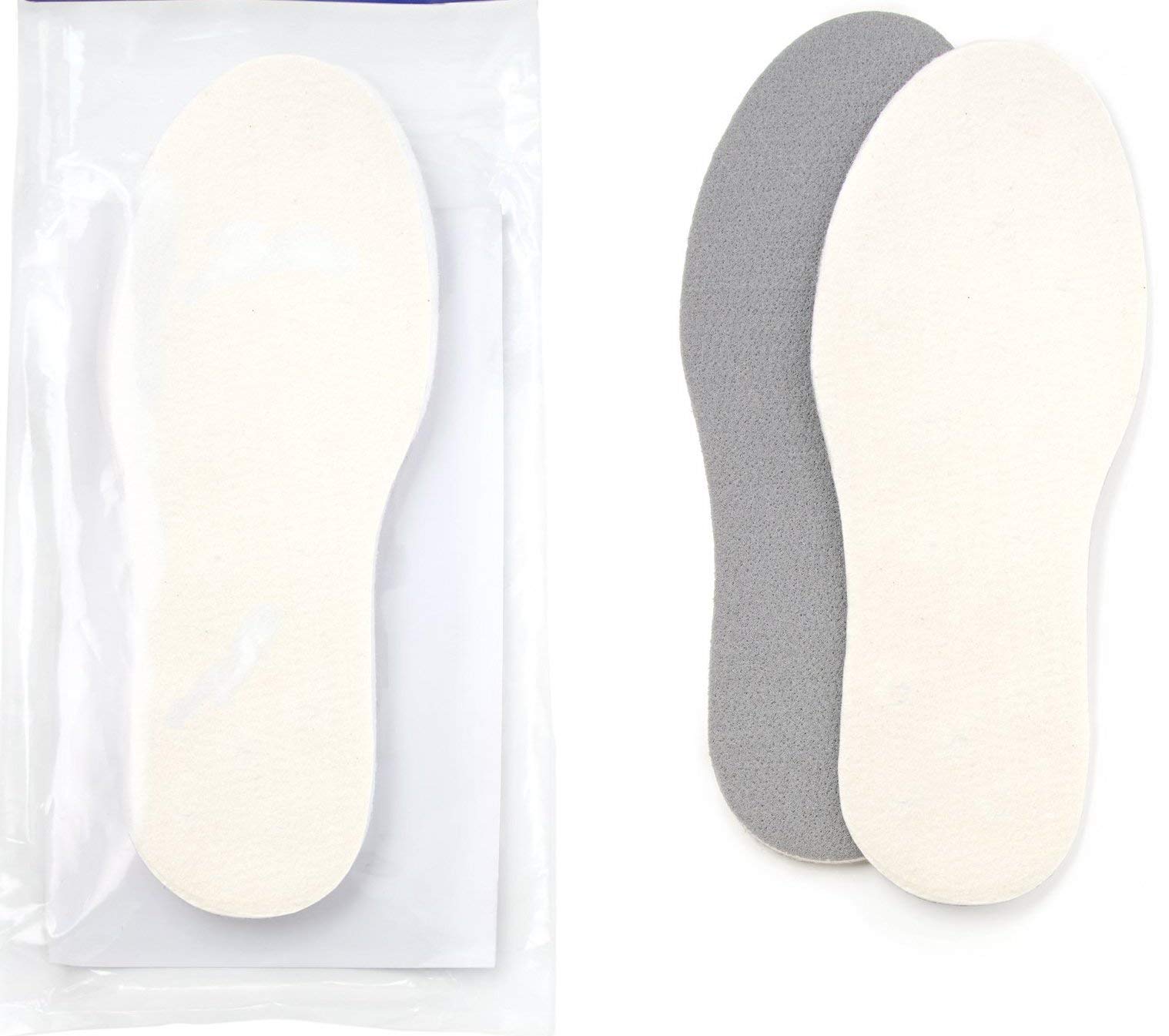
For wading boots with no click-in system: fresh felt you glue on yourself.
This is the route for a pair of wading boots that is not part of an interchangeable system but still has life left in the uppers. You pull off the old worn felt, glue this on, and you are back on the river with the same felt-on-rock grip the click-in pick offers. At 10.24 ounces it is the lightest of the Korkers options here, and it takes hand washing rather than machine abuse.
Felt is the right call if you fish slick, algae-covered rock, because it spreads contact rather than relying on lugs. Where this kit gets tricky is the bonding step. Getting the felt to sit flat and stay put is the make-or-break part, and it is genuinely easier on some boots than others. Prep the surfaces properly — clean, dry, slightly rough — and you give the adhesive a fair chance.
Be realistic about longevity too. This is a consumable layer, and how long it lasts depends on how well it was glued and how hard you walk on it. If you want a set-and-forget solution, the click-in felt sole above spares you the glue entirely.
The reason to pick it: it is a genuine revival kit for a good boot — you cut your old felt off, glue this down, and keep the boots you already trust on the water instead of buying new ones.
The part nobody enjoys: the glue job is fussy, and a poor bond is what shortens the life of the felt.
Go this way if: you have decent wading boots with a flat sole area and no interchangeable system, and you are willing to do the adhesive work.
Think twice if: you want plug-and-play traction — the click-in option saves you the mess.
4. Shoe Sole Repair Rubber Soling Sheet, 3/16 Inch Thick

A thick, cut-it-yourself rubber sheet that turns one purchase into several sole jobs.
If you want a single sheet you can carve into heel patches, half soles, or a full resole, this is the workhorse of the group. The sheet measures 15 x 11 inches and is 5mm thick, which is substantial enough to absorb wear and add cushioning. It is flexible enough to curve to the shape of a shoe instead of cracking when it bends.
What buyers keep coming back to is the quality of the rubber itself, and the 5mm thickness is a big part of that appeal. The diamond pattern on the surface gives it a non-skid grip, and it cuts easily, so shaping it to a clog, a heel, or a boot toe does not fight you. If you are resoling more than one pair, a sheet this size stretches across jobs where a pre-cut sole would not.
Here is the honest bit: this sheet is only as good as your cutting and gluing, and at 5mm it takes up real room underfoot. It weighs 1.34 pounds as a whole sheet, so it is not a delicate patch — it is bulk material you shape yourself. If you want a thin, flush finish, the 1mm Vibram pair below sits far lower.
Why it stands out
- 5mm thickness gives real cushioning and wear material, not a thin veneer
- Diamond-pattern surface adds a non-skid property
- Flexible enough to curve to different shoe soles
- Cuts and trims easily with ordinary tools
What to plan around
- You shape and bond it yourself — results track your skill with a blade and glue
- At 1.34 pounds and 5mm thick, it adds noticeable bulk compared to a thin sheet
Made for: the DIY resoler who wants one big thick sheet to cut into multiple patches and half soles.
Not for: a flush, thin finish on a dress shoe — this one is about substance and coverage.
5. Resistant Shoes Sole Sheet Kit 2.5MM

A thin rubber pad aimed squarely at protecting leather soles and patching worn heels.
This kit sits in a different lane than the thick resole sheets: it is a 2.5mm rubber pad meant to shield and repair, not to rebuild an entire sole from scratch. The 22.05 x 14.96 inch sheet gives you plenty to cut from, and because you trim it to your needs, it suits everything from boots to casual shoes and sandals. The rubber is chosen for elasticity and abrasion resistance, which is what you want on a heel that wears down from pavement.
Where this earns its keep is on leather-soled footwear that you want to keep going without slipping. A thin pad on the bottom protects the leather from grinding away and gives you more grip than bare leather. It is a repair-first product, and the expectation should be a protective layer rather than a cushioned rebuild.
The honest caveat is the surface prep. This pad only holds if you sand both the patch and the sole until they are a bit rough, then bond properly. Do that step well and it holds; rush it and a thin pad like this will peel. It is also the newest listing of the bunch, so there is less of a track record to lean on than the established Vibram and Korkers options.
The plain-English job: a protective rubber layer for leather soles and worn heels, thin enough not to wreck the fit, with the elasticity to take pavement wear.
The honest limit: thin pads are unforgiving of bad prep, and this is a newer product with a shorter history than the brand-name soles here.
Worth a look if: you want to shield leather-soled boots or patch a heel without adding bulk.
skip it if: you need a full, thick sole rebuild — the 5mm sheet is the better tool for that.
6. CHGCRAFT Shoe Replacement Rubber Soles for DIY Shoes
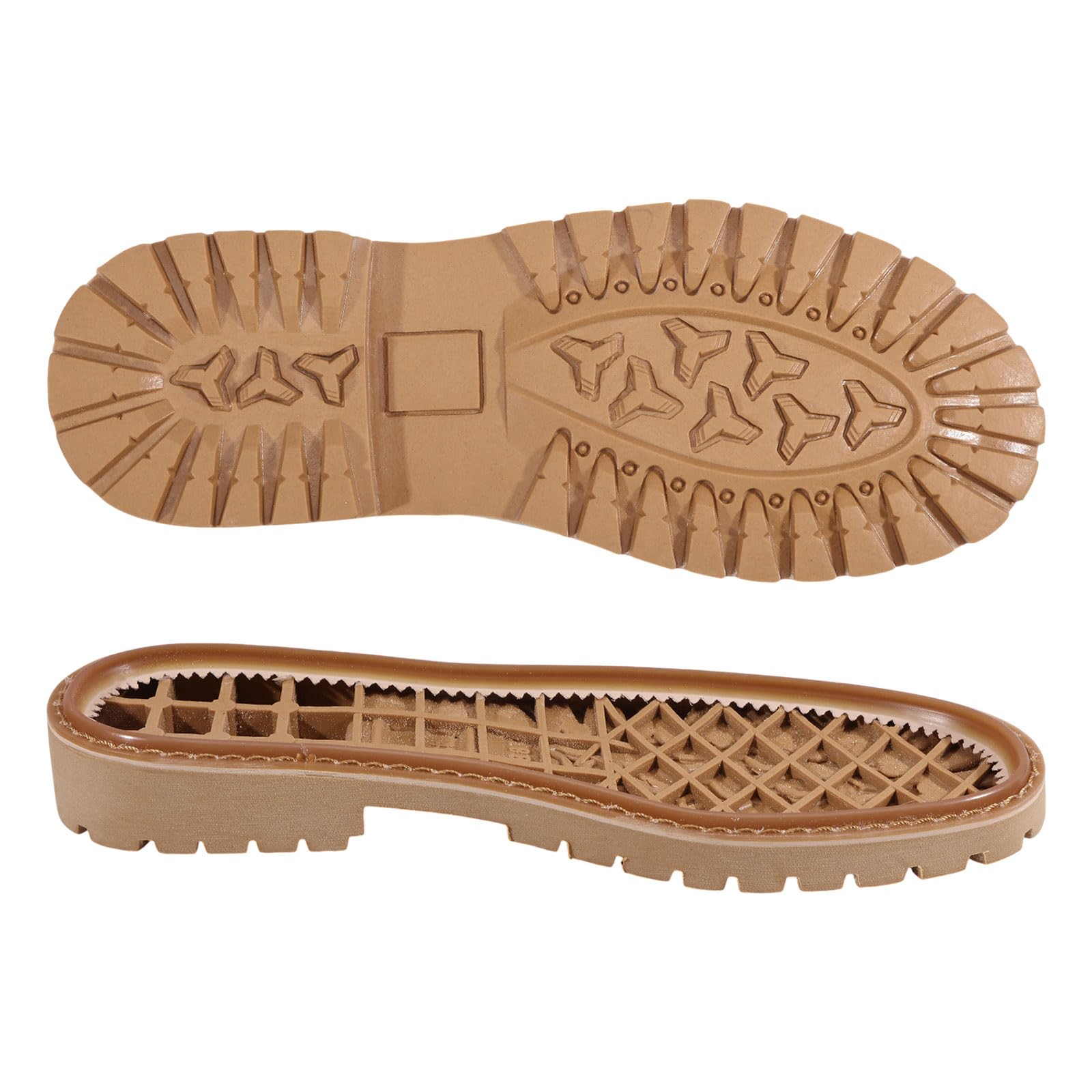
A full rubber outsole with a raised grain surface, built for work boots facing wet floors.
This pair is for the full sole restoration job — the kind where the whole bottom of the boot needs replacing, not just a heel patch. The raised grain design on the surface is the traction story: it puts extra texture between you and wet floors to cut down on slipping. The rubber is chosen for elasticity so it takes the flex of a work boot rather than cracking at the bend.
The pair measures 12 x 4.6 inches and comes in brown, sized for men’s shoes and boots. The application steps matter more here than anywhere else on the list: clean the old outsole thoroughly with water or a damp cloth, air dry it, then stick. That drying step is not optional — a damp surface is where a glue bond fails.
Worth knowing going in: this is a newer listing with less of a review history behind it than the Korkers and Vibram entries, so you are leaning more on the spec than on years of owner feedback. The raised grain also means it is not the slimmest profile — it is built to add cushioning and lift to a worn sole, so expect a fuller feel underfoot.
The right buyer: someone rebuilding the entire bottom of a pair of work boots and wanting built-in raised texture for wet floors.
The wrong buyer: anyone after a thin, discrete patch — this is a full, textured outsole.
7. Vibram Red Rubber Soles Replacement, 1mm Thin (1 Pair)
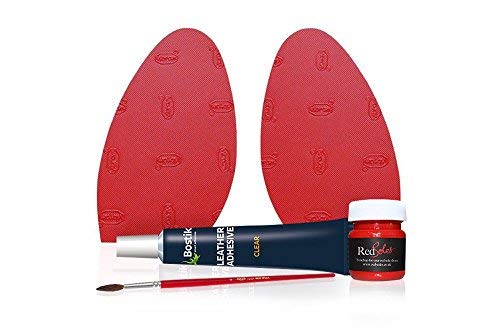
A 1mm Vibram pair so thin it disappears under your foot and barely changes the fit.
Sometimes the goal is grip without any change in feel, and that is exactly this sole’s brief. At 1mm thick it is thin enough to sit flush under the original sole, and it weighs just 0.95 ounces for the pair. Compare that to the 16-ounce studded Korkers sole and you can see the two sit at opposite ends of the weight spectrum — this one you will not feel.
The professional-quality rubber is what buyers single out, and the practical use case is resoling fine footwear where a chunky patch would show. Because it is so thin, it works as an added protective layer rather than a structural rebuild. You supply the paint, brush, and glue yourself, so this is very much a project part, not a ready-to-stick kit.
The slip resistance on this smooth surface is a mixed bag — some find it fine, others less sure of it on wet ground, so it is not the sole to trust on a slick riverbed. It is a finish and protection layer for dressier shoes, not a traction upgrade for the trail.
The case for it: a 1mm Vibram pair that keeps your shoe’s original profile while adding a protective rubber layer, at under an ounce for the pair.
Where it falls short: smooth and thin means grip on wet surfaces is a question mark, and you have to supply your own glue and paint.
Pick it for: dress shoes and fine boots where you want a flush, nearly invisible protective sole.
Look past it for: wading or trail traction — this is a thin finishing part, not a grippy one.
Know the Specs
Sole thickness in millimeters
Thickness decides how much wear material and cushioning you get, and how much room the sole takes inside the boot. A 1mm sheet sits flush and keeps the fit unchanged, which suits dressier shoes or a tight-fitting boot. A 5mm sheet adds real substance and cushioning but pushes your foot up, so roomy boots handle it better than snug ones.
Carbide studs and lug depth
Carbide studs are small hardened metal tips embedded in the rubber lugs. On a studded sole, they are what bites into slimy stone, mud, and ice where plain rubber slides. The lug pattern around them — deep and wide is the goal — clears the surface as you step. More studs and deeper lugs mean more grip on bad ground, at the cost of weight and a faster-dulling wear surface.
Felt versus rubber traction
Felt spreads your weight over a wide patch of wet rock, which is why it holds on algae-covered stone. Rubber relies on lugs and texture to grip, and it is the better all-round material on pavement and dry ground. The two are not interchangeable in performance: match felt to rivers and rubber to land.
Glue-on versus click-in fit
A click-in sole only works on boots built for that system and swaps in seconds with no adhesive. A glue-on sole fits almost any boot but demands surface prep — sanding both surfaces rough, cleaning, and drying before bonding. The prep step is what separates a sole that lasts from one that peels.
Common Questions
How do I know if my boots take a click-in sole or a glue-on sole?
Is felt or studded rubber better for wading on slick rocks?
How thick a rubber sheet should I buy for resoling boots?
Why does my glued-on sole keep peeling off?
Can I use a replacement sole on any brand of boot?
How long does a replacement sole last?
Do I need to supply my own glue for these soles?
What is the difference between a full sole and a heel pad?
Will a thick replacement sole make my boots fit tighter?
Are studded soles safe to walk on indoors?
The Bottom Line
For most people, the right move among the soles for boots options is the Korkers Unisex-Adult Replacement Soles, because felt on a click-in system gives you genuine wet-rock grip with zero glue and a five-second swap. If you fish the slimiest, muddiest, iciest ground and need maximum bite, the Korkers OmniTrax v3.0 Studded Vibram XS Trek Replacement Sole is the one to reach for. And if your boots have no interchangeable system at all, grab a cut-to-fit sheet — the Shoe Sole Repair Rubber Soling Sheet gives you the most material to work with. Match the sole to your surface and your boot’s attachment type, and a fresh bottom will outlast the uppers it sits on.
How we choose
We do not accept paid placement. Every pick is matched to a real buyer and a real use-case; we do not hands-on test units.
Sources
Specifications: manufacturer listings and product documentation. Review insights: verified customer reviews, as of November 2026. Pricing: not shown on this page (it changes often); check the current price via the retailer link.
As an Amazon Associate, Tactical Gear Guy earns from qualifying purchases. This does not affect which products we feature.