Specs are compiled from manufacturer listings and verified buyer reviews and can change over time — please confirm the key details on the product page before buying.
You want a real wall socket you can zip into a backpack — not a 40-pound box that needs two hands. The catch with this category is that a true 110V AC outlet needs an inverter inside, and inverters add bulk, heat, and drain. So the smallest units win by trimming capacity and wattage, not by magic. Below, the picks that still fit in a daypack while running a laptop, a fan, or a lamp when the grid drops.
This guide is built by comparing the manufacturers’ published specifications and the patterns across verified customer reviews, so you get each pick’s real strengths and trade-offs instead of marketing spin.
The rule that matters most here: check the AC outlet’s watt rating against your device’s draw before anything else. Our list of the smallest power bank with AC outlet options keeps that limit front and center on every pick.
Top Picks


How To Choose The Best Smallest Power Bank with AC Outlet
Two numbers decide whether a palm-sized power station is useful to you or just a heavy charger with extra plastic. One is the AC outlet’s running wattage. The other is the Watt-hours (Wh — how much total energy the battery stores). Miss either one and the unit won’t run what you bought it for.
Read the AC wattage before anything else
The AC outlet’s watt rating is the hard ceiling on what will run. A 100W outlet handles a laptop, a fan, or a lamp. A 300W outlet can push a bit further, like a small cooler or a projector. Anything with a heating element or a compressor sits far above these numbers and simply will not start.
Translate Wh into minutes of real use
Watt-hours set runtime; wattage sets what can plug in. A compact unit with about 90Wh stores enough for a few phone fills or a short laptop session, while a 257Wh pack stretches that noticeably. Divide your device’s watt draw into the total Wh for a rough runtime estimate.
Peak watts versus running watts
Motors and compressors draw a short burst of extra power at startup, called peak watts. A 120W outlet rated for 220W peak means a device that briefly pulls double its normal draw can still start. Ignore peak ratings when sizing normal electronics — they only matter for things with a motor.
Carry weight and true pocketability
Once you cross about 5 pounds, a power station stays in the car or on a shelf. Anything near 2 to 3 pounds goes in a backpack without a second thought. Check the weight in pounds and the boxy footprint together — a slim 2.2-pound body tucks into a side pocket, while a wider one takes up half a daypack.
Side-by-Side Comparison
| Model | Best For | AC Output | Capacity | Weight | Amazon |
|---|---|---|---|---|---|
| Bailibatt Portable Power Station 600W Surge★ Best Overall | Desk and campsite hybrid | 300W (2 outlets) | 257Wh | 5.4 lb | Amazon |
| BALDR Portable Power Station 28000mAhFastest Recharge | Fast top-ups on the trail | 150W peak | 90Wh | 2.4 lb | Amazon |
| Portable Power Station 120W, 110VTent Companion | Tent camping with a light | 120W (2 outlets) | 97.6Wh | 2.2 lb | Amazon |
| VTOMAN Jump 100 | Backpack travel and CPAP | 100W (200W peak) | 89.6Wh | 2.36 lb | Amazon |
| GENSROCK Portable Power Station 120W | Grab-and-go home backup | 120W run, 220W peak | 88Wh | 2.3 lb | Amazon |
| Daran Portable Power Station 100W | Silent tailgate and desk use | 100W (200W peak) | 89.6Wh | 2.54 lb | Amazon |
| Portable Power Station 200W (Powkey) | Longer laptop sessions | 200W (2 outlets) | 146Wh | 3.2 lb | Amazon |
| ZOUPW 140W Portable Power Bank | Airline carry-on travel | 100W (150W peak) | 99.9Wh | 1.8 lb | Amazon |
| DaranEner Portable Power Station 192Wh | Camping with a group | 300W (600W surge) | 192Wh | 5.7 lb | Amazon |
Detailed Reviews
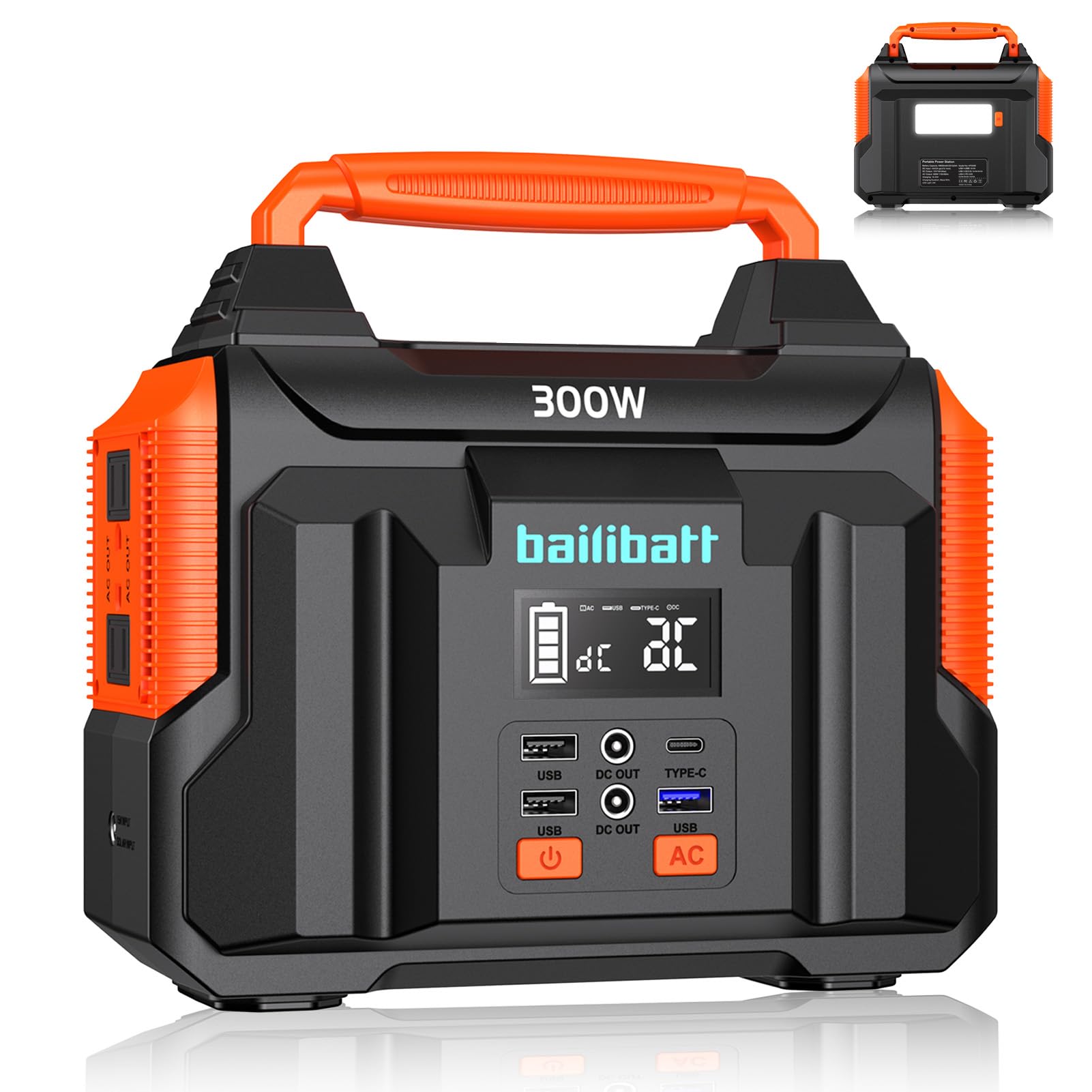
1. Bailibatt Portable Power Station 600W Surge, 257Wh
Our pick — 4.0+★ from 650+ verified ratings; the strongest balance of quality and price.
The biggest tank on this list, still light enough for one hand at the campsite
The 257Wh pack is the standout here, and it runs a 300W output through two 120V pure sine wave AC outlets — a sine wave being the clean, steady kind of power that laptops and tablets expect from a wall socket. That combination gives you real headroom. It holds 2.9 times the capacity of the VTOMAN Jump 100’s 89.6Wh and pushes three times the AC wattage (300 watts against 100 watts), so a fan, a laptop, and a light can share the load instead of fighting over it.
For an all-rounder, it earns its place. Eight outputs total — two AC, dual DC 12V/10A ports, USB-C PD at 24W, QC3.0, and two USB-A ports — mean you rarely need to unplug one thing to charge another. The company rates the Grade-A battery pack for 1500+ charge cycles, and the onboard LCD plus BMS (Battery Management System — the chip that watches voltage, current, and temperature) keeps you informed. Campers treat it as a packable wall outlet; the size and portability are what the crowd keeps coming back to, and it slides into a backpack without a fight.
A claimed 4.6-pound figure appears in the listing headline, but the spec sheet lists 5.4 pounds — go by the spec sheet when you load your pack. It also weighs more than twice the 2.2-pound ZeroKor below, so this is a car-and-camp pick rather than a summit-and-back one. At 8″L x 4″W x 6.5″H it is the chunkiest body here. Remember to hold the AC button for three seconds to switch the outlet on, and to top up the battery every 1-2 months when it sits idle.
What it brings to a blackout
- Two 120V pure sine wave AC outlets at 300W total give you genuine wall-type power
- 257Wh stores far more than the pocket-sized picks — 2.9x the VTOMAN Jump 100
- Eight ports let you charge a laptop, two phones, and a camera at once
- LCD screen and BMS monitor keep an eye on voltage, current, and temperature
The load-bearing caveats
- 5.4 lb per the specs is twice the ZeroKor’s 2.2 lb — car support, not summit gear
- No car charger cable or solar accessories in the box
- AC output needs a three-second button hold, easy to forget in the dark
Reach for this if: you want the most capacity and AC wattage you can still carry one-handed, for camping or a home outage.
Look elsewhere if: you are hiking miles with your pack — the 5.4-pound body and 8-inch length want a car nearby.
2. BALDR Portable Power Station 28000mAh, 90Wh LiFePO4
Sixty-five watts of two-way power in a body that weighs as little as a paperback
The feature that wins buyers over is the 65W bidirectional charging — it refills from 0% to 80% in about one hour, per the company’s own spec, and pushes that same 65W out to a laptop. In real terms, that means plugging into a wall for a coffee break and walking out with a mostly full tank. A 90Wh LiFePO4 battery (lithium iron phosphate, a chemistry that holds up over more cycles than ordinary lithium) powers the show, and the maker rates it for over 5000 charge and discharge cycles.
Reliability is the thing people count on it for. It sits in a body at 7 x 3 x 3.6 inches and 2.4 pounds, and the 150W peak AC outlet gets a shoulder strap in the box so you can sling it over one shoulder.
Here is the honest limit: 90Wh is a small tank, so a laptop run is short — think one solid session, not a full workday. It also sits at just under four stars, which says plenty of people are happy but a slice ran into expectations the small capacity could not meet. Complete the two full charge and discharge cycles the manual suggests, and top it up every 1-2 months when stored.
Why it earns a slot: the one-hour 0-to-80% refill is the fastest headline on this list, and that speed is what keeps a tiny pack genuinely useful on the move.
Pick this when: you recharge between stops and need something light on a shoulder strap.
Think twice if: you expect multi-hour laptop runtime — 90Wh will not stretch that far.
3. Portable Power Station 120W
The lightest thing here with two real AC outlets and a flashlight built in
At 2.2 pounds, this ZeroKor unit is the lightest of the full-outlet picks, and it still carries a 97.6Wh battery with two 120W AC outlets. Sized against the Bailibatt, the difference is dramatic — the Bailibatt is 5.4 pounds against this 2.2 pounds, and its 8″L x 4″W x 6.5″H body dwarfs this one’s 5.7″L x 4.4″W x 4.1″H. That means this one slips into a motorcycle pannier or a daypack side pocket without a squeeze.
What buyers use it for is exactly that: it earns its keep for motorcycle camping and outdoor carry, with the compact size and portability as the two things people keep coming back to. A built-in LED flashlight with a reading mode and SOS mode rounds out the tent kit. The screen shows remaining power and AC/DC status, so you know where you stand without guessing.
The trade-off is honest: 120W is a firm ceiling. The listing warns plainly that anything pulling more — a coffee maker, hair dryer, toaster — can damage the unit, and heating or compressor-driven devices are out. The manufacturer also badges it for devices under 120W only. Charge it through USB-C, a car USB port, or a solar panel (sold separately), and long-press the DC button to wake the outlet.
The weekend verdict: this is the one you grab for a tent, a bike, or a tailgate where the load is phones, lights, and a small speaker — nothing with a heating coil.
Best for: motorcycle campers and daypack carry who want two AC outlets without the bulk.
Not for: anything drawing over 120W or needing a compressor startup — that is where this unit stops.
4. VTOMAN Jump 100 Portable Power Station 89.6Wh LiFePO4

A backpack-shaped outlet that refills in about 1.4 hours flat
Start with the number that shapes the day: 65W USB-C PD input refills this 89.6Wh pack from 0 to 100% in about 1.4 hours. That is quick enough to top up during a lunch stop. The 100W AC outlet with a 200W peak runs a laptop, a mini fan, a CPAP machine, or a portable projector, while a 65W USB-C port fast-charges a MacBook or tablet and two USB-A ports share the rest.
Portability is where it shines. It weighs 2.36 pounds and measures 6.92 x 4.50 x 3.27 inches, which the maker designed to slip into a backpack, carry bag, or a car compartment. Effectiveness and durability are the two traits buyers keep coming back to — this is a unit people carry on drone trips, photography outings, and road trips rather than use as a shelf-bound backup. The LiFePO4 battery carries a 3,000-plus cycle rating, and the LifeBMS protection guards against overcharge, overheating, and short circuits.
The part to know before you buy: 89.6Wh is a small tank, so a laptop session lands near an hour, and the maker’s own numbers say a phone gets about four or more fills. Some owners find it does not last as long as they hoped once heavy use sets in — treat the capacity as pocket-sized, not workday-sized. Its three-mode LED stretches from 64 to 128 hours depending on brightness, which helps during an outage, but hold the AC button for 3-5 seconds to switch the inverter off after use so it does not quietly drain.
The pocketable read: for carry-on travel and trail use, the 1.4-hour refill and 2.36-pound body make it a natural companion for a drone or a camera bag.
Choose it for: backpack travel, photography trips, and CPAP backup where weight and quick recharge matter most.
Look past it if: you need long runtime on a high-draw device — 89.6Wh caps the session length.
5. GENSROCK Portable Power Station 120W, 24000mAh
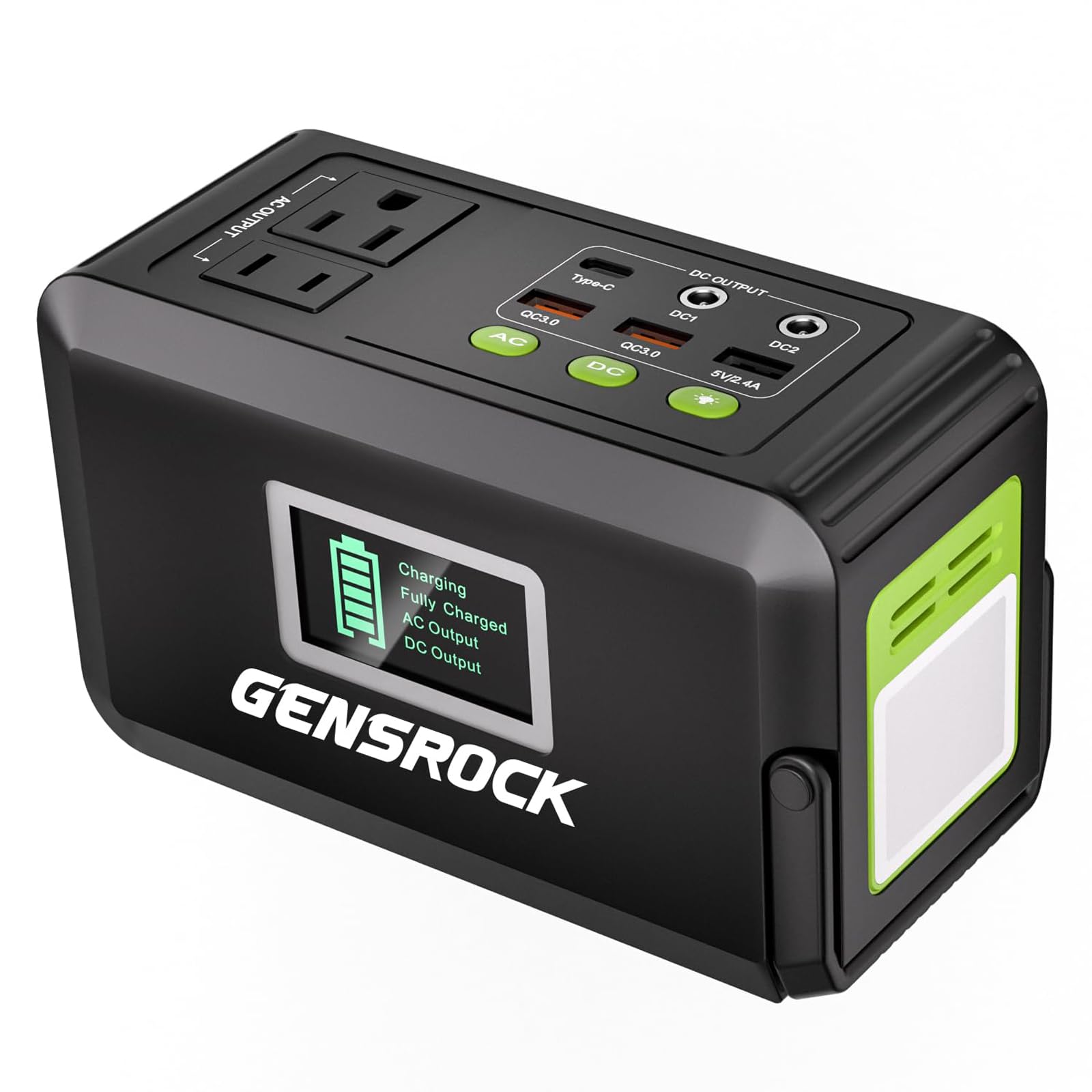
Eight ports and a 24-month guarantee in a 2.3-pound frame
Functionality is what carries this one — with 88Wh (24000mAh at 3.7V) on tap and an 18W USB-C port alongside dual QC 3.0 USB, a USB port, two DC 12V/10A ports, and two AC sockets (120W running, 220W peak), you can keep a phone, a small fan, and a light going together. The maker’s own examples give a solid read on everyday use: a light for about 15 hours, a phone for about six charges, and a handheld console for more than 13 hours.
The slim body is 6.6 x 4 x 3 inches at 2.3 pounds with a movable handle, so it slides into an emergency bag or a camping tote without hogging room. It also ships with a 24-month product guarantee and 24×7 specialist support, and it carries the full set of protections — low voltage, over current, over voltage, overload, and short circuit.
The recurring gripe is the durability question — a slice of buyers report the battery not holding up as long as they wanted, so treat the cycle life as the make-or-break detail. The maker rates it above 1500 cycles, and the outlet ceiling is 120W, which rules out anything with a heating element. Recharge it via AC adapter, a car socket, or a solar panel rated 15V-24V, and know that the flashlight offers three steady-brightness levels plus an SOS mode.
Worth the shelf space: this is a strong value play for a kid’s dorm, a glovebox, or a tent — plenty of ports, a slim body, and a two-year guarantee behind it.
Great fit for: an emergency bag or camping tote where you want maximum ports and a warranty.
Skip if: long cycle life is your top concern — durability is the one area buyers flag most.
6. Daran Portable Power Station 100W, 89.6Wh LiFePO4
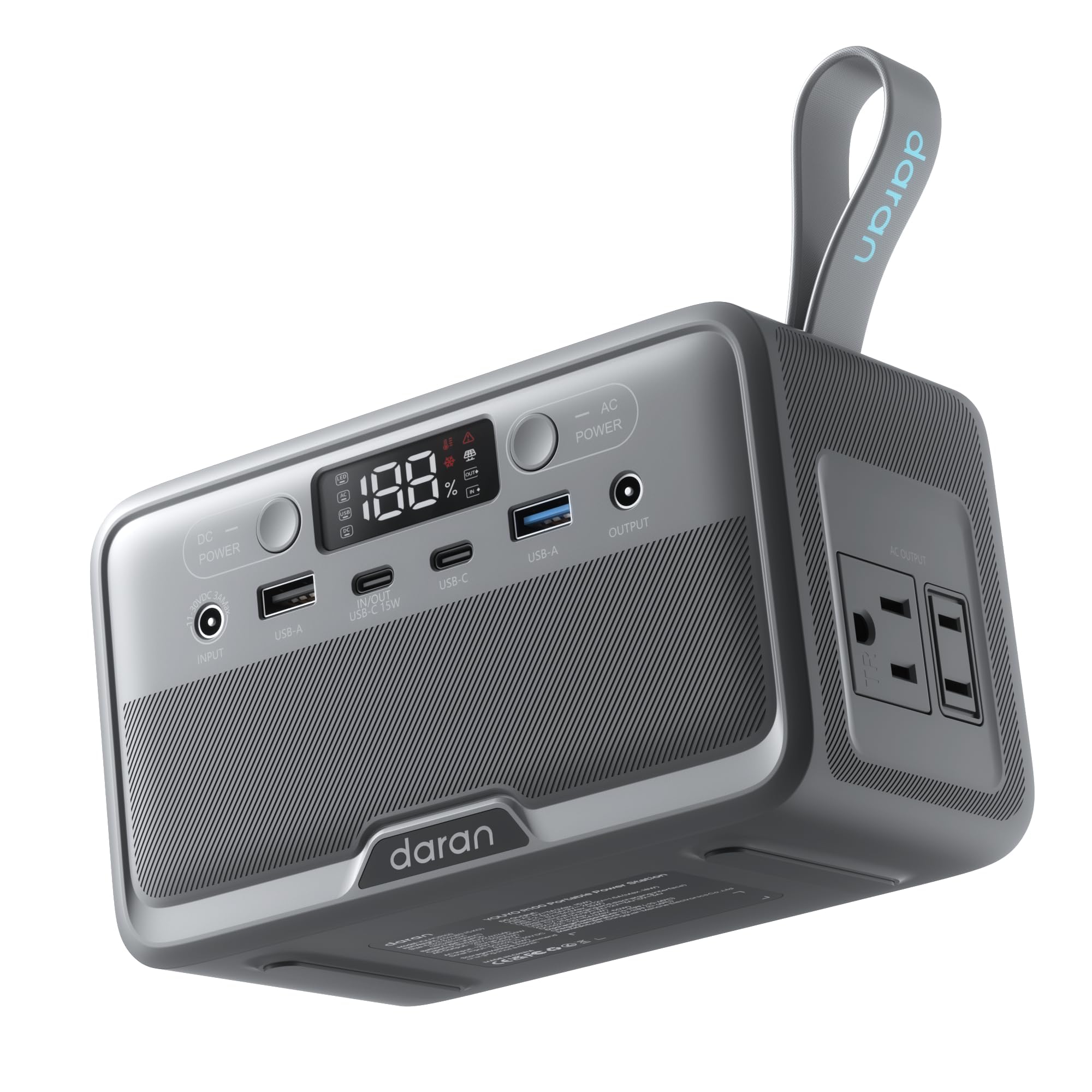
Runs so quietly you forget the inverter is even on — and that is the point
Zero fan noise is the detail that sets this one apart. It runs completely silently, so a fan-driven head to the tent or a quiet desk does not get a whirring hum from an inverter. Behind that sits a 100W output with a 200W peak via two AC outlets, a 45W PD USB-C port, dual USB-A, and a 60W DC port — seven ports that can feed a laptop, a drone, a DSLR, a mini fan, and an LED light at once.
Functionality earns the most mentions by far, and performance follows close behind. The body weighs 2.54 pounds at 6.5 x 3.3 x 4 inches, with an ergonomic soft handle for a one-handed grip, so it fits into a backpack, a tent pocket, or a car seat. A LiFePO4 battery backs the show with an automotive-grade rating and a BMS that the manufacturer describes as 12 layers of safety protection. The smart LED display shows battery status live.
Two full charge and discharge cycles are suggested after the first use, and 89.6Wh is a modest tank — expect quick top-ups rather than long powers. Some owners note the battery life not stretching as far as they hoped, so plan around short sessions. A 3-mode LED flashlight (high, low, strobe) with anti-mistouch protection covers the nighttime gap, and the maker backs it with a 3-year warranty.
The quiet advantage: a fan-free build is genuinely rare in this compact category, and it makes this one a pleasure at a tailgate or a quiet campsite.
Ideal for: quiet settings — a desk, a hotel room, or a tent where noise would bother you.
Reconsider if: you need sustained power — the 89.6Wh capacity is built for quick jobs, not marathons.
7. Portable Power Station 200W (Powkey) with AC Outlet
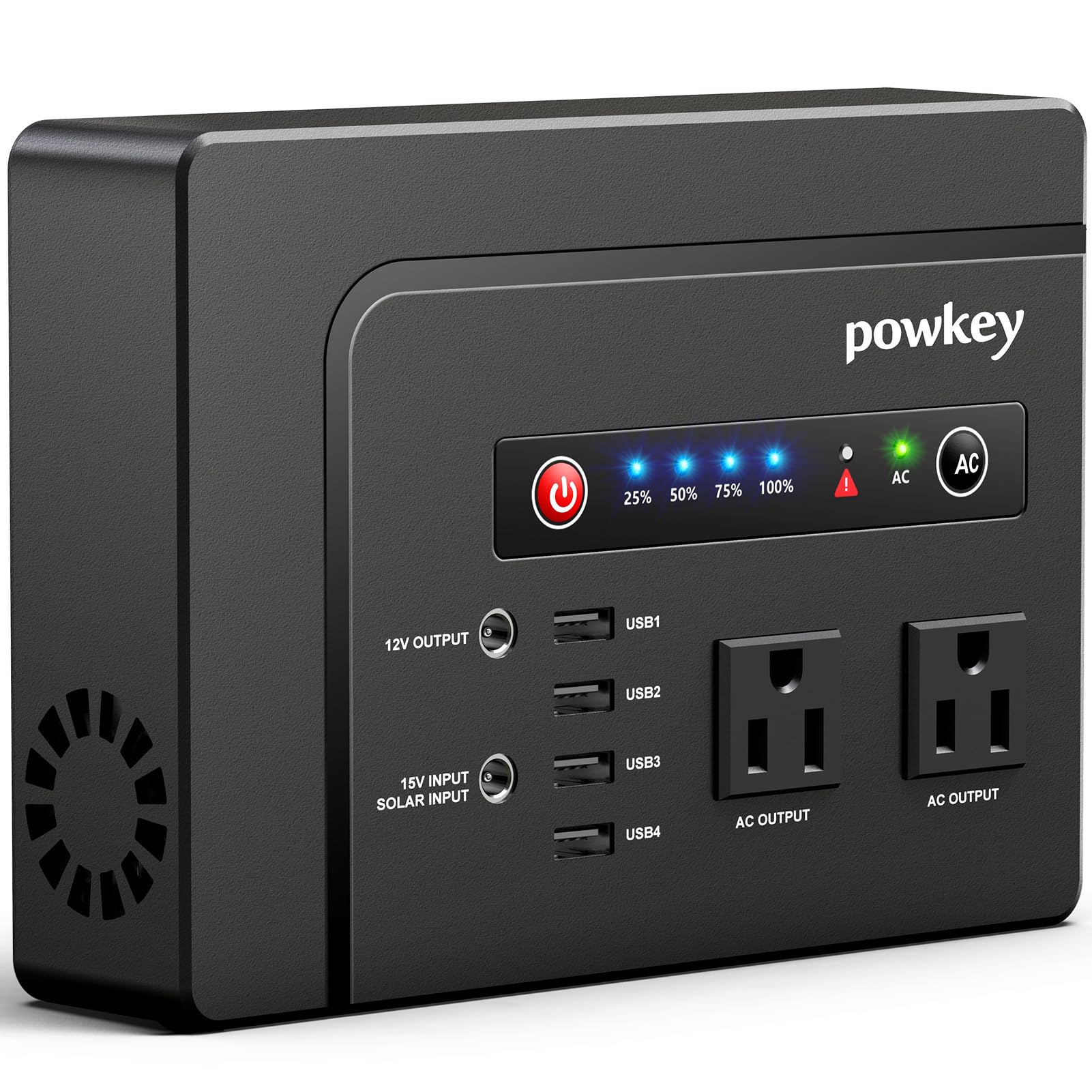
The larger tank for longer sessions, without ballooning into a two-handed box
This Powkey runs at 200W through two 110V AC outlets with a 146Wh (39600mAh) lithium-ion pack behind it — the biggest capacity among the mid-sized picks here. The pure sine wave output is a real plus: a cleaner, steadier current is gentler on sensitive electronics and cuts fan noise, so a laptop or a mini fridge runs without complaint. Seven ports total — two AC, four USB, and one DC — let you keep several devices fed at once.
It is still a compact proposition at 3.2 pounds and 7.9 x 5.7 x 2 inches, and it ships with a carrying handbag that protects the unit and makes it easier to haul. Buyers call it a life saver for a reason: it is the pick for a laptop-heavy road trip or a longer outdoor stay. When it needs a refill, charging runs about 5-9 hours whether through an AC wall outlet, a solar panel, or a car charger — slow, yes, but you choose the source.
The honest catch is power. Some owners say it is not powerful enough for the devices they hoped to run, which tracks with a 200W ceiling and a firm warning to keep appliances under 200W. It is also the heaviest of the mid-sized picks, so it lives in a car or a shelf rather than a trail pack. The maker approves it with CE, FCC, ROHS, UL, MSDS, UN38.3, and ISO9001 certifications, and a built-in cooling fan keeps temperatures in check.
For longer sessions: the 146Wh pack is the pick here when you want to stay plugged in for hours rather than minutes, provided your device stays under 200W.
Suits: a laptop-heavy road trip or a longer camping stay where runtime beats featherweight carry.
Pass on it if: you expect big appliances to run — the 200W ceiling is firm.
8. ZOUPW 140W Portable Power Bank with 100W AC Outlet
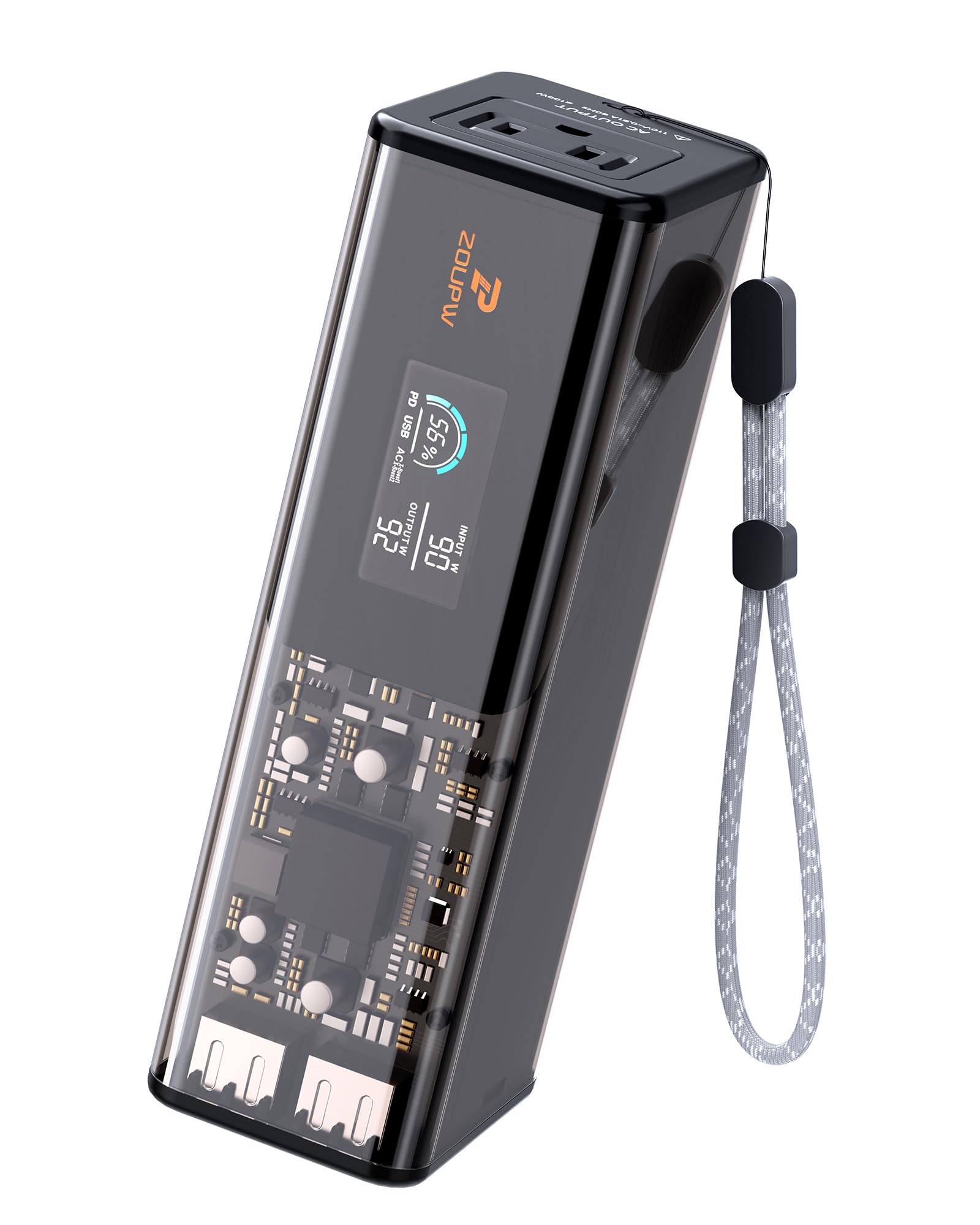
A 1.82-pound, FAA-compliant carry-on with a real 100W AC socket inside
At 1.82 pounds and 6.9 x 2.0 x 2.7 inches, this is the lightest unit on the whole list, and it still packs a 99.9Wh battery — the exact ceiling airlines allow in a carry-on. The 100W AC outlet with a 150W peak handles things you would normally only plug into a wall socket, like a drone, a small RV fridge, or a projector. Underneath, 21700 EV-grade Li-ion cells with a 3C high-discharge rating push 140W PD 3.1 over USB-C for laptop-level output.
Functionality earns it a spot for both laptop and phone charging at the same time, and quality follows close behind. Charging itself is fast: with a 100W USB-C input and a 100W GaN charger (sold separately), it refills from 0% to 100% in about one hour. A color screen shows real-time input and output wattage and temperature, while the Smart BMS protects against overheating and overcharge. A 150-lumen LED flashlight (SOS and flash modes) covers the after-dark gaps.
The catch is battery life for some. A slice of buyers find it charges fast but does not deliver the run time they expected, so plan around shorter sessions. The dual-button control takes learning, too — tap DC to wake the screen and press AC eight times to recalibrate the battery gauge, a step the maker spells out in detail. At 3.5+ stars it is the least-reviewed and lowest-scored pick here, so it fits the lightest-travel niche rather than a broad all-rounder role.
Where it fits: the weight and airline-safe capacity make this the one to pack for a flight or a long hike where every ounce counts.
Right choice for: air travel and fast-and-light hiking where 1.82 pounds and a carry-on-safe pack are the whole point.
Not the one for: anyone wanting a proven all-rounder — the shorter runtime and lower score make it a niche pick.
9. DaranEner Portable Power Station 192Wh, 300W (Peak 600W)
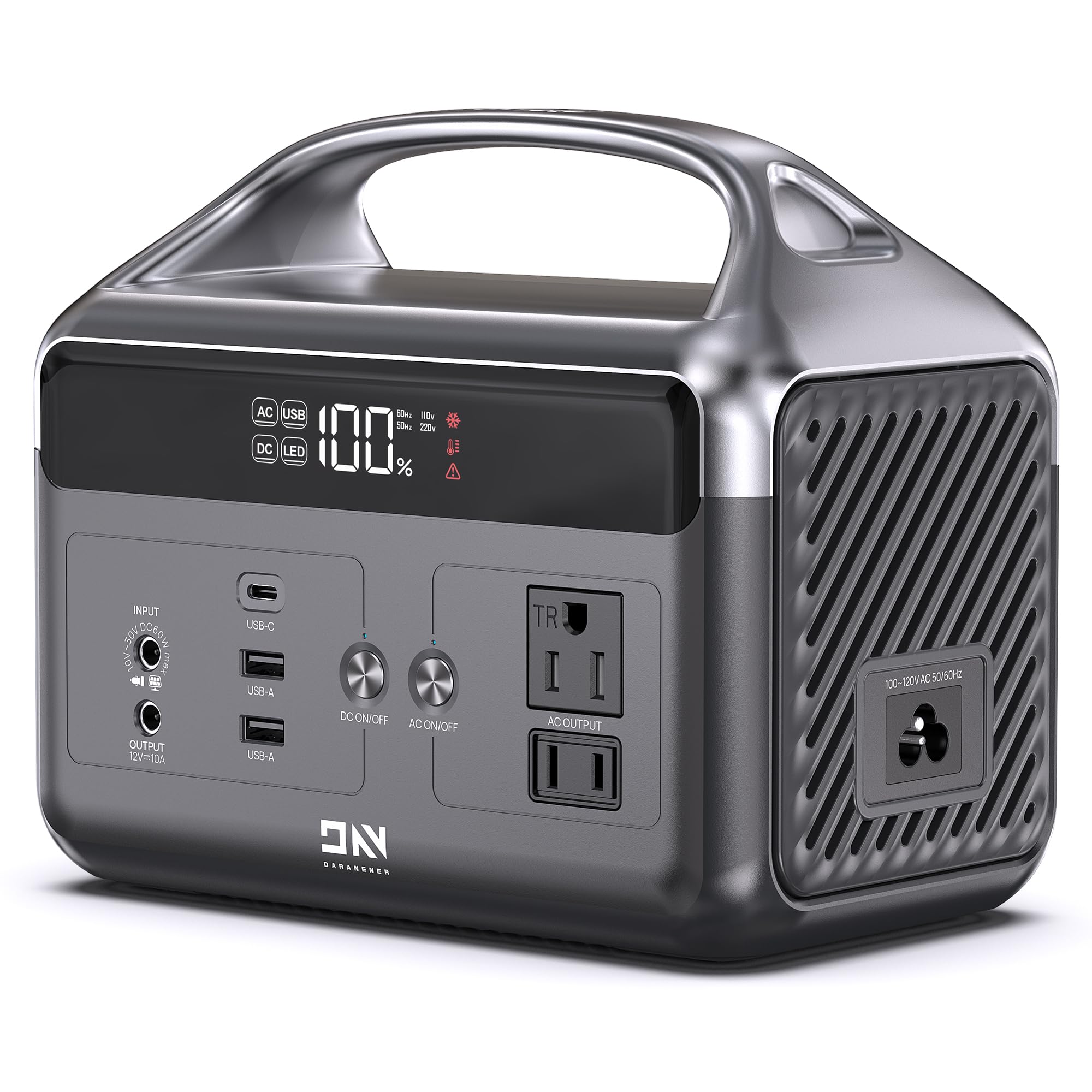
Three hundred watts of pure sine wave in a body smaller than a toaster
This one pairs 192Wh of LiFePO4 capacity with a 300W (600W surge) output — two factors that give it the most rounded power of the camp-sized picks. The 600W surge is what lets a device with a startup burst get going, while the 300W running rating comfortably feeds phones, tablets, laptops, fans, lights, and a CPAP machine. Six devices can plug in at once across two 300W AC outlets, one 60W USB-C PD, two 18W USB-A, and a 12V DC output.
Reliability is the thread that runs through it — it held up for a two-day camping trip, per the kind of use buyers put it through, and it is favored for boating and camping. The maker rates the LiFePO4 cells at 3500-plus cycles, and the BMS guards against overcharge, overheating, and short circuits. It weighs in at 5.73 pounds and reads as smaller than a toaster, with a built-in LED offering four brightness modes including SOS.
The one thing to internalize: 300W is a hard ceiling. The listing plainly notes that rice cookers, hair dryers, and mini-fridges that exceed 300W or spike higher on startup are out. It recharges via AC wall outlet (max 100W), car charger, or a compatible solar panel (max 60W) with an MPPT controller smoothing the solar input. Plan on two full charge and discharge cycles first, then a top-up every 1-2 months.
Why a group campsite likes it
- 300W pure sine wave output with a 600W surge starts more than the pocket units can
- 192Wh of LiFePO4 capacity with a 3500-plus cycle rating travels well
- Six simultaneous ports keep the whole tent charged at once
- Built-in four-mode LED with SOS backs up a night without power
Before you pack it
- 5.73 lb is a car-and-camp weight, not a summit weight
- 300W ceiling rules out anything with a heating element or compressor
- Solar and car charging cables are not in the box
Built for: a family campsite or boat where several devices need to stay charged for days.
Beat by the lighter units on: portability — at 5.73 pounds this one earns a car ride, not a long hike.
Know the Specs
Watt-hours (Wh) versus wattage (W)
Watt-hours measure stored energy — how long the outlet can run. Wattage measures output — the ceiling on any single device. A 90Wh pack and a 300W outlet are two separate facts, and you need both. Wattage caps which devices start; watt-hours cap how many minutes they run. A 300W outlet on a 90Wh pack runs a fan briefly; a 100W outlet on a 257Wh pack runs a laptop far longer.
Pure sine wave versus modified sine wave
The type of current coming out of the AC outlet matters. Pure sine wave is the smooth kind that wall sockets deliver, and sensitive electronics like laptops run cleaner on it. Modified sine wave is a rougher approximation that can make some devices buzz or misbehave. This list mostly favors pure sine wave, which is one reason the compact units still cost more than a plain USB power bank.
LiFePO4 versus standard lithium-ion
LiFePO4 (lithium iron phosphate) is a battery chemistry rated for more charge cycles and steadier thermal behavior than ordinary lithium-ion. On a compact unit, that translates to a pack you can recharge over and over without it sagging quickly. Standard lithium-ion still shows up at lower weights and sometimes bigger capacity in the same size, so you weigh cycle life against raw storage.
Running watts versus peak or surge watts
A 100W outlet with a 200W peak rating means the normal draw is 100W, but a short startup burst up to 200W is tolerated. This matters only for devices with a motor or compressor — a fan or a small cooler can spike at startup. For phones, laptops, and lights, the running watt figure is the one that governs the purchase.
Common Questions
Can I run a hair dryer or a coffee maker from a small AC power bank?
How long will a 90Wh unit actually run a laptop?
What is the biggest AC power bank I can bring on a plane?
Will a pure sine wave outlet charge my CPAP machine?
Is LiFePO4 better than a standard lithium-ion battery for a small power station?
Why does my AC outlet cut out when I plug in a fan?
How do I turn on the AC outlet on these units?
Can these power banks be charged with a solar panel?
How often should I recharge a power station I rarely use?
Do the AC outlets deliver the clean current a laptop wants?
The Bottom Line
For most people after the smallest power bank with AC outlet that still does real work, the Bailibatt 257Wh is the pick — it pairs a 300W dual pure sine wave output with 2.9 times the capacity of the VTOMAN Jump 100, and it weighs 5.4 pounds you can still carry in one hand. If pocket-level weight matters more than tank size, the VTOMAN Jump 100 gives you a 2.36-pound body with a 1.4-hour refill. And for airline travel where every ounce counts, the ZOUPW at 1.82 pounds is the lightest way to carry a real AC socket.
How we choose
We do not accept paid placement. Every pick is matched to a real buyer and a real use-case; we do not hands-on test units.
Sources
Specifications: manufacturer listings and product documentation. Review insights: verified customer reviews, as of November 2026. Pricing: not shown on this page (it changes often); check the current price via the retailer link.
As an Amazon Associate, Tactical Gear Guy earns from qualifying purchases. This does not affect which products we feature.