Specs are compiled from manufacturer listings and verified buyer reviews and can change over time — please confirm the key details on the product page before buying.
A car battery fails on its own schedule, usually the coldest morning of the year, and the replacement you grab in a panic is the one you regret. The way out is boring but reliable: match the group size to your old battery, check the cold cranking amps against what your engine actually asks for, and buy from a pick that has proven itself across a large pile of real owners. That is exactly what this shortlist does. Every battery here is a Group 47, an H6, or a Group 34 AGM (absorbed glass mat, a sealed design that holds its charge better than a flooded battery), and each one is broken down by the numbers that decide whether it survives your climate.
This guide is built by comparing the manufacturers’ published specifications and the patterns across verified customer reviews, so you get each pick’s real strengths and trade-offs instead of marketing spin.
You will see which battery suits a stop-start commuter, which one is built for a truck that sits for weeks, and where the honest weak spots sit. The short answer: for most drivers chasing a top rated car battery, the value leader below is the safest place to start.
Top Picks


How To Choose The Best Top Rated Car Battery
A battery is one of the few car parts where getting the size wrong means it simply will not bolt down. Before you look at any rating, confirm three things against the battery currently in your car: the group size stamped on the case, the terminal layout (which side is positive), and the cold cranking amps your engine was built around. Everything else is a refinement on top of that foundation.
Start With Group Size, Not Brand
Group size is a standardized footprint code — 47 and H5 are the same physical shell, and a Group 34 is a longer, taller box. If your tray holds a Group 47, a Group 34 will not drop in without modification. Measure your old battery’s length, width, and height and compare that against the listing before you buy. Every pick on this list states its dimensions for exactly that reason.
Match Cold Cranking Amps To Your Engine And Climate
Cold cranking amps (CCA) measure how much punch the battery delivers in freezing conditions. A larger engine and a colder winter both push that number up. A 680 CCA battery handles most four-cylinder and V6 commuter cars comfortably, while a big V8 or a truck used in deep cold benefits from the higher 740 to 800 CCA options further down this list.
Decide if you need AGM Or Standard Flooded
If your car has a start-stop system (the feature that shuts the engine off at red lights), it almost certainly needs an AGM battery. AGM batteries are sealed, hold charge better during storage, and tolerate the constant cycling that stop-start demands. All seven picks here are AGM, so that box is already ticked.
Check Reserve Capacity If You Run Accessories
Reserve capacity (RC) is how many minutes the battery can keep your car’s electronics running if the alternator quits. If you run a winch, a fridge, or a big audio system, a higher RC number buys you more margin. It is measured in minutes and listed on every spec sheet here.
Side-by-Side Comparison
| Model | Best For | Group Size | Cold Cranking Amps | Reserve Capacity | Amazon |
|---|---|---|---|---|---|
| MARXON Group 47 H5 L2★ Best Overall | Stop-start commuter cars | Group 47 / H5 | 660 CCA | — | Amazon |
| Weize Platinum AGM Group 47Also Great | Best Overall | Group 47 / H5 | 680 CCA | 100 RC | Amazon |
| Autocessking H5 Group 47 | Cold-climate daily drivers | Group 47 / H5 | 680 CCA | 100 RC | Amazon |
| Daakmax Platinum AGM Group 47 | BMW and SUV fitment | Group 47 / H5 | 680 CCA | 100 RC | Amazon |
| Interstate MTX-34 | Trucks and accessory loads | Group 34 | 740 CCA | 115 RC | Amazon |
| OPTIMA D34 YELLOWTOP | Off-road and high-compression V8 | Group 34 | 750 CCA | 120 RC | Amazon |
| OPTIMA DH6 YELLOWTOP | Big electrical demand builds | Group 48 (H6) | 800 CCA | 140 RC | Amazon |
Detailed Reviews
1. MARXON Group 47 H5 Car Battery
Our pick — 4.5+★ from 800+ verified ratings; the strongest balance of quality and price.
The budget-minded Group 47 that swaps in under half an hour.
At 660 cold cranking amps, the MARXON sits 20 CCA below the 680-CCA trio above — a small gap that still covers most four-cylinder and V6 engines without strain. The real draw here is install simplicity: owners consistently report swapping it in under 30 minutes with no fuss. The 9.53″ x 6.89″ x 7.48″ shell matches the tray dimensions of the Daakmax almost exactly. It also supports stop-start functions and the maker claims 40% faster charging than a standard flooded battery, thanks to a new material mix that improves charge acceptance.
Battery quality is the trait that wins people over here, followed closely by performance. Owners note it works well with stop-start and matches an OEM 2.5-year-old tray without a fight. The maintenance-free design means no adding acid or water — one less chore at every oil change. The 3-year replacement warranty runs through a US-based office, which is rare at this price.
The trade-off is that 660 CCA figure. It is fine for a light commuter car, but a larger V6 or a truck in a hard winter may want the extra 20 CCA the 680 options provide.
Where It Shines
- Swaps in under 30 minutes — owners call it plug-and-play.
- Matches Group 47 tray dimensions at 9.53″ x 6.89″ x 7.48″.
- Stop-start ready with maintenance-free design.
- 3-year replacement warranty backed by a US office.
Where It Falls Short
- 660 CCA is the lowest of the Group 47 group here.
- No reserve capacity figure published — a gap if you run heavy accessories.
- A heavy 41-pound lump to lift solo.
Go with this if: you want the cheapest Group 47 swap and drive a modest-engine car.
Pass if: you need maximum cold cranking for a big V8 or a deep-winter truck.
2. Weize Platinum AGM Battery Group 47
The Group 47 with the deepest pool of verified owner reviews in this guide.
The Weize Group 47 gives you 680 cold cranking amps and a 100-minute reserve capacity in a 12-volt 60Ah case, which is enough starting punch for most four-cylinder and V6 commuters. It sits at 41.6 pounds, so it is a hefty lump to lift onto the tray, but that weight reflects a genuinely substantial battery. The 100 RC rating means your accessories keep running longer if the alternator fails. It also carries the largest verified owner review count of any Group 47 here.
Where it earns its spot is start-up reliability in cold weather. Buyers report it cranks immediately in sub-zero temperatures and arrives fully charged, so you can install it without a bench session. The dimensions are 9.52″ L x 6.89″ W x 7.48″ H with a tapered terminal layout (left negative, right positive). That is 0.05 inches shorter than the Autocessking H5 at 9.57 inches — a negligible difference, but worth checking against your tray if clearance is tight. Weight also climbs slightly against the Daakmax at 38 pounds, so if the battery sits in a cramped engine bay, the lighter option may be easier to wrestle into place.
The honest caveat is longevity variance. Some owners mention the battery dying faster than expected, which is a pattern common to every AGM on this list and worth planning around rather than ignoring.
What Buyers Rave About
- Battery quality drives more satisfaction than any other trait — the build feels substantial.
- Starts up immediately even in sub-zero temperatures.
- Arrives fully charged so install is a straight swap.
- 680 CCA and 100 RC give comfortable margin for a commuter car.
What To Plan Around
- At 41.6 pounds it is the heaviest Group 47 here, so expect a two-hand lift.
- Longevity is the recurring question — a handful report early failure.
- Not for deep-cycle use such as solar or marine.
Buy this if: you drive a stop-start commuter car and want the pick with the deepest track record.
Think twice if: your tray is tight and you want the lighter 38-pound alternative.
3. Autocessking H5 Group Size 47 AGM Battery
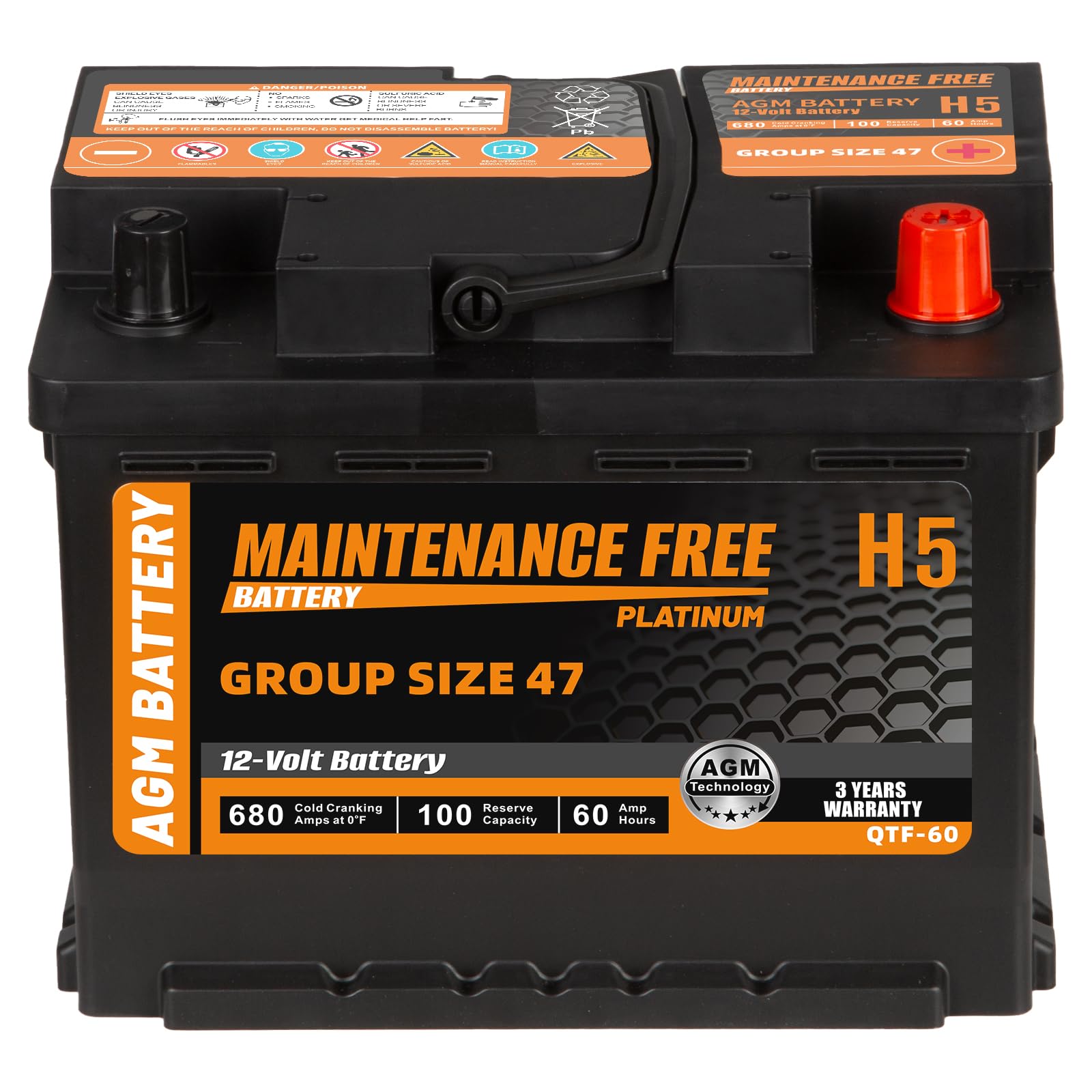
Built to keep cranking when the thermometer drops below zero.
This Autocessking H5 pushes 680 cold cranking amps like its Group 47 rival above, but its standout is temperature tolerance. It performs continuously between -18°C and 60°C and survives short-term extremes from -40°C to 75°C. That makes it a natural fit for northern winters where the morning temperature is the real enemy. The 9.57″ x 6.89″ x 7.48″ shell is the longest of the Group 47 trio at 9.57 inches versus the Daakmax’s 9.52 inches — a fraction of a difference, but confirm tray clearance before you commit.
Owners find it well-built and easy to install, and the fit is described as spot-on without modification. The 18X vibration resistance rating and leak-proof vent cap suit washboard roads and rough pavement better than a flooded battery. It also carries a 3-year warranty, the same term the Weize and Daakmax Group 47 batteries offer. For a daily commuter that sits outside year-round, these are the specs that matter most.
The catch is battery life consistency. It generally arrives fully charged, but a few customers note an early death, so buy from a seller with a clear warranty path. And like every pick here, it is a starting battery, not a deep-cycle unit for solar or trolling motors.
The real strength: it keeps working from -18°C to 60°C and tolerates short bursts down to -40°C, so it stands apart from batteries built for warm climates.
The honest limit: the mixed reports on long-term life mean you should register the warranty the day it arrives.
Reach for this if: you park outside in a genuinely cold climate and want temperature headroom.
Look elsewhere if: deep-cycle use is on the menu — this is a starting battery.
4. Daakmax Platinum AGM Car Battery Group Size 47
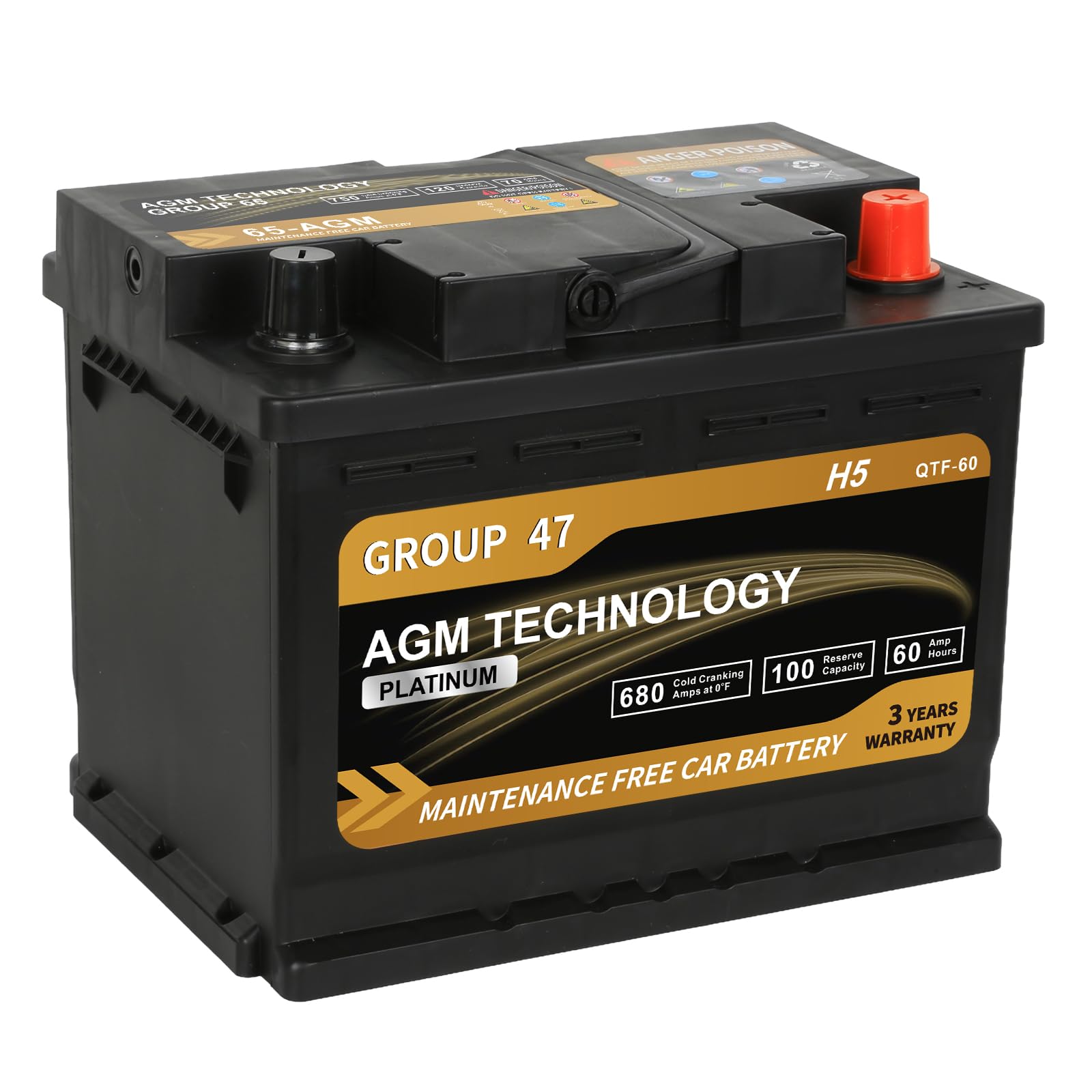
The Group 47 that slots into European engine bays without a fight.
If your car has a tight, side-terminal layout, this Daakmax is the one to check first. It is a 9.52-inch-long Group 47 with tapered terminals (left negative, right positive), a 680 CCA rating, and a 100-minute reserve capacity — the same core numbers as the others. But it is the fit that earns the shout here, with owners reporting clean swaps into vehicles including BMW models. It weighs 38 pounds, which is noticeably lighter than the Weize at 41.6 pounds, making it easier to drop into a crowded bay without scraping knuckles.
It handles the temperature band from -22°F to 158°F and briefed extremes from -40°F to 75°F, so it covers both hot summer traffic and cold snaps. AGM construction with high-density negative paste gives faster recharge times and 18X vibration resistance. Its 3-year free-replacement warranty matches the Autocessking and Weize terms. For a car that needs a precise drop-in fit, those dimensions and terminal marks are the deciding details.
Here is the one thing to watch: some reviewers point out the battery losing charge over time, so confirm your charging system is healthy before blaming the battery. It is not built for deep-cycle use, so a winch or trolling motor setup needs a different design entirely.
The fit story: 9.52″ x 6.89″ x 7.48″ with left-negative, right-positive tapered terminals is the exact layout many European cars expect.
Sizing note: at 38 pounds it is the lightest Group 47 here, which matters in a cramped bay.
Best for: BMW and European cars that need a precise Group 47 drop-in.
Skip if: you need deep-cycle capacity for accessories — this is a starting battery.
5. Interstate Batteries Group 34 AGM
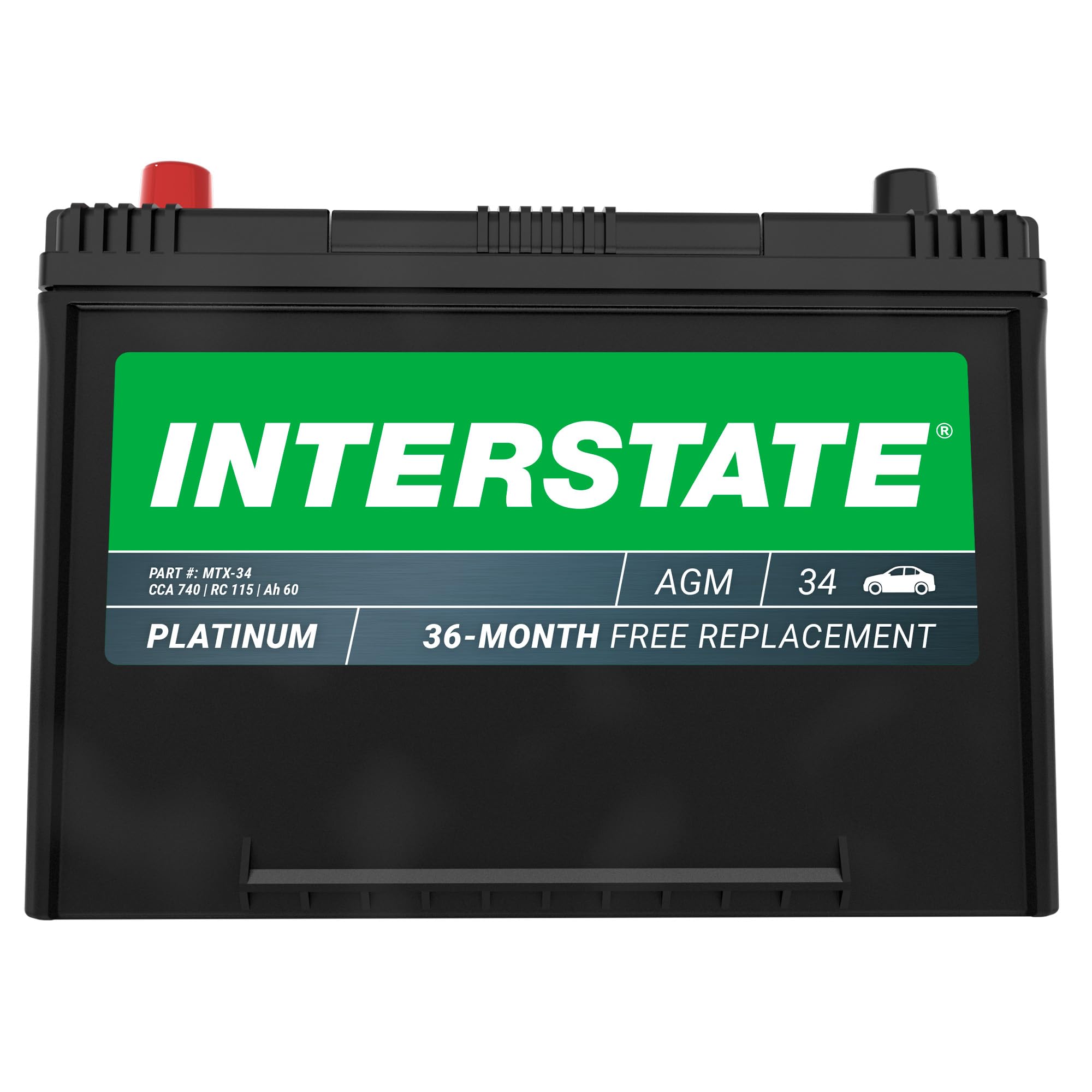
A Group 34 with more cranking muscle for trucks and accessory-heavy rigs.
The first thing to flag is that this is a Group 34, not a Group 47. Its 10.25″ x 6.81″ x 7.75″ case is longer and taller than the H5 options above, so it only fits if your tray was designed for a Group 34. If it does fit, you get 740 cold cranking amps and 115 minutes of reserve capacity — the extra cranking power suits a truck or a van that has to start in cold weather with a full accessory load. Interstate has built batteries since 1952, and the MTX-34 is rated for 2X the cycle life of a conventional flooded battery.
Owners consistently describe it as reliable and easy to install, and the fit is tight and clean in vehicles built for it. Accessibility to 580+ year-make-model combinations makes the Confirmed Fit Tool worth using before purchase. For a truck used as a mobile office with lights and plugs running, the 115 RC figure is a meaningful upgrade over the 100 RC on the Group 47 picks.
Battery life receives mixed feedback — some report holding charge for around 10 hours of use, others note a 2-year death. Plan for a replacement cycle rather than expecting a decade of service. This is a starting battery, not a deep-cycle unit for a trolling motor.
The standout number: 740 CCA and 115 RC beats the Group 47 lineup’s 680 CCA and 100 RC on both counts.
The honest trade-off: it is a Group 34 footprint, so verify your tray before buying or it will not bolt down.
Choose it when: your vehicle was built around a Group 34 and you want more starting power.
Skip it when: your car takes a Group 47 — this will not fit.
6. OPTIMA D34 YELLOWTOP AGM Battery
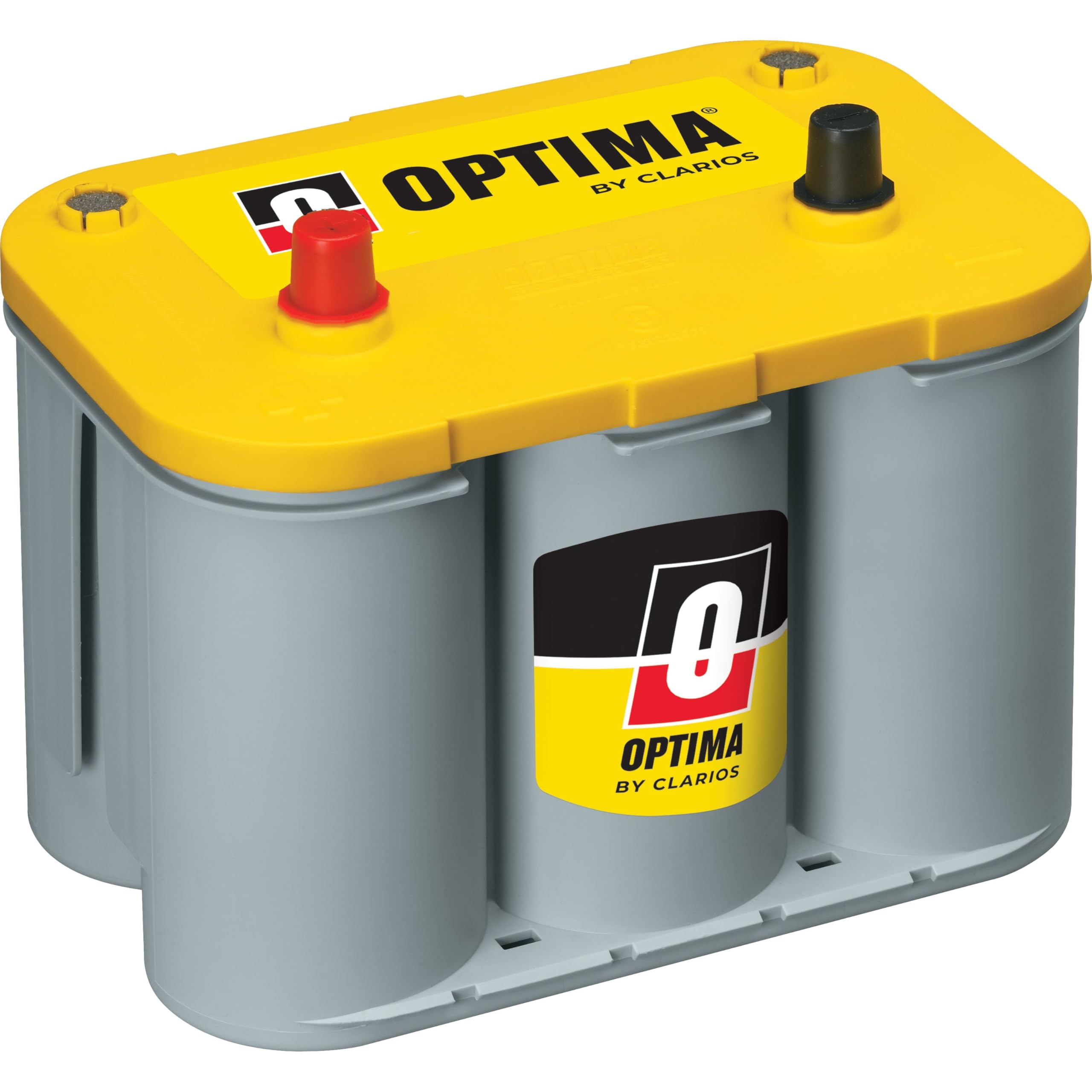
Spiral-wound plates and 750 CCA built for a V8 that has to turn over on the trail.
what separates it is the construction. SPIRALCELL technology uses 99.99% pure lead wound into a tight spiral instead of flat plates, and the maker claims 15X more vibration resistance than standard flooded batteries. That is the spec that matters for off-roading, where a loose battery is a dead battery.
Owners with high-compression V8 engines report it turns over without drama, and it holds up well on rougher trails. The 10″ x 6.87″ x 7.81″ case and 42.9-pound weight are standard for the group size. The sealed maintenance-free build means no fluid checks. For a dual-purpose rig that runs a winch and auxiliary lights, the combination of 120 RC and vibration resistance is exactly what you want.
The catch is service life. Some shoppers say failure after a year, and pricing sits at the premium end without a guarantee of double the lifespan. Treat this as a performance buy, not a value play.
Why it earns the premium label: SPIRALCELL construction with 99.99% pure lead and 15X vibration resistance is a genuinely different design from the flat-plate batteries here.
The real limitation: mixed reports on lifespan mean you are paying for performance and ruggedness, not longevity certainty.
The right buy when: you run a high-compression V8 or an off-road build where vibration resistance is non-negotiable.
Look elsewhere when: you want maximum lifespan per dollar — the Group 47 picks above deliver better longevity per spend.
7. OPTIMA® Batteries High Performance DH6 YELLOWTOP® Dual Purpose Sealed AGM

The highest cranking amps here, for the build that runs everything at once.
This is a Group 48 (H6) dual-purpose battery with 800 cold cranking amps and 140 minutes of reserve capacity — the highest RC figure on the list. Its dimensions are 10.94″ L x 6.89″ W x 7.5″ H, which makes it wider than the Group 47 picks and a different fitment entirely. The 72 AH C20 capacity is the largest here, and the 54-pound weight reflects a genuinely bigger battery. If you run a winch, auxiliary lights, and a fridge on a dual-battery setup, this is the one spec sheet that supports it.
PUREFLOW technology uses 99.99% pure lead in compressed radial grid plates, and buyers report it holds a steady 14 volts. The 15X vibration resistance and up-to-3X-longer-life claims match the D34 above. The DIN type A1 terminals and maintenance-free design round out a package built for high electrical demand.
The honest reality: this is the most compromised pick on the list in terms of owner sentiment. Battery life reports are mixed, with some owners describing early failure, and value perception is split. If you need a drop-in for a Group 48 vehicle and want the highest RC, it delivers. Just buy from a seller with a clear return path and register the warranty.
The Big Numbers
- 800 CCA is the highest cranking rating in this entire guide.
- 140 minutes RC outruns every other pick here.
- 72 AH C20 capacity supports serious accessory loads.
- DIN A1 terminals and maintenance-free sealed design.
The Reality Check
- Mixed reports on battery life — buy with a return path in place.
- At 54 pounds it is the heaviest battery here by a wide margin.
- Group 48 footprint means it will not fit a Group 47 tray.
Built for you if: you need maximum RC and CCA for a high-demand dual-battery setup.
Not your match if: you drive a standard Group 47 commuter car — this will not fit.
Know the Specs
Cold Cranking Amps (CCA)
CCA is the amp punch the battery delivers at 0°F for 30 seconds while staying above 7.2 volts. It is the number that tells you whether a battery can turn a cold engine over. A larger engine and a colder climate both demand more. The 660 to 800 CCA range across this list covers most passenger cars and light trucks, but a big V8 in deep winter sits at the top of that band.
Reserve Capacity (RC)
RC is how many minutes the battery can keep your car’s electrical systems running if the alternator fails. It is measured in minutes and matters more the more accessories you run. The 100 to 140 minute range here means a 140 RC unit will keep the lights and fuel pump going significantly longer than a 100 RC unit in a roadside breakdown.
Group Size
Group size is the physical and terminal layout code. A Group 47 and H5 are the same shell; a Group 34 is longer and taller; a Group 48 is wider. Fitting the wrong group means the battery will not bolt into the tray or the terminals will not line up. Always compare length, width, height, and terminal position against your old battery.
AGM Construction
AGM (absorbed glass mat) holds the electrolyte in a glass-fiber mat rather than as free liquid. That makes it sealed, leak-resistant, and better at tolerating the constant charge-discharge cycling that start-stop systems create. Every pick here is AGM, so any car with start-stop already meets its battery requirement by choosing from this list.
Common Questions
Will a Group 47 battery fit my car that currently has a Group 34?
Is 680 cold cranking amps enough for a V6 engine in winter?
Do I need an AGM battery if my car has start-stop?
What does reserve capacity mean on a car battery?
Can I use a start-stop AGM battery for a trolling motor or solar setup?
How long should a car battery last before replacement?
What is the difference between a Group 47 and a Group 48 battery?
Do I need to charge a new AGM battery before installing it?
Can a higher CCA battery damage my car’s electrical system?
Why do some reviews mention a car battery dying after only a year?
The Bottom Line
For most drivers shopping for a top rated car battery, the winner is the Weize Platinum AGM Group 47 because it pairs 680 CCA and 100 RC with the deepest pool of owner experience on this list — a pick that starts in sub-zero cold and comes from the start ready to install. If you drive a European car with a tight engine bay, the Daakmax Platinum AGM Group 47 is the cleaner drop-in fit at 38 pounds. And for a truck or accessory-heavy rig that runs a winch or fridge, the Interstate MTX-34 delivers 740 CCA and 115 RC in a Group 34 shell built for that workload. Pick the group size that matches your tray first, then the CCA that suits your climate, and the right battery from this list will serve you well.
How we choose
We do not accept paid placement. Every pick is matched to a real buyer and a real use-case; we do not hands-on test units.
Sources
Specifications: manufacturer listings and product documentation. Review insights: verified customer reviews, as of November 2026. Pricing: not shown on this page (it changes often); check the current price via the retailer link.
As an Amazon Associate, Tactical Gear Guy earns from qualifying purchases. This does not affect which products we feature.