Specs are compiled from manufacturer listings and verified buyer reviews and can change over time — please confirm the key details on the product page before buying.
Cold feet end more winter hikes than steep grades do. The fix is matching insulation grams to the cold you actually walk in — too little and your toes go numb, too much and they sweat, then chill. This guide breaks down eleven insulated hiking boots by how much warmth they pack, how much they weigh, and how they hold up on wet rock and packed snow. The quick answer: the Columbia Men’s Firecamp is the safest all-around buy for most people, and the Merrell Coldpack 3 is the pick if ice is your main worry.
This guide is built by comparing the manufacturers’ published specifications and the patterns across verified customer reviews, so you get each pick’s real strengths and trade-offs instead of marketing spin.
Winter boots live or die on two specs: insulation grams and outsole grip. Below you’ll find a plain-English breakdown of both, followed by the top rated insulated hiking boots ranked by the jobs they actually do well.
Top Picks

How To Choose The Best Top Rated Insulated Hiking Boots
Most winter-boot mistakes happen at the checkout page, not on the trail. You buy for the coldest day you can imagine, then wear that boot on a mild trail and cook your feet. Get these four specs right and you’ll land on the right pair.
Match insulation weight to the cold you walk in
Insulation is measured in grams, and that number tells you the temperature band the boot is built for. A 200g boot like the Merrell Coldpack 3 stays comfortable on active winter hikes, where your feet generate their own heat. A 600g or 1000g boot like the ROCKY Sport Utility or the Hunthor is built for long sits in the cold, where your feet produce almost no warmth. Hunters in a tree stand want the heavy stuff; day hikers usually don’t.
Check the waterproofing and the breathability together
A waterproof membrane keeps slush and snowmelt out, and it’s the reason wet feet don’t end your day. But a boot that seals water out also traps sweat in. Look for a maker that pairs its membrane with a breathable lining or a heat-reflective layer, and plan on a wool sock to move moisture away from your skin.
Look at the outsole, not just the upper
Leather keeps the weather out, but the rubber under your foot decides whether you stay upright. A winter outsole with a soft, grippy compound holds on cold pavement and packed snow better than a hard summer tread. Deeper lugs bite into mud and loose ground. If you walk icy driveways or frozen trails, prioritize the rubber over everything else.
Expect sizing to vary by brand and sex
Insulated boots run inconsistent from maker to maker. Some pairs are built on a wider form with a roomy toe box, others are cut narrow and short. Read the fit notes for the specific model, and leave room for a thicker sock without letting your heel lift.
Side-by-Side Comparison
| Model | Best For | Insulation | Reported Weight | Waterproofing | Amazon |
|---|---|---|---|---|---|
| Columbia Men’s Firecamp Boots★ Best Overall | Everyday cold-weather wear | Low-bulk insulation (grams not listed) | — | Waterproof construction | Amazon |
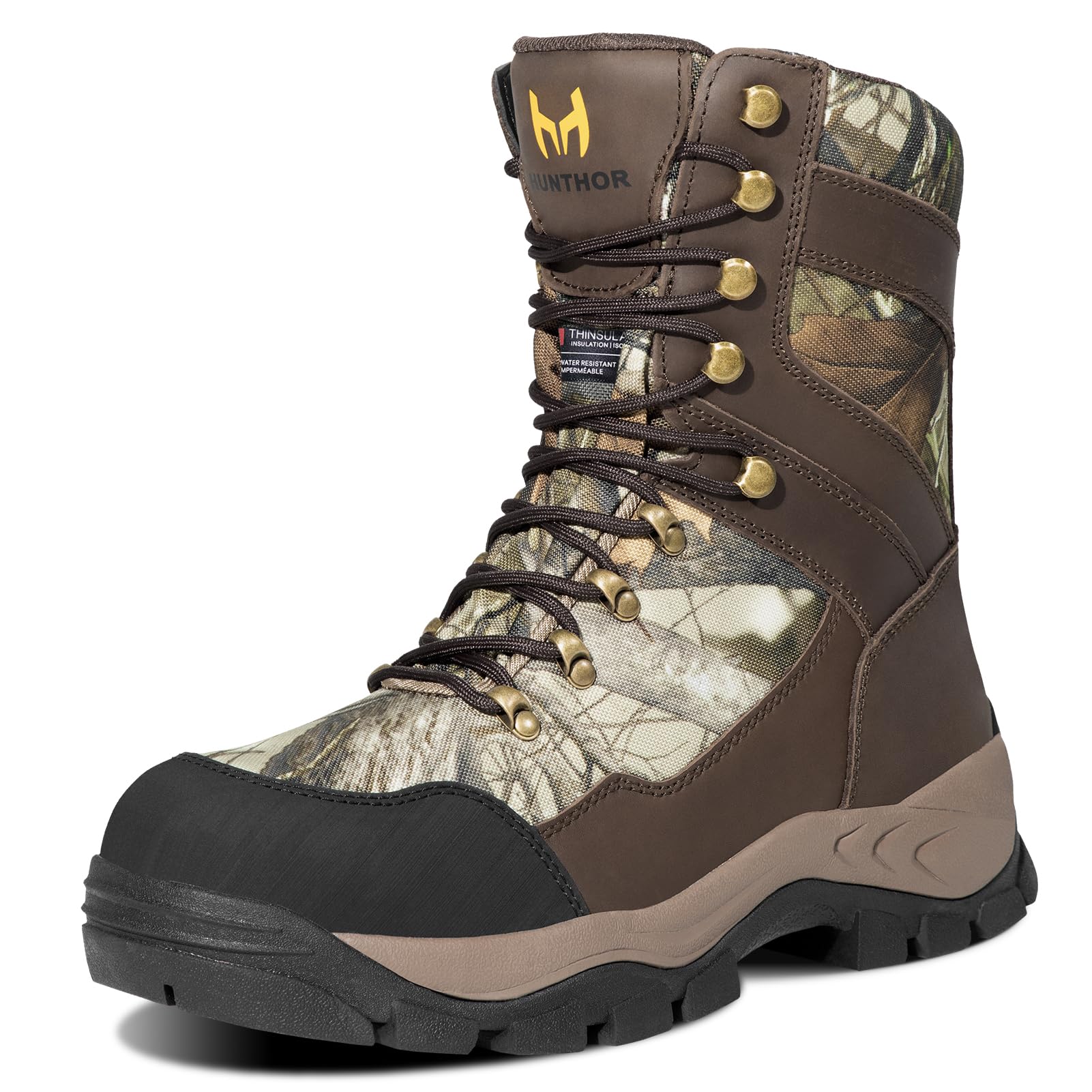
| Hunthor Hunting Boots, 1000g InsulationCold-Sit Champion | Stand hunting in deep cold | 1000 g | — | — | Amazon |
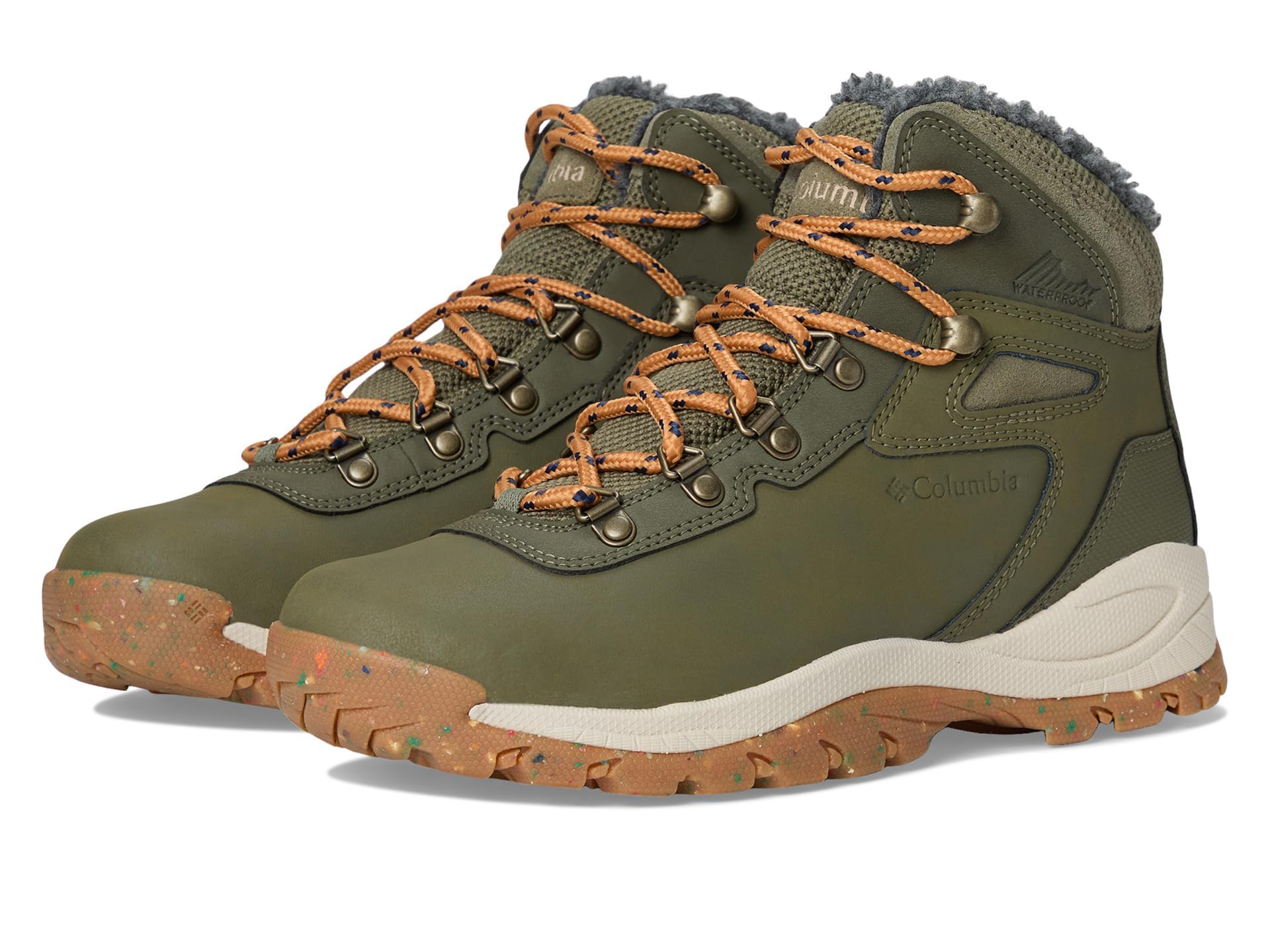
| Columbia Women’s Newton Ridge Omni-Heat IIWomen’s Trail Pick | Women’s trail and town boot | Omni-Heat reflective lining (grams not listed) | — | Waterproof | Amazon |
| Merrell Men’s Thermo Chill Mid | Winter hiking in mud and slush | — | — | Waterproof | Amazon |
| ROCKY Sport Utility 600G | Hunting and all-day outdoor work | 600 g 3M Thinsulate Ultra | 4.5 lb | Waterproof leather | Amazon |
| KEEN Men’s Revel III Mid | Wide-footed winter hiking | Thermal heat shield (grams not listed) | 1.31 lb | Waterproof, breathable | Amazon |
| The North Face Chilkat 400 | Deep snow days | — | 1.63 lb | Waterproof | Amazon |
| The North Face Men’s Bergen Leather | Leather boot buyers who hike | — | — | Waterproof leather, DWR | Amazon |
| Oboz Men’s Bridger 10″ Insulated B-DRY | Tall winter boots for snow | 400 g Freeze Guard | — | B-DRY membrane | Amazon |
| Merrell Men’s Coldpack 3 Thermo Mid | Ice and hard-packed snow | 200 g with fleece lining | — | Waterproof | Amazon |
| KEEN Women’s Revel III | Women’s snowshoe and winter hiking | KEEN.Warm up top plus tri-layer underfoot | 1 lb | KEEN.Dry membrane | Amazon |
Detailed Reviews
1. Columbia Men’s Firecamp Boots
Our pick — 4.5+★ from 950+ verified ratings; the strongest balance of quality and price.
A low-bulk insulated boot that keeps your feet warm without the anchor weight of a 1000g hunting boot.
Here is the rare cold-weather boot that works as hard on a mountain trail as it does on a downtown sidewalk. Columbia builds the Firecamp with low-bulk insulation — warmth that doesn’t add bulk to the boot — plus a waterproof shell and plush cushioning underfoot. It’s a multi-sport design, so you’re not locked into one kind of day.
The Firecamp is the crowd favorite here, sitting at 4.5+ stars. What wins people over is sheer build quality and comfort; buyers keep coming back to how the boots hold up and how the cushioning feels on long walks. Warmth and waterproofing follow close behind — socks staying dry in cold weather is a recurring theme in what people write.
The honest catch is fit and sizing. This is the highest-rated boot on the list, but it isn’t the most specialized one — it doesn’t carry a printed insulation gram count the way the heavy hunting boots do. If you’re planning to sit still in serious cold for hours, step up to a 600g or 1000g boot. For everyone else, this is the safest place to start.
Why buyers keep these on
- Plush cushioning and low-bulk insulation mean warm feet without a boot that feels clunky
- Waterproof construction keeps socks dry in wet, cold conditions
- Multi-sport design handles both trail and town
- Available in multiple colors and sizes
Where it stops short
- No published insulation gram count, so it’s hard to compare against 200g/600g/1000g boots
- Not built for long static sits in deep cold
Reach for this if: you want one versatile, waterproof insulated boot for cold hikes, errands, and everyday winter wear.
Look elsewhere if: you’re stand hunting or spending hours motionless in freezing weather and need a heavy printed gram rating.
2. Hunthor Hunting Boots 1000g
1000 g of insulation for the stand hunter who sits motionless through the coldest hours.
If your winter day involves sitting in a stand while the temperature drops, this is a different breed of boot. The Hunthor packs 1000 g of insulation — more than any other boot on this list — which is the kind of fill you want when your feet aren’t moving enough to make their own heat. An EVA midsole (a soft foam layer under your foot) adds a cushioning layer between you and frozen ground.
The trade-off is obvious: 1000 g is a heavy warm-weather boot, not a summer hiker. Compared with the ROCKY Sport Utility’s 600 g, the Hunthor runs 67% more insulation, which tells you it’s aimed squarely at deep cold. Buyers confirm the warmth and comfort hold up for cold-condition stand hunting.
The one thing to sort out before ordering is size. Fit comes up mixed — several buyers report these run slightly big, so plan your sock thickness accordingly and consider sizing down if you’re between sizes. It’s the newest boot here, so the track record is shorter, but the warmth-per-dollar math is compelling for a cold-sit hunter.
Heaviest insulation on the list: 1000 g of fill is built for motionless cold-weather hunting, and the EVA midsole cushions against frozen ground.
Fit caution: owners mention these run slightly big, so match your order to the socks you’ll actually wear.
The right call for: hunters and cold-sit sitters who need maximum insulation and don’t mind a bulkier boot.
Skip these if: you’re an active hiker who generates heat — 1000 g will feel like too much boot.
3. Columbia Newton Ridge Omni-Heat II
A women’s boot that jumps from tile floor to trail without skipping a beat.
Columbia’s Omni-Heat lining is the heat-reflective layer that bounces your own body warmth back at you, and it’s paired here with a waterproof shell for cold, wet days. The result is a boot that’s built for real weather but light enough to wear all day. Customers note it handles both cement and tile floors and actual trails, which says a lot about how flexible the design is.
The thing that jumps out from the reviews is looks — buyers praise the appearance of these boots more than anything else. Comfort, warmth, and fit follow closely, and the water resistance holds up with feet staying dry in cold weather. People also note the boots give extra room for thick socks without pinching the toes.
Without a printed insulation gram count, it’s hard to compare directly against the 200g Merrell or 400g Oboz. Treat this as a mild-to-moderate cold boot rather than a deep-winter specialist. For an active woman who wants one boot that covers winter commuting and weekend trails, that’s exactly the right balance.
What stands out
- Omni-Heat reflective lining helps trap warmth on cold days
- Waterproof construction keeps feet dry in cold, wet weather
- Lightweight and sturdy for all-day wear
- Extra room for thick socks without binding the toes
Where it gives ground
- No printed insulation gram count, so comparison against heavy hunting boots is guesswork
- A moderate-cold boot, not a deep-winter stand-hunting specialist
Built for: women who want a lightweight, waterproof, warm boot for winter commuting and active trail days.
Not the one for: extended exposure to freezing temperatures where maximum insulation is the priority.
4. Merrell Men’s Thermo Chill Mid Hiking Boots

The everyday winter hiker that keeps feet warm and dry from the trailhead to the mud puddle.
Merrell built this one for regular winter hiking rather than extreme cold. It’s lightweight, waterproof, and warm enough that buyers describe wearing it all day in mud without the cold getting through. One buyer calls it their go-to winter footwear, which is the kind of thing you only say about a boot that earns its place by the door.
Fit is where this boot shines — it draws more praise than any other quality, and comfort follows right behind. That combination of a secure fit and comfortable cushioning is what makes the Thermo Chill a natural daily driver for wet, cold trails.
The catch is durability. Sole material splitting and difficulty with the lacing system come up in what reviewers point out, so treat this as a boot that rewards reasonable care. Heel the laces carefully, and don’t expect it to survive constant abuse the way a full leather tank would. If you hike mixed winter conditions a few times a week, it’s a sensible fit.
Fit-forward design: buyers praise the way these boots fit above all else, with comfort a strong second.
Worth knowing: reports of sole splitting and lacing trouble mean this boot wants some care, not just hard miles.
Pick it for: regular winter hiking in mud, slush, and wet cold where a secure fit and comfort matter most.
Think twice if: you need a boot to survive years of heavy abuse — sole durability is the weak spot.
5. ROCKY Sport Utility 600G Insulated Waterproof Boot

Full-grain leather, 600 grams of Thinsulate, and a safety toe — this is a boot built for hard days.
The ROCKY Sport Utility sits in the middle of the insulation range with 600 g of 3M Thinsulate Ultra, the fill that traps warmth for cold conditions. Full-grain leather makes up the upper, and there’s a composite safety toe up front — a protective cap for the working hunter or hiker. The Sport Utility outsole is there for traction and stable footing on rough ground.
The place this boot wins is comfort from the start. Buyers describe them as comfortable right away, with waterproofing and warmth holding up to keep feet dry and warm. The build quality gets credit as well, and one buyer specifically mentions never rolling an ankle while wearing them.
The weight is the real trade-off. At 4.5 lb, it’s dramatically heavier than the KEEN Revel III at 1.31 lb — the KEEN is 3.4x lighter. That’s the difference between a boot built for sitting in cold and one built for covering miles fast. Fit is also a mixed bag, with some buyers finding the sizing accurate and others saying they run large. Try before committing to a size if you can, or order with returns in mind.
The case for it
- 600 g Thinsulate Ultra insulation handles serious cold
- Full-grain leather upper with a composite safety toe
- Comfortable right from the start
- Sport Utility outsole for traction and stable footing
The honest downside
- At 4.5 lb, it’s the heaviest boot on this list — the KEEN Revel III is 3.4x lighter
- Sizing is inconsistent; some buyers find them large
Choose it for: hunting and all-day outdoor work where a safety toe, full leather, and serious insulation matter more than light weight.
Look past it if: you want a light, fast boot for long distances — the 4.5 lb weight will wear you down.
6. KEEN Revel III Mid
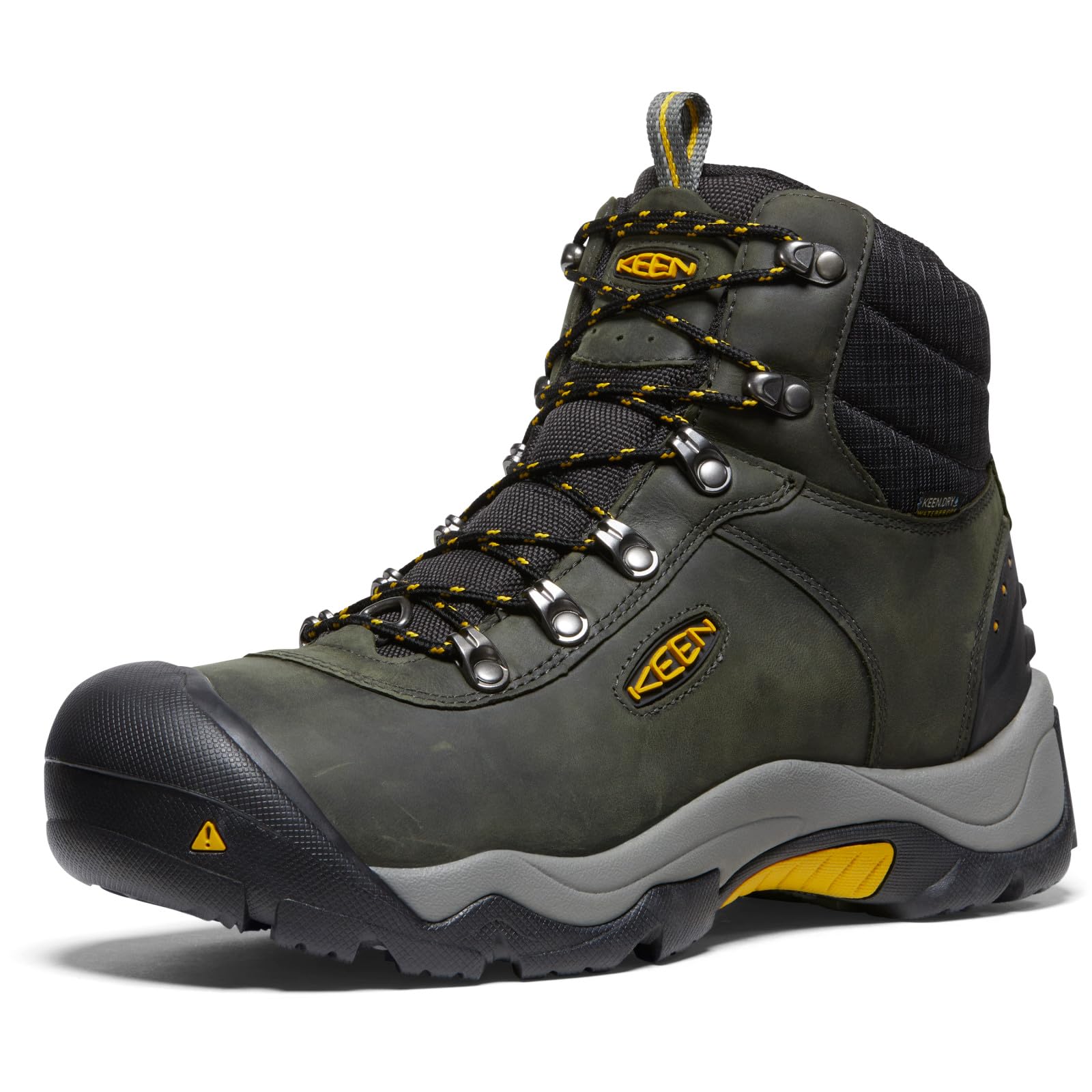
Wide-footed hikers finally get a warm winter boot that doesn’t pinch the toes.
KEEN’s traditional wider form is the headline here. If you’ve ever abandoned a boot because your toes felt cramped, the Revel III’s wide toe box is the fix. Inside, a thermal heat shield captures warmth, and a speed lace webbing system (a lace setup that lets you dial in tension fast) lets you fine-tune the fit across the whole foot.
Build quality is the quality buyers praise most, with comfort and fit right behind. Shoppers say the boots are warm without being bulky, and the lacing system gives them the fine-tuning they want. One buyer calls them built like a tank, which matches the general sense of a solid boot.
One trade-off: the fabric covering over the laces. Some buyers report it breaks quickly, so handle those laces with a little care. At 1.31 lb, this boot is one of the lightest here — next to the ROCKY at 4.5 lb, it is 3.4x lighter. That light weight plus a wide fit suits active winter hiking well.
Fit without compromise: the wide toe box and speed lace webbing make the Revel III a great choice for hikers who need room up front.
One thing to watch: the fabric covering the laces has drawn durability complaints, so handle the lace area gently.
For you if: you need a wide toe box, light weight, and warm protection for active winter hikes.
Not ideal if: you’re rough on lace hardware — the lace covering is the reported weak point.
7. The North Face Chilkat 400

A snow boot so warm that buyers describe wanting to sleep in it.
The Chilkat 400 is The North Face’s answer to heavy-duty snow conditions. It’s well insulated and comfortable enough for long days in the snow, and it gets credit for its appearance as well as its warmth. One buyer describes the boot as made for heavy-duty snow conditions, and the insulation is warm enough that people mention sleeping in them — hyperbole, but it tells you what you need to know.
Quality and warmth are what buyers praise most, with comfort following close behind. The boot handles snowmobiling and other winter activities with a mix of durability and comfort. It’s a women’s boot, so the fit is cut accordingly.
The real caveat is sizing. Some buyers find the fit good, but others report the boot is really tight at regular shoe size and too small — sizing is the most-discussed concern here. Order with room to spare and plan for a thick winter sock. If you’ve got a wide or difficult-to-fit foot, try these carefully before committing.
Why it earns its place
- Well insulated for deep snow and cold weather
- Comfortable enough for long snow days
- Durable build with good appearance
- 1.63 lb — noticeably lighter than a heavy leather hunting boot
Where sizing bites
- Some owners mention the boot runs tight at regular shoe size and too small
- Not the lightest or most technical hiking boot on the list
Made for: women who need serious warmth and comfort in heavy snow and cold winter conditions.
Order carefully if: you’re between sizes — the reported tightness at regular size is worth planning around.
8. THE NORTH FACE Men’s Bergen Leather Waterproof Hiking Boot
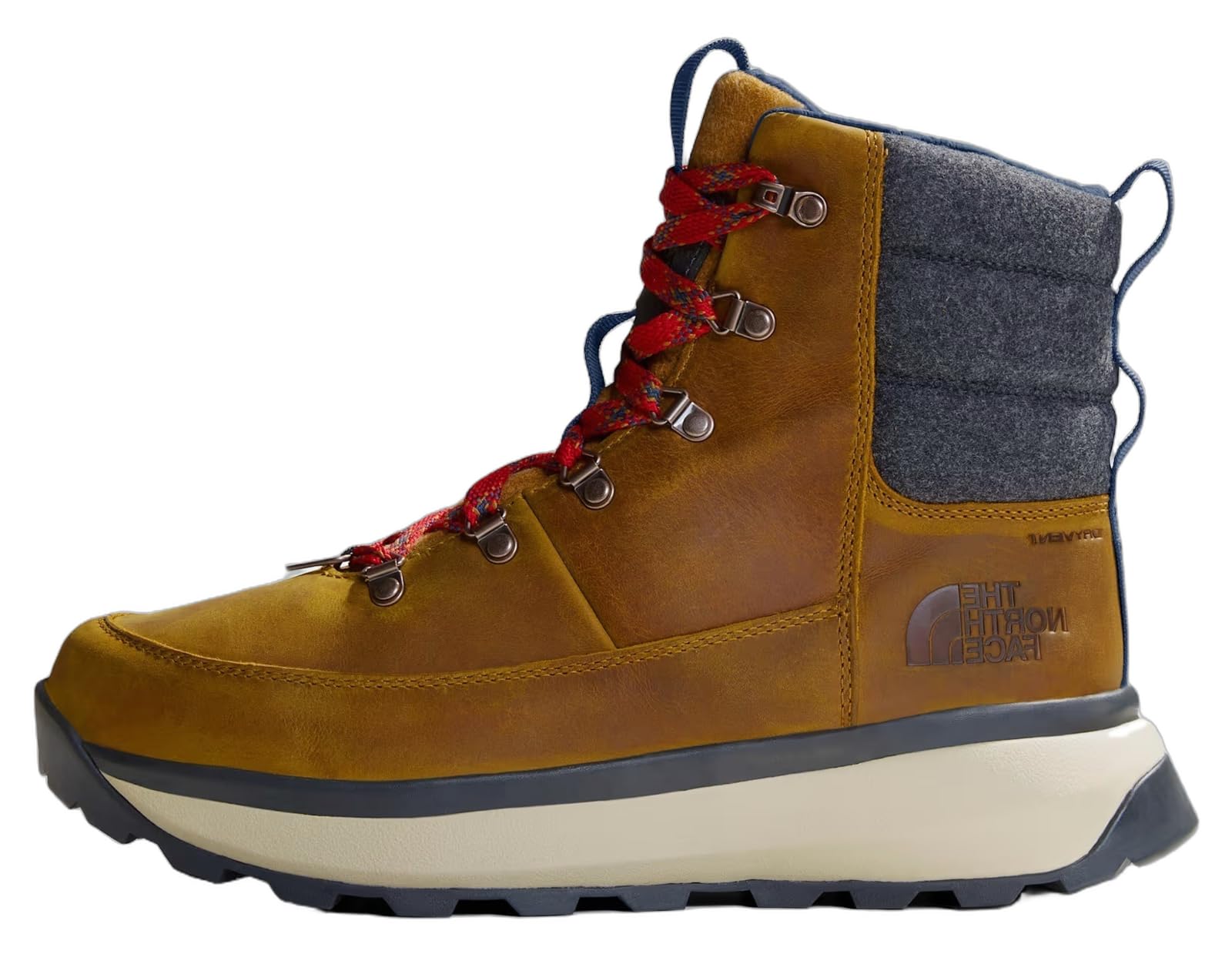
Leather looks, sneaker comfort, and 4.5 mm lugs underfoot for real trail grip.
The Bergen takes The North Face’s leather boot formula and pairs it with a winterized outsole. Those 4.5 mm lugs are the depth of the rubber teeth under your foot — deep enough to bite into soft ground and packed snow. Waterproof leather and a non-PFC DWR (durable water repellent) treatment handle the wet, and the insulated build handles the cold.
Fit is the standout: buyers find these true to size, and comfort and warmth round out the praise. One buyer describes the design as sneaker-like, which fits the idea of a leather boot that doesn’t feel like a brick. For a boot with a genuine leather upper, that’s a real selling point.
The catch here is the shorter track record — this is a newer model with a thin review history, so the long-term durability picture is still forming. And there’s no published insulation gram count, which makes it harder to slot against the 200g/400g/600g boots. If you want leather looks with trail-capable traction, it’s a strong pick; if you want proven cold-weather numbers, look elsewhere.
Trail-ready leather: the 4.5 mm lugs and waterproof leather combine real grip with weather protection.
Newer model caveat: a limited review history means the durability story is still being written.
The pick for: buyers who want a leather winter hiking boot with true-to-size fit and sneaker-like comfort.
Wait on it if: you want a long track record or a printed insulation rating to compare against other boots.
9. Oboz Men’s Bridger 10″ Insulated B-DRY
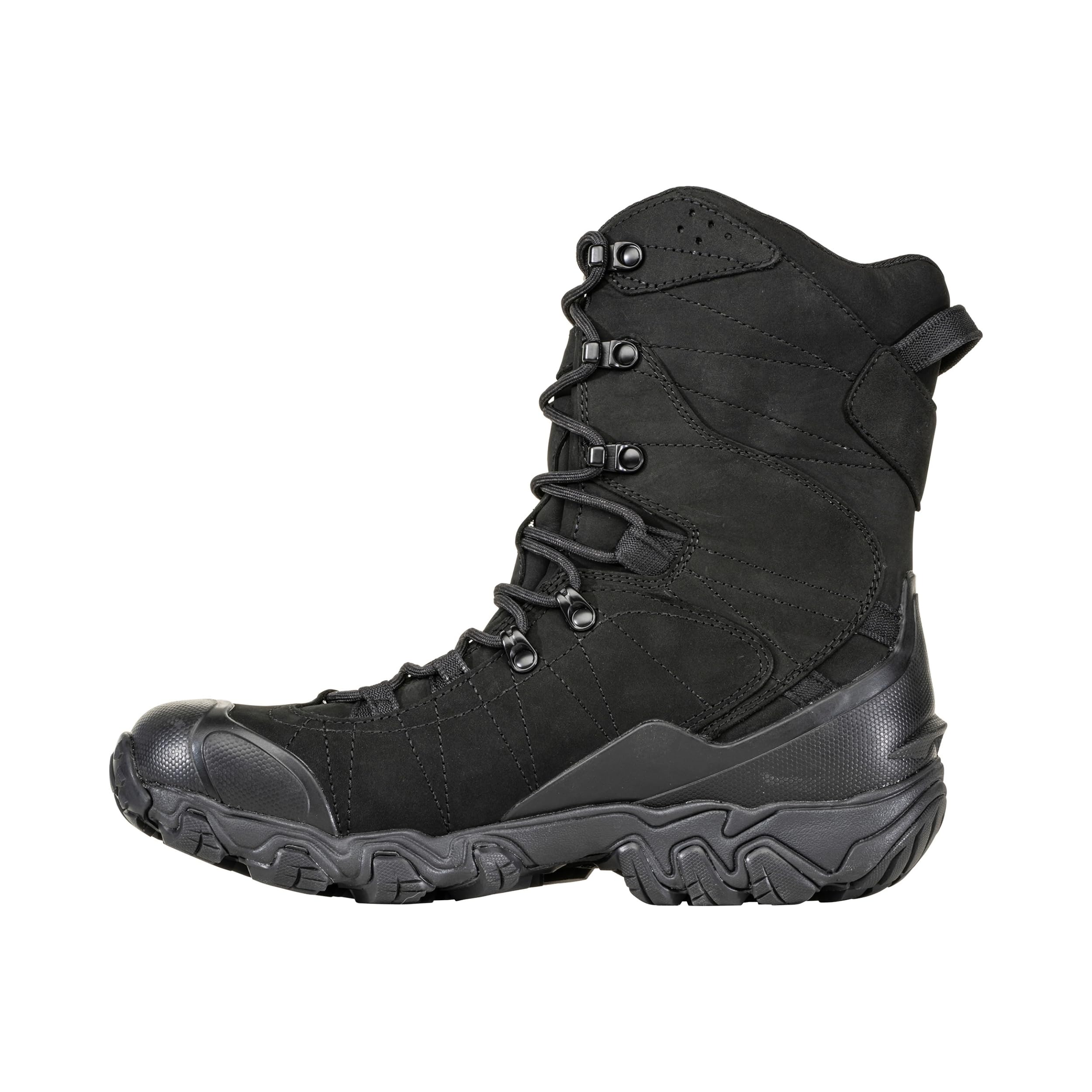
A 10-inch-tall winter boot that puts 400 grams of fill between you and the frozen ground.
The Bridger 10″ is Oboz’s warmest, burliest boot, and the spec sheet backs that up. 400 g of Freeze Guard insulation goes up top, with thermal layers in the O FIT insole reflecting heat back at your feet. A DWR nubuck leather upper and B-DRY waterproof membrane keep the wet out, and the TPU chassis plus Granite Peak outsole keep you stable on snow, ice, and frozen ground.
The 10″ height is a genuine advantage in deep snow — buyers call it out as a reason to love these boots. Comfort and warmth come next, and durability and water resistance round out the picture. One buyer notes the sole holds up well for winter riding, which speaks to the outsole’s grit.
Size is the one gray area. Some buyers find the fit perfect, while others report the boots run slightly small. If your feet sit between sizes, order the larger one and let a thick sock take up the slack. The 10″ height also takes more breaking in than a mid boot, so plan a short first walk before a long one.
What’s built in
- 400 g Freeze Guard insulation plus thermal insole layers
- B-DRY waterproof membrane and DWR nubuck leather
- 10″ height for deep snow and cold-weather coverage
- TPU chassis and Granite Peak outsole for stability
Points to plan around
- Some customers note the boots run slightly small
- The tall height and burly build take more break-in than a mid boot
Best bet for: men who need a tall boot for deep snow and frozen ground.
Consider another fit if: you want a lower-profile, quicker-to-break-in boot for mild winter trails.
10. Merrell Men’s Coldpack 3 Thermo Mid Waterproof

The boot that treats bare ice like a sidewalk you can actually walk across.
If you slip more than you should in winter, start here. The Coldpack 3 runs Vibram Arctic Grip underfoot — an outsole compound made to grab on cold, wet, icy surfaces — and buyers specifically praise its traction on bare ice. 200 g of insulation plus a fleece lining keeps your feet warm without making the boot feel like a snowmobile. Waterproof construction handles the wet.
Quality and warmth are what buyers praise most, and comfort and fit follow right behind. One buyer mentions lots of room above the toes, and another calls them their go-to cold weather boots. That set of strengths — traction, warmth, room — is what makes this boot a natural daily driver for icy commutes and hard-packed snow trails.
The honest catch is that 200 g of insulation is a moderate amount. For frosty mornings and active days, it’s plenty. For long sits in deep cold, the Hunthor’s 1000 g or the ROCKY’s 600 g will keep your feet warmer. Pick this one for ice rather than for extreme cold.
Built for ice: Vibram Arctic Grip underfoot is the traction story here, and buyers confirm it grabs on bare ice.
Moderate insulation: 200 g with a fleece lining is warm for active winter days but not a deep-cold stand-hunting amount.
The one to grab if: ice and hard-packed snow are what you walk on, and you want warm, roomy boots for daily winter wear.
Choose heavier fill if: you spend hours still in deep cold — 200 g isn’t built for that.
11. KEEN Women’s Revel III Cold Weather Hiking Boot
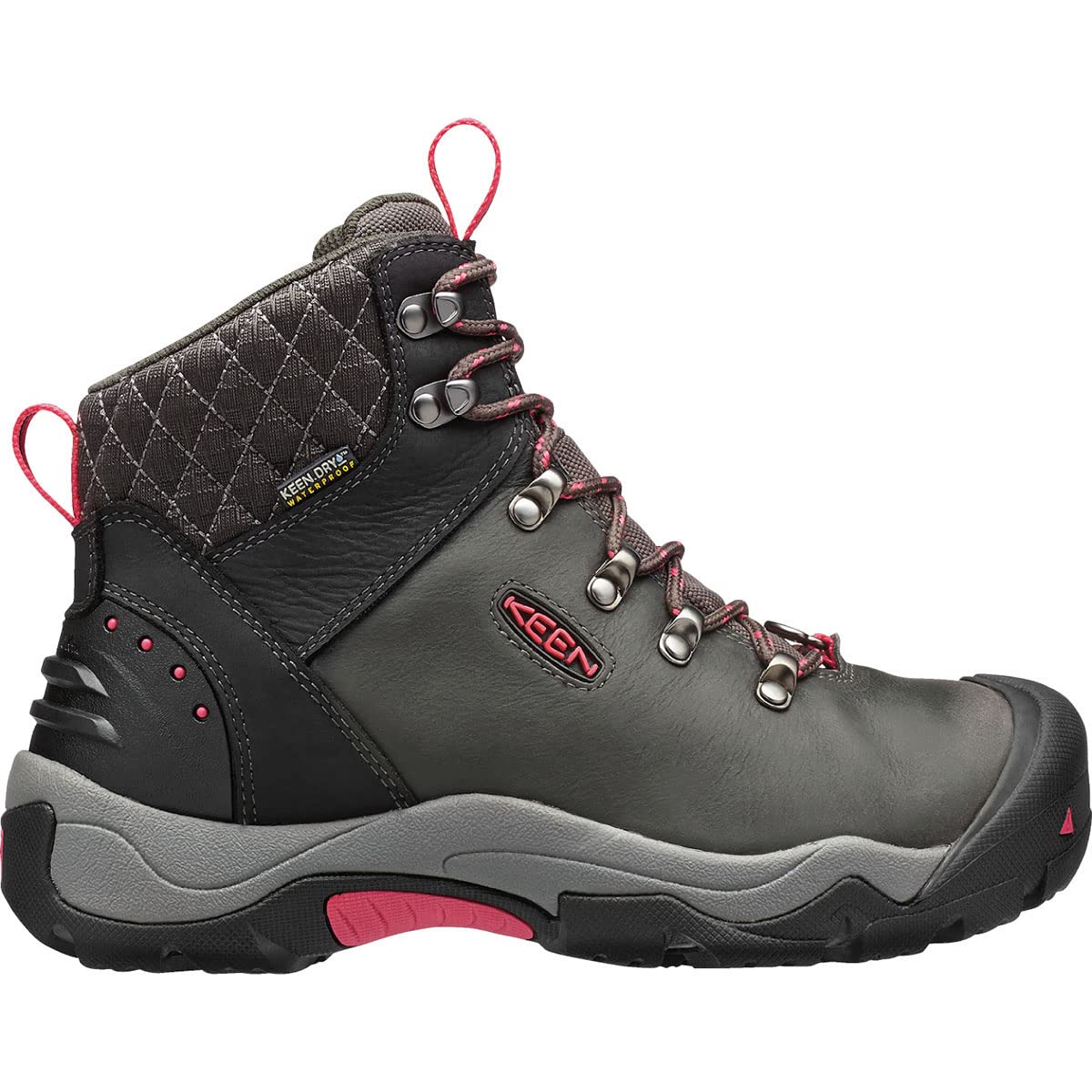
Two layers of insulation and a snow-and-ice outsole, built for women who hike right through winter.
KEEN’s Revel III for women uses two insulation systems: KEEN.Warm up top and a tri-layer heat trapolator underfoot. That second layer is the one that matters when you’re standing on frozen ground — it’s a heat-trapping stack between your foot and the cold. The nubuck leather upper is lined with a KEEN.Dry waterproof, breathable membrane, and the dual-compound snow-and-ice grip outsole handles the slick stuff.
Fit is the standout: it’s the quality buyers praise most, and comfort is a close second. Reviewers point out no blisters, and the boots feel like they’ve been broken in for years. Good ankle and arch support gets called out too, and the reviews mention snowshoeing and winter hiking as natural uses.
At 1 lb, this is the lightest women’s boot here, and the combination of a proven fit and a tri-layer heat-trapping insole makes it the strongest women’s pick for active winter use. The one thing to check is the listed department — it’s a women’s boot, so men should be looking at the Revel III mid for men above.
Where it delivers
- Two insulation systems: KEEN.Warm up top, tri-layer underfoot
- KEEN.Dry waterproof, breathable membrane
- Dual-compound snow-and-ice grip outsole
- 1 lb weight — the lightest women’s boot on this list
What to keep in mind
- A women’s cut only — men need the men’s Revel III mid
- No published gram count for direct comparison against 200g/600g boots
Made for: women who snowshoe, winter hike, and need a light boot with proven fit and real snow grip.
Not for you if: you’re a man looking for the same design — go for the men’s Revel III mid.
Know the Specs
Insulation Weight in Grams
Insulation is measured in grams, and that number tells you how cold the boot is built for. A 200 g boot with fleece lining, like the Merrell Coldpack 3, is warm for active hikes and icy commutes. A 600 g boot like the ROCKY Sport Utility is aimed at long, cold days. A 1000 g boot like the Hunthor is built for the coldest sits. Match the grams to how much you move, because a boot that’s too warm makes your feet sweat, and sweat turns cold.
Waterproofing and Breathability
A waterproof membrane keeps snow and puddles out, but it also traps sweat. That’s why makers pair a membrane with a breathable lining or a heat-reflective layer — the Columbia’s Omni-Heat lining, KEEN’s KEEN.Dry membrane, Oboz’s B-DRY membrane, and Merrell’s fleece lining all play this role. Waterproof leather plus a DWR treatment adds another layer of protection against wet.
Outsole Traction and Lug Depth
The rubber under your foot is what keeps you upright. Lug depth, measured in millimeters, is how deep the rubber teeth go — the North Face Bergen’s 4.5 mm lugs bite into soft ground and packed snow. Vibram Arctic Grip on the Merrell Coldpack 3 is a compound made to grip cold, wet, icy surfaces. For daily winter walking, traction matters more than insulation.
Boot Height and Ankle Support
Boot height ranges from mid-cut to tall. A 10″ boot like the Oboz Bridger gives more coverage in deep snow and more ankle support, while a mid boot like the KEEN Revel III is lighter and easier to break in. Tall boots take more time to soften, so plan a short first walk. Match height to the snow depth and support you actually need.
Common Questions
How much insulation do I need in a winter hiking boot?
Do insulated hiking boots run true to size?
Will waterproof boots make my feet sweat?
What is the difference between 200 g, 600 g, and 1000 g insulation?
Are insulated hiking boots good for snowshoeing?
How do I stop slipping on ice in winter boots?
Can I wear insulated hiking boots in warmer weather?
How long should winter hiking boots last?
What is the benefit of a taller boot for hiking in snow?
Should I size up for thick winter socks?
The Bottom Line
For most buyers, the top rated insulated hiking boots pick is the Columbia Men’s Firecamp. It keeps your feet dry and warm with low-bulk insulation, and its cushioning feels at home on a mountain trail or a winter sidewalk. Want the most insulation on the list for standing around in the cold? Choose the Hunthor with its 1000 g fill. For ice and hard-packed snow, reach for the Merrell Coldpack 3, where Vibram Arctic Grip (a rubber sole compound that grips slick ice) does the work underfoot.
Two more picks are worth keeping in mind. If you need a wide toe box and light weight, the KEEN Revel III delivers. And for a tall boot in deep snow, the Oboz Bridger 10″ with 400 g of Freeze Guard is the strong option. Match the grams to how much you move and how cold you get, and the right pair will follow.
How we choose
We do not accept paid placement. Every pick is matched to a real buyer and a real use-case; we do not hands-on test units.
Sources
Specifications: manufacturer listings and product documentation. Review insights: verified customer reviews, as of November 2026. Pricing: not shown on this page (it changes often); check the current price via the retailer link.
As an Amazon Associate, Tactical Gear Guy earns from qualifying purchases. This does not affect which products we feature.