Specs are compiled from manufacturer listings and verified buyer reviews and can change over time — please confirm the key details on the product page before buying.
You have a zone that will not shut off, or a valve box the lawn swallowed two summers ago, and you need to hear that solenoid click before you put a shovel in the ground. A sprinkler valve locator feeds a signal into the irrigation wiring and makes the buried valve chatter so you can walk the yard and listen for it. The picks below split into two families — pocket-sized chatter boxes that clip onto the controller terminals, and professional wire tracers that follow a cable’s path and even estimate how deep it sits. Start with the small tool if your valves work and you just need to find them; reach for a tracer if the wire itself may be cut.
This guide is built by comparing the manufacturers’ published specifications and the patterns across verified customer reviews, so you get each pick’s real strengths and trade-offs instead of marketing spin.
The picks below separate the tools that genuinely chatter a solenoid from the ones that only tone a wire, and flag the Toro and deep-burial limits before you order. Here is how I rank a sprinkler valve locator that earns its place in your toolbox.
Top Picks

How To Choose The Best Sprinkler Valve Locator
The first decision is not brand or price — it is whether your solenoid still works. A chatter box sends current into the valve and relies on the valve’s own solenoid to snap open and closed, which is the noise you hear through the soil. If the solenoid is dead or the wire is cut, there is nothing to click, and you need a tracer instead.
Chatter tool or wire tracer
A chatter tool clips onto the controller terminals or the valve wiring and pulses the solenoid. It is small, cheap to own, and fast when the system is healthy. A wire tracer puts a signal on the cable and lets you follow its path above ground, which is the right call when a zone is dead because a wire was nicked by a shovel or an edger.
The 24VAC compatibility question
Nearly every residential irrigation controller feeds its valves 24 volts of alternating current — written 24VAC — and that is the voltage these tools expect. Check the label on your controller or your valve solenoid before you buy, because a tool built for 24VAC will not behave properly on a different system. One popular pick here is explicitly not compatible with Toro valves, so read the brand list in each review.
Depth and soil decide whether you hear anything
Sound has to travel from the solenoid up through wet soil, mulch, and turf to your ear. A valve buried deep, or sitting under heavy landscaping, can click away with nothing reaching the surface. That is why the better tools give you a slower, more distinct click rate — a deliberate rhythm is easier to pick out of background noise than a fast buzz.
What the box includes matters more than you think
Clips that grip terminal screws, a wiring guide, and a carry pouch sound like throw-ins until you are on your knees in the dark. Slim test clips that hold a terminal strip screw and a printed troubleshooting guide save real time on the first job.
Side-by-Side Comparison
| Model | Best For | Locating Method | Power Source | Weight | Amazon |
|---|---|---|---|---|---|
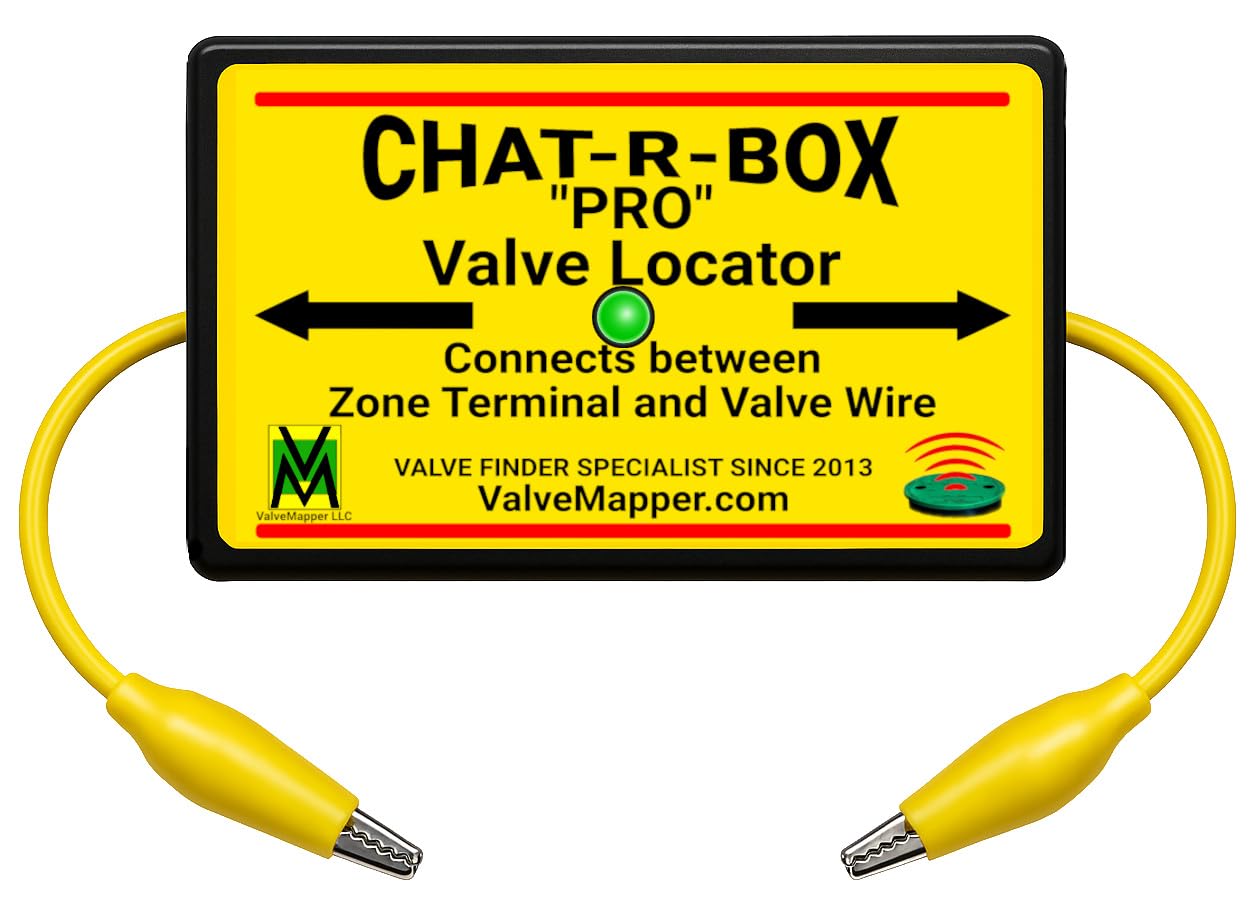
| Chat-R-Box PRO Valve Locator★ Best Overall | Fast valve-box hunting | Solenoid chatter (~5–6 clicks/sec) | Corded, 24VAC system powered | 2.39 ounces | Amazon |
| NOYAFA NF-818L Wire LocatorBest for Buried Cable | Tracing buried cable runs | Signal tracing up to 2.6 ft deep | 3.7V 1100mAh battery | — | Amazon |
| The Buzz-Bee Valve Locator RIS24BZEntry-Level Chatter | Entry-level chatter attempt | Valve chatter | — | — | Amazon |
| Clackee PRO V2.1 Locator | Working solenoids, shallow burial | Activates existing solenoid | AC 24V system powered | 2.68 ounces | Amazon |
| TEMPO Station Master Pro 24B | Diagnosing solenoids and wire ID | Chatter plus tracing tone | Battery powered | 0.23 kg | Amazon |
| Armada Pro48 Tester | Multi-check field diagnostics | Chatter, activation, 1 kHz tone | Two 9V batteries (not included) | 9.6 ounces | Amazon |
| TEMPO Station Master Pro 24BK | Pro-grade solenoid testing | Chatter plus tracing tone | Battery powered | 15.52 ounces | Amazon |
| TEMPO 521E Locator Tool | Depth measurement before digging | Wire trace with 45-degree depth indicator | Battery powered | 10.63 pounds | Amazon |
| TEMPO 521A Locator Tool | Full commercial system tracing | Adjustable transmitter, hotspot detection | Battery powered (alkaline) | 8.13 pounds | Amazon |
Detailed Reviews
1. Chat-R-Box® PRO Valve Locator
Our pick — 4.5+★ from 70+ verified ratings; the strongest balance of quality and price.
A thumb-sized box that turns your buried valves into a slow, unmistakable click you can follow across the yard.
The thing you will notice first is the rhythm. This tool fires the solenoid at roughly 5 to 6 clicks per second, a deliberate pace that survives wet soil and mulch far better than a fast electronic buzz. Clip it to the controller terminals or the valve wiring, and the buried valve does the talking — no digging, no settings, no calibration step to learn. It arrives with a printed wiring and troubleshooting guide, which matters the first time you are staring at a terminal strip.
For anyone with Rain Bird valves, this is the pairing the maker built the PRO model around — the slower click rate is specifically tuned to coax a clear response from those solenoids. It also works across Hunter, Orbit, Weathermatic, Ki-Rain and Irritrol 24VAC hardware. The hard limit is Toro: this unit is not compatible with Toro irrigation valves, so check your valve brand before you order. Buyers report finding every valve inside 30 minutes, and owners routinely describe hearing the chatter from 8 to 10 feet away.
It is a plastic tool, powered by the irrigation system’s own 24VAC, so it never needs a battery and never weighs you down. Compare that to the NOYAFA tracer in this list, which stretches to 2.6 feet of detection depth but needs a 3.7V 1100mAh battery to run — different jobs entirely. Wiring simplicity is where the Chat-R-Box wins people over: two wires, included clips, done.
What earns the top spot
- Deliberate 5–6 clicks-per-second rhythm is easy to hear through soil
- No battery, no settings, no calibration — powered by the controller’s 24VAC
- Works with Rain Bird, Hunter, Orbit, Weathermatic, Ki-Rain and Irritrol
- Hand-tested in Texas with real human tech support behind it
Where it stops short
- Not compatible with Toro irrigation valves
- Needs a live solenoid — a dead valve or cut wire gives it nothing to click
- Plastic body rather than a ruggedized housing
Grab this one when: your valves are healthy and you simply cannot find the box under the turf.
Pass it by if: your system runs Toro valves or the wire itself is suspect.
2. NOYAFA Underground Wire Locator NF-818L
Not a chatter box at all — this one follows the cable itself, so it works even when the valve is silent.
If your zone is dead and you suspect a nicked wire, a chatter tool cannot help because there is no solenoid to fire. The NF-818L takes the opposite approach: it puts a signal on the cable and you walk the route, tracking buried or wall-penetrating wire. It handles depths up to 2.6 feet (about 0.8 meters) and cable lengths up to 1,640 feet (about 500 meters), though the maker notes that depth detection can be affected by environmental factors.
The scope is broad — pet fence wire, power lines, network cable, irrigation lines, and cable fault points all fall inside its range. A built-in LED flashlight means you can keep working after the sun drops, which is exactly when most people finally get around to hunting a valve box. The 3.7V 1100mAh lithium battery is rated for roughly 6 hours of continuous use on a charge, enough for a long outdoor session without hunting for an outlet.
The honest catch is the rating, which sits lower than the rest of this shortlist — 3.5+ stars across 150+ ratings — and the data does not give us a customers-say summary or review quotes to explain why. Treat this as the specialist for wire-path problems rather than a do-everything tool. Its weight is not published, so judge it by the 6-hour battery instead.
Where it shines: tracing a wire route or finding a break in a pet fence or irrigation line, up to 2.6 feet deep and 1,640 feet of cable.
What to weigh: the lower rating and thinner review base mean you are buying a focused tracer, not a proven all-rounder.
Reach for this if: you need to follow a buried cable or find where a wire was cut.
Look elsewhere if: your valves work fine and you just want to hear a solenoid click.
3. The Buzz-Bee Valve Locator RIS24BZ
A bare-bones chatter tool with almost no documentation and a track record that asks you to look carefully first.
This is the entry-level option in the list, and it shows. The listing tells you almost nothing — the entire “about this item” is the phrase “Valve Locator,” and the only spec on record is the manufacturer, VR Manufacturing. There is no stated click rate, no voltage confirmation, no brand compatibility list, and no battery detail. That lack of published information is itself a buying consideration when the tool’s whole purpose is to match your 24VAC system.
The customer consensus here is the roughest in the whole shortlist, and honesty demands saying so plainly. The pattern is not a fit mismatch or a shipping ding — it is that the locator does not work for a meaningful share of buyers, and the top-discussed aspects are functionality and quality, both landing on the negative side. That is a genuine gap versus the Chat-R-Box, which pairs a 5–6 click rhythm with a clear Rain Bird and Hunter compatibility list.
It is here as the entry-level budget option, not because it will win a head-to-head. If you want a chatter tool you can trust on the first dig, the higher-rated picks in this list are the safer calls. Think of the Buzz-Bee as the cautionary end of the shelf rather than a value pick.
The reality check: almost no published specs, and a customer consensus that the unit frequently fails to work as a locator.
Where it fits: only if you accept its documented track record and have a return path ready.
Try it only if: you want the cheapest possible entry into the chatter-tool concept and can absorb a return.
Choose a proven tool if: the valve box is genuinely lost and you need a first-try hit.
4. The Original Clackee PRO V2.1 Sprinkler Valve Locator

The first thing the maker tells you is what it cannot do — and that candor is the reason to trust it.
Clackee’s V2.1 does not contain a speaker. That is not a flaw, it is the design: the tool activates your existing 24VAC valve, and the valve’s own solenoid makes the sound underground. Sound volume depends on soil type, valve condition, burial depth, surrounding landscaping, and environmental noise. If the valve is buried too deep, the maker says outright, the sound may not be audible. Weighing just 2.68 ounces, it disappears into a pocket until you need it, and the included waterproof storage pouch and strip-to-strip test wire make it easy to keep on the truck.
Where it delivers is speed, provided your system is sound. It requires electrical continuity to the valve, so it will not help with broken wires, open circuits, or faulty solenoids — a separate wire tracer is the right call there. Owners mention working quickly through a dozen valves in a single four-hour stretch, and one identified a valve buried under 8 inches of dirt. Functionality is what draws the most praise, with ease of use close behind.
Compare it with the TEMPO Station Master Pro 24B, which adds LED indicators and a tracing tone but weighs far more — the Clackee’s 2.68 ounces and the Chat-R-Box’s 2.39 ounces both fit in a shirt pocket. The two mixed signals worth flagging are value for money and noise level: the clicking is described as super loud by some and the value question lingers for others, so set your expectations around a tool, not a premium kit.
Why it earns its place
- Fast locating when solenoids are healthy — a full set found in one session
- 2.68 ounces with a waterproof pouch for pocket carry
- Honest documentation of exactly what it cannot do
- Works with 24VAC irrigation systems and provides strip-to-strip test wire
Where you will feel the limits
- Deeply buried valves may not be audible at all
- No help with broken wires, open circuits, or dead solenoids
- Noise and value draw mixed reactions
Best for: the homeowner with a working system and a lost valve box in reachable soil.
Skip it for: diagnostic work on a dead circuit — you need a tracer for that.
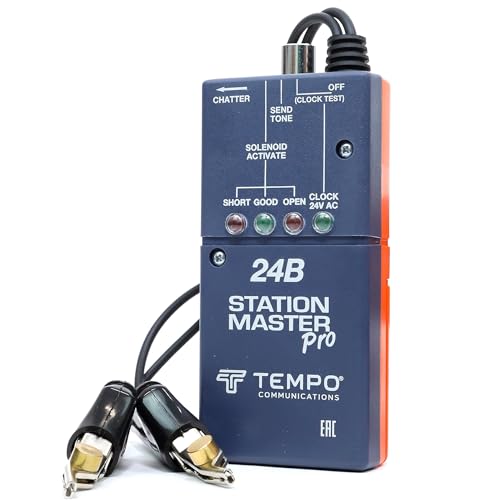
5. TEMPO Station Master Pro 24B Solenoid Tester
A technician’s toolbox piece that activates, chatters, and tones — but it expects you to know your way around a terminal strip.
This is a battery-operated irrigation tester built for fault-finding. It activates any 24VAC solenoid to confirm the valve opens, uses chatter mode to make the valve click so you can locate it by ear, and sends a strong tracing tone down the wire to identify which cable is which. Easy-to-understand LEDs report sufficient voltage supply and solenoid condition at a glance, so you are not guessing from a multimeter reading in the rain. The “bed-of-nails” piercing pin clips grip insulated wire without cutting or stripping, which is the single biggest time-saver on a job site.
It will also safely hold a working solenoid open for hours, and it tests solenoids without the controller attached — useful when you need to rule the controller out. The catch, and it is a real one, is the chatter volume: the clicking often is not loud enough, and the valves can be hard to hear through soil. Performance splits the crowd too, with some reporting it works like a champ and others finding it does not trigger solenoids enough. Accuracy and ease of use are the aspects that draw the most praise.
At 12.4 x 3.6 x 1.2 inches and roughly a quarter of a kilogram, it is a proper handheld instrument rather than a pocket clip like the Chat-R-Box’s 2.25 x 1.25 x 0.75-inch body — a difference the Chat-R-Box’s own reviewers feel in the pocket. If hearing the valve is your priority, the louder-targeted chatter tools in this list may suit you better; if you want diagnostic breadth, this delivers.
What you gain: solenoid activation, chatter, tracing tone, and LED voltage checks in one battery-powered unit.
What to plan for: the chatter is on the quiet side, so surface-level listening may not be enough — pair it with a tracer if the valve is deep.
Built for: the irrigation tech who wants one tester for activation, wire ID, and chatter.
Not the fit if: you need a loud, unambiguous click from a deeply buried valve.
6. Armada Pro48 Irrigation System Tester

Four test modes, a 1 kHz tone, and slim clips that grip a terminal screw — this is a wire-and-valve checker in one hand.
The LED readout is the star here. Clear indicators show Good, Short, Open, and Volts status, so a glance tells you whether a solenoid is healthy, a wire is shorted, or a circuit is broken. It chatters solenoids to verify they respond, activates and holds solenoids open to confirm valve operation, and generates a 1 kHz tracing tone for tagging irrigation wiring when used with an inductive probe accessory. It even checks the irrigation clock’s 24V power output to confirm the controller is putting out what it should.
The slim test clips are the detail that wins field techs — they grip terminal strip screws for a stable connection instead of slipping off mid-test. It runs on two 9V batteries (not included), so stock spares before a job. At 9.6 ounces it sits heavier in the hand than the Clackee’s 2.68 ounces, a trade-off for the voltmeter function and multi-mode breadth.
Customers note locating all sprinkler valves on a system with the valve locator feature. The honest caveat is audible confirmation: several users could not hear the valves clicking, and accuracy draws mixed reactions. Functionality and ease of use are where it earns most of its praise. If reliability of the click matters most, note that limit upfront and plan to use the LED and tone functions as your primary confirmations.
What makes it capable
- Good/Short/Open/Volts LEDs read the circuit at a glance
- 1 kHz tracing tone with an inductive probe tags wires
- Checks clock 24V power output to rule out the controller
- Slim clips grip terminal strip screws securely
What to anticipate
- Chatter clicking can be hard to hear at the valve
- Accuracy draws mixed reactions
- Needs two 9V batteries that are not included
Worth it for: the tech who diagnoses wiring and valves with one tester.
Think twice if: audible valve locating is the only job and the click must be loud.
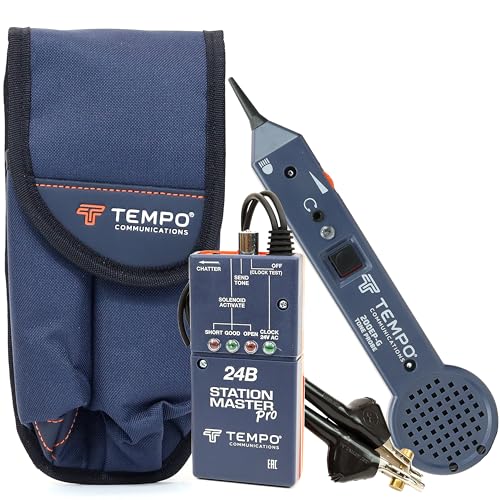
7. TEMPO Station Master Pro 24BK Solenoid Tester
The heavier, professional-styled sibling of the 24B — same core tester, more in the hand and a steeper ask.
This is the same Station Master Pro platform with a professional styling: activate solenoids, chatter them to locate a valve by ear, and send a tracing tone to identify wires. The piercing-pin bent-nose clips bite onto insulated wire with no cutting or stripping, and the LEDs confirm sufficient voltage supply and solenoid condition. It also tests solenoids without the controller and can hold a working solenoid open for hours. At 15.52 ounces, it carries noticeably more weight than the 9.6-ounce Armada Pro48, so if pocketability matters, that difference is real.
Usefulness is where it wins people over — that is the aspect the buyer feedback leans on most, and the chatterbox concept is the core of it. The chatter mode itself is the weak spot, with buyers unsure it really helps find the valve, and functionality and value both go mixed. Ease of use is not unanimous either. On a tester at this level, those mixed reads are worth taking seriously before you commit.
Compare it honestly with the 24B above: same tester, same chatter-plus-tone design, but the 24BK carries a pro styling and a higher place on the shelf. If the chatter mode failing to convince buyers is a concern, the Chat-R-Box’s slow 5–6 click rhythm is built specifically to make the click more distinct. The 24BK suits the tech who already trusts the platform and wants the professional variant.
The draw: activate, chatter, and tone off one battery-powered unit with piercing-pin clips.
The caveat: chatter mode is the least convincing part, and the value question is real at this level.
Choose this for: a professional who wants the Station Master platform in its pro build.
Look at alternatives if: chatter-based locating is your main need and you want a clearer click.
8. TEMPO Communications 521E Wire and Sprinkler Valve Locator

The one that tells you how deep the wire sits before you break ground — a 45-degree indicator does the geometry for you.
Most locators tell you where; this one tells you how far down. A 45-degree angle indicator lights when you are within 3 degrees of the target angle, letting you triangulate wire depth within 10 percent before you dig. That single capability changes the job from hopeful shovel work to a measured cut. It follows buried wire paths, spots wire breaks and large nicks, and finds solenoid valves, all on a sunlight-compatible LCD you can read in the midday glare.
The receiver is carbon fiber reinforced and built for one-handed use with gloves, and the transmitter is removable so it fits into tight spaces. That is the field reality this tool was designed around: cramped valve boxes, sunny afternoons, and gloved hands. It earns praise for quality and functionality above all, and the consensus is that it functions well — including on sprinkler control wire specifically.
There is a lot of unit here: 10.63 pounds and a 28-inch package, so plan for a case and a truck rather than a pocket. Compare it with the pocket-sized Chat-R-Box at 2.25 x 1.25 x 0.75 inches — this is a completely different class of instrument. If you need depth numbers and cable-path following, the 521E delivers that; if you just want to hear a solenoid, it is overbuilt for the job.
Why pros reach for it
- 45-degree indicator triangulates wire depth within 10 percent
- Finds breaks, nicks, and solenoid valves along the path
- Sunlight-compatible LCD for bright outdoor work
- Carbon-fiber receiver handles one-handed use with gloves
What it costs you in practice
- 10.63 pounds and a 28-inch footprint — not a pocket tool
- Overkill if you only need a chatter box
- Battery powered, so charge and spares matter on long jobs
Made for: the pro who must know depth before cutting turf.
Not for: the homeowner chasing a single valve box with a healthy system.
9. TEMPO 521A Irrigation Sprinkler Valve Locator Tool
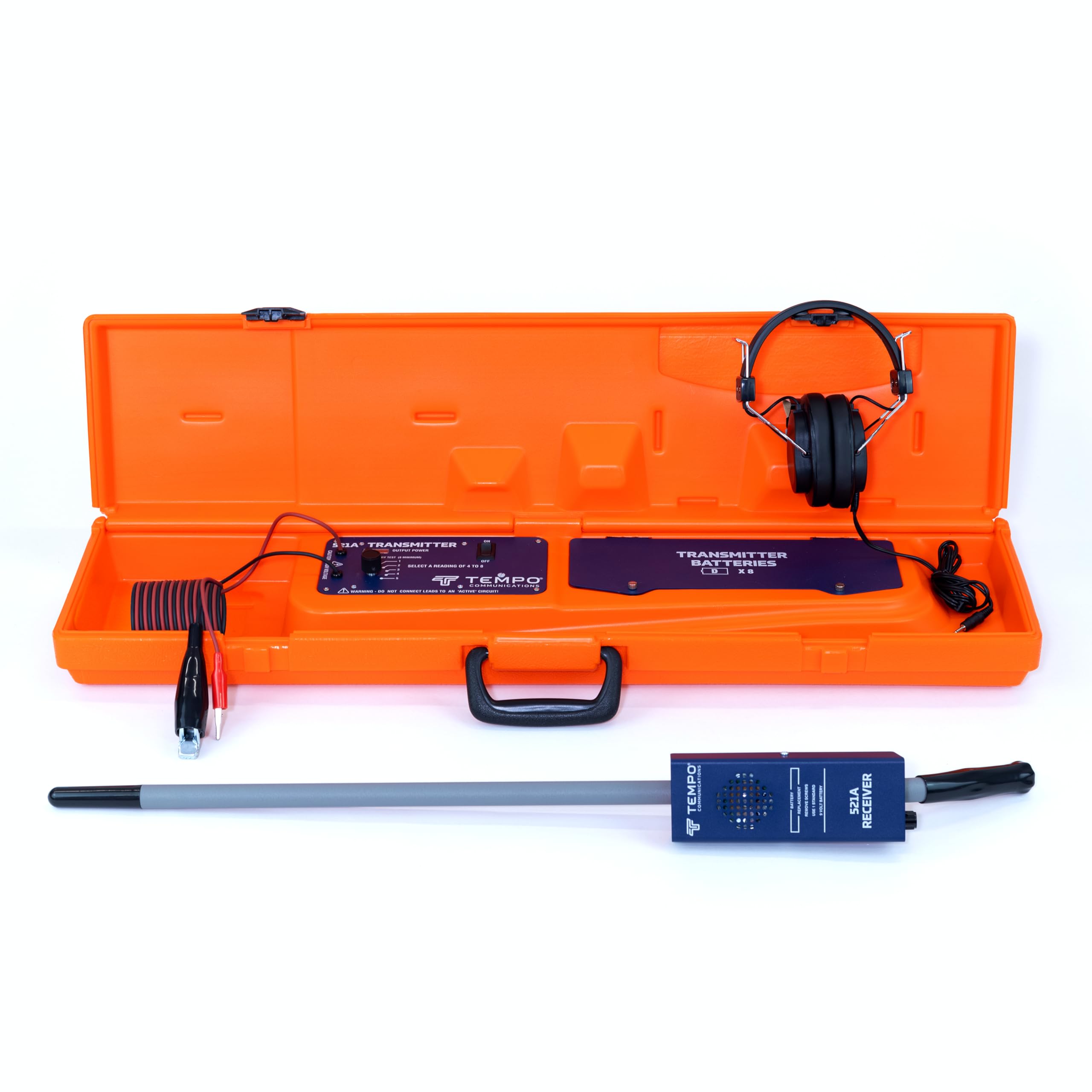
The industry-standard kit with an adjustable transmitter and a hotspot signal that pinpoints solenoid valves.
This is the full system: a 521-R receiver, a 521-T transmitter, a 521-C carry case, and an HS-1 headset in the box. The adjustable transmitter gives extended range and maximum signal strength, and the valve solenoid hotspot feature spotlights the target so you are not sweeping a wide field hoping to catch a signal. It is built for electronically controlled sprinkler systems, and it works well at both tracking wires and locating valves — the consensus points to it finding a buried valve box in a single pass of tracing.
The audio is customizable: an adjustable loudspeaker plus headset audio. That matters when you are standing next to a running street or a blower, because the rugged headphones block ambient noise so you can hear the signal that counts. It runs on alkaline batteries and ships in a slim-line carry case, so it travels as a kit rather than a loose tool.
The weight is the honest part — 8.13 pounds — which places it with the 521E’s 10.63 pounds as a truck-and-case instrument, not a pocket tool. Value for money divides buyers: some call it worth the cost, others feel it is overpriced for the class. Ease of use is also not unanimous. Functionality and quality are what raise it above the pack. If you are outfitting a service vehicle for years of irrigation work, that kit completeness is what you are paying for; for a one-off hunt, the simpler chatter boxes make more sense.
The case for it: receiver, transmitter, case, and headset in one kit, with adjustable signal and hotspot solenoid detection.
The honest note: 8.13 pounds and a value question that splits buyers — this is a fleet tool, not a drawer tool.
Right for: the irrigation contractor who wants a complete, range-adjustable tracing kit.
Wrong for: a single homeowner job where a chatter tool would do.
Know the Specs
24VAC system voltage
Nearly every residential irrigation controller sends 24 volts of alternating current to its valves, written 24VAC. A chatter tool draws on that same supply to pulse the solenoid, so it needs no battery of its own — the Chat-R-Box and the Clackee both run off the system. Check your controller and valve labels to confirm you are on 24VAC, and check the brand: the Chat-R-Box works with Rain Bird, Hunter, Orbit, Weathermatic, Ki-Rain and Irritrol, but is explicitly not compatible with Toro.
Click rate and why slower is clearer
A chatter tool fires the solenoid at a set rhythm. The Chat-R-Box runs about 5 to 6 clicks per second, a deliberate pace the maker tunes to be easier to recognize through soil and landscaping than a fast electronic buzz. A slower, distinct click gives your ear a pattern to lock onto in a noisy yard. Fast, buzzy pulses are harder to separate from ambient sound, especially when the valve sits under turf or mulch.
Burial depth and soil type
Sound has to travel from the solenoid up through wet soil, mulch, and grass to reach you. The Clackee maker warns that a valve buried too deep may not be audible at all, and even the pocket tools depend on soil condition, valve condition, and surrounding landscaping. A wire tracer with depth finding, like the TEMPO 521E, uses a 45-degree indicator to triangulate wire depth within 10 percent, which helps you predict whether the click will reach the surface.
Chatter tools versus wire tracers
A chatter tool needs a working solenoid and a continuous wire to make noise. The moment the wire is cut or the solenoid is dead, there is nothing to click, and the Clackee maker says plainly that a separate wire tracer may be required if wiring is damaged. A tracer puts a signal on the cable and follows its path — the NOYAFA handles depths up to 2.6 feet and lengths up to 1,640 feet. Diagnose first: continuous circuit, buy a chatter tool; broken circuit, buy a tracer.
Common Questions
Will a sprinkler valve locator work on my Rain Bird controller?
Does a valve locator work with Toro valves?
Why can I not hear the valve clicking through the soil?
Will a valve locator find a valve if the wire is cut?
Does a valve locator also repair a faulty solenoid?
How deep can a wire locator trace and how long a cable?
Does a chatter tool need its own battery?
What is a 45-degree depth indicator and why does it help?
Do I need a wire tracer or a chatter box for a single lost valve box?
What is a hotspot signal on a valve locator?
The Bottom Line
For most yards, the best sprinkler valve locator is the Chat-R-Box PRO Valve Locator — the 5 to 6 clicks-per-second rhythm is built to be heard through soil, it needs no battery, and it covers Rain Bird, Hunter, Orbit and most other 24VAC systems. If you suspect a cut wire rather than a lost valve, the NOYAFA NF-818L traces up to 2.6 feet deep and 1,640 feet of cable without the valve making a sound. And for professionals who need to know depth before the shovel goes in, the TEMPO 521E triangulates wire depth within 10 percent. Whichever you pick, check your solenoid’s health first — a locator can only find what is still talking back.
How we choose
We do not accept paid placement. Every pick is matched to a real buyer and a real use-case; we do not hands-on test units.
Sources
Specifications: manufacturer listings and product documentation. Review insights: verified customer reviews, as of November 2026. Pricing: not shown on this page (it changes often); check the current price via the retailer link.
As an Amazon Associate, Tactical Gear Guy earns from qualifying purchases. This does not affect which products we feature.