Specs are compiled from manufacturer listings and verified buyer reviews and can change over time — please confirm the key details on the product page before buying.
All-season tires are not winter tires: their rubber hardens in the cold, and that mix-up is the most common winter-tire mistake. The tires that actually earn the severe winter label carry a three-peak mountain snowflake symbol or embedded metal studs, and they stay soft when the thermometer drops. This guide breaks down seven tires that genuinely qualify, so you can match one to your car, your roads, and how much ice you actually drive on.
This guide is built by comparing the manufacturers’ published specifications and the patterns across verified customer reviews, so you get each pick’s real strengths and trade-offs instead of marketing spin.
You will see which rubber compounds hold up in deep snow, which studded options bite hardest on ice, and which sizes fit your wheels. Read on for a clear look at the best severe winter tires worth putting on your vehicle before the first freeze.
Top Picks

How To Choose The Best Severe Winter Tires
Winter tire sidewalls are crowded with symbols and codes, and most of them look alike. The trick is knowing which numbers and symbols actually decide whether a tire keeps you moving on a snow-packed road or leaves you spinning at the bottom of a hill.
Start With the Three-Peak Symbol
Check the sidewall for the three-peak mountain snowflake mark. That symbol means the tire passed a standardized snow-traction test, so it grips packed snow in a way an ordinary all-season tire does not. Every pick in this guide qualifies, either through that certification or through embedded studs (metal spikes molded into the tread that bite into ice).
Studs are small metal pins set into the tread. They bite into hard ice where rubber alone slides, which is why studded tires dominate in mountain towns and far-north climates.
Read the Size Numbers Correctly
A size like 225/65R17 means the tire is 225 millimeters wide, has a sidewall height equal to 65 percent of that width, and fits a 17-inch wheel. Order the exact size stamped on your current tire’s sidewall or in your owner’s manual. A close-but-wrong size can rub the wheel well or throw off your speedometer.
Match the Load Index to Your Vehicle
The load index is a code for how much weight one tire can carry. A 100-rated tire handles more than a 94-rated one. If you drive a heavier SUV or carry cargo, a higher load index keeps you inside the tire’s safe working range.
Decide if you need Studs
Studded tires grip best on hard-packed ice and frozen slush. Studdable tires give you the option to add studs later. If your winters are mostly cold and dry with occasional snow, a non-studded winter compound may suit you better and run quieter on bare pavement.
Side-by-Side Comparison
| Model | Best For | Load Index | Item Weight | Item Diameter | Amazon |
|---|---|---|---|---|---|
| Cooper Evolution Winter 235/60R16 100T★ Best Overall | Deep snow without studs | 100 | 25.5 pounds | 27.1 inches | Amazon |
| Michelin X-Ice Snow 195/65R15 95TQuiet Commuter | Quiet dry-road commuting | 95 | 19.5 pounds | 25 inches | Amazon |
| HANKOOK Winter ipike X W429 215/50R17 95T XL | Studded passenger-car grip | 95 | 23.5 pounds | 25.4 inches | Amazon |
| Firestone Winterforce 2 UV 225/65R17 102 S | Heavy SUV loads | 102 | — | 28.5 inches | Amazon |
| Nordman North 9 205/55 R 16 94T XL | Pre-studded ice control | 94 | 20.9 pounds | 24.9 inches | Amazon |
| General Tire Altimax Arctic 12 235/45R18 98T | Freezing rain and wet ice | 98 | 25.6 pounds | 26.3 inches | Amazon |
| Nokian Hakkapeliitta 10 SUV 245/65 R 17 111T XL | Ice-bound SUV driving | 111 | 31.5 pounds | 29.5 inches | Amazon |
Detailed Reviews
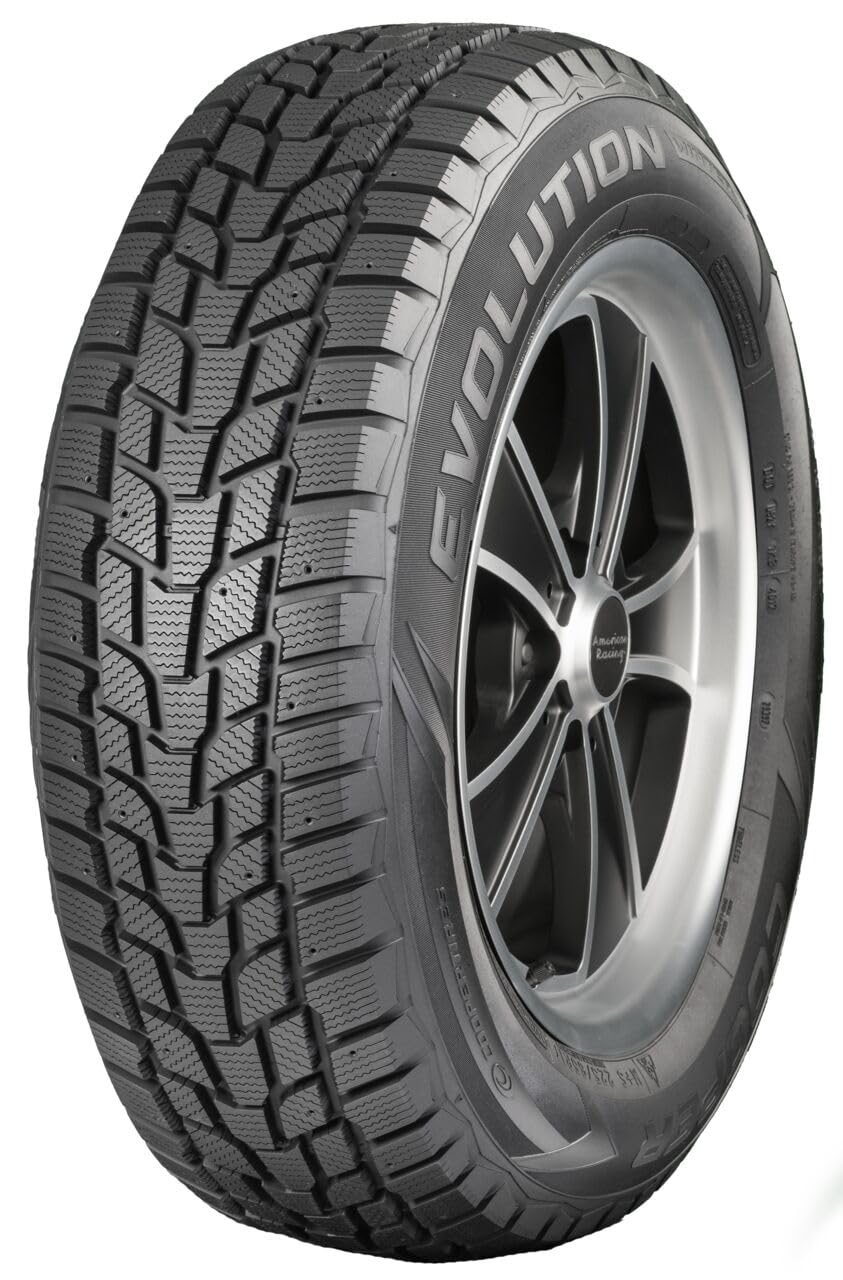
1. Cooper Evolution Winter 235/60R16 100T Tire
Our pick — 4.5+★ from 750+ verified ratings; the strongest balance of quality and price.
The deep-snow specialist that plows through drifts and still lets you add studs later.
Fire this tire at a snowbank and it keeps clawing forward. Cooper builds it for deep snow first, and the three-peak mountain snowflake certification backs that up — the tire passed a standardized snow-traction test, so you are not guessing. Its 100 load index means each tire carries a rated load capacity of 1764 pounds, enough to cover a loaded mid-size SUV across all four corners.
What wins people over is the deep-snow traction and the price. This is the tire owners describe as reliable for stopping and starting on cold roads, and it rides smoothly enough that you are not bracing for every frost heave. At 25.5 pounds per tire it is manageable to swap on a jack, and the 27.1-inch diameter fits the common 16-inch winter-wheel setups.
The honest catch involves studs. It arrives unstudded, so you get the option to add them but not the ice bite on day one. If you drive straight onto glare ice every morning, a pre-studded tire saves you the trip to a shop.
Where It Earns Its Keep
- Deep-snow traction that keeps pulling when the plow has not come through
- 1764-pound load capacity per tire covers heavier vehicles comfortably
- Studdable design lets you upgrade to ice grip when you want it
- Three-peak mountain snowflake certified for genuine winter rating
Where It Asks Something Back
- Ships without studs, so hard-ice grip is not there from the start
- Road noise picks up once you add studs
Reach for this if: you face deep snow more than sheet ice and want one tire that handles a loaded SUV.
Look elsewhere if: your driveway is a skating rink and you want studs biting from the first mile.
2. Michelin X-Ice Snow 195/65R15 95T Bsw Winter tire
A winter tire that stays hushed on dry pavement, so the cold months don’t sound like a wind tunnel.
Most winter tires remind you they are on the car every time you merge onto a highway. This one mostly does not, and quietness is the trait that stands out most to its buyers. Michelin builds it for the driver who spends winter on cleared roads with snow storms in between, and it rides smoothly with a tread that looks and behaves like a winter tire should.
Lifting this wheel onto the hub is easier than hoisting a Nokian heavyweight: it weighs 19.5 pounds versus 31.5 pounds for the top Nokian SUV tire, a gap you notice with every seasonal swap. It also carries a 40,000-mile manufacturer’s treadwear warranty, so the maker backs the tread for that distance. Its maximum pressure rating is 50 psi (pounds per square inch, the most air the tire is built to hold).
The trade-off is a 95 load index, which is lighter-duty than some of the SUV-oriented picks here. It fits a compact car or sedan well, but a heavily loaded wagon pushes near the limit.
Why it stands out: the quietness and the smooth, planted feel on dry cold roads, backed by quality feedback that keeps coming back to how it holds up.
The note to keep: it is a snow-and-cold road tire, not a dedicated ice-biter. If you want studs for glare ice, look at a studded pick instead.
Suits you when: you want winter traction without giving up a calm cabin on cleared highways.
The one catch: its 95 load index and non-studded build leave heavy SUVs and steep ice to tougher tires.
3. HANKOOK Winter ipike X W429 215/50R17 95T XL
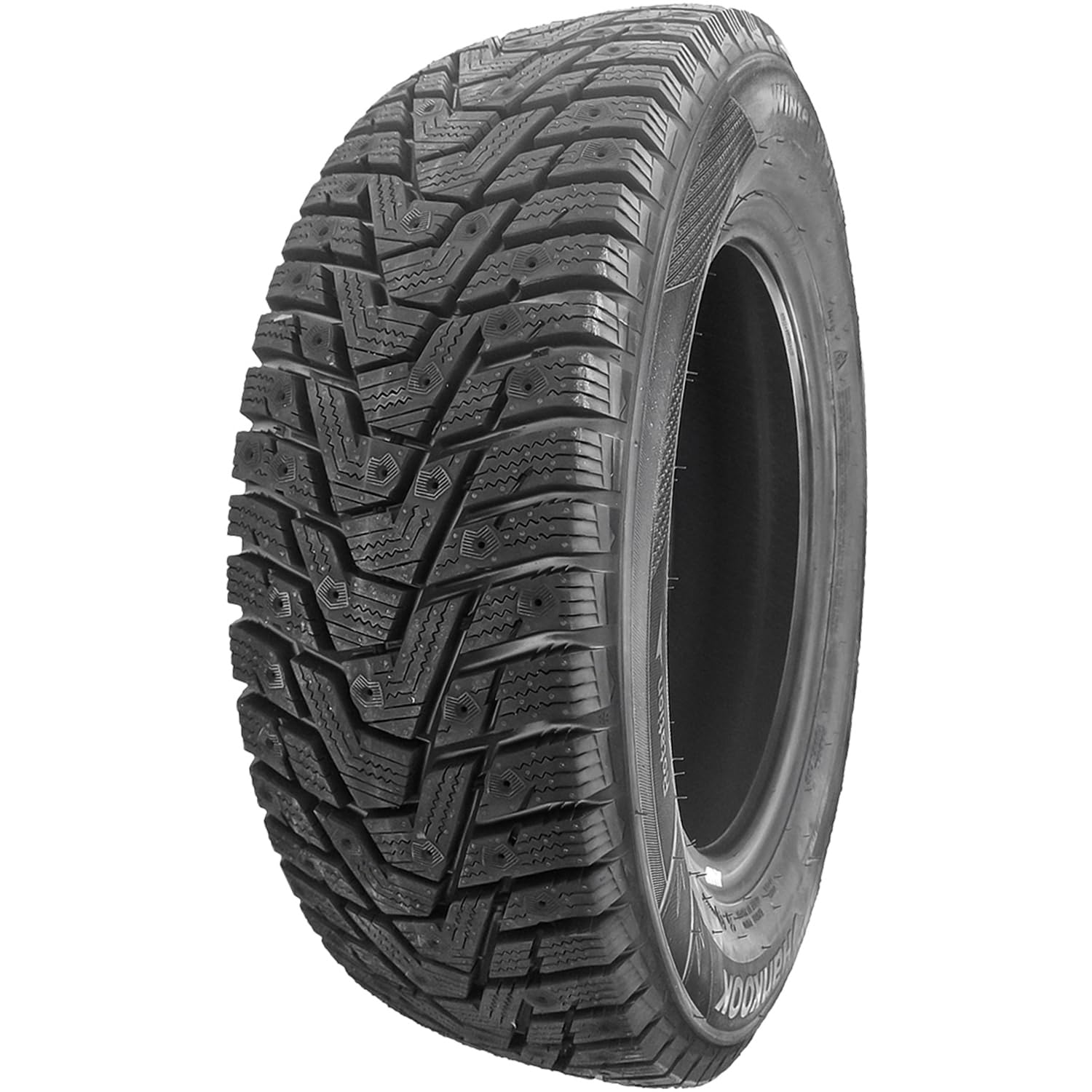
Comes from the start with studs already set, ready to bite into a frozen morning.
A directional tread pattern channels slush and snow out from under the contact patch, and the factory studs add the metal bite that rubber cannot. Hankook rates this tire at a 95 load index with an XL load range, so it holds an extra-load rating despite the passenger-car sizing. The 23.5-pound weight keeps it light enough for a compact car without feeling flimsy.
Where it earns its place: owners run these in genuinely brutal climates, including Alaska, and describe them handling cold and wet weather well while staying fairly quiet in normal driving. The new rubber compound is built to resist wear and keep tread life going through repeated freeze-thaw cycles.
The one thing to weigh is value. Pricing sits at the higher end of the mid-range pack, and some buyers feel the cost is a stretch given the smaller size. If budget is tight and you don’t need studs, a non-studded tire gets you similar snow grip for less.
What Works
- Factory studs give immediate ice grip with no extra trip to a shop
- Directional tread clears slush and snow efficiently
- XL load range adds capacity for a passenger car
What to Consider
- Priced near the top of the mid-range group
- Some buyers find the cost steep for the tire’s size
Go with this one if: you want studs from day one on a passenger car and value cold-and-wet performance.
Think twice if: budget is your main filter and you don’t actually drive on hard ice.
4. Firestone Winterforce 2 UV 225/65R17

The SUV workhorse that shoulders the heaviest loads in this lineup without breaking a sweat.
Look at the load capacity first: each tire is rated for 1874 pounds, which out-carries the Hankook’s 1521 pounds by a clear margin. That extra headroom matters if you drive a loaded SUV, tow a small trailer, or routinely have the back seats and cargo bay packed. The 102 load index ranks among the highest here for sheer weight handling.
The 28.5-inch diameter fits the common 17-inch SUV wheel, and the studdable design lets you add metal bite if your roads turn to ice. Buyers report these handle snow and rain well and hold up over real seasons — as owners put it, they “lasted 5 years.” Low road noise and durability come up again and again.
What you give up is refinement at speed. This is a truck-oriented winter tire with a stiffer feel than the lighter passenger picks. If you mostly drive a compact car on city streets, you are paying for capacity you will never use.
The case for it: 1874 pounds of load capacity per tire plus studdable ice grip, at a price that undercuts several rivals in this list.
The counterpoint: it is the heaviest-duty tire here, so it rides firmer than the lighter passenger options — fine for an SUV, overkill for a small sedan.
Best matched to: SUV owners who load up heavy and want winter traction that doesn’t flinch.
Not for: light city cars where a bigger load rating just adds a firmer ride.
5. Nordman North 9 205/55 R 16 94T XL Studded Winter Tire

Nokian’s studded secret at a lower weight, built to stick to icy roads without fuel penalty.
Embedded studs are the whole story here — metal pins that grab the ice so you keep control on a slick patch. Nokian makes this one under its Nordman line, and it keeps the weight down at 20.9 pounds, which you will notice when you are hauling four wheels out of the garage.
Compare the size to the premium Nokian SUV tire: this one measures 24.9 inches in diameter versus 29.5 inches, and carries a 94 load index versus 111. That makes it a compact-car tire, not an SUV tire, and it is built for lower rolling resistance to trim fuel consumption. The 51 psi maximum pressure rating gives it a bit more headroom than the Michelin’s 50 psi.
The honest limit is size and weight class. A 94 load index is for lighter vehicles, so a big SUV does not belong on this tire. For a sedan or small hatchback in a hard-ice climate, it does the crucial job well.
Pick this if: you drive a compact car on genuinely icy roads and want pre-set studs at a light weight.
Pass if: you drive an SUV or carry heavy loads — the 94 load index is not built for that.
6. General Tire Altimax Arctic 12 235/45R18

A quiet studdable winter tire that handles freezing rain and wet ice with steady composure.
Freezing rain is the weather that catches drivers out, and this tire is built for it. General rates it for reliable braking on wet, snowy, and ice-covered roads, with a rubber compound that stays flexible in low temperatures. The 98 load index and XL load range put it in mid-weight territory, and the 1654-pound load capacity per tire covers most sedans and crossovers.
What wins people over is the low noise for a studdable winter tire. Owners describe it as a quiet ride even in the depths of winter, which is more than many studdable tires can claim. The 25.6-pound weight is reasonable for an 18-inch wheel fitment, and the 26.3-inch diameter keeps the overall package proportionate.
On the support side, General backs it with a 45-day trial and 72 months of limited treadwear coverage — a genuine safety net if the fitment or feel is not right. The trade-off is the 18-inch sizing, which fits fewer cars than the more common 16 and 17-inch wheels.
Strongest card: freezing-rain braking and a quiet ride, backed by a 45-day trial and 72 months of treadwear coverage.
Watch for: the 235/45R18 size limits it to vehicles running 18-inch wheels.
Made for: drivers with 18-inch wheels who face freezing rain and want a quiet studdable winter tire.
Skip the fitment if: your car runs 16 or 17-inch wheels — the size simply won’t mount.
7. Nokian Tyres Hakkapeliitta 10 SUV 245/65 R 17

The heavyweight SUV studded tire built for ice, slush, and deep snow all at once.
This is the premium end of the studded world, and it shows in the hardware. Nokian’s Double Stud Technology and Eco Stud 10 concept put metal to work improving traction, grip, acceleration, and braking on icy, slushy, and snowy roads. The three-peak mountain snowflake certification confirms it earned the severe winter rating rather than inheriting it.
The size tells you who it is for. At 29.5 inches in diameter and 31.5 pounds per tire, it fits larger CUV and SUV wheels — this is not a compact-car tire. Its 111 load index is the highest here, well above the Nordman’s 94, and the dedicated winter rubber compound stays flexible in freezing temperatures. Lower rolling resistance helps with fuel economy too.
Your wallet feels this one: pricing is the steepest in this guide, and cost is the main thing buyers push back on — owners mention some find it hard to justify even while praising its grip. If you drive an SUV through ice and heavy snow and want the most aggressive studded bite available here, this is the tire that rewards the spend. On a light car, it is simply too much tire.
Why It Belongs Up Top
- Double Stud Technology for aggressive ice grip on SUV-sized vehicles
- 111 load index carries large, heavy SUVs with confidence
- Three-peak mountain snowflake certified for genuine winter performance
- Winter rubber compound stays flexible in freezing temperatures
The Honest Costs
- The highest-priced tire in this lineup
- 31.5 pounds per tire makes swapping labor-intensive
- Overkill for compact cars and light passenger vehicles
This is your tire if: you pilot a larger SUV through genuine ice and snow and want the most capability available here.
Look to a lighter pick if: your wallet or your vehicle size can’t absorb a premium SUV studded tire.
Know the Specs
Load Index and Load Capacity
The load index is a code number for how much weight a single tire can safely carry, and load capacity is that weight in pounds. A 111-rated tire (as on the premium Nokian) handles far more than a 94-rated one (as on the Nordman). Match a higher index to heavier vehicles like SUVs and wagons, and a lower one to lighter cars. Running a tire near its capacity limit is what you want to avoid.
Studded vs Studdable
Studded tires arrive with metal studs already embedded, ready for hard ice from day one. Studdable tires give you the option to add studs later, which suits drivers who want flexibility or who face more snow than sheet ice. Studs boost grip on glare ice but add road noise on bare pavement, so your local climate decides which one makes sense.
Three-Peak Mountain Snowflake Rating
That sidewall symbol means the tire passed a standardized snow-traction test, which an ordinary all-season tire does not. Treat it as the minimum bar for a true winter tire. Every pick in this guide clears it through certification or studded construction.
Tire Size Numbers Explained
A size like 225/65R17 breaks into three parts: 225 millimeters of tread width, a sidewall height equal to 65 percent of that width, and a 17-inch wheel diameter. Order the exact size your vehicle calls for. Getting the width or wheel diameter wrong can cause rubbing or a mismatched speedometer reading.
Common Questions
Are severe winter tires better than all-season tires in snow?
Do I really need studded tires or is studdable enough?
Can I run winter tires on only two wheels?
How do I know which size winter tire fits my car?
What does a tire’s load index mean for my SUV?
Will studded winter tires damage my driveway or garage floor?
How long do winter tires typically last?
Can I leave winter tires on all year?
Is a heavier winter tire better for ice grip?
Do winter tires help with braking on wet and icy roads?
The Bottom Line
For most drivers, the severe winter tires winner is the Cooper Evolution Winter 235/60R16 100T Tire. It pairs genuine deep-snow traction with a studdable design (you can add studs yourself) and a 1764-pound load capacity per tire, so a fully loaded mid-size SUV rides without straining. If you want studs biting from the first mile, the Nordman North 9 comes with pre-set studs already installed and weighs a compact 20.9 pounds, which suits an icy commute. For a large SUV facing the worst ice and snow, the Nokian Hakkapeliitta 10 SUV is the most aggressive studded option here. Match the tire to your vehicle’s load index first — that single number (the weight each tire is rated to carry) decides which of these is safe to run.
How we choose
We do not accept paid placement. Every pick is matched to a real buyer and a real use-case; we do not hands-on test units.
Sources
Specifications: manufacturer listings and product documentation. Review insights: verified customer reviews. Pricing: not shown on this page (it changes often); check the current price via the retailer link.
As an Amazon Associate, Tactical Gear Guy earns from qualifying purchases. This does not affect which products we feature.