Specs are compiled from manufacturer listings and verified buyer reviews and can change over time — please confirm the key details on the product page before buying.
You already carry trekking poles. A trekking pole tent turns those two sticks into your entire frame, so you leave the tent poles at home and shave a real chunk off your pack weight. The catch is that not every one of these shelters pitches the same way, handles rain the same way, or gives you the same room inside. This guide sorts the seven strongest options so you can match one to your terrain, your partner situation, and how much weight you are willing to carry.
This guide is built by comparing the manufacturers’ published specifications and the patterns across verified customer reviews, so you get each pick’s real strengths and trade-offs instead of marketing spin.
Some of these shelters are single-wall bivvy-style tents that drop to about a pound, while others are double-wall two-person models built for storms. Every pick below is confirmed to pitch from trekking poles alone, so the only thing left is figuring out which one belongs on your back.
Top Picks


How To Choose The Best Trekking Pole Tent
A trekking pole tent is a shelter with no poles of its own. You plant your two hiking poles and stretch the fabric over them, which saves you from hauling a separate pole set up the trail. That one design choice is the whole reason these tents are so light, but it also means the pitch depends on poles that reach the right height. Get the height wrong and the shelter goes floppy.
Match the pole height to the design
Some shelters want your handles pointing down at the ground, and some want them pointing up. The Altair Two asks for poles about 47 inches tall, so check what your own poles extend to before you commit. Most adjustable trekking poles reach that range easily, but a fixed-length pair might leave you short.
Decide single wall or double wall
A single-wall tent is one layer of fabric between you and the weather, which saves weight but collects condensation on cold nights. A double-wall shelter adds an inner mesh body under the fly, so moisture forms on the outer layer and stays off your sleeping bag. If you hike in humid or wet country, that extra layer earns its weight.
Read the waterproof rating, not the label
The waterproof index, measured in millimeters, tells you how much water pressure a fabric holds back before it leaks. A 5000mm fly handles steady rain, and a floor rated higher than the fly keeps groundwater out from below. Seam sealing matters just as much, because a leak usually starts at a stitched seam.
Check the floor size against your pads
A two-person label tells you the tent sleeps two, but it says nothing about whether two wide sleeping pads fit side by side. Look at the actual floor width and length, then compare it to your pad dimensions. Some shelters squeeze two people, and some genuinely stretch out.
Side-by-Side Comparison
| Model | Best For | Sleeps | Stated Weight | Waterproof Head | Amazon |
|---|---|---|---|---|---|
| Night Cat Ultralight 1 Person★ Best Overall | Solo hikers on a budget | 1 | 2 lbs | Waterproof rainfly | Amazon |
| Altair TwoBest Two-Person Weight | Two-person thru-hikes | 2 | 2.73 lbs | 3000mm | Amazon |
| 3F UL Gear Lanshan 2 (Green) | Storm-ready two-person trips | 2 | 1155 g | 5000mm fly | Amazon |
| 3FULGEAR Lanshan 2 (Khaki) | Versatile 3/4-season use | 2 | 1155 g / 2.5 LB | 5000mm fly | Amazon |
| Sierra Designs High Route 1P | Thru-hikers who want tarp options | 1 | 2 lb 4 oz | Water-resistant | Amazon |
| Six Moon Designs Lunar Duo Outfitter | Couples who want elbow room | 2 | — | 190T polyester | Amazon |
| Six Moon Designs Lunar Solo | Tall solo hikers saving grams | 1 | 26 oz | 20D SilPoly | Amazon |
Detailed Reviews
1. Night Cat Ultralight Tent 1 Person
Our pick — 4.0+★ from 300+ verified ratings; the strongest balance of quality and price.
A two-pound solo bivvy that pitches from your trekking poles instead of a dedicated pole set.
The number that defines this shelter is 2 lbs. That is the whole point of a trekking pole tent — you carry fabric and nothing else, and your hiking poles become the structure. If you walk long days and feel every extra ounce by the last mile, that 2-lb figure is why this solo shelter sits at the top. It is molded in a bivy form factor (a low, close-fitting single-person shape that shields you from wind), so it tucks into a pack and disappears until camp.
The setup is genuinely simple for a first-timer. Stakes and ropes come included, so pitching means staking the corners and stretching the rainfly over your pole. Buyers praise the build quality most, with ease of setup a close second. A nylon fabric shell with a waterproof rainfly means rain and snow slide off instead of soaking through. One detail worth knowing: the floor runs 125cm by 100cm, so it is roomy for one person but not a two-person shelter despite some buyers having used it that way. The tent weighs nothing on your back, though the rain performance is the spot where feedback splits, with some staying dry through storms and others finding gear damp after heavy rain. Treat it as a fair-weather to moderate-rain solo shelter and it holds up. Its 4.0+ star score rests on 300+ owners, which is a real body of trail time behind it.
What carries the pitch
- 2 lbs total, so your hiking poles do all the structural work.
- Nylon shell with a waterproof rainfly sheds rain and snow.
- Stakes and ropes included means camp setup is quick and complete.
What to weigh before buying
- Water resistance is the honest weak point — gear can get damp in a hard soak.
- Bivy shape is a solo-only shelter, so it is not a partner tent.
- A few owners find the pitch less stable than a freestanding frame.
Solid for: solo backpackers who carry trekking poles and want the lightest possible shelter without spending much.
Think again if: you camp in sustained downpours or want to share the tent — pick a double-wall two-person option instead.
2. Altair Two Ultralight Backpacking Tent
The double-wall two-person shelter that asks your trekking poles about 47 inches of reach.
Here is the pitch spec that decides everything: this tent stands on two trekking poles or sticks about 47 inches tall. If your poles adjust to that, you get a double-wall shelter for two at 2.73 lbs. Compared with the Night Cat at 2 lbs, this one carries 36% more weight, but it holds a second sleeper and adds an inner mesh body that keeps condensation off your sleeping bag. That extra 0.73 lbs is the core trade for couples who want a second sleeper and a condensation-fighting inner.
The fabric is 20D ripstop sil nylon rated at 3000mm (a waterproof measure showing it holds back steady rain before it leaks), and the seams come sealed so water does not creep through stitching. Two doors and two large high vents move air through and cut the damp that plagues single-wall designs. The floor spans 86.6 by 50 inches, wide enough for two full-size sleeping pads, and peak height stands at 47.24 inches. Both large vestibules shelter your packs outside the sleeping area. The makers also flag an honest limit: the peak height sits at the center only, and the sloped side walls cut headroom toward the edges, so this shelter is built for sleeping rather than sitting up and moving around.
Durability and waterproofing are the two areas where owner experience is strongest, and the tent holds up in wind, rain and snow in the field. Its 3.5+ star score comes from a smaller pool of buyers, so read it as early feedback rather than a long trail record. Buyers also rate the value highly: a double-wall two-person shelter at 2.73 lbs without a premium price.
The weight-per-sleeper win: 2.73 lbs for two people is the number to carry in your head, and the double wall keeps condensation off your bag in a way single-wall tents cannot.
The honest catch: sloped walls drop headroom at the edges, so if you want to sit up and dress inside, check the floor plan before committing.
Reach for it if: you hike as a pair, your poles stretch to about 47 inches, and you want double-wall protection without the premium price.
Look elsewhere if: you pitch with short fixed poles or need generous sit-up room — this shelter tune for sleeping.
3. 3F UL Gear Lanshan 2 Person Tent

A 5000mm waterproof fly built for the trip where the sky refuses to close.
The waterproof index is the reason to look here. The flysheet is 15D nylon rated to 5000mm, which means it holds back heavy rain before water pushes through, and the floor steps up to 8000mm so groundwater stays beneath you. The fabric is 15D silnylon — a silicone-coated nylon that stays light while resisting tears — and the whole shelter weighs 1155 grams. Two trekking poles and eight stakes are all the pitching hardware you need, and the listing estimates 5 minutes to get it standing.
The inner space runs 210 by 110 by 120cm, enough for two sleepers with a compact footprint that fits tight tent pads. It is built for 3/4-season use, so it stands up to cold-weather trips and wind, and the one-side silicone coating plus PU coating adds weather resistance. Because the fly and inner add up to a double-wall layout, condensation collects on the outer layer instead of your bag. A compact packed size means it slips into a pack without eating the whole compartment.
This is a newer listing with a modest review pool, so judge it on the published numbers rather than a long owner record. For storm-prone country, that 5000mm fly rating is the spec that matters most.
Where the money goes: the 5000mm fly and 8000mm floor are the strongest waterproof numbers on this list, and that is exactly what you are paying for.
Keep in mind: poles and stakes are not included as a set with the shelter’s own hardware, so confirm you have two poles and eight stakes before you head out.
Fit for: two hikers heading into wet, windy or cold trips who want a weather rating that outruns a fair-weather shelter.
Not the pick if: you are chasing the absolute lightest solo load — this one is built for two and for storms.
4. 3FULGEAR Lanshan 2 Tent (Khaki 3 Season)
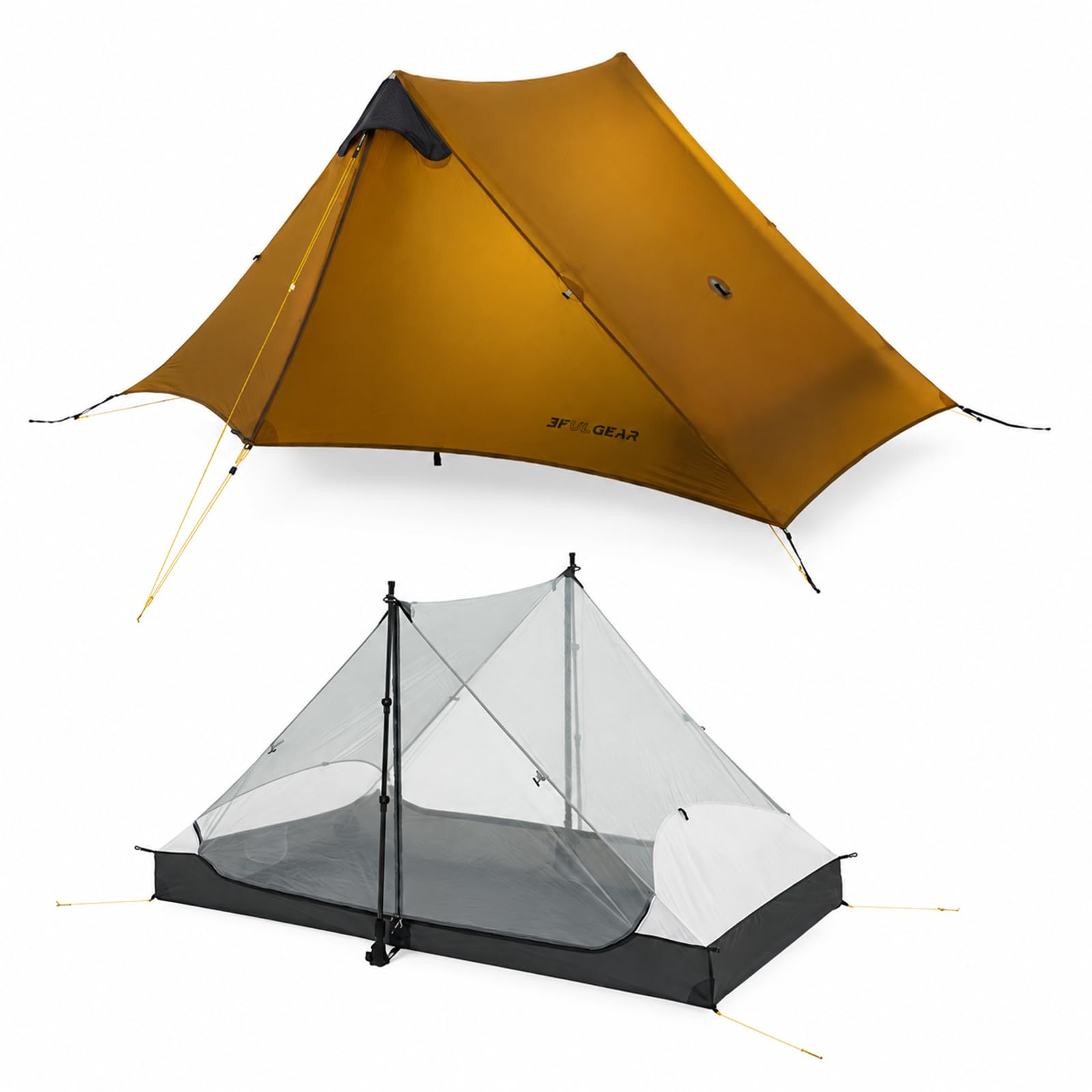
The three-season twin that lets you choose breathable mesh or a wind-blocking inner.
What separates this Khaki shelter from the other Lanshan on this list is the choice of inner fabric. The three-season version runs 15D mesh for strong breathability, while a four-season option uses a 15D windproof and breathable fabric that resists cold air. Pick the mesh inner for humid summers, the windproof inner for cold trips. The weight lands at 1155g or 2.5LB, and the floor measures 86.6 by 43.3 inches with a 49.2-inch peak height.
The exterior is 15D custom double-sided silicone coated fabric, and the waterproof numbers are the strongest set here: 5000mm on the outer tent, 6000mm on the floor, and 4000mm on the ground cloth. Seams are double-layered and glued to keep water from starting a leak at the stitches. The inner and outer connect by hooks, so you skip separate assembly, and one person can raise it with trekking poles in 5-10 minutes. YKK zippers (a well-known brand of zipper that resists jamming) and built-in pockets add everyday usability.
Its floor area of 3741.88 square inches runs smaller than the Altair Two at 4330 square inches, so if two wide pads must fit, the Altair gives you more room. The repair kit and included components come as standard, though ground cloth and trekking poles are sold separately — that is the one thing to confirm before your first trip, because this shelter must be pitched with poles.
Reasons it earns a spot
- Three-season mesh or four-season windproof inner, your choice.
- 5000mm fly, 6000mm floor and 4000mm ground cloth guard against rain.
- Hooked inner and outer cut setup time to 5-10 minutes for one person.
Where it holds back
- Ground cloth and trekking poles are not included and must be bought separately.
- Smaller floor than the Altair Two, so two wide pads feel tighter.
Best suited to: campers who swap between humid summer nights and cold-weather trips and want one shelter that adapts.
Check first: you need your own trekking poles and a separate ground cloth, so budget for both pieces before you order.
5. Sierra Designs High Route 1P

One shelter, three setups — tarp only, inner only, or both together.
The pitch flexibility is what sells this one. It is built to raise from your trekking poles as a non-freestanding shelter (it needs poles and stakes rather than bending its own frame), and you can pitch it as a tarp alone, an inner alone, or the full tarp-plus-inner combo. That range means a solo hiker can trim weight on mild nights and add the mesh inner when bugs or weather close in. It comes from the design of Andrew Skurka, a thru hiker and adventure guide, and the makers estimate about 5 minutes to pitch.
The numbers break down this way: the inner tent offers 16 square feet with a 40-inch peak height, and the fly covers 29 square feet with a 45-inch peak. Packed size runs 9 by 6 by 5 inches, and the whole thing weighs 2 pounds 4 ounces. The fly and bathtub floor are 20D nylon ripstop, with 15D mesh on the inner for airflow, and you get one full door plus a partial gear door and a single interior pocket. The warranty runs for the lifetime of the product against manufacturing defects in materials and workmanship.
Weight is the honest story to know here. A solo shelter at 2 pounds 4 ounces is heavier than the 2-lb Night Cat, so this one is for the hiker who values the multi-setup system over the lowest possible gram count. The 3.5+ star score reflects a small, early owner pool. If you want one shelter that flexes across seasons, that adaptability is the reason to look; if sheer weight is the goal, the Night Cat beats it on the scale.
The real draw: three configurations from one bag, so you can drop to a bare tarp on clear nights and add the inner when weather turns.
The honest trade-off: at 2 pounds 4 ounces it is not the lightest solo option here, and the multi-part pitch takes a few more minutes than a single-body shelter.
Pick this if: you want a shelter that adapts between tarp, inner and full modes and you value lifetime warranty coverage.
Choose lighter if: your priority is the smallest carry weight and you camp mostly in moderate weather.
6. Six Moon Designs Lunar Duo Outfitter
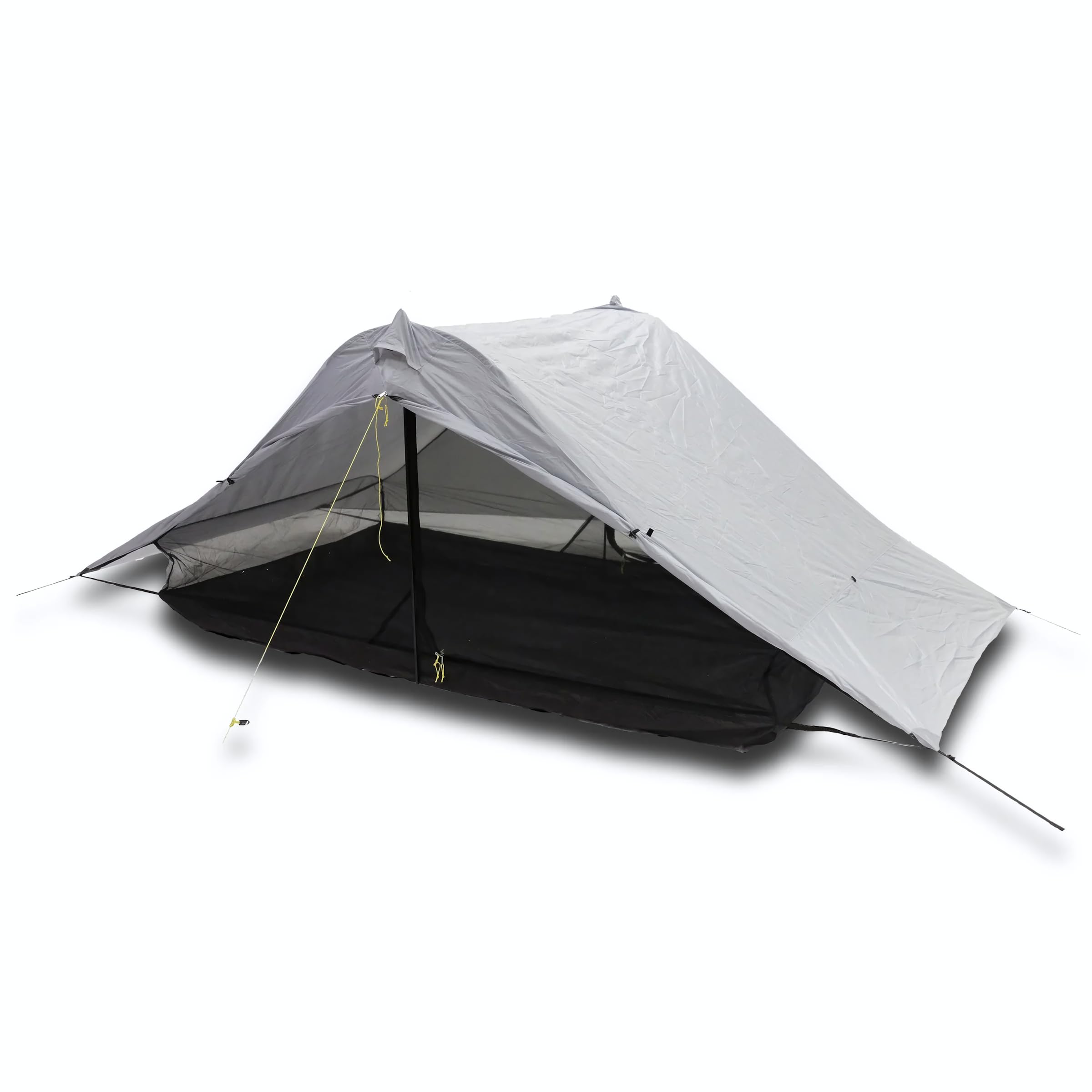
Two hikers who are tired of crawling over each other get a palace instead.
The living space is the headline: the makers list 45 square feet with a 45-inch peak height, and it is billed as more head and shoulder room than any lightweight two-person tent in this group. The floor width measures 54 inches, the widest here, so two people can stretch out without shoulder-bumping. Two large doors and a private vestibule for each side mean you enter and exit on your own side and store your packs under cover.
The construction leans practical. Walls and floor are 190T polyester, chosen for UV resistance and puncture protection, so it favors hikers who camp often and want fabric that lasts. The hybrid double-wall design keeps condensation down, and the mesh canopy moves air through for humid country and three-season trips. Setup needs two trekking poles or SMD 45-inch poles — that is the one requirement to plan for, because the shelter will not stand without them.
The honest trade-off is fabric weight. That tough 190T polyester is not the featheriest material on this list, so a weight-obsessed solo hiker could find lighter options. For a couple who wants room to sit up, spread out, and store gear, the space is worth the fabric. Owner feedback puts quality and setup in the strong column, and the 4.0+ star score reflects a satisfied early group.
Why couples like it: 45 square feet, a 54-inch floor width and two separate doors turn a cramped night into a roomy one.
What to know: it needs two trekking poles or SMD 45-inch poles to stand, and the 190T polyester trades some ultralight feel for UV resistance and puncture protection.
Built for: two hikers who pri-oritize room and durable fabric over the lowest possible packed weight.
Skip if: you hike solo and want to shave every ounce — a one-person shelter suits that goal better.
7. Six Moon Designs Lunar Solo

A 26-ounce solo shelter built for tall hikers and soggy nights alike.
Start with the weight, because 26 oz is the whole pitch: this is a solo thru-hiker shelter that uses your hiking pole as its frame so you save the weight of dedicated tent poles. The fabric is 20D silicone polyester, engineered not to sag or stretch when wet, which means the canopy stays drum-tight through rain and overnight dew. A floppy, water-pooling roof is the classic single-wall failure, and this one is built to avoid it.
For taller hikers, the numbers are the reason to look. The floor spans 26 square feet and runs 90 inches long, which fits tall bodies and extra gear, and the 48-inch peak height gives you real headroom. A 6-inch deep bathtub floor blocks groundwater from seeping in at the edges, while the full mesh perimeter moves air through to cut condensation for solo sleepers. The makers list a setup time under 2 minutes with 6 stakes, and the hexagonal shape with steep slopes sheds wind and heavy rain. Packed size stays small enough for bikepacking.
This is the premium solo option in this group, so it sits at the top end of the price range and you are paying for the silpoly fabric, the generous floor length and the fast pitch. The 3.5+ star score comes from a moderate review pool. For a hiker over six feet who has been squeezed by shorter shelters, the 90-inch floor is the argument, and a no-sag roof in rain is the reason to spend here.
The case for the Lunar Solo
- 26 oz and pitched from your own hiking pole, so no extra pole weight.
- 20D silicone polyester resists sag and stretch when wet.
- 90-inch floor length and 48-inch peak give tall hikers real space.
The honest limits
- It is a single-wall shelter, so condensation management leans on the mesh perimeter.
- Premium pricing puts it at the top end of this list.
Ideal for: tall solo thru-hikers who want a long floor, a no-sag roof and a fast pitch in one shelter.
Consider twice if: your budget is tight or you rarely camp in rain — a lighter, cheaper solo option covers that ground.
Know the Specs
Hydrostatic Head (Waterproof Index)
The waterproof index, measured in millimeters, tells you how much water pressure a fabric resists before moisture pushes through. A higher number means better rain protection, and floors usually carry a higher rating than flies because they sit in groundwater. A 5000mm fly handles steady rain, and a floor rated higher keeps water out from below. Seam sealing matters just as much, because leaks start where fabric is stitched.
Single Wall vs. Double Wall
A single-wall shelter uses one layer of fabric between you and the weather. It saves weight, but on cold, humid nights your breath condenses on that inside surface. A double-wall design adds an inner mesh body beneath a separate fly, so moisture forms on the outer layer and stays off your bag. If you camp in wet or humid conditions, the extra layer earns its weight.
Floor Area and Peak Height
Floor area in square feet tells you how much sleeping and gear space you get, and floor width decides whether two pads fit side by side. Peak height matters for sitting up, but check where that peak sits — on some shelters it is center-only, so sloped walls cut headroom at the edges. Long floor lengths suit tall sleepers, while compact floor plans fit small tent pads.
Pole Height and Pitching
Every shelter here stands on trekking poles, but the required pole length varies. Some designs ask for poles about 47 inches tall, so confirm your own poles adjust to that range before buying. Non-freestanding shelters will not stand without poles and stakes, so carry both. Setup times run from about 2 minutes with 6 stakes to 5-10 minutes for a hooked inner-and-outer design.
Common Questions
Do I need special trekking poles for a trekking pole tent?
Is a single-wall or double-wall trekking pole tent better for wet weather?
What does the waterproof rating actually mean?
Can a two-person trekking pole tent really fit two people?
How long does a trekking pole tent take to pitch?
Why do some trekking pole tents weigh more than others?
Will a trekking pole tent hold up in wind and snow?
Are trekking poles included with these tents?
Does a short floor work for a tall hiker?
The Bottom Line
For most solo backpackers, the trekking pole tent to beat is the Night Cat Ultralight 1 Person — at 2 lbs it turns the poles you already carry into a full shelter, and it has the deepest owner backing in this group at 4.0+ stars from 300+ owners. If you hike as a pair and want double-wall protection at 2.73 lbs, grab the Altair Two. And for storm-prone trips, the 5000mm fly on the 3F UL Gear Lanshan 2 is the rain armor to reach for. Tall solo hikers chasing a no-sag roof and a 90-inch floor will find the Lunar Solo worth the premium step.
How we choose
We do not accept paid placement. Every pick is matched to a real buyer and a real use-case; we do not hands-on test units.
Sources
Specifications: manufacturer listings and product documentation. Review insights: verified customer reviews, as of November 2026. Pricing: not shown on this page (it changes often); check the current price via the retailer link.
As an Amazon Associate, Tactical Gear Guy earns from qualifying purchases. This does not affect which products we feature.