Specs are compiled from manufacturer listings and verified buyer reviews and can change over time — please confirm the key details on the product page before buying.
Wooden clogs are a fit decision, not a style decision. The wood base does not bend, so your heel lifts with every step and the leather does the gripping. That rigid base is why first-time buyers who order their sneaker size end up with clogs that rub at the instep or slide off at the heel. Nail the footbed measurement and the one-to-two-week leather break-in, and a limewood or alder base will hold up for years. Miss either one and the clogs stay in the closet. This guide covers six pairs and explains how to match a clog’s footbed chart and leather break-in to your own feet.
This guide is built by comparing the manufacturers’ published specifications and the patterns across verified customer reviews, so you get each pick’s real strengths and trade-offs instead of marketing spin.
Wooden clogs ask something unusual of you: a break-in period, a heel that lifts, and leather that needs to soften before it grips. Below you’ll find what separates European limewood from Swedish alder, what an adjustable sling-back actually changes, and which pairs reward patience. Here is the honest read on the best traditional wooden clogs for real feet and real wear.
Top Picks

How To Choose The Best Traditional Wooden Clogs
The single most common mistake is buying your normal sneaker size and expecting the clog to behave like a sneaker. It won’t. A wooden clog is a rigid platform, and the fit has to come from measuring your foot against the maker’s footbed chart, not from habit.
Measure both feet, then trust the chart
Sizing charts on wooden clogs describe the actual footbed length, not a generic shoe size. Stand with your heels against a wall on a sheet of paper and trace to the tip of your longest toe. Measure both feet — most people are slightly uneven — and use the longer one. Measuring both feet and sizing to the longer one is what prevents the fit-related returns that dominate this category.
Wood type changes how the base feels
European limewood is the base on the Verka pairs, and it’s chosen because it is light, durable, and comfortable underfoot. Swedish alder wood, used on the MIA and Sandgrens pairs, is a denser option that gives the sole a stable, planted feel. Neither is “better” — limewood keeps the shoe lighter, alder feels more solid in the heel.
Expect a break-in window of one to two weeks
The leather upper is what eventually hugs your foot, and it needs time. Wear new clogs a few hours a day at home for the first week or two. Skip the shortcuts: liquid, a shoe stretcher, or a hairdryer can ruin the leather and the wood for a quick fix that doesn’t last. If it feels tight during break-in, wear a sock.
Open mule or closed toe with a strap
An open-back mule is the classic Swedish shape, and the heel lift is part of the walk. If you want more security — driving, stairs, uneven pavement — an adjustable sling-back strap that can be worn two ways gives you a firmer hold without changing the wood base underneath.
Care is a cloth, not a kit
A damp microfiber cloth handles the leather. The wood base wipes clean with the same cloth, and a plain eraser lifts scuffs off the base. A damp cloth and an eraser are the entire routine on the Verka and Sandgrens pairs, and the sealed wood and leather are why they last seasons rather than months.
Side-by-Side Comparison
| Model | Best For | Base Wood | Upper | Strap / Shape | Amazon |
|---|---|---|---|---|---|
| VERKA LEDIG★ Best Overall | Everyday wear with a classic Swedish look | European limewood | Leather (patent or matte) | Open mule | Amazon |
| MIA AlmaBest for Dressing Up | Dressing up with a low heel | Swedish alder wood | Italian leather | Adjustable sling-back | Amazon |
| VERKA BLOMMA | Style-first buyers who want compliments | European limewood | Leather (patent or matte) | Open mule | Amazon |
| Sandgrens Tokyo | Long days on a low heel | Swedish wood | Vegetable-tanned or Nubuck leather | Low heel mule | Amazon |
| Sandgrens Athens | Arch support in a low-heel mule | Swedish wood | Vegetable-tanned or Nubuck leather | Low heel mule | Amazon |
Detailed Reviews
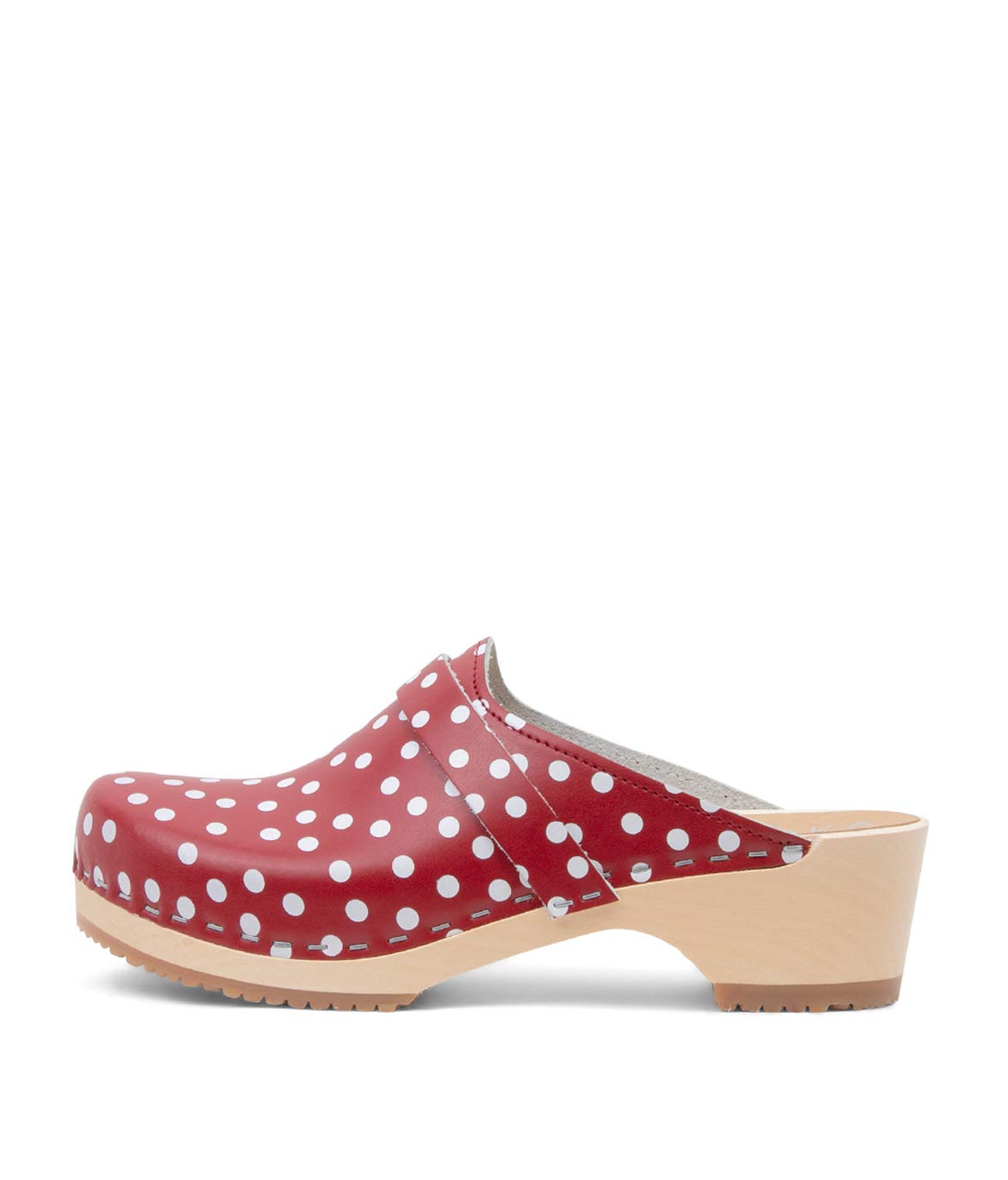
1. VERKA Women’s Wooden Clogs from Sweden – LEDIG
Our pick — 4.0+★ from 350+ verified ratings; the strongest balance of quality and price.
The pair that gets the everyday Swedish clog right, from the first walk to the thousandth.
The LEDIG is the one to start with if you have never worn a wooden clog and want the classic shape without a gamble. It sits on a European limewood base — a light, durable hardwood that keeps the clog from feeling like a plank underfoot — with a thin rubber sole underneath so you get a little grip on tile and pavement. Two leather finishes are offered: a glossy patent and a matte traditional, which is the one most people will want for everyday.
What wins people over is comfort, and it is the thing owners bring up most often — the shoe lands soft and wearable from the start rather than punishing. Quality ranks right behind it, and the shape draws compliments, which matters if you plan to wear these out rather than only in the garden. The leather is what eventually molds to your foot, so give it the week or two Verka recommends: a few hours a day at home, then longer walks.
The catch is sizing, and it is the one place first-time buyers trip. Verka’s chart measures the actual footbed, and feet run uneven, so trace both feet standing up and use the longer measurement. Skip the shoe stretcher and the hairdryer entirely — Verka is explicit that both can ruin the clog for a short-term fix. As owners put it, once the leather softens the shoe feels made for you: the crowd favorite here holds 4.0+ stars across 300+ owners, and the fit question is the only thing standing between most people and a very good clog.
What Lands Immediately
- European limewood base keeps the clog light and durable instead of clunky
- Comfort is the most-praised trait — wearable from the first day, per owner consensus
- Two leather finishes: glossy patent or a matte traditional for everyday
- Thin rubber sole under the wood adds grip on smooth floors
Where It Asks Patience
- Fit runs snug for some and off-size for others — the footbed chart is essential
- Needs a one-to-two-week break-in; no shortcuts with heat or stretchers
Reach for this if: you want the archetypal Swedish clog in a light limewood base and you’re willing to measure your feet properly.
Look elsewhere if: you need a strap for security on stairs or in the car — this is an open mule with a heel that lifts.
2. MIA Shoes Alma Womens Leather Clogs with Heels
A closed-toe clog with a strap you can wear two ways, built to go from errands to dinner.
The Alma is the pick for anyone who wants wooden clogs that read as a shoe rather than a garden slip-on. The upper is Italian leather over a Swedish alder wood sole, and the modest wooden platform gives you the ’70s silhouette without a wobbly heel. The shape is closed at the toe, so your foot stays covered, and the contoured insole is the part that decides whether a day in them feels fine or not.
The detail that changes daily use is the adjustable sling-back strap. It can be worn two ways, which means you can tighten it down for stairs and driving or flip it for a looser slip-on feel. That is a real difference from the open Verka mules above, which rely entirely on the leather grip and your own gait. If you have ever had a clog slide off on a gravel path, you know why that strap matters.
Appearance is what carries this pair — compliments come often, and the bright red finish is a particular favorite. The leather and the alder base together are the reason it reads as a dressed-up clog. One note on size: buyers describe the fit as not perfectly consistent, so order against MIA’s own chart rather than assuming your usual. It is a shoe for a night out or a day of errands in something nicer than a sneaker.
The honest summary: a leather-lined, closed-toe clog with a two-way strap that converts it from secure to slip-on — the most flexible wear in this group.
Fair warning: sizing feedback is not unanimous, so treat the size chart as a starting point and expect a possible exchange.
Go with the Alma if: you want a wooden clog that looks intentional at a dinner or an errand run, and you value the security of a strap.
skip it if: you want a pure open-heel Swedish mule with nothing on the back — the strap is the point here.
3. VERKA Women’s Wooden Clogs from Sweden – BLOMMA
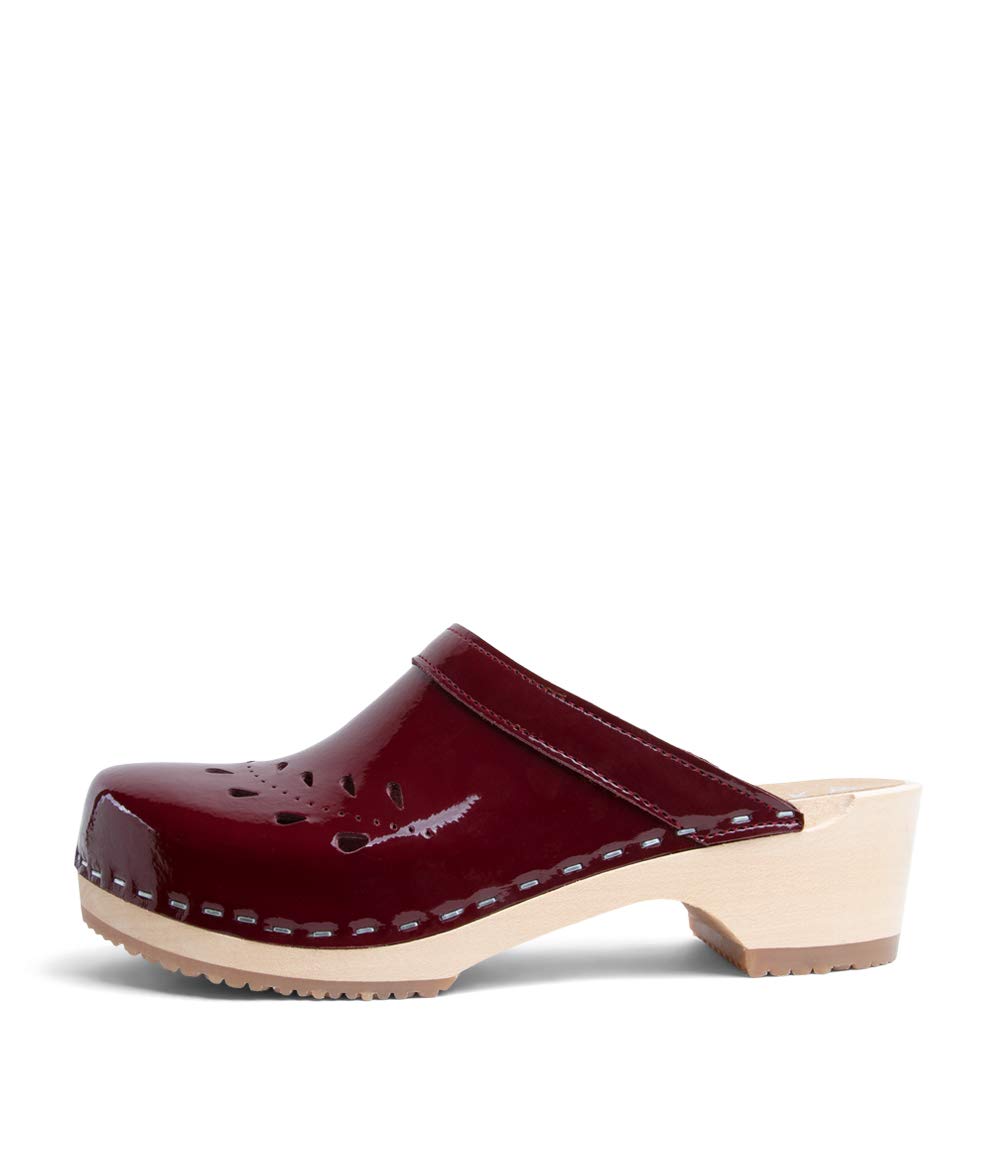
The Verka shape with the most personality, for the buyer who wants their clogs noticed.
Same limewood base, same leather construction, same break-in rules as the LEDIG — the BLOMMA differs in its styling, and that styling is the whole reason to choose it. The pairing of a light limewood footbed with a leather upper is what lets Verka offer the matte traditional finish alongside the gloss patent, so you can lean understated or shiny depending on how bold you want to go.
Compliments arrive constantly with this pair, and style is the lead reason buyers pick it up in the first place. What surprises people is that the shoe does not clamp across the top of the foot — there is no pressure there, which is a specific relief if you have wide feet or a high instep. That is a real difference from clogs that grip hard at the instep to stay on, and it makes the BLOMMA easier to wear for a first wooden clog.
The trade-off is the same one every limewood clog has: the wood does not flex, so the heel lifts and the leather has to be broken in properly over a week or two. The BLOMMA’s fit runs a touch tight for some buyers, so measure first and do not expect the leather to stretch into a larger size — Verka warns clearly that it won’t. Treat it gently for the first week and the shoe rewards you for years.
Why people reach for it: the style and the open instep. There is no pressure across the top of the foot, and the compliments follow the shoe wherever it goes.
The honest catch: limewood does not flex and the fit runs snug for some — measure, do not assume, and let the leather break in on schedule.
Pick the BLOMMA if: styling is your number one reason to buy wooden clogs and you want a shape that sits easy across a high instep.
Consider the LEDIG instead if: you want the same base in the more understated everyday cut.
4. Sandgrens Swedish Wood Clogs Tokyo

The pair owners reach for on long days, built on a low heel that stays steady.
If you are shopping wooden clogs to actually wear them all day, the Tokyo is the strongest case in this group. Craftsmanship is what people talk about most with this pair, and that is the right lens for it — the wood base is handmade, the leather is either vegetable-tanned full grain or Nubuck top grain, and both are chosen to take a real break-in rather than flake after a season. The low heel mule shape keeps you close to the ground, which makes a difference when you are on your feet for hours.
Comfort sits just behind craftsmanship in what owners value, and the wooden footbed is the reason. It holds its shape and supports the arch, so your foot is not sliding around looking for a soft spot. Sandgrens is clear about the feel: unlike most shoes the wood does not bend, so your heel lifts with each step and the rock of the base takes getting used to. Starting with short wears is the sane way in.
The one honest friction point is fit. Sandgrens sizes vary between styles, so the Tokyo’s chart is not interchangeable with the Athens or the Maya — check the specific size guide for this design. The leather does stretch a little as it conforms to your foot, but Sandgrens is direct that you should not downsize and hope it grows into you. A well-made clog that asks for a measured foot and a little patience in exchange.
Where It Leads
- Handmade Swedish wood base with a genuinely stable low-heel mule
- Vegetable-tanned or Nubuck leather chosen to break in, not to flake
- Wooden footbed holds its shape and gives arch support
- Craftsmanship is the most-praised trait — the pair earns its keep
Where Fit Demands Care
- Sizing runs different by style — use the Tokyo’s own chart, not a sister shoe’s
- Heel lift and wood stiffness take real getting used to for a first-time wearer
Best for all-day wearers: long hours on your feet, a low heel, and a handmade base that does not wobble.
Know before you order: the leather stretches a little but you should not size down hoping it will — fit from the chart.
5. Sandgrens Swedish Wood Clogs Athens
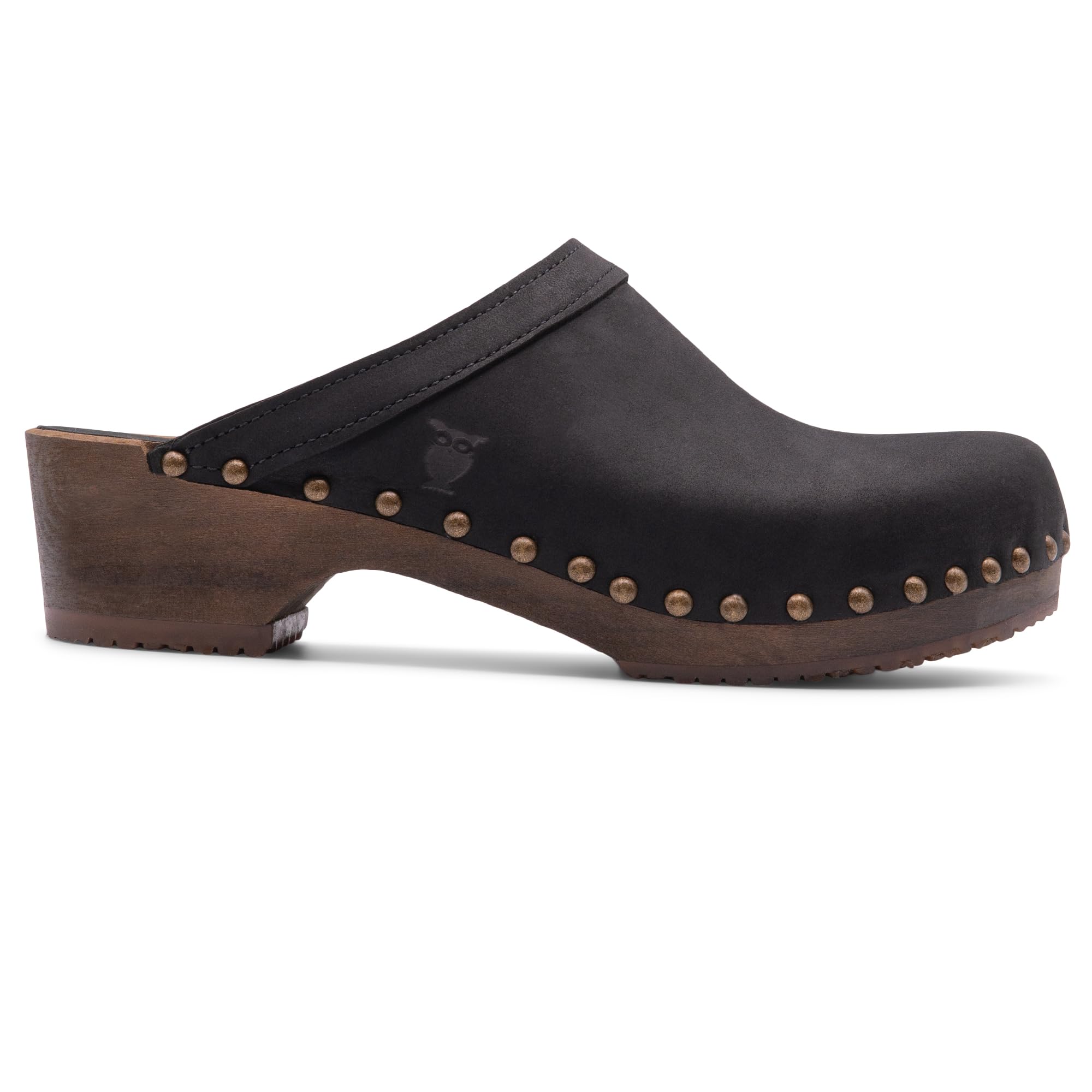
Same Sandgrens build as the Tokyo, with a decorative button trim around the sole.
The Athens and the Tokyo are siblings — same low heel mule shape, same handmade Swedish wood base, same choice of vegetable-tanned full grain or Nubuck top grain leather. Where they part ways is the trim: the Athens carries an attractive button detail around the sole, which is the visible difference a stylist will notice on foot. If you want the Sandgrens build with a bit more personality than a clean band, this is the one.
Arch support is where this pair has its own following. Buyers describe the wooden footbed as giving real support underfoot — one owner’s comment speaks to leg comfort, which makes sense for a stable wood base that holds your arch rather than letting it collapse. That is a practical reason wooden clogs have stuck around for generations: the base does the work a soft insole cannot, hour after hour.
Fit is mixed, and ownership is honest about it. Some find the Athens perfectly true and worth the money; others find it tight from the start and worth returning over. That spread is normal for a leather clog that has not softened yet, but it does mean you should measure rather than guess. The button trim is decorative and rated fine; the leather is the piece doing the actual fit work.
What stands out: the arch support and the button trim. The wooden footbed is described as giving real support, and the decorative band gives the low-heel mule a little more character than its siblings.
The one honest tension: fit feedback splits — some owners call it true, others find it tight from the start. Measure first, and give the leather its break-in window.
Choose the Athens if: arch support under a wooden footbed is your priority and you like a decorative button trim around the sole.
Look at the Tokyo instead if: you want the same Sandgrens build with a clean, unembellished band.
Know the Specs
Wood Base: Limewood vs Alder
European limewood is light and durable and is the base on the Verka pairs, which is why those clogs feel less heavy underfoot. Swedish alder wood is a denser base, used on the MIA and Sandgrens pairs, and gives a more planted feel in the heel. Neither wood flexes — that is the point of a wooden clog — so the walking motion comes from the heel lifting, not from the sole bending.
Leather Upper and the Break-In Window
The leather is what eventually grips your foot, and every pair here needs a break-in. The Verka guide puts that at a week or two, worn a few hours a day at home. The Sandgrens materials — vegetable-tanned full grain and Nubuck top grain — also soften with wear but keep their shape. Massaging the leather between wears helps it along, and the clogs should never be forced with heat or liquid.
Sizing and the Footbed Chart
Wooden clog sizing charts describe the actual footbed length, not a generic shoe size. That is why two brands in this list read as “not true to size” in the same way: your normal sneaker size tells you nothing here. Trace both feet standing up, take the longer measurement, and use the chart for that specific style — Sandgrens states its sizes vary between styles, so a Tokyo chart is not the same as a Maya chart.
Mule Shape and Strap Choice
An open-back mule relies on the leather grip and your gait, and the heel lift is designed into the walk. A closed-toe clog with an adjustable sling-back strap, like the MIA Alma, gives more security and can be worn two ways. Strap or no strap is a real daily-use decision: if you take the stairs or drive in your clogs, a strap is worth considering even though the mule is the purer Swedish shape.
Common Questions
Why does my heel slip out of a wooden clog when I walk?
Do traditional wooden clogs run true to size?
How long does it take to break in wooden clogs?
Will a shoe stretcher or hairdryer make wooden clogs fit faster?
What is the difference between limewood and Swedish alder clogs?
Do wooden clogs need an open heel or a strap?
How do I clean a leather and wood clog?
Will the leather on wooden clogs stretch over time?
Can I wear wooden clogs all day at work?
Do wooden clogs have arch support?
The Bottom Line
The honest answer to the best traditional wooden clogs question is the VERKA LEDIG — a light limewood base, leather that breaks in like it should, and the most comfortable first walk in this group. If you want more security for stairs or driving, the MIA Alma gives you a closed toe and an adjustable sling-back strap. And for all-day wear on a handmade base with real arch support, the Sandgrens Tokyo is the pair worth the patience.
Order from the maker’s footbed chart with both feet measured, expect a week or two of leather break-in, and skip the stretchers and hairdryers. Measure the footbed, allow the break-in, and skip the heat and stretchers.
How we choose
We do not accept paid placement. Every pick is matched to a real buyer and a real use-case; we do not hands-on test units.
Sources
Specifications: manufacturer listings and product documentation. Review insights: verified customer reviews, as of July 2026. Pricing: not shown on this page (it changes often); check the current price via the retailer link.
As an Amazon Associate, Tactical Gear Guy earns from qualifying purchases. This does not affect which products we feature.