Specs are compiled from manufacturer listings and verified buyer reviews and can change over time — please confirm the key details on the product page before buying.
Losing a wallet costs you an hour of re-tracing every step while your cards sit somewhere in a parking lot. A tracker card solves that, but only if it is thin enough that you actually leave it in the card slot every single day. That’s the whole test: a card thick enough to feel in your pocket is a card you leave at home. This guide covers the nine wallet tracker cards worth your card slot, sorted by what they actually do well.
This guide is built by comparing the manufacturers’ published specifications and the patterns across verified customer reviews, so you get each pick’s real strengths and trade-offs instead of marketing spin.
Thickness, network choice, and battery style decide nearly everything here, so each pick below is judged on those three first. Here is the honest shortlist of the tracker card for wallet market, ranked by what actually holds up in daily carry.
Top Picks
How To Choose The Best Tracker Card for Wallet
A tracker card only works if it’s thin enough to stay in the card slot unnoticed. That single idea should drive every decision you make here, because a card that adds bulk gets pulled out and left on a desk within a week.
Thickness Is the First Filter, Not the Last
Anything around 0.06 to 0.07 inches behaves like a normal credit card in a card slot. Once a card creeps past about 0.1 inches, it starts to bow the leather and press against your other cards. A tracker at 0.06 inches is something you stop noticing; a tracker at 0.1 inches is something you feel every time you sit down.
Pick Your Network Before You Pick a Card
Apple Find My and Google Find Hub are two separate crowdsourcing networks. An iPhone user needs Find My support; an Android user needs Find Hub. A few cards run either network but only one at a time, so you pick a side at setup and stay there.
Rechargeable or Sealed Battery
A sealed battery means you never think about charging, but the card has a fixed lifespan before it becomes e-waste. A rechargeable card asks for a Qi wireless top-up every few months and keeps going. Both are legitimate — just know which maintenance habit you are signing up for.
What the IP Rating Actually Buys You
IP68 means the card survives dust and full water immersion. IP67 means it survives immersion in up to 1 m of fresh water for up to 30 minutes. IP66 covers strong water jets but not immersion. If your wallet lives in a jacket pocket through rain, all three are fine; IP68 gives the most margin.
Side-by-Side Comparison
| Model | Best For | Battery Style | Alert Volume | Water Rating | Amazon |
|---|---|---|---|---|---|
| KIUP Wallet Tracker Card★ Best Overall | Set-and-forget carry | Up to 10 years, sealed | 120 dB | IP68 | Amazon |
| QUICKHORSE MFi Wallet Tracker CardBest Value | Budget iPhone tracking | 120 days, rechargeable | 80 dB | IP68 | Amazon |
| UGREEN FineTrack Slim Duo2Most Versatile | Switching ecosystems | Rechargeable, lithium-ion included | 110 dB | — | Amazon |
| Life360 Tile Slim | Family tracking app users | 3 years, non-serviceable | 104 dB | — | Amazon |
| Nomad Tracking Card Carbide | Slim profile and Qi charging | 5 months, rechargeable | — | IPX7 | Amazon |
| Ridge Tracker Card | Long-range ringing | 5 months, rechargeable | 95 dB | IP68 | Amazon |
| Ekster Tracker Card | Longest rechargeable runtime | 10 months, rechargeable | 95 dB | IP68 | Amazon |
| Pebblebee Card 5 | Lightweight dual-network | 18 months, rechargeable | — | IP66 | Amazon |
| Chipolo CARD | Loud ringer and warranty | 12 months, rechargeable | 110 dB | IP67 | Amazon |
Detailed Reviews
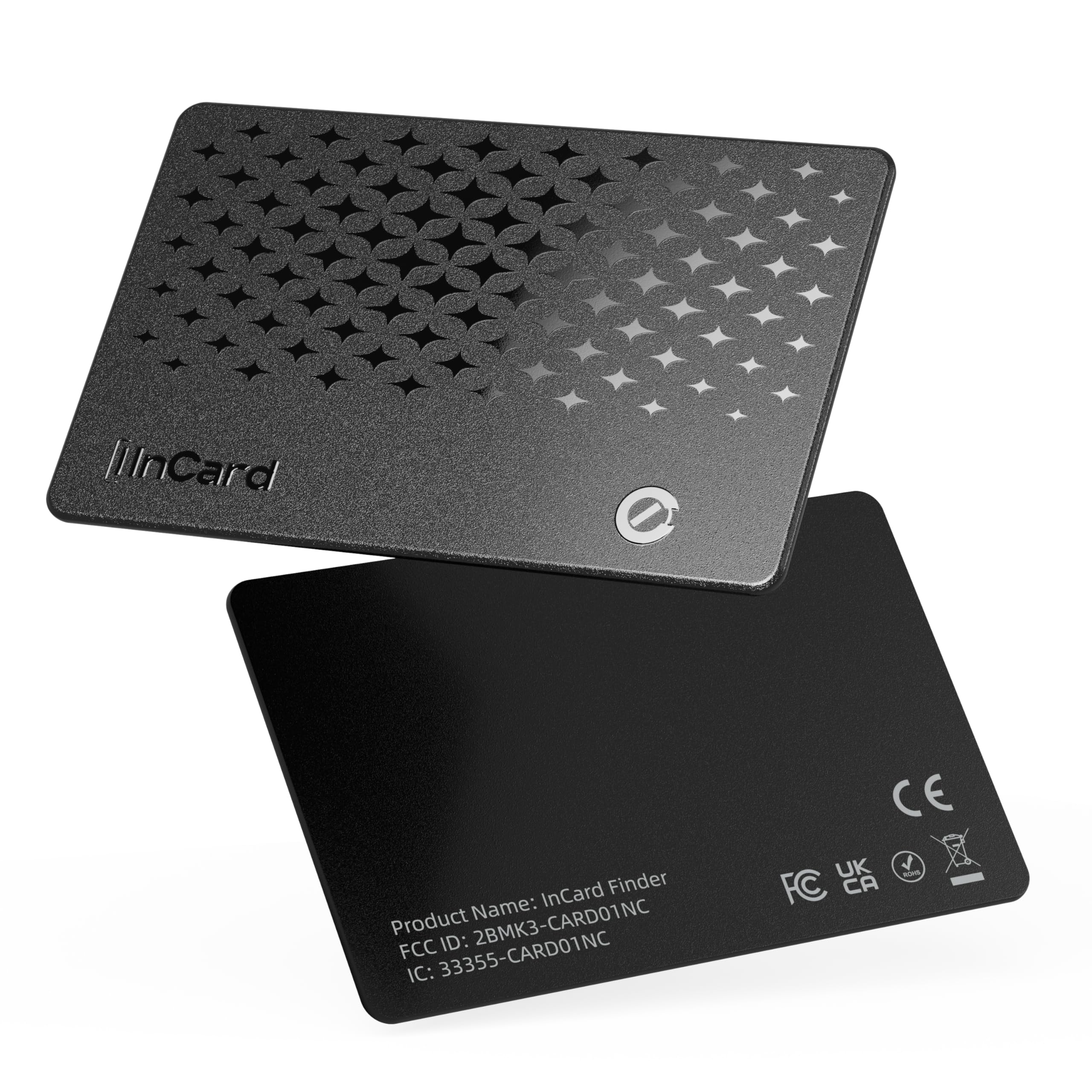
1. KIUP Wallet Tracker Card (10-Year Battery)
Our pick — 4.5+★ from 500+ verified ratings; the strongest balance of quality and price.
The one you charge never and forget entirely.
A slim card tracker you don’t have to think about is the whole game, and this is the crowd favorite at 4.5+ stars across 500+ owners. Its headline number is the one no rival here comes close to: up to 10 years of battery life from a sealed cell. That means you never fish the card out for a wireless charger, never buy a replacement, and never notice it sitting in your card slot. The second number that matters is thickness — 0.06 inches, thin enough to sit flush beside your debit card without bowing the wallet leather.
What wins people over is how little effort setup takes. It pairs through the native app already on your phone — Apple Find My on an iPhone, Google Find Hub on Android — so there is nothing new to download. The card also gives you 120 dB of alarm when you ring it, loud enough to hear through couch cushions and under a car seat. At 120 dB it leads the MFi-certified QUICKHORSE card, which rings at 80 dB.
The catch is honest and specific: this is not a GPS unit, and the maker states it plainly — it does not work with GPS or Huawei devices. So the tracking is Bluetooth proximity plus the crowdsourced network, not live satellite mapping. If you need a card that reports its own coordinates, this isn’t the one. If you mostly need “which room is my wallet in,” the loud ringer and the ten-year cell handle that without fuss. The internal battery is listed at 220 mAh and the housing is ABS plastic, so treat the card as durable rather than armored.
Why it earns the top slot
- Up to 10 years of sealed battery life means zero charging routine
- 0.06-inch body sits like a normal card in any slot
- Works with either Apple Find My or Google Find Hub
- 120 dB ringer is one of the loudest in this group
Where it stops short
- No GPS and no support for Huawei devices, per the manufacturer
- Sealed battery means the card retires when the cell finally dies
- Uses the phone’s native app only — no dedicated app for extra features
Reach for this: if you want to slot a tracker in once and never think about charging it again.
Look elsewhere: if you specifically need GPS positioning or you carry a Huawei phone.
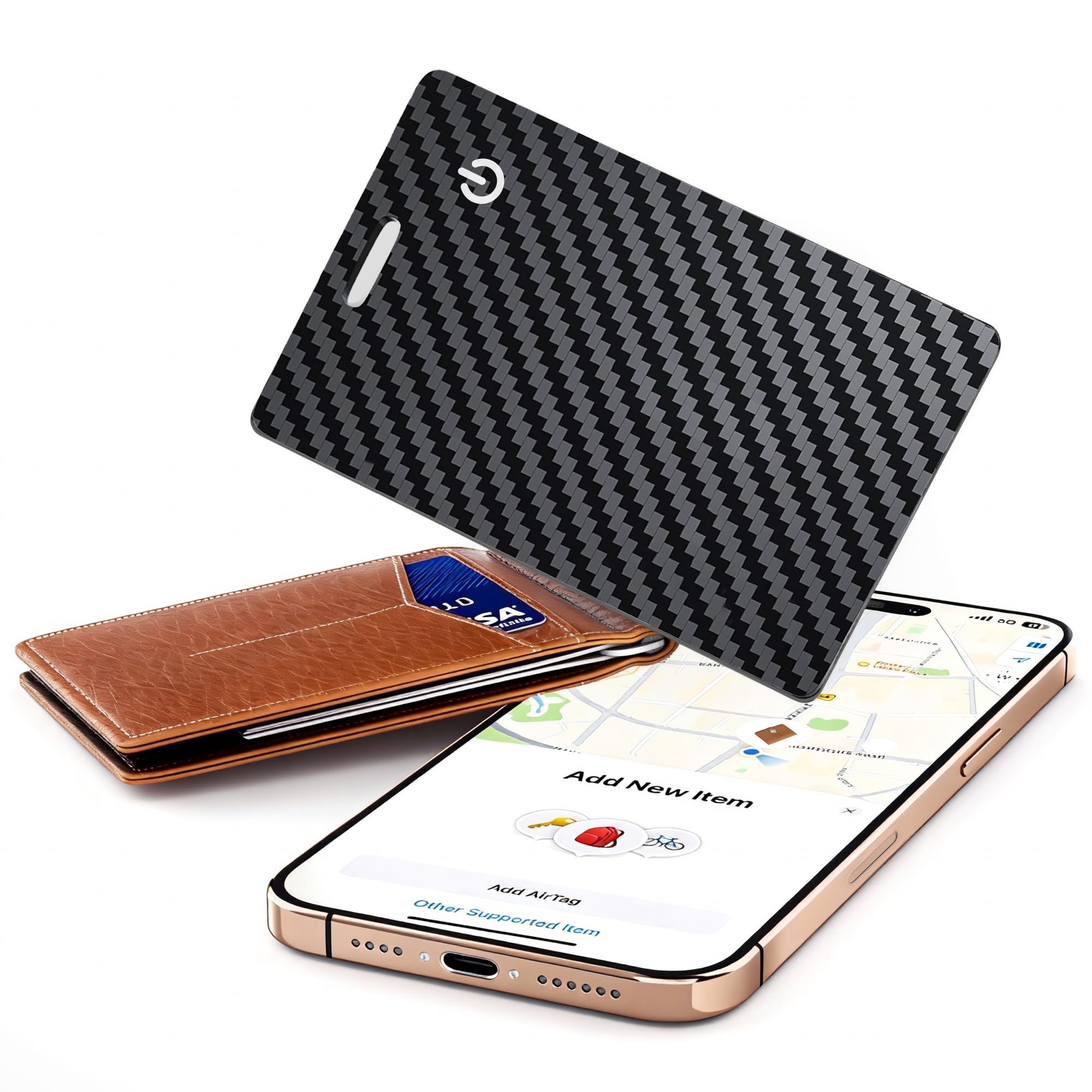
2. QUICKHORSE MFi Wallet Tracker Card
An iPhone-only card that matches the price of the cheap stuff.
If you carry an iPhone and want to spend the least while still getting a real Find My tracker, this is the one to check first. It is Apple MFi certified — meaning Apple has verified it meets its accessory standards — and it pairs straight into the Find My app with no subscription.
Rechargeable battery is the trade here. You get up to 120 days per charge, and topping it up is just dropping it on any standard Qi wireless charger — the same pad you already use for your phone. Apple’s Find My app also fires a left-behind notification with the last known location if you walk off without your wallet. Multi-person sharing arrived in iOS 17, letting up to 5 iPhone devices see the card on a map, and one iPhone can hold up to 32 smart tags.
The honest wrinkle is charging consistency. Most cards arrive with a charge and work immediately, but the charging experience itself splits opinion — some find it reliable, others don’t. It’s not a reason to rule the card out; it’s a reason to top it up on a schedule rather than when it dies. The alarm tops out at 80 dB, which is quieter than several cards here — audible in a quiet room, less commanding in a noisy one. The 2-year manufacturer warranty is a genuine buffer at this price.
What the iPhone crowd gets: certified Find My integration, Qi charging, and a 1.7 mm body for budget-tier money.
The realistic limit: iOS 14.5 or later only — Android phones are out entirely, and the 80 dB ringer is on the soft side.
Suits you if: you want the most affordable Apple-certified card and don’t mind a wireless top-up every few months.
skip it if: you’re on Android or you need a ringer that cuts through background noise.
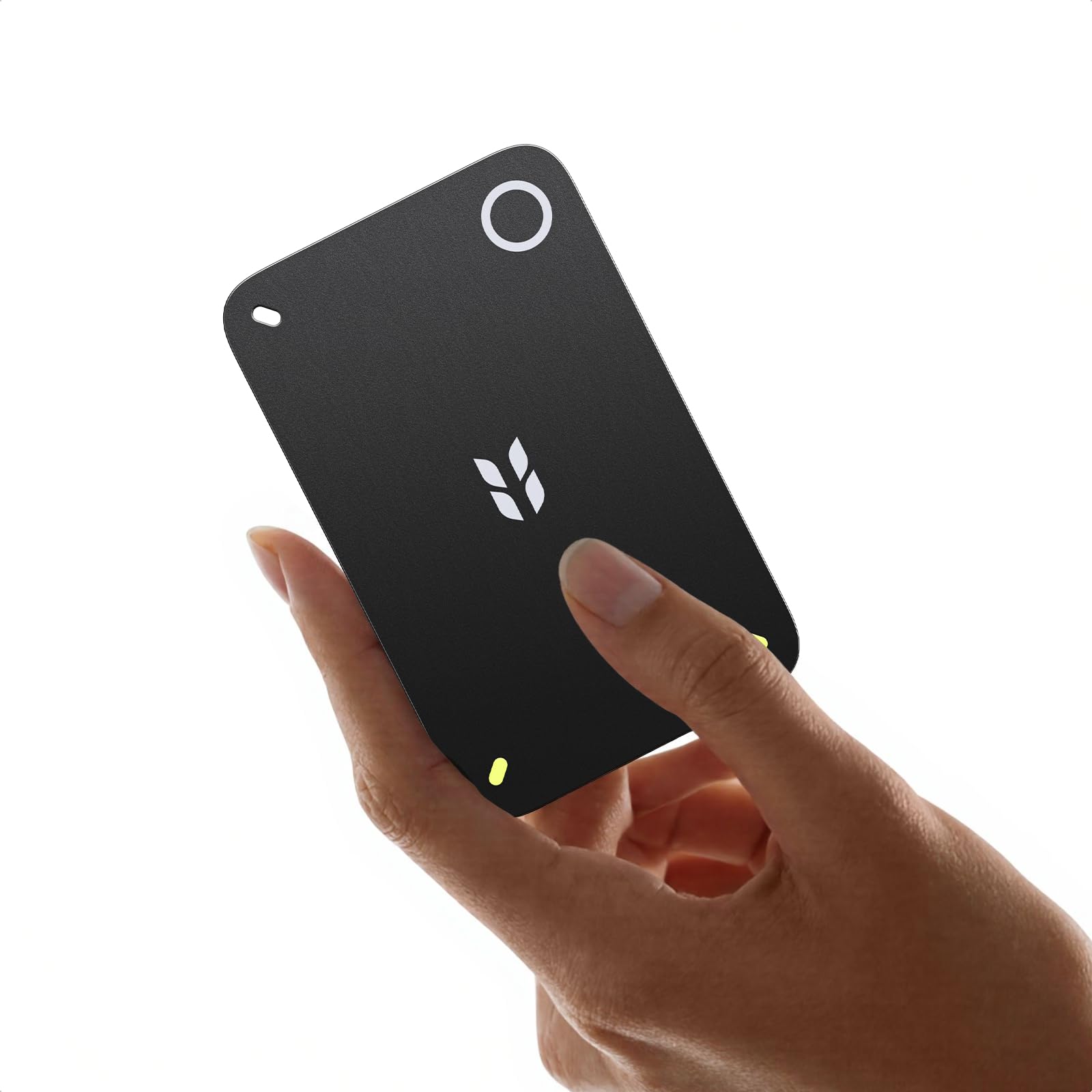
3. UGREEN FineTrack Slim Duo2
A tracker that switches sides between iPhone and Android.
Most cards lock you into one ecosystem on the box. This one lets you decide at pairing time — Apple Find My for an iPhone, Google Find Hub for Android — which is the feature to want if your household is split across both phones. It weighs 15 g, a touch lighter than the Life360 Tile Slim at 15.5 g, so the card disappears in the slot rather than weighing down a slim wallet.
Nearby location hunting is straightforward: within 10 m (about 33 ft) of Bluetooth range, the card rings at 110 dB to help you find it in a bag or a drawer. Past that range you fall back on the Find My or Find Hub network for the last known location. Lost Mode lets a stranger scan and reach you if the wallet turns up. Left-behind alerts tell you the moment the card drops off your phone’s connection.
Here’s the thing you have to plan around: the RFID-blocking tech is built into the card, and the manufacturer is upfront that you cannot tap or swipe a card sitting next to it. You’ll need to pull your credit card out of that slot before paying. If your wallet is a tap-to-pay setup, budget for that extra step or keep the tracker in a different pocket. Also worth knowing: the 110 dB figure is measured at 0 cm, and volume falls off as you move away from the card. One ecosystem per pairing, not both at once.
The standout: one card covers both networks plus RFID blocking, at 15 g and backed by a 24-month warranty.
The fine print: RFID blocking means you must remove your payment card before every tap or swipe.
Best for: mixed iPhone and Android households that also want RFID shielding in the wallet itself.
Think twice if: you pay by tapping the card still sat in your wallet.
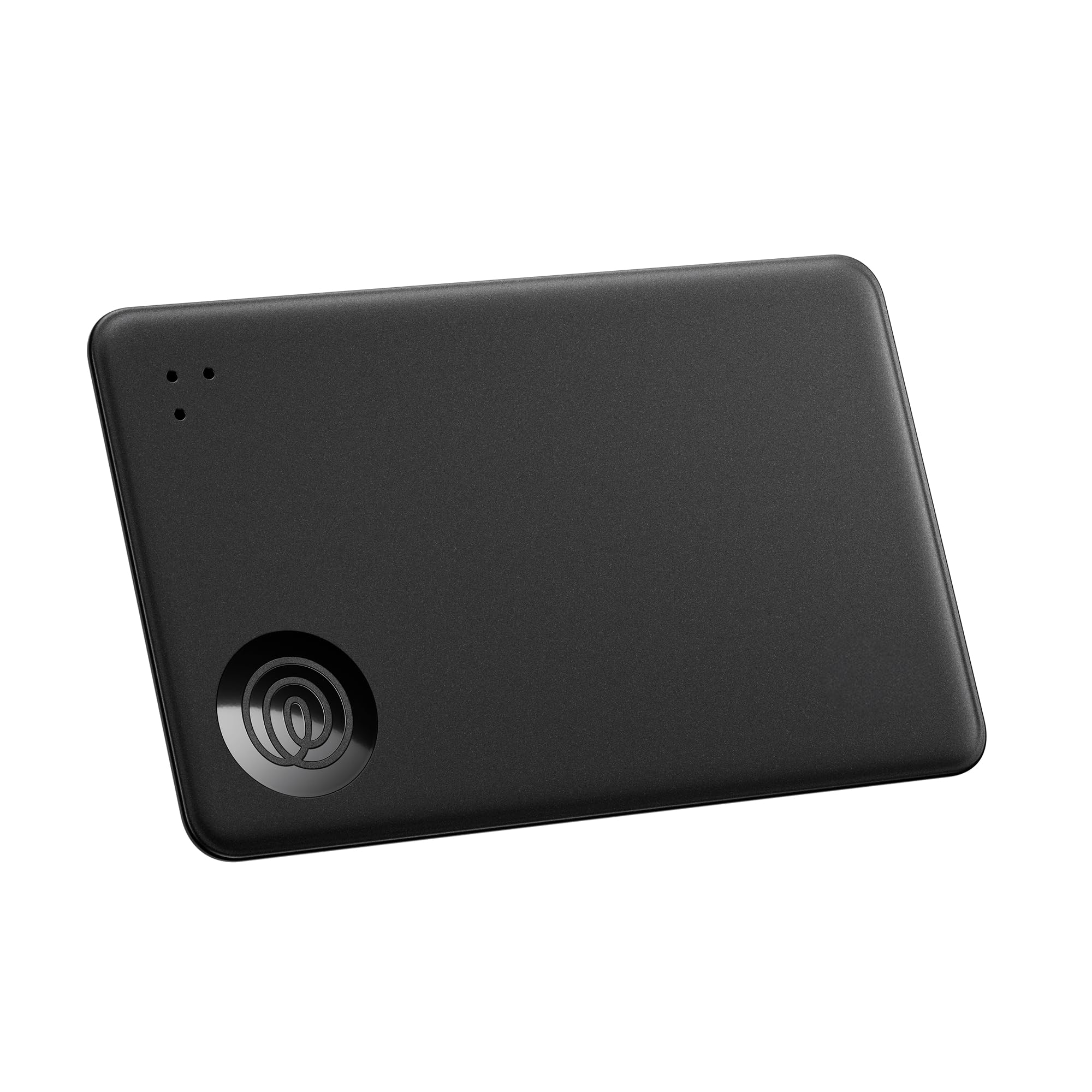
4. Life360 Tile Slim
The tracker that doubles as your family’s shared map.
This is a different job entirely: it’s a tracker for households already inside the Life360 app, where everyone and everything sits on one map. The Tile Slim runs on a sealed battery rated for 3 years, so you get the forget-it’s-there experience without ever charging. Against the KIUP card’s 10-year cell, that’s 3 years versus 10 — meaningfully shorter, though still years of not thinking about it.
The physical build is honest about its limits. At 0.1 inches thick it is a bit chunkier than the 0.06-inch KIUP card and about 0.1 inches against the 0.07-inch QUICKHORSE, so it presses a little more in a tight card slot. It still slides into wallets, passports, and luggage, and at 15.5 g it stays light. The 104 dB ringer is loud enough to ring through a room. There’s an SOS alert that quietly notifies your loved ones, and the phone-finder feature makes your phone ring even when it’s on silent.
The one honest caveat: the battery is non-serviceable, so when the 3-year cell flatlines, the card is done. And the app requires a Life360 account, so it is only worth it if your family is already in there. For everyone else, the pitch is weaker. For a family already using Life360, the wallet tracker shows up on the same family map as everyone’s phones.
Where it pulls ahead
- Plugs into the Life360 family map if you already use the app
- 3-year sealed battery with no charging routine
- SOS alert and silenced-phone finder add real safety value
What to weigh first
- 0.1 inches thick — chunkier than the slimmest cards here
- Non-serviceable battery means the card retires after 3 years
- Less useful if your family isn’t already on Life360
Go with it: if Life360 is already your family’s map and you want the tracker on the same screen.
Not the one: if you carry a slim wallet where 0.1 inches is a deal, or you want a replaceable battery.
5. Nomad Tracking Card Carbide

Barely a card at all — two credit cards’ worth of thin.
Nomad’s card is as thin as just 2 standard credit cards, and that is the whole reason to want it if you carry a slim wallet. It slips in without adding bulk, and it charges on any Qi or MagSafe wireless charger — including upright MagSafe stands, so it can top up on the same stand as your phone. On a per-charge basis it lasts up to 5 months, which compares to the KIUP card’s 10-year sealed cell as recharge-versus-non-recharge trade.
Find My is the only network here — this is an iOS-only tracker, so Android users are out. Within the Apple ecosystem it works the way you would expect: open Find My, see the card, hear it ring. The IPX7 rating means it survives water immersion, and the maker bills it as dust-proof too. Owners are positive on the slim design and on the rechargeable battery lasting weeks between charges, which is the right everyday rhythm.
Where it gets more mixed is the ringer volume and the accuracy — some find the alarm loud enough, others find it too quiet, so if you’re searching a sofa for a phone-sized object, set your expectations. The value picture is also a split: some owners think it’s a fair buy, others less so. It’s not a flawed card so much as one whose premium price and 5-month charge cycle ask you to show up with an iPhone and a MagSafe charger.
The case for it: genuinely credit-card thin, MagSafe charging, IPX7 water resistance.
What it asks of you: iPhone only, no sealed ten-year cell, and a ringer that splits opinion on volume.
Right for: iPhone users with a slim wallet and a MagSafe stand who want the thinnest card they can get.
Wrong for: Android phones, or anyone who wants a louder alarm for locating.
6. Ridge Tracker Card

Built for open-air ranging rather than echoing inside leather.
Ridge built this card for long-distance locating. It rings at up to 95 dB (about as loud as a busy street) and reaches up to 300 ft (90 m) in open areas — so you can hear it from another room. The maker is candid about the catch: range drops when the card sits inside a Ridge wallet, and for best performance it should live under your Cash Strap or Money Clip. So the big 300 ft number is the open-air version, not the parked-in-a-back-pocket version.
Inside, it is a 155 mAh rechargeable battery that tops up on any Qi or MagSafe charger and runs up to 5 months per charge. Apple Find My and Google Find Hub are both supported, so iPhone and Android owners can both use it, and MFi certification means Apple has verified the hardware. IP68 water resistance covers splashes and spills. Proximity alerts fire when the card walks out of range, Siri can locate it by voice, and location sharing works with up to 5 trusted contacts.
The friction point is cost-to-value. It works, and owners are positive about the functionality and dual-network support, but a fair share find it pricey for what it does. That’s a fair read — this is a mid-range card at a premium-leaning price, best justified if you’re already in the Ridge wallet family or you genuinely need the open-air range. If you’re just chasing “what did I do with my wallet” around the house, a cheaper card with a loud ringer does that job.
Why it stands out: 300 ft open-air range plus dual-network support and a 5-month rechargeable battery.
Fair warning: the range shrinks inside a wallet, and the value-for-money call is genuinely divided.
For you: if you want extra range, dual-network flexibility, and IP68 in one card.
Not for you: if a premium price for a small tracker bothers you more than open-air range pleases you.
7. Ekster Tracker Card

The rechargeable card you charge the least often.
Among the rechargeable cards here, this one asks for the least maintenance. Ekster rates it at up to 10 months per charge — the longest single-charge runtime in this group, well ahead of the 5-month Nomad and Ridge cards and the 120-day QUICKHORSE. It tops up on standard wireless charging, so you reuse the pad you already own rather than hunting for a cable.
At 1.8 mm thin, it is a true card-slot resident, and credit-card sized so it fits slim wallets, cardholders, passport holders, and bags. It supports either Apple Find My or Google Find Hub — you pick one network at setup, which means no separate iPhone and Android versions to buy. The 95 dB ringer handles nearby searches, and range reaches up to 300 ft in open areas. IP68 water resistance keeps the hardware safe through everyday carry, and location sharing covers up to 5 trusted people.
This is the newest card in this guide, so the long-term picture is still being written — the specs are strong on paper, but you’re making a call on a short track record. If the published specs hold up in the years ahead, the 10-month charge cycle (you recharge it less than once a year) and dual-network support (works with both Apple Find My and Google Find Hub) make this one of the more capable cards here. Note it also weighs the opposite of the UGREEN: you’re carrying a feature-rich card, not the lightest one.
On paper: 10 months per charge, 1.8 mm thick, IP68, 95 dB, dual-network, 300 ft range.
Buyer’s note: a newer product with a shorter real-world record than the KIUP or Life360 cards.
Go for it: if you want rechargeable convenience with the longest per-charge life in this lineup.
Hold off if: you’d rather buy a card with years of review history behind it.
8. Pebblebee Card 5

The lightweight, dual-network card that skips the charging cable.
At just 0.49 oz (14 g), this is the lightest card in the lineup — lighter than the UGREEN FineTrack Duo2 at 15 g and the Life360 Tile Slim at 15.5 g, so it truly vanishes in the slot. It is also over 30% thinner than its predecessor, per the maker, and the sealed design fits wallets, passports, and luggage. The 18-month battery life per wireless charge (you set it on a charging pad about once every year and a half) is one of the longer rechargeable runtimes here, and the wireless charging means no cable to manage — though no charger is included.
Compatibility is genuinely flexible: Apple Find My on iPhone or Google’s Find Hub on Android, one at a time. It also doubles as a phone finder — double-press the card and your phone rings even on silent. IP66 water resistance handles rain and splashes but not immersion, which is a step below the IP68 cards here. At 14 g and over 30% thinner than its predecessor, it sits flush in a card slot without adding bulk.
Buying this card means accepting more variance than most. Reliability is the most-discussed theme in its feedback, and it splits down the middle — plenty of owners find it works fine, while others have a card that goes unresponsive or won’t connect. Setup and battery life also draw mixed reactions rather than a clean consensus. That’s not a reason to avoid it, but it is a reason to buy from a seller with a straightforward return window so a dead card is easy to swap. If you get a good unit, the 18-month battery and 14 g weight make it the lightest, lowest-maintenance card here.
What’s strong here
- 14 g — the lightest card in this lineup
- Up to 18 months per wireless charge
- Dual-network support for iPhone and Android
- Doubles as a phone finder with a silent-mode ring
What’s genuinely mixed
- Reliability is the most-discussed theme and it’s split, not settled
- IP66 covers splashes only, not immersion
- No charger included — you supply the wireless pad
Fits you if: you want the lightest card with an 18-month battery and you’re comfortable returning a dud if it comes to that.
Steer clear if: you want a clean reliability consensus or full immersion protection.
9. Chipolo CARD
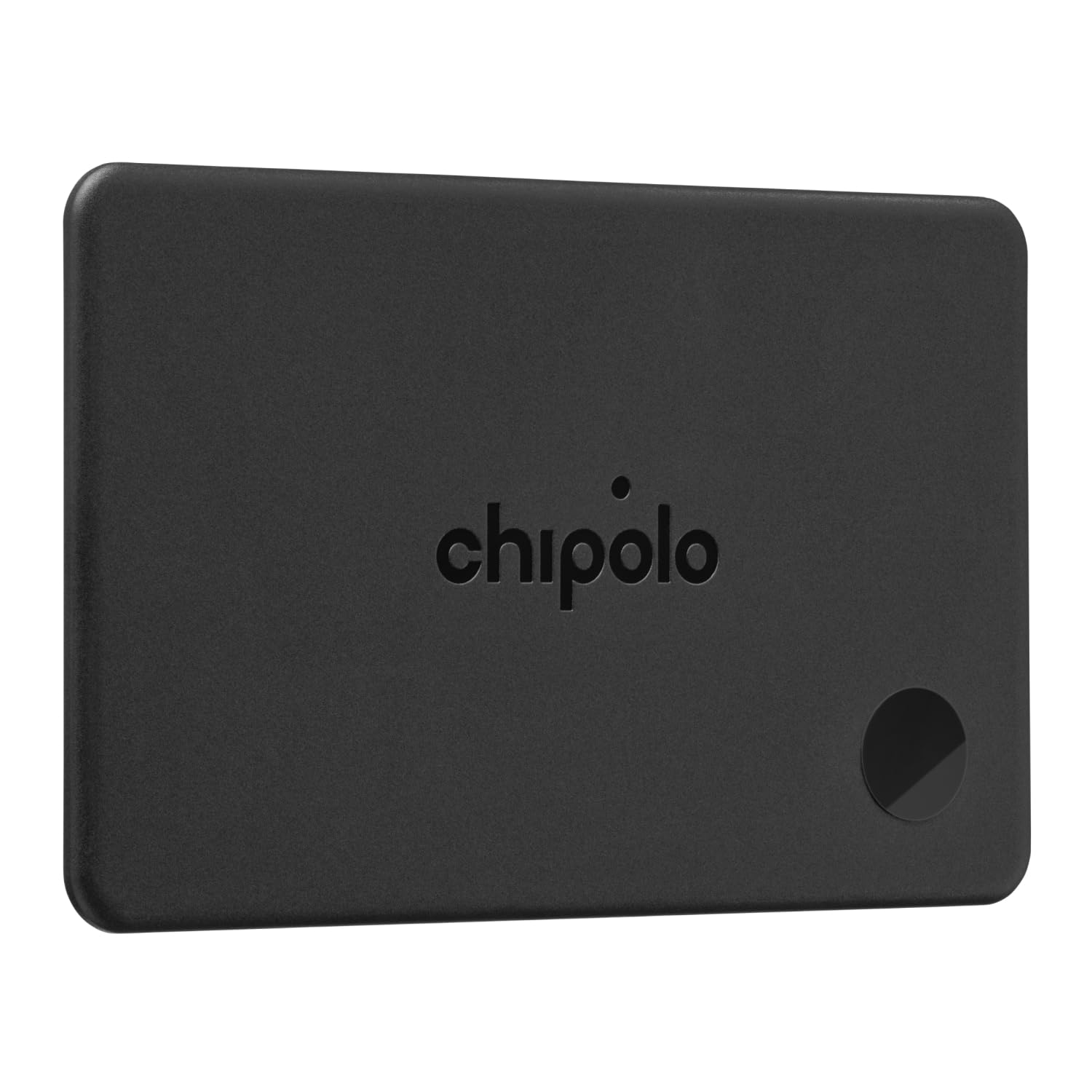
A side-corner sound outlet that makes it the loudest card here.
Most trackers bury the speaker and hope you hear it. Chipolo put the sound outlet on the side corner, and the result is 110 dB — loud enough to hear through a sofa cushion or a closed drawer. It sits at 0.1 inches thick and 17 g, on the chunkier end of this group, but the payoff is that ringer. The batteries are rechargeable via a Qi magnetic wireless charger, and a single charge lasts up to 1 year.
Compatibility is universal — Apple Find My or Google Find Hub, one network at setup. IP67 means it survives immersion in up to 1 m of fresh water for up to 30 minutes, which covers a wallet dropped in rain or a puddle. Nearby items get rung; far-away items show the last known map location on the network. The free Chipolo app adds extras: a remote camera shutter button, custom ringtones, and a call-your-phone feature that works even when the phone is set to silent.
The value side is honest and slightly mixed: some owners think it’s a fair deal, others less so, and battery life and connectivity draw a mixed read rather than uniform praise. The 2-year warranty helps offset that — Chipolo’s support team replaces cards quickly if something goes wrong, and you contact them through the Amazon order. For a card priced toward the top of this group, the warranty is a real part of the value.
What it gets right: the 110 dB ringer, the 1-year rechargeable battery, IP67, and a 2-year warranty with easy replacement.
The realistic catch: a top-tier price with mixed value and battery feedback — the warranty is the comfort blanket.
Best match for: anyone who loses items regularly and needs to hear the alarm, plus a warranty that covers a dead card.
Look past it if: you want the slimmest possible body or the lowest price in the category.
Know the Specs
Battery Style: Sealed vs Rechargeable
A sealed cell (like the KIUP’s up-to-10-year battery) means you never charge the card — but when the cell dies, the card retires. A rechargeable cell (like the Ekster’s 10-month charge or the Chipolo’s 12-month charge) asks for a wireless top-up now and then but keeps the card alive. Match the style to your habits: if you’d forget to charge it, go sealed.
Find My or Find Hub
Apple Find My works on iPhone, and Google Find Hub works on Android. Some cards support either network but only one at a time, so you pick a side at setup. Confirm your phone matches before you buy — an Android phone cannot use a Find My-only card, and a Find My-only card cannot be set up without iOS 14.5 or later.
Alert Volume in Decibels
Decibels (dB) measure how loud the card’s ringer is when you trigger it from your phone. Higher numbers mean the card is easier to hear from across a room or through a cushion. The 120 dB KIUP card sits at the top of this group; the 80 dB QUICKHORSE card sits at the bottom, so expect a quieter locator there.
Water and Dust Ratings
IP68 means dust-tight and able to survive water immersion. IP67 means immersion in up to 1 m of fresh water for up to 30 minutes. IP66 covers strong water jets but not full immersion. Most wallet cards spend their life in a pocket, so splash protection is usually enough — pick IP68 if your wallet sees rain or puddles often.
Common Questions
Will a tracker card work if I use a slim leather wallet?
Does a tracker card need a separate subscription?
Will it block my credit card if the tracker has RFID?
Can I use one tracker card on both iPhone and Android?
How long does the battery actually last?
What happens when the sealed battery dies?
Will the alarm be loud enough to find my wallet in a couch?
Do I need a wireless charger for a rechargeable tracker card?
Can a tracker card find my phone too?
What’s the difference between Bluetooth tracking and GPS?
The Bottom Line
For most people, the tracker card for wallet winner is the KIUP Wallet Tracker Card because a sealed up-to-10-year cell (you never recharge it) and a 0.06-inch body mean you slot it in and forget it — while still getting a 120 dB ringer (loud enough to hear across a room) and both Find My and Find Hub support. If you’re on iPhone and want to spend the least, grab the QUICKHORSE MFi Wallet Tracker Card. And for a household already living on the Life360 family map, the Life360 Tile Slim is the one to reach for. Whichever you pick, remember the real test: the card you never notice is the one that’s still in your wallet when you need it most.
How we choose
We do not accept paid placement. Every pick is matched to a real buyer and a real use-case; we do not hands-on test units.
Sources
Specifications: manufacturer listings and product documentation. Review insights: verified customer reviews, as of November 2026. Pricing: not shown on this page (it changes often); check the current price via the retailer link.
As an Amazon Associate, Tactical Gear Guy earns from qualifying purchases. This does not affect which products we feature.