Specs are compiled from manufacturer listings and verified buyer reviews and can change over time — please confirm the key details on the product page before buying.
Most men buy a walking boot that looks right and then spend the first month learning why it was wrong. Pick the boot for the terrain you actually walk on, then check the fit and the waterproofing before anything else. The pick that suits the widest range of walkers here is the Columbia Men’s Firecamp Boots — a warm, lightweight waterproof boot that keeps your socks dry in cold, wet conditions and runs in multiple colors and sizes.
This guide is built by comparing the manufacturers’ published specifications and the patterns across verified customer reviews, so you get each pick’s real strengths and trade-offs instead of marketing spin.
A boot earns its place by matching your daily route, your foot width, and the weather you walk in. Below, the walking boots for men are ranked by how well they handle that real-world mix, from entry-level value to full leather.
Top Picks

How To Choose Walking Boots for Men
A walking boot has to survive miles, not a mirror. That means three things decide whether you will be happy six months from now: the upper’s build, the fit through the toe box, and how the sole grips on the surface you actually walk.
Start with the upper, because it sets warmth and dryness
A leather upper — like the full-grain and premium leather builds on several picks here — resists scuffs and holds shape over long walks. A nylon or mesh upper drops weight and dries faster but flexes more. If you walk in cold weather, look for an insulated build; the Guide Gear Silvercliff II carries 400-gram insulation, which is a real warmth layer, not a label.
Fit is where most men get this wrong
Walking pushes your foot forward in the boot with every step, so your toes need room to spread. A slightly wider toe box, like the one on the Merrell Moab Adventure 3, keeps toes from jamming on descents. Buy your normal US size on boots described as true to size, and size up only if the fit notes say a model runs small.
Match the outsole to your ground
Multi-directional lugs — the raised rubber blocks under the sole — bite into loose dirt and wet grass. A thermoplastic rubber or solid rubber outsole handles pavement and gravel without wearing flat too fast. If your walks are mostly sidewalk and park path, a lighter sneaker-like sole is more comfortable than a stiff mountain lug.
Side-by-Side Comparison
| Model | Best For | Waterproofing | Upper Build | Ankle Height | Amazon |
|---|---|---|---|---|---|
| Columbia Firecamp Boots★ Best Overall | Cold-weather walking | Waterproof construction | Insulated synthetic | Boot height | Amazon |
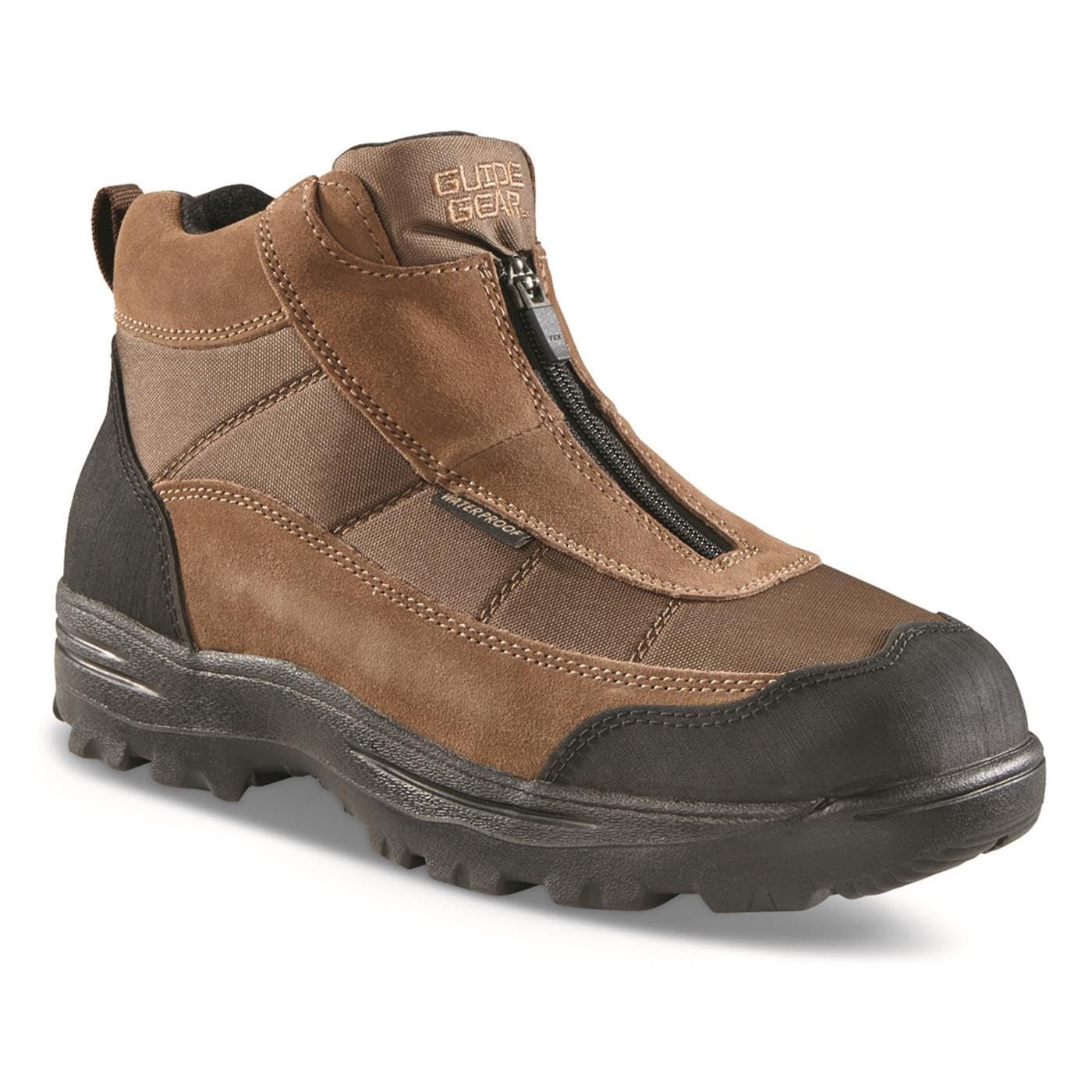
| Guide Gear Silvercliff II Mid ZipBest Value | Quick on and off | Waterproof | Suede leather & nylon | 7″ | Amazon |
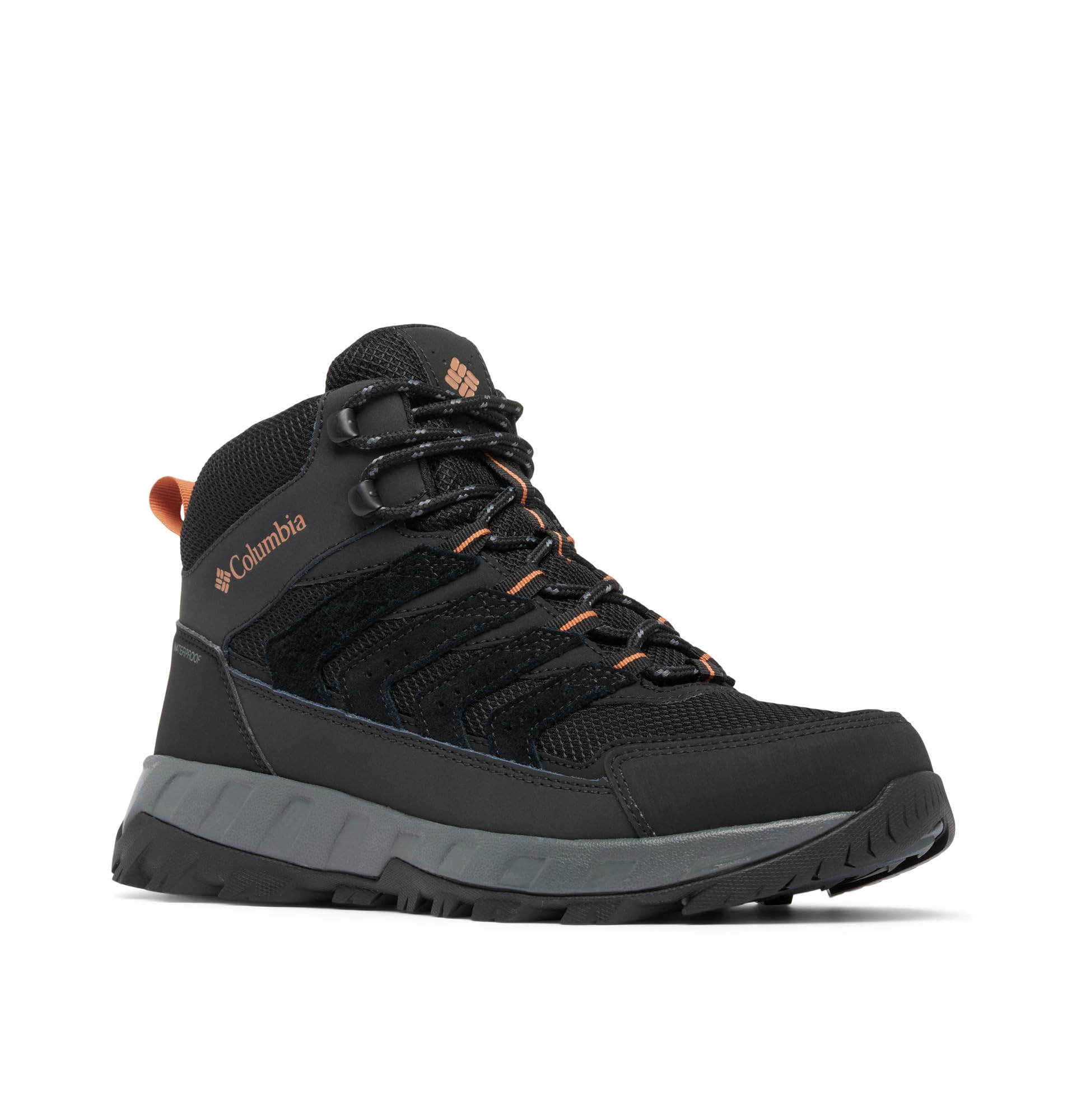
| Columbia Strata Trail Mid WPLightest Walk | Light trail walking | Waterproof | Lightweight synthetic | Mid | Amazon |
| Skechers Respected 2.0 Hagler | All-day standing | — | Leather & synthetic | Moc toe boot | Amazon |
| KEEN Hightrail Mid WP | Fast day hikes | Water-resistant leather | Water-resistant leather | Mid | Amazon |
| Timberland White Ledge Mid WP | Premium leather build | Seam-sealed waterproof | 100% premium waterproof leather | Mid | Amazon |
| Merrell Speed Strike 2 Mid WP | Light and fast | Waterproof | Durable outdoor mesh | Mid | Amazon |
| Merrell Moab Adventure 3 WP | Everyday versatility | Merrell waterproof membrane | Waterproof build | Low-mid | Amazon |
Detailed Reviews
1. Columbia Men’s Firecamp Boots
Our pick — 4.5+★ from 950+ verified ratings; the strongest balance of quality and price.
The cold-weather walker that keeps your socks dry and your toes warm without bulk.
This is the boot for winter walks when you want warm, dry feet without a second thought. Columbia builds it with a waterproof upper and low-bulk insulation — a thin warmth layer that traps heat without the puffy, clumsy feel of a heavy snow boot. Plush cushioning sits underfoot, so a long walk on cold pavement stays comfortable.
What wins people over is the overall build quality, with comfort close behind and warmth rounding out the top three things buyers talk about. The waterproofing holds up in real use, which is the part that matters: your socks stay dry when the pavement is slushy or the trail is wet. It also comes in multiple colors and sizes, so you are not stuck with one look.
The catch is honest and small: this is an insulated cold-weather boot, so it runs warmer than a bare summer hiker. If you walk in heat and humidity, the insulation works against you. It scores 4.5+ stars across 900+ ratings, a higher average than the far more-reviewed Timberland White Ledge below.
What earns it the top slot
- Waterproof build keeps socks dry on wet, slushy walks
- Low-bulk insulation warms feet without a clumsy snow-boot feel
- Plush cushioning for long stretches on hard ground
- Multiple colors and sizes to choose from
Where it asks something of you
- Built for cold weather, so it runs warm on hot-weather walks
- Insulation is the wrong tool for summer trail use
Made for: the man walking through cold, wet months who wants warm, dry feet and a cushioned ride.
Think twice if: your walks happen in summer heat, where the insulation becomes a liability.
2. Guide Gear Men’s Silvercliff II Mid Zip Hiking Boots
A 7-inch insulated mid boot with a zip side for the man who hates lacing up in the cold.
At 7 inches tall with 400-gram insulation, this is the warmest boot in the group on paper — that insulation number is the warmth layer’s weight, and higher means warmer. The suede leather and nylon upper takes a scuff, and the thermoplastic rubber outsole handles gravel and packed dirt. Each shoe weighs 24 oz, which you feel on a long walk but is normal for an insulated mid boot.
The zip side is the feature buyers reach for most after quality and comfort. You step in, zip, and go — which matters when your hands are cold and your boots are by the door. Appearance and value also get steady praise, and the boot is easy on and off in a way a full lace-up never is.
The honest trade-off is the zipper itself and the sizing. Fit and sizing feedback is split, with some saying it runs small and some finding it right, and a number of buyers hit zipper trouble — a slider that slides back down or comes off the track. Order your normal size, check the zip the day it lands, and treat the pull gently.
Reach for this if: you want maximum warmth and zip-on speed without stretching the budget.
Look elsewhere if: you want a bulletproof zip or have been burned by a boot that runs small.
3. Columbia Men’s Strata Trail Mid Waterproof
Feels broken-in from the first step, which is exactly what a light trail walk needs.
Comfort right from the start is the headline here, and that is not a small thing for a walking boot. Buyers describe a fit that runs true to US sizing, so your normal number should land right. It is a lightweight mid boot built for trail walking, and the look holds up on the street too.
Where the Strata Trail leads its group is price-to-value: quality is the top thing people remark on, comfort sits right behind it, and buyers rate the value as the best of the Columbia pair here. It is the boot to wear on a walk that starts on pavement and turns into a groomed path.
Now the part you should hear straight: durability and water resistance are mixed on this model. Some walkers find it plenty tough and properly waterproof; a share report tears within months and a boot that lets water through. If you walk hard daily on rough ground, that is the risk. If you walk a few days a week on easy terrain, the light feel pays you back.
The honest read: the Strata Trail is the most comfortable boot in its price band for everyday footing, but it is not the boot to bet on for punishing daily abuse. The mixed durability signal is the one thing to weigh before you commit to a long relationship with it.
Right for you if: you want a true-to-size, broken-in-from-day-one boot for light trails and sidewalk walks.
Skip the long bet if: your daily mileage is heavy and you expect the upper to survive hard ground for years.
4. Skechers Men’s Respected 2.0 – Hagler

The boot you step into without touching a lace, cushioned for a full day on your feet.
Skechers Hands Free Slip-ins is the whole pitch, and it lands. The relaxed-fit moc toe boot has a charcoal-infused Air-Cooled Memory Foam insole under your foot and an anti-slip Goodyear rubber outsole under that. You step in, your foot settles, and you are out the door — no lacing, no leaning over in the cold.
Slip-on ease is the standout, but the fit is not far behind: the generous toe box gets specific praise and the boot runs true enough that your regular size works. Buyers wear these all day and report their feet and knees stay comfortable, which is the real test for a walking boot.
The one thing to know: this is a lifestyle and walking boot, not a mountain hiker. It does not carry a waterproof rating, so a downpour will soak through. If your walks are pavement, gravel, and errands, the slip-on comfort is the better trade. If you walk wet trails, this is not the pick.
Fit and feel: the relaxed toe box and memory foam insole make this the easiest boot here to just live in, and the charcoal-infused insole is built for warm-weather comfort.
Where the line is drawn: no waterproof claim means a wet walk is a wet foot, so keep this one for dry ground.
Pick it for: dry-ground walks, errands, and anyone who wants to stop fighting with laces.
Leave it for another day if: your route is wet trails or rainy weather.
5. KEEN Men’s Hightrail Mid Waterproof Hiking Boots

A sneaker that learned to hike, built to keep pace on a fast day out.
KEEN fused a sneaker-like shape with water-resistant leather, and the result walks lighter than a full leather mountain boot. The Contoured Fit curves with the natural shape of your foot, so the hold is snug rather than loose. That is the design idea from the maker’s own description, and it shows up in how the boot moves with you.
Durability and foot support are the two things this boot is known for beyond the comfort. It carries excellent ankle support, and it is light on its feet for a mid cut. It also passes the city test — trim enough that it does not read as a pure trail boot.
The catch is width. Some walkers find it true to size, and a fair number find it very narrow, so if you have a wide foot this is the model to try on or size around. Water resistance is also mixed in feedback, so do not treat it as a monsoon boot. For a fast, light day hike on dry-ish trails, it suits the job well.
Best match for: the walker who moves quickly on day hikes and wants sneaker weight with trail support.
Weigh the risk if: your foot is wide or you expect full storm-proofing.
6. Timberland Men’s White Ledge Mid Waterproof Hiking Boots

The one that has been on more trails than any other boot here, by a wide margin.
Start with the leather, because it is the story. The upper is 100% premium waterproof leather from an LWG Silver-rated tannery, and the seams are sealed on top of that. The tongue is fully gusseted, meaning the flap is stitched all the way up so water cannot slip in through the lacing gap. Rustproof speed-lace hardware with hooks at the top lets you cinch fast and forget about corrosion.
Underfoot you get an EVA footbed and EVA midsole — EVA is the foam material that gives cushioning and keeps a boot light — and a solid rubber outsole with multi-directional lugs for bite on loose ground. The crowd here is enormous and steady: quality is the runaway top talking point, comfort is second, and fit and appearance both draw heavy agreement. It is the most-reviewed boot in the group, holding 4.5+ stars across 67,000+ owners.
The durability story is where it gets honest. Longevity is the one mixed note — many walkers say it holds up great, and a share report it falling apart around the year mark. It is still the classic against which the others are measured, but if you walk relentlessly every day, know that some boots do not make it to a second winter.
The leather does the heavy lifting
- 100% premium waterproof leather with sealed seams
- Fully gusseted tongue keeps water out of the lacing gap
- Rustproof speed-lace hardware with top hooks
- EVA footbed and midsole for a cushioned, light ride
What you accept
- Longevity is mixed — some pairs wear out inside a year
- Premium leather build carries a premium position
The classic choice: you want proven waterproof leather and the biggest record of real-world use behind a boot.
Weigh it against: your own mileage — heavy daily walkers may outlast the build.
7. Merrell Men’s Speed Strike 2 Mid Waterproof

An athletic hybrid hiker with a sticky trail outsole and room in the toe for long walks.
You get airflow and grip in one shoe: Merrell built this as a hybrid, with durable outdoor mesh uppers (a breathable woven fabric) for airflow and a sticky trail outsole (the grippy rubber bottom) for traction on the move. The mesh cuts weight, and buyers report lightweight as among the most repeated things about it. The mid cut (a collar that rises above the ankle) still gives you ankle coverage, so it is not a slipper.
Support is where it earns its keep — buyers describe support that does not feel bulky, which is the balance a light hiker chases. Quality leads the discussion by a wide margin, comfort is the close second, and the toe space gets a mention because a roomy toe box keeps long walks comfortable.
Durability and water resistance are the honest mixed pair on this model, so do not expect a leather boot’s lifespan from a mesh upper. Treat it as your fast, comfy walker for dry-to-damp days, and keep a leather boot for the sloppy stuff.
Go here for: a lightweight, ventilated walker with real support and toe room for a fast pace.
Choose differently if: you need a boot that shrugs off long-term wear and heavy rain.
8. Merrell Men’s Moab Adventure 3 Waterproof

The all-rounder: trail grip, a dry membrane, and a fit that works on and off the path.
The tech here is the two-part story. A Vibram TC5+ outsole gives you a grippy rubber sole built for trail footing, and a Merrell waterproof membrane keeps water out while the boot breathes. It carries the out-of-the-box fit the Moab line is known for, with a slightly wider toe box for room up front.
What makes it the most versatile is the range: it is comfortable enough for outdoor work and steady enough for everyday walking, with stability that buyers call out along with the look. True-to-size fit means your normal number should do, and the wider toe box helps on long days.
The mixed notes are the familiar pair — durability and water resistance both draw a split verdict, so this is not a boot to subject to years of brutal mileage. For a walking shoe that moves between town, work, and trail, the balance is hard to argue with.
Why it is the all-rounder: the Vibram TC5+ outsole gives real trail grip while the waterproof membrane keeps you dry, and the slightly wider toe box handles long days without pinching.
The trade-off to weigh: durability feedback is split, so treat it as a versatile daily walker rather than an indestructible one.
Take this one: you want one boot for work, town, and trail with grip and a dry membrane.
Look harder if: you need a boot you can lean on for years of hard mileage.
Know the Specs
Waterproof Upper vs. Water-Resistant
“Waterproof” on a boot means the upper and seams are sealed against water — a leather build with sealed seams and a gusseted tongue keeps water out of the lacing gap. “Water-resistant” is a lighter claim: the material sheds some water but is not built to sit in it. Read which word the boot actually uses, and plan your wet-weather walking around it.
Insulation Weight
Insulation is measured in grams, the weight of the warmth layer inside. Higher means warmer and bulkier. A 400-gram boot is built for cold weather, so it runs too warm for summer. If your walking is seasonal, an insulated boot like the Silvercliff II is a winter tool, not a year-round one.
Ankle Height and Cut
Boot height is usually given in inches or as “mid.” Taller cuts wrap the ankle for support on uneven ground; lower or mid cuts save weight and feel freer. A 7-inch mid boot with a zip is the tall, easy-on end of the range, while a low-mid hybrid moves faster.
Outsole and Lug Design
The outsole is the bottom rubber layer; lugs are the raised blocks that grip. Multi-directional lugs bite into loose dirt and grass, a sticky trail compound grips rock, and a solid rubber outsole wears flat slower on pavement. Match the sole to the surface you walk most.
Common Questions
Should I buy my normal shoe size in men’s walking boots?
Is a waterproof boot too hot to walk in during summer?
How do I know if a walking boot will support my ankle?
What does “water-resistant” mean versus “waterproof” on a boot?
Are leather boots better than mesh boots for walking?
How long should a men’s walking boot last?
Can I walk in a boot with a zip side every day?
What is a good walking boot for standing all day?
Do I need insulated boots for winter walking?
Should I size up for thick walking socks?
The Bottom Line
For most walkers, the walking boots for men winner is the Columbia Firecamp Boots because it pairs waterproof construction with low-bulk insulation for warm, dry feet in cold, wet weather. If you want the biggest track record in waterproof leather, grab the Timberland White Ledge Mid, which holds 4.5+ stars across 67,000+ owners. And for everyday slip-on comfort on dry ground, the Skechers Respected 2.0 is the one to reach for — the ease-of-entry crowd has clearly made their choice.
How we choose
We do not accept paid placement. Every pick is matched to a real buyer and a real use-case; we do not hands-on test units.
Sources
Specifications: manufacturer listings and product documentation. Review insights: verified customer reviews, as of November 2026. Pricing: not shown on this page (it changes often); check the current price via the retailer link.
As an Amazon Associate, Tactical Gear Guy earns from qualifying purchases. This does not affect which products we feature.