Specs are compiled from manufacturer listings and verified buyer reviews and can change over time — please confirm the key details on the product page before buying.
If you are shopping for sonar hardware, the short answer is this: match the transducer to your display first, then worry about how deep it reads. A 500-watt fish finder with the wrong connector does nothing for you, and a bronze thru-hull is useless on a boat that gets trailered every weekend. Below you get seven submersible transducers, sorted so you can pick by boat, by mount, and by what you actually want to see on the screen.
This guide is built by comparing the manufacturers’ published specifications and the patterns across verified customer reviews, so you get each pick’s real strengths and trade-offs instead of marketing spin.
You will see frequency ranges, mounting styles, and depth figures side by side, plus the compatibility trap that catches more buyers than any other. The right choice depends on the connector and mount you already own, and this underwater ultrasonic transducer guide lays every option out so you can match one to your hull in minutes.
Top Picks
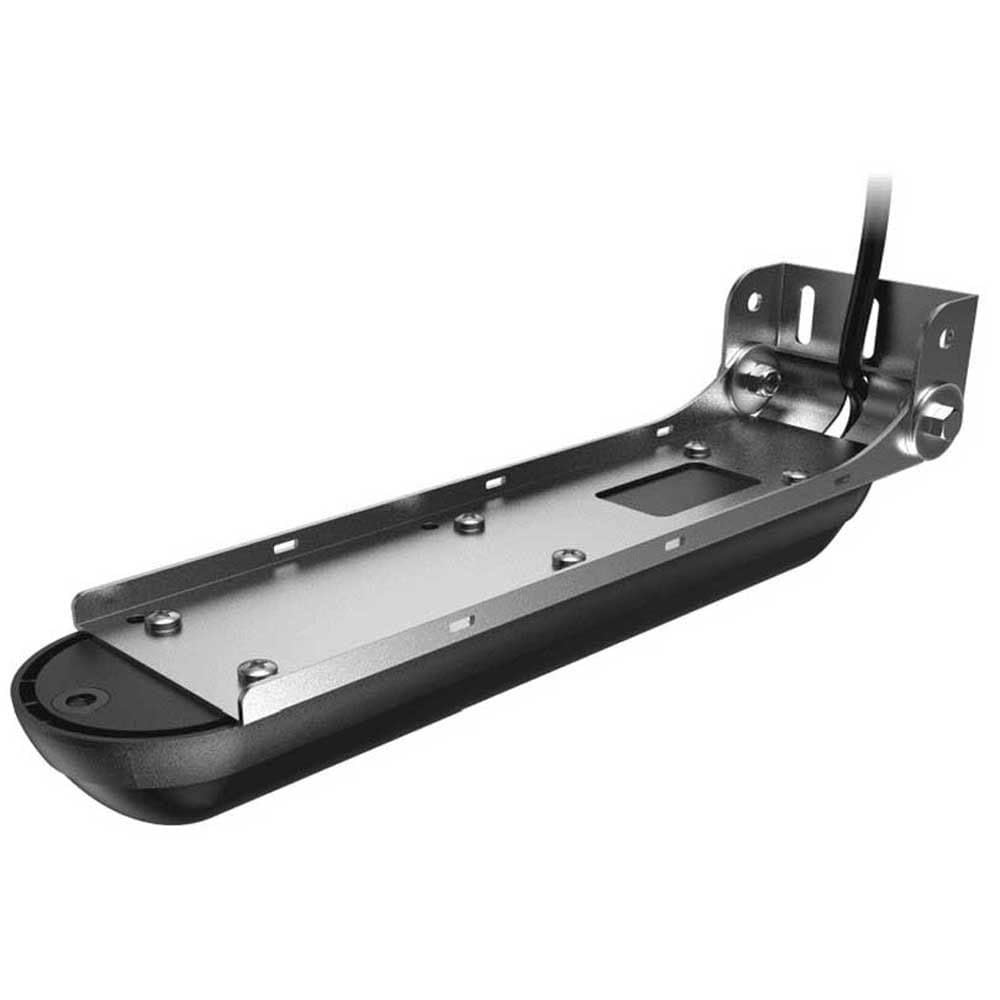

How To Choose The Best Underwater Ultrasonic Transducer
The most common mistake is buying an excellent transducer that will not talk to your fish finder. Frequency is the second half of that problem. A unit built for 83/200 kHz traditional sonar and a unit pushing 800 kHz for detail scanning are not interchangeable, because the display has to support those numbers.
Start With The Connector And The Compatibility List
Every transducer ends in a plug, and that plug must match the port on your head unit. Count the pins and read the manufacturer’s compatibility line. Lowrance’s Active Imaging 3-in-1, for example, is listed for HDS LIVE, Elite FS, and Simrad NSS evo3s and GO series displays. If your screen is not on that list, keep looking.
Decide Between Coverage And Detail
Traditional CHIRP sonar shows a cone directly under the boat, which is what you want for a classic bottom reading. Side-imaging shows a long swath to the left and right, which is how you find rockpiles and drop-offs you have already passed over. DownScan and ClearVü fall in the middle, giving a photograph-like slice straight down for structure.
Match The Mount To Your Boat
Transom brackets go on boats that get trailered or on the trolling motor shaft, and they are simple to install. Thru-hull installations drill into the hull itself, which suits a boat that stays in the water. Both work, but a thru-hull cut into a trailered hull cannot be undone at the ramp.
Side-by-Side Comparison
| Model | Best For | Frequency Support | Max Depth | Mount Type | Amazon |
|---|---|---|---|---|---|
| Lowrance 000-14489-001 Active Imaging 3-In-1★ Best Overall | All-round structure viewing | 83/200 kHz + 455/800 kHz | 300 feet | — | Amazon |
| Simrad HDI Skimmer, Medium/High CHIRP, 9-PinBest Value | Transom installs on Simrad screens | 83/200/455/800 kHz | — | Transom Mount | Amazon |
| Furuno 525T-BSD Bronze Thru-Hull | Permanent thru-hull fit | 50/200 kHz | — | Thru-Hull | Amazon |
| Garmin 010-12909-00 GT54UHD-TM | Clean installs on lighter boats | 800 kHz ClearVü | 800 feet | Transom/Trolling Motor | Amazon |
| Garmin GT56UHD-TM | Wide side coverage at speed | 455/800/1000 kHz | 800 feet | Transom/Trolling Motor | Amazon |
| Lowrance ActiveTarget 2 / 2 XL | Live real-time fish watching | — | 1524 meters | Multiple | Amazon |
Detailed Reviews
1. Lowrance 000-14489-001 Active Imaging 3-In-1 Transducer
Our pick — 4.5+★ from 300+ verified ratings; the strongest balance of quality and price.
Three sonar views in one housing, and the crowd favorite by a wide margin.
What you get here is one transducer doing the job of three. The Active Imaging 3-in-1 combines CHIRP sonar, SideScan and DownScan inside a single body, then layers FishReveal on top so the fish and the structure underneath them land on one screen. In plain terms, DownScan alone gives you a crisp picture of a brush pile but leaves you guessing which blob is a bass, and FishReveal is the tool that separates the two for you.
The frequency support is the real decision-maker: Medium and High CHIRP at 83/200 kHz, plus 455/800 kHz for the scanning views. Traditional 83/200 kHz is the low-frequency pair that punches down through depth, while 455/800 kHz is the higher-frequency set that buys you sharp detail at shorter reach. It reads structure down to a stated 300 feet, which covers the weedbeds, standing timber, ditches and drop-offs most anglers actually fish. In a straight head-to-head, that 300-foot ceiling falls well short of the Garmin GT51M-TM’s 1800 feet — a real gap if you chase fish in deep water.
Owners are emphatic about this one. It carries a 4.5+ star rating across 300+ ratings, and what wins people over is straightforward: build quality and everyday performance, with image clarity close behind. The picture is the thing people talk about — the down- and side-scan views are described as extremely clear. Scanning performance is the one thread that splits opinion, so treat it as a fit question rather than a flaw. And do check the compatibility line before you buy: this is listed for Lowrance HDS LIVE, Elite FS, and Simrad NSS evo3s and GO series displays only.
Where It Earns Its Keep
- CHIRP, SideScan and DownScan in a single housing, so one install covers three views
- FishReveal puts fish and structure on the same DownScan screen, which saves guesswork
- 83/200 kHz plus 455/800 kHz covers both depth reading and detailed scanning
- 300-foot depth rating handles most inland and coastal structure fishing
Where It Stops Short
- Locked to a listed set of Lowrance and Simrad displays, so a different head unit is a no-go
- 300 feet is shallow compared to deep-water transducers in this group
- Scanning performance draws split opinions rather than a clean consensus
Best match: Lowrance HDS LIVE or Elite FS owners who want three views from one transducer and fish structure more than open depths.
Look elsewhere: if you run a different brand of display, or you regularly hunt fish past 300 feet.
2. Simrad HDI Skimmer Transducer, Medium/High CHIRP, 9-Pin
The bolt-on that gets a Simrad screen reading fish and bottom without a big spend.
If your boat has a Simrad display and you want CHIRP plus downward detail without rebuilding the whole sonar setup, this is the one to look at. The HDI Skimmer merges CHIRP sonar and DownScan Imaging into one hybrid unit, so you get a clean fish reading and a structure shot from the same housing. It supports 83/200/455/800 kHz — the 83/200 pair for traditional sonar and the 455/800 pair for the detailed down view.
Installation is the quietly useful part. The package includes the mounting bracket and hardware for a complete transom job, and the cable runs 20 feet from the transom back to your display. That is enough length to route along the gunwale without a splice on most trailerable boats. A temperature sensor is included too, which means you get water temp off the same unit rather than a separate probe. The 9-pin xSonic connector is the piece to check against your head unit before ordering — the number of active electrical contacts can vary by sonar function and device.
Ratings sit at 4.5+ stars, and the two-year manufacturer warranty backs up the build. This is the value slot of the group: it asks a fraction of what the live-sonar units do while still delivering real DownScan imaging. The honest catch is geometry. A transom-mounted skimmer gets its cleanest reading at low speed, so if you want a bottom picture at full cruise you may need to look at a thru-hull instead.
The straightforward math: You get CHIRP (a sonar that sweeps multiple frequencies for clearer readings) and DownScan (a downward-looking view for structure detail) in one transom unit, a 20-foot cable, mounting hardware in the box, and a two-year manufacturer warranty — the practical choice for a Simrad owner who wants more than a plain depth sounder.
Before you commit: confirm your head unit accepts the 9-pin xSonic plug, because this transducer is only as good as the display it talks to.
Worth it for: Simrad owners on a trailerable boat who want CHIRP and DownScan from one transom mount.
Think twice if: you need a clean reading at planing speed, where a thru-hull body serves you better.
3. Furuno 525T-BSD Bronze Thru-Hull Transducer with Temperature

A bronze body that drills through the hull and stays there for good.
This is the pick for a boat that lives in the water rather than riding a trailer. The 525T-BSD is a bronze thru-hull transducer, meaning the housing passes through the hull itself and shoots straight down with nothing in the water stream to foul it. Furuno includes a fairing block in the box, which is the shaped piece that smooths water flow around the fitting so you get a cleaner reading underway.
The sonar side is traditional 50/200 kHz with a temperature sensor built in, and the cable runs 30 feet to a 10-pin plug. Low-frequency 50 kHz is the classic deep-water pair, so this unit leans toward bottom reading and fish marking rather than picture-like structure scanning. Its stated body size is 9 inches long by 2 inches wide by 6 inches high at 3.4 pounds — that footprint is what your hull cut has to accommodate, so measure twice before the drill comes out.
It holds a 4.0+ star rating, with the smaller review pool you would expect from a specialist thru-hull part. The trade-off is permanent commitment: once you cut the hull, this transducer is part of the boat. That permanence is why it suits a slipped boat and rules out a trailered one. If your hull stays on a trailer between trips, a transom bracket is the smarter route.
Who this is built for: the boat that sits in a slip or mooring and wants a bottom reading with no bracket hanging off the stern.
The honest catch: 50/200 kHz traditional sonar gives you depth and fish marks, not the side-scan imagery the Lowrance and Garmin units in this group produce.
Reach for this if: your boat stays in the water and you want a permanent, low-drag thru-hull with a fairing block in the box.
Leave it alone if: you trailer your boat or you are not ready to cut a hole in the hull.
4. Garmin GT54UHD-TM Transducer

Two pounds of Garmin hardware that will not drag your transom down.
The number that jumps out on the GT54UHD-TM is weight: 2 pounds. That is the lightest unit in this group by a wide margin, and it matters because a heavy bracket on a small hull or a trolling motor shaft is a real handling problem. For comparison, the Lowrance ActiveTarget 2 runs 10.4 pounds, so the Garmin is the one you want if you are mounting on a trolling motor or a smaller boat.
It reads to a stated 800 feet, and it does it through 800 kHz ClearVü scanning sonar, which is Garmin’s name for the high-frequency downward view that renders structure in near-photo detail. Mounting is listed as transom or trolling motor surface mount, so the same unit suits either spot. The body measures 7.8 inches long by 6.4 inches wide by 3.3 inches high, which is compact enough for crowded transoms.
Garmin’s imaging reputation carries this model, and the 4.5+ star rating puts it among the most trusted units here. The thing to understand is that all-in-one Garmin transducers live or die on head-unit pairing, so confirm your display is a supported Garmin model first. Check the Garmin compatibility chart before ordering, because the plug decides whether it works.
Why It Stands Out
- 2 pounds, the lightest mount in this lineup, which suits trolling motors and small boats
- 800 feet of stated depth range on 800 kHz ClearVü scanning
- Transom or trolling motor surface mount from the same unit
- Compact 7.8 by 6.4 by 3.3 inch body fits tight transoms
What To Plan Around
- Garmin-specific pairing, so it only works with a compatible Garmin display
- High-frequency detail views work best at slower speeds
balance: Garmin owners who want high-detail scanning without adding bulk to the transom or trolling motor.
Not your pick if: your head unit is not a supported Garmin model, because the plug will not cooperate.
5. Garmin GT56UHD-TM Transom Mount Transducer

Side-scan reach that stretches 500 feet off each side of the hull.
What sets the GT56UHD-TM apart is how far sideways it looks. Its 455 kHz SideVü scanning sonar (a side-looking sonar that runs at 455 kilohertz) sees up to 500 feet to each side of the boat, which turns a blank stretch of water into a map of rockpiles and drop-offs you never knew were there. If your fishing is about covering water and finding structure, that side reach does more work than any bottom reading.
Garmin builds it around three scanning frequencies — 455 kHz, 800 kHz and 1000 kHz — with 500 watts of power behind them. The 1000 kHz setting is the highest-frequency, highest-detail view of the set, and Garmin states it delivers 20% greater range at that frequency. Traditional high wide CHIRP rounds it out and gives clear target separation up to 800 feet below the boat, so the same housing handles both the down view and the wide view. Vivid color palettes let you push targets and structure apart visually at a glance.
Quality is what people talk about with this model, and it earns 4.5+ stars. Compatibility is the split thread, and that is worth taking seriously. This is an all-Garmin part with a 12-pin connector and both transom and trolling motor mounts in the box, so it is only as good as the head unit you pair it with. Check the pin count and the supported-model list before you click buy.
The reason to pay up: 500 watts of power and a 1000 kHz SideVü view that reaches 500 feet per side — a serious water-covering tool, not a depth sounder.
The fine print: the 12-pin Garmin connector and mixed compatibility feedback mean your existing display is the deciding factor here.
Pick this for: Garmin users who fish wide, open structure and want side imagery that reaches far off the hull.
Skip the upgrade if: you already run a non-Garmin display, because this one is locked to the Garmin family.
6. Lowrance ActiveTarget 2 Transducers
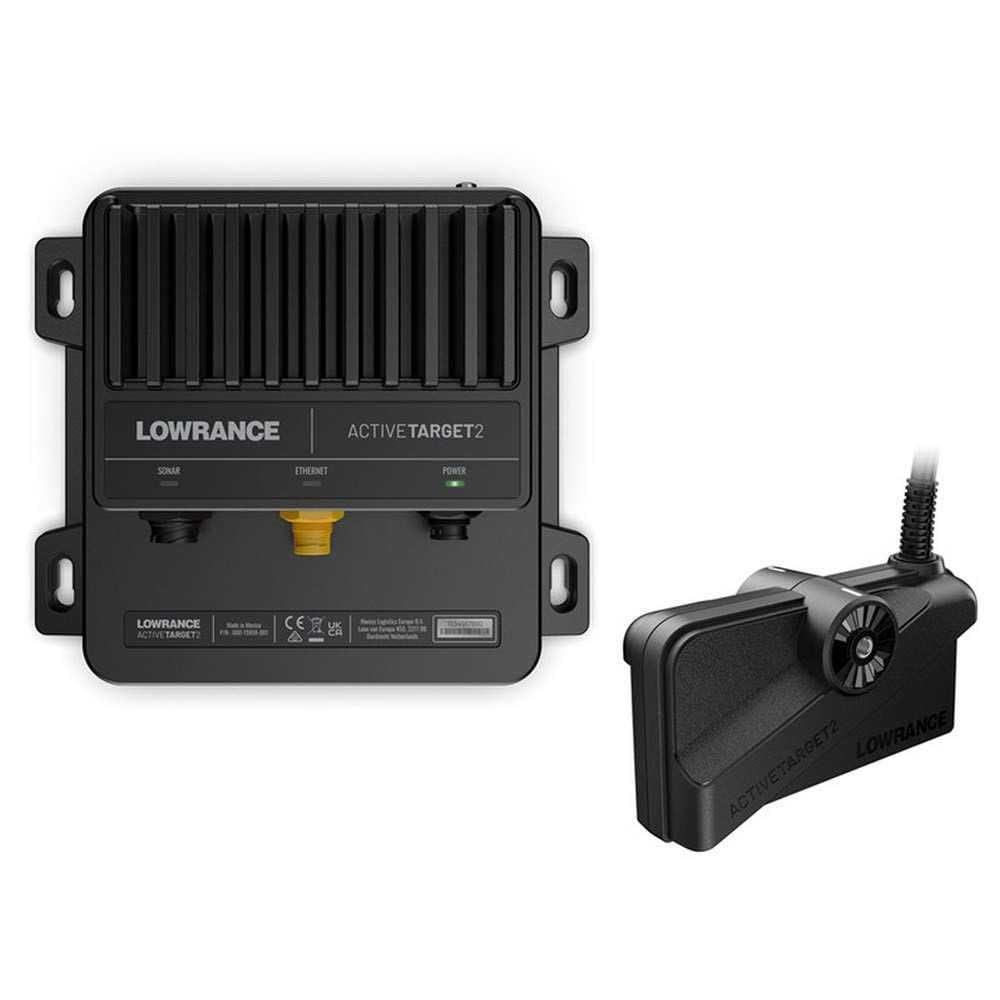
Watches fish move in real time instead of waiting for the boat to pass over them.
ActiveTarget 2 is a different animal from the scanning transducers above. Instead of painting a still picture of the bottom, it reveals what is happening underwater in real time, so you watch a fish turn and follow your bait rather than reading a frozen image. It runs forward, down and scout viewing modes, which lets you track fish ahead of the boat, below it, or crossing your path.
The brand claims image clarity is the headline, and it is paired with ultra-smooth sonar performance so fish movement is easy to read as it happens. Pair it with an HDS Pro display and you can view multiple sonar angles at once; add a second optional ActiveTarget 2 transducer and you open up 180 degree and Scout Wide views for tracking bait in front of the boat. Depth is stated as 1524 meters. Weight is the number to plan for: 10.4 pounds, compared with the Garmin GT54UHD-TM’s 2 pounds, so this is a substantial mount that needs a sturdy trolling motor bracket.
The kit comes complete — transducer, module, trolling motor brackets, power and ethernet cord — so there is no scramble for a missing piece. It holds 4.5+ stars across a moderate review pool. Live sonar demands the most seat time of anything here, and it only pays back once you can read the screen. If you want a set-and-read bottom image, a cheaper scanning transducer does that job fine.
The case for it: real-time fish behavior, forward/down/scout modes, HDS Pro multi-view support, and a complete kit with brackets and cabling included.
What you take on: a 10.4 pound mount and the steepest learning curve in the group — this rewards seat time before it pays you back.
Built for: the serious angler who wants to watch fish react to a lure in real time and already runs an HDS Pro display.
Probably not yet if: you are new to sonar or your trolling motor setup cannot carry a 10.4 pound unit.
Know the Specs
Operating Frequency In kHz
Frequency is the number that decides what you can see. Traditional CHIRP pairs like 83/200 kHz and 50/200 kHz give you a solid bottom reading and fish marks. Higher bands — 455, 800 or 1000 kHz — trade reach for sharp detail, so they render structure almost like a photo. A transducer and a display must share a frequency band, which is why a unit built for 800 kHz will not simply plug into a 50/200 kHz system and work.
Maximum Depth Rating
This is the stated depth the manufacturer says the unit can measure to, and it varies enormously. In this group it runs from 300 feet on the Lowrance Active Imaging 3-in-1 up to 1800 feet on the Garmin GT51M-TM. Match the rating to the water you actually fish. Buying a 1800-foot transducer for a shallow lake buys reach you will never use, and buying a 300-foot unit for deep water leaves you blind.
Connector Pins And Compatibility
The plug at the end of the cable has to match your head unit. Pin counts differ — 9-pin, 10-pin and 12-pin all appear in this group — and each brand publishes its own compatible-model list. Confirm the pin count and the display model before you order. A mismatched pin count is the most common reason a good transducer never leaves the garage.
Mount Type And Weight
Transom brackets bolt to the stern, thru-hull bodies drill through the hull, and surface mounts suit a trolling motor. Weight matters for the mounting point: a 10.4 pound live-sonar unit needs a sturdier bracket than a 2 pound scanning transducer. Thru-hull is a permanent commitment, so it rewards a boat that stays in the water, while transom mounts suit a trailerable hull.
Common Questions
Will the Lowrance Active Imaging 3-in-1 work with my Garmin or Humminbird display?
What is the difference between 50/200 kHz and 455/800 kHz sonar?
Do I need a thru-hull or a transom transducer?
How deep can these transducers actually read?
What does the FishReveal feature on the Lowrance do?
Is live sonar like ActiveTarget 2 worth it over a standard scanning transducer?
Why does my transducer lose the bottom reading at high speed?
How much weight can a trolling motor bracket carry?
What cable length and plug do I need for a transom install?
Can I add a second transducer for wider scanning coverage?
The Bottom Line
For most buyers, the strongest underwater ultrasonic transducer in this group is the Lowrance Active Imaging 3-in-1, because it puts CHIRP, SideScan and DownScan in one housing with FishReveal to separate fish from cover. If deep water is your ground, the Garmin GT51M-TM reaches 1800 feet where the shallow scanners go blind. And for a permanent, low-drag fit on a boat that stays in the water, the Furuno 525T-BSD is the thru-hull to reach for. Whatever your brand, confirm the connector pins against your display first — it is the difference between working sonar and a spare part.
How we choose
We do not accept paid placement. Every pick is matched to a real buyer and a real use-case; we do not hands-on test units.
Sources
Specifications: manufacturer listings and product documentation. Review insights: verified customer reviews, as of November 2026. Pricing: not shown on this page (it changes often); check the current price via the retailer link.
As an Amazon Associate, Tactical Gear Guy earns from qualifying purchases. This does not affect which products we feature.