Specs are compiled from manufacturer listings and verified buyer reviews and can change over time — please confirm the key details on the product page before buying.
Here is the short answer: buy for fit first, thickness second. A wetsuit that gapes at the neck or pinches under the arm will flush cold water on every stroke no matter what the label claims. If you swim open water or race triathlon, a 3mm sleeveless or full-sleeve suit covers most conditions, while a 5mm suit is the one you reach for when the lake stays cold well into spring. Below you get seven real options, sorted by what each one actually does well.
This guide is built by comparing the manufacturers’ published specifications and the patterns across verified customer reviews, so you get each pick’s real strengths and trade-offs instead of marketing spin.
You will see why thickness changes buoyancy, why seam construction decides lifespan, and how sizing charts differ between brands. The right starting point is a suit measured against your chest and hips, not your street clothes, and this breakdown of the wetsuits for swimming makes that first order far less of a gamble.
Top Picks


How To Choose The Best Wetsuits for Swimming
A swimming wetsuit is not a dive suit and not a surf suit. It is cut to let your arms travel overhead, and the neoprene is chosen so you can recover through the stroke instead of fighting the rubber. Get the thickness and the fit right and the suit feels like a second skin that floats you slightly higher.
Thickness sets your water temperature range
Neoprene thickness is measured in millimeters, and it does two jobs at once: it traps a thin layer of water that your body warms, and it adds buoyancy. A 3mm suit (three millimeters of foam) is the common choice for milder water and long pool-to-lake sessions. A 5mm suit packs more foam and lifts you higher, so it suits colder swims and swimmers who want extra leg lift. The trade-off is that thicker rubber takes more effort to move through.
Sleeveless versus full sleeve
Sleeveless suits free up your shoulders completely, which many swimmers prefer for a long pool set or a warm lake. Full-sleeve suits add warmth and buoyancy across the arms and let the panels help your catch. If your arms fatigue early in a sleeved suit, that is usually a fit problem, not a thickness problem.
Seams and zips decide how long it lasts
Flat-lock stitching joins panels with a stitched seam that stays flexible. Glued and bonded seams fuse the panels for a smoother surface and better water seal. Front zips are the easiest to enter and exit alone. Back zips sit flush for less drag and are the triathlon standard, but they want help on land. Look at both before you commit.
Fit beats the size you wear in jeans
Every maker here tells you to measure chest, waist, and hips and pick from their own chart. A new suit should feel snug and slightly tight on land, because neoprene loosens a little once it is wet. If it feels roomy in the shop or the bedroom, it will balloon with water in the lake.
Side-by-Side Comparison
| Model | Best For | Thickness | Style | Entry | Amazon |
|---|---|---|---|---|---|
| XTERRA Men’s Volt Triathlon★ Best Overall | Open water racing on a budget | 3/2mm | Sleeveless | Back zip | Amazon |
| Seaskin Mens 3mm ShortyBest Value | Snorkeling and warm-water swims | 3 millimeters | Shorty, long sleeve | Front zip | Amazon |
| Seaskin 3mm Full Wetsuit | Water aerobics and full coverage | 3 millimeters | Full, long sleeve | Front zip | Amazon |
| AnParc Women’s Shorty | Summer ocean swims and snorkeling | 3 millimeters | Shorty, long sleeve | Front zip | Amazon |
| Owntop 5mm Wetsuit | Cold water and shoulder-season swims | 5 millimeters | Full, long sleeve | Front zip | Amazon |
| Synergy Women’s Volution | Long open-water races, neck comfort | 3/2mm | Full, long sleeve | Back zip | Amazon |
| Synergy Men’s Endorphin | Maximum buoyancy for cold races | 5mm core / 3mm legs / 2mm arms | Full, long sleeve | Back zip | Amazon |
Detailed Reviews
1. Men’s Volt Triathlon Wetsuit
Our pick — 4.5+★ from 100+ verified ratings; the strongest balance of quality and price.
A sleeveless tri suit that floats you through the swim leg without a fight.
The XTERRA Volt is the suit to look at if your shoulders are your weak point. It uses a 3/2mm build (three millimeters through the body, two through the arms) in a sleeveless cut, so nothing pulls across your shoulder on the recovery. The X-FLEX liner stretches in all four directions and springs back, so it keeps its shape instead of bagging out after a season.
What wins people over is the fit — it draws by far the most praise of anything about this suit, and the sleeveless design is a big part of that. The X-SLICE coating on the exterior cuts drag through the water. One owner swimming Ironman distance reported no irritation around the arms, which is the exact place sleeveless suits usually go wrong.
The 3/2mm body is not a cold-water suit. That is the honest limit: if your lake sits in the low range for much of the season, you will want the 5mm Owntop instead. And because it is sleeveless, you give up the extra arm buoyancy a full-sleeve suit provides. The trade is shoulder freedom, and for most swimmers that is the right trade.
Why Swimmers Rate It
- Sleeveless cut frees the shoulder through the whole stroke
- 3/2mm neoprene body gives real buoyancy in open water
- X-FLEX liner holds its shape over time instead of stretching out
- X-SLICE coating reduces drag so you hold speed with less effort
- Fit draws the strongest feedback of anything about this suit
The Honest Limits
- 3/2mm is a mild-water suit, not a cold-lake suit
- No sleeve buoyancy, so weaker kickers get less lift
Built for: the triathlete who wants free shoulders and a suit that survives a full race season.
Think twice: if your open water is genuinely cold, the thinner body here will leave you under-insulated.
2. Seaskin Mens 3mm Shorty Wetsuit
The easy-on shorty that gets you in the water without a wrestling match.
If you swim in warm water, snorkel on holiday, or just want a suit you can get into alone on a rocky shore, this Seaskin shorty is the sensible entry point. The 3mm neoprene (three millimeters of foam) is built from 90% neoprene and 10% nylon, so it stretches where it needs to and insulates where it counts. Shorty means short legs and short arms, which keeps your limbs free and makes the whole thing far less fussy to pull on.
The front YKK zip is the star for most people. It opens wide and closes simply, so you are not contorting your arms to reach a back zip. Flat-lock stitched seams hold the panels together and stay flexible. The one thing to plan for is the tightness: the maker says it should fit snug against the body and settle into its real fit after a few wears, so your first try-on will feel tighter than you expect.
Be honest about longevity. There are reports of the suit ripping at the seams after three wears, so treat the seams gently and avoid yanking it on by the neck. Fit, though, is the thing that carries this suit — it is praised more than any other aspect, and it handles taller frames well. For warm-water swimmers on a tight budget, it does the job.
Where it shines: the front zip and shorty cut make this the least intimidating wetsuit to put on, and the snug 3mm body keeps you warm in mild water without fighting your arms.
What to watch: seam durability is the recurring concern — a few owners saw rips early, so pull it on slowly and store it flat.
Reach for this if: your swims are warm-water snorkels, holiday dips, or casual lake days and you want a quick-on suit.
Look elsewhere if: you race cold open water, where the shorty cut leaves your forearms and shins exposed.
3. Seaskin Wetsuits for Men Women 3mm Front Zip Full Wetsuit

Full-length neoprene coverage that keeps the whole body in the warm zone.
This is the same Seaskin formula as the shorty above, but stretched to full arms and legs. The 3mm neoprene (three millimeters of foam) insulates the whole body, and the front zipper with flat-lock stitched seams makes it far easier to get in and out than a back-zip full suit. If you want sun protection on your arms or you swim in water that has a sting to it, the long sleeve adds a layer the shorty simply does not have.
The front zipper is praised more than almost anything else here — it is a genuine convenience on a full suit, which is normally the hardest type to enter. The fabric blocks UV and gives some defense against sea lice and jellies. It is also a common pick for water aerobics and kayaking, where you want coverage without a bulk suit.
One practical note: the maker says a new suit can carry a pungent smell when it arrives. It is harmless and fades once you hang it in open air. Beyond that, the fit is snug and settles after a few wears, so order from the Seaskin chart rather than your clothing size.
What Earns It a Spot
- Full arm and leg coverage for cold and stingy water
- Front zip makes a full suit far easier to enter alone
- Long sleeve blocks sun and some jellyfish contact
- Flat-lock seams stay flexible through the stroke
Before You Buy
- Ships with a rubber smell that needs airing out
- Tight first fit that settles after several wears
The call: the practical pick when you want full-length warmth but dread a back zip, and the coverage earns its keep in coastal or aerobics water.
Heads up: order from the Seaskin chart — clothing size will steer you wrong on a full suit.
4. Wetsuit Women 3mm Neoprene

A warm-water shorty that covers the arms but leaves your legs free to kick.
AnParc builds this one for women swimming in milder water — the summer ocean swimmer, the snorkeller, the pool-to-lake regular. It is a 3mm (three millimeter) shorty with long sleeves, so your arms stay shielded from sun and chill while your legs move unencumbered. The neoprene composite uses tiny air cavities in the foam that block cold water from flowing across your skin, which is the whole trick behind any wetsuit.
What the swim crowd here likes is flattering — a suit that fits close without pinching. One owner spent the summer in the SoCal ocean in it and stayed comfortable throughout, which is exactly the warm-water use case this is built for. The zipper glides smoothly, and the base of the zip is buffered so it does not dig into your skin during the stroke.
The suit’s own limits are its own: the maker says it is not meant for deep-sea diving, so keep it in the shallows and open swims. Entry and exit split opinion — some find it quick, some wrestle with it. It is also a shorty, so cold water will find your lower legs.
The fit story: a close, flattering cut that keeps you comfortable without restricting the swim, backed by a snug neck and a smooth-running zip.
Best kept to: shallow and warm water — the maker rules out deep-sea diving for this suit.
Worth grabbing for: summer ocean swims, snorkel trips, and anyone who wants arm coverage without a full-length suit.
Skip the cold: a shorty leaves the legs bare, so a colder lake calls for a full suit.
5. Owntop 5mm Wetsuit

Five millimeters of warmth that stretches your swim season past the cold snap.
Here is where the thickness math gets real. This Owntop carries a 5mm neoprene body (five millimeters of foam) with 4mm CR neoprene cuffs. Compare that to the 3mm suits at the top of this list and the gap is stark — the difference between 5mm and 3mm is a 67% bigger foam layer. That extra bulk is what keeps you warm when the lake is still cold, and it is why one owner found it extended their swimming into winter.
The suit is built for movement despite the thickness. The 5mm body is paired with 4mm cuffs at the wrist and ankle that seal tight against water flushing in. The fabric also carries UPF50+ sun protection and resists jellyfish and coral scrapes. A front YKK zip makes entry and exit straightforward instead of a struggle.
The one thing that will make or break this suit is sizing. The maker is blunt: measure chest, waist, and hip first, and do not pick from your normal clothing size or another dive suit’s fit. Get that wrong and a 5mm suit is unforgiving. Get it right and it is the warmest value on this list.
The Warmth Case
- 5mm body is the thickest here, a 67% bigger foam layer than 3mm suits
- 4mm cuffs at wrist and ankle seal out water flushing in
- UPF50+ fabric blocks sun and guards against jellyfish and coral
- Front YKK zip makes a thick suit manageable to enter
Sizing Reality
- Must measure chest, waist, and hip — clothing size will fail you
- 5mm rubber takes more effort to move through
Choose it for: shoulder-season lakes, cold coastal swims, and anyone who feels the chill in a 3mm suit.
Only caveat: measure properly before ordering, because a 5mm suit has no give for a wrong size.
6. Synergy Volution 3/2mm Wetsuit
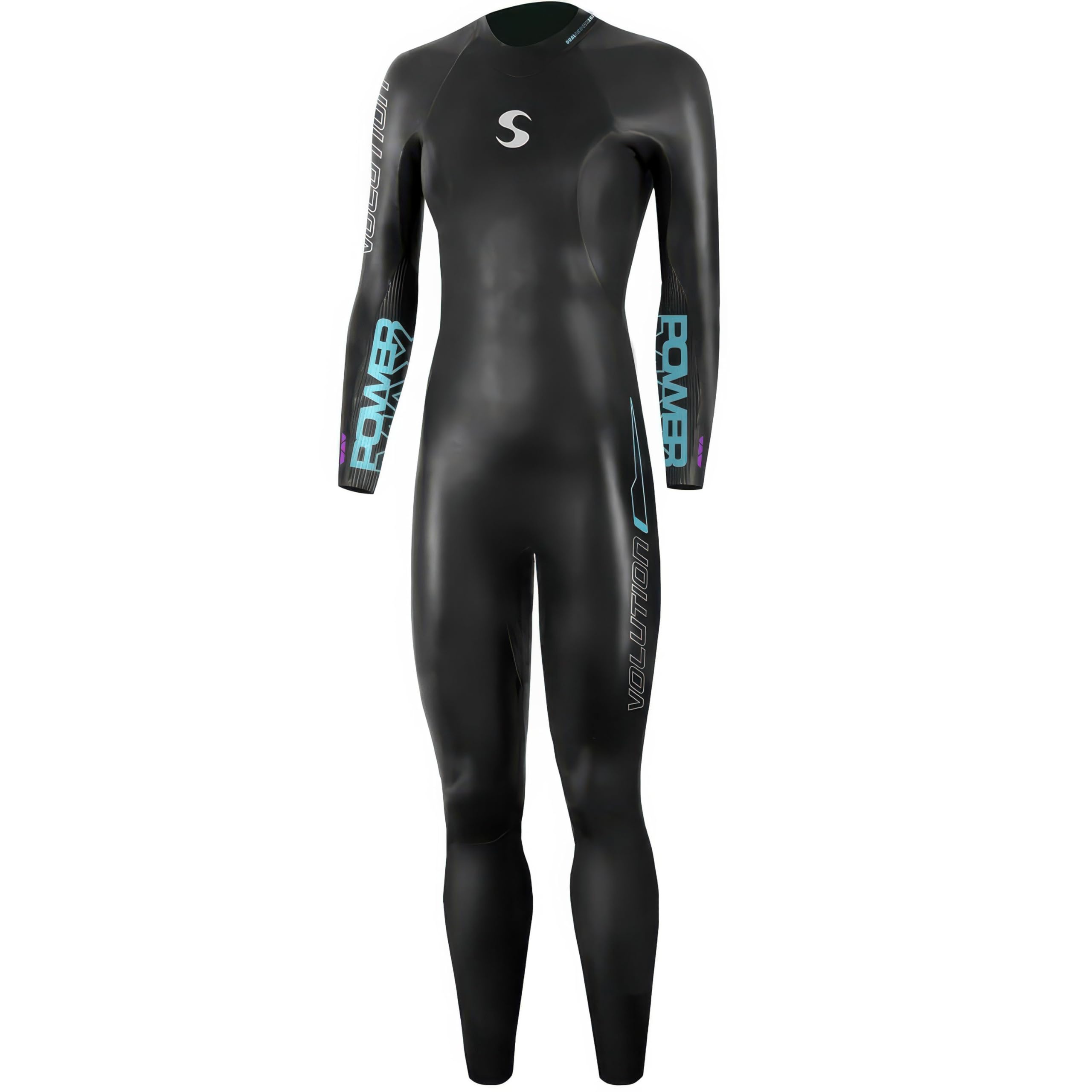
Built around a soft neck so long swims stop being a chokehold.
Neck chafe is the thing that ruins full-sleeve wetsuits for a lot of swimmers, and the Volution attacks it directly. A super-soft SmoothSkin low neck collar lines both the inside and outside of the neckline, so the rubber does not grab at your skin as you turn to breathe. The chest and back carry a 3/2mm SmoothSkin neoprene core panel, which gives you lift and warmth where your body needs it most.
The arms get their own treatment. PowerMAX neoprene panels in the arms are cut for a full catch and pull, so your stroke does not feel like you are pulling against the suit. Seams are stitched and bonded to reinforce every panel junction and keep the surface smooth through the water. The internal YKK zip lies flat against your back and opens fast, so the transition is not a fight with your gear.
Two things to know before ordering. The fit runs tight in the arms for some builds, and it is meant to feel snug on land and release once you are in water — that is the design, not a fault. Durability is also a fair question, since a few owners saw tears. Treat it as a race suit, not a beater, and it will serve well.
The real draw: that soft double-lined neck, which is the reason this suit works for nervous swimmers on longer open-water efforts.
Order carefully: the arm fit runs tight and the suit is cut to feel snug on land, so trust the height and weight chart over how it feels dry.
For the racer who hates a tight collar: this is the full-sleeve suit that trades a little arm room for a neckline you can forget about.
Know before buying: expect a snug dry fit and treat the seams with care, as this is a race suit meant for the water.
7. Synergy Endorphin Wetsuit

The maximum-lift race suit, with a 5mm core that floats you like a cork.
This is the suit for a man chasing buoyancy in cold open water. It carries a 5mm thick core buoyancy panel, dropping to 3mm through the lower legs and back and 2mm through the arms and shoulders. That 5mm core is the maximum buoyancy allowed in triathlon wetsuits, and the maker states it creates nearly double the buoyancy of a 3mm suit. Think of it as built for the guy who wants to ride high and save energy for the run.
The materials are the premium reason for the price. The hydrodynamic neoprene uses Yamamoto #39 with SCS silicone-coated SyPrene, and the suit claims 680 percent flexibility. That number is about how far the rubber can stretch and snap back, which is what lets a 5mm suit still move with your stroke. The internal YKK zip is the highest grade anti-corrosion option and lies flat to cut drag. A soft low neck with smoothskin on both sides means you barely feel it against your throat.
The obvious question is value. The fit also splits opinion — some find it perfect, and one found it super tight around the neck. If those two points give you pause, the Volution above shares the same neck focus with a thinner body.
Why It Leads On Buoyancy
- 5mm core panel is the maximum buoyancy allowed in triathlon suits
- Yamamoto #39 neoprene with SCS silicone coating for speed
- 680 percent flexibility keeps a thick suit moving with your stroke
- Anti-corrosion YKK internal zip sits flat to reduce drag
Worth Weighing
- Premium construction that some feel is overpriced
- Neck and fit run tight for some body types
Made for: the cold-water triathlete who wants every bit of legal lift and does not mind paying for premium neoprene.
Think twice if: your budget is tight or you have been pinched by tight necks before — the thinner Volution is the gentler call.
Know the Specs
Millimeter thickness (the number before “mm”)
Thickness tells you how much foam sits between you and the water. A 3mm suit is the everyday choice for milder water and freer movement. A 5mm suit packs more warmth and lift, which is what cold-water swimmers want. Numbers like 3/2 mean the body is 3mm and the arms or legs taper to 2mm for mobility where you move most.
Neoprene grade and coating
Neoprene comes in different grades. Yamamoto #39 is a high-grade foam, and a coating like SCS silicone goes on top to cut drag through the water. That is why premium suits feel slicker and glide faster — it is the material and the coating working together, not a label trick.
Seam construction
Flat-lock stitching joins panels with a stitched seam that bends with you. Glued and bonded seams fuse the rubber for a smoother surface and a better water seal. Better seams mean fewer flushes of cold water and a longer life before a rip appears, so this is worth checking on any suit.
Sleeveless, shorty, or full
Sleeveless frees the shoulders for long pool or warm-lake swims. A shorty covers the torso with short arms and legs, so it is easy on and easy off, best for warm water. A full suit covers everything for cold water and maximum lift, but takes more care to enter and exit.
Common Questions
Should I buy a 3mm or 5mm wetsuit for swimming?
How tight should a swimming wetsuit feel when I first put it on?
Can I wear a shorty wetsuit for cold water swimming?
Is a front zip or back zip better for a swimming wetsuit?
How do I stop my neck from chafing in a full-sleeve wetsuit?
What does 3/2mm thickness actually mean on a wetsuit?
Can I use a triathlon wetsuit for regular pool swimming?
How should I wash and store a neoprene wetsuit?
Will a thicker 5mm wetsuit slow me down?
How long should a swimming wetsuit last?
The Bottom Line
For most swimmers, the wetsuits for swimming winner is the XTERRA Volt because the sleeveless 3/2mm build frees your shoulders and cuts drag, and a 4.5+ star crowd favorite across 100+ ratings confirms it holds up. If cold water is your reality, grab the Owntop 5mm for that 5mm foam body and sealed cuffs. And for long open-water races where the neck is the deciding factor, the Synergy Volution is the one to reach for.
How we choose
We do not accept paid placement. Every pick is matched to a real buyer and a real use-case; we do not hands-on test units.
Sources
Specifications: manufacturer listings and product documentation. Review insights: verified customer reviews, as of November 2026. Pricing: not shown on this page (it changes often); check the current price via the retailer link.
As an Amazon Associate, Tactical Gear Guy earns from qualifying purchases. This does not affect which products we feature.