Specs are compiled from manufacturer listings and verified buyer reviews and can change over time — please confirm the key details on the product page before buying.
A sportbike helmet has one job you cannot compromise on: keeping your head intact when the worst happens. Everything else — how quiet it is at highway speed, how well the visor clears in rain, whether your glasses fit underneath — is a bonus built on top of that. The picks below all wear a real DOT certification, many go further with Snell or ECE 22.06 testing, and the ordering here is by what each one does best for a rider, not by what it costs.
This guide is built by comparing the manufacturers’ published specifications and the patterns across verified customer reviews, so you get each pick’s real strengths and trade-offs instead of marketing spin.
You will see how shell material, liner fit and vent layout change the ride, because those three things decide whether a helmet disappears on your head or fights you all day. Every pick here has been checked the same way, which is what makes this shortlist of top sportbike helmets worth your time.
Top Picks


How To Choose The Best Top Sportbike Helmets
Start with the certification label, not the paint job. A sportbike helmet is a piece of safety equipment first, and the sticker inside tells you how much testing it survived. From there, weight, head shape and vent placement decide whether you actually want to wear it on a two-hour ride.
Read the certification before anything else
DOT means the helmet meets Federal Motor Vehicle Safety Standard 218, the baseline US road requirement. ECE 22.06 is a European standard that adds more impact testing, and several picks here carry both. Snell M2020D is a voluntary standard with its own lab testing, and the Shoei RF-SR carries it alongside DOT and FMVSS 218. Any of these is a real bar to clear — a helmet with no certification is not a helmet you should ride in.
Shell material and weight
Polycarbonate and ABS shells are the common budget and mid-range choice, and they are strong enough for street riding when molded well. Fiberglass and composite shells cost more and usually shed weight, which matters because helmet mass is what your neck fights at speed and in a fall. The Shoei RF-SR uses a fiberglass-and-organic-fiber AIM shell at 3.5 pounds; the AGV K1 S uses thermoplastic at 1580 g. Lighter is easier on your neck, but fit and certification matter more than a few ounces.
Head shape decides comfort
Most helmets are built for an intermediate oval head — slightly longer front to back than side to side. If your head is rounder or wider, a lid built for a different shape will press at the forehead or the sides no matter what size you buy. Look for brands that publish their internal shape, and expect a snug fit on day one, because the liner packs down slightly with use.
Vents, visors and fog
Sportbike riding sits you behind a small screen, so chin-bar vents and top intakes do most of the cooling work. A Pinlock-ready shield means you can add an anti-fog insert later; on several picks here that insert is sold separately, so budget for it. A drop-down internal sun visor saves you swapping shields when the light changes, which is genuinely useful on a commute that runs into dusk.
Side-by-Side Comparison
| Model | Best For | Certification | Shell Material | Stated Weight | Amazon |
|---|---|---|---|---|---|
| Shoei RF-SR★ Best Overall | Long-haul sport riding | DOT, FMVSS 218, Snell M2020D | Fiberglass / organic fiber (AIM) | 3.5 lb | Amazon |
| LS2 AssaultBest Value | All-day value with sun shield | DOT, FMVSS 218 | Kinetic Polymer Alloy (KPA) | — | Amazon |
| HJC C10Beginner Pick | First helmet, tight budget | DOT, FMVSS 218 | Polycarbonate | 3.5 lb | Amazon |
| HAX Obsidian Pro | Dual visor on a budget | DOT, ECE | ABS / EPS / PC | 2.09 kg | Amazon |
| ScorpionEXO R330 | Dual-certified entry lid | DOT FMVSS 218, ECE 22.06 | Polycarbonate | 4.5 lb | Amazon |
| ILM MF510 | Adjustable liner fit | DOT, FMVSS 218 | ABS | 6.4 lb | Amazon |
| ILM 861A | Dual visor + rear wing | DOT, FMVSS 218 | ABS / EPS | 2.31 kg | Amazon |
| HAX Force | Night visibility | DOT, ECE 22.06 | ABS / PC | 4.6 lb | Amazon |
| HJC i10 PLUS | Integrated sun visor + glasses | DOT | Polycarbonate | 5 lb | Amazon |
| ScorpionEXO T520 | Touring comfort and comms | DOT FMVSS 218, ECE | Polycarbonate | 4.8 lb | Amazon |
| AGV K1 S | Track-inspired sport fit | ECE 22.06, DOT FMVSS 218 | Thermoplastic | 1580 g | Amazon |
Detailed Reviews
1. Shoei RF-SR Full Face Motorcycle Helmet
Our pick — 4.5+★ from 400+ verified ratings; the strongest balance of quality and price.
The only lid here with Snell M2020D stacked on DOT, and owners notice the sturdier build.
This is the pick for the rider who treats a helmet as long-term gear, not a seasonal purchase. The shell is built from Shoei’s AIM construction, a layering of fiberglass and organic fibers designed to spread impact energy, and it clears three separate standards: DOT, FMVSS 218 and Snell M2020D. That Snell label is voluntary and costs the maker money to earn, which is a large part of why this one sits at the top of the list.
At 3.5 pounds it is not the lightest shell in this guide, but it stays stable at speed and fits an intermediate oval head shape — the fit most riders land in. Multiple intake and exhaust ports move air through, so a summer commute feels breezy instead of baking. The interior is a 3D Custom system (a liner that wicks moisture and pulls out for washing), and the Emergency Quick Release System lets a trained responder remove the cheek pads if you go down.
The shield is optically correct and Pinlock EVO ready, so fog on a cold morning is a solved problem once you fit the insert. Owners single out the build quality and the intermediate-oval fit, both of which draw steady praise. The honest catch is wind noise: it is the one area where opinions split, so if you ride long highway stretches, plan on earplugs. Worth knowing, the LS2 below has more reviews behind it, but the Shoei holds the higher score at 4.5+.
Where it earns the top slot
- Three certifications stacked — DOT, FMVSS 218 and Snell M2020D
- AIM fiberglass-and-organic-fiber shell built for impact spread
- Emergency Quick Release System for safer removal after a fall
- Washable, removable 3D interior with moisture-wicking fabric
- Pinlock EVO-ready optically correct shield included with the helmet
What to weigh before you buy
- Wind noise is the one mixed report — earplugs help on long runs
- Heavier than a thermoplastic shell at 3.5 lb
- Premium-tier spend for a full-face street helmet
Built for: the rider who wants the strongest certification stack on this list and will keep the helmet for years.
Think again if: you do most of your miles at highway speed and noise is your first priority.
2. LS2 Helmets Assault Full Face Motorcycle Helmet W/ SunShield
Three shell sizes and a composite shell at an entry-level price — the volume leader of this group.
LS2’s Assault makes its case on construction rather than marketing. The shell is molded from Kinetic Polymer Alloy, a composite the company describes as lightweight and strong, and it comes in three separate shell sizes so the helmet is not one big mold stretched across the size range. Inside, a multi-density EPS liner (the foam layer that absorbs impact) backs up a comfort liner that wicks moisture, dries fast and pulls out for washing. The pads are pre-curved using LS2’s 3D laser process, which is aimed at eliminating pressure hot spots.
Cooling comes from adjustable vents on the chin bar and crown, working with a rear spoiler and side venturi vents to pull air through. The eye port is wide and takes an optically correct Pinlock-ready shield — the insert is sold separately, so factor that in. Certification is DOT and it meets the FMVSS 218 standard.
The rear spoiler is not just styling; it is part of the airflow design and helps the helmet stay settled when you are tucked. Riders report long rides without neck fatigue, which tracks with the KPA composite shell and three shell sizes. The one thing to brace for is wind noise — it is the mixed note in an otherwise strong record. Among the picks here, it carries one of the deepest review bases of any value-tier helmet.
Shell sizing done right: three shell sizes across the range means the smallest head and the largest head both get a proportional lid, not a compromise.
The noise question: wind noise is the split point in the feedback — fine on back roads, more present on open highway, so pair it with earplugs if that is your commute.
Reach for this one if: you want composite-shell construction and a sun shield without climbing into premium territory.
Look elsewhere if: you need Snell-level certification and nothing less will do.
3. HJC C10 Solid Full Face Motorcycle Helmet
The price you pay for a first lid, without giving up vent channels or speaker pockets.
HJC built this as a starter helmet and it shows in the right places. The polycarbonate shell is molded with CAD technology for a close fit, and at 3.5 pounds it lands in the same range as helmets costing a good deal more. The DOT FMVSS 218 certification covers energy absorption, penetration resistance and chin strap integrity — the three things the standard actually tests.
Venting runs through the ACS Advanced Channeling System, with 3 intake and 2 exhaust vents that move heat and humidity up and out. The interior liner wicks moisture and dries quickly, and both the crown and cheek pads come out for washing. There are speaker pockets built in for a Bluetooth communicator, which is a detail many budget lids skip.
The HJ-34P shield carries 99% UV protection and an anti-scratch coating, and it is Pinlock ready if you add the insert. Owners agree it conforms well to the head and runs quiet for the price, which is what makes it a strong first helmet. Sizing and airflow are where the feedback splits, so measure your head carefully and expect to fine-tune the vent setting rather than leave it wide open.
Quiet for the money: soundproofing against wind is a genuine strength here, which is unusual in an entry-level shell.
Fit is on you: sizing advice runs both ways in the feedback, so get a tape measure out before you order.
For the first-time buyer: a DOT-certified shell with speaker pockets and Pinlock readiness at the lowest serious price here.
Not for: riders who need ECE or Snell certification to satisfy a track or a personal standard.
4. HAX Obsidian Pro Series Dual Visor Full Face Motorcycle Helmet

Two visors, two certifications and a glasses groove — all in one mid-range shell.
The Obsidian Pro suits riders who commute in changing light. An outer visor and an inner sun visor both have UV treatment rated to block about 98% of ultraviolet radiation — handy when you ride into a low sun and cannot swap shields. Certification covers both DOT and ECE, so it meets the bar most riders and tracks accept.
Fit gets real attention here. The liner is upgraded to a hypoallergenic padding set, and the helmet is built to sit comfortably over eyeglasses. There is an internal slot for a Bluetooth headset, so a communicator tucks away cleanly instead of pressing against your ear. Multiple vents are designed to flush out stale air quickly, and the aerodynamic shell shape is shaped to cut wind resistance and noise.
The visor uses Pinlock-ready plastic nails, and HAX points you to the DKS166 insert if you want true anti-fog — it is not in the box. Shell material is ABS with an EPS liner and polycarbonate elements, at 2.09 kg. If you want a graphic scheme rather than a plain shell, the range is wide. The trade-off is that this is the one pick here without a settled body of owner feedback yet, so treat the specs as your guide and confirm the visor tint you want ships with the color you pick.
The sun-visor advantage: a drop-down inner visor means no more squinting into a low afternoon sun or swapping shields at a red light.
Check the box contents: the Pinlock insert and a dark smoke shield are separate purchases, and accessories ship by product page.
Suits riders who: wear glasses and want a dual-visor shell with DOT and ECE coverage.
Skip if: you want an anti-fog insert in the box — here it is an add-on.
5. ScorpionEXO R330 Full Face Motorcycle Helmet

Emergency cheek-pad tabs and double certification at a price that reads budget-friendly.
ScorpionEXO calls the R330 a reworking of an earlier budget model, and the safety list shows it. It carries both DOT FMVSS 218 and ECE 22.06 certification, and adds an Emergency Release System: tabs on the neck roll let trained medical personnel pull the cheek pads out to remove the helmet with less strain on your neck. Reflective piping on those cheek pads helps you stand out in low light.
The polycarbonate shell is shaped for aerodynamics, with the aim of reducing drag and wind noise at speed. The eye port is large, giving a wide horizontal and vertical field of view, and the shield has an anti-scratch coating plus 95% UV protection. The Ellip-Tec ratchet system pulls the shield into the eye-port gasket on a 2-axis movement so it seals tight, and a Pinlock insert is available separately.
Inside, the Kwikwick 2 liner is built to wick moisture and stay comfortable across warm and cool weather, and both the liner and cheek pads come out for washing. Speaker pockets make it ready for most Bluetooth communicators, and there is a 5-year warranty behind the shell. Owners say the build quality holds up against far pricier brands, and the finish draws compliments. Comfort and fit split opinion, so try the sizing chart carefully — the shell rewards a correct fit.
Reasons it makes the list
- Double certified to DOT FMVSS 218 and ECE 22.06
- Emergency Release System cheek-pad tabs for safer removal
- Ellip-Tec 2-axis ratchet pulls the shield into a tight seal
- Reflective piping on the cheek pads for night visibility
- 5-year warranty backs the shell
What to plan around
- Comfort is a mixed report — the fit matters more than usual here
- Pinlock insert is an add-on, not included
- At 4.5 lb it carries more weight than the 3.5 lb lids above
Pick it for: dual DOT and ECE 22.06 certification plus an emergency release system at an accessible tier.
Weigh first: the comfort and fit feedback is genuinely split, so order with the size chart in hand.
6. ILM Motorcycle Helmets Full Face MF510
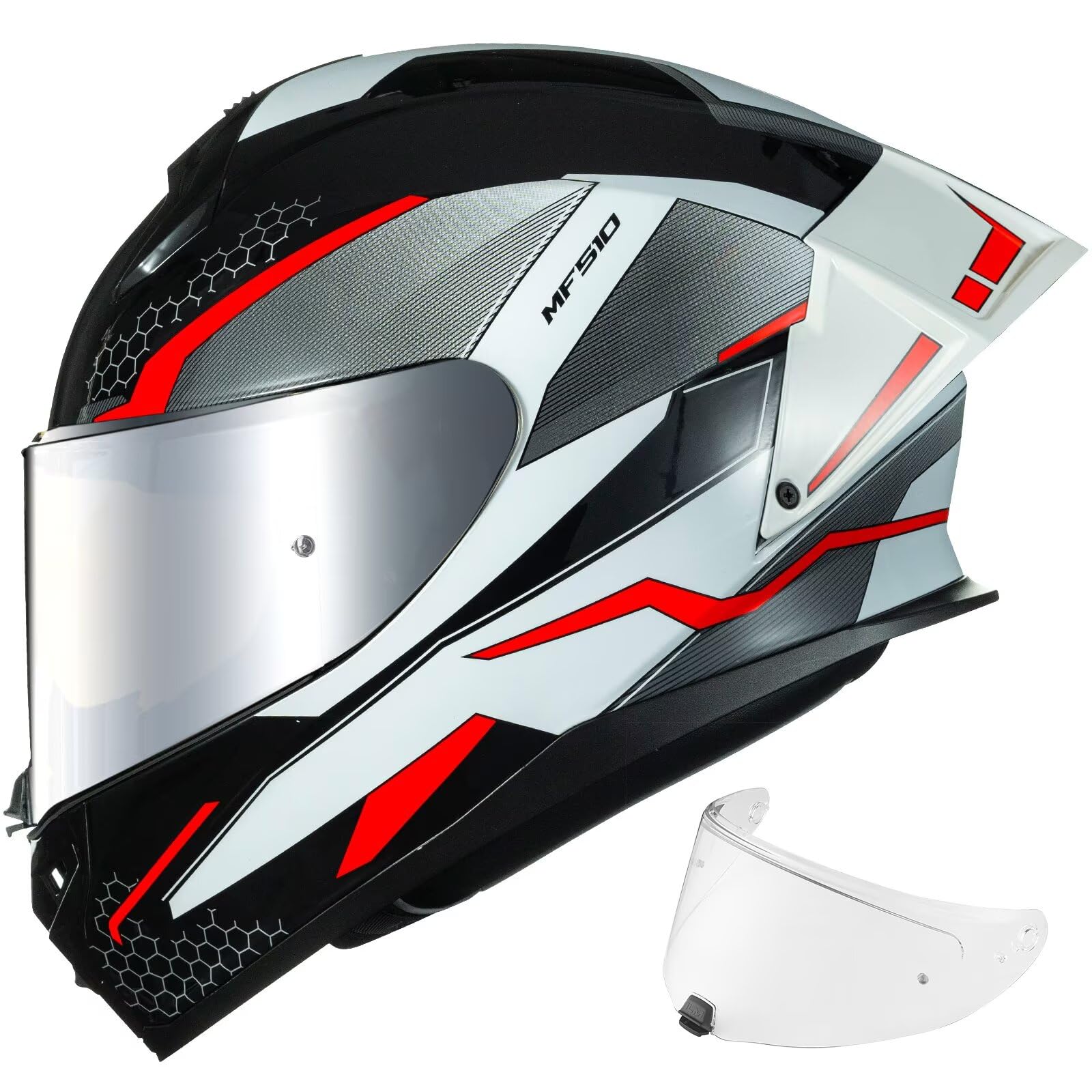
Eighty-one liner combinations to dial in fit — and an anti-fog insert that ships in the box.
Most helmets give you a size and hope it lands. The MF510 gives you choices: the ALS Adjust Liner System is built around 81 different liner options so you can fine-tune how the shell sits on your head. That is the standout feature, and it is aimed squarely at riders who struggle to find a stock fit that feels right.
Protection is handled by FlexImpact technology, which the maker describes as absorbing and dispersing impact energy, and the helmet meets FMVSS 218 and DOT safety standards. The shell is ABS, and the shape is aerodynamic — a large rear spoiler stabilizes airflow and is designed to cut wind noise and drag. A multi-channel vent system keeps air moving, and the visor uses UV treatment to blunt glare with a clear view day and night.
One genuine advantage over several picks above: a Pinlock 70 anti-fog insert is included rather than sold separately, so the fog problem is solved from the start. The feedback lands on quality and fit, and riders wearing glasses report that the shell accommodates them. Sizing is the one mixed note — some say it runs true, others find it a little small. At 6.4 lb it is the heaviest helmet on this list, so if neck strain is a concern, weigh that against the fit flexibility. The best advice with this one is to use the liner options, not guess at a size.
The fit-first build: 81 liner options is a real answer for anyone who has never found a comfortable off-the-shelf helmet.
An included insert: the Pinlock 70 comes with it, unlike most of this list where you buy the anti-fog insert separately.
Choose it if: fit has always been your problem and you want an anti-fog insert included from day one.
Note before ordering: at 6.4 lb it is the heaviest here, and sizing feedback runs both ways.
7. ILM Full Face Dual Visor Motorcycle Helmet 861A

The rear wing and quick-release strap make this the street-and-track crossover of the group.
ILM’s 861A is the sportier sibling in this lineup. The ABS shell and high-density EPS foam meet or exceed FMVSS 218 and DOT standards, and the shape is built for aerodynamic stability at speed. The rear spoiler carries a passive vent designed to extract warm air out the back, which is a small design touch that pays off on a hot ride.
The visor setup is a dual system: a wide-angle outer clear visor with Pinlock EVO pins, and a retractable inner visor for bright light. The Pinlock insert itself is not included, so budget for that separately. Cheek pads are soft and plush, and optional interior components in different sizes let you customize the fit — the liners pull out and wash.
The quick-release strap is the detail that separates this one from a standard D-ring lid. A red rope pulls to release the chin strap and tension adjusts without a struggle, which matters when you are gloved up at a cold gas station. The shell and spoiler work together for stability, and riders note that the dual visors both move smoothly. Fit is the split point here — some find it perfect, others need the optional pads — and noise runs mixed too. If you ride mixed surfaces, the strap alone is worth a look.
What stands out
- Quick-release strap with red pull cord for easy gloved removal
- Dual visor: wide-angle outer plus retractable inner sun visor
- Rear spoiler with passive vent to pull warm air out
- Optional sizing components let you adjust the interior
- Washable liner and cheek pads
What to know going in
- Fit feedback is mixed — the optional pads are worth ordering
- Pinlock insert not included despite the ready pins
- Sportier shell shape may suit an oval head best
Good match for: riders who want a quick-release strap and a rear wing for a sportier look and feel.
Consider other sizes: the fit is the one thing that needs attention — order the optional pads if you are between sizes.
8. HAX Force Aerodynamic Full Face Motorcycle Helmet

Luminous patterns that light up on dark roads give this shell a real reason to exist.
If you ride at night, the Force has a feature the rest of this list does not: a glow-in-the-dark finish that lights up on dark roads. That is an honest visibility play, and it is the first thing people notice about the helmet. Certification is dual — DOT and ECE 22.06 — so the safety side is covered before the style question comes up.
Behind the graphics is a durable ABS-plus-polycarbonate shell, kept lightweight and shaped to resist wind at speed. The maker’s fit chart is the most detailed here: small runs 21.5 to 22 in, medium 22.3 to 22.8 in, large 23 to 23.5 in, x-large 23.8 to 24.5 in, and xx-large 24.8 to 25.2 in. Measure your head and match it to that chart rather than guessing. An adjustable strap locks the fit down.
Cooling comes from adjustable vents you can open or close, and the breathable liner is hypoallergenic and removable for cleaning. The outer lens carries UV protection, there is a retractable sun visor, and the helmet is eyeglass-compatible plus Bluetooth and Pinlock ready, though those accessories are sold separately. The glow-in-the-dark finish is the most-praised feature, with the fit close behind. Fogging is the honest weak spot: a few riders find it fogs up quickly, so treat the Pinlock insert as a priority, not an afterthought.
The night rider’s angle: the luminous pattern is a real visibility aid, not just a cosmetic choice.
The honest trade-off: fog buildup is reported, so plan to fit the Pinlock insert from the start and pick up a carrying case with the order.
Built for: the rider who rides at dusk or dawn and wants a shell that stands out in low light.
Not the pick if: fog-free visor performance from the start is your top must-have.
9. HJC i10 PLUS Solid Natural Motorcycle Helmet
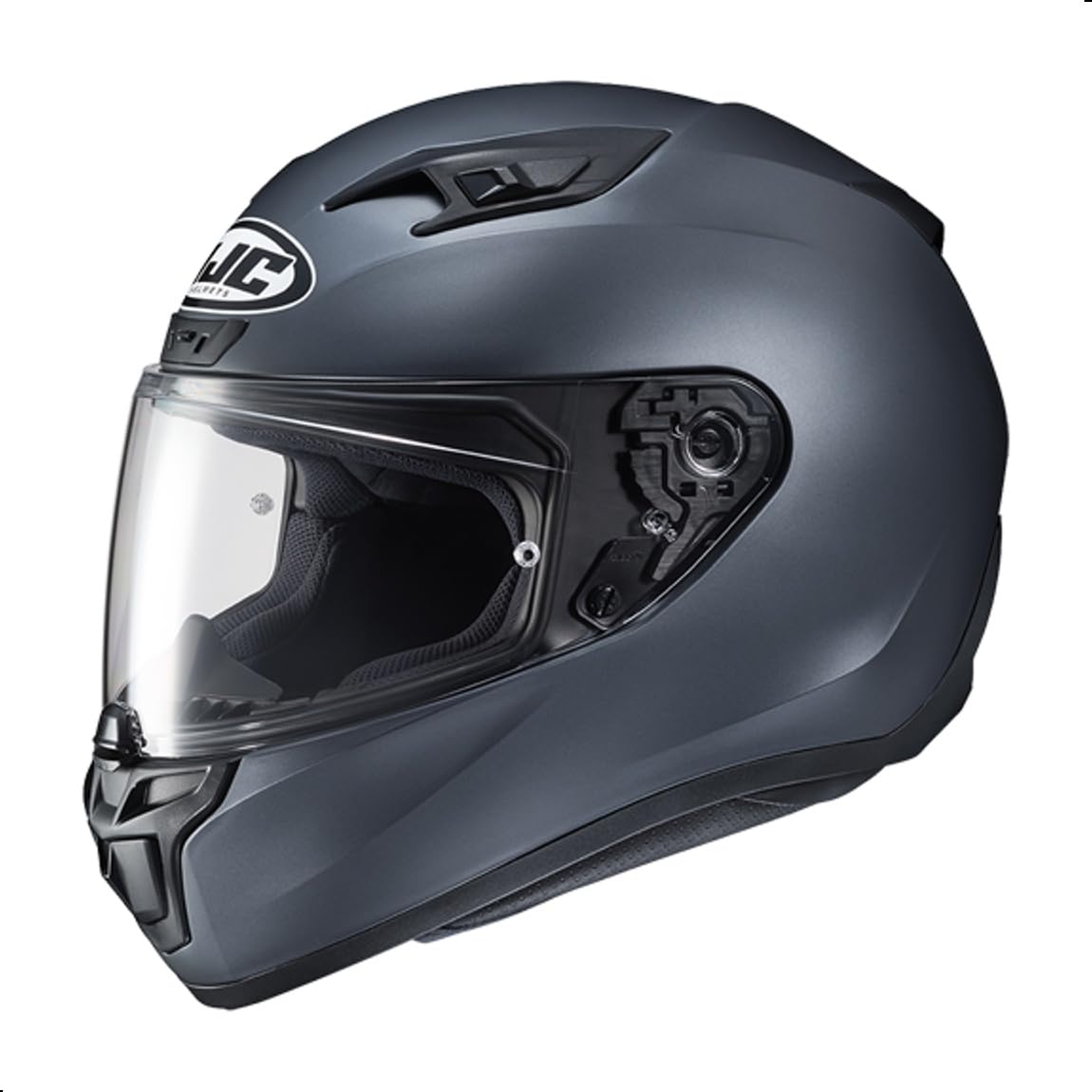
A tinted sun visor on a slide lever plus a built-in groove for riders who wear glasses.
The i10 PLUS is built for the rider who wants one helmet to do everything. A dark smoke-tinted sun visor sits inside, deployed by a slide lever that works with gloves on — no reaching around the shell at speed. The shell itself is a compact polycarbonate molded with CAD technology, and inside sits an impact-absorbing, multiple-density EPS liner. A D-ring with an adjustable retention strap locks it all down, and the DOT approval covers the US standard.
The main shield is an HJ-20M with an anti-scratch coating, 95% UV protection and a new 3D shape, and it is Pinlock ready — the insert is sold separately. The Rapid-fire Shield Replacement System lets you swap the shield without tools, and a 2-stage closure pulls it into a tight seal. Cooling comes from the ACS Advanced Channeling system: adjustable forehead and chin vents plus two rear exhausts push air front to back.
Two comfort details stand out. The Supercool interior is an anti-bacterial, moisture-wicking fabric with a glasses groove, so riders who wear eyeglasses are thought about here. Crown and cheek pads are removable and washable, and all C-70 cheek pad sizes are interchangeable. Owners praise the ACS vent airflow and the moisture-wicking Supercool liner. The catch is that at 5 lb it is one of the heavier shells on this list, so try it before a long tour if you are sensitive to weight.
For glasses wearers: the built-in groove means the arms of your frames sit in a designed channel, not jammed against your temples.
Weight worth noting: at 5 lb the shell is on the heavy side — light enough for commuting, more noticeable on a long haul.
Best match for: commuters who want an integrated sun visor and eyeglass compatibility in one shell.
Second-guess if: you want the lightest helmet here — at 5 lb there are lighter picks on this list.
10. ScorpionEXO T520 Full Face Touring Motorcycle Helmet
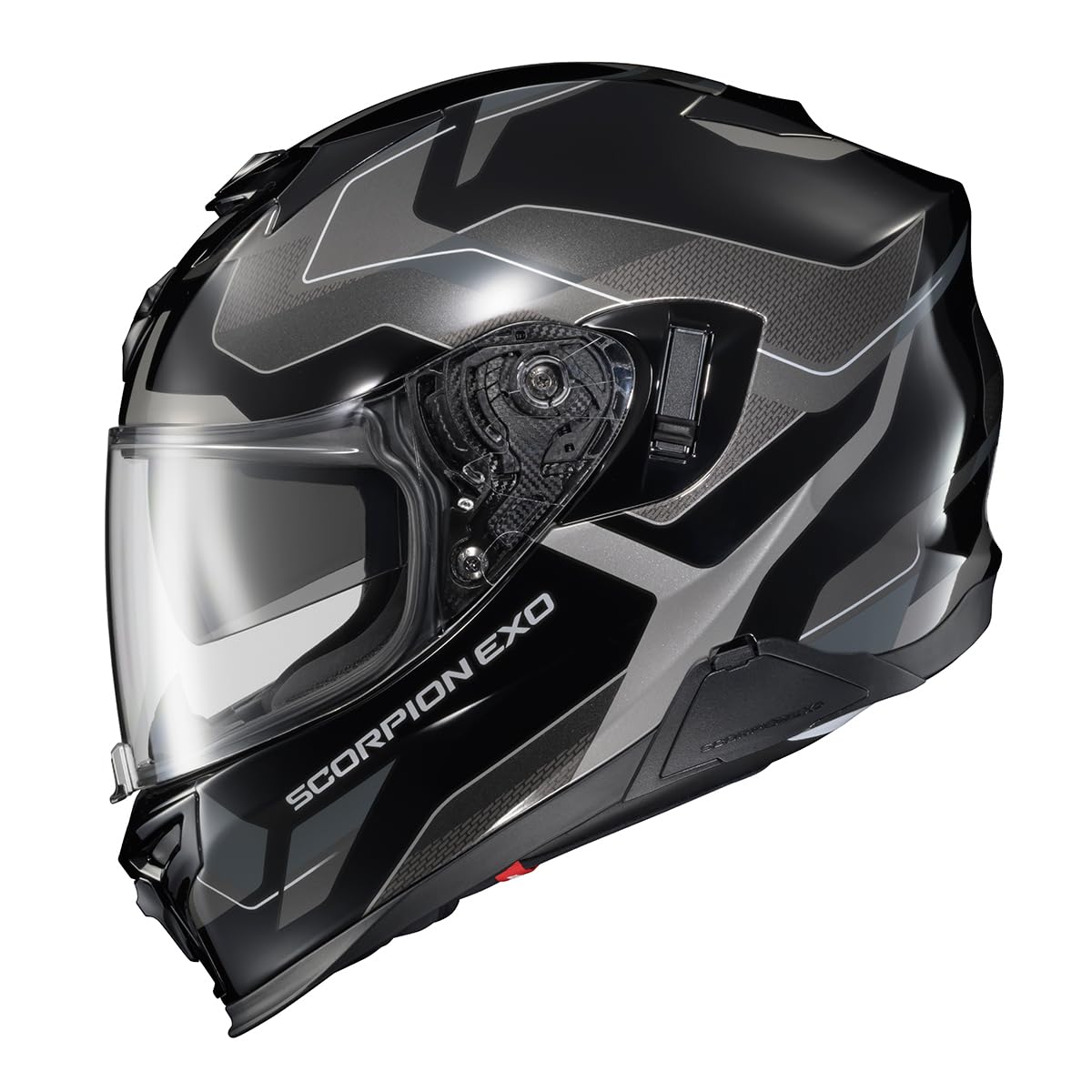
An inflatable cheek-pad system that locks the fit down — the long-distance specialist here.
The T520 is the touring pick, and the feature that earns it that spot is the AirFit Inflation System. It lets you inflate the cheek pads to a custom fit, which the maker says helps cut wind noise and lift at speed. Combined with the included Aero Skirt chin curtain, this is a shell built to be quiet and stable over long hours rather than sharp and light for the track.
The shell is ScorpionEXO’s advanced polycarbonate, backed by a dual-density EPS layer (expanded polystyrene foam that absorbs impact energy). It comes in three shell sizes across the full XS to 3XL range, so weight and fit match your size instead of one mold doing everything. A double D-ring retention system (two metal rings you thread the strap through) holds it secure. Certification is DOT FMVSS 218 and ECE, and a 5-year warranty covers the shell.
Ventilation is aero-tuned, with closeable top intakes forcing in cool air and exhaust vents pulling heat out. The mouth vent has two positions: the first acts as a defroster, the second as both defroster and ventilation. A breath deflector comes included for extra fog control. The KwikWick C liner wicks moisture, the KwikFit cheek pads make eyeglass use easy, and there are large speaker pockets plus EXO-COM readiness for a communicator. Owners consistently praise the AirFit cheek-pad fit and the overall build quality. Sizing is the split — some find it runs small — so check the chart before you commit.
What touring riders get
- AirFit inflation for a custom cheek-pad fit that targets wind noise
- Aero Skirt chin curtain and breath deflector both included
- Three shell sizes across XS to 3XL for a proportional fit
- EXO-COM ready with large speaker pockets
- DOT FMVSS 218 and ECE certified, backed by a 5-year warranty
Where it demands care
- Sizing feedback runs small — use the chart, don’t default to your usual
- Noise draws mixed comments despite the noise-reduction features
- 4.8 lb makes it one of the heavier lids here
Made for: riders who spend long hours in the saddle and want to inflate a fit custom to their cheeks.
Order with: a tape measure — the size feedback leans small, and a snug starting point matters here.
11. AGV K1 S Solid Gloss Full Face Motorcycle Racing Helmet
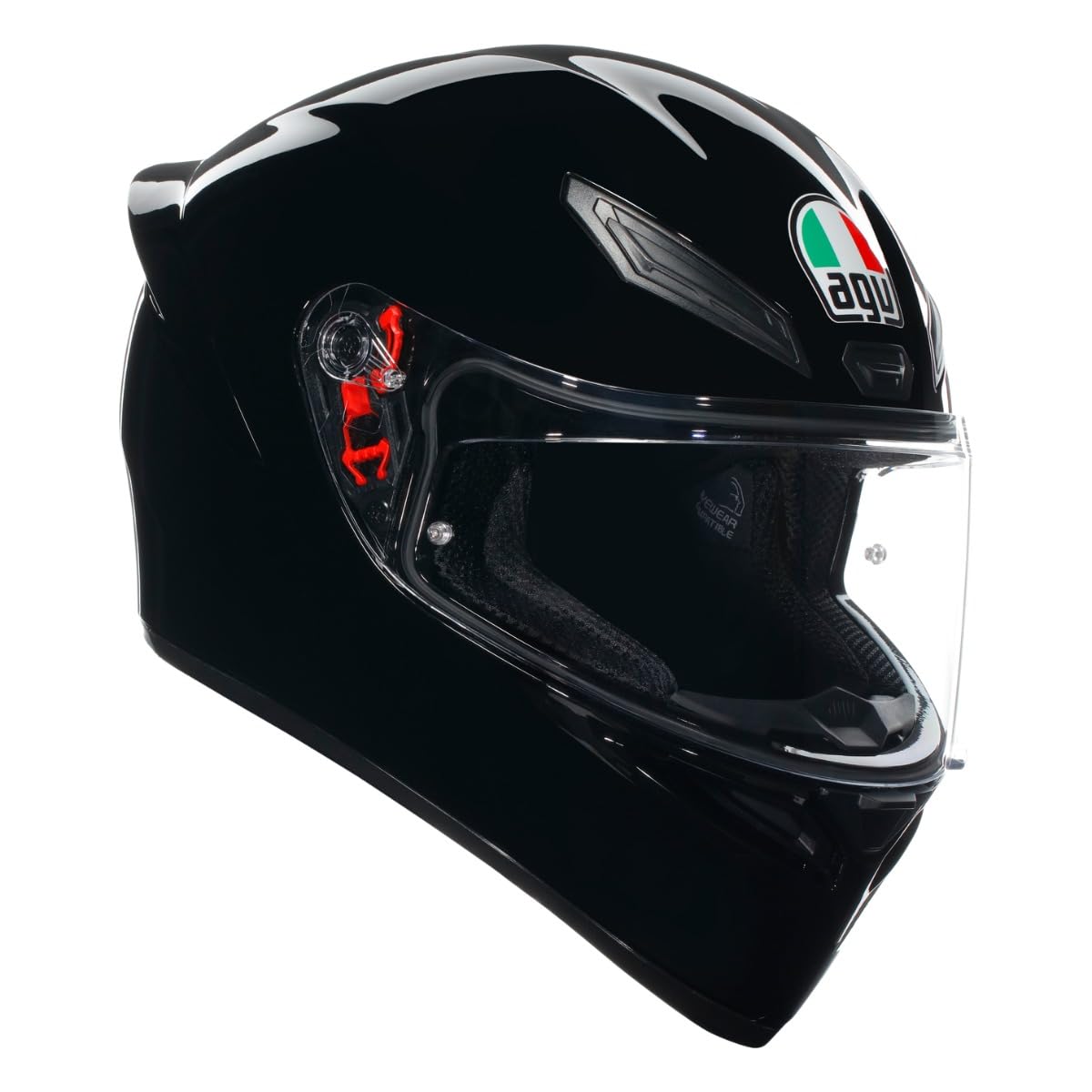
Seven vents and a race-bred shell shape — the closest thing to a track lid on this list.
AGV builds the K1 S as a racing helmet, and the spec sheet follows that intent. A high-resistance thermoplastic shell comes in two shell sizes for a balanced fit across the range, and 7 vents split between large front and crown intakes and rear extractors keep fresh air moving through on a hot lap. The GT4 visor is Pinlock MaxVision prepared, with a wide field of view and a clear visor included in the box.
The closure is a double D-ring chinstrap — the race-proven standard — and the liner is removable and washable. Certification covers ECE 22.06 and DOT FMVSS 218, so it meets both the European and US standards. At 1580 g it is the lightest shell here once you put the numbers side by side, which is the practical reason a track-oriented build feels different on your neck. The gloss finish takes well to a colored visor if you plan to swap one on.
What the feedback comes back to is quality — this feels built to race, and the shell sturdiness stands up over time. Value for the name on the box is a genuine strength. The honest limit is that a race-fit shell is snug by design, and sizing splits both ways in the feedback, so if you are between sizes, the larger one will usually suit a street rider better. It is the pick for someone whose riding leans aggressive.
Built for the aggressive rider: seven vents and a Pinlock MaxVision visor on a race-derived shell put the K1 S in track territory.
The fit is race-derived: sizing is split in the feedback because this shell hugs, so choose the larger of two sizes if you commute rather than ride track days.
For you if: you want a track-inspired shell with a double D-ring closure and the lightest weight on this list.
One honest note: the race fit is snug by design and sizing is split, so try before a long street ride.
Know the Specs
DOT vs. ECE 22.06 vs. Snell M2020D
DOT is the US baseline — it means the helmet meets Federal Motor Vehicle Safety Standard 218, which tests energy absorption, penetration resistance and chin strap integrity. ECE 22.06 is a European standard that adds its own impact testing, and it is often required for track use. Snell M2020D is a voluntary standard earned through separate lab testing, and it is the highest bar on this list. A helmet can carry more than one. The Shoei RF-SR carries all three; the LS2 and HJC C10 carry DOT; the AGV K1 S and several ScorpionEXO picks carry ECE.
Pinlock readiness and anti-fog inserts
A Pinlock-ready shield has small plastic pins that accept a silicone-sealed insert, and that insert is what actually stops fog by trapping a layer of air between the insert and the visor. Readiness is not the same as inclusion. Several picks here ship with the pins but not the insert, and the Liners below sell it separately. The ILM MF510 is the exception on this list — a Pinlock 70 insert comes in the box. If your climate is dampand cold, budget for the insert from day one.
Shell material: what the acronyms mean
The shell is the outer layer, and its material decides weight and how impact energy spreads. Polycarbonate is a tough molded plastic used in most entry and mid-range helmets. ABS is a similar hard plastic and is common on value shells. Fiberglass and composites, like the AIM construction in the Shoei RF-SR, layer fibers into the shell for strength at lower weight. Thermoplastic, used on the AGV K1 S, is a molded plastic engineered for high resistance. Inside every shell is an EPS liner — expanded polystyrene foam that crushes on impact to absorb energy — and the better helmets use multiple densities of it.
Head shape and liner fit
Head shape is invisible on a spec sheet but it decides comfort. An intermediate oval is slightly longer front to back than side to side, and most helmets are built for it. A round head or a very wide head will press against a lid built for a different shape, no matter the size. This is why some picks offer fit flexibility: the ILM MF510 ships with 81 liner options, the ILM 861A lets you add optional interior components, and the ScorpionEXO T520 inflates its cheek pads. A correct fit is snug around the crown and cheeks with no pressure points at the forehead.
Vents, spoilers and wind noise
Sportbike riding puts you behind a small screen, so vent placement matters more than vent count. Chin-bar intakes feed your face, crown intakes cool the top of your head, and rear exhausts or spoilers pull warm air out the back. The HJC C10 uses 3 intake and 2 exhaust vents; the AGV K1 S runs 7 vents; the ScorpionEXO T520 has 6. A rear spoiler, like the ones on the LS2 Assault and ILM 861A, also stabilizes airflow at speed. Wind noise is a separate issue — it comes from airflow over the shell and eye port, and it is the most common mixed report across this whole list.
Weight and what it means for your neck
Helmet mass is what your neck carries, both over a long ride and during the rotational forces of a fall. On this list weights run from 1580 g on the AGV K1 S to 6.4 lb on the ILM MF510, with most picks sitting between 3.5 and 4.8 lb. Lighter is generally easier on the neck, but a well-fitting heavier shell can feel better than a poorly fitting light one. Weight is also tied to how the helmet is built — more shell sizes usually means better weight distribution across the size range.
Common Questions
Is a DOT-certified helmet enough for sportbike riding?
What is the difference between ECE 22.06 and Snell M2020D?
Will a sportbike helmet fit if I wear glasses?
Does a Pinlock insert come with these helmets?
How do I know which helmet size to order online?
Can I add a Bluetooth communicator to these helmets?
Why is wind noise such a common complaint on sportbike helmets?
Should I buy a heavier or lighter full-face helmet?
How long does a motorcycle helmet last before I need a new one?
Can these helmets be used for track days or is that street-only?
The Bottom Line
For most riders, the top sportbike helmets winner is the Shoei RF-SR, because it is the only pick here that stacks DOT, FMVSS 218 and Snell M2020D on an AIM fiberglass shell with an emergency quick-release system. If you want composite-shell construction and a sun shield without crossing into premium spend, the LS2 Assault is the value play. And for long-distance comfort with an inflatable cheek-pad fit, the ScorpionEXO T520 is the one to reach for.
If you want track-inspired certification and the lightest shell on this list, the AGV K1 S pairs ECE 22.06 and DOT with 7 vents at 1580 g — a strong match for riders whose style leans aggressive. Whichever you choose, measure your head, match it to the brand’s chart, and treat the Pinlock insert (an anti-fog lens) as part of the purchase, not an optional extra.
How we choose
We do not accept paid placement. Every pick is matched to a real buyer and a real use-case; we do not hands-on test units.
Sources
Specifications: manufacturer listings and product documentation. Review insights: verified customer reviews, as of November 2026. Pricing: not shown on this page (it changes often); check the current price via the retailer link.
As an Amazon Associate, Tactical Gear Guy earns from qualifying purchases. This does not affect which products we feature.