Specs are compiled from manufacturer listings and verified buyer reviews and can change over time — please confirm the key details on the product page before buying.
Here is the uncomfortable truth about photochromic lenses and cars: your windshield is already filtering most of the UV light that makes those lenses darken. So a pair that turns pitch-black on a sunny sidewalk can stay stubbornly pale behind the wheel. The picks below all run clear in low light and darken in sun — and each one’s real-world behavior inside a car is where they differ. I’ll tell you which ones actually earn a spot on your dash.
This guide is built by comparing the manufacturers’ published specifications and the patterns across verified customer reviews, so you get each pick’s real strengths and trade-offs instead of marketing spin.
You still want a pair that goes clear enough to read a dark dashboard at dusk and dark enough to cut glare on an open highway — and that’s exactly what the nine pairs below are sorted on.
Top Picks


How To Choose The Best Transition Lenses for Driving
The core problem with any transition lens in a car is the windshield. Auto glass blocks much of the ultraviolet light that triggers the tint, so lenses that go dark outdoors often stay far lighter behind the wheel. You want a pair that goes clear enough for a dark dashboard at night and dark enough to soften a low sun on the highway — and that balance is what separates these picks.
Why the windshield changes everything
Photochromic lenses react to UV light, not to brightness alone. A standard car windshield filters a large share of that UV, so the tint inside the cabin may stay lighter than it does outdoors in direct sun. A pair still gives you daytime glare relief and a clear view at dusk, but don’t expect the near-black tint you get standing in a parking lot.
Polarization and glare off the road
A polarized lens (one that filters the flat, reflected light that bounces off wet asphalt, hoods, and chrome) cuts the harsh glare that makes your eyes tired on a long drive. Every pick here is polarized and rated UV400, which blocks both UVA and UVB rays. Together those two things matter more for driving comfort than how dark the lens gets.
Base tint and reaction speed
A lens with a very light base tint reacts fast but reads a touch reflective indoors. A darker base tint feels calmer in the car but can lag when you come out of a tunnel. Think about your typical drive: lots of tunnels and garage exits favor a fast-reacting lens, while open highway miles favor a calmer base tint.
Side-by-Side Comparison
| Model | Best For | Lens Type | Frame Material | Notable Spec | Amazon |
|---|---|---|---|---|---|
| Polarized Photochromic Sunglasses for Men★ Best Overall | All-around day and night driving | Photochromic polarized, UV400 | Aerospace-grade, ultra-light | Spring hinges open 30 degrees | Amazon |
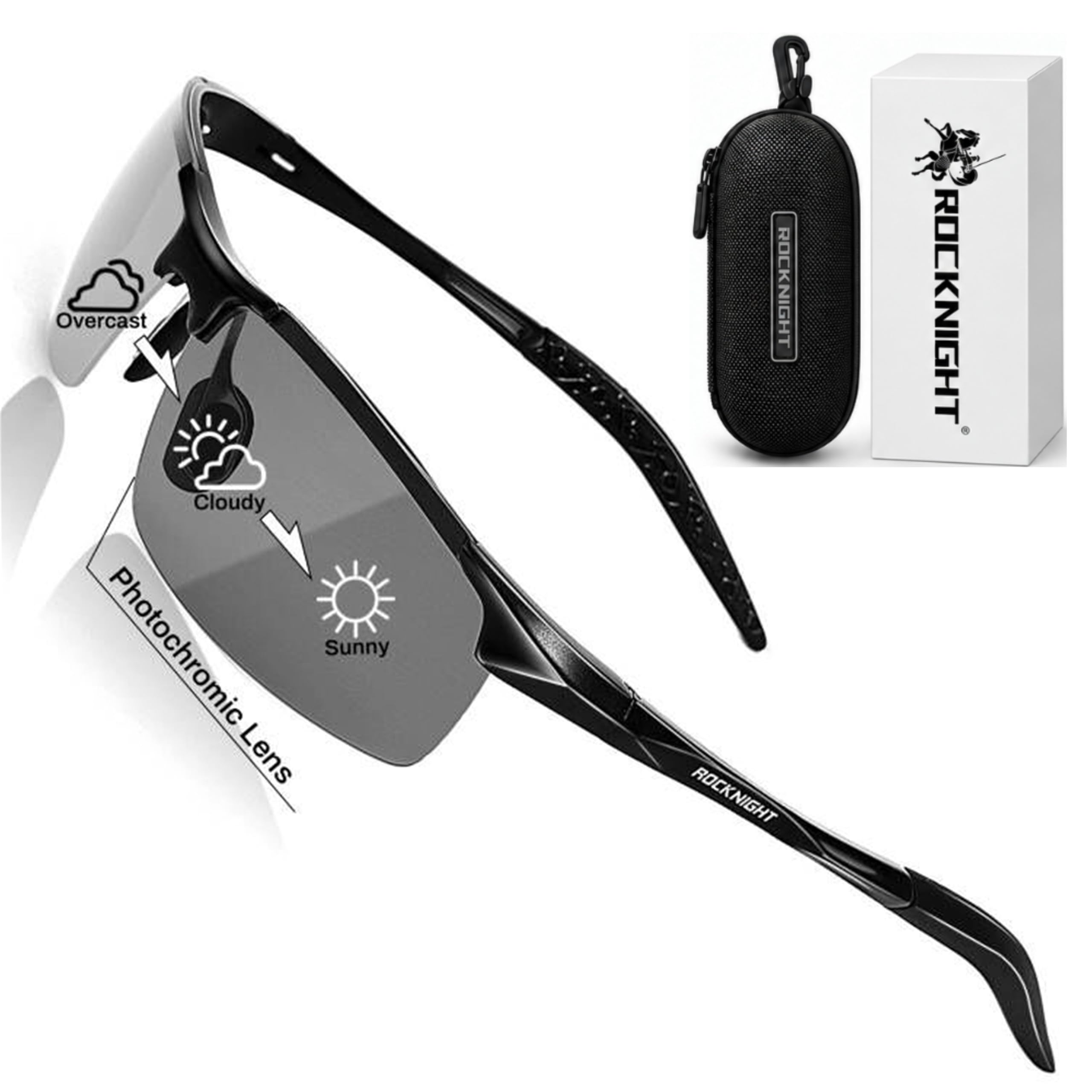
| ROCKNIGHT Polarized Photochromic Driving SunglassesFull Kit Pick | Full kit with adjustable fit | Photochromic polarized, UV400 | Al-Mg frame | 1-year product coverage | Amazon |
| IGnaef Women Night Vision GlassesBest for Night Glare | Night and bad-weather glare | Photochromatic, UV400 | — | 0.71 oz | Amazon |
| Paleshy 0.1s Auto-Tinting Sunglasses | Fast tunnel-to-clear transitions | Photochromic polarized, dual UV400 | Lightweight | 0.1s tint claim, hard case included | Amazon |
| YIMI Aluminum Half Frame Sports Sunglasses | Sport and driving hybrid | Photochromic polarized, UV400 | Aluminum half frame | 2.47 oz | Amazon |
| YIMI Z87 Day and Night Safety Glasses | Work-site and road safety | Photochromic polarized, UV400 | — | Z87 rated | Amazon |
| Transition Photochromic Safety Glasses ANSI Z87 | Industrial and cycling crossover | Photochromic, ANSI Z87 rated | — | ANSI Z87 rating | Amazon |
| COTIA 0.1 Seconds Smart Photochromic Sunglasses | Fishing and multi-scene wear | Photochromic polarized | — | 0.1 second tint claim | Amazon |
Detailed Reviews
1. Polarized Photochromic Sunglasses for Men
A photochromic polarized pair with spring hinges that open 30 degrees for a secure fit.
The defining feature here is the multi-layer compound lens. It stays clear in low light — night, indoors, a dim garage — and forms a protective dark layer on the outer surface when it detects strong UV. So on a bright morning drive the tint deepens to cut glare, and at dusk it eases back toward clear. That day-to-night swing is exactly what a driving lens needs.
The frame is built from an aerospace-grade material the maker calls ultra-light and durable, and the spring hinge temples expand up to 30 degrees so they sit snug across different face shapes. Spec-wise you get a 0.67-inch bridge, a 2.36-inch lens width, and a 1.65-inch lens height — proportions that suit a wide range of faces without pinching. Non-slip nose pads keep the glasses planted when you turn to check a blind spot.
The honest catch is the tint’s dependence on UV strength. Because the photochromic layer only activates when UV light is strong enough, it won’t color up unnecessarily — good for indoors, but it means the tint inside a UV-filtering windshield will stay lighter than it does outdoors. Treat the car cabin as “light tint, strong glare reduction” rather than “full blackout,” and you’ll be happy.
What earns it the top spot
- Full UV400 protection plus glare reduction in one lens.
- Clear in low light, dark in strong sun — a true day-to-night pair.
- Spring hinges expand 30 degrees for a secure, comfortable fit.
- Non-slip nose pads hold steady while driving.
- Impact-resistant and built for outdoor sports.
Where it asks patience
- Tint inside a windshield stays lighter than outdoors.
- Photochromic response is gradual, not instant.
Reach for this if: you want one pair that handles a dark garage, a bright highway, and the drive home at dusk.
Adjust expectations if: you expect full sunglasses-dark tint behind the wheel — the windshield limits that on every photochromic lens.
2. ROCKNIGHT Polarized Photochromic Driving Sunglasses
A photochromic driving pair with an adjustable aluminum-magnesium frame and a full accessory kit.
What wins people over with the ROCKNIGHT is the package as much as the lens. You get the glasses, a carton box, a zipper case, a cleaning cloth, instructions, a polarization test card, spare nose pads, and even a screwdriver. That polarization test card is genuinely handy for confirming the glare-cutting filter works the way it should. The frame is aluminum-magnesium, and the temple arms and nose pads are adjustable so you can dial in a fit rather than hope for one.
The tint here is gradual, not instant — the maker is upfront that darkening and fading times vary with UV exposure and temperature. That honesty matters, because it sets realistic expectations. Expect to give the lens a moment when you move between environments, and expect the tint inside a car to stay lighter than outdoors in direct sun, since windshields filter much of the UV that activates it.
Owners like the clarity and the glare reduction, and the polarization holds up in traffic. The split opinion is on how far the lenses darken — some say they shift to a lighter tint, others feel they fall short of the marketing. Balanced against that, you also get 30-day returns and a 1-year coverage window, which takes the risk out of trying them.
Best reason to buy: the complete kit and adjustable Al-Mg frame make it a low-fuss daily pair you can tune to your face.
Set your bar: judge it as a clear-to-light-tint driving lens, not a deep-blackout sunglass.
Toolkit and coverage buyer: if you want spare pads, a test card, and support in the box, this is the fullest package here.
Want instant blackout: the gradual tint may feel mild in bright noon sun.
3. IGnaef Women Photochromatic Night Vision Glasses
A 0.71-ounce round frame built to cut headlight and bad-weather glare after dark.
The whole reason to pick these is the night and weather angle. The lens is meant to soften oncoming high beams and reduce glare when you drive after dark or through cloudy, rainy, and foggy conditions. The round frame carries a 142mm width, a 46mm lens height, and a 141mm arm length — a boxy-free shape that’s easy to read as a women’s fit and sized for a smaller face.
Then there’s the weight. At 0.71 ounces, this is a genuinely light pair — the YIMI half-frame above sits at 2.47 ounces, so the IGnaef is roughly a fraction of that on the bridge of your nose over a long drive. It comes with a soft pouch and cleaning cloth, and there’s a sensible tip to skip paper towels, which can scratch the lens.
Glare reduction earns mixed feedback — some find it gives necessary relief and isn’t too dark, while others feel it doesn’t darken in the sun as promised. That’s a fair split to weigh. If your primary drive is night and foul weather, this is a comfortable, light pick. If you need a pair that goes deep-dark in direct midday sun, look elsewhere.
The light-on-your-nose case: at 0.71 oz it barely registers, and the round shape is gentle on a smaller face.
Where it stays modest: the sun-darkening is the weakest part of the story — it shines after dark, not at noon.
Night-shift driver: ideal if headlight glare and rainy nights are your main complaint.
Midday sun chaser: you’ll want a darker base tint than this delivers.
4. Paleshy 0.1s Auto-Tinting Sunglasses

A dual UV400 polarized pair built around a 0.1-second tint claim for tunnel exits.
The pitch here is speed. The maker claims a 0.1-second transition from dark to clear when you exit a tunnel, and the lens reacts to UV light rather than raw brightness. Daytime polarization is meant to cut the reflected glare off the road and car hoods, while a night mode is meant to soften headlight glare and boost contrast in rain. It’s a dual-purpose all-weather lens with UV400 protection and a light base tint for quick reactions.
The accessories are a real plus: every order includes a durable hard case, a soft microfiber pouch, a lens cloth, and a gift box. That hard case is worth having in a car where the glasses end up on a seat or in a door pocket. The maker also notes an upgraded inner anti-reflective coating to reduce internal reflections for a clearer view.
Here’s the catch you need to weigh. The auto-tint is the most-discussed feature in the reviews, and the verdict is split — a number of drivers find the lenses simply don’t get very dark. The maker says as much: the tint is comfortable for most sunny conditions but not as dark as static sunglasses. Factor that in if deep midday shade matters to you.
The case for the Paleshy
- 0.1s tint claim targets tunnel and garage transitions.
- Dual UV400 with polarized glare cutting for daytime.
- A hard case, pouch, and cloth come with every pair.
- Upgraded inner anti-reflective coating for a clearer view.
The honest caveat
- Auto-tint is the mixed spot — some find it doesn’t get very dark.
- A light base tint means slight reflections indoors.
Tunnel and garage commuter: pick it if quick clear-up on exit is your priority.
Needs deep shade: the light tint won’t match a static sunglass in bright sun.
5. YIMI Polarized Photochromic Aluminum Half Frame Sports Sunglasses

A 2.47-ounce aluminum half-frame sport design for cycling, running, fishing, and driving.
The YIMI half-frame is the pair you buy if you want one set of glasses for the bike and the car. The UV400 polarized lens blocks UVA and UVB rays and cuts glare and haze, while the photochromic layer adapts the transparency of the lens to the sunlight around you. That makes it equally at home on a run, on the water, or behind the wheel — no need to swap pairs when your day changes.
In the hand it’s a sub-three-ounce pair at 2.47 ounces, and the aluminum half-frame gives it a sportier, more contoured look than a full round frame. The package is straightforward: the glasses, a glasses box, a soft cleaning cloth, and a polarized test card. That test card is a small but genuinely useful way to confirm the polarization is doing its job.
What earns the most praise here is the build quality, and the honest wrinkle is sunlight coverage — a share of buyers feel the lens doesn’t go as dark as they’d like in direct sun. That’s the same windshield-limited story you’ll find across photochromic glasses; the lens works, it just stays lighter in a cabin. If you accept that, this is a versatile, well-built pick.
One pair, many uses: the photochromic lens and aluminum half frame make it a sport-to-drive crossover.
Know the limit: sunlight coverage is the mixed point — it stays lighter than a fixed sunglass at high noon.
Active all-day wearer: great if your day mixes a ride, a run, and a drive.
Wants maximal darkening: the tint tops out short of a dedicated dark sunglass.
6. YIMI Polarized Photochromic Z87 Day and Night Safety Glasses

A Z87-rated photochromic polarized pair built for the work site and the drive home.
The Z87 rating is the reason to look at this one. It’s offered as eye protection for worksite and everyday use while the photochromic lens shifts with sunlight, so it can serve a shop floor in the morning and a drive home at dusk. The lens is UV400 polarized to block UVA and UVB and cut glare and haze, and the package includes the glasses, a box, a cleaning cloth, and a polarized test card.
The fit is a bright spot — buyers consistently find they sit well, and the appearance gets positive notes too. The polarization draws mixed reactions, with some finding the glare cut solid and others less convinced by the anti-glare performance. Those are the two things to weigh if you’re choosing between this and a dedicated driver’s lens.
The main trade-off, and it’s the most-discussed point, is glare reduction. A share of owners mention the lenses don’t darken as advertised in the sun, and opinions split on whether the finish feels like good value or simply cheap. If you need a single pair that covers a work site and the road and you accept the light-in-cabin tint, it’s a practical crossover. If deep sun-darkening is your priority, the top picks serve that better.
Why the crossover works
- Z87-rated for site and everyday use.
- Photochromic and UV400 polarized for day and dusk.
- Fit and appearance earn steady praise.
Points to weigh
- Sun-darkening splits opinion — some say it stops short.
- Finish is a love-it-or-not detail on value.
Work-site to highway: the pair to grab if you need one set for safety and driving.
Deep-dark desire: the sun tint may feel lighter than advertised.
7. Transition Photochromic Safety Glasses ANSI Z87
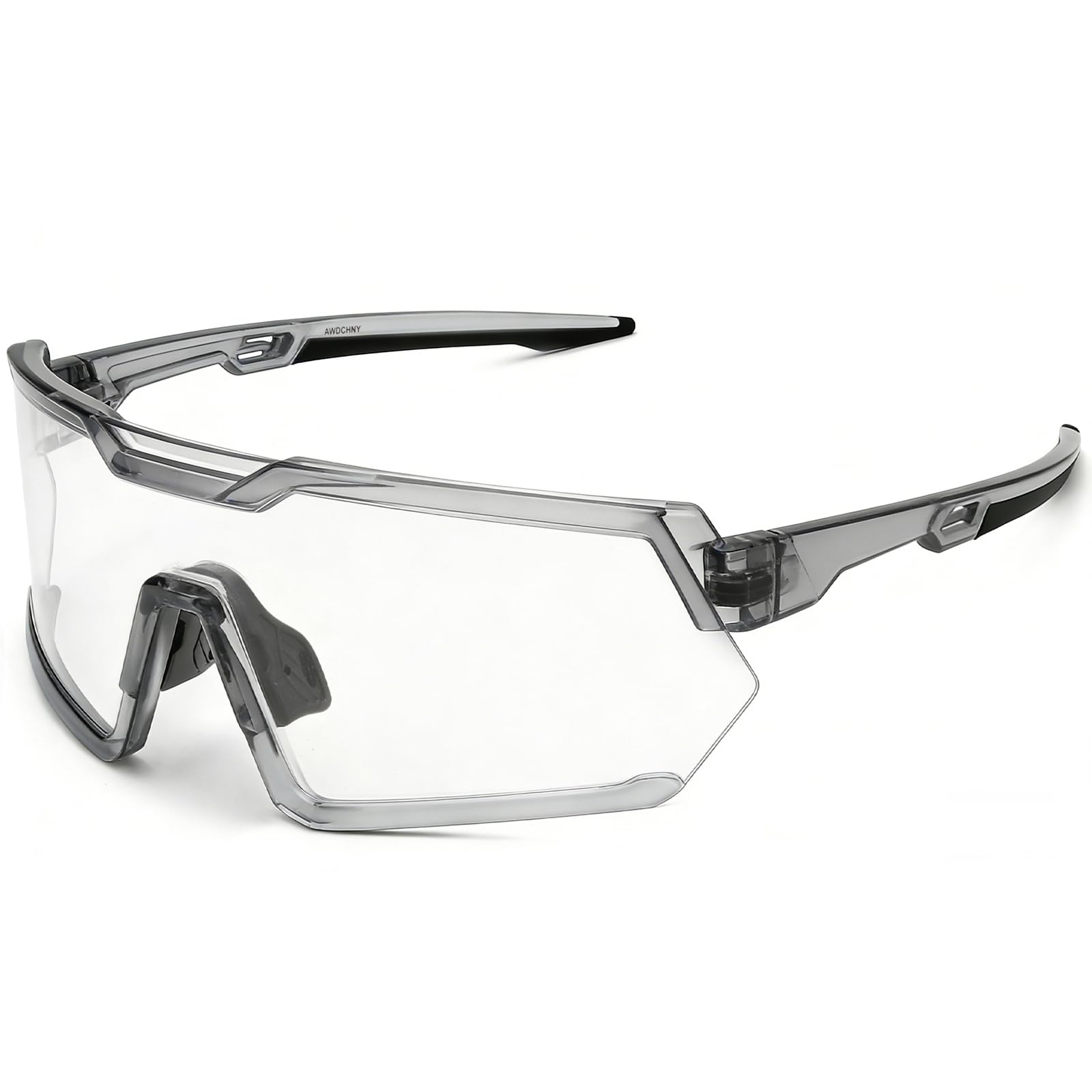
An ANSI Z87-rated transition lens for cycling, driving, and fishing.
This one leads on certification. It’s rated to ANSI Z87, the safety-glasses standard, and it’s a transition lens that goes clear and darkens as light changes — the maker lists cycling, driving, and fishing as the intended uses. Build quality is the thing that wins people over most, which is what you’d hope for from a pair meant to take knocks. It’s sold for both men and women.
The expected catch is the tinting. A share of buyers find the lens doesn’t darken sufficiently in sunlight, and it’s the most-discussed point in the feedback. That’s the familiar photochromic limitation, sharpened by the fact that this is a safety-first lens rather than a sun-obsessed sunglass. If you want protection that also transitions, the trade is a lighter tint at midday.
Value is the other split — some feel it’s more than they’d like to spend for the transition quality. Set that against the Z87 rating, which is something the plain sport picks don’t carry. If you need one pair for light protection and driving, it earns its place. If the tint’s depth is all that matters, keep reading.
Certification-first buy: ANSI Z87 rating and solid build quality make it the safety-minded choice.
The honest limit: the transition tint is the recurring gripe — it doesn’t go as dark as some want.
Safety on the job: the right call when ANSI Z87 protection is non-negotiable.
Sun-heavy driving: if midday darkening is your priority, the top three outperform it.
8. COTIA 0.1 Seconds Smart Photochromic Sunglasses

A multi-scene photochromic pair pitched at fishing and driving, with a 0.1-second tint claim.
The COTIA wants to be the one pair for every outdoor scene. It’s a 0.1-second smart polarized photochromic sunglass pitched at driving, fishing, and general outdoor use. The maker argues polarized lenses are the right choice for driving because they filter the flat, reflected glare that blurs contours and tires your eyes. Wearing it for fishing is meant to make it easier to see a drifting float without eye strain, and darker lens colors are meant to feel comfortable in summer.
Care is spelled out plainly: clean with water or the included soft cloth, never with alcohol or harsh chemicals that can break the lens surface, and keep it out of extreme heat and long damp storage to avoid deformation. Those are easy rules to keep and they protect the coating.
The caveat is that the feedback splits on quality and function — some find they work as described, others find the finish cheap and the function short of the claim. Lens visibility is the most-discussed concern, with buyers noting the lenses don’t darken as advertised. It’s a reasonable multi-use pair for casual days; it isn’t the most dependable darkener in this lineup.
Polarized-for-the-road logic: the glare filtering is aimed at drivers and anglers alike, with a fast-tint claim.
Where it wobbles: lens darkening and build are the mixed notes, so treat it as a light-use pair.
Fishing plus driving days: a solid casual pick if you want one pair for the water and the wheel.
Demands dependable darkening: the tint falls short of the claim for some, so a darker pick is safer.
Know the Specs
Photochromic vs polarized
Photochromic means the lens changes tint with UV light — clear in low light, darker in sun. Polarized means the lens filters the flat reflected light that causes glare off asphalt, hoods, and water. They do different jobs, and the best driving pairs combine them, so you get both auto-tint and glare control.
UV400 and what it covers
UV400 is a lens rating that blocks both UVA and UVB rays across the dangerous part of the spectrum. For driving, this is the baseline protection you want. Every pick on this list is rated UV400, which is a good sign that the lens is doing more than just darkening.
Reaction time and base tint
Reaction time is how fast the lens shifts between dark and clear. A fast 0.1-second claim helps on a tunnel exit. The base tint is the slight color in the “clear” state; a very light tint reacts faster but can show reflections indoors, while a slightly darker tint feels calmer in the car but can lag.
ANSI Z87 and Z87 safety ratings
ANSI Z87 is the standard marker for safety glasses meant to protect the eye from impact. When a pair carries this rating, it’s built to stand up to more than decorative lenses. If you need glasses for a work site as well as the road, this rating is the key spec to check.
Common Questions
Will transition lenses darken behind a car windshield?
Are these glasses safe to wear at night while driving?
What is the difference between photochromic and polarized lenses?
Do I need UV400 protection in driving glasses?
How long does a photochromic lens take to change tint?
Should I buy ANSI Z87 safety glasses for driving?
Will polarised lenses fix glare from oncoming headlights?
How do I clean photochromic lenses without damaging them?
Is a lighter base tint better for daytime driving?
Do photochromic sunglasses work for driving and fishing both?
The Bottom Line
For most drivers, the transition lenses for driving winner is the Polarized Photochromic Sunglasses for Men because its multi-layer lens goes clear in a garage and dark in sun, and the 30-degree spring hinges hold a secure fit. If your main battle is headlight glare after dark, the IGnaef Night Vision Glasses aim squarely at that and weigh only 0.71 ounces. And if you need an ANSI Z87 rating for the job site and the road, the Transition Photochromic Safety Glasses are the pair to reach for. One honest nudge: judge every photochromic lens by how it behaves inside a UV-filtering windshield, not on the sunny sidewalk where it looks darkest.
How we choose
We do not accept paid placement. Every pick is matched to a real buyer and a real use-case; we do not hands-on test units.
Sources
Specifications: manufacturer listings and product documentation. Review insights: verified customer reviews, as of November 2026. Pricing: not shown on this page (it changes often); check the current price via the retailer link.
As an Amazon Associate, Tactical Gear Guy earns from qualifying purchases. This does not affect which products we feature.