Specs are compiled from manufacturer listings and verified buyer reviews and can change over time — please confirm the key details on the product page before buying.
If your lawn edges have gone shaggy and the battery trimmer keeps dying halfway down the fence line, you already know what you need: a gas string trimmer that fires up and keeps cutting. The trick is picking one whose engine, shaft, and starting system match how much yard you actually have to clear. This guide ranks nine gas trimmers by what they genuinely do well — from a lightweight curved-shaft model for small suburban lots to a professional-grade straight-shaft machine for heavy brush.
This guide is built by comparing the manufacturers’ published specifications and the patterns across verified customer reviews, so you get each pick’s real strengths and trade-offs instead of marketing spin.
Some trimmers here start with a push button, some need a firm pull, and a few run on straight gas with no oil mixing at all. Below you’ll find the engine sizes, shaft types, cutting widths, and starting systems side by side, so you can match one to your own yard and skip the rest.
Top Picks
How To Choose The Best Top Rated Gas String Trimmers
You are not really shopping for a brand name. You are shopping for a match between an engine and the work in front of you. A half-acre suburban lot with tidy edging needs far less machine than two acres of blackberry and saplings. Get that match right and the trimmer feels easy. Get it wrong and you fight a heavy tool that bogs down in thick growth.
Start with engine size, measured in cc
The number that matters first is displacement, written in cc (cubic centimeters — the swept volume of the engine’s cylinder). A small engine around 22cc to 26cc is enough for routine grass trimming along fences, walkways, and flower beds. Step up toward 30cc and above when you expect thick weeds, tall grass, or brush. Bigger displacement usually means more weight to carry, so buy only the power your property actually demands.
Decide between 2-cycle and 4-cycle
A 2-cycle engine (also called 2-stroke) needs oil mixed into the gasoline. In exchange it is typically lighter and revs hard for its size. A 4-cycle engine (4-stroke) runs on plain gasoline with no oil mixing, which removes a whole chore from your refueling routine. The trade-off is that 4-cycle models tend to carry a little more weight. If you hate measuring oil, lean 4-cycle. If you want maximum output per pound, lean 2-cycle.
Match the shaft and cutting width to your layout
A curved shaft is shorter and easier to swing in tight suburban yards. A straight shaft gives you longer reach under shrubs, around fence posts, and beneath low branches. Cutting width works the same way: a 16-inch or 17-inch swath is nimble around obstacles, while an 18-inch swath clears open ground faster. Wider is not automatically better if your yard is crowded with things to trim around.
Look hard at the starting system
Cold-start hassle is the number one thing that makes people stop using a gas trimmer. Smart Start, Air Purge, SpringAssist, and push-button electric start all exist to shorten that fight. A push-button start that runs off an onboard battery means no cord pulling at all. Purge bulbs and easy-start chokes cut the pulls down to a few. Pay attention to this spec if you have shoulder or back trouble.
Side-by-Side Comparison
| Model | Best For | Engine | Cutting Width | Weight | Amazon |
|---|---|---|---|---|---|
| Echo SRM-2620 ProXtreme★ Best Overall | All-round trimming and edging | 25.4cc gas | — | 13 pounds | Amazon |
| LawnMaster No-Pull NPTGSP2617AEasiest Start | Push-button starting | 26cc 2-cycle | 17 inches | 18.9 pounds | Amazon |
| NEO-TEC 3-in-1 BC260EPA-XBest 3-in-1 | Three tools in one | 26cc 2-cycle | 16 inches | — | Amazon |
| Husqvarna 122C | Light yard work | 22cc 2-cycle | 17 inches | — | Amazon |
| PROYAMA 42.7cc 3-in-1 | Heavy brush clearing | 42.7cc 2-cycle | 18 inches | 19 pounds | Amazon |
| PROYAMA 40cc 4-Cycle PBC140 | No oil mixing | 40cc 4-cycle | 18 inches | 16 pounds | Amazon |
| Husqvarna 122LK | Attachment-capable trimming | 22cc 2-cycle | 17 inches | 10.6 pounds | Amazon |
| Troy-Bilt TB304S | Quieter 4-cycle work | 4-cycle | 17 inches | 15 pounds | Amazon |
| Echo SRM-3020T X Series | Professional landscaping | 30.5cc gas | 12 inches | 50 pounds | Amazon |
Detailed Reviews
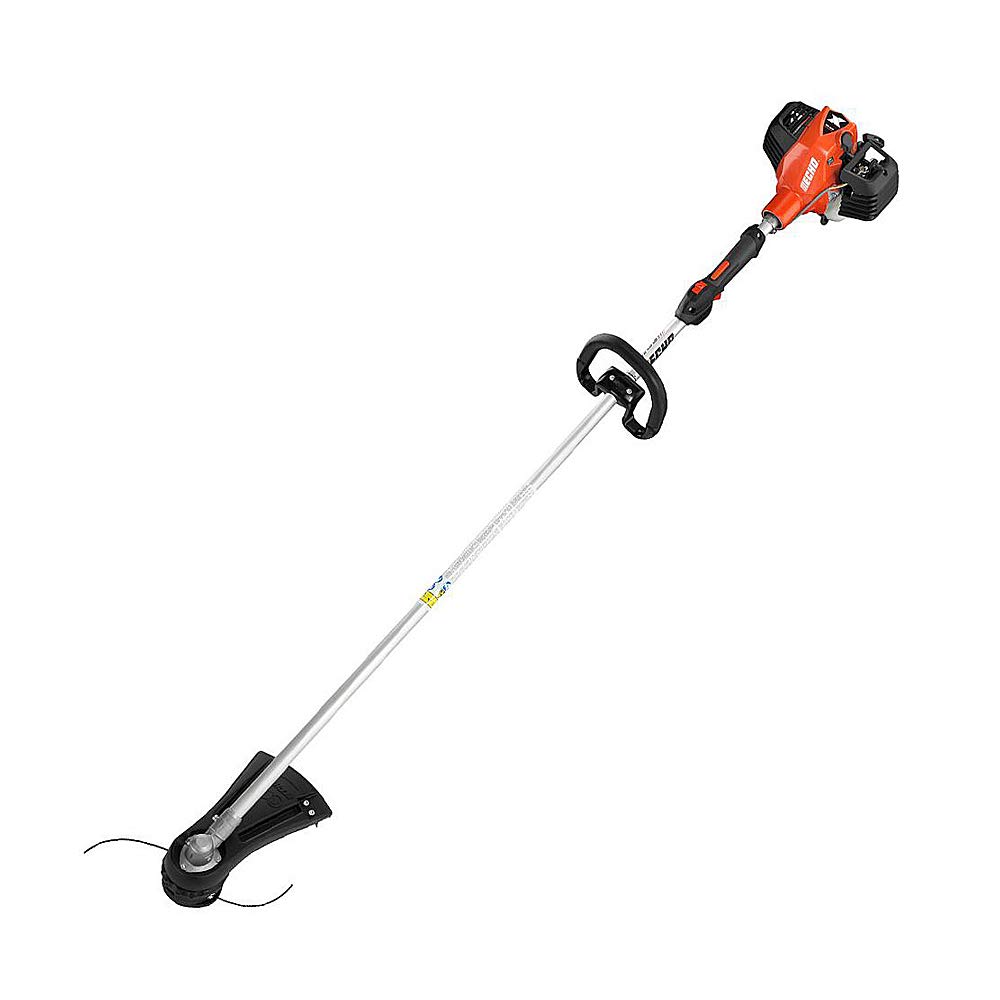
1. Echo SRM-2620 ProXtreme Trimmer
Our pick — 4.5+★ from 150+ verified ratings; the strongest balance of quality and price.
The straight-shaft workhorse that trims all season without asking for a battery.
Here is the trimmer most people should put at the top of their short list. It carries a 25.4cc gasoline engine that spins its cutting head at 8,500 rpm (revolutions per minute — how fast the line whips around). That speed translates to clean cuts through ordinary grass and light weeds without bogging down. At 13 pounds it is one of the lighter machines on this list, so you can carry it along a long fence line without your arms giving out. It also undercuts the heavier PROYAMA 42.7cc at 19 pounds and the Echo SRM-3020T at 50 pounds. That weight difference is the whole reason this one works for a homeowner doing their own yard rather than a crew running it all day.
Owners repeatedly report that it keeps running season after season. Performance is the single thing people talk about most, with functionality close behind, and the theme across both is that a tank of mixed fuel gets the job done without drama. Buyers report it outlasts and outcuts the battery-powered trimmers they used to own. Durability shows up too — at least one account has the same machine still working after four years of use. For a tool you leave in the garage and pull out every weekend, that staying power matters more than any single spec.
The honest catch is weight, and it splits opinions. Some owners call it light and easy to swing. Others feel it a little heavier than they expected after a long session, and that is a fair note if you have shoulder trouble. It is a 2-cycle engine, so you do need to mix oil into the gas before every fill. Reviewers also note the professional-grade billing fits: this is a tool built to work, not a featherweight toy. The 1-year commercial and 5-year consumer warranty backs that up.
What earns it the top spot
- 25.4cc engine turning 8,500 rpm handles routine grass and weeds with headroom
- 13 pounds is light next to the 19-pound and 50-pound alternatives here
- Straight shaft reaches under low branches and around fence posts
- Durability that holds up across seasons, backed by a 5-year consumer warranty
Where it asks a little of you
- 2-cycle design means measuring oil into the fuel every time you refill
- Some find the weight noticeable during long sessions
Pick this one if: you want a straight-shaft trimmer that starts, cuts, and keeps going weekend after weekend.
Think twice if: you want to avoid oil mixing entirely — the PROYAMA 4-cycle below runs on plain gas.
2. LawnMaster NPTGSP2617A Grass Trimmer
Press a button and it starts — the gas trimmer that skips the cord-pulling ritual entirely.
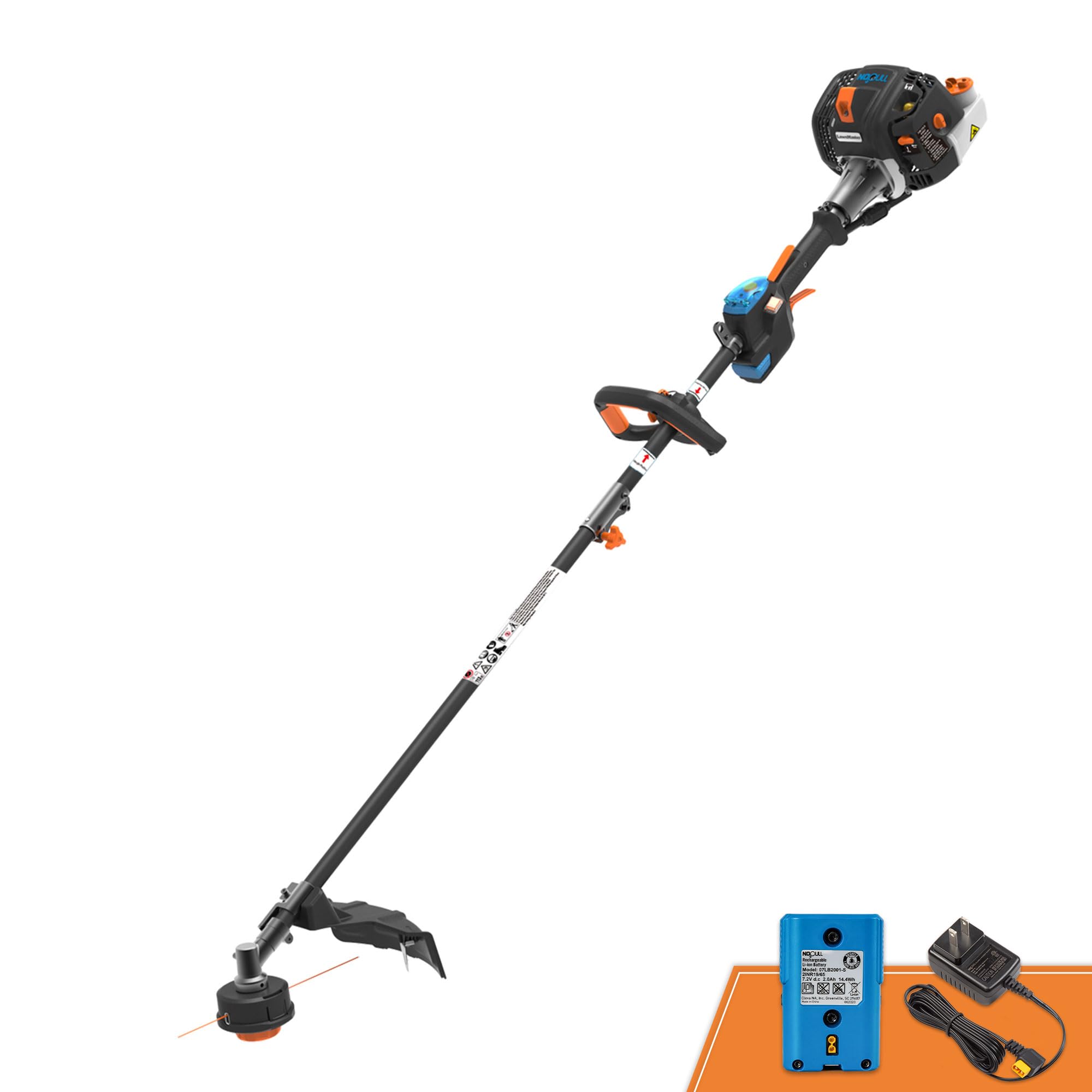
If yanking a starter cord is what keeps you from using a gas trimmer, this is your answer. A single button powers it up, and the onboard battery is rated for up to 250 starts on one charge. That is a genuinely different experience from the pull-start machines here. The 26cc 2-cycle engine drives a 17-inch cutting swath, and the head is loaded with 0.095-inch line so you can trim right away. A split shaft lets it break down for storage, and it accepts multi-tool attachments.
Where this one stands out with its owners is the simplicity. People who no longer want to wrestle a recoil cord, including older gardeners, describe it as the easiest trimmer they have used. The electric push start is the feature that comes up again and again as the reason it earns a spot in the shed. The adjustable anti-vibration handle slides and rotates a full 360 degrees, so you can position the grip where it feels right for your height and reach.
The trade-off worth knowing is a wide split of opinion on how long it holds up. Some owners mention it works like a champ; others have had one quit after minimal use. That spread is not a reason to write it off — it is a reason to buy from a seller with a solid return path and to use the split shaft and rapid-reload spool the way they are meant to be used. Note too that No-Pull models are not sold in California.
The real draw: push-button gas starting rated for up to 250 starts on a charge removes the single biggest friction point of owning a trimmer.
Fair warning: reliability feedback is genuinely divided, so treat this as a convenience-first pick with a good return window in your back pocket.
Reach for it if: easy starting is the thing you care about most and you want gas power without the cord.
Look elsewhere if: you want a long track record of durability over time — the Echo or PROYAMA 4-cycle read stronger there.
3. NEO-TEC 3-in-1 Gas String Trimmer, 26cc 2-Cycle
One trimmer that switches to an edger and a brush cutter in seconds.
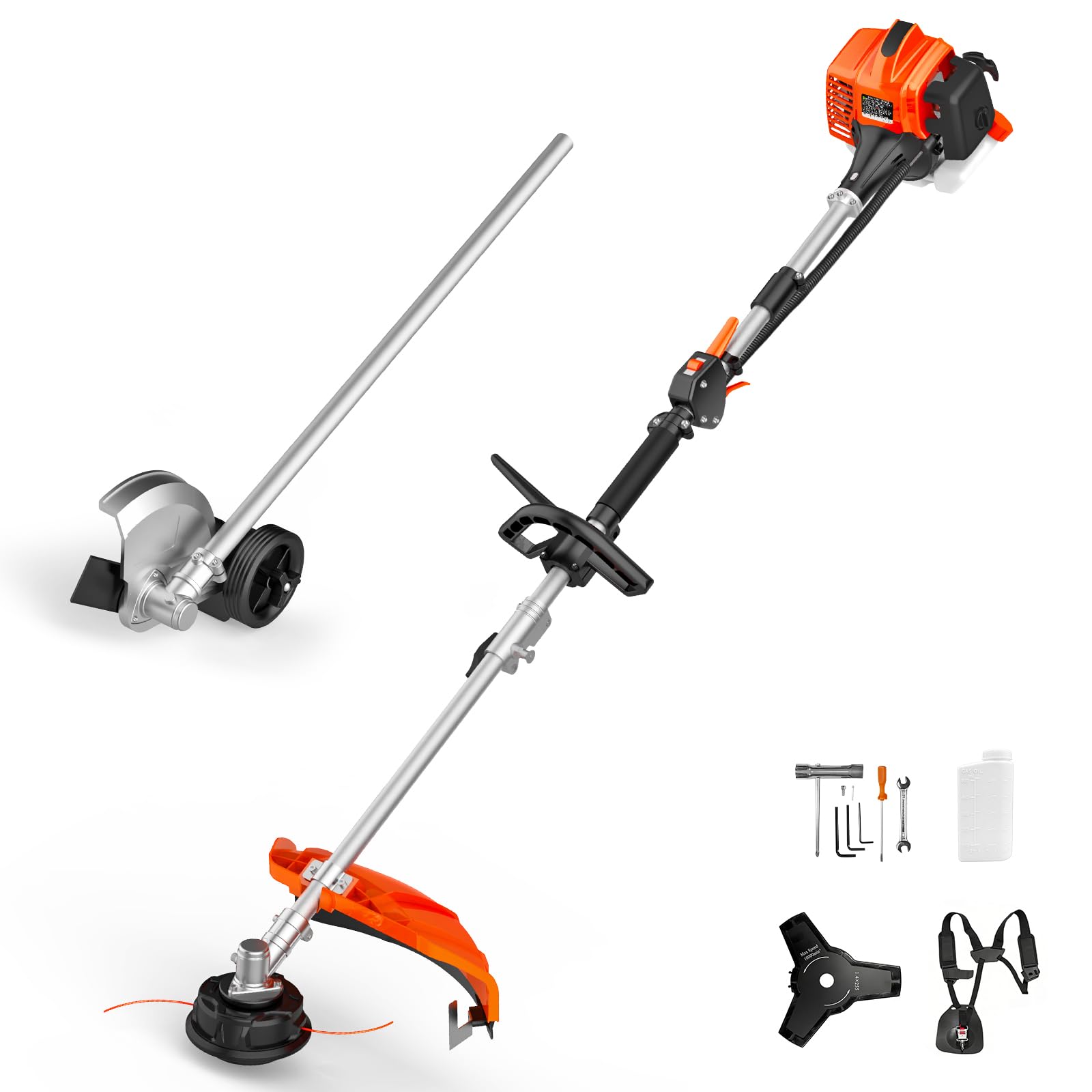
The reason to grab this one is the kit: a 16-inch string trimmer head, a 9-inch edger blade, and a 10-inch 3-tooth brush cutter blade all come in the box. Swap attachments and the same machine trims grass, cuts crisp lawn edges, or chews through thick brush. You get one engine to fuel and store instead of three separate tools. A 26cc 2-cycle engine provides the power, and the whole package runs off an EPA-certified engine that starts in a few pulls.
Owners consistently point to the value side of the deal — you are getting three tools for the task. Cutting performance draws steady praise, and the sharper stories involve thick growth getting cleared without a fight. One buyer reports the trimmer cut through a large cherry tree with the brush-cutter blade. The adjustable shoulder strap and split shaft help during longer jobs and make storage compact. Note this model is not CARB certified and cannot be sold or shipped to California addresses.
Why buyers keep it
- String head, edger blade, and 3-tooth brush blade all included
- 26cc 2-cycle engine starts easily in a few pulls
- Shoulder strap and split shaft ease longer jobs and storage
Things to plan around
- 2-cycle engine needs oil mixed into the fuel
- Not CARB certified — California buyers are blocked at checkout
Best fit for: a homeowner who wants trimming, edging, and brush clearing from one fuel tank.
Not for you if: you live in California, since this engine is not CARB certified for sale there.
4. Husqvarna 122C String Trimmer with Tap N’ Go Trimmer Head

A light, quiet 22cc curved-shaft trimmer built for maneuvering around obstacles.
This is the suburban yard tool. The curved shaft and a 22cc low-noise engine are built for steering around obstacles — bushes, mailboxes, the dog’s water bowl — rather than for hacking down a field. A 17-inch cutting width covers enough ground per pass to tidy an average lot. Compare it to the NEO-TEC’s 16 inches and you see the difference is not huge, but every inch helps when you have long edges to work. The engine here is deliberately designed to cut noise, which matters if you trim early or live close to the neighbors.
Starting is where Husqvarna earns its fans. Smart Start technology and an Air Purge system work together to clear the carburetor and cut down the pull effort, so a cold start becomes a quick job. Owners gravitate to how easy it is to use and how little it weighs. The Tap N’ Go head feeds fresh line with a bump on the ground, so you are not stopping to restring every few passes.
Honest note: this is not the trimmer for heavy brush. The 22cc engine is modest, and while some owners find it plenty powerful, others feel it is on the weaker side once the grass gets thick. Reliability is the headline concern people raise, so treat it as a beginner-friendly pick for light to moderate work rather than a machine you lean on for overgrowth. Keep up with fresh fuel and regular maintenance and it does its job.
The story in one line: low noise, easy start, and a bump-feed head make this the friendliest curved-shaft trimmer for small yards.
Who should look past it: anyone with thick weeds or brush — the 22cc engine is not built for that fight.
Ideal if: your lawn is modest, your edges are tight, and you want quiet operation and easy cold starts.
Choose another if: overgrowth is on the menu — step up to the 42.7cc PROYAMA for that.
5. PROYAMA 42.7cc Brush Cutter Trimmer

The biggest engine here — built to chew through brush the small trimmers cannot touch.
When raw cutting muscle is the priority, this is the pick. A 42.7cc 2-cycle engine delivers 2 horsepower and spins the head at 10,000 rpm. Put that next to the Echo SRM-2620’s 8,500 rpm and you see this is a trimmer built for clearing, not just edging. It is rated at a 42.7cc displacement — the highest cc figure on this list, versus the 22cc Husqvarna 122C. An 18-inch cutting width and a straight shaft give it the reach to work around fences, trees, and sidewalks. It also comes with four cutting attachments: a trimmer head, a 3-tooth blade, a 40-tooth blade, and a chain blade.
Owners treat this like a serious machine: it starts on the first or second pull and the motor does not lack for power. Quality draws the most praise of any aspect, followed closely by functionality, with the overall theme being that it works and keeps working. Cutting performance is the reason it earns its place on a list like this — the metal blades handle brush, tall grass, and small branches that would stall a lightweight trimmer. The shoulder straps help distribute the load.
The catch is weight and learning curve. At 19 pounds, compared with the Echo SRM-2620 at 13 pounds, it is a machine you carry deliberately, not casually. Feedback on ease of use splits, with some finding it simple and others struggling to get it dialed in. Durability also draws mixed notes. Treat this as a tool for the person with real overgrowth who is willing to learn the machine.
Built to clear ground fast
- 42.7cc engine and 10,000 rpm out-rev the 8,500 rpm Echo SRM-2620
- Four attachments — trimmer, 3T blade, 40T blade, chain blade — cover brush and grass
- 18-inch width and straight shaft reach around fences and trees
What it costs you
- 19 pounds compared with the Echo SRM-2620 at 13 pounds
- Some find it takes practice to get running smoothly
Made for: a big property with thick brush, tall weeds, and saplings that need real engine muscle.
Weigh the trade-off: 19 pounds is a lot to swing — go lighter if your work is mostly tidy grass.
6. PROYAMA 40cc String Trimmer
Fill it with plain gas and go — no measuring oil into the tank before every job.
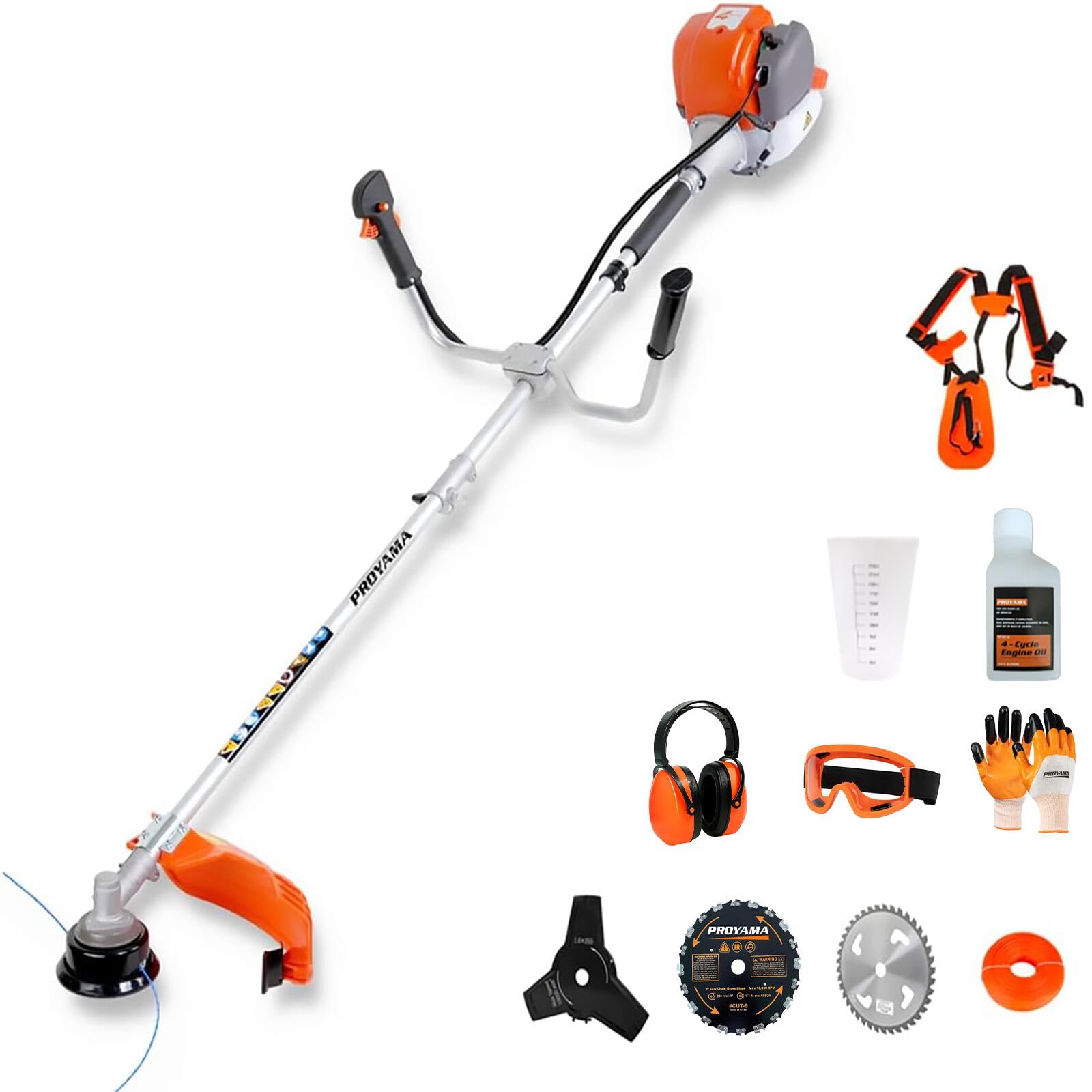
A 4-cycle engine is the practical choice if oil mixing is the chore you dread. This trimmer runs a 40cc 4-cycle 1.5-horsepower engine on regular gasoline, no mixing required. That means refueling is exactly as simple as filling a car. The engine is built to run smoother with less vibration than a 2-cycle, so your hands feel it less over a long session. An 18-inch cutting width and a 73-inch straight shaft give it the reach for fences, trees, and hard-to-reach spots.
Owners describe this machine as a beast that works right from the start and starts reliably every time. Quality and functionality are the two things people praise most, with value for money following close behind. It handles heavy-duty tasks well — trimming thick brush and maintaining both large and small areas. It also switches between a string head and metal blades for tougher weeds and brush clearing.
The downside is the weight. At 16 pounds it is 3 pounds heavier than the 13-pound Echo SRM-2620. That is not nothing when you are holding it out along a long fence. Assembly also draws some mixed feedback, so budget a little patience for putting it together. If the no-mix convenience and lower vibration are what you are after, the extra heft is a fair trade.
Why it stands out: a 40cc 4-cycle engine on plain gasoline and lower vibration make long sessions easier on your hands.
The honest cost: 16 pounds runs 3 pounds heavier than the 13-pound Echo, and assembly takes some patience.
Suits you if: you refuse to mix oil and want a strong 40cc engine with a smoother feel.
Consider the alternative if: you want the lightest carry available — the 10.6-pound Husqvarna 122LK is easier to swing.
7. Husqvarna 122LK Grass Trimmer, Straight Shaft Gas Trimmer

A featherweight straight-shaft trimmer that clicks into attachments as your yard demands.
At 10.6 pounds, this is the lightest straight-shaft trimmer on the list — and weight is where it shines. A straight shaft reaches under bushes and around obstacles that a curved shaft cannot get to, so it works for edging and tight spots. The 22cc 2-cycle engine keeps noise down, and the detachable shaft accepts Husqvarna’s line of attachments, plus the T25 heavy-duty trimmer head is compatible. Smart Start brings cold starts down to minimum effort.
The things owners like most are the easy handling and the low weight. For occasional homeowner use, that combination is what makes it pleasant to pull out on a Saturday. The attachment system is the other headline: click on a tool and the trimmer becomes something else without you buying a second engine. The 17-inch cutting width handles normal trimming with a stable pass at a time.
What deserves honest attention is long-term behavior. Quality and reliability draw split responses; some owners find it fantastic, others run into trouble over time. A limited fuel tank size also draws complaints from people who want more runtime between fills. So think of this as a light-duty, attachment-flexible tool — great for regular trimming, not the machine for a heavy brush season.
The light-and-flexible case
- 10.6 pounds — the lightest straight-shaft option here
- Detachable shaft accepts Husqvarna attachments and the T25 head
- Smart Start makes cold starting low-effort
Where it’s honest about limits
- Small fuel tank means more frequent refueling
- Built for occasional homeowner work, not heavy brush
Worth it for: homeowners who want a light straight-shaft trimmer and the option to add attachments later.
Not for you if: you need all-day runtime or heavy brush capability.
8. Troy-Bilt TB304S String Trimmer

A cleaner-running 4-cycle trimmer for the neighbor who notices engine noise.
Two practical reasons to pick this one. First, a 4-cycle engine means you never mix gas and oil — it runs on straight fuel and produces less noise in the process. Second, the 17-inch cutting swath clears weeds and grass in steady passes without you having to fight the machine. SpringAssist takes the sting out of the pull start, and the straight shaft reaches under shrubs and around fence posts and other obstacles.
The 4-cycle advantage is the core of the pitch. It is cleaner-running and quieter, and the “never mix gas and oil” rule is one less thing to remember when you fuel up. SpringAssist eases cold-start effort, which is where a lot of gas trimmers frustrate people. The 15-pound weight and 17-inch width put it in the manageable middle — heavier than the Echo but not the burden of the brush-clearing machines.
The thing to weigh honestly is long-term reliability. Feedback splits between those who say it works well and those who report it will not stay running. That is a typical split for homeowner-grade 4-cycle machines, and it is why clean fuel and routine maintenance matter here. Treat it as a quiet, no-mix option for regular lawn care rather than a machine you push hard through thick brush.
The value angle: no-mix 4-cycle engine, quieter running, and SpringAssist starting for regular yard work.
The caution: running reliability divides owners, so keep fresh fuel and a maintenance routine in play.
Choose this if: you want a quieter, no-mix trimmer for routine lawn and edge work.
Compare with caution if: you need a long, trouble-free run — the repair-free track record is less certain than the 4-cycle PROYAMA’s.
9. ECHO SRM-3020T String Trimmer
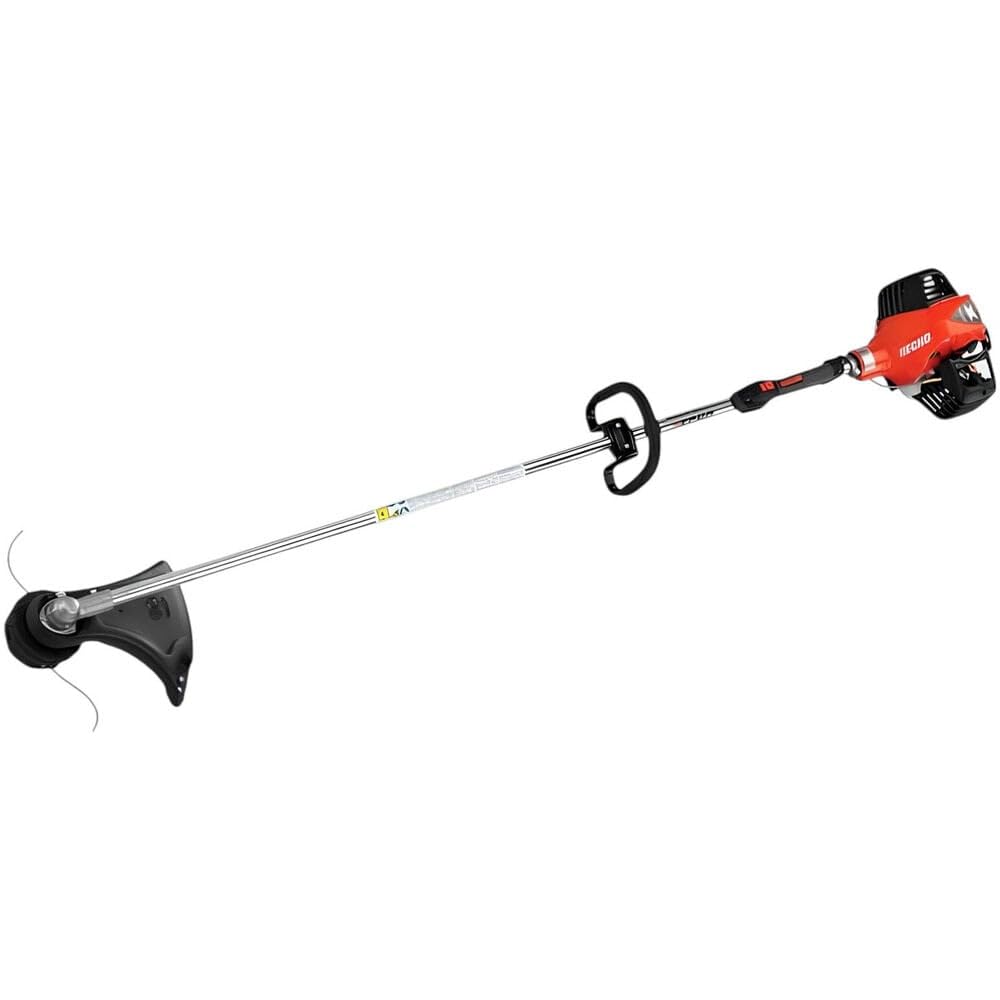
Pro-grade muscle and a 1.62:1 gear reduction for the landscaper’s workload.
The defining feature here is a 1.62:1 gear reduction at the cutting head. In plain terms, gearing multiplies the engine’s turning force into more cutting torque at the head, so the line keeps its speed through dense growth. A 30.5cc engine drives a 10,000 rpm head — matching the fastest PROYAMA here for head speed. This is the machine for professional landscaping, large-scale gardening, and high-demand trimming, and it is priced for that tier. A 12-inch cutting width keeps it maneuverable in close work.
Owners describe this one in terms of raw strength. Performance is the theme, with power following, and the repeated observation is that it slices through almost anything in its path. Value for money draws praise too, and it gets called a best buy for the pro crowd. For anyone running a landscaping business or facing a genuinely huge property, the built-in durability of a professional-grade Echo is the whole reason to swallow the price.
The catch is the spec sheet itself. The listed weight of 50 pounds is by far the heaviest here and not something you swing for a casual Saturday. The 12-inch cutting width is narrower than the 17-inch and 18-inch trimmers on this list, so you cover less ground per pass. That trade is deliberate in pro tools, but it is worth knowing before you buy.
Worth it for: landscaping work and large properties where 30.5cc and 1.62:1 gear reduction power through heavy growth.
Look past it if: you are a casual homeowner — 50 pounds and a 12-inch cut are not built for weekend trimming.
Know the Specs
Engine displacement (cc) and head rpm
Displacement in cc tells you the engine’s size, and a larger number generally means more cutting power for thick growth. The rpm figure is how fast the cutting head spins — the 8,500 rpm Echo SRM-2620 and the 10,000 rpm PROYAMA and Echo SRM-3020T show the spread. Higher rpm usually means cleaner cuts through tough grass, but more power also usually adds weight and fuel use. Match cc and rpm to your real workload, not the biggest number on the shelf.
2-cycle vs 4-cycle engines
A 2-cycle engine needs oil mixed into the fuel but tends to be lighter and revs high for its size. A 4-cycle engine runs on plain gasoline with no mixing, runs smoother with less vibration, and typically sounds quieter — but it normally carries more weight. If convenience wins, go 4-cycle. If output per pound is your goal, go 2-cycle. Either way, use fresh fuel and follow the manual to keep the engine healthy.
Straight shaft vs curved shaft
A straight shaft extends your reach under bushes, around fence posts, and beneath low branches — the Echo SRM-2620, the PROYAMA models, the Husqvarna 122LK, and the Troy-Bilt all use one. A curved shaft like the Husqvarna 122C’s is shorter and nimble for keeping clear of obstacles in a tight suburban yard. Your yard layout decides which is handier.
Cutting width and trimmer head
Cutting width is the swath you clear per pass. A 17-inch to 18-inch width covers ground fast in open areas; a 16-inch width edges around obstacles more easily. The trimmer head type matters too: a bump-feed head like Husqvarna’s Tap N’ Go advances line with a tap on the ground, while a rapid-reload spool speeds up restringing. Both save you stopping mid-job to fiddle with trimmer line.
Common Questions
Do I really need to mix oil into the gas on a 2-cycle trimmer?
What cc engine do I need to clear thick brush?
Is a straight shaft or curved shaft better for trimming under bushes?
Which trimmer here is the easiest to start?
Can I attach tools like an edger or brush blade to a gas trimmer?
Why do some trimmers list a much wider cutting width than others?
Is a 4-cycle trimmer worth it over a 2-cycle?
Can a gas trimmer be sold in California?
How much does weight matter on a gas string trimmer?
Will a wide cutting width help me finish faster?
The Bottom Line
For most people looking for top rated gas string trimmers, the pick is the Echo SRM-2620 — a 25.4cc straight-shaft machine that spins 8,500 rpm at just 13 pounds, so it trims a normal yard without weighing you down. If you would rather never mix oil into your fuel, reach for the PROYAMA 40cc 4-Cycle, which runs on plain gasoline. And when thick brush, saplings, and overgrowth are your main enemy, the 42.7cc PROYAMA 3-in-1 out-powers everything else on this list with its 10,000 rpm head and four cutting attachments.
How we choose
We do not accept paid placement. Every pick is matched to a real buyer and a real use-case; we do not hands-on test units.
Sources
Specifications: manufacturer listings and product documentation. Review insights: verified customer reviews. Pricing: not shown on this page (it changes often); check the current price via the retailer link.
As an Amazon Associate, Tactical Gear Guy earns from qualifying purchases. This does not affect which products we feature.