Specs are compiled from manufacturer listings and verified buyer reviews and can change over time — please confirm the key details on the product page before buying.
If you have a tall window, a glass balcony rail, or a shower screen you have been avoiding for months, the short answer is this: buy a robot that sprays water onto the glass while it works, not one that just drags a damp cloth. Water is what lifts dried-on dust, bird mess, and hard-water film instead of smearing it around. Every pick below has a real onboard water system, so you can compare them on the things that actually decide whether the job gets done: suction strength (how hard the robot grips the glass), spray setup, tank size, and the safety backup that keeps the unit stuck to the glass if the power drops.
This guide is built by comparing the manufacturers’ published specifications and the patterns across verified customer reviews, so you get each pick’s real strengths and trade-offs instead of marketing spin.
You will see how each water system differs, what the suction numbers mean in plain terms, and which safety backups matter on high glass. By the end you will know which of these is the right window cleaning robot with water for your windows, your frames, and your comfort level with heights.
Top Picks
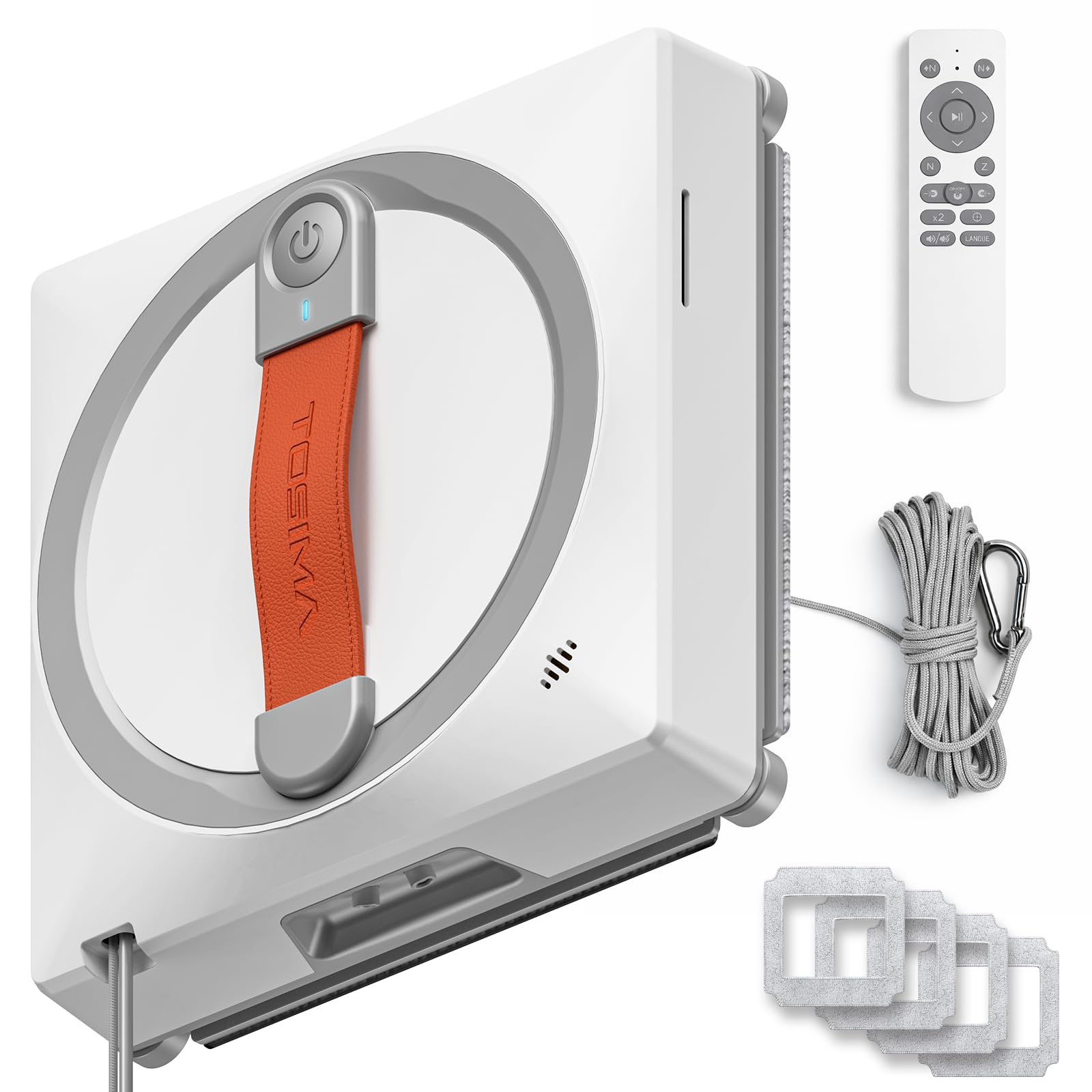
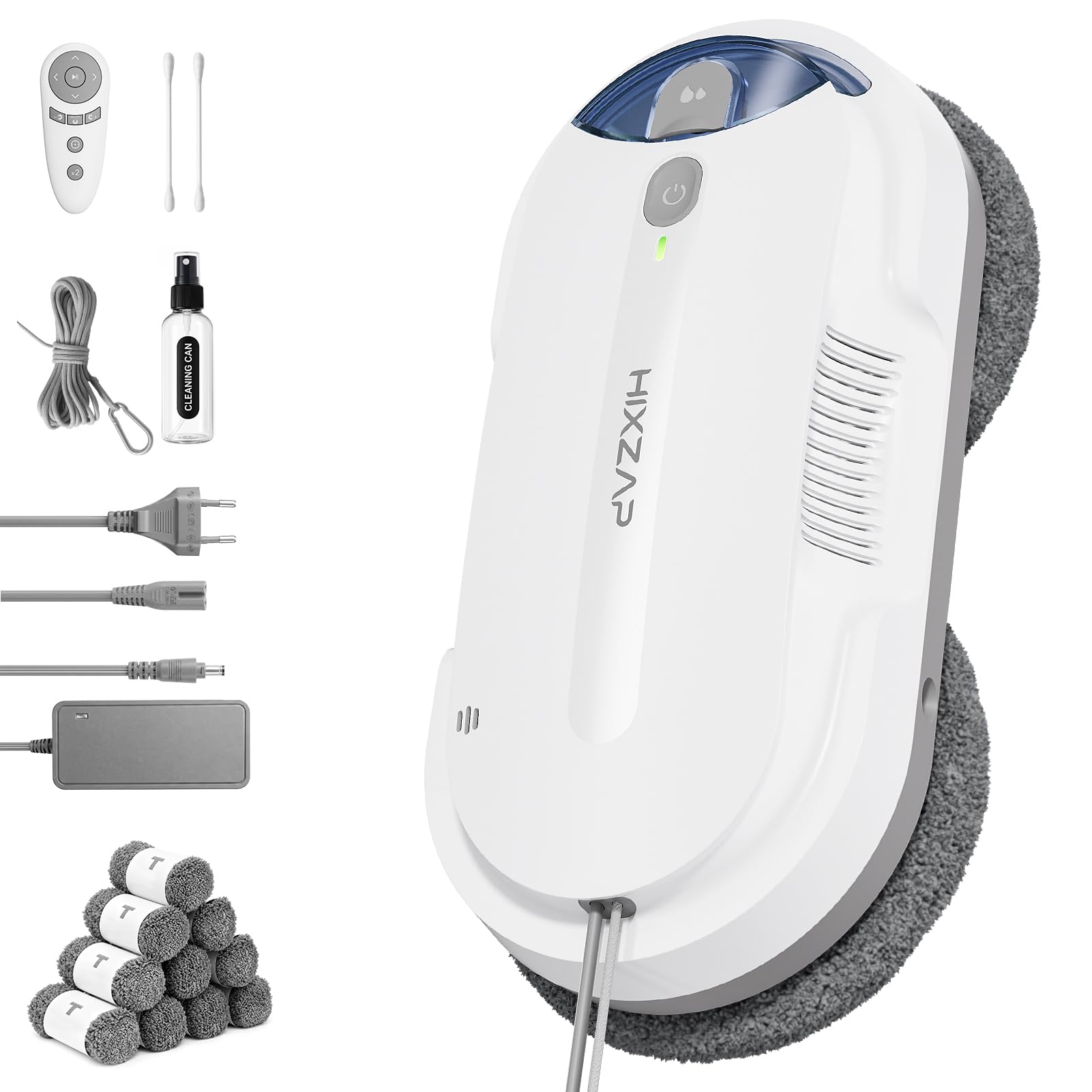
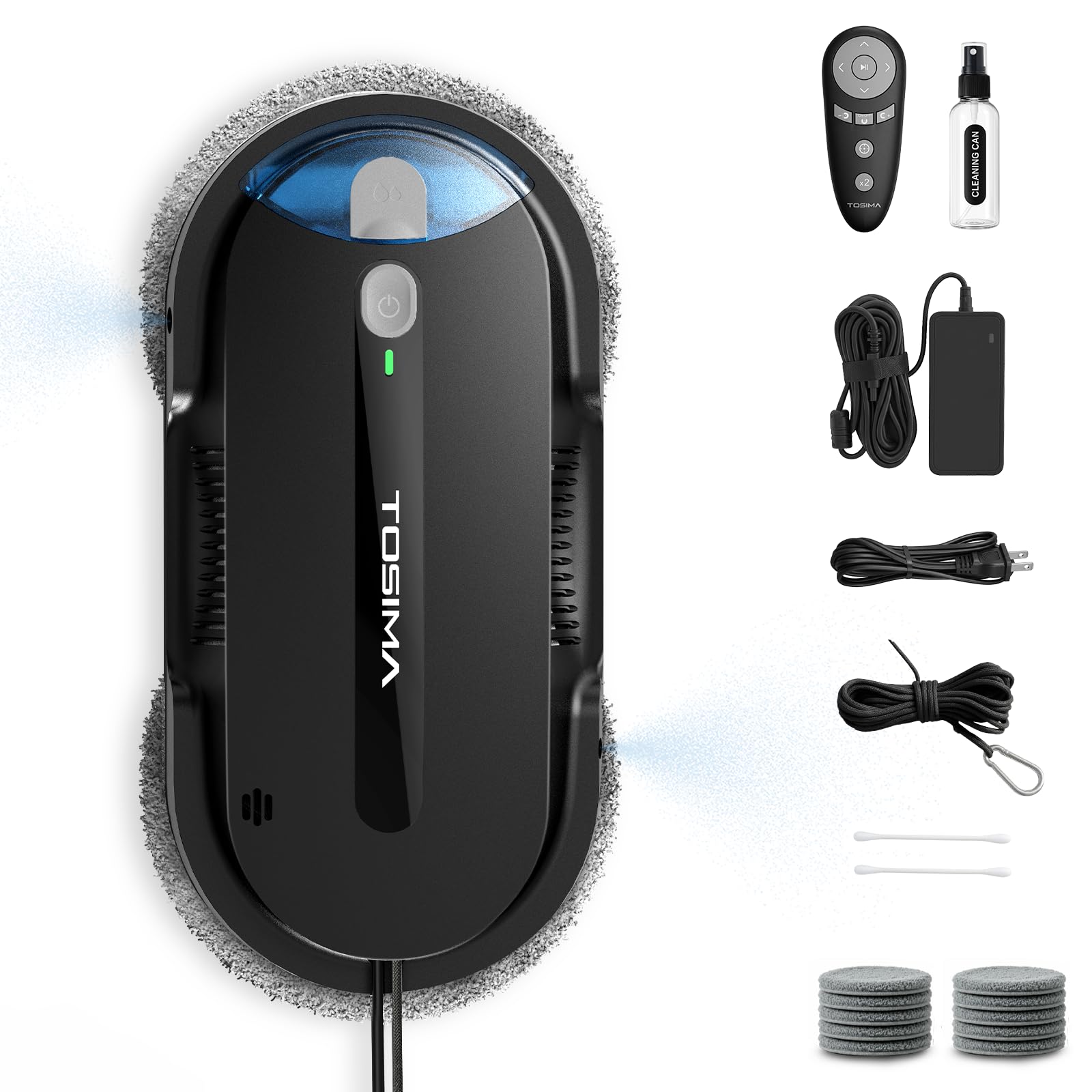
How To Choose The Best Window Cleaning Robot with Water
A water-spraying window robot solves one specific problem: cleaning glass you cannot safely reach. The trick is that water on glass is only useful if the robot can hold itself there while the spray does its work. So you are really shopping for two things at once — a spray system that wets the glass evenly, and a suction system that keeps the unit planted on a vertical pane.
Start with the spray, not the pad
A pad alone pushes dry dust around and can scratch. Look for a robot that mists water as it travels, ideally with more than one nozzle so the spray follows the direction of movement. A dual-nozzle or triple-nozzle setup wets the glass across the full cleaning path instead of one narrow line, which is what reduces streaks. Tank size decides how long you can go between refills — a small tank means you stop mid-window to top up.
Then check how hard it grips
Suction is measured in pascals (Pa) — think of it as how hard the robot is pressed against the glass. Higher Pa holds better on thick panes and large uninterrupted glass, and it also resists slipping when the pad gets heavy with water. Robots in this group range widely on that number, so match it to your windows rather than assuming more is always necessary.
The safety backup is not optional
Every robot here runs on mains power or a battery, and any of them can lose that power mid-clean. What saves the machine is an emergency backup battery that keeps the suction alive for a set number of minutes so it does not drop. Pair that with a safety rope anchored to something solid for overhead work, plus edge sensors that stop the unit at the frame. On second-story or higher glass, these three things are the whole ballgame.
Side-by-Side Comparison
| Model | Best For | Suction | Water Tank | Cleaning Path Width | Amazon |
|---|---|---|---|---|---|
| WA9C Pro★ Best Overall | Balanced all-rounder | 2600–3200 Pa | Onboard tank, 4 nozzles | 8 inches | Amazon |
| X1 PRO (HIXZAP)Most Powerful Grip | Thick and large glass | 7200 Pa | 85 ml | 8 inches | Amazon |
| Tosima X1Highest Rated | Small to large windows | — | 85 ml, visible | 8 inches | Amazon |
| X6 Pro (HIXZAP) | Round-body corner coverage | 6400 Pa | 85 ml | — | Amazon |
| X3 (Schbot) | App-controlled cleaning | 3500 Pa | Auto spray system | — | Amazon |
| KKI X3 | Wide coverage per pass | 2200–3200 Pa | 85 ml | 11.8 inches | Amazon |
| HUTT H10 | Dual-stage wet and dry | 6500 Pa | 80 ml | — | Amazon |
| ECOVACS WINBOT W2 PRO OMNI | Rooms without outlets | — | 3-nozzle spray | — | Amazon |
| ECOVACS WINBOT W3 OMNI | Fully hands-free cleaning | — | 1.1 liters | — | Amazon |
Detailed Reviews
1. WA9C Pro Window Cleaning Robot
Our pick — 4.5+★ from 200+ verified ratings; the strongest balance of quality and price.
Four nozzles that purge air before they spray, so the water hits the glass where it counts.
The WA9C Pro earns the top spot because it does the fundamentals without drama. Four precision nozzles — two on each side — push air out of the internal water lines first, then deliver an even spray across the glass. That purging step matters: it is the difference between a real mist and a sputtering dribble, and it is why the wetting here stays consistent along the whole path.
Suction runs in a 2600 to 3200 Pa range, kept steady by a smart air pressure monitor, while a bottom drop sensor watches the glass beneath the unit. Together they keep the robot planted on vertical panes. If the power cuts, the internal lithium-ion battery holds the unit to the window for up to 25 minutes and sounds an alert, and the bundled safety rope anchors to something solid for overhead work. Six cleaning modes cover N-shape vertical passes, Z-shape horizontal coverage, and manual control from the remote for stubborn spots.
Reviewers keep returning to how well it cleans, and it holds its price against pricier brands in the same conversations. The catch is streaks: some owners get a clean finish and others a film, depending on how much water is laid down and whether the pad is swapped before it saturates. Run the regular spray setting first and only step up to the large volume on genuinely dirty glass. It ships with four mops, a water bottle, spare nozzles, and an unclogging needle kit, so you can keep pads rotating.
Where it holds its ground
- Four nozzles with air purge for an even, realistic water spray
- Air pressure monitor plus drop sensor keeps grip steady on vertical glass
- 25-minute power-failure hold with audible and light alerts
- Six modes including N-shape, Z-shape, and remote-driven manual cleaning
What to plan around
- Streak results split both ways — water volume and pad freshness decide it
- Needs the safety rope anchored for any overhead or high-reach work
- Mains-powered, so you need a cord reach to the window
Built for: anyone who wants one robot to handle interior glass, mirrors, and doors with a genuine four-nozzle spray.
Think twice if: you expect a perfect streak-free finish on the first pass without managing spray volume and pad changes.
2. X1 PRO Window Cleaning Robot
The highest suction number in this group, aimed squarely at thick glass and tall panes.
If your windows are floor-to-ceiling, double-glazed, or simply enormous, this is the pick that answers the obvious worry: will it stay up there? The HIXZAP X1 Pro pulls up to 7200 Pa, the strongest figure on this list, and it is rated to grip glass from 3mm thick and up. That margin is what gives it headroom on big uninterrupted panes where a weaker hold starts to feel like a gamble. It weighs 2 pounds and holds an 85 ml water tank.
The spray is genuinely directional rather than a blanket mist. The left nozzle fires when the robot travels left, the right when it travels right, so water lands on the section being cleaned instead of drying ahead of the pad. Combined with the S-shaped path that runs top to bottom and stops with a beep when finished, you can set it going and walk away. Spot mode scrubs back and forth for stubborn marks.
Safety gets real attention here: a safety cable rated to hold the full device weight, plus a UPS backup battery (an uninterruptible power supply that keeps the robot running briefly when the mains cut out) that keeps it suctioned for 25 minutes if power drops, and live suction monitoring that alerts you if something drifts. The kit includes 20 reusable microfiber pads and a water bottle, and there is no app required — the remote handles spray intensity, modes, and manual steering. It works on glass surfaces from 12×12 inches and up, so smaller panes are covered too.
Best on big glass: 7200 Pa and a 3mm minimum thickness rating make this the confident choice for sliding doors, floor-to-ceiling panes, and high-rise exterior work.
The trade-off: all that suction is more than a small bathroom mirror needs — on light, small panes you are buying headroom you may never use.
Go for it if: your glass is large and thick and you want the strongest hold in this lineup.
Look elsewhere if: every window you own is small and interior — a mid-suction model will do the same job for less.
3. Tosima X1 Window Cleaning Robot
A see-through tank so you never run dry halfway up a pane.
Here is the small design choice that makes the biggest daily difference: the 85 ml tank has a viewing window. You can see the water level before you start, which kills the mid-window dry spell that turns a clean into a smear. Two separate nozzles release water only in the direction of travel, so the spray leads the pad instead of trailing behind it — that is the mechanism behind the streak-free finish this model is built around.
It cleans in an S-shaped path from top to bottom automatically, and the remote lets you redirect it at any point, including for overhead work on sunroom windows. The minimum glass size is 30×30 cm, so small panes are fair game alongside large ones. If power drops, the internal battery keeps it attached for about 25 minutes, and a safety tether clips to a fixed object for improve work.
Designed for household use between 0 °C and 40 °C (32 °F – 104 °F), it comes in a compact black body with water-resistant materials and quality cleaning cloths. This is the pick for someone who wants a straightforward, low-fuss machine and cares about seeing the water level rather than guessing at it.
Why it fits daily use: the viewing window and directional nozzles remove the two most common causes of a bad first run — a dry pad and water landing in the wrong place.
Worth noting: the tank is small, so a whole-house run on big glass means refilling between windows.
Reach for this if: you want to see exactly how much water is left and spray only where the robot is heading.
Not the one for: anyone cleaning a full wall of glass in one go — you will be topping up the tank.
4. X6 Pro Window Cleaning Robot
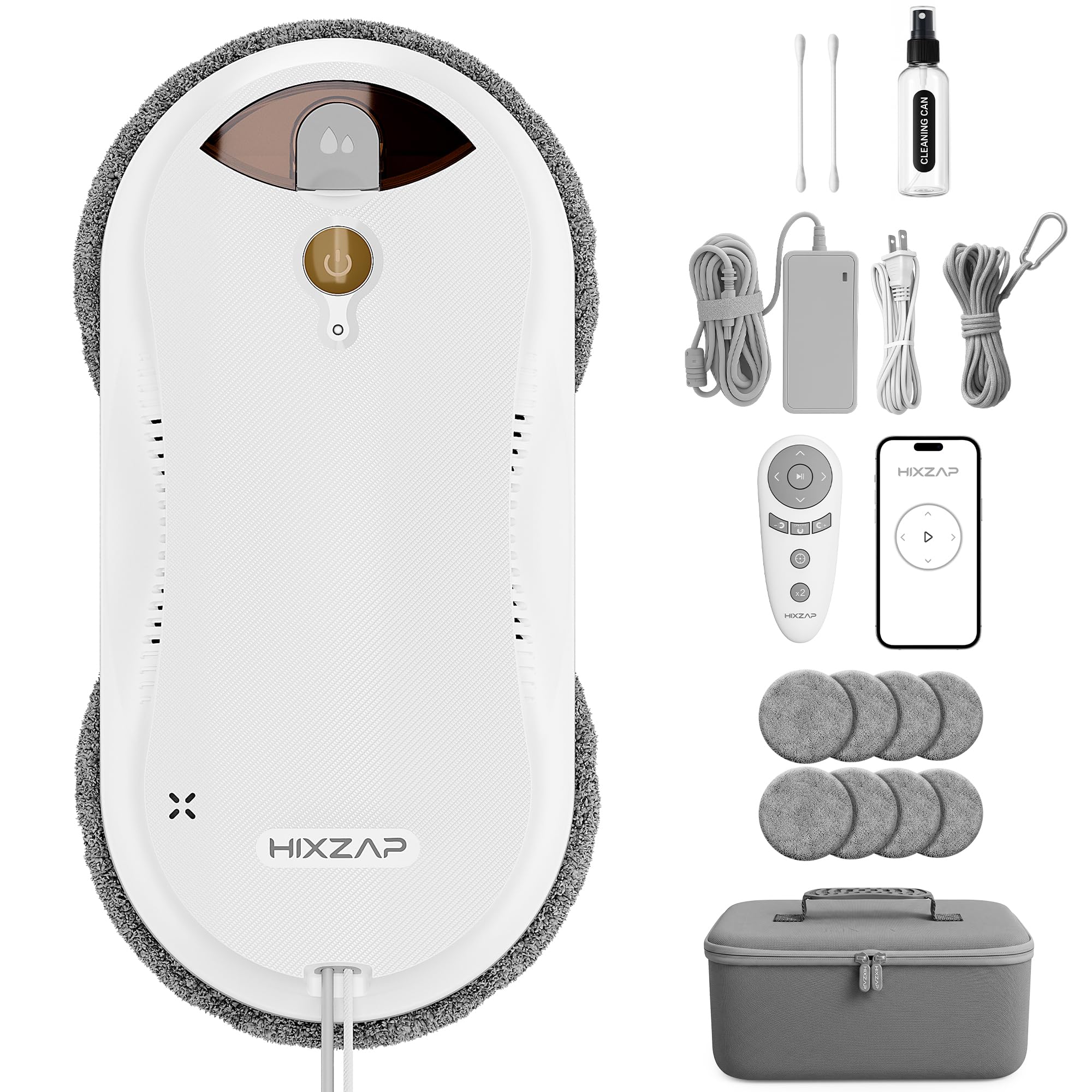
A round body built to reach the corners square robots skate past.
Square robots leave blind spots. This one is round on purpose, and the maker puts the covered area at 95% of the glass — the corners and edges being the reason. Variable suction tops out at 6400 Pa and scales down to suit the dirt, so it can ease off for a light dust film and lean in for bird droppings and hard-water stains. Dual-spray nozzles wet the glass evenly as it goes.
Cleaning is genuinely quick: a 3.3㎡ window finishes in about 7 minutes according to the manufacturer. The safety package is the deepest in the mid-range — a heavy-duty cable rated to hold at least 150 lbs, anti-fall edge detection, and a UPS that keeps it stuck for 30 minutes if power cuts. It is slim enough to fit narrow window frames and handles skylights, mirrors, and tile walls as well as glass.
The app and remote both work, letting you schedule cleanings, switch modes, or stop it on the spot. A custom storage bag is included, which sounds minor until you are trying to keep pads and cables together between uses. On very dirty glass the maker’s own advice is to let it run two passes rather than expect one, and to swap the pads when they load up.
What it does better than most
- Round body plus 6400 Pa variable suction for 95% area coverage
- 30-minute UPS hold and a cable rated to hold at least 150 lbs
- Around 7 minutes to clean a 3.3㎡ window, per the maker
- App scheduling plus a dedicated remote, and a storage bag in the box
The limits
- Heavy soiling needs a second pass — the maker says so itself
- Pads need swapping as they load up or the finish dulls
- Round shape suits open glass better than tight, cluttered frames
Strongest case: corner-to-corner coverage on wide, unobstructed panes with the beefiest safety rating in the mid-range.
One caveat to weigh: on grimy glass expect to run it twice before the finish looks right.
5. X3 Window Cleaning Robot with Auto Spray & 3500 Pa Suction
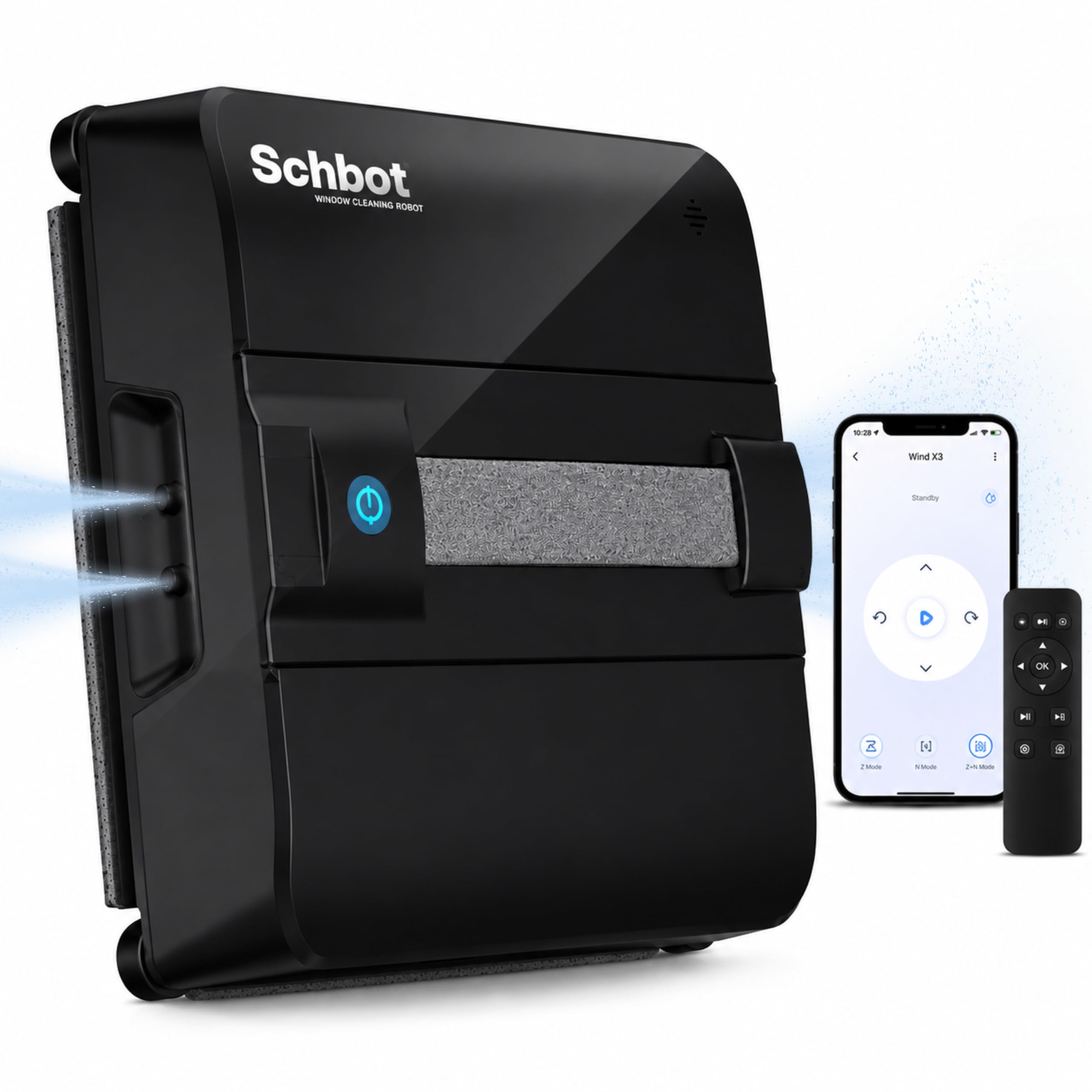
For the phone-first crowd: an auto-spray robot you run from an app or a remote.
Suction is 3500 Pa here — solidly mid-pack, enough for everyday interior glass but not the figure you pick for floor-to-ceiling double glazing. What gives it a real reason to exist is the built-in automatic water spray, which keeps moistening the cleaning pad as it works rather than dumping one burst at the start. That continuous top-up is what lets it handle dust and grime across a longer run without stopping to re-wet.
Control is where this one separates itself. A dedicated smartphone app lets you manage and monitor the robot, with Z Mode, N Mode, and a combined Z+N Mode that mixes vertical and horizontal passes for different window sizes and soil levels. A separate remote is in the box too, so you can drive it hands-free without reaching for your phone at all. It weighs 3.2 pounds, so it is easy to lift between windows.
Before committing, ask whether you will actually use the app — that is the feature you are paying for. If you like scheduling and monitoring from your phone, the flexibility here is genuine. If you just want to press a button on the unit and walk away, a remote-only model will feel the same in daily use.
Where it earns its place: three path modes plus app and remote control give you more ways to steer it than most mid-range units.
The caveat: 3500 Pa is honest middle ground — on very large or heavy glass, the higher-suction picks above have more grip to spare.
Pick this if: app-based control and flexible Z, N, and Z+N path modes are what you want from a spray robot.
Pass on it if: your glass is oversized and thick — the suction here is not the headline.
6. KKI X3 Window Cleaning Robot
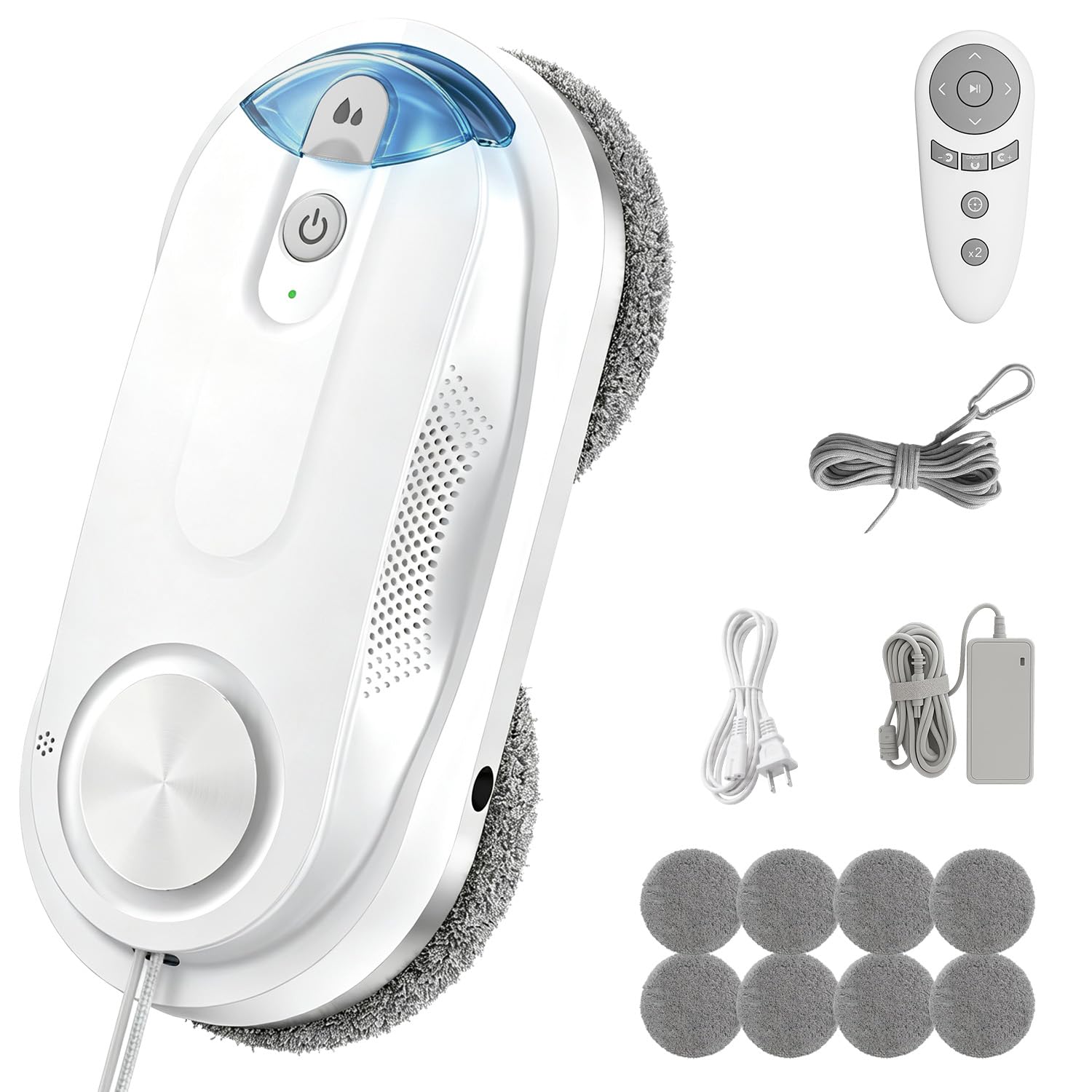
Every pass is wide — an 11.8-inch cleaning path means fewer trips across the glass.
Coverage per pass is the number that decides how long a job takes, and this KKI lays down an 11.8-inch cleaning path — noticeably wider than the 8-inch path on the WA9C Pro and X1 Pro. On a broad pane that means fewer sweeps for the same area, which adds up on large glass doors and wide picture windows. It atomizes water from both sides through a dual ultrasonic spray system, wetting the surface evenly to prevent dry scratches and leftover streaks.
The 85 ml tank supports up to 2 hours of continuous cleaning per the manufacturer, so refills are infrequent. Suction runs 2200 to 3200 Pa, backed by a 600mAh emergency battery that keeps it stuck during a sudden power loss, plus a 5m safety rope and power cord. It handles glass from 30cm x 30cm and up, and covers more than 20 square meters per working cycle — enough to get through a whole house of glass in one session.
The split here is surface type: flat, even glass only. This robot is built for flat, even glass and works best on light to moderate dirt; heavily soiled panes want a quick pre-wipe first. It is not designed for curved, textured, or very uneven glass, and concentrated cleaning solutions can clog the sprayer — stick to water. Setup is quick, and the package includes 10 cloths, 2 of them pre-installed, so you have spares from day one.
Numbers that matter here
- 11.8-inch cleaning path — wider than the 8-inch paths on the WA9C Pro and X1 Pro
- 85 ml tank rated for up to 2 hours of continuous cleaning
- Over 20 square meters covered per cycle
- 600mAh emergency battery keeps suction during a power cut
Fit check before you buy
- Built for flat glass only — curved, textured, or uneven surfaces are out
- Heavy dirt needs a pre-wipe before it runs
- Concentrated cleaners can clog the sprayer; water only
The fit: wide, flat windows and glass doors where a broad path finishes the job fast.
Not the fit: textured or curved glass, or anyone hoping to skip a pre-wipe on grimy panes.
7. HUTT H10 Window Cleaning Robot
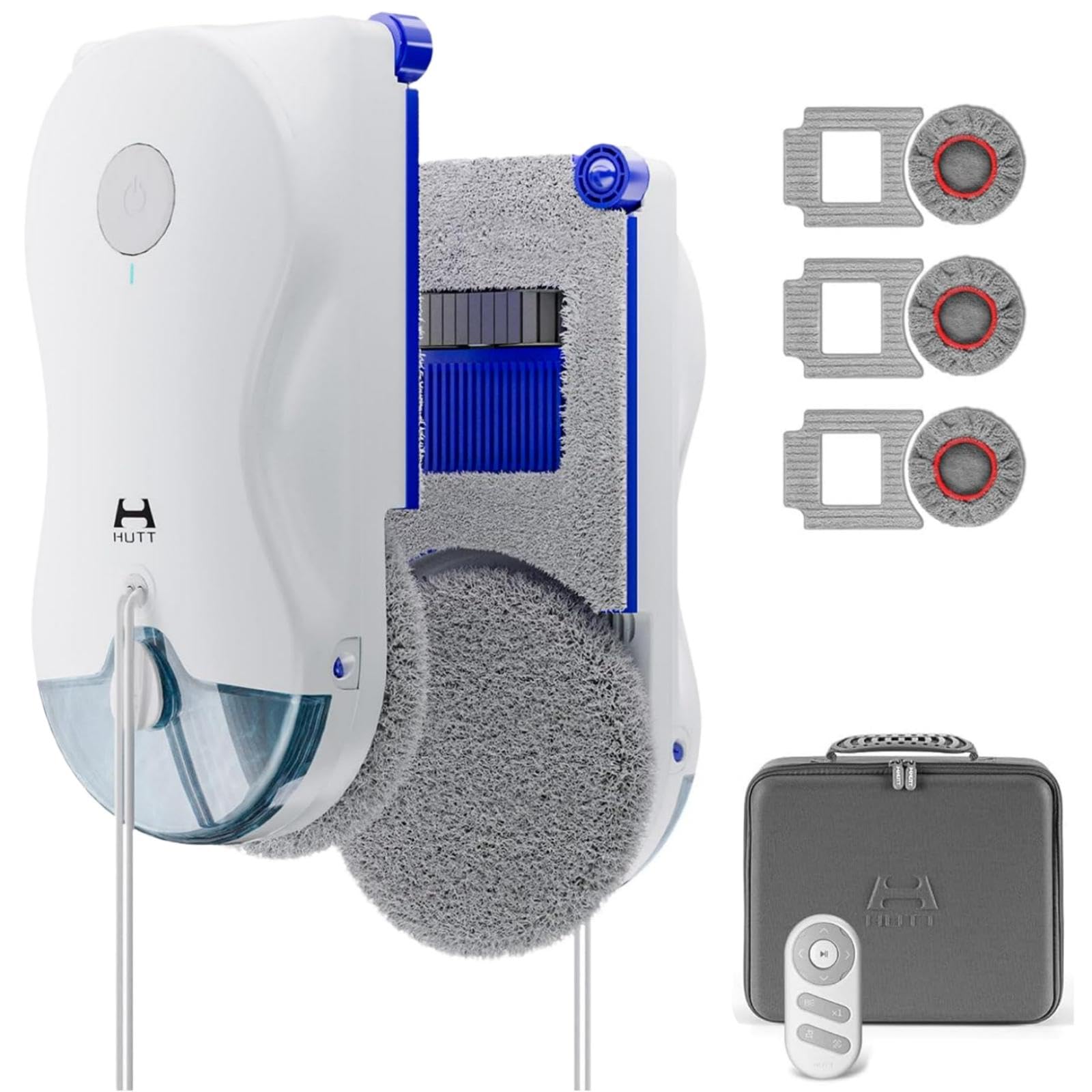
Two pads, two jobs: one lifts the dirt wet, the other polishes it dry.
Most robots here clean in one motion. The H10 splits the job in two — a 70 RPM round pad lifts dirt wet, then a precision square pad follows to wipe and polish dry. That second dry stage is the reason it targets streaks so directly, because the film left behind by a wet pass gets picked up before it dries. Suction tops out at 6500 Pa from a brushless motor, and a 3D suspension base maintains up to 55N (12.3 lbs) of cleaning pressure to keep the pad pressed to the glass.
The water side is a dual-direction ultrasonic mist, with an 80 ml visible tank rated to cover up to 60㎡ (646 sq ft) per refill. Navigation runs on the NAVI 7.0 system, which detects window dimensions and plans a route, backed by 14 sensors handling edge detection and pressure monitoring. If the unit drifts near edges, the maker’s advice is to keep the drive tracks clean and dry, use square pads dry, and wring the round pads out well before running.
Safety and comfort are both covered: a safety rope rated up to 220kg, a UPS battery (a backup that keeps the robot powered briefly during an outage) holding adhesion for up to 30 minutes during an outage, and noise as low as 65dB (about the level of a normal conversation) so you can run it without a racket. At 1.3kg it is easy to lift between windows, and it handles mirrors, shower doors, and sliding glass from 30 × 30cm up. Use purified water to keep mineral buildup from clogging the six included nozzles.
The standout: a genuine two-stage wet-then-dry routine, 6500 Pa of suction, and 55N of pad pressure make this the most thorough cleaner in the premium tier.
What to plan for: the dual-pad setup asks more of you — dry square pads, wrung-out round pads, and clean drive tracks are part of getting a good result.
Worth it for: anyone chasing a genuinely polished, low-streak finish and willing to keep two pad types in rotation.
Skip the upgrade if: you want a one-pad, press-and-go routine — the dual-stage care takes a bit more attention.
8. ECOVACS WINBOT W2 PRO OMNI

Battery mode for balconies and bathrooms where there is simply no socket.
Two power modes set this apart. In battery mode it runs up to 110 minutes on a charge — the maker puts that at 55 square meters of coverage — which is what lets you clean a balcony rail or a bathroom mirror with no outlet in sight. Plug it in for large glass areas and it cleans continuously. Alternating between the two also limits how often the battery fully drains, which is a quiet longevity win.
The 6-in-1 multifunction station is the other half of the pitch: it acts as control panel, pad changer, stabilizer, and portable storage for the whole setup. Three wide-angle nozzles deliver a spray the maker says increases water pressure, working with the wet cloth to dissolve dirt in a single stroke. WIN-SLAM 4.0 path planning handles turning and edge detection, and it adapts to floor-to-ceiling, small, frameless, and tilting windows.
Safety is a 12-stage protection system spanning hardware and software, and ECOVACS backs it with insurance protection for financial security. Owners say it handles patio doors and big windows well and cuts manual window washing out of the calendar. Worth knowing: the station is a real piece of furniture to store, so measure your cupboard space before it arrives.
The cordless case: 110 minutes of battery and a 6-in-1 station mean you can work far from an outlet and keep everything in one place.
The real question: the station is bulky — if storage is tight, that footprint is the thing to check first.
Choose it for: balconies, bathrooms, and glass away from power, where its 110-minute battery does the work.
Think again if: you are short on storage — the multi-function station needs a home of its own.
9. ECOVACS WINBOT W3 Omni

The station washes the pads for you in a minute, so your hands stay clean.
This is the only robot on the list that cleans its own mop pads. The station fires 16 high-pressure nozzles at the pads for just 1 minute, and an optional self-cleaning function keeps the station itself fresh over the long haul. No scrubbing pads in the sink, no handling a grimy cloth — that single feature is the entire reason to step up to this tier if the pad-washing chore is what has kept you from a window robot so far.
Cleaning is edge-focused thanks to TruEdge, a scrubber that lowers itself along edges and into corners at 200 RPM, then retracts to avoid spreading dirt between sections. WIN-SLAM 5.0 navigation handles obstacle avoidance at 1 mm precision, and Fast, Intensive, and Zone modes let you tailor the run to different window layouts. A triple-nozzle wide-angle spray raises water pressure to loosen dirt before the pad follows, and the 1.1-liter capacity is the largest tank here.
The battery runs up to 130 minutes, the longest figure on this list. Owners describe it working in a tight, structured grid and call it a big time saver, with the station simplifying the whole routine. The caveat is straightforward: this is the most expensive pick and the one with the most hardware to store — buy it for the self-cleaning station specifically, not just for cleaning performance.
What the money buys
- Station washes mop pads with 16 high-pressure nozzles in 1 minute
- 130-minute battery — the longest on this list
- 1.1-liter tank, the largest capacity here
- TruEdge scrubber cleans corners at 200 RPM and retracts to avoid spreading dirt
Before you commit
- Most hardware to store of any pick here — the station is a fixture
- Self-cleaning is the point, so it is a poor value if you would happily wash pads by hand
- Battery and tank figures overshoot what small interior windows need
Made for: anyone who wants the pad-washing part gone entirely and has room for the station.
The honest counterpoint: if hand-washing a mop pad does not bother you, the extra outlay here buys station convenience, not cleaner glass.
Know the Specs
Suction in Pa
Pascals measure how hard the robot presses against the glass. Higher figures hold better on thick panes, large uninterrupted glass, and when the pad is heavy with water. The robots here run from 2200 Pa up to 7200 Pa, so match the number to your glass: a small mirror needs little, a floor-to-ceiling sliding door wants the higher end. Suction is also what resists slipping, so it works with edge sensors and the safety rope rather than replacing them.
Water Tank and Spray System
Capacity in milliliters tells you how long you can clean before refilling. Smaller tanks mean you stop between windows on big glass; the largest here holds 1.1 liters. Just as important is nozzle count and direction. Directional nozzles that spray only the way the robot is moving wet the section about to be cleaned, which is what cuts down on streaks versus a blanket mist that dries before the pad reaches it.
Emergency Backup Battery
This is the safety feature that keeps the robot stuck to the glass if mains power cuts. Units here hold suction for periods from about 25 minutes up to 30 minutes. Always anchor the safety rope or cable to a fixed object as well — the backup battery and the rope are designed to work together, and that pairing is what makes second- or third-story work less risky.
Cleaning Path and Modes
Path shape decides coverage. S-shaped routes run top to bottom without skipping areas, while N-shape and Z-shape favor vertical or horizontal passes, and manual modes let you target a specific stain. Coverage per pass is set by the cleaning path width — a wider path covers more glass per sweep. Edge detection sensors tell the robot where the frame is so it turns rather than runs off.
Common Questions
Can a window cleaning robot with water handle exterior high-rise windows?
Do these robots need to be plugged in while they clean?
Will a window robot leave streaks on the glass?
What kind of glass can these robots clean?
Can I use cleaning solution in the water tank?
What happens if the power goes out while the robot is on the glass?
How long does the water tank last on a single fill?
Is a wider cleaning path actually better?
Do I need an app to run these robots?
Can a window robot clean mirrors and shower doors too?
The Bottom Line
Anyone shopping for the best window cleaning robot with water should start with the WA9C Pro — four purging nozzles, 2600 to 3200 Pa of monitored suction (Pa, or pascals, measures how hard it grips the glass), and a 25-minute power-failure hold make it the most complete package with the strongest owner track record in this group. If your glass is thick and tall, step up to the HIXZAP X1 Pro and its 7200 Pa of grip. For wide panes where speed matters, the KKI X3 and its 11.8-inch cleaning path cover more glass per pass. And if washing mop pads is the chore you want gone for good, the WINBOT W3 OMNI cleans its own pads in a minute.
How we choose
We do not accept paid placement. Every pick is matched to a real buyer and a real use-case; we do not hands-on test units.
Sources
Specifications: manufacturer listings and product documentation. Review insights: verified customer reviews, as of November 2026. Pricing: not shown on this page (it changes often); check the current price via the retailer link.
As an Amazon Associate, Tactical Gear Guy earns from qualifying purchases. This does not affect which products we feature.