Specs are compiled from manufacturer listings and verified buyer reviews and can change over time — please confirm the key details on the product page before buying.
You want a headset that stays hooked to your head and still lets you hear a car coming up behind you. That combination is what separates a real running headset from earbuds that only claimed to be sporty. Below are nine wireless headsets that all fit the brief, from bone-conduction designs (they vibrate sound through your cheekbone) to clip-on models that sit just outside your ear canal. A quick note on selection: this list uses flexible, human-like matching for wireless Bluetooth headsets, so not every pick is the exact model number you typed into the search bar — the nearest same-type design that serves the same running purpose made the cut.
This guide is built by comparing the manufacturers’ published specifications and the patterns across verified customer reviews, so you get each pick’s real strengths and trade-offs instead of marketing spin.
Every headset here is judged on the things that matter mid-run: whether it stays put, how long it plays, and how much of the world it still lets in. The result is a straight-talking shortlist of the best wireless headset for running you can sort through in a few minutes.
Top Picks


How To Choose The Best Wireless Headset for Running
Running puts two demands on a headset that a desk or commute never does. It has to survive sweat, and it has to stay on your head through vibration and bounce. Nail sweat resistance and a secure fit, and the rest of the shopping list gets short.
Open-ear versus sealed-in-ear
An open-ear headset leaves your ear canal clear so you hear your surroundings — the reason runners favor bone conduction and clip-on designs. Sealed in-ear models with noise isolation push out background sound, which can be a problem on a road with traffic. If your running is safely off-road on quiet trails, either style works; on streets, open-ear is the safer habit.
Read the IP rating, not the word “sweatproof”
The IP rating is a two-digit code for dust and water. The first digit covers solids, the second covers water — so IP67 means strong dust protection and water that survives immersion. IPX5 means only water is rated, and at a splash level. For a sweaty run, anything at IPX5 or above handles the wet; the higher IP67 and IP68 numbers give more headroom for heavy sweat and rain.
Single-charge playtime versus case playtime
Two numbers get advertised and they are not the same. Single-charge playtime is how long the buds run before the battery dies; total playtime folds in the extra juice in the charging case. A set of earbuds listed at 40 hours might deliver 10 hours per charge with 30 more from the case. For daily runs, the single-charge number is the one that matters most.
Fit is the deciding spec
An ear hook, wing tip, neckband, or clip all solve one problem: keeping the driver pointed at your ear while you move. Look for an adjustable hook or a stable band, because a headset that loosens on the first mile is useless regardless of how it sounds.
Side-by-Side Comparison
| Model | Best For | Single-Charge Playtime | Water/Dust Rating | Fit Style | Amazon |
|---|---|---|---|---|---|
| SHOKZ OpenRun★ Best Overall | Awareness on roads | 8 hours | IP67 | Bone-conduction band | Amazon |
| TOZO OpenEarRingBest for Glasses | Glasses wearers | 10 hours (40 with case) | — | Clip-on ear hook | Amazon |
| SoundPEATS Q40 HDHi-Res Neckband | Hi-Res sound on a neckband | 20 hours total | IP67 | Neckband | Amazon |
| Soundcore Sport X20 | Noise cancelling at the gym | 12 hours (48 with case) | IP68 | Adjustable ear hook | Amazon |
| JBL Soundgear Clips | All-day open-ear comfort | 8 hours (32 with case) | IP54 | Memory-wire clip | Amazon |
| Cleer ARC 5 | Spatial audio on long runs | Up to 60 hours total | IPX7 | Open-ear ear hook | Amazon |
| SHOKZ OpenFit 2 | Long battery, featherlight | 11 hours (48 with case) | IP55 | 9.4 g ear hook | Amazon |
| Beats Powerbeats Pro | Bass-heavy gym work | 9 hours (24 with case) | Sweat resistant | Adjustable ear hook | Amazon |
| Bose Ultra Open Earbuds (2nd Gen) | Premium clip-on comfort | 9 hours (28 with case) | IPX4 | Clip-on cuff | Amazon |
Detailed Reviews
1. SHOKZ OpenRun Bone Conduction Headphones
Our pick — 4.5+★ from 27,000+ verified ratings; the strongest balance of quality and price.
The bone-conduction runner that leaves your ears open to the road.
The OpenRun is the headset that made open-ear running mainstream, and its whole appeal sits in one design choice: sound travels by vibration through your cheekbone instead of into your ear canal. That means you hear the music and you still hear the car, the cyclist, and the trail ahead. At 4.5+ stars across 27,000+ owners, it is the crowd favorite here, and reviewers consistently praise the sound — bone conduction delivers clear audio without sealing off your ears.
Comfort is the second thing that wins people over. The wraparound featherweight frame sheds the ear-pain problem that sealed earbuds create after a few miles. An IP67 rating (strong dust protection plus water that survives immersion) covers hard sweat and rain, and a moisture detection alert guards the charging pins. The 8-hour single charge covers a marathon-plus, and a 10-minute quick charge adds 1.5 hours when you forget to top it up.
The catch is battery life. Eight hours on a single charge versus the TOZO OpenEarRing’s 10 hours per charge (40 hours total with its case) — so if you are out all day and hate charging, the Shokz will need a top-up. A small number of units do arrive with charging trouble, and the electronics have a mixed reliability record on the broader review pages. For a runner who wants awareness first, though, it is the one to beat.
Why runners reach for it
- Bone conduction keeps your ears fully open to traffic
- IP67 shrugs off heavy sweat and rain
- Featherweight wraparound frame skips ear-canal pressure
- 10-minute quick charge delivers up to 1.5 hours
Where it asks you to compromise
- 8-hour single charge is shorter than several picks here
- Reliability and battery reports run mixed across reviews
- Not built for swimming
Made for: the road runner who wants music without going deaf to the world.
Think twice if: you want the longest possible playtime on a single charge.
2. TOZO OpenEarRing Open Ear Earbuds
A clip-on earbud so light at 5.1 g that your glasses barely notice it.
If you wear glasses, you already know the pain: most ear-hook headsets shove the temple arm into the side of your head and leave a raw spot by mile two. The OpenEarRing is engineered with that exact problem in mind, and each earbud weighs just 5.1 g, so it clips on with zero ear pressure even over frames. Value and comfort land as the standouts on the review pages, and the skin-friendly silicone keeps the long wear easy.
The spec that defines it, though, is playtime. A single charge runs up to 10 hours, and the case adds another 30 for 40 total — versus the 8-hour single charge on the SHOKZ OpenRun. A digital display on the case shows what is left, and Type-C charging keeps it simple. Bluetooth 5.4 holds a steady signal out to 20 meters, and audio latency sits at 60 milliseconds, low enough that footfalls on a training video stay in sync.
On the water front, TOZO builds in a protective nano-coating for water resistance, so sweat and light rain are not a worry. The 10 mm dynamic driver handles the sound, and the TOZO App open up 32 EQ modes if you want to shape the bass or pull back the highs. The honest limit: it clips outside the ear rather than sealing in, so bass is on the lighter side and true noise isolation is not on the menu. For a glasses-wearing runner chasing awareness and battery, it fits beautifully.
Stays clear of your frames: a secure clip-on design with a 5.1 g per-bud weight is the reason glasses wearers keep it on all day without a sore spot.
Battery that outlasts the week: 10 hours per charge plus a 30-hour case total means you can leave the cable at home.
Pick it if: you run in prescription glasses and want a headset that never fights your frames.
Look elsewhere if: deep bass and sealed-in isolation are what you want from music.
3. SoundPEATS Q40 HD Neckband Headphones
The neckband built to keep Hi-Res audio anchored to your shoulders.
Some runners hate the idea of buds that can drop out of an ear and skitter across the pavement. The Q40 HD solves that with a flexible neckband that drapes around your neck and an adjustable cable clip, so the drivers stay put even through HIIT intervals. An IP67 rating covers full sweat, dust, and water protection, and multiple ear-tip and wing sizes let you dial in the seal.
Where this one pulls ahead of the pack is raw audio hardware. An 11 mm dual-magnet driver — larger than the 10 mm unit in the TOZO OpenEarRing — drives the sound, and LDAC support transmits far more data than a standard Bluetooth codec. The result is the kind of detail that lets you hear a guitar pluck and a bass note separately. That 11 mm driver edges out the TOZO’s 10 mm unit, a measurable step up in headroom.
Bluetooth 6 leads the field here on paper, and the 20-meter range matches the TOZO for freedom to leave the phone down. Single-driver playtime runs up to 20 hours with a 10-minute quick charge good for up to 5 hours. Reliability is the honest question mark — the reviews show a mixed record on durability — so treat the neckband with a little care and it should serve. The other note: a neckband runs warmer on the back of your neck than a clip-on, which some runners notice on a hot day.
Sound-first engineering: Hi-Res certification plus LDAC means this is the detail-focused pick on the list.
Never loses a bud: the neckband and cable clip keep everything attached during the roughest sessions.
Best match for: the runner who wants the most audio detail and refuses to risk a dropped earbud.
Less ideal if: you prefer a completely wire-free feel with nothing on your neck.
4. Soundcore Sport X20 Earbuds

Turns a clanging gym into your own quiet training room.
Treadmill gridlock and dropped dumbbells are a special kind of fatigue, and the Sport X20 fights back with active noise cancelling that muffles the clatter around you. That is the opposite philosophy from an open-ear headset, and it is the right one if your runs happen indoors and you want focus over awareness. The adjustable ear hooks extend and rotate — up to 30 degrees of rotation and 4 mm of extension — so you can position the bud to actually fit your ear.
Sound is pushed along by 11 mm dynamic drivers with BassUp technology, which is the setting to reach for on a workout playlist. The build is where this one shines: an IP68 SweatGuard rating means it is sealed against dust and survives water at the highest level on this list. Battery runs 12 hours on the buds themselves, and the case stretches that to 48 hours on a 580 mAh cell.
The trade-off is the thing noise cancelling implies — you are deliberately blocking the world out, which is the wrong call on a busy road or a blind trail corner. The fit also earns mixed feelings online: the hooks work for many, but a few ears find them fiddly to seat right at first. Take a minute to dial in that rotation and extension and the grip improves. For gym and treadmill runners who want their gym drowned out, this is a strong, sweat-proof pick.
What it does better than most
- ANC shifts between cancelling and transparency modes
- IP68 SweatGuard is the toughest water-and-dust seal here
- Adjustable hooks add 30 degrees of rotation and 4 mm extension
- 12-hour bud battery plus 48-hour case backup
The honest fine print
- Noise cancelling cuts your road awareness
- Some ears find the hooks take fiddling to seat
- Charge time runs a full 3 hours
The pick for: treadmill and gym-floor runners who want the noise gone.
Skip the idea if: you need to hear traffic and other people while you move.
5. JBL Soundgear Clips Open Ear Headphones

An open-ear clip tuned to keep your music private while the world stays audible.
The Soundgear Clips are named for their whole pitch: situational awareness. JBL’s OpenSound technology angles the speaker for minimal sound leakage, and the SonicArc design adds bass and privacy, so the person next to you does not hear your playlist. In practice that means you can run a busy street and still catch a shouted warning. Quality is the aspect that leads the reviews, with sound close behind — a neat fit for a headset at this tier.
Comfort comes from a flexible memory-wire hook wrapped in soft material, and the clipping strength is tuned to stay stable without pinching. An 11 mm dynamic driver with Adaptive Bass Boost handles the low end. Playtime lands at up to 8 hours in the buds with three more charges in the case, up to 32 hours total, and 10 minutes of USB-C tops you up with three extra hours. Four beamforming mics with an AI-trained algorithm keep calls clear, even in a breeze.
Here is where the honest read gets specific: an IP54 rating (splash and light-dust resistance) covers drizzle and sweat, but not the rich protection of the IP67 picks above. A downpour deserves a pause. Battery life draws mixed reactions from owners too — some find it runs shorter than the 8-hour figure suggests, so heavy users should plan a mid-day top-up. Otherwise the Fast Pair and multipoint connection make it a smooth daily companion.
Privacy built in: the angled driver and SonicArc design keep your audio to yourself, which is rare for an open-ear clip.
Calls on the move: four mics and an AI-trained noise algorithm clean up your voice even outdoors.
Well suited to: runners who want open-ear audio with real privacy and easy all-day wear.
Bear in mind: IP54 is a light-weather rating, and some find the battery drains faster than advertised.
6. Cleer ARC 5 Open Ear Earbuds with Dolby & THX Audio, Black
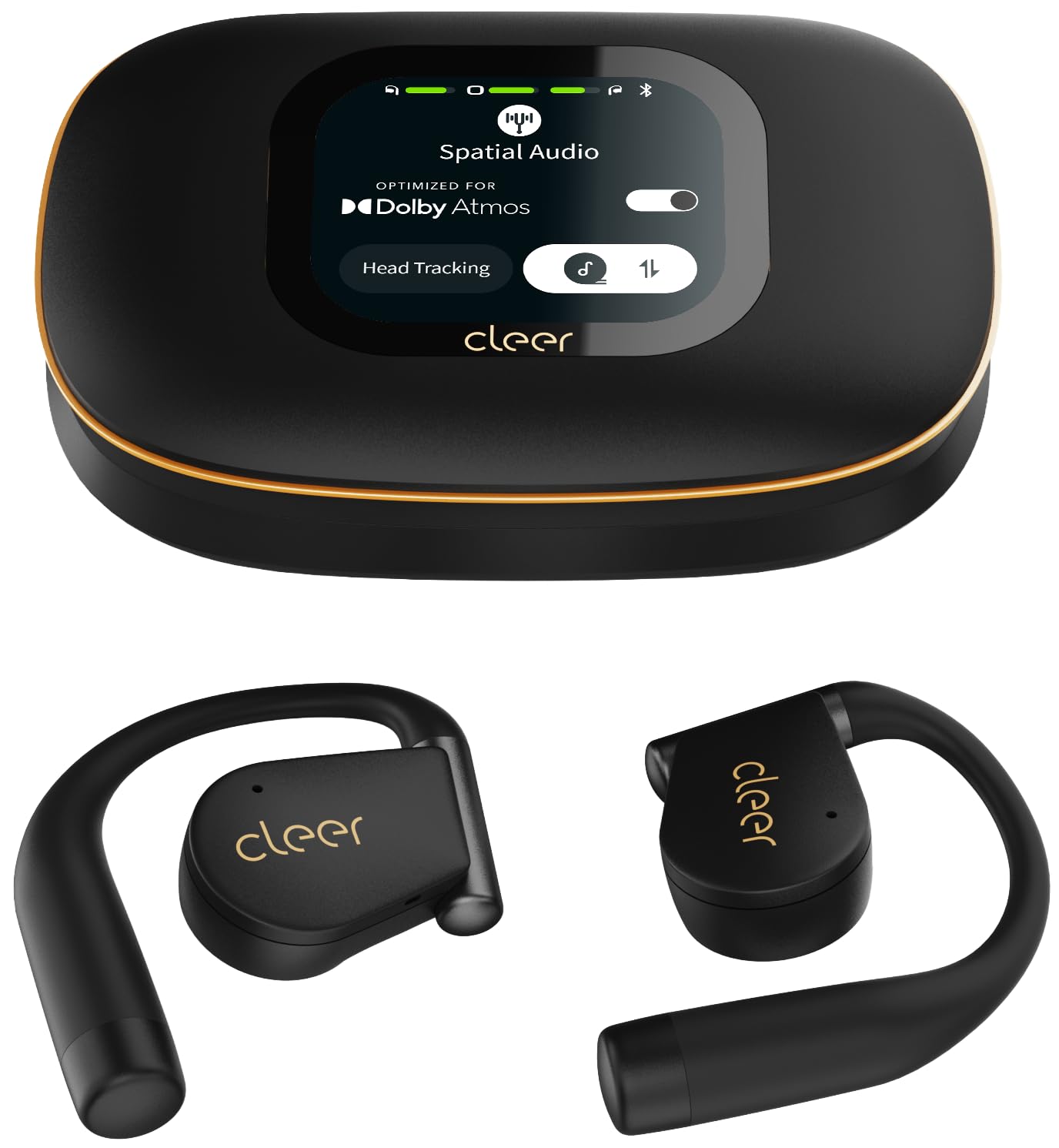
Dolby Atmos and a touchscreen case put this open-ear bud in a class of its own.
The feature that defines the ARC 5 is one no other pick carries: a smart charging case with an FHD touchscreen built right into the lid. You tap it to adjust Dolby effects and EQ, and closing the lid runs UV-C sanitization to keep the buds clean — a small detail that a daily runner will actually appreciate. Sound quality is the aspect that leads owner feedback, followed by battery life.
That sound leans on Dolby Atmos and THX Spatial Audio with dynamic head tracking, so the audio moves as you turn your head instead of sitting flat. Qualcomm Snapdragon Sound with aptX Adaptive and lossless support feeds the drivers. The waterproofing is IPX7, which covers sweat and rain on any run. On battery, the case pushes total playtime to up to 60 hours, the largest total figure here, and a quick 5-minute charge adds up to 2 hours of playback.
The caveat with a case this clever is that it is doing real work, and that complexity shows up in the reviews: connectivity, fit, and value run mixed, with some owners reporting connection hiccups and a less-than-perfect fit. With only 90+ ratings and a 4.0+ score, it has a shorter track record than the heavyweight names around it. If spatial audio and a smarter case are worth the learning curve, it delivers something genuinely different.
Spatial sound on the move: Dolby Atmos and THX with head tracking turn a run into a more enveloping listen.
Case that does more: the FHD touchscreen and UV-C sanitization set it apart from every plain charging case on this list.
Reach for this if: you want spatial audio and a genuinely smart case and don’t mind a shorter track record.
Consider something else if: you value a rock-solid, widely tested fit over new features.
7. SHOKZ OpenFit 2 Earbuds

Eleven hours per charge in a 9.4 g ear hook you forget you have on.
An 11-hour single charge is the number that jumps off the page here, and it is the reason this Shokz earns its place over the brand’s own OpenRun above. Where the OpenRun runs 8 hours, the OpenFit 2 delivers 11 on the buds, plus 48 hours total with the case on a 600 mAh cell. A 10-minute quick charge adds 2 more hours when you are scrambling out the door. And these are air-conduction ear hooks rather than bone conduction, so the fit is a featherlight 9.4 g per side.
A Ni-Ti alloy in the hook contours to your ear so the fit stays personal without clamping. SHOKZ’s DualBoost composite drivers and OpenBass 2.0 algorithm push clearer mids and highs with deeper bass than the earlier bone-conduction formula. Dual noise-cancelling mics and DirectPitch 2.0 keep your calls private. An IP55 rating handles water spray and dust, which is fine for sweat and rain but not for taking a plunge.
Multipoint pairing with two devices and physical multifunction buttons round out the controls, and the Shokz App lets you remap them and tune EQ. It has the strongest blend of comfort, battery, and secure hook fit in the lineup, backed by a 4.0+ score across 3,500+ ratings. The honest limit is the balance between the two Shokz designs: the OpenFit 2 wins on battery, but the OpenRun’s bone conduction leaves the ear canal more completely open for maximum road awareness.
The numbers that matter for a runner
- 11-hour single charge, 48 total with the case
- 9.4 g ear hook with Ni-Ti alloy that contours to your ear
- 10-minute quick charge adds 2 hours
- Dual noise-cancelling mics with DirectPitch 2.0 privacy
What to keep in mind
- IP55 resists spray but not immersion
- Air-conduction design leaves a touch of ear-canal coverage versus full bone conduction
Ideal for: the distance runner who wants the longest single-charge playtime in an open-ear hook.
Pass on it if: you need full submersion waterproofing.
8. Beats Powerbeats Pro Wireless Earbuds

The bass-forward gym classic with hooks that simply do not let go.
Start with the grip. Adjustable, secure-fit earhooks combined with a reinforced, sweat-and-water-resistant body are why so many lifters and runners trust the Powerbeats Pro through a heavy session. Sound quality is the thing buyers rave about most, and the dynamic range with noise isolation gives it a punchier, more connected feel than the open-ear picks above. It sits at the sealed-in end of the spectrum, so expect the world to fade a little.
The Apple H1 chip drives the quick pairing and hands-free voice handling, and Class 1 Bluetooth is billed for extended range and fewer dropouts. Volume and track controls sit on each earbud along with Auto Play/Pause, so you rarely touch your phone. Listening time runs up to 9 hours, with more than 24 hours added by the charging case, and a 5-minute Fast Fuel charge hands you 1.5 hours of playback when the battery is low.
The weakness the reviews flag most is charging: several buyers report a bud that will only charge on one side, which is the trade-off on an older model. The sealed-in design also cuts your awareness of traffic, so this is the wrong pick for a road run and a great one for an indoor gym or a quiet trail. Weigh the grip and bass against that charging history and you know whether it belongs in your gym bag.
Grip and punch: adjustable hooks plus reinforced sweat-and-water resistance make it stable and durable in a heavy workout.
The charging caveat: reports of single-side charging problems mean it is best bought by those who can live with the risk on an older model.
Suits you if: you train indoors and want strong bass with a bombproof hook fit.
Forget the idea if: you run on open roads and want to hear traffic — the sealed design blocks it.
9. Bose Ultra Open Earbuds
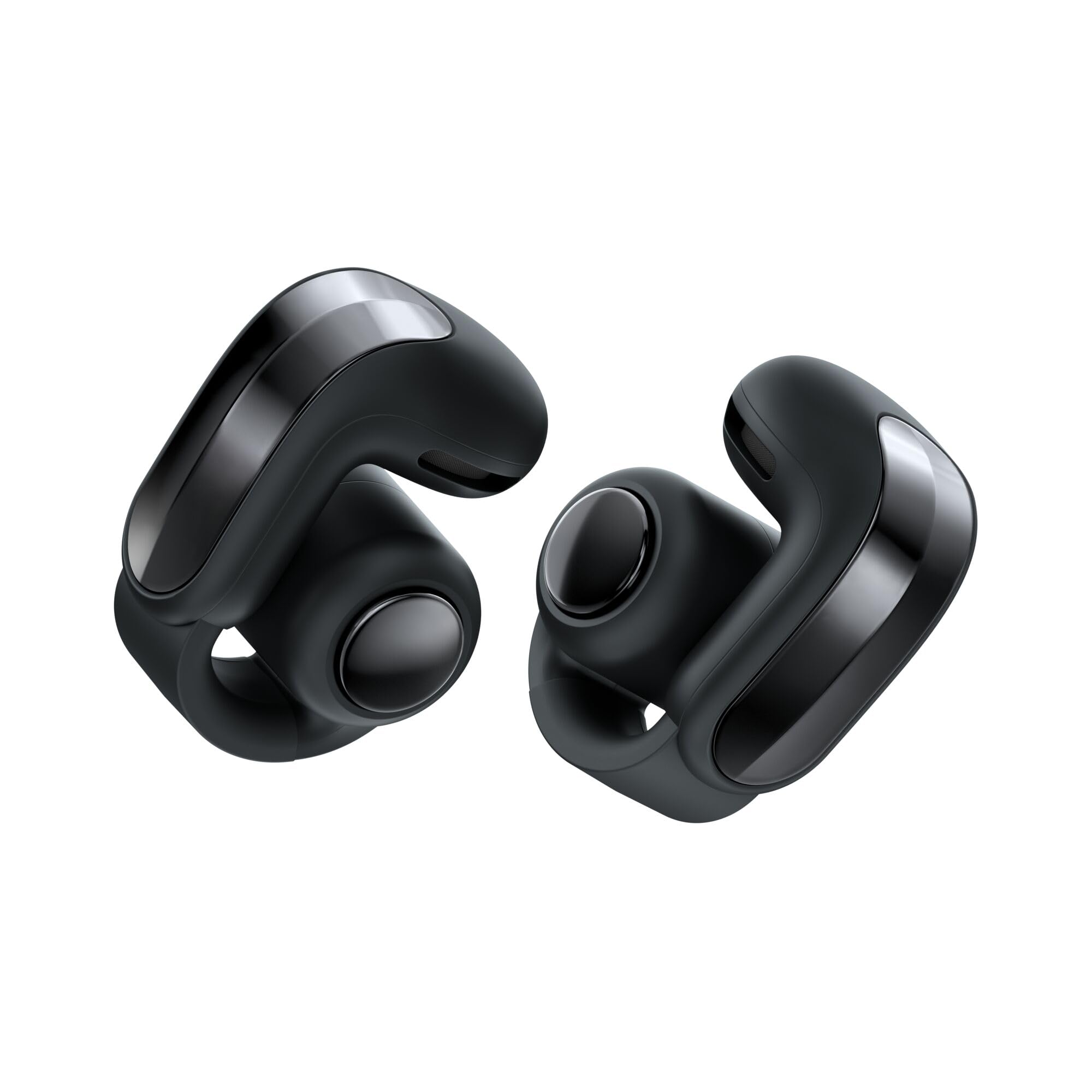
A cuff-style open earbud that curves around your ear and just disappears.
The Ultra Open design is the most distinctive comfort story here: a cuffed ear design with a flexible joint and silicone curves around your ear rather than sitting in it, and a non-occluding shape keeps the driver just outside your ear canal. Owners single out the sound and comfort most, and the metallic finish with a more sturdy case shows this is meant to be seen as much as heard. Updated 12 mm drivers deliver deeper, more true-to-source bass, and TrueSpatial Tech with head tracking gives you a 3D listen.
Battery is the quietly impressive part. You get 9 hours of active listening, up to 28 hours using the case, and a 10-minute Quick Charge for 2 hours of playback. Wireless charging is a nice touch this premium tier earns. An IPX4 rating covers sweat and light rain, and SpeechClarity tech with multiple mics keeps calls clean on the move.
The honest caveat is fit during a hard run: the reviews run mixed here, and while many find the cuff stays put, some say it can slip away from the ear. That makes it a better fit for easy jogs, walks, and the travel-school-office life Bose markets it for than a sprint session. The clip-on cuff is comfortable enough to wear all day, and the button controls switch modes in an instant — so if your running is gentle and your wear time is long, this is a premium comfort play.
Comfort above all: the flexible cuff and silicone joint curve around the ear so it never sits inside the canal.
Slippery on the move: mixed fit feedback during workouts makes this a pick for easy miles and all-day wear rather than sprints.
The right call for: the runner who values long-wear comfort and rich audio over a locked-down sprint fit.
A mismatch if: you need a headset that grips hard through fast, sweaty intervals.
Know the Specs
Bone Conduction vs Air Conduction Open-Ear
Bone conduction sends sound as vibrations through your cheekbone to the inner ear, leaving the canal fully open — the SHOKZ OpenRun works this way. Air-conduction open-ear designs, like the OpenFit 2, aim a driver at your ear from just outside, giving a fuller tone while still letting sound in. Both are open-ear; the difference is how the audio reaches you, and how much of the road you still hear.
What the IP Rating Digits Mean
The first digit guards against dust and the second against water. IPX5 or IPX4 means water-only protection at splash level, IP54 adds light dust resistance, and IP67 or IP68 step up to strong dust sealing plus immersion. For runners, sweat and rain are covered from IPX5 upward; higher numbers mean more headroom for the worst days.
Single-Charge Versus Total Playtime
Single-charge playtime is how long the buds run between charges; total playtime adds the extra juice in the case. The Bose Ultra Open, for example, lists 9 hours on the buds but up to 28 using the case. Match the single-charge number to your longest run, then treat the case as backup rather than the number that decides the buy.
Bluetooth Range and Latency
Bluetooth range is how far you can leave your phone behind before the signal drops — 10 meters on the OpenRun, 20 on the TOZO and SoundPEATS. Latency, measured in milliseconds, is the delay between a sound and what you hear; the TOZO’s 60 milliseconds keeps on-screen footfalls in sync with training videos.
Common Questions
Are bone-conduction headsets actually good for running?
Will a clip-on headset stay put during a hard run?
What IP rating do I need for sweat and rain?
Is the SHOKZ OpenRun or OpenFit 2 better for long runs?
Can I wear a running headset over my glasses?
How many hours does a wireless running headset really last?
Do noise-cancelling earbuds make running more dangerous?
What Bluetooth version should a running headset have?
Can I use a running headset for calls too?
Is a neckband or true wireless better for running?
The Bottom Line
For most runners, the wireless headset for running winner is the SHOKZ OpenRun because bone conduction keeps your ears open to the road while an IP67 build shrugs off sweat and rain. If you wear glasses and want the longest single-charge playtime in a clip-on, the TOZO OpenEarRing delivers 10 hours per charge in a 5.1 g bud. And for the distance runner who wants the most hours on one charge in an open-ear hook, the SHOKZ OpenFit 2 is the one to reach for. One honest nudge: if you want gym noise cancelled rather than the road kept audible, grab the Soundcore Sport X20 and switch on its transparency mode when you head outside.
How we choose
We do not accept paid placement. Every pick is matched to a real buyer and a real use-case; we do not hands-on test units.
Sources
Specifications: manufacturer listings and product documentation. Review insights: verified customer reviews, as of November 2026. Pricing: not shown on this page (it changes often); check the current price via the retailer link.
As an Amazon Associate, Tactical Gear Guy earns from qualifying purchases. This does not affect which products we feature.