Specs are compiled from manufacturer listings and verified buyer reviews and can change over time — please confirm the key details on the product page before buying.
Buying a foam roller looks simple until you touch one. A soft roller feels nice in the store and does almost nothing for a tight calf or a locked-up upper back. The rollers worth owning are the ones firm enough to press into the muscle — and the wrong firmness is the single most common regret in this category. Below you’ll find nine rollers sorted by what they actually do well, from a 13-inch grid roller that has become the default pick for daily recovery to a 31-inch extra-firm beast built for people who train hard.
This guide is built by comparing the manufacturers’ published specifications and the patterns across verified customer reviews, so you get each pick’s real strengths and trade-offs instead of marketing spin.
Firmness, diameter, and length decide almost everything here, so each pick below is described in those terms. Read on for the Top-Rated Foam Rollers for Recovery that match how you actually move and hurt.
Top Picks


How To Choose The Best Top-Rated Foam Rollers for Recovery
The mistake most buyers make is choosing by color or by how soft the foam feels under a thumb. Soft foam gives you comfort and very little pressure. What you want for recovery is a roller that presses back — so start with density and diameter, then decide on length.
Density: the one thing you cannot change later
Density is how hard the foam pushes back. A high-density roller holds its shape and drives into the muscle. A soft one collapses under your weight and stops doing much beyond the first week. If you have never rolled before, a medium-density roller is the safer start. If you already roll regularly and want deeper pressure, an extra-firm roller is the right tool — just expect a sharper sensation on the first few sessions.
Diameter and surface texture
Roller diameter changes how far off the floor your body sits. A larger diameter like the 6-inch rollers here is more forgiving under the back and easier to balance on. Smaller ones get closer to the floor, and the 321 STRONG’s 5.25-inch body is the most compact in this group. Surface texture is the other lever: a smooth roller spreads pressure evenly, while ridges or bumps concentrate it into tighter spots. Textured rollers feel more intense, and the more pronounced the bumps, the more intense it gets.
Length and hollow versus solid cores
Pick your roller length by where you’ll use it. An 18-inch roller handles most limb work and travels well. A 36-inch roller lets you lie along it for full-back rolling and gives more stability for balance work. Hollow-core rollers — a firm shell wrapped around an empty center — tend to feel firmer than a solid foam block of the same stated density. The shell wall does the work, not a big soft block.
Side-by-Side Comparison
| Model | Best For | Length | Diameter | Firmness | Amazon |
|---|---|---|---|---|---|
| TriggerPoint Grid 1.0★ Best Overall | Everyday recovery, all body parts | 13 in | — | Multi-density (firm) | Amazon |
| Amazon Basics 18″Best Value | Gym bag and beginner rolling | 18 in | 6 in | High density | Amazon |
| Amazon Basics 36″Longest Reach | Full-back rolling on the floor | 36 in | 6 in | High density | Amazon |
| 321 STRONG 3-Zone | Precise pressure on tight spots | 12.5 in | 5.25 in | Medium | Amazon |
| Gaiam Restore 18″ | Textured work on smaller muscle groups | 18 in | 6 in | Medium | Amazon |
| Black Mountain Products | Firm full-body work on a long roller | 36 in | 6 in | Extra firm | Amazon |
| Rollga Medium Density | Back rolling without spine pressure | 18 in | 6 in | Medium | Amazon |
| OPTP AXIS 36″ | Clinic-style myofascial release | 36 in | 6 in | Firm | Amazon |
| RumbleRoller Extra Firm | Deep pressure for serious training | 31 in | 6 in | Extra firm | Amazon |
Detailed Reviews
1. TriggerPoint Grid 1.0 Foam Roller
Our pick — 4.5+★ from 23,500+ verified ratings; the strongest balance of quality and price.
The roller that convinced a generation of gym-goers that recovery is worth ten minutes.
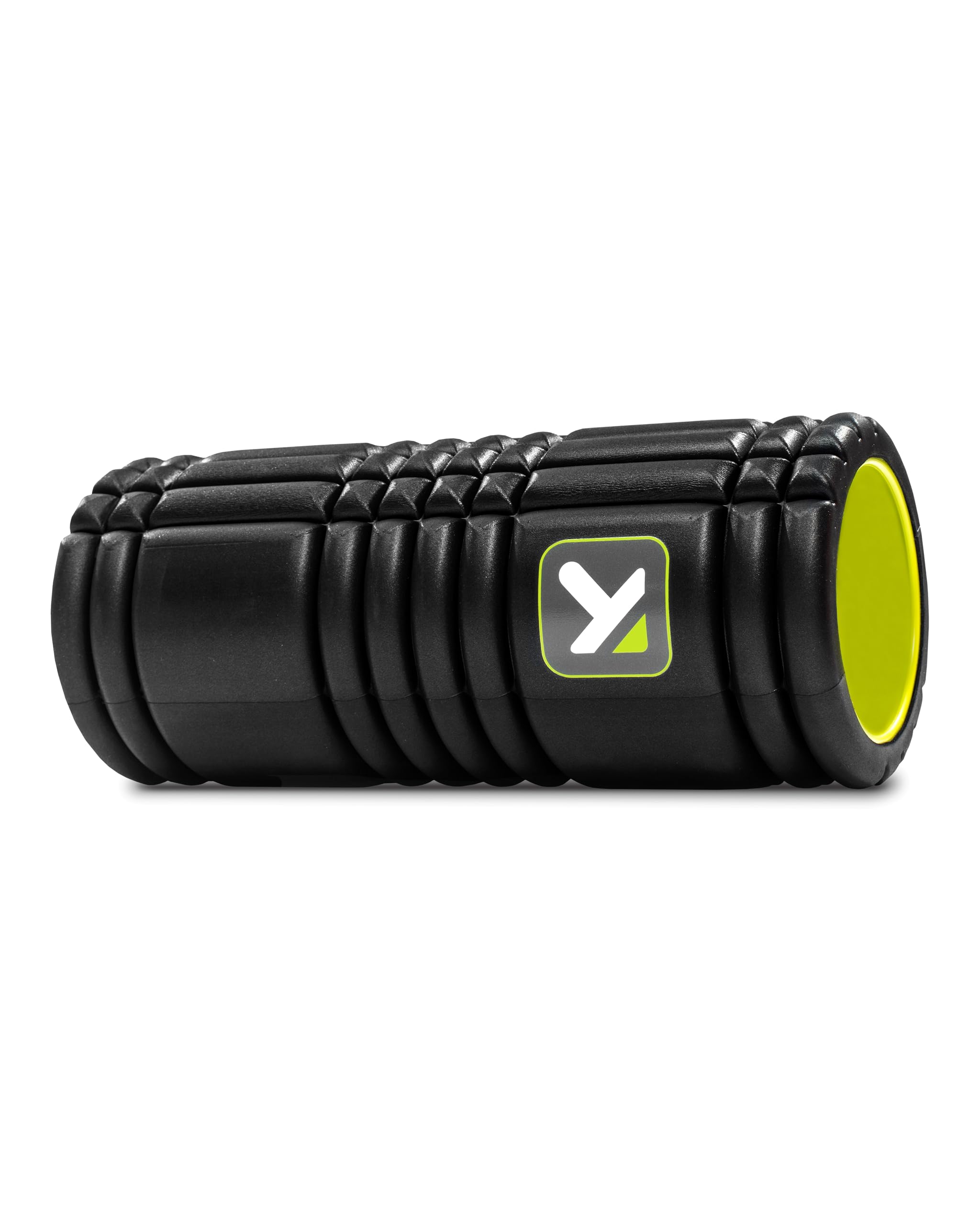
This roller wins the top spot because of its surface, not its size. The Grid’s three-dimensional pattern works different regions of the roller depending on how you position it, so one tool covers both a broad sweep and a focused dig. At 4.5+ stars across 23,000+ ratings, it’s one of the most widely reviewed rollers here. The 13-inch length is the first thing to understand. That short body rolls along your quads, calves, glutes, and upper back — anywhere you need concentrated pressure — without the bulk of a long roller. For a runner with tight IT bands or an office worker with a knotted upper back, this is the size that actually gets used.
The feel is firm in a specific way. It’s built as EVA foam wrapped around a hollow core, and the maker states that construction is firmer than traditional foam rollers. Practically, you get that sports-massage level of compression without the roller going flat under your bodyweight. The aspect owners praise most here is build quality, and that tracks: it holds its shape rather than denting in the middle, so your pressure stays consistent from month to month.
The catch is real, though it’s a fit issue rather than a fault. Comfort is the aspect the feedback most often debates — plenty of people like the soft-firm balance while others find it too much. If you’re new to rolling, that textured surface will feel sharp for the first week. Start with lighter bodyweight on the roller and build up.
What owners rave about
- The 13-inch length is compact enough to live in a backpack and still reach every major muscle group.
- The GRID surface lets you choose a broad roll or a concentrated press on the same tool.
- EVA foam over a hollow core holds shape under load instead of flattening.
- Works on both tight, sore muscle and softer tissue around the neck and shoulders.
Where the fit can be wrong
- Ridges feel intense on a first rolling session — new users should ease in.
- Shorter body means the backs of your thighs get less coverage per pass than a 36-inch roller.
Go for it: You want one small roller that handles daily recovery on every body part and stays close to your gym bag.
Second-guess it: You’re brand new to rolling and want the gentlest possible surface to start on.
2. Amazon Basics High Density Foam Roller, 18 Inches
Straightforward foam, a 6-inch diameter, and nothing you don’t need.
Start with the shape: 6 inches across and 18 inches long. That diameter gives your spine and back enough clearance to relax into the roll. The 18-inch length is the balance for carrying to class. The real draw for a first roller is the material — firm, durable polypropylene that the maker says maintains its shape. Molded edges on the ends soften where your hands or hips meet the foam.
Being a plain high-density roller, it hands you even pressure across the whole surface rather than spot-targeting. That’s a plus if you want to roll large areas like the quads and back, and a limitation if you wanted a deep dig into one stubborn knot. Utility is where the feedback lands: people use it as a post-gym unwinder for back and shoulders, and the material is reported to last longer than expected — a solid sign for a plain foam block.
Firmness is the split you should know about before you buy. It’s dense enough that some people find it hard under the shoulders and spine, which is normal for a high-density piece. Size also draws a mixed read — the 6-inch diameter suits back work well but can feel broad for smaller limbs. It’s a great all-rounder, not a precision instrument.
Where it earns its place: A firm, cleanable 18-inch roller that handles balance work, stretching, and post-lift recovery without overcomplicating any of it.
Ideal for: Someone who wants one reliable roller for the gym floor and doesn’t need sculpted texture.
Not ideal for: You need pinpoint pressure on a single tight spot — a textured roller does that better.
3. Amazon Basics High-Density Foam Roller, 36 Inches
Lay your whole spine along it and work both sides of the back in one pass.
Here’s the number that separates this from its shorter sibling: 36 inches of working length. That’s what lets you lie the roller lengthwise under your spine, roll both shoulder blades at once, and get the stability that comes from a long surface under you. The stocked 36 x 6 x 6-inch body gives you 6 inches of diameter too, so your back isn’t pinched against the floor while you roll.
It’s the same firm polypropylene as the 18-inch version, with molded edges and a wipe-clean surface, and light enough to move around the room. Owners single out the construction quality, tying it to back ache relief, looser leg cramps, and stretching that doesn’t pinch. That’s high-density foam doing its job.
One honest note that applies to this length and material. Hardness is the most-debated trait, with some finding this density simply too hard for sensitive areas like the low back or neck. Given the whole product is one long high-density surface, that firmness applies across the entire length. Roll a towel under it if you need a lighter touch on the spine.
The trading floor truth: If you mostly roll a single leg at a time, this length is more roller than you need. If you lie along it for upper- and mid-back work, the extra coverage is exactly why it’s here.
Reach for it when: You roll the full back, lying lengthwise, and want stability and coverage from a single piece of firm foam.
Look elsewhere if: You want a travel roller — this one lives on the floor, not in a bag.
4. 321 STRONG Patented 3-Zone Massage Roller
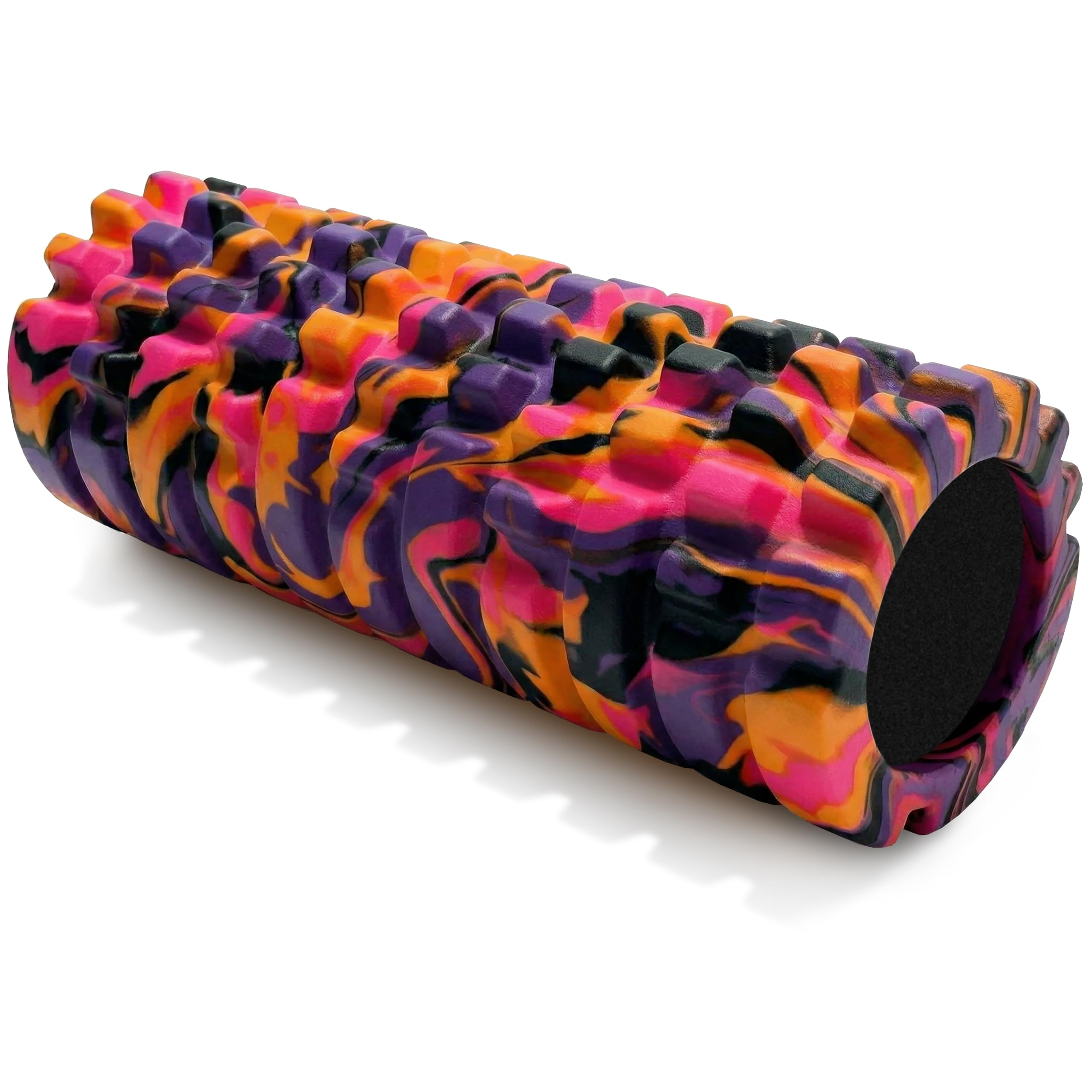
Three bump sizes on one roller let you dial pressure up or down mid-session.
You sit lower to the floor and get a tighter, more controlled roll on the arms and legs, because this is the most compact body in this group at 5.25 inches in diameter. That’s narrower than the 6-inch rollers beside it. The surface is the headline: three distinct zones of projection — small ones like fingertips, midsize like thumbs, large like the base of a palm. You shift which zone you roll on based on how much pressure you want.
It’s built as BPA-free closed-cell EVA foam over an EPP core, and the maker is explicit that there’s no hard plastic in the product. Practically that means it won’t crack under load, and the foam is firm enough to reach the muscle groups either side of the spine without driving into the spine itself. What people mention most is the deep-tissue capability — this is the one to pick for a knot in the upper back that a smooth roller glides right over.
The trade-off sits in the texture, not in the build. Hardness, size, and comfort all draw mixed feedback, and you can guess why: those projections feel sharper than foam on day one. There’s also a companion eBook listed in the product documents, so you don’t have to guess where each zone goes on the body. Go in knowing the first few rolls will feel intense.
The case for the 3-Zone
- Three bump sizes let you pick the pressure on the fly, from gentle to deep.
- 5.25-inch diameter sits low and keeps control on limbs.
- Closed-cell EVA over an EPP core holds weight without deforming.
- Texture reaches soft tissue and fascia rather than just skimming the surface.
What some owners wrestle with
- Projections feel sharp during early sessions — ease in and let your body adjust.
- Compact size means less coverage per pass across big muscle groups.
Best suited to: Anyone who has a specific knot to work out and wants one roller that can go gentle or deep.
Skip the idea if: You want to lie back on it across the whole spine — a smooth, wider roller is kinder there.
5. Gaiam Restore Foam Roller, 18″, High Density
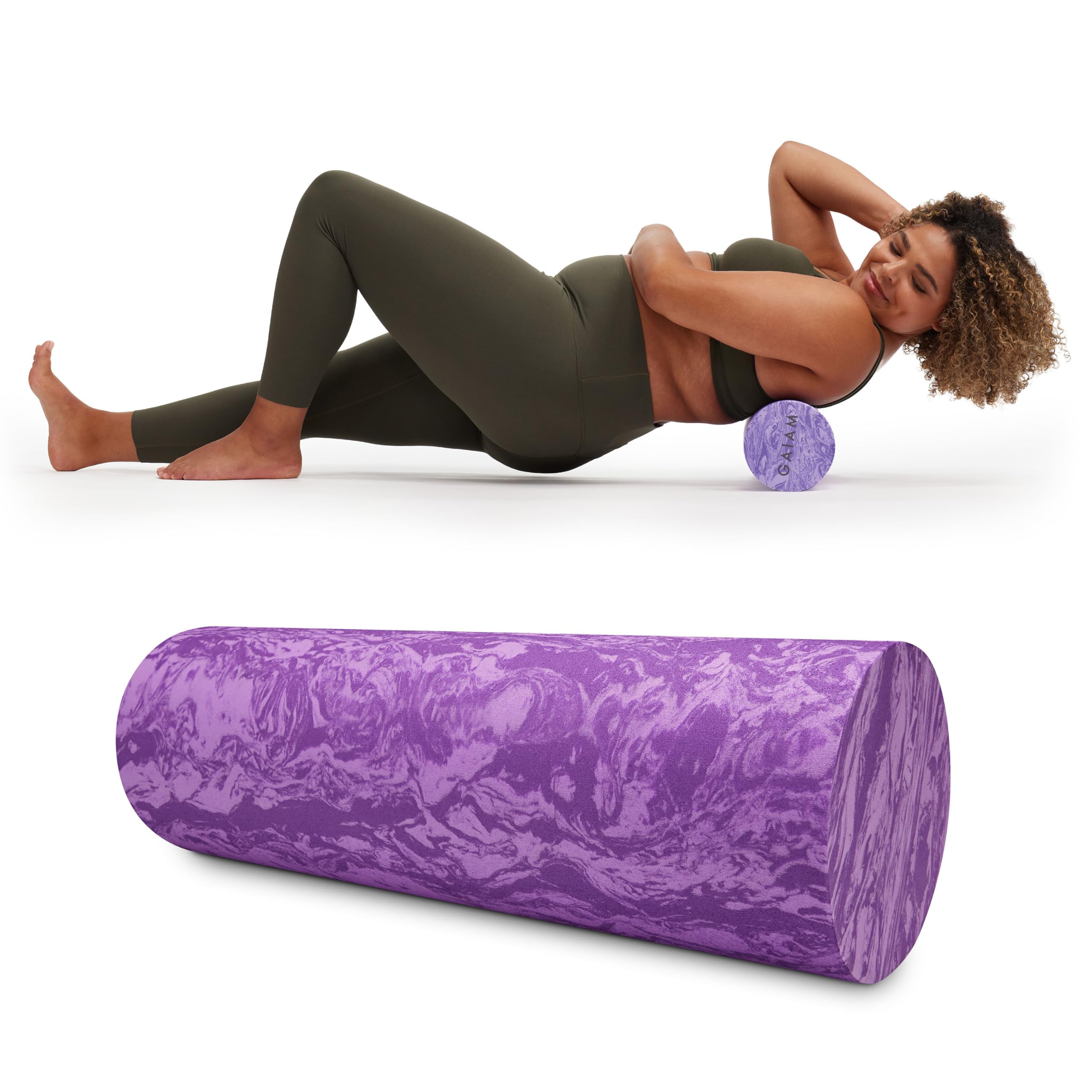
A textured 6-inch roller for isolating the glutes and quads.
At 6 inches in diameter and 18 inches long, this is a mid-size roller sized for the job the maker describes: isolating smaller muscle groups in the back, arms, and legs. The texturing is the difference from a plain foam block. A tread pattern concentrates pressure on specific points and gives your hands something to grip and steer, so you get more leverage and control while rolling. It can be used over clothes or on bare skin, which is handy when you’re in a hurry.
The density is medium, and the maker frames it as a warm-up and cool-down tool for post-workout rolling. Quality is the trait the feedback picks out first — small sample, but a consistent read — and effectiveness follows close behind, with tight IT bands being the specific spot people report it working on.
Here’s the honest part. Firmness and size both draw mixed feedback, with some finding it too hard and too big for their particular needs, and durability opinions split too. None of that makes it a bad roller — the tread does exactly what tread is meant to do. It just means this one suits a body and a rolling style that likes a wide, firm, textured surface.
How it slots in: This is the gentlest entry point of all the textured rollers here, because the density is medium rather than extra firm. It’s a good first step if you want more than smooth foam without the bite of a bump-covered roller.
Pick it if: You want a bit of pinpoint texture on the quads and glutes and like the stability a 6-inch barrel provides.
Consider a smooth roller instead if: Even medium-density foam has felt too firm under your back in the past.
6. Black Mountain Products High Density Extra Firm Foam Roller

Extra-firm foam on a 36-inch barrel, for people who want pressure, not padding.
The specification that defines this pick is simply “extra firm.” You’re getting a 36 x 6 x 6-inch roller — a full-length body, 6 inches in diameter, made in the USA. That combination of length and firmness means you can lie along it for back work and, when a hamstring is locked tight, drive a deep massage into it without the foam squashing away from you.
What wins people over the most is the build quality, and the feedback backs that up with specific results. It eases tightness and holds its shape, so each session feels the same instead of softening over time. There’s a note in the reviews worth wiring into your expectations: it does a particularly good deep job on the hamstrings, so if that’s your tight spot, this is a strong match.
Because it’s extra firm, the same foam that makes it effective makes it unforgiving. Size draws mixed feedback — some find the 36-inch length just right, others find it too large to store or to handle on smaller limbs. That’s the honest price of a long, hard roller: it’s great when you want it, and awkward when you don’t.
Tactical read: This is the pick for someone who already knows rolling helps and wants maximum firmness at full length, no learning curve.
Right choice for: Regular rollers who want a firm 36-inch surface for hamstrings and full-back work.
Think twice if: You need something portable — a 36-inch barrel takes up real floor and closet space.
7. Rollga Medium Density Ergonomic Foam Roller
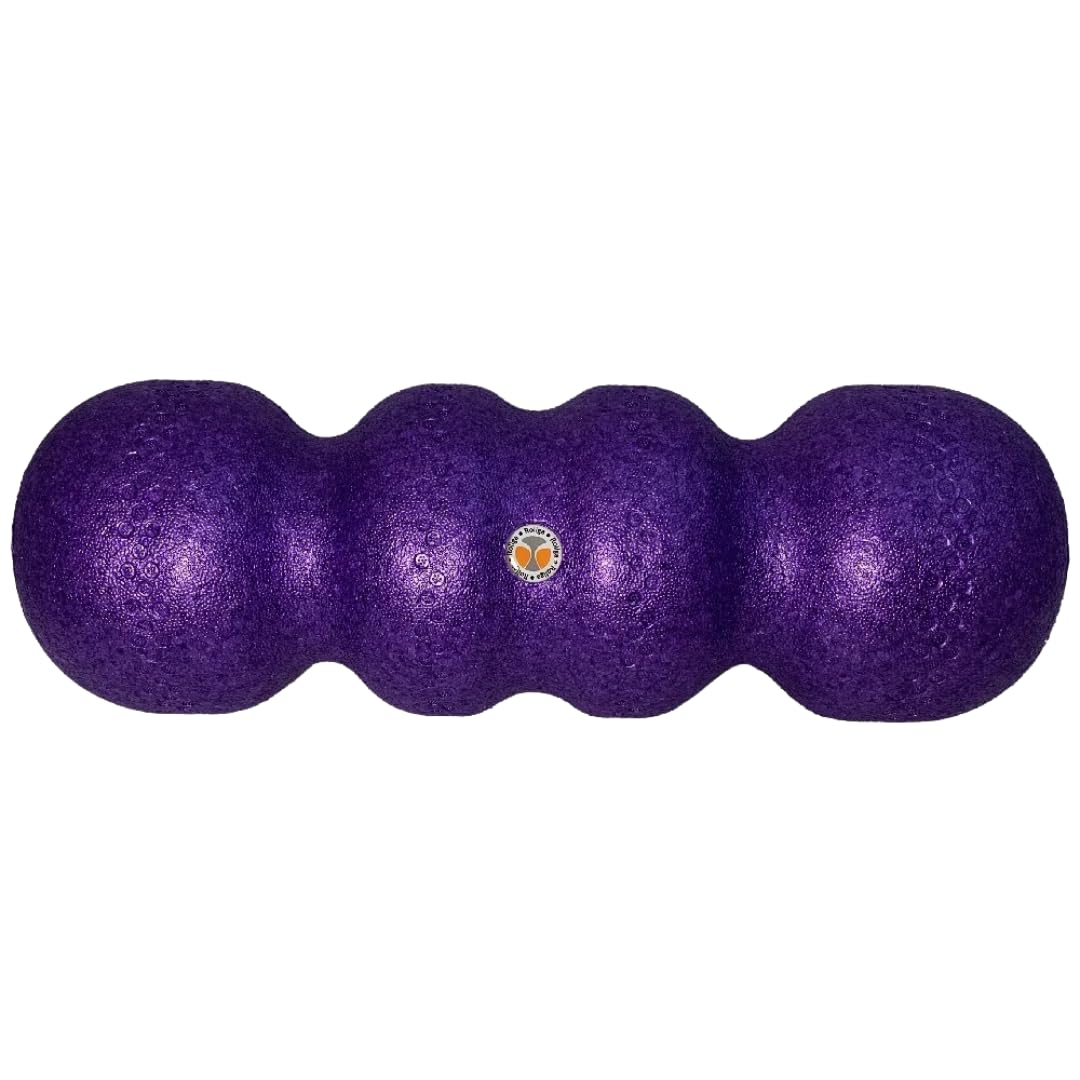
The one shaped to fit around your spine instead of pressing into it.
The contoured profile is the whole idea. Instead of a round barrel, this 18 x 6 x 6-inch roller has a patented shape that cups your spine and shoulder blades. The pressure lands on the muscle either side of the backbone rather than straight on the bone. If you’ve ever winced rolling a smooth cylinder up your mid-back, that shape is the fix. It’s marketed for both upper and lower back work, and it suits yoga and Pilates routines too.
Material quality is what stands out in the feedback, and the effectiveness lines up with it — people use this on the neck, back, legs, arms, and feet and report it reaching the tight spots without spine pressure. At roughly that contoured shape, its versatility gets mentioned a lot: it’s the rollout tool that doesn’t force you to switch rollers mid-session.
Two things to size up honestly. Firmness and pain are the mixed points in the feedback, so the pressure can feel like a lot in the first few rolls even though it’s medium density overall. The 18-inch length also makes it a mid-size roller — great for targeted back work, less coverage per pass than a 36-inch barrel.
Honest verdict: If back rolling is your main goal and spine pressure has always bothered you, the shape here solves a real problem that round rollers can’t. If your target is legs and glutes, a plain firm roller does the same job for less.
Made for you if: Your tight spots live in the upper and lower back and you want pressure that skips the spine.
skip it if: You mainly roll legs — the contoured shape is wasted there.
8. OPTP AXIS Firm Density Foam Roller, 36″ x 6″

A plain, firm 36-inch barrel built for daily clinic-style sessions.
This is the roller framed for physical-therapy, yoga, and Pilates use, and the spec that carries it is the material: high-quality, closed-cell EPP foam with a smooth surface, in a 36 x 6-inch barrel. That smooth surface matters — it gives even pressure across a broad area, so you can work the IT band, piriformis, hamstrings, quads, or the whole back without texture distracting you. It also cleans with soap and water, which is the kind of detail that holds up in a gym or studio.
The other trait this pick earns is durability. Buyers report no signs of wear even with heavy usage — the payoff of closed-cell EPP, a dense block that keeps its shape. Session after session, it delivers the same myofascial release pressure. That consistency is why it holds up as a premium pick.
Firmness is the honest trade-off. Hardness is the most-debated trait here, so if you’re not used to firm foam under the back, this will feel like a lot. That firmness is deliberate — it’s what makes the roller effective. Just know going in that smooth does not mean soft.
What makes it worth it: If you want a roller that behaves like the one at the clinic — smooth, firm, and built to last — this is that roller in a form you can keep at home.
Best fit: People who want firm, even pressure over a full 36-inch surface and care more about longevity than portability.
Pass if: You want texture to bite into a stubborn knot — a smooth surface won’t do that.
9. RumbleRoller Extra Firm Foam Roller (31 Inches)

Raised bumps built like thumbs, for athletes who want the deepest dig here.
This is the most aggressive tool on the list, and the spec that says so is the 31-inch length paired with extra-firm density and signature raised bumps. Those bumps are the point: the maker describes them as mimicking the hands of a massage therapist, so instead of a flat surface spreading pressure, they drive in and work soft tissue more like a hands-on massage. For a serious athlete with dense quads or a locked-up back, that’s a different level of intensity than smooth foam.
The bump-and-firmness combination is where people feel the difference, and that’s exactly what the feedback emphasizes — the deep, digging quality of the work. It’s recommended for serious gym-goers, and the durability holds firm without softening. Its 4.5+ star rating reflects how well that deep pressure lands with experienced rollers.
The obvious caveat: extra firm plus pronounced bumps is not a gentle experience. Firmness and pain are both divided in the feedback, with a running theme that it can feel too hard. That’s the tool doing its job, and it’s the reason this one belongs to someone already comfortable with rolling. If you’re new, this isn’t the place to start.
Why it earns the deepest pick
- Raised bumps dig into dense muscle where a smooth surface glides over.
- 31-inch full size covers larger muscle groups from quads to back.
- Extra-firm foam holds its shape instead of flattening under pressure.
- Made for people who train often and want serious, deep-tissue work.
What you have to expect
- Bumps and extra-firm foam feel very intense, especially early on.
- Not a first roller — it works best once you know how much pressure you can take.
Designed for: Experienced rollers and athletes who want the deepest tissue work in this group and aren’t put off by a sharp sensation.
Turn away if: This is your first roller or you prefer smooth, even pressure across your back.
Know the Specs
Density and Firmness
Density is simply how hard the foam pushes back under your weight. It’s described as soft, medium, firm, or extra firm, and it decides how deep the roller presses into a muscle. Medium density suits first-time rollers and gentler back work; firm and extra firm suit regular users and tight muscles that need real pressure. A roller that’s too soft collapses under you and stops doing much. A roller that’s too firm on a sensitive area can feel harsh — which is why the feedback on nearly every pick here turns on firmness.
Diameter
Diameter is how thick the barrel is, measured across the round face. A 6-inch roller lifts your body further off the floor, which makes it easier to balance on and kinder under the spine. A smaller one like the 5.25-inch 321 STRONG sits lower for tighter, more controlled work on limbs. Think of it as stability versus precision.
Length
Length decides what you can cover in one pass. An 18-inch roller handles isolated muscle groups and travels easily. A 36-inch roller lets you lie along it for full-back rolling and gives more surface for balance work. If you mostly roll one leg at a time, short is fine. If you roll the whole spine, long is better.
Core and Foam Material
Two constructions dominate here. Solid foam rollers are one dense block of material, often polypropylene or EPP foam, and hold their shape reliably. Hollow-core rollers wrap a foam shell around an empty center, and the maker of the TriggerPoint states this runs firmer than a traditional foam roller. Surface pattern is the last variable: smooth spreads pressure evenly, while ridges and bumps concentrate it into tighter spots.
Common Questions
How do I know if a foam roller is too firm for me?
Should I get an 18-inch or a 36-inch foam roller?
What is the difference between a smooth foam roller and a textured one?
Do textured foam rollers hurt?
Will a foam roller lose its shape over time?
Can I use a foam roller for my lower back?
How do I clean a foam roller?
Is a hollow-core foam roller better than a solid one?
What size diameter should a foam roller be?
The Bottom Line
The top-rated foam rollers for recovery that earns its top spot for most buyers is the TriggerPoint Grid 1.0, because its 13-inch multi-density surface covers a broad sweep and a focused dig on one compact tool. If full-back rolling is your priority and you want to lie along a long, firm barrel, the Amazon Basics 36-Inch covers the whole spine. And for the deepest tissue work in this group, the RumbleRoller Extra Firm is the one to reach for once you’re used to rolling.
How we choose
We do not accept paid placement. Every pick is matched to a real buyer and a real use-case; we do not hands-on test units.
Sources
Specifications: manufacturer listings and product documentation. Review insights: verified customer reviews, as of November 2026. Pricing: not shown on this page (it changes often); check the current price via the retailer link.
As an Amazon Associate, Tactical Gear Guy earns from qualifying purchases. This does not affect which products we feature.