Specs are compiled from manufacturer listings and verified buyer reviews and can change over time — please confirm the key details on the product page before buying.
Cold feet ruin a whole day outdoors, and the boots that fix it are not always the famous ones. The number that actually predicts warm feet is the insulation weight printed on the box: 200 grams suits a slushy commute, 1200 grams suits a treestand in deep freeze. This guide sorts nine men’s winter boots by that number and by what the tread does on ice, so you can pick the right pair once.
This guide is built by comparing the manufacturers’ published specifications and the patterns across verified customer reviews, so you get each pick’s real strengths and trade-offs instead of marketing spin.
Warmth is only half the job, though — a stiff rubber shell that pinches your calf will feel cold no matter what insulation sits inside it. Here are the warmest boots for men.
Top Picks

How To Choose The Best Warmest Boots for Men
Warm feet in winter come down to three things you can read straight off the spec sheet: how much insulation sits in the boot, how tall the shaft rises up your leg, and whether the material keeps water out without trapping sweat.
Insulation Grams Decide Your Temperature Range
Insulation is measured in grams, and that number tells you roughly how cold the boot is built for. A 200 g boot (200 grams of synthetic fill) suits an active winter — shoveling the drive, walking the dog, a wet city commute. A 1200 g boot (1200 grams of fill) is built for standing or sitting still in serious cold, like a hunting blind or an ice-fishing chair. More grams mean more warmth but also more bulk, so match the number to how much you will actually move.
Rubber Shell Vs Leather Hiker
Rubber-and-neoprene boots slip on and off in seconds and shrug off slush because there are no seams to soak through. Leather hiking-style boots breathe better on a long walk and feel more like a shoe underfoot. If you plan to cover ground, lean leather. If you plan to stand in a wet marsh or push through snowbanks, lean rubber.
Shaft Height And Calf Fit
Shaft height is how far the boot climbs up your leg — a 10-inch or 17-inch shaft keeps deep snow from pouring over the top. The catch is that a tall rubber shaft grips your calf, so a boot with a snug stretch top can feel tight if you have heavy calves. Check the fit notes before you commit to a tall pair.
Side-by-Side Comparison
| Model | Best For | Insulation | Shaft / Style | Waterproof Build | Amazon |
|---|---|---|---|---|---|
| Columbia Firecamp★ Best Overall | Everyday winter wear | Low-bulk insulation | Multi-sport hiker | Waterproof construction | Amazon |
| ROCKY Blizzard Stalker 1200GWarmth Champion | Standing in deep cold | 1200 g Thinsulate Ultra | 8 in | Rocky Waterproof | Amazon |
| Columbia Expeditionist ShieldIce Grip Pick | Ice and snow grip | Ample insulation | Winter hiker | Waterproof-breathable | Amazon |
| TIDEWE Rubber Hunting Boot | Mud and marsh | 800 g + 7 mm neoprene | Rubber pull-on | Waterproof rubber | Amazon |
| MUCK Arctic Pro | Subfreezing work | 8 mm neoprene + fleece | 17 in, steel toe | 100% waterproof | Amazon |
| THE NORTH FACE Chilkat V | Trail and town | 200 g | Lace-up snow boot | Waterproof + DWR | Amazon |
| Oboz Bridger 10″ Insulated | All-day winter hiking | 400 g Freeze Guard | 10 in | B-DRY liner | Amazon |
| SOREL 1964 Pac Nylon | Style plus warmth | Thermal-lined | Sherpa cuff | Seam-sealed | Amazon |
| Merrell Coldpack 3 Thermo | Grip on bare ice | 200 g + fleece lining | Mid cut | Waterproof + Vibram Arctic Grip | Amazon |
Detailed Reviews
1. Columbia Men’s Firecamp Boots
Our pick — 4.5+★ from 950+ verified ratings; the strongest balance of quality and price.
A waterproof low-bulk hiker that handles slushy commutes and weekend trails without the bulk of a rubber pack boot.
The Firecamp wins the top spot because it balances warmth, waterproofing, and comfort without the bulk of a full rubber snow shell. Low-bulk insulation keeps the heat in, and the waterproof build means slush stays on the outside. Plush cushioning handles a full day on your feet, which is why this is the one most buyers end up keeping.
What earns it the crowd’s confidence is build quality — it is the single thing owners praise most here, well ahead of every other trait. Comfort is next, then warmth and fit, with plenty of toe room coming up again and again in the feedback. That combination is rare at this level: a boot that fits right and stays dry in the same breath.
You get it in multiple colors and sizes, so a narrow or wide foot has a fair shot. The honest catch is that low-bulk insulation is built for active winter days, not for sitting motionless in a treestand at zero degrees — for that you want a 1200 g boot. For commuting, shoveling, and winter hiking, it is the sensible default.
What buyers keep coming back to
- Low-bulk insulation keeps feet warm without the clunky feel of a rubber pack boot.
- Waterproof construction and a dry-sock reputation — slush does not get through.
- Plush cushioning and generous toe room make all-day wear easy.
- Multiple colors and sizes to choose from.
Where it stops short
- Built for active winter use, not for standing still in severe cold.
- Less raw insulation than the heavy hunting boots further down this list.
Best fit for: the guy who wants one pair for errands, dog walks, and weekend trails.
Think twice if: your winter means hours of sitting still in deep cold — you want the 1200 g option instead.
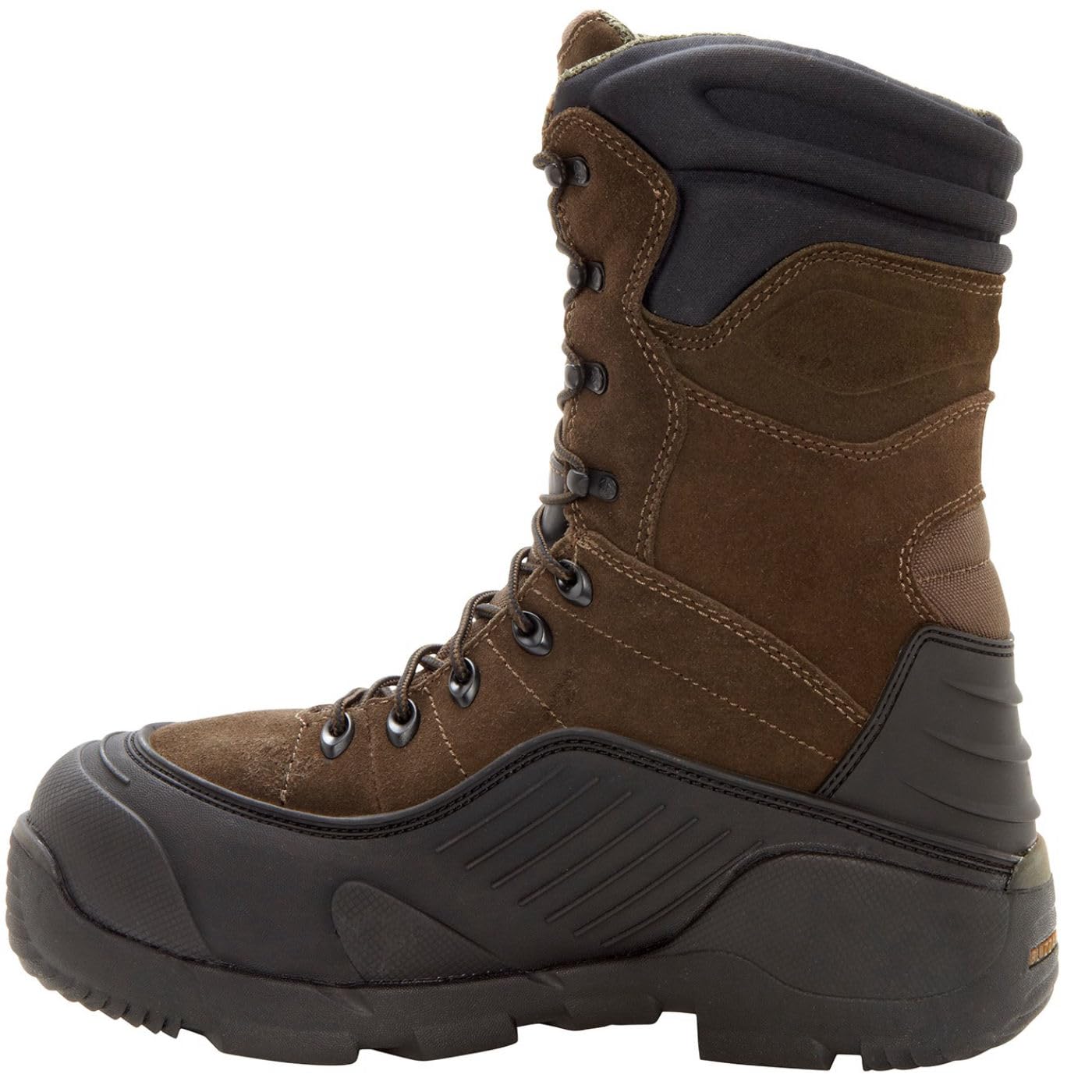
2. ROCKY Blizzard Stalker Waterproof 1200G Insulated Boot
Six times the insulation of the Chilkat — this is the boot for standing in real cold.
The Blizzard Stalker carries 1200 g of Thinsulate Ultra insulation, and that number is the whole story. Set it beside The North Face Chilkat V at 200 g and the gap is plain: 1200 g vs 200 g, six times the fill. If your winter work is sitting still in a blind or a treestand, that difference is the reason you pick this one.
Winter hunting boots in this class are judged on two things, and here quality takes the lead as the most-praised trait, with warmth close behind. The split suede and 900 denier high-abrasion textile upper (a tough woven fabric that resists scuffs) stands up to brush and briars. A removable mesh PU footbed lets air move, and a TPU heel stabilizer keeps your heel locked in place as you walk.
Grip comes from the multi-directional Blizzard outsole, built for uneven snow and ice, and the molded foam padded collar softens the ankle. Two things to sort out before you buy: sizing is the most-corrected gripe here, so try your normal size first, and the boot weighs 5.4 pounds per pair in a size 10. At 8 inches tall it sits mid-calf, not over it.
The weight trade-off: 5.4 pounds per pair is the price you pay for 1200 g of fill — that is a boot meant for cold, not for sprinting.
Fit first: sizing comes up more than any other complaint, so order your true size and size up only if you layer heavy socks.
Grab this one for: late-season hunts, ice fishing, and any winter job where you stand still in the cold.
Look elsewhere if: you want a light boot for an active city commute.
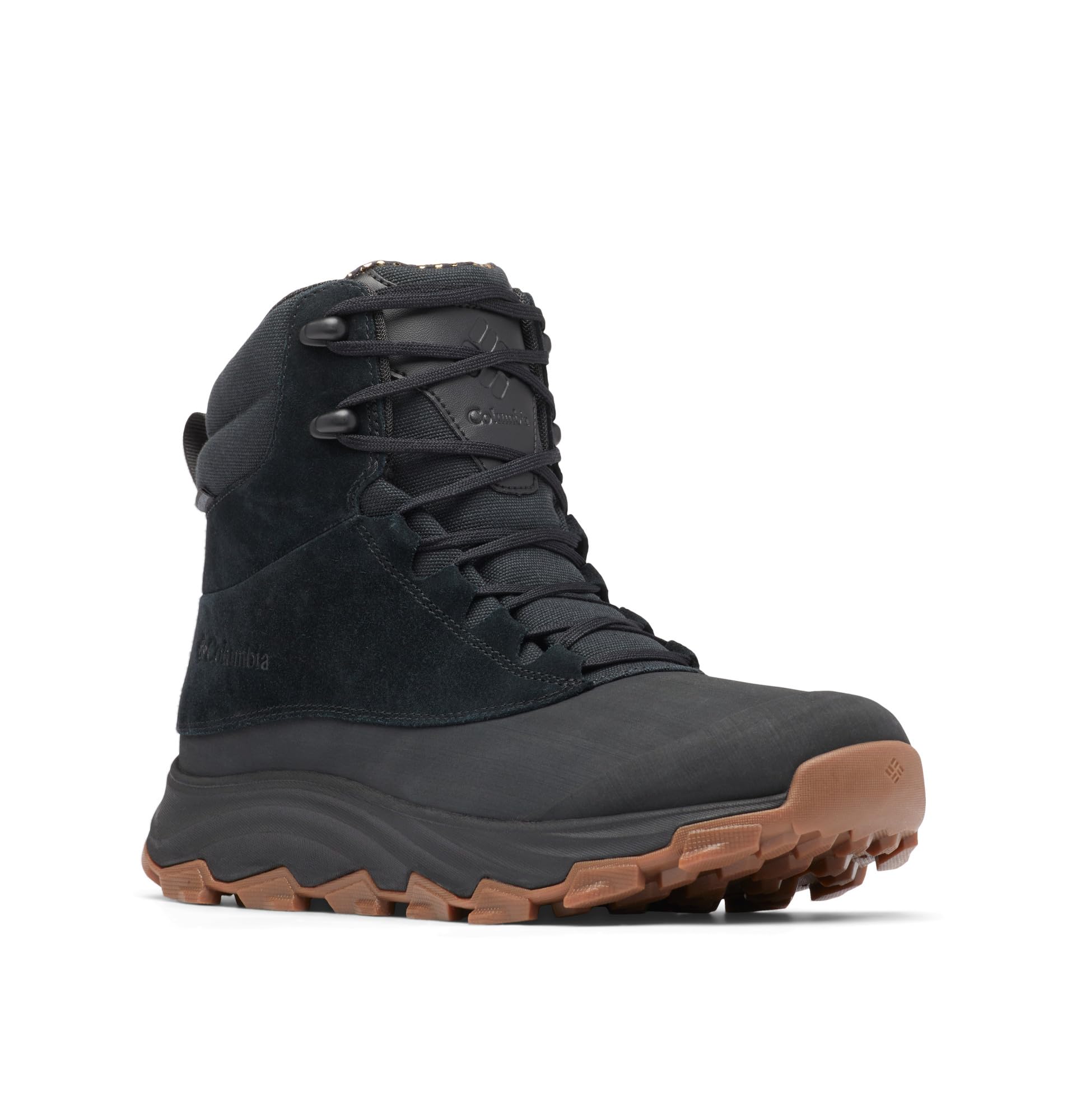
3. Columbia Men’s Expeditionist Shield
Columbia’s most advanced heat-reflecting lining, wrapped in a boot built to bite ice.
What sets the Expeditionist Shield apart is its lining: Columbia’s most advanced thermal-reflective tech bounces your own body heat back at your feet instead of letting it leak out. Add ample insulation and a waterproof-breathable build, and you get warmth in and weather out — the combination that makes a boot feel dry after a slushy walk.
Where it earns its place next to the Firecamp is underfoot. Cold-tune traction is engineered to grip tight to ice and snow, so a frozen sidewalk does not turn into a skating rink. Build quality leads the feedback here, with comfort and warmth close behind, and water resistance drawing steady praise — the no-water-gets-in comments come through clearly.
The one knock is longevity, which comes up mixed: some owners find them tough, others wonder how many seasons they will last. That is a fair thing to weigh against the grip, and it does not change the fact that this is a comfortable, warm, water-tight boot for winter weather. For a man who walks on ice daily and wants heat reflected back rather than packed in, it is a smart pick.
Heat that comes back: thermal-reflective lining is the standout — it recycles your own warmth instead of relying only on fill.
The longevity question: durability feedback is split, so treat this as a boot you may replace sooner than a heavy leather hiker.
Reach for this if: icy sidewalks are your daily reality and reflected warmth sounds better than bulk.
Pass if: you expect a decade of hard use from one pair.
4. TIDEWE Rubber Hunting Boots

Rubber that flexes with your foot instead of fighting it, with 800 g of fill inside.
TIDEWE builds this boot around 7 mm neoprene and rubber, plus 800 g of insulation — enough fill for cold-weather hunts without the stiffness of a full rubber block. The 7 mm neoprene (a stretchy synthetic rubber that insulates and flexes) fits the MUCK Arctic Pro’s 8 mm as a close second, so you get comparable flexibility at the rubber-wall level.
The flex is the point: the rubber-and-neoprene shell bends when you walk, so your feet and legs move naturally instead of being clamped in place. A thick cushioned footbed and generous toe room keep a long day in the marsh from turning into a grind. Quality is what wins buyers over most here, with fit right behind it, and warmth and comfort rounding out the praise.
The honest catch is sizing — the guide is the most-corrected issue, and a few find them bulky. Owners in a size 8 do note the fit leaves room for thicker socks, which is exactly what you want in a hunting boot. If you want a wet-ground boot that moves with you, this is the one.
Why it earns its spot
- 7 mm neoprene plus 800 g insulation handles cold, wet hunts.
- Flexible rubber-and-neoprene shell moves with your foot instead of restricting it.
- Thick cushioned footbed and roomy toe box for long days out.
What to plan around
- The sizing guide is the most-corrected complaint — check carefully before ordering.
- Some find the boot bulky underfoot.
Made for: marsh hunters and anyone who works in wet, cold ground and wants flex over stiffness.
Skip if: you need a snug, shoe-like fit and cannot tolerate a roomy rubber boot.
5. MUCK unisex-adult Arctic Pro
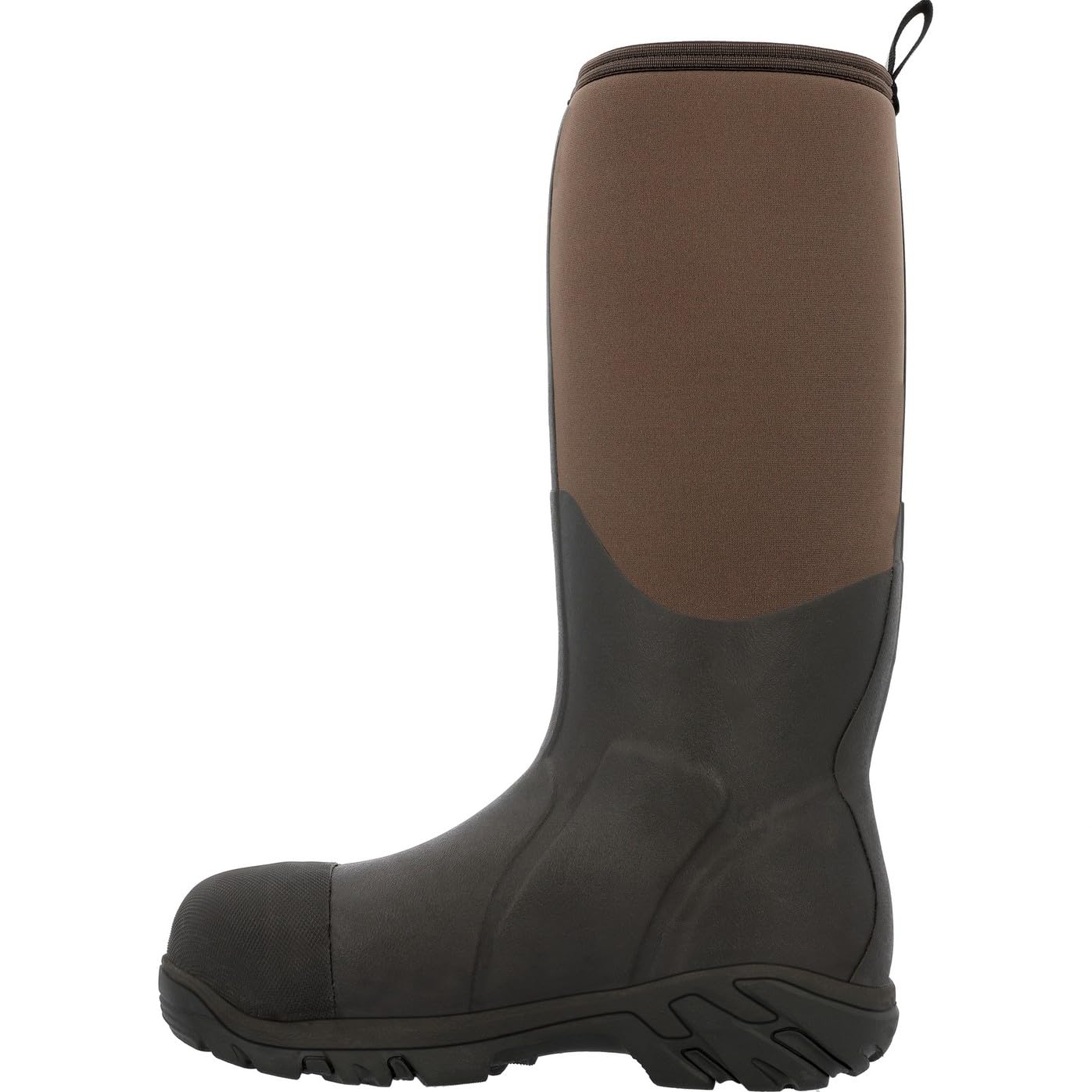
A 17-inch waterproof shaft, a steel toe, and a -60 °F comfort rating for subfreezing jobsite work.
The Arctic Pro carries the lowest comfort rating in this group: -60 °F to 30 °F. That comes from 8 mm neoprene — the thickest rubber wall here, ahead of the TIDEWE’s 7 mm — paired with warm fleece lining and 2 mm thermal foam under the footbed.
The 8 mm neoprene brings more than warmth. It absorbs shock, holds heat, and shapes to your foot to resist blisters and chafing. A stretch-fit Comfort Topline snugs your calf to seal warmth in and keep cold and debris out, and the 17-inch shaft (the full height up your lower leg) buries deep snow. The Bob-Tracker molded outsole handles ice and snow, and a steel toe protects against impacts from above — it meets ASTM F2413-11 M I/75 C/75 EH, the safety standard for protective footwear.
Here is the reality: this is a work boot, not a walking shoe. The fit comes up mixed, with some finding it tight around the calves, and both durability and value draw mixed views. It weighs 6.9 pounds as a single boot. Point it at a jobsite in subfreezing weather and it does its job; point it at a stroll through town and you will feel the bulk.
The cold rating is real: -60 °F to 30 °F is the widest temperature window on this list, backed by 8 mm neoprene and a fleece lining.
Watch the calf: the snug stretch top is exactly what keeps snow out — and exactly what a few owners with heavy calves find tight.
Pick it for: subfreezing outdoor work where a steel toe and a sealed shaft matter.
Not your pair if: you want a light everyday boot or have wide calves.
6. THE NORTH FACE Men’s Chilkat V Lace-up Waterproof Snow Boot

A lace-up snow boot that handles dirt, mud, creeks, and light snow without complaint.
The Chilkat V runs 200 g of insulation, and that is the honest limit to know up front. Next to the ROCKY Blizzard Stalker’s 1200 g, it carries a fraction of the fill — 200 g vs 1200 g — so it is built for active winter use, not a stationary stakeout in deep cold. Where it shines is versatility: buyers report it working well in various winter conditions, including dirt, mud, creeks, and light snow.
A non-PFC Durable Water-Repellent treatment (DWR, a coating that makes water bead and roll off) sheds snow and rain, and the waterproof build keeps the wet out. Lightweight is a genuine theme in the feedback, and so is durability — owners mention the pair lasting over a year of real use. That is a good sign for a lace-up you plan to wear daily.
The trade-off is warmth ceiling. If your feet run cold or you spend hours standing in subfreezing air, the 200 g fill will not cut it. For a man who moves — trail to town to a slushy driveway — it is a sharp, walkable choice with the weatherproofing to match.
Active-winter partner: 200 g fill and a DWR shell suit a boot that moves with you, not one that sits in a blind.
The lightweight edge: reviewers flag the low weight and durability together — a rare pairing in a lace-up snow boot.
Buy it if: your winter is an active mix of trail, town, and light snow.
Think again if: you need a boot that holds heat while you stand still in bitter cold.
7. Oboz Men’s Bridger 10″ Insulated B-DRY
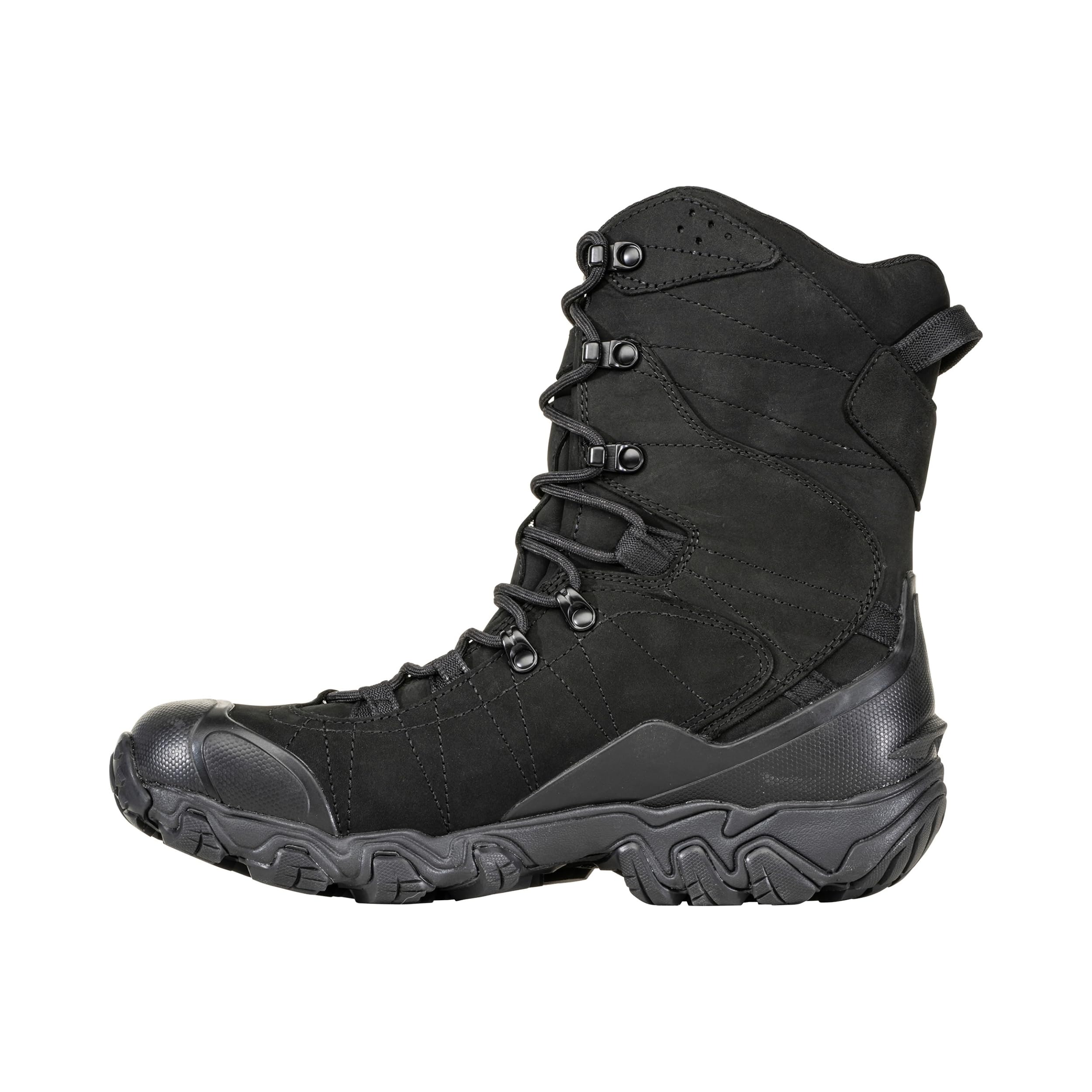
Oboz calls it their warmest, burliest boot, and 400 g of Freeze Guard backs the claim.
Between the Chilkat’s 200 g and the ROCKY’s 1200 g sits the Bridger, with 400 g of Freeze Guard insulation. It is the middle ground for a man who wants warmth on a winter hike but also wants to walk five miles without dragging a heavy pack boot. A DWR-treated nubuck leather upper with the waterproof B-DRY liner keeps feet dry, and a molded rubber toe cap and heel kick take the abuse of trail rocks.
The 10-inch height does two jobs at once: it traps warmth up the ankle and keeps snow from topping the boot on a deep drift. Underfoot, the winterized Granite Peak outsole pairs with a TPU chassis (a stiff plate that adds stability and stone protection) to hold your line on snow, ice, or frozen ground. The O FIT Insole wraps thermal layers that trap and reflect heat, and it is molded for a shaped fit rather than a flat slab.
Owners tend to call this one of the best boots they have owned, with comfort and warmth leading the praise and a 10-inch height that people specifically call out. The only recurring note is size — some find it runs slightly small. Order a half size up if you plan to wear thick socks, and this becomes a genuine winter hiker rather than a snow-day standby.
Where the Bridger delivers
- 400 g Freeze Guard insulation lands between light and heavy winter boots.
- Thermal-layered O FIT Insole reflects heat back into the foot.
- TPU chassis and Granite Peak outsole stabilize you on snow and ice.
- A tree planted for every pair sold.
Size matters here
- Some find it runs slightly small — size up for thick socks.
- 400 g is not enough for extended standing in extreme cold.
This suits: the hiker who wants a warm, stable winter boot that still walks like a trail shoe.
Look past it if: you need arctic-grade fill or spend the day motionless in the cold.
8. SOREL Men’s 1964 Pac Nylon Waterproof Boot
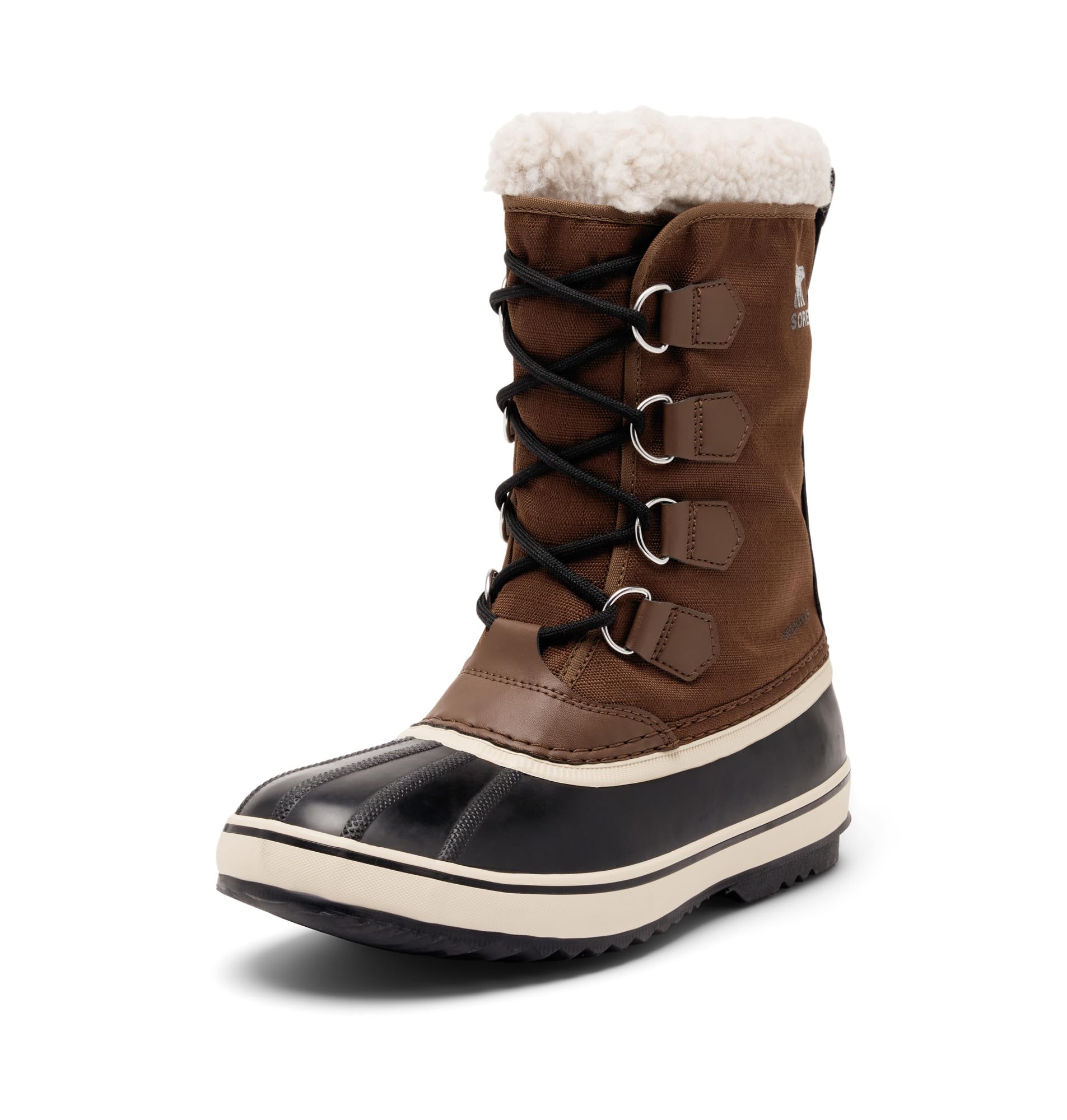
A seam-sealed, Sherpa-cuffed winter boot with classic SOREL styling and a vulcanized rubber sole for slick ground.
Warmth, here, comes from construction rather than a grams figure. Seam-sealed build (every stitch line is sealed so water cannot seep in) keeps feet cozy, a Sherpa cuff traps warmth at the ankle, and a vulcanized rubber shell with an extra-grip sole digs into slick terrain. That is a classic winter boot recipe, and it holds up.
Quality is what people praise most, with warmth close behind and comfort earning steady nods. It embraces the classic SOREL look without giving up function — this is a boot you can wear blazing snowy trails and still have on when you stop for coffee.
The split is fit and finish: some find the sizing off, and build quality draws a few dissenting voices. Neither is enough to sink a boot with a strong warmth record — just check the size chart and set expectations that this is a heritage-style boot, not an expedition shell. For style with a real thermal backbone, it earns its place.
Style that works: seam-sealed waterproofing and a Sherpa cuff make this more than a fashion boot.
Sizing caution: fit is the one thing that splits opinion, so measure before you order.
Best for: a man who wants a warm winter boot that looks as good as it performs.
Look elsewhere if: you need a precise, shoe-like fit and hate sizing guesswork.
9. Merrell Men’s Coldpack 3 Thermo Mid Waterproof

The pair that grips bare ice, with 200 g of fill and a fleece lining for the cold.
What makes the Coldpack 3 Thermo stand out is the sole. Vibram Arctic Grip underfoot — a rubber compound built specifically for cold, slick surfaces — delivers traction in conditions that turn other boots into skates. Owners specifically praise the grip on bare ice, and that is the kind of feedback you want from a winter boot.
Warmth comes from 200 g of insulation and a fleece lining, so feet stay warm when temperatures dip. The waterproof build keeps the wet out. Quality, warmth, and comfort all draw steady praise, and fit is solid — owners note lots of room above the toes, which matters when you want to wiggle a little or add a thin sock. It is a mid-cut boot, so it slips into a car or a boot bag without fighting back.
The limit is the same as any 200 g boot: it is built for active cold, not for standing motionless in a deep freeze. If your winter is icy sidewalks, a slushy parking lot, and a weekend walk, the trade of raw fill for real grip pays off.
The grip is the story: Vibram Arctic Grip traction on bare ice is the feature that sets this boot apart from warmer but slippier options.
Know your cold: 200 g of insulation and fleece handle active winter days, but a stationary deep-cold job needs more fill.
Go for this if: ice is your biggest hazard and you want traction you can trust.
Keep looking if: your priority is maximum warmth for long hours outside doing very little.
Know the Specs
Insulation Weight in Grams
The grams number tells you how much synthetic fill sits inside the boot, and that drives its temperature range. A 200 g boot (200 grams of fill) handles an active winter day, while a 1200 g boot is built for standing or sitting in deep cold. More grams buy warmth but add bulk and weight, so match the number to how much you will move.
Neoprene Thickness in Millimeters
Neoprene is the stretchy synthetic rubber used in rubber boots, and its thickness in millimeters sets both insulation and flexibility. An 8 mm wall insulates more than a 7 mm one, and thicker rubber adds shock absorption and shapes to your foot. The trade is that thicker neoprene can feel snugger around the calf.
Common Questions
How many grams of insulation do I need for the coldest weather?
Will rubber boots keep my feet warm in snow?
How tall should a winter boot’s shaft be?
Do I need steel toe protection in a winter boot?
Are insulated hiking boots or rubber hunting boots warmer?
Do waterproof boots stop breathing and make my feet sweat?
Should I size up in insulated winter boots?
What does Vibram Arctic Grip do that a normal sole does not?
How heavy are the heaviest winter boots here?
The Bottom Line
For most men, the warm winter boot that does the most jobs without overbuilding is the Columbia Firecamp — low-bulk insulation, waterproof construction, and a comfortable fit that handles errands, commutes, and winter trails. If your winter means standing still in real cold, pick the ROCKY Blizzard Stalker for its 1200 g of Thinsulate. And if ice is the hazard you face daily, the Merrell Coldpack 3 Thermo and its Vibram Arctic Grip sole are the ones to reach for.
How we choose
We do not accept paid placement. Every pick is matched to a real buyer and a real use-case; we do not hands-on test units.
Sources
Specifications: manufacturer listings and product documentation. Review insights: verified customer reviews, as of November 2026. Pricing: not shown on this page (it changes often); check the current price via the retailer link.
As an Amazon Associate, Tactical Gear Guy earns from qualifying purchases. This does not affect which products we feature.