Specs are compiled from manufacturer listings and verified buyer reviews and can change over time — please confirm the key details on the product page before buying.
Wet socks ruin a winter day faster than cold air does. If you want boots that keep slush out and warmth in, here is the short answer: the Muck Arctic Pro is the most proven pair here, and the Hunthor 800g is the one to buy if you want serious insulation for the least outlay. Below, each pair is matched to how you actually spend your winter.
This guide is built by comparing the manufacturers’ published specifications and the patterns across verified customer reviews, so you get each pick’s real strengths and trade-offs instead of marketing spin.
“Insulated” is a gram count and “waterproof” is a membrane or molded shell — not a label on the box. This breakdown of waterproof insulated winter boots covers what each number means before you commit.
Top Picks

How To Choose The Best Waterproof Insulated Winter Boots
Most people buy winter boots on looks and regret it by February. The pair that works is the pair whose insulation matches your coldest realistic day and whose sole holds on ice. Match those two to your winter and the rest is fit and finish.
Match insulation grams to your actual winter
Insulation is measured in grams, and the number tells you how much fill sits between your foot and the cold. A 200-gram boot is a walking-around boot for cold pavement and light snow. An 800-gram boot is built for standing still in serious cold. A 1,200-gram boot is for long, brutal cold where you barely move.
The trade-off is real: more grams means more warmth, but also more bulk and heat once you go indoors. A 1,200-gram boot on a mild day becomes a sweatbox.
Waterproof means a barrier, not a coating
A true waterproof boot has a barrier — a membrane or a molded rubber shell — that stops liquid water at the material level. Water-resistant boots only shrug off light spray. Slush, puddles and wet snow will push through a coating, so look for the word waterproof in the construction description itself.
Look at the outsole before the colourway
Ice is where a winter boot’s outsole does the real work. An outsole with multi-directional lugs, or one specifically designed for grip on ice, keeps you upright on a slick driveway. A deep lug pattern also sheds packed snow instead of letting it cake under your arch.
Side-by-Side Comparison
| Model | Best For | Insulation | Waterproofing | Cold Rating | Amazon |
|---|---|---|---|---|---|
| Muck Arctic Pro★ Best Overall | Deep cold and slush | 8 mm neoprene + 2 mm thermal foam | Rubber and neoprene shell | -60 °F to 30 °F | Amazon |
| Columbia FirecampBest Value | Everyday city wear | Low-bulk insulation | Waterproof construction | — | Amazon |
| Hunthor 800gBest for the Money | Budget hunting and work | 800 g Thinsulate | Waterproof rubber | — | Amazon |
| Rocky Blizzard Stalker | Standing in brutal cold | 1,200 g Thinsulate Ultra | Rocky Waterproof construction | — | Amazon |
| TIDEWE Rubber Hunting | Wet mud and marsh | 800 g insulation | 7 mm neoprene and rubber | — | Amazon |
| North Face Chilkat V | Lightweight winter hiking | 200 g | Waterproof construction | — | Amazon |
| KEEN Revel 4 Mid Polar | Snowshoeing and long walks | Thermal heat shield lining | Waterproof, breathable | — | Amazon |
| SOREL Tivoli V Tall | Deep snow in the city | Insulated lining | Waterproof construction | — | Amazon |
| Merrell Coldpack 3 Thermo | Ice grip and warm feet | 200 g | Waterproof construction | — | Amazon |
Detailed Reviews
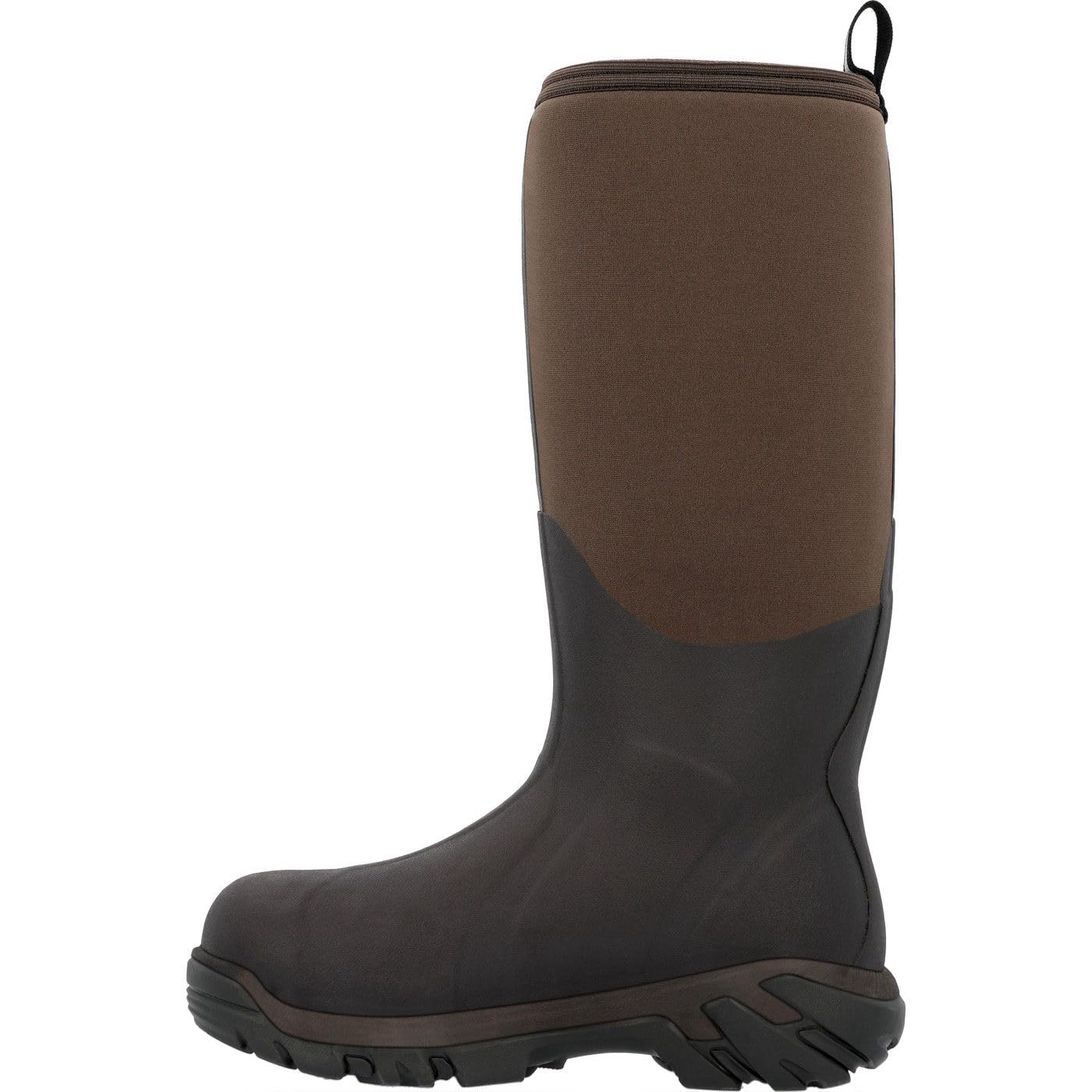
1. Muck Men’s Arctic Pro Insulated Boot
Our pick — 4.5+★ from 5,000+ verified ratings; the strongest balance of quality and price.
The rubber tank that shrugs off -60 °F and asks for more.
If your winter means standing in a frozen marsh, working a snowy yard, or walking a dog through slush, this is the pair that ends the argument. The number to anchor on is the comfort range: -60 °F/-50 °C up to 30 °F/-1 °C. That is a boot built to hold heat when the thermometer drops and you are barely moving.
Under your foot sits 2 mm of thermal foam, and the shell is extra thick 8 mm neoprene — a stretchy rubber that molds to the shape of your foot and traps body heat. Fleece lining adds another warm layer, and the stretch-fit Comfort Topline closes snug at the calf so cold air cannot sneak in from above. A lightweight EVA insole cushions, and double reinforcement through the instep, heel and Achilles keeps the structure from collapsing on long days. The Bob-Tracker outsole underneath is the part that keeps you off the ice.
The crowd favorite, with 4.5+ stars across 5,000+ ratings, and the reason is fit — that is what wins people over more than any other trait here. Warmth runs a close second. Owners describe pulling them on and forgetting about their feet until they take them off. Do note the reported weak spot: over years of hard use, some shells have been seen to crack, so store them out of direct sun and skip them for nothing more than casual wear.
Why owners keep them
- Comfort range of -60 °F to 30 °F handles hard winter without batting an eye
- 8 mm neoprene shell flexes with your foot and holds heat in
- Comfort Topline seals the calf so snow cannot drop in from above
- Double reinforcement at instep, heel and Achilles keeps shape over long days
Where it asks for care
- Shell cracking has been reported with age and heavy use
- Rubber build is at its best in cold weather, not a summer shoe
Pick it for: slush, mud, ice fishing, and any winter where you stand still in the cold.
Think twice if: you want a light boot purely for dry pavement.
2. Columbia Men’s Firecamp Boots
A light, low-bulk boot that treats winter like a commute to beat.
If you walk to a bus stop, shovel a driveway, or wander a frozen downtown, this is the boot that does the job without weighing down your stride. The defining trait is low-bulk insulation: enough fill to keep you warm in cold weather, but thin enough that the boot stays lightweight and flexible underfoot. Waterproof construction keeps the slush on the outside, and plush cushioning means you can stand around for a while without your arches noticing.
What earns it praise is the build — quality is the trait people call out most, followed by comfort. One dynamic worth knowing: plenty of toe room, which suits anybody who spent last winter with pinched toes at the front of a narrow boot. Columbia offers it in multiple colours and sizes, so finding a colourway is rarely the problem. It sits at the easiest-to-justify end of the premium-tier line, and delivers on fair-weather winter days.
Be honest about where it sits. This is a 200-gram-class idea of winter, so it is a great everyday boot rather than a deep-freeze survivor. It is not the boot to take to knee-high snowdrifts, but as a versatile pair to wear most of the season it does exactly what a city winter demands.
The design logic: plush cushioning and roomy forefoot are the two comfort levers a commuter notices first, and both are here. No cold-rating figure is published for this boot, so treat it as a cold-weather all-rounder rather than a deep-freeze specialist.
Best fit: anyone who wants one lightweight boot for cold, wet city days.
Hold off unless: you regularly spend hours standing in serious snow.
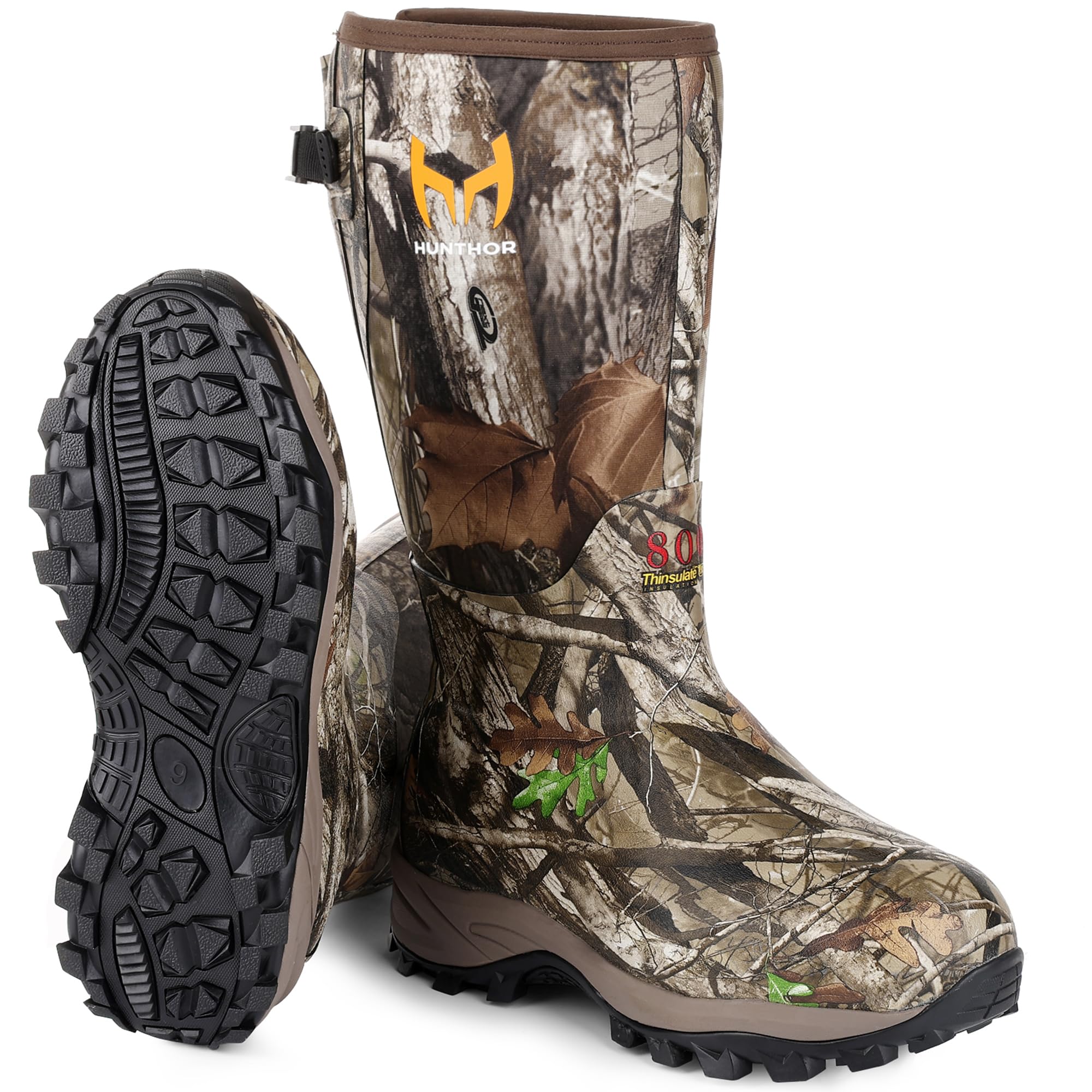
3. Hunthor 800g Insulated Hunting Boots for Men
800 grams of Thinsulate for a mid-tier outlay — the value headline of this list.
The insulation figure is the sentence here: 800 g of 3M Thinsulate. Compare that to the 200 g in the North Face Chilkat V or the Merrell Coldpack 3, and this is a boot built for standing in real cold rather than strutting through a light dusting. It does that at a price that makes the Rocky Blizzard Stalker, its 1,200-gram rival, look like a luxury purchase.
The waterproof rubber shell means slush and standing water are simply not its problem. An EVA mid-sole absorbs impact, and an Ice-Grip outsole is tuned for slick ground — a detail most boots at this tier skip. Its camo pattern is a matter of taste, but the build quality is the part owners talk about most, with warmth right behind. Plenty of buyers call it money well spent.
The catch is the fit. Sizing feedback splits both ways, so ordering your usual size is a gamble — measure your foot, add the thickness of the sock you will wear, and size up if that lands near a boundary. A few owners also find the boot on the heavy side. Neither is a dealbreaker for a boot designed to stand still in cold: the trade-off is weight for warmth, and 800 g of insulation costs you some heft. What it does not have is a published temperature rating, so judge it by the Thinsulate grams.
The case for it
- 800 g Thinsulate brings serious insulation without a premium-tier bill
- Fully waterproof rubber shell stands up to puddles and wet mud
- Ice-Grip outsole is a thoughtful detail at this price
- EVA mid-sole keeps the footbed springy underfoot
The honest caveats
- Fit reports split — some say too big, others say right on
- Weight is noticed by a few owners; insulation grams carry a cost
Grab these if: you want 800 g of Thinsulate without paying premium prices.
Measure first if: you are between sizes, because fit is the one thing buyers argue about.
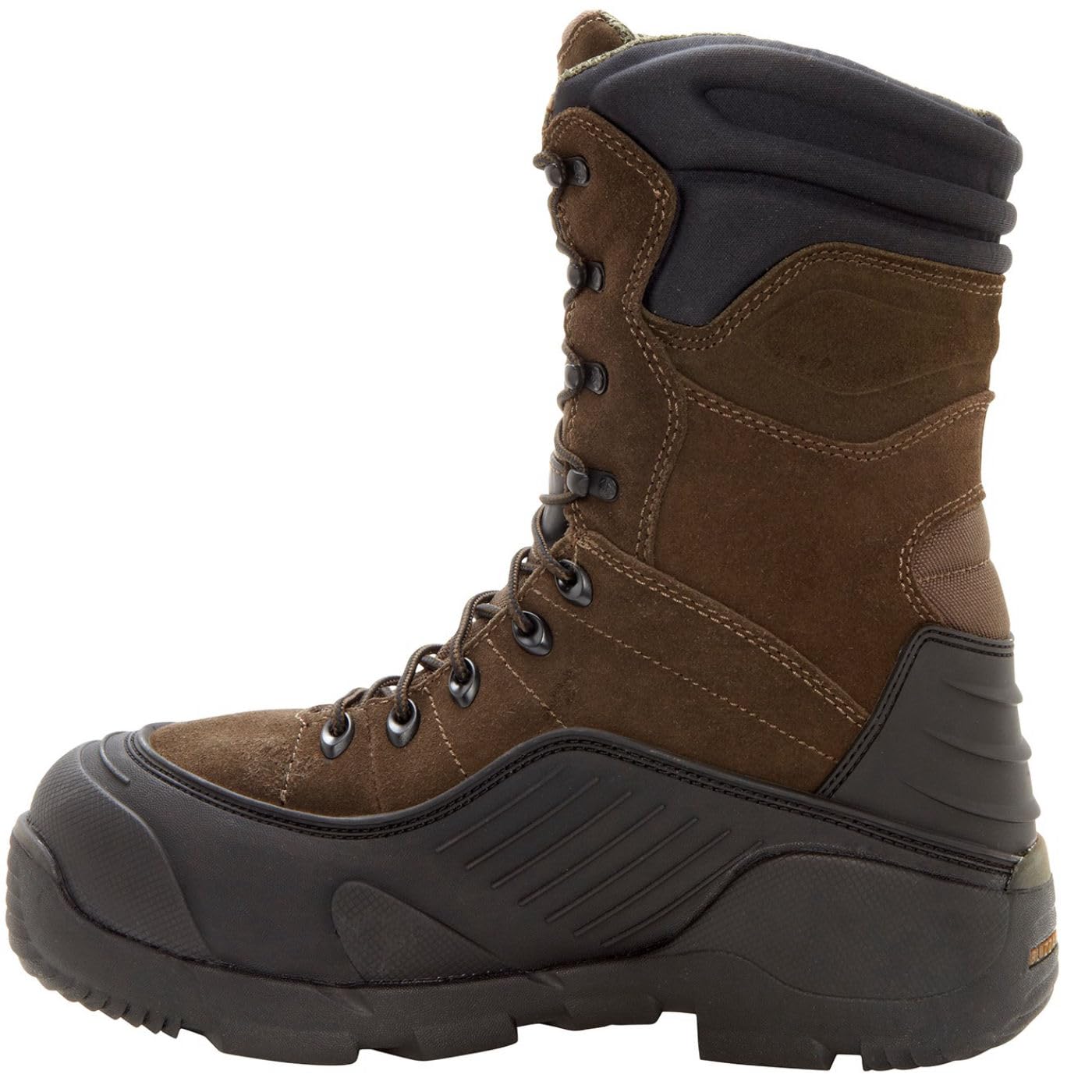
4. ROCKY Blizzard Stalker Waterproof 1200G Insulated Boot
More insulation than anybody else here — 1,200 grams of Thinsulate Ultra.
Where the Hunthor packs 800 g of Thinsulate, this one loads in 1,200 g of Thinsulate Ultra. That is the most insulation on this list, and it is meant for a specific buyer: the hunter, the ice fisher, the person who sits or stands outside in brutal cold for hours. If that describes your winter, the 1,200 g fill is the reason to pick it.
Rocky Waterproof construction handles the wet side, and the upper is split suede with a 900 denier high-abrasion textile — a tough fabric rated for scuffing and wear. A removable mesh PU footbed lets air move, and a TPU heel stabiliser locks your heel in place so you are not sliding around in the boot on uneven ground. The multi-directional Blizzard outsole is engineered for snow, ice and uneven terrain. The boot stands 8 inches tall, which keeps snow out of the shaft and keeps warmth in.
Honest scale: at 5.4 lb per pair in a size 10, it is a heavy boot, and the 1,200-gram fill is overkill for a mild day. There is also real variance in how long the stitching holds up. Treat this as the specialist in the lineup — a dedicated cold-weather tool, not the boot you wear every day of the season.
For the deep cold: 1,200 g of Thinsulate Ultra plus Rocky Waterproof construction is the warmest-and-driest pairing on this list, and the 8-inch shaft seals the snow out of the leg entirely.
For daily wear: 5.4 lb per pair and all that fill make it a boot you bring out for serious conditions, not one you throw on to grab coffee.
Made for: the sit-still-in-the-cold crowd — hunters, ice anglers, and anybody outside all day in deep winter.
Not the one if: you want a boot light enough to wear to work every morning.
5. TIDEWE Rubber Hunting Boots, Waterproof Insulated

7 mm of neoprene for the muddiest, wettest job on your calendar.
If your winter boots are for wading through flooded fields, muddy trails and wet marsh, the rubber-and-neoprene build of this TIDEWE boot is the right shape for the job. The shell is 7 mm neoprene with rubber — thick, flexible, and molded so it bends with your stride rather than fighting it. It comes with 800 g of insulation, which puts it in the same warmth class as the Hunthor, but here you also get the extra thickness and give of neoprene.
Comfort is not an afterthought. A thick cushioning footbed and generous toe room mean you can wear it all day. Sizes run 5 through 14, so most men will find a match. Quality is what earns the most praise across owner feedback, and fit runs close behind it. Durability as a long-term trait also gets credit — this is a boot built to take a beating in wet conditions and keep going.
The rub is in the size chart. Some find the sizing guide unreliable, and the boot reads bulky on some feet. That is the nature of a thick neoprene shell: it holds heat and shrugs off water, and it will feel bigger than a low-profile boot. Get the size right and the thick neoprene wraps your foot; size up too far and it slops with every step. Check the sizing help before you commit, and this becomes an easy recommendation.
Go this route if: your winter involves mud, standing water and wet field work.
Look elsewhere if: you need a low-profile city boot that disappears under trousers.
6. THE NORTH FACE Men’s Chilkat V Lace-up Waterproof Snow Boot

200 grams of insulation in a lace-up boot that feels like a sneaker.
For the buyer who wants to walk through winter, not stand in it, this is the smart pick. The number that matters is the 200 g of premium insulation — a boot designed to keep you warm on cold days without turning your foot into a sauna the moment you step indoors. It is also the lightest pair on this list, which makes a ten-minute walk feel like no work at all.
Compared to the TIDEWE’s 800 g or the Rockys 1,200 g, this boot is a fraction of the warmth fill. That is not a weakness — it means a boot you can wear from the bus stop to the office without broiling your feet. The waterproof construction handles snow and light slush, and the lace-up design gives you a snug fit around the ankle. The company has been in cold-weather gear since 1966, and the boots live up to that heritage in real winter conditions: dirt, mud, creeks and light snow were all navigated successfully in owner reports.
Durability is well attested — one owner reported a pair lasting over a year of use. The honest trade-off is depth of snow. If you walk through drifts or stand in deep slush all day, 200 g will not hold off the cold the way 800 g would. For cold pavement, packed snow and the occasional creek crossing, the 200 g build is the reason to buy it.
The case for it: 200 g of insulation and a lace-up cut make this the easiest boot to walk in all day, and it handled dirt, mud, creeks and light snow in owner use.
The limit: in deep drifts and all-day standing cold, 200 g cannot compete with an 800 g or 1,200 g boot.
Right for: the walker who wants warmth without bulk and reaches for boots every morning.
Wrong for: the stationary outdoorsman who needs maximum fill.
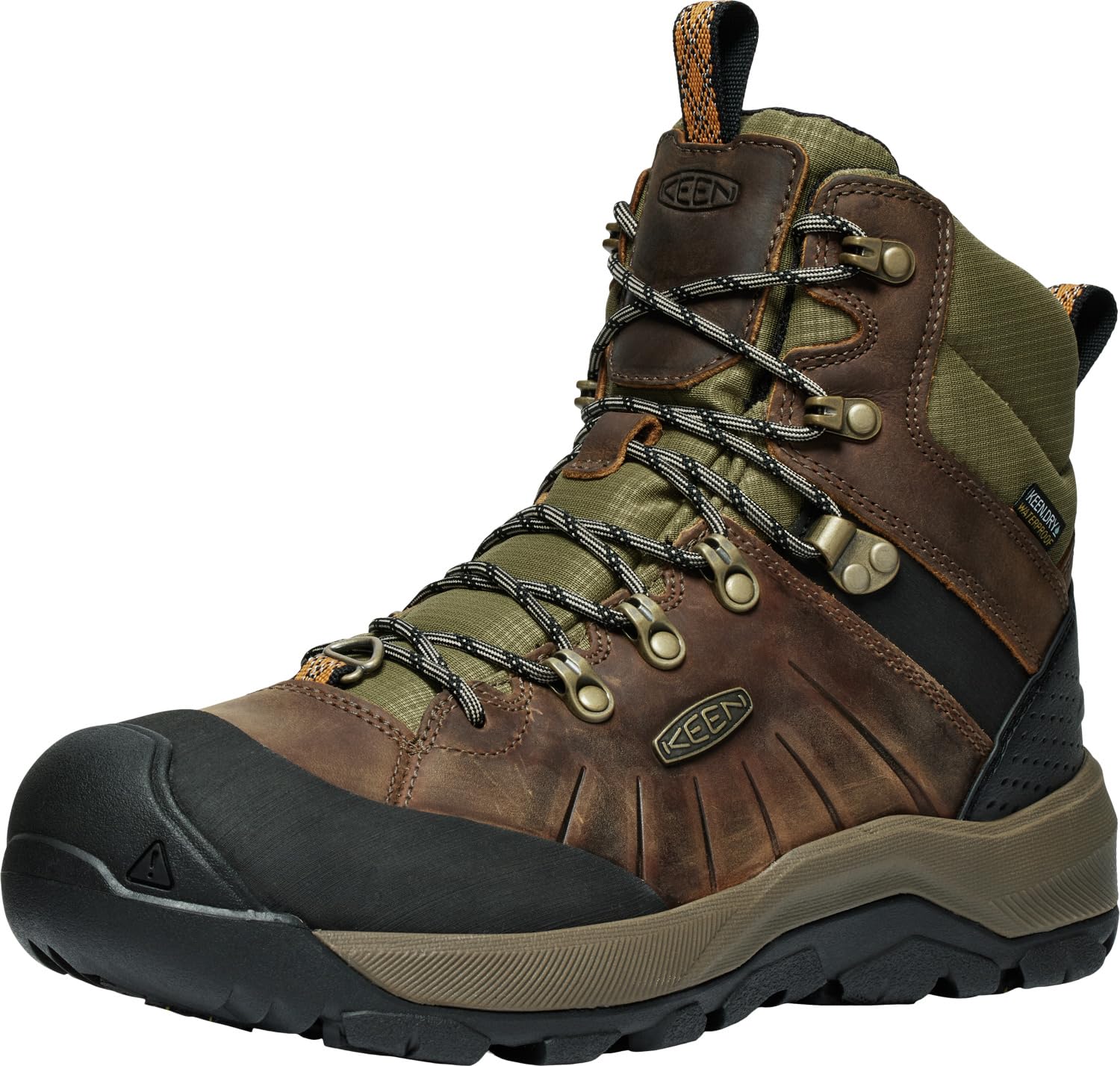
7. KEEN Revel 4 Mid Height Polar Insulated Waterproof
A walker’s boot with a heat shield inside and a wide toe box.
If you snowshoe, hike winter trails, or cover serious miles in the cold, this is your pair. The core features are a thermal heat shield lining that captures warmth inside the boot and a waterproof, breathable construction that keeps feet dry without trapping moisture. A speed lace webbing system lets you cinch up fast and lock the fit in place for the length of your walk.
This is a KEEN foot shape — built off the brand’s traditionally wider form. That is why fit gets the strongest appreciation from owners, and warmth is next in line. The reports that matter most are about distance: owners have put it through a long city walk and found it stayed comfortable mile after mile, and it handled snowshoeing and wet trails without soaking through. Comfort and functionality both get their due.
Two things to watch. The shoelace anchor has been reported to break on some pairs, so inspect it before a big trip. And the pricing places it in the upper tier, which a few people find steep for a mid-height boot. Weigh that against the walkability — this is a boot you use to move, and the ones who use it that way love it. If you only need to stand around outside, a warmer filled boot makes more sense.
What you are paying for
- Thermal heat shield lining traps warmth inside the boot
- Wide KEEN foot form fits roomier feet
- Speed lace webbing locks in the fit quickly
- Waterproof and breathable, so sweat does not build up
What to inspect first
- Shoelace anchors have broken on some pairs
- The upper-tier pricing puts it out of reach for some buyers
Suits: snowshoers, winter hikers, and anyone with a wider forefoot who covers real distance.
Pass on it if: you want a stationary cold-weather boot with maximum insulation fill.
8. SOREL Women’s Tivoli V Tall Waterproof Boot
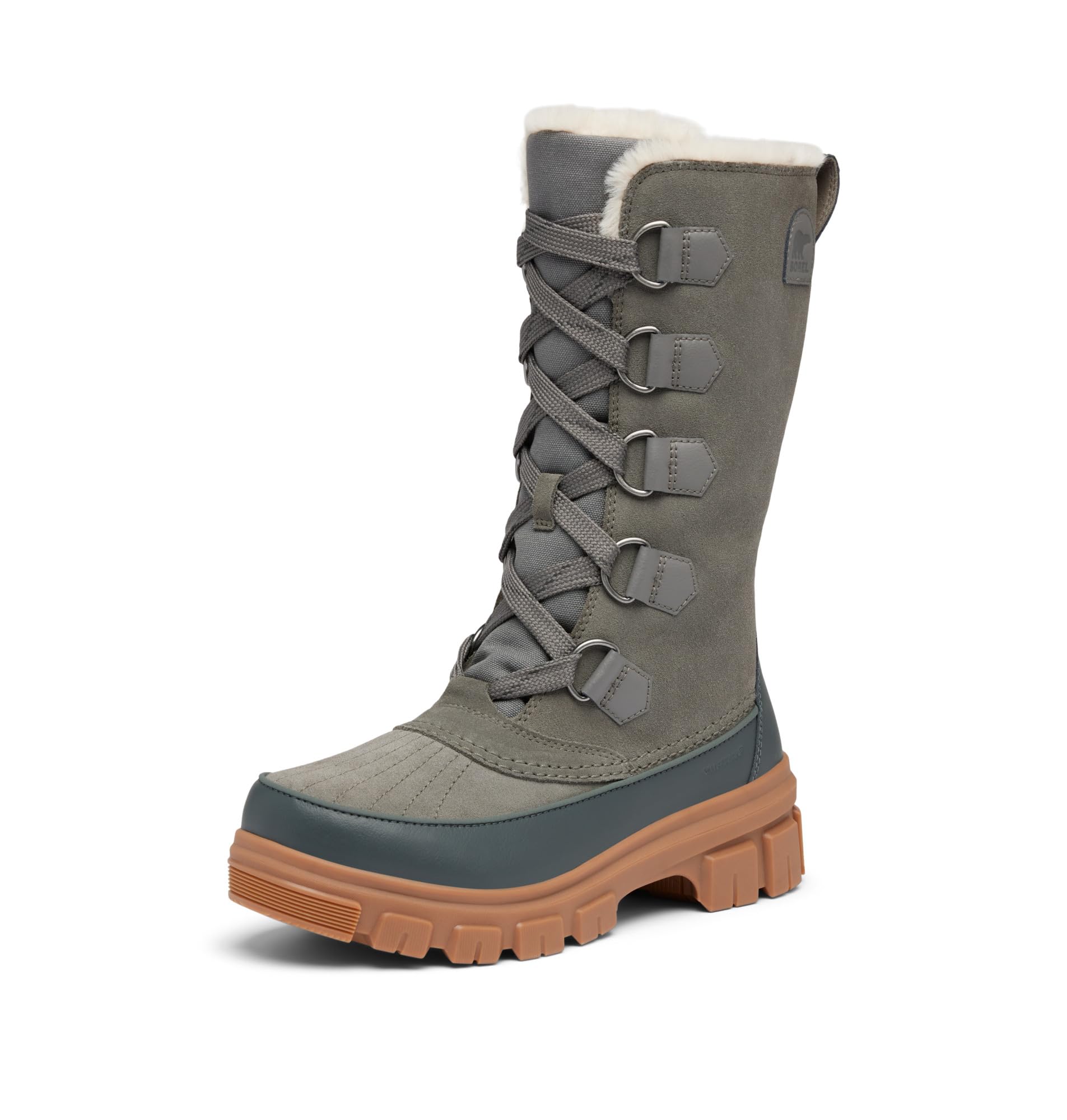
The tall, warm, dry boot for deep-snow mornings in the city.
For women facing deep snow on the way to work or a snowy campus walk, this is the pair that makes the height work in your favour. The tall cut climbs higher up the leg so you can step into a snowbank and not worry about the snowy stuff spilling in over the top. Waterproof construction and a soft interior keep feet dry and toasty, and the design is meant to look good doing it.
Buyers report this boot holds up through deep snow and ice, and owners mention it still looks new after a winter of use. Quality gets the most credit in reviews, followed by warmth, then comfort and appearance. If you need one boot that works as a warm boot and still looks presentable, that mix is the whole point.
Sizing is where the feedback splits. Some find it true to size, others not quite, so it is worth checking the sizing notes before ordering. That is the one practical wrinkle here. Otherwise this is a solid winter-weather boot for the woman who wants a taller cut and a soft, warm interior that handles deep snow.
Where it shines: tall-cut design plus a soft warm interior makes it a natural pick for deep snow, and the boot held up over winter without looking beat up.
The one thing to check: sizing feedback varies between true to size and not, so confirm your fit before you buy.
Made for: the woman who wants a tall, warm, dry boot for snowy commutes and deeper drifts.
Not for: someone who needs an ultra-light athletic fit for winter running.
9. Merrell Men’s Coldpack 3 Thermo Mid Waterproof

Vibram Arctic Grip underneath, 200 grams of insulation inside.
If the walk to work crosses an icy sidewalk and you have been worried about going down, the specification for you is the sole: Vibram Arctic Grip. It is an outsole designed specifically for gripping cold, slick ground, and it is the standout difference between this boot and the rest of the list. Waterproof construction sits around a 200 g insulation fill, and a fleece lining keeps the warmth close to your foot when temperatures dip.
The result is a boot that is warm and grippy at the same time — a pairing you do not always get. Traction on bare ice gets specific credit from owners, and warmth lands where it should, with plenty of people calling this their go-to cold weather boot. Comfortable and well-fitting out of the gate, with good room above the toes for thicker socks.
Compare it to the Muck Arctic Pro and the difference is philosophy, not just fill. The Muck gives you an 8 mm neoprene shell and a -60 °F comfort range for standing in deep cold. This one is built around grip and a 200 g fill, so your feet stay warm while you walk from one heated place to another. You give up deep-cold standing warmth and get a boot you can walk in all day.
Why the grip matters
- Vibram Arctic Grip outsole is designed for icy, slick surfaces
- 200 g of insulation and a fleece lining keep feet warm while walking
- Roomy above the toes for thick winter socks
- Waterproof construction keeps snow and slush out
Size the fill alongside it
- 200 g is a walking-weather fill, not a standing-in-deep-cold fill
- Full insulation figures sit well below the Muck and Rocky boots
Take this one: if icy pavements are your biggest winter hazard.
Go warmer instead if: you stand outside all day in a deep freeze.
Know the Specs
Insulation grams
The number of grams refers to how much synthetic fill sits between your foot and the cold. A 200-gram boot is a walking-around boot for cold days. An 800-gram or 1,200-gram boot is built for standing still in much colder weather. More grams means more warmth — and also more bulk and heat once you go indoors.
Waterproof vs water-resistant
A waterproof boot has a barrier that stops liquid water at the material level, usually a membrane or a molded rubber shell. A water-resistant boot only shrugs off light spray. In slush and puddles, water-resistant coatings eventually wet through. Look for the word waterproof in the construction description itself.
Outsole and ice grip
The bottom of the boot decides whether you stay upright. Multi-directional lugs and outsoles designed for ice grip (like the labels on the Rocky, TIDEWE and Merrell picks) improve traction on slick ground. Deep lugs also shed packed snow rather than letting it build up under your arch.
Comfort range and lining
Some makers publish a comfort range — the temperature band where the boot is meant to be worn, like the Muck’s -60 °F to 30 °F. Linings (fleece, thermal shield, neoprene) trap warmth inside. Flex and cut of the shell decide how the boot feels over a long walk.
Common Questions
Will 800-gram boots be too warm indoors?
Does waterproof also mean my feet will not sweat?
Should I buy my normal size in a winter boot?
Are these boots actually meant for standing in deep snow?
Is Vibram Arctic Grip worth it over a standard outsole?
What is the difference between a rubber-and-neoprene boot and a leather boot?
Can I wear these boots in spring and autumn?
How do I keep a winter boot from cracking over time?
Which boot is best if I have a wider foot?
Do I need an insulated boot for a mild winter?
The Bottom Line
For most people, the winner among these waterproof insulated winter boots is the Muck Arctic Pro. Its rubber and neoprene shell (neoprene is a stretchy, water-blocking foam) has a -60 °F to 30 °F comfort range, so wet-and-cold stops being a problem on any serious winter day. If you want the most insulation for the least outlay, reach for the Hunthor 800g, which packs 800 g of Thinsulate (a synthetic insulation measured in grams) at a value price. And for slippery pavement where you want grip rather than fill, put on the Merrell Coldpack 3 with Vibram Arctic Grip (a sole compound built to bite on wet ice).
How we choose
We do not accept paid placement. Every pick is matched to a real buyer and a real use-case; we do not hands-on test units.
Sources
Specifications: manufacturer listings and product documentation. Review insights: verified customer reviews, as of November 2026. Pricing: not shown on this page (it changes often); check the current price via the retailer link.
As an Amazon Associate, Tactical Gear Guy earns from qualifying purchases. This does not affect which products we feature.