Specs are compiled from manufacturer listings and verified buyer reviews and can change over time — please confirm the key details on the product page before buying.
The short answer: for most people recording voice at a desk, the Shure MV7+ is the safest pick because it works over USB straight into a computer and still gives you XLR when you upgrade — and the Shure SM7B is the better choice if you already own an audio interface. Below you’ll find nine voice recorder mics split by how you actually plug them in, what they reject from a room, and what each one really sounds like on a spoken voice.
This guide is built by comparing the manufacturers’ published specifications and the patterns across verified customer reviews, so you get each pick’s real strengths and trade-offs instead of marketing spin.
A voice recorder mic is not a music mic with a different label — it lives closer to your mouth, rejects the room harder, and usually skips an interface entirely. That difference is what separates a clean take from a hissy one, and this guide to the voice recorder mic sorts the nine strongest by purpose.
Top Picks


How To Choose The Best Voice Recorder Mic
Choosing a mic for spoken voice is mostly a question of three things: how you connect it, what kind of capsule sits inside it, and how much of your room it hears. Get those right and the brand name barely matters.
Dynamic or condenser — pick by your room, not by prestige
A dynamic capsule (a sturdier, less sensitive element that needs you close to the mic) shrugs off background sound and desk thumps. A condenser capsule (a more sensitive element that picks up more detail and more of the room) rewards a quiet, treated space and punishes a noisy one.
If you record in a normal bedroom with a fan and a street outside, a dynamic mic usually gets you a cleaner take with less fuss. If you have a treated booth and want airy detail, a condenser earns its keep.
The pickup pattern decides what sits behind you
Cardioid (a heart-shaped pickup zone aimed at your mouth) rejects most sound arriving from behind the mic, which is why it dominates voice work. Omni (even pickup in every direction) hears the whole room and suits a lavalier clipped to a collar. Bidirectional and stereo patterns are for two-person or spatial recordings — handy, but not your daily voice setting.
Connection: USB, XLR, or wireless
USB means one cable into a computer with no interface between you and the recording — the fastest path to a finished file. XLR (a three-pin balanced audio connector) needs an interface or mixer but gives you gain control and a longer, cleaner cable run. Wireless lavalier systems trade a cable for a transmitter and receiver pair, which is the only sensible option when you need to move on camera.
Noise floor and SPL — the two numbers worth reading
Signal-to-noise ratio tells you how far your voice sits above the mic’s own hiss; higher is quieter. SPL (sound pressure level, the loudest peak the mic survives before distorting) tells you how much headroom you have when you get animated. A mic that handles high SPL without distortion will not clip when you laugh or shout mid-sentence.
Side-by-Side Comparison
| Model | Best For | Connection | Capsule Type | Frequency Range | Amazon |
|---|---|---|---|---|---|
| Shure SM7B★ Best Overall | Broadcast-grade voice with an interface | XLR | Dynamic | up to 20000 Hz | Amazon |
| DJI Mic MiniBest for On-Camera | Wireless voice on camera | Bluetooth, USB-C | Wireless lavalier | 20–20000 Hz | Amazon |
| Shure MV7+Most Versatile | USB today, XLR tomorrow | USB-C, XLR | Dynamic | — | Amazon |
| Logitech Blue Yeti | Flexible multi-pattern desk recording | USB | Condenser, three capsules | 20 Hz – 20 kHz | Amazon |
| MAONO PD200W | Duo shows and cable-free recording | USB-C, XLR, Wireless | Dynamic | — | Amazon |
| FIFINE K688 | Dual USB/XLR on a budget | USB, XLR | Dynamic | 50 Hz – 16 kHz | Amazon |
| MAONO PD100 | Starter XLR studio | XLR | Dynamic | 60 Hz – 14 kHz | Amazon |
| Sony ECMLV1 | Pocket lavalier for phone or camera | 3.5 mm jack | Omni lavalier | — | Amazon |
| FIFINE K669 | Cheapest clean voice desk setup | USB | Condenser | 20–20 kHz | Amazon |
Detailed Reviews
1. Shure SM7B Dynamic Vocal Microphone
Our pick — 4.5+★ from 12,000+ verified ratings; the strongest balance of quality and price.
The broadcast-standard dynamic that pulls a clean voice out of an untreated bedroom.
The SM7B is the mic that taught a generation of podcasters that you do not need a treated studio to sound professional. Its cardioid pickup pattern ignores most sound arriving from behind the mic, and Shure pairs that with air suspension shock isolation — a suspension system that keeps handling knocks and desk vibration out of your recording. The result is your voice front and center, with a fan or a passing car pushed well back.
A dynamic cartridge feeding a frequency response reaching 20000 hertz gives you warm, balanced spoken vocals rather than the thin, bright sound cheap mics produce. In practice, a low voice keeps its body and a louder voice keeps its detail. Built-in pop filtering and the included detachable windscreen mean you can talk right up against the grille without every P and B thumping through the take.
Here is the honest part: the SM7B is a pure XLR microphone, so it needs an audio interface or mixer before your computer hears anything — that is extra gear and extra setup. Its 150 ohm impedance is also lower than the MAONO PD100 at 600 ohm, which is a normal spec for a broadcast dynamic and simply means you should let the interface’s preamp do the gain work. The all-metal body and electromagnetic shielding keep hum out of long sessions.
What sets the sound apart
- Cardioid pickup plus air suspension shock isolation keeps room and handling noise out of the track.
- Built-in pop filtering and a detachable windscreen handle plosives without add-on accessories.
- All-metal enclosure and electromagnetic shielding resist hum over long recording days.
What you should know first
- XLR only — an audio interface or mixer is mandatory before you can record.
- Needs you close to the grille, which is a quirk of dynamic voice mics rather than a fault.
Worth it if: you already own an interface and want a voice that sounds mixed before you touch a plugin.
Not your mic if: you want one cable into a laptop with no other gear.
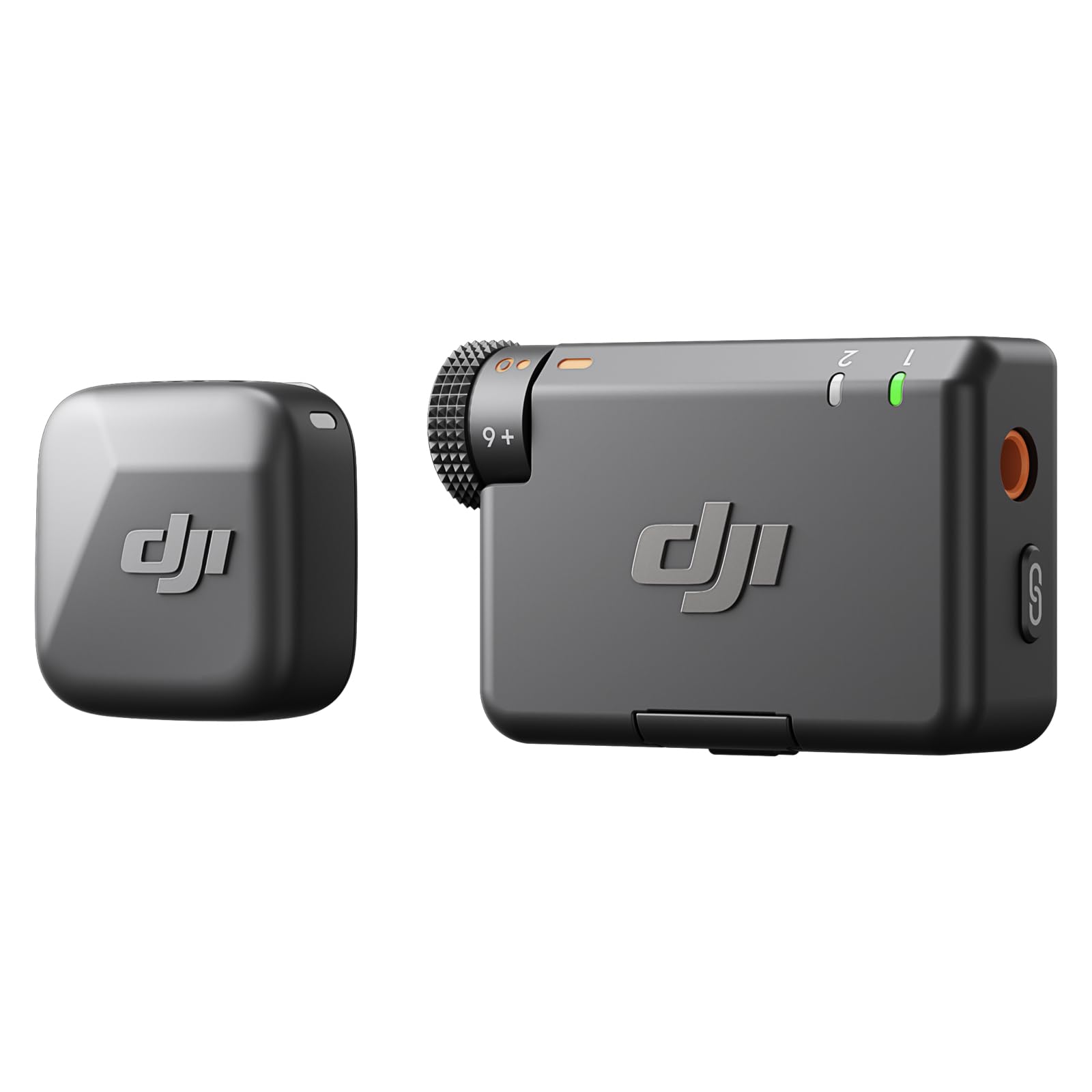
2. DJI Mic Mini (1 TX + 1 RX), Ultralight, Detail-Rich Audio
A 10 g clip-on transmitter that keeps your voice clean while you walk and talk on camera.
Clip the DJI Mic Mini to a collar and its 10 g transmitter (a tiny clip-on mic body that sends your voice to a receiver) nearly disappears on camera. The receiver talks to it over a 400 m maximum transmission range, so you can pace around a busy street without the audio breaking up.
The numbers behind the sound: 48kHz sampling (the rate at which the mic captures audio detail) and 120 dB SPL handling (the peak loudness it takes before distorting) keep a raised voice clean. Two noise cancellation levels are available — Basic for a quiet indoor room, Strong for a noisy outdoor setting. Automatic limiting quietly drops the volume when your input gets too hot, which stops a laugh from clipping the whole take.
Battery is the part that decides whether this fits your day: roughly 10 hours of operating time across the transmitter and receiver, which covers a full interview schedule. A 20–20000 Hz frequency range and USB-C plus Bluetooth connectivity mean it plugs into a camera, phone, or computer without fuss. The one thing to plan for is compatibility — the kit arrives with a Type-C phone adapter, so iPhone users need to check their connector situation before relying on it as a one-kit solution.
Where it earns its keep: The ultralight build and 400 m range give you freedom a desk mic simply cannot, and the two-stage noise cancellation is genuinely useful outdoors.
The trade-off to weigh: A wireless kit like this is built for movement, not for the deep, close-miked warmth of a dynamic desk mic.
Grab it for: vlogs, interviews, and footage where you cannot sit still.
Pass on it for: a fixed podcast desk, where a wired mic will sound fuller.
3. Shure MV7+ USB-C & XLR Podcast Dynamic Mic with Stand
A dynamic mic with USB-C and XLR outputs, so you can record tonight and add an interface later.
Two connectors on one dynamic microphone is the whole pitch here. You plug the MV7+ in over USB-C with the included cable and start recording today; when you add an audio interface, you switch to XLR and keep the same voice. That flexibility is why it edges out a pure XLR mic for a first serious voice setup.
Shure’s Voice Isolation Technology and a built-in DSP (digital signal processor — a chip that cleans the signal before it reaches your software) work with a real-time denoiser to pull down fan noise and room echo. Auto Level Mode adjusts gain as you lean toward or away from the mic, and a digital pop filter softens harsh plosives. The multi-color LED touch panel lets you mute by tapping anywhere on it, which is the kind of thing you appreciate the one time a phone rings mid-recording.
The measured noise floor helps here: 20 db of audible noise is the lowest figure in this group, and it keeps quiet pauses genuinely quiet. An all-metal body means it will survive being knocked around a desk. The MOTIV Mix app adds reverb and tone shaping, and the included adjustable desktop stand means nothing else is required to start.
Best of both connections: USB-C for simplicity, XLR for growth, with OBS certification for streamers who record and stream at once.
What to expect: The desk stand works, but a proper boom arm gets the mic closer to your mouth and gets the best from a dynamic capsule.
Reach for this if: you want a pro voice now without committing to an interface.
Keep looking if: you want a stereo pair or a lavalier form factor for on-camera work.
4. Logitech Creators Blue Yeti USB Microphone
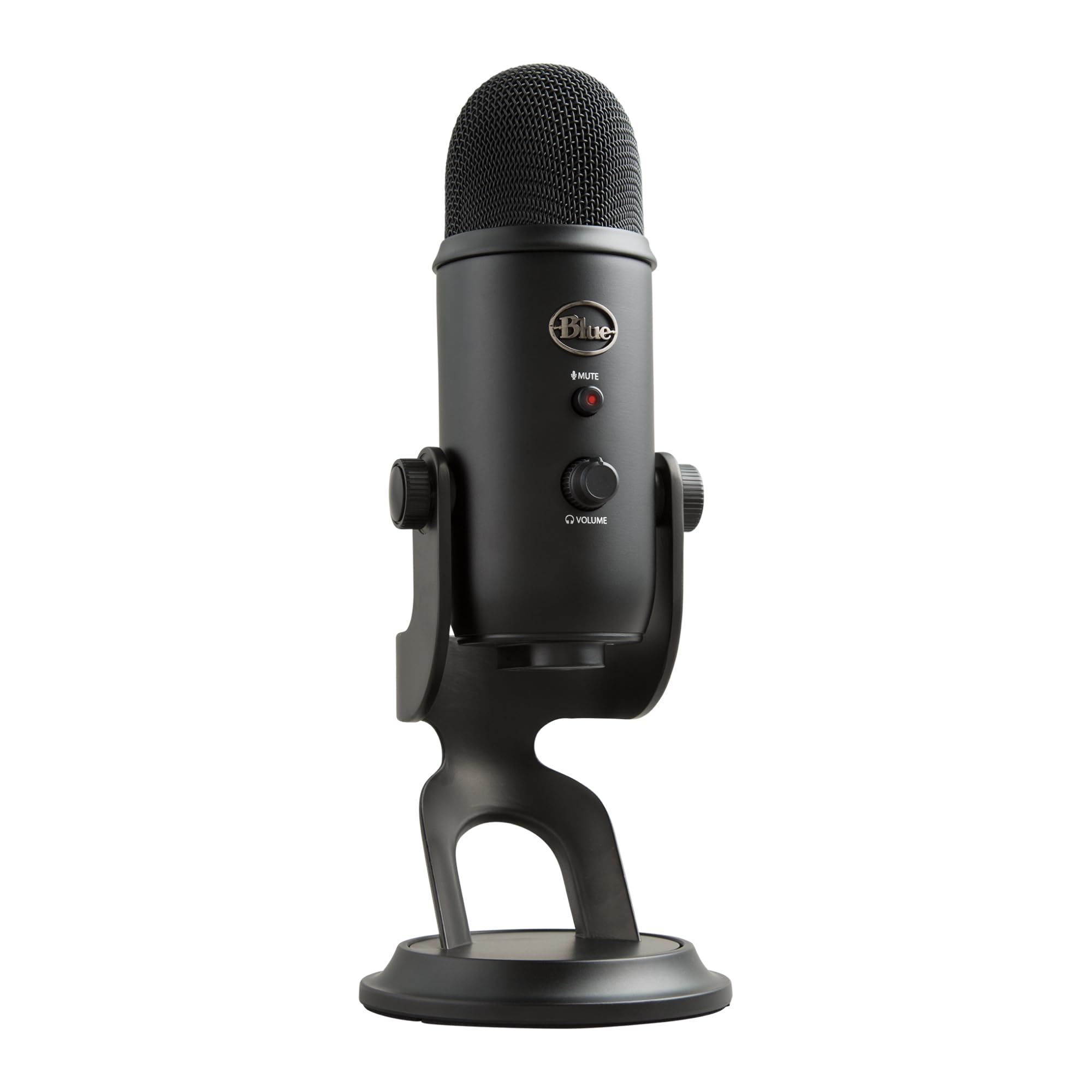
A three-capsule USB condenser with a pattern dial for solo voice, two-person interviews, and stereo.
A three-capsule array inside the Yeti is what buys the flexibility: cardioid for solo voice, omni for a room, bidirectional for a two-person interview across a table, and stereo for capturing space. Normally that range of jobs asks for several microphones — here you turn a dial on the body.
Onboard controls for headphone volume, pattern selection, instant mute, and mic gain keep you out of software menus during a take. The adjustable desktop stand lets you tilt the mic toward your mouth, and no-latency monitoring lets you hear yourself in real time over headphones. Blue VO!CE software adds broadcast-style vocal shaping and effects if you want a polished sound without a mixing session.
It is a condenser, which is the honest trade-off: 20 Hz to 20 kHz capture is detailed and lively, but a condenser hears more of your room than the dynamic mics here. In a quiet space that detail is a gift. In a live room with a humming fridge, you will hear the fridge. Plug-and-play over USB means no interface and no driver hunt on Mac or PC.
Why the pattern dial matters
- Four pickup patterns replace several single-purpose mics on one desk.
- Onboard gain, mute, and headphone controls remove software steps from a take.
- Metal enclosure and no-latency monitoring suit long recording sessions.
Where a condenser bites
- It picks up more room sound than a dynamic mic, so a quiet space counts.
- The desktop stand transmits some desk knocks if you type while recording.
The pick for: one mic handling solo recording and the occasional two-person sit-down.
Think twice if: your room hums or echoes — a dynamic will forgive more.
5. MAONO PD200W Hybrid Wireless Podcast Microphone
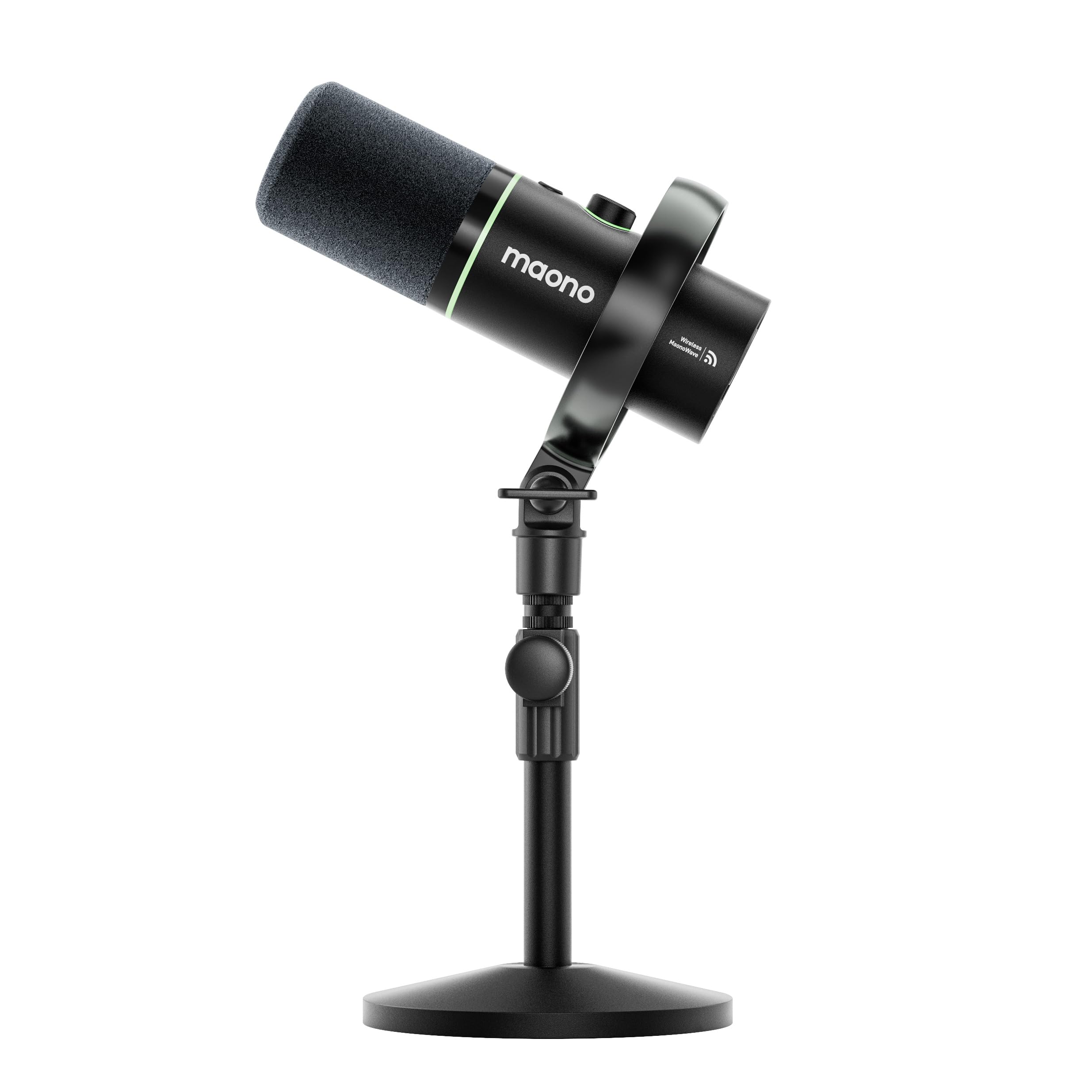
A desktop dynamic mic with wireless, USB-C, and XLR modes that pairs two mics to one receiver.
Most voice mics make you choose: wired or wireless. The PD200W does both — wireless for freedom, USB-C for a quick plug into a phone, tablet, or computer, and XLR when you want a stable interface run. You buy once and keep your options open.
The internals back up that flexibility. A 30mm dynamic capsule (a large voice-tune element) with a cardioid pickup delivers an 82dB signal-to-noise ratio, which puts your voice well above the mic’s own hiss, and it handles up to 128dB SPL without distorting. Three-stage noise cancellation works to pull down room echo even without a soundproof booth. One receiver can pair with two wireless desktop mics for a duo show, and each mic records to its own track so you can edit each voice separately.
Battery is where this one is unusual: up to 60 hours with the RGB lighting off, over a stable 60m wireless range. That is enough for a run of episodes without hunting for a charger. The MaonoLink app adds four master-tuned preset modes plus EQ and reverb control, so you can shape tone without a computer-based mixing workflow. At 1.32 kg the mic and stand have real heft, which is good for stability on a desk.
Why duo podcasts suit it: Two mics, one receiver, separate tracks — the interview workflow is already solved.
The caveat: Camera and Lightning accessories are sold separately, so check your phone connector before planning a phone-based shoot.
Built for: two-host shows and creators who swap between phone, computer, and interface.
Skip it for: a simple one-person USB setup that never needs a second voice.
6. FIFINE AmpliTank K688 Dynamic Microphone, XLR/USB

A cardioid dynamic with USB-C and XLR outputs that rejects desk and computer fan noise.
The K688 gives you the two paths serious recorders want. Plug the included 8.2ft USB-C cable straight into a laptop and record without software or settings; switch to XLR into a sound card or mixer when you want more control. Its SPL rating of 130dB means a loud vocal or a music bed will not distort on the way in.
The cardioid pattern is tightly directional, which is exactly what you want against computer fans and hard drives. Signal-to-noise sits above 80dB, so the voice arrives with detail and space rather than a flat wall of sound. A tap-to-mute panel on the front mutes silently instead of clicking into your take, and a gain knob on the body saves you from digging through Mac settings.
Real-time monitoring through a 3.5mm headphone jack with its own volume control is the sleeper feature for voice-over work — you can hear whether the noise reduction is doing its job as you speak. The bundled shock mount eases low-frequency desk vibration, and the windscreen softens plosives. Two honest notes: all function keys work only over USB, and XLR cable, boom arm, and mic stand are not in the box.
Where the money goes: Dual XLR and USB outputs on a metal-bodied dynamic mic is a lot of routing flexibility for an entry-level spend.
Plan for this: The XLR path needs a cable and stand you supply, so budget the accessories alongside the mic.
Choose it if: you want a dynamic desk voice and a path to an interface later.
Not the one if: you want every cable and the stand included in the box.
7. MAONO PD100 XLR Podcast Microphone

An XLR-only dynamic bundle with cable, desktop stand, and rod extender in the box.
If you want to record over XLR without buying five separate pieces, the PD100 arrives as a complete set: the mic, a 6.56 ft XLR cable, a desktop stand, a heavy round metal base, and a mic rod extender. Add an interface and you are recording.
The dynamic core and an inner double-layer pop filter attenuate plosives before they reach the capsule. A 60–14kHz frequency range is narrower than the Shure SM7B’s top end at 20000 hertz, which is the trade-off of a value dynamic: you trade airy detail for a warm, mellow voice that sits comfortably on a spoken track. The “talk to the mic top” pickup style is designed to capture depth and keep your voice centered and forward.
The desk setup solves a common problem — the 2.36 inch rod extender lifts the mic closer to your mouth, which is where dynamic mics need to be. The thick circular base damps vibration, and built-in 5/8″ and 3/8″ threads fit most mic stands when you upgrade. Its 600 ohm impedance is the highest in this group, which simply means pair it with an interface that can supply enough clean gain.
The value math that works
- Cable, stand, base, and rod extender all come in the box.
- Double-layer pop filter tames plosives without extra accessories.
- Metal body and a heavy base keep the mic steady through a session.
Before you commit
- XLR only — you still need an audio interface or mixer to record.
- The 60–14kHz range trims the top end compared with pricier dynamics.
Good match for: a first XLR setup where you want the stand and cable sorted.
Look past it if: you have no interface and want to plug into a laptop directly.
8. Sony Compact Stereo Lavalier Microphone ECMLV1

A battery-free omni lavalier that plugs into any 3.5 mm jack on a phone, camera, or recorder.
Clip this on and you have a voice mic that weighs almost nothing and needs no charging. At 0.43 x 1.26 x 0.43 inches it is tiny next to the MAONO PD100 at 4 x 4 x 8.86 inches — the kind of piece you can leave in a jacket pocket and forget about.
An omni-directional element picks up sound from every direction for stereo capture, and the included windscreen knocks down wind noise outdoors. The 360-degree rotation clip lets you angle the mic however the collar sits. Plug-in power means the recording device feeds the mic through the 3.5mm jack, so no battery to replace mid-interview.
Its 30 db audible noise figure is one of the quieter ratings in this group — lower than the FIFINE K669 at 78 db — which helps quiet passages stay clean. Compatibility is the practical bit: it works with 3.5mm jack cameras, recorders, smartphones, and PCs, which covers most phones that still have a headphone socket. The honest caveat is durability, since a wired lav sees a lot of tugging, and functionality is the area where feedback splits between working wonderfully and simply not working for a given setup.
Why the small package earns it: Stereo pickup, a windscreen, and battery-free operation in a lav smaller than a thumb.
Match it to your gear: A USB-C-only phone will need an adapter, since this terminates in a 3.5mm jack.
Use it when: you need a discreet voice mic for a phone or camera and want no cables to a desk.
Think again if: you are recording to a laptop with no 3.5mm port and no adapter.
9. FIFINE K669 White USB Desktop Microphone

The cheapest honest path to a clean voice — one cable, one knob, no interface.
The K669 is the mic you buy when you want to stop overthinking and start recording. The USB cable is in the box, the tripod stand is in the box, and there is no interface to configure. Plug into a PC or Mac and you are capturing audio the same minute.
A cardioid condenser handles the voice work, and a volume knob on the body sets input level by hand instead of through a settings panel — quicker and less fiddly mid-session. A 20–20 kHz frequency range covers the full spoken spectrum. Compatible devices span PC, laptop, PS4, and Windows, Mac, Zoom, Discord, YouTube, and Twitch, so the same mic covers game chat and a podcast without re-cabling.
Two specs to understand honestly. The 78 db audible noise figure is the highest in this group, which means a condenser this affordable is more likely to reveal room hiss than the quieter Shure MV7+ at 20 db — treat it as a mic for a reasonably quiet room. The metal body and heavy tripod reduce vibrations that would otherwise get into the recording, which is the right build choice at the entry level.
What you actually get: Complete plug-and-play recording for the entry tier, with a manual volume knob that removes software from your workflow.
Set expectations here: A condenser this affordable wants a quiet room, so a fan or echo will show up in the track.
Start here if: you want a working voice setup today and no extra gear.
Move up if: your room is noisy or you record next to a running fan.
Know the Specs
Dynamic vs condenser capsules
A dynamic capsule (a sturdier element that needs you close and rejects room sound) suits normal rooms and loud voices. A condenser (a more sensitive element that captures more detail and more of the room) rewards a quiet, treated space. Both appear on this list, and neither is “better” — the right one depends on your space and how close you can work.
Pickup patterns explained
Cardioid (a heart-shaped zone aimed at your mouth) is the voice standard because it ignores what is behind the mic. Omni (even pickup all around) suits a lavalier clipped to a collar. Bidirectional and stereo patterns suit two-person recordings and spatial capture.
Signal-to-noise ratio and SPL
Signal-to-noise ratio tells you how far your voice sits above the mic’s own hiss — higher is quieter. SPL (sound pressure level, the loudest peak before distortion) tells you how much headroom you have. A mic that handles high SPL without distorting will not clip when you raise your voice.
USB, XLR, and wireless connections
USB needs one cable and no interface — the fastest route to a recording. XLR needs an interface or mixer but gives you gain control and a balanced cable run. Wireless pairs a transmitter and receiver so you can move freely on camera.
Common Questions
Do I need an audio interface to use the Shure SM7B or MAONO PD100?
Is a dynamic voice mic better than a condenser for podcasting?
How close should I talk into a voice recorder mic?
Will the DJI Mic Mini work with my iPhone or Android phone?
What does a cardioid pickup pattern actually do?
How long does the DJI Mic Mini battery last?
Can the MAONO PD200W record two people at once?
Does the Sony ECMLV1 work without a battery?
What is signal-to-noise ratio and why does it matter for voice?
The Bottom Line
For most people, the best voice recorder mic is the Shure MV7+, because it records over USB-C today and still offers XLR when you upgrade, backed by a dynamic capsule and a real-time denoiser. If you already own an interface and want the classic broadcast sound, grab the Shure SM7B. For on-camera voice where you need to move, the DJI Mic Mini is the one to reach for, with its 10 g transmitter and 400 m range.
Pick the SM7B when your room and gear are ready, the MV7+ when you want an easing-in path, and the DJI Mic Mini when the camera is rolling.
How we choose
We do not accept paid placement. Every pick is matched to a real buyer and a real use-case; we do not hands-on test units.
Sources
Specifications: manufacturer listings and product documentation. Review insights: verified customer reviews, as of November 2026. Pricing: not shown on this page (it changes often); check the current price via the retailer link.
As an Amazon Associate, Tactical Gear Guy earns from qualifying purchases. This does not affect which products we feature.